Table of Contents
Get our free local reporting delivered straight to your inbox. No noise, no spam — just clear, independent coverage of Marblehead. Sign up for our once-a-week newsletter.
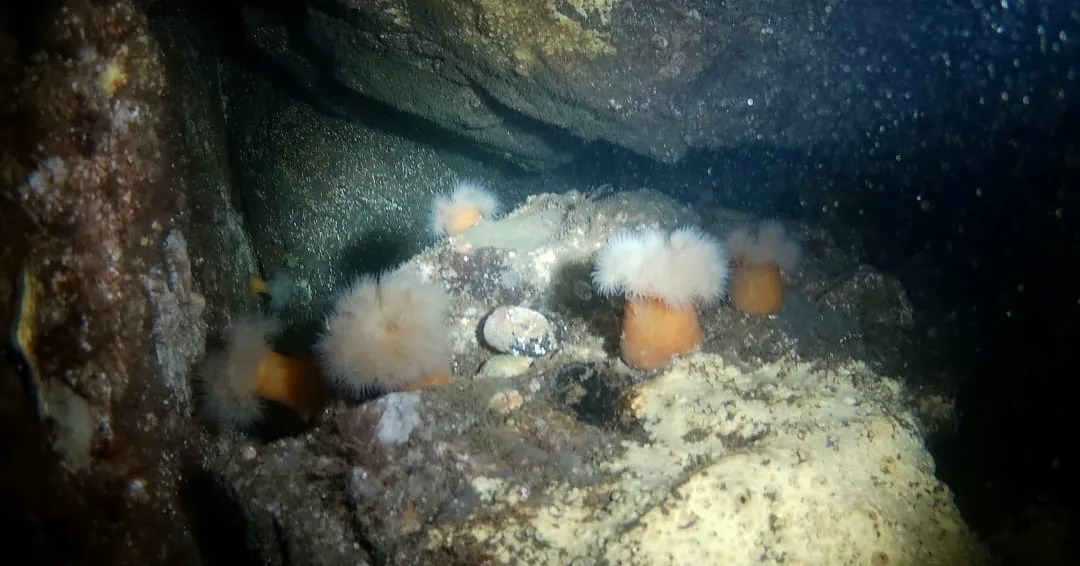
The plumose anemone (Metridium senile) is an invertebrate native to our waters. It belongs to the same family as jellyfish — the cnidarians — which are characterized by the presence of stinging cells known as nematocysts. The gentle sway of its ghostly tentacles is a dazzling spectacle should one be fortunate enough to see one.
These radially symmetrical organisms favor hard, stable surfaces on the seafloor, often anchoring themselves to rocky ledges, boulders, pilings and submerged debris where steady currents deliver a constant flow of plankton. They are commonly found clustered together, forming soft, living gardens among mussels, barnacles, kelp and seaweeds that cling to the same underwater terrain.
Plumose anemones tend to thrive in places where the water is cool, oxygen-rich and in motion. In these pockets of the seafloor, small fish dart in and out of nearby cover, crabs patrol the rocks below and sea stars move slowly along the bottom — a quiet community built around structure, patience and balance.
I knew these anemones existed in our waters during my first dives in Nahant during the summer of 2024. It was last year that I was happy to discover these anemones in Marblehead, which made them more special. The fact that I can easily visit these anemones in my own town brought a bit more joy into my marine-oriented life.
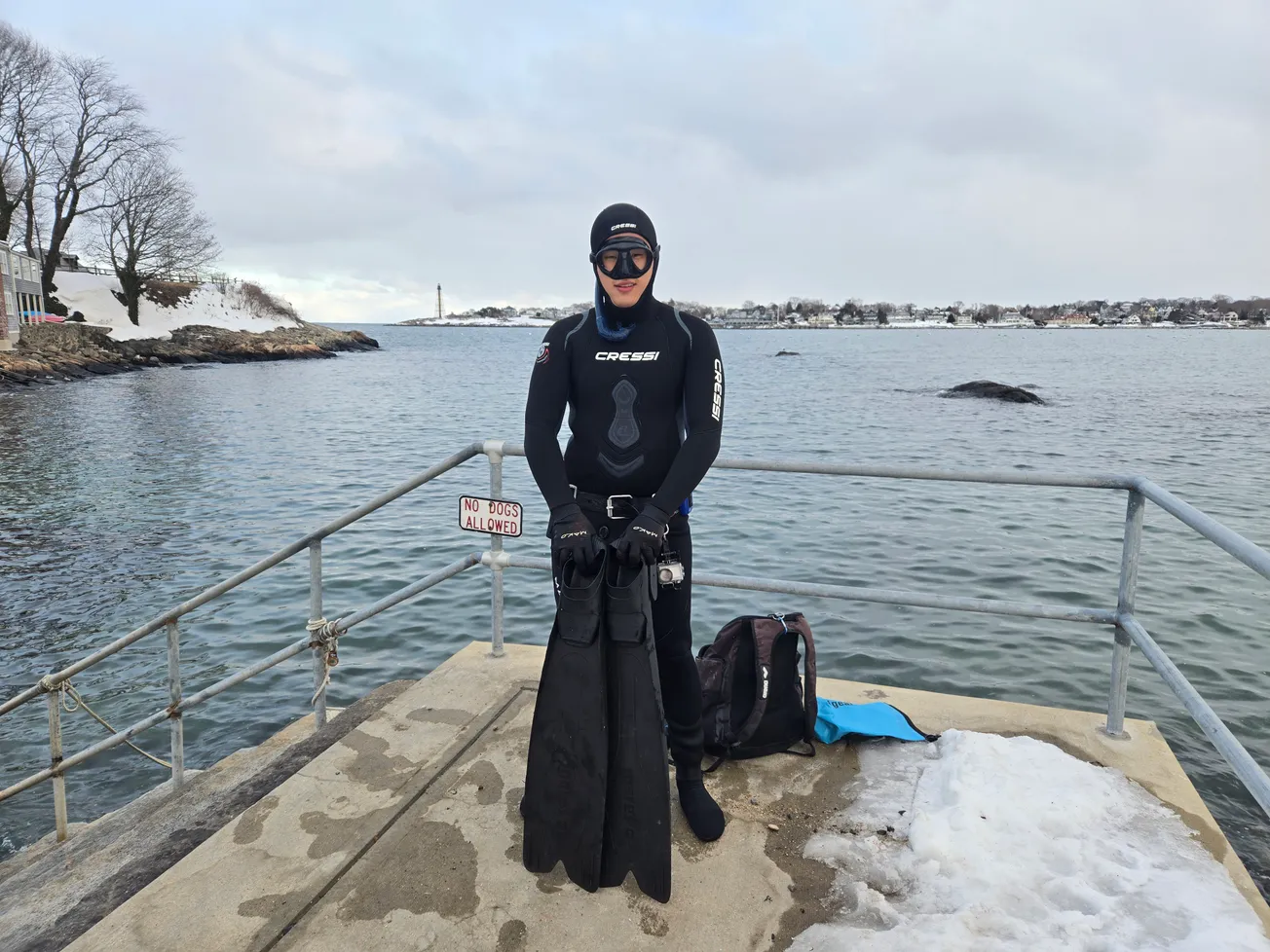
Freediving is now a huge part of that life, unlocking many doors and allowing me to see the beauty of our oceans at a deeper level. Returning to the same underwater places again and again has taught me how much life exists just beyond casual notice — anchored quietly, waiting for those willing to slow down and look.
You’re able to read this because 64 Marblehead residents — parents, retirees and local professionals — support The Independent with recurring contributions. That support helps make space for stories like this one: a neighbor taking the time to notice what lives quietly beneath our own shoreline and to return, again and again, to the same place. We operate on about $80,000 a year, with roughly 95% dedicated directly to reporting, and we’re working toward 100 members by Dec. 31 so this kind of local, place-based storytelling can continue. If this piece changed how you see Marblehead’s waters, joining today helps keep that perspective alive. Click here to become an Independent member.
Ryan Park, a Marblehead resident and practicing dentist, writes Beneath the Blue, an occasional column in which he shares the experiences, challenges and discoveries of freediving in photos and words.