Table of Contents
Get our free local reporting delivered straight to your inbox. No noise, no spam — just clear, independent coverage of Marblehead. Sign up for our once-a-week newsletter.
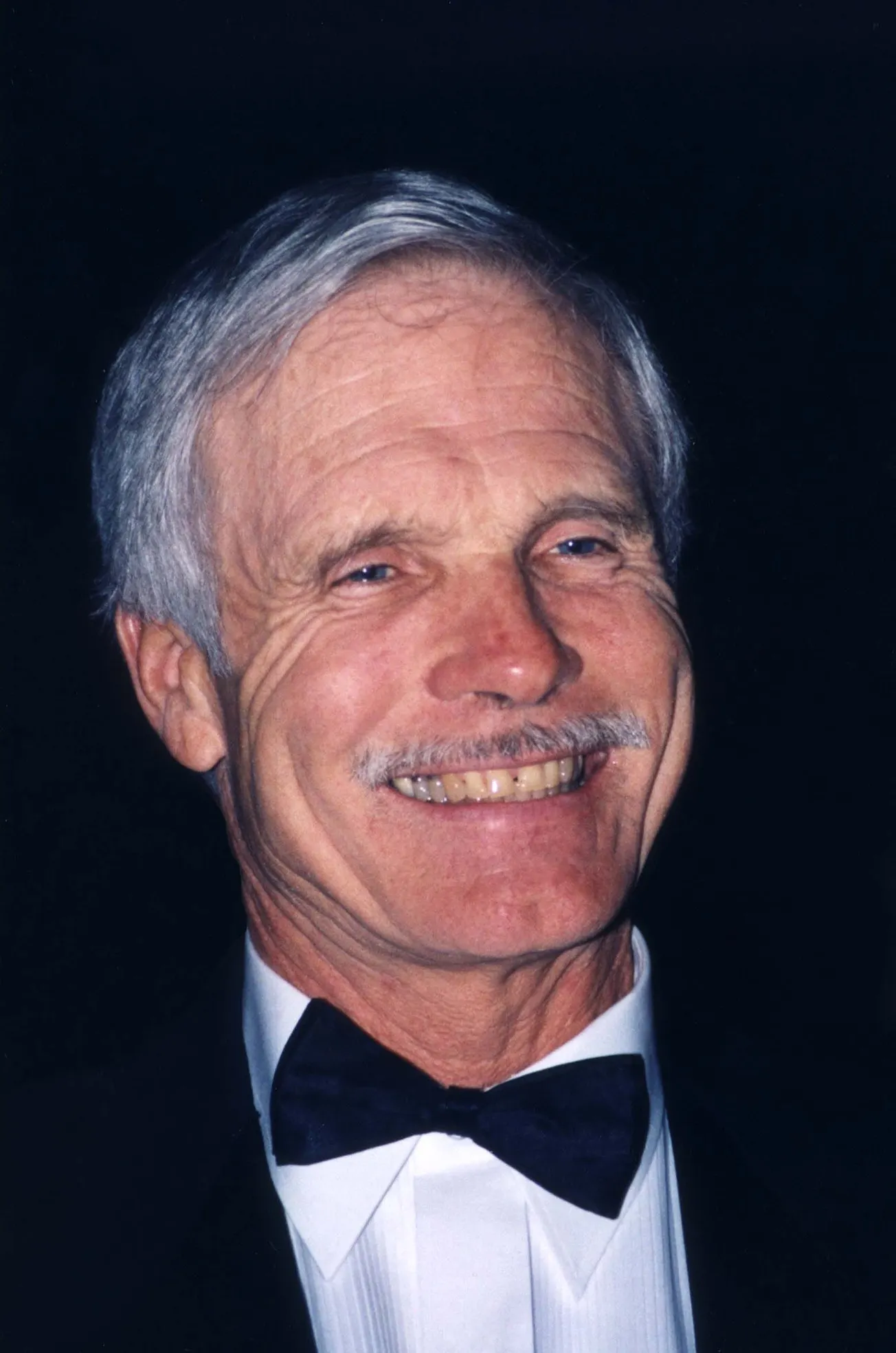
When Ted Turner died this week, I thought first of our phone call.
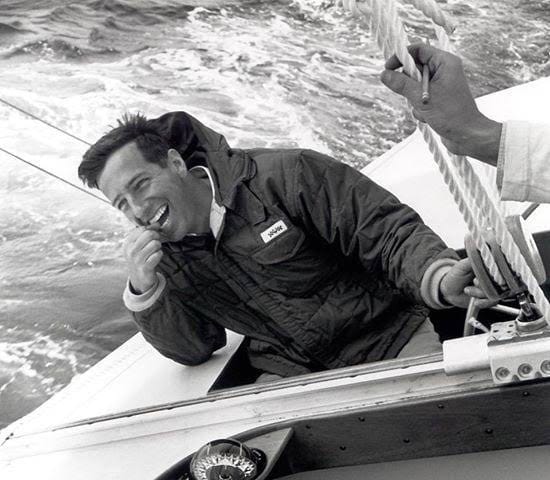
It was years ago, inside the tiny State Street office of The Marblehead Reporter, beside Maddie’s and Crosby’s. I was writing my first proper obituary. The subject was Marbleheader Ted Hood — a consummate sailmaker, yacht designer, four-time America’s Cup winner, the kind of figure whose life a young reporter cannot fully measure in a single all-nighter. Gary Jobson, then president of the National Sailing Hall of Fame, mentioned almost casually that he had Ted Turner’s number if I wanted it.
I sat with the offer for a moment. Ted Turner. The idea had a certain absurdity to it — a reporter at a small-town paper, writing an obituary for a Marblehead sailmaker, calling one of the most recognizable men in America. The voice that tells you not to reach started in immediately. Then the other voice, quieter: Why not.
I called and reached a woman first, explained myself and assumed politely that would be the end of it. About two hours later, the phone in that little newsroom rang.
It was Ted Turner.
The two men had found each other on the water years before. Turner beat Hood in the 1977 America’s Cup at the helm of “Courageous” — the very 12-meter yacht with which Hood had won the title three years earlier. In sailing, sharing a boat like that is close to sharing a language. They became good friends afterward. Turner said he had sailed often with Hood, that Hood had always shown good sportsmanship, that he was a genius at designing boats, masts and sails. The last time Turner saw him was at Hood’s induction into the National Sailing Hall of Fame. They were competitors who had loved the same thing in the same way, and that bond outlasted the rivalry by decades.
I have thought about that call often over the past 11 or so years. Not because Turner picked up — though he did — but because of why he picked up. He did not return the call for me. He returned it for Ted Hood. Because Hood meant something to him. Because the world they had shared on the water — the Cup, the rivalry, the long mutual respect — still lived in him. The reporter was incidental. The name on the other end of the question was not.
That, I think, was the truest measure of Turner. He launched a 24-hour news network nobody asked for, and he also returned a small-town reporter’s call about a dead sailmaker. The scale and the generosity were the same instinct in him. What looked, from a distance, like scale was, up close, openness.
The name of Charlie Baker’s dog
A few years later I found myself sitting in former governor Charlie Baker’s Swampscott home during that strange political limbo between election and inauguration. It was early in the morning. A Christmas tree glowed nearby. Lauren Baker was siting nearby, still in her pajamas. The atmosphere felt less like a formal political interview than a household briefly paused between ordinary family life and the enormous machinery of state government preparing to descend.
I thought of Hood and Turner when I sat down to prepare. The voice was familiar by then — You’re a local reporter, he’s about to be governor, there’s a ceiling here — and so was the answer to it. Turner hadn’t returned the call for me. He had returned it for Hood. The question before every story since has been the same: what will this person return a call for. I went through old clips, local records, background details and years of public statements before I walked through Baker’s door. I knew about his three-year run as a selectman, ending in 2007. I knew the history of the house on Monument Avenue. At one point in our conversation, I mentioned the family dog by name. Baker stopped for a second and gave me a look that seemed more to say: “I don’t remember telling you that.”
What stayed with me afterward was not that I had impressed him. It was the realization that Baker did not open up because of who I was. He opened up because the conversation was honoring the version of him that lived inside that house — the former selectman, the husband and, yes, the father whose dog had a name.
The door opened
Years later I pursued Lesley Stahl for the same reason — not because I had access, but because I knew she had grown up in Swampscott and suspected the place still meant something to her. The same instinct the Hood call had left me with. The same push against the voice that said: She’s a “60 Minutes” correspondent, why would she sit for the Swampscott Reporter. She had grown up on the North Shore — a fact, and then, if I was right, a door.
The path to her ran through one of her executive producers. Somewhere in our early emails I mentioned my byline, and serendipitously his mother’s maiden name was Dowd. It was one of those small contractions the world occasionally makes — a national television institution, an iconic correspondent and there in the middle of it a family name. He made the introduction.
What struck me about Stahl, once we spoke, was that despite decades at the center of American media she still talked like someone who had never entirely left. Allen Road. The Surf Theater across from Fisherman’s Beach. The household arguments over Stevenson and Eisenhower. The salt air. Decades after she left, when she thinks of home she still tears up. She was not performing nostalgia. She was reporting it — the way a good reporter does — from the inside.
She did not agree to the interview because the Swampscott Reporter is the Swampscott Reporter. She agreed because Swampscott still lived inside her.
The Mayo siblings
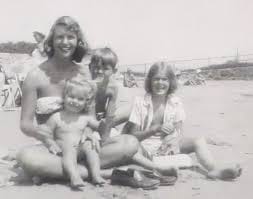
And then there were the Mayo siblings. The voice was there again when I started making calls — You can’t get three strangers to sit with you and talk about a famous poet who babysat them 70 years ago. I thought of Turner. I dialed anyway.
More than 70 years removed from that summer, Sylvia Plath had long existed in their lives less as a living memory than as a strange, distant association — a famous name attached to a fleeting chapter of childhood. Freddie was 7 that summer, Pinny was 4, Joie was 2. They could not remember Plath’s voice or presence.
As I read passages from Plath’s unabridged journals aloud in their Ridge Road living room, the distance between 1951 and the present briefly collapsed. There was Freddie, still recognizable in Plath’s description of him. There was Pinny hearing her childhood insecurities reflected back with uncanny precision. There was Joie laughing at the image of herself pinching Plath’s nose before bedtime.
Until then, they had not understood how carefully they had been observed. What filled the room was an eerie tenderness — the sense of three people being returned to themselves, not by memory, but by the gaze of a young woman who had seen them with startling care.
They said yes to the interview because the summer of 1951 belonged to them in a way they had never quite reckoned with. I had come for what they remembered of Plath. I left with what Plath had kept of them. She was the one with the memories.
Turner is gone now. What his brief generosity in a 15-minute phone call left me with was not “go big.” It was the conviction that the world is more reachable than caution suggests, and that the doors one assumes are closed are mostly just assumed to be closed. The question worth asking is almost always the one you have already half-decided not to ask.
BEFORE YOU GO … Our reporting remains free and open to all. It is sustained by readers who choose to support it — by contributing so that routine, document-based local reporting continues without paywalls or promotional framing. Right now, 101 readers support The Marblehead Independent with monthly or annual contributions. Click here to become an Independent member.