Table of Contents
Get our free local reporting delivered straight to your inbox. No noise, no spam — just clear, independent coverage of Marblehead. Sign up for our once-a-week newsletter.
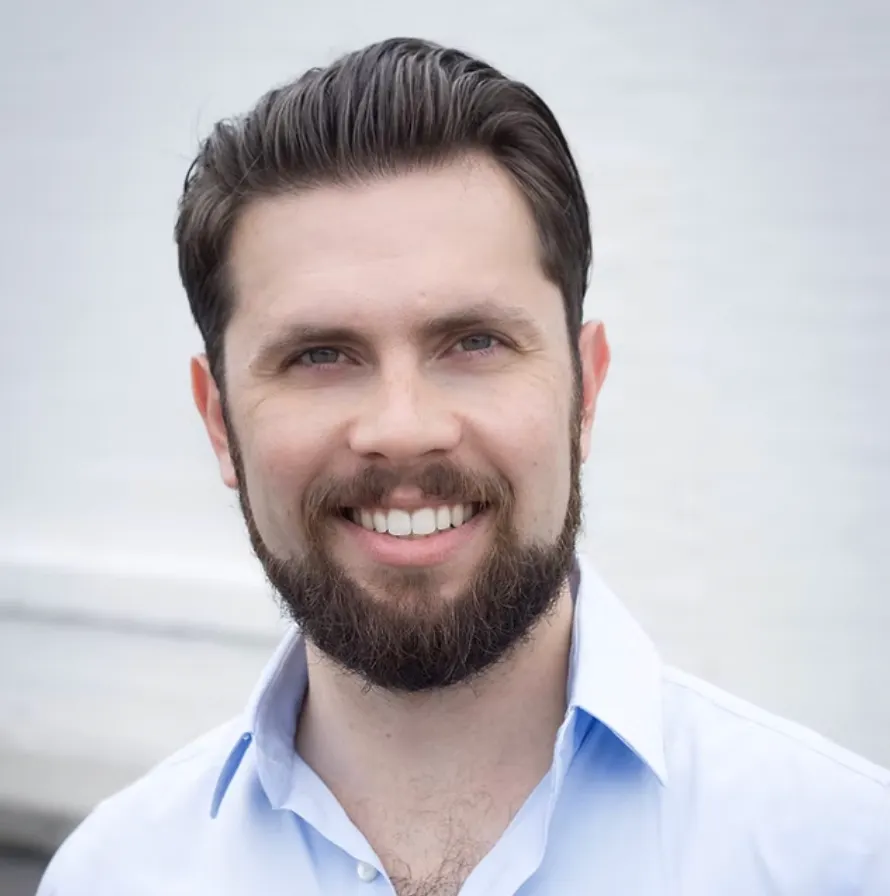
At James Buchanan High School in Mercersburg, Pennsylvania, I was the kid who raised his hand five minutes before the bell. Everyone had a line for it, and the eye rolls that came with it were more fond than annoyed: “Oh, Will’s got another question.”
Two teachers saw something else. Social studies teacher Mary Stoner and English teacher Susan Stempian arranged a week for me at the Public Opinion in nearby Chambersburg. That week taught me you could ask questions for a living.
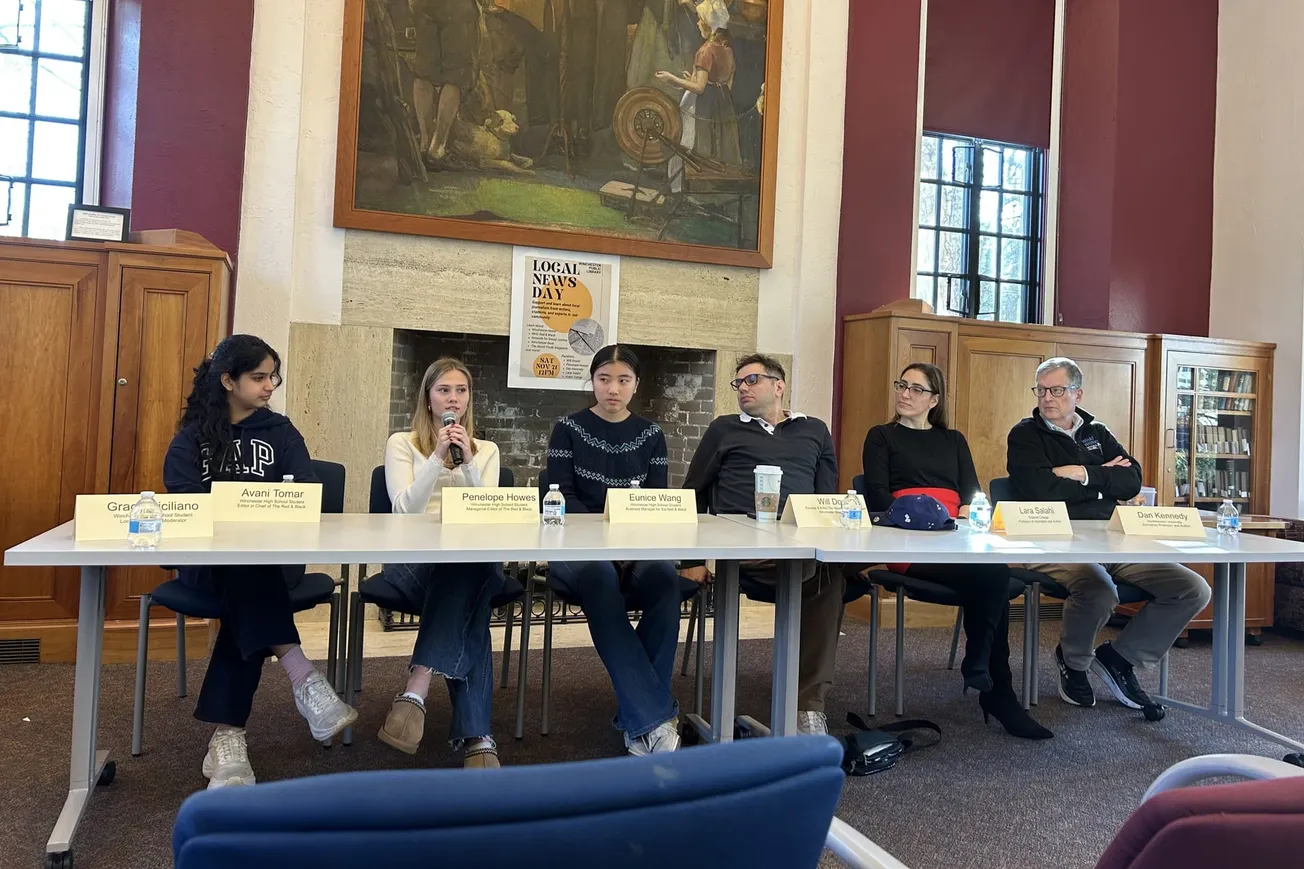
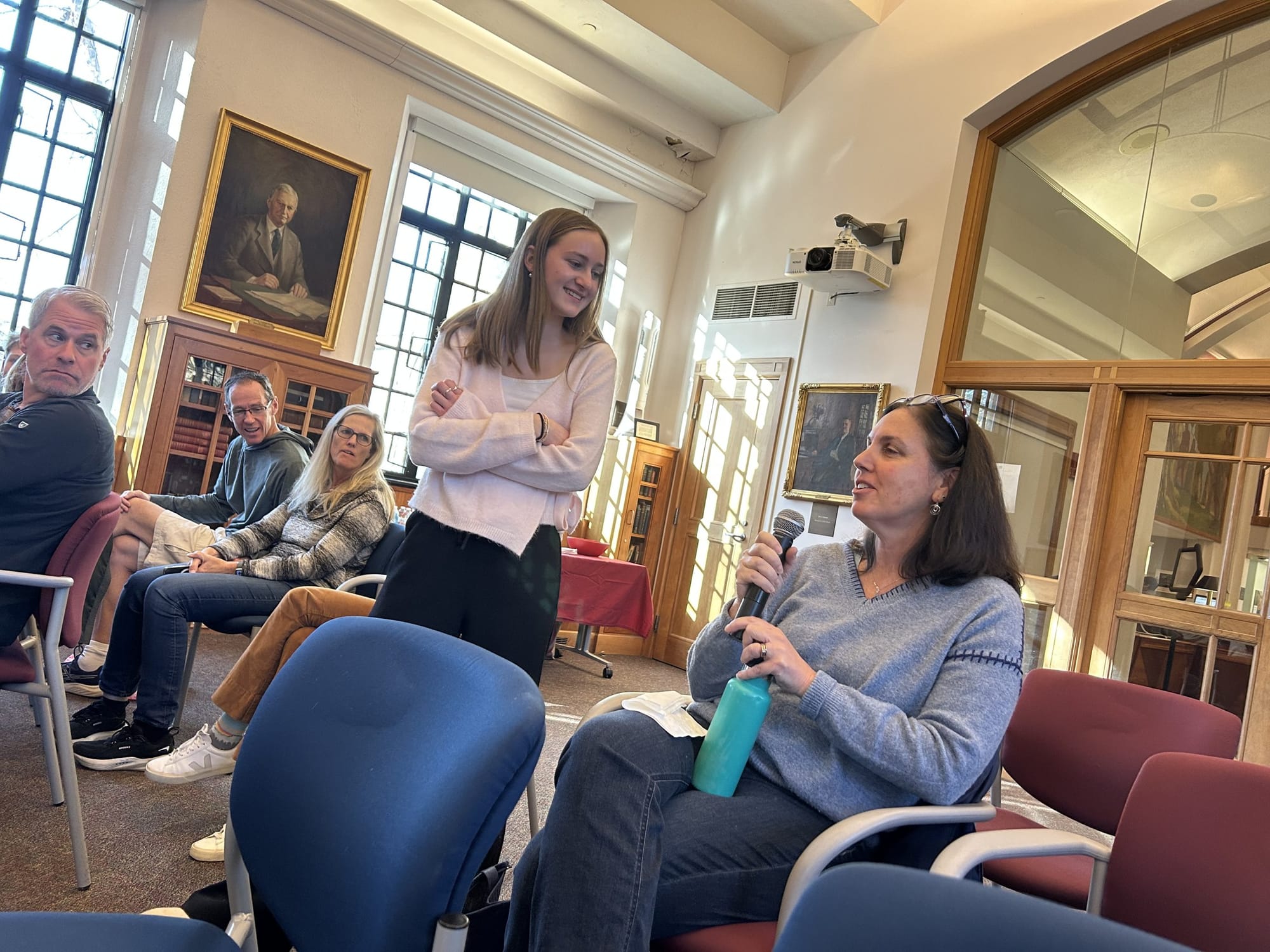
I told that story Saturday at Local News Day in the Winchester Public Library. Beside me sat three editors of the Red & Black, Winchester High School’s student newspaper. They are already doing the job.
The day belonged to Grace Siciliano, a Winchester High School junior. She organized and moderated it for her Girl Scout Gold Award. The award requires at least 80 hours on a project the scout leads herself. It also forces you to pick an issue, she told me afterward. She picked news deserts, places without reliable local news. Winchester isn’t one. So she started at home, hoping other towns would want what Winchester has.
My Winchester News editor Nell Escobar Coakley introduced her to the two professors who participated in the panel: Media Nation columnist Dan Kennedy, who teaches journalism at Northeastern University, and Lara Salahi, a distinguished professor of journalism at Endicott College. Grace’s measure of success after months of planning: “Just having people show up and care about it.”
On deadline
The student editors know what that care takes.
Avani Tomar, one of two editors in chief, joined the paper as a freshman over her parents’ objections. Nobody reads newspapers anymore, they said, and her father doesn’t get his news from print. So she became the paper’s first website manager.
Eunice Wang, a business manager, sells the ads. Every time the paper prints, she checks the bank balance and thinks, “Wow, that’s a lot of money.”
Penelope Howes, one of two managerial editors, said one edition takes a month of chasing writers about deadlines.
Their stories follow their curiosity. Avani reviewed “Barbie,” and a reader who agreed with her now designs the paper’s graphics. Eunice wrote about fungal networks. She also asked whether Hayao Miyazaki will ever retire, and the principal emailed her because his sons are fans. Penelope covered the Model United Nations conference she helps run.
When you’re curious about something, I told them afterward, someone else probably is, too. That audience may be small. Kennedy argued it can still be the one that matters most.
Those 10 people
Kennedy once edited the Winchester edition of Woburn’s Daily Times Chronicle. He covered the Woburn toxic-waste trial for 78 days in federal court. He doubted more than 40 or 50 people were reading. Those readers hung on every word. That, he said, “fills you with such a sense of responsibility and obligation to get it right.”
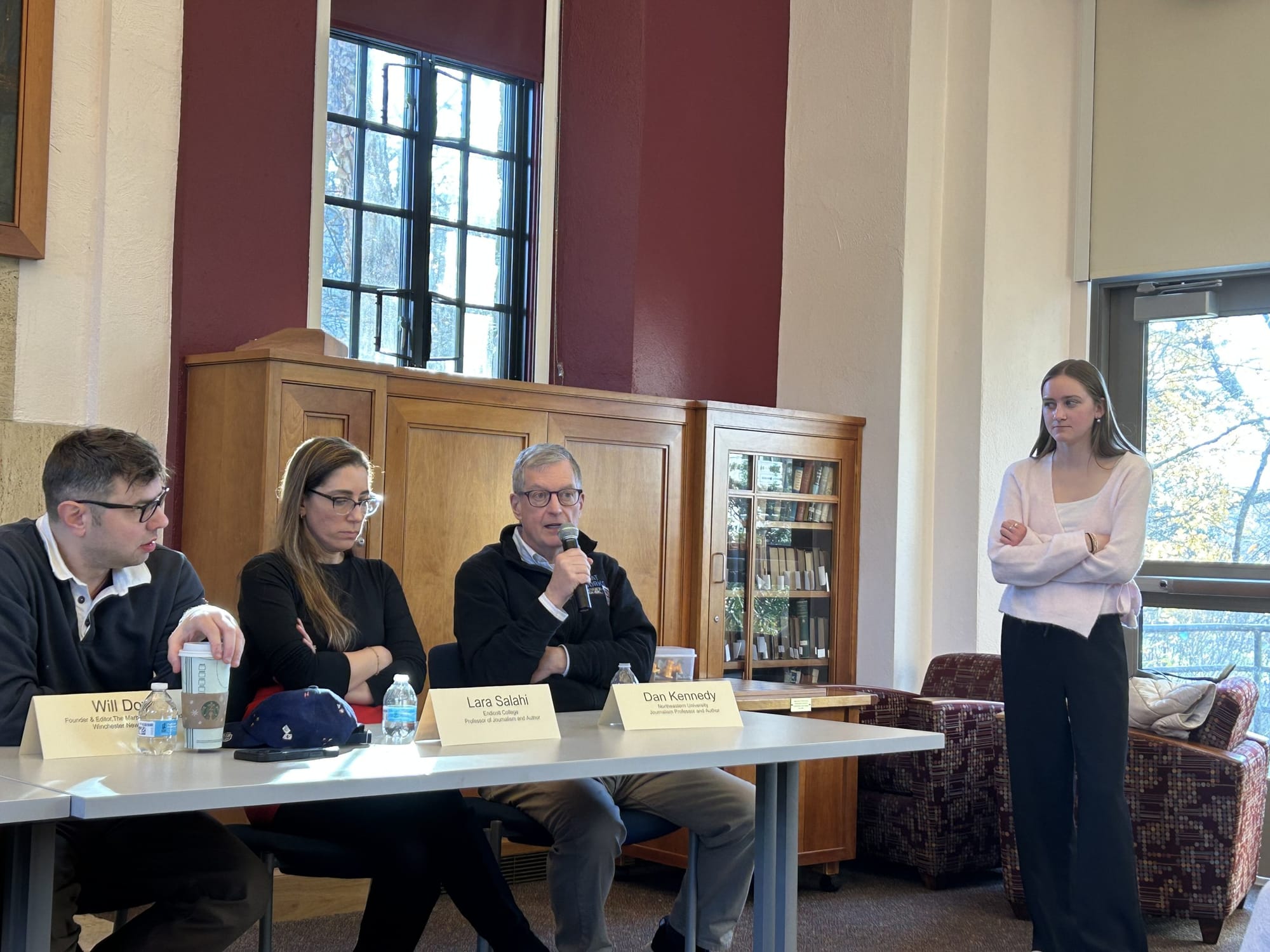
I told the panel I like writing obituaries. As a cub reporter, I dreaded calling grieving families. Now I drop what I’m doing, because people usually want to talk. Kennedy saw the connection. An obituary “may only matter to about 10 people,” he said. “But man, does it matter to those 10 people.” Reporters are told to climb toward the New York Times, he added. “No, you don’t. You really don’t.”
Sometimes the readers who matter most are the subjects themselves. In early 2024, a Facebook photo stopped me: a young woman with a bicycle in Marblehead, captioned Sylvia Plath, 1951. That summer, the 18-year-old babysat three Mayo children. More than 70 years later, I found them. They didn’t remember very much of her. So I read them what she wrote about them in her journals. The story became what Plath remembered of them.
Tools change
How stories reach readers keeps changing. Salahi said Endicott’s program doesn’t primarily teach to the technology, because it will change before students graduate. What lasts is news literacy: judging whether information is reliable and synthesizing complex information.
Kennedy sees the shift in his students. Readers of the Huntington News, Northeastern’s student paper, followed its 2024 encampment coverage mostly on Instagram. The website, he recalled the editors saying, was “for our professors and our parents.” Depth, his students told him, now builds across a series of posts.
After the panel, I told Grace that my tools point backward. I loaded a century of the old Marblehead Messenger, about 50,000 pages, into a language model on my own computer. For Veterans Day, it helped me find Messenger stories about townspeople missing in action. In January, artificial intelligence also helped me analyze all 114 Proposition 2½ questions Marblehead voters had faced since 1982 after several hours in the Abbot Public Library’s Marblehead Room. For Winchester News, I tracked all 33 Winchester questions from 1988 to 2023 and built an interactive chart.
I use tech to find. Judging what they find is still my job. That was Salahi’s point. The skills outlast the platforms.
Still asking why
Salahi said everyone starts out curious. Toddlers ask, “why, why, why,” until adults tell them to stop. Most of us get “socialized out of it.”
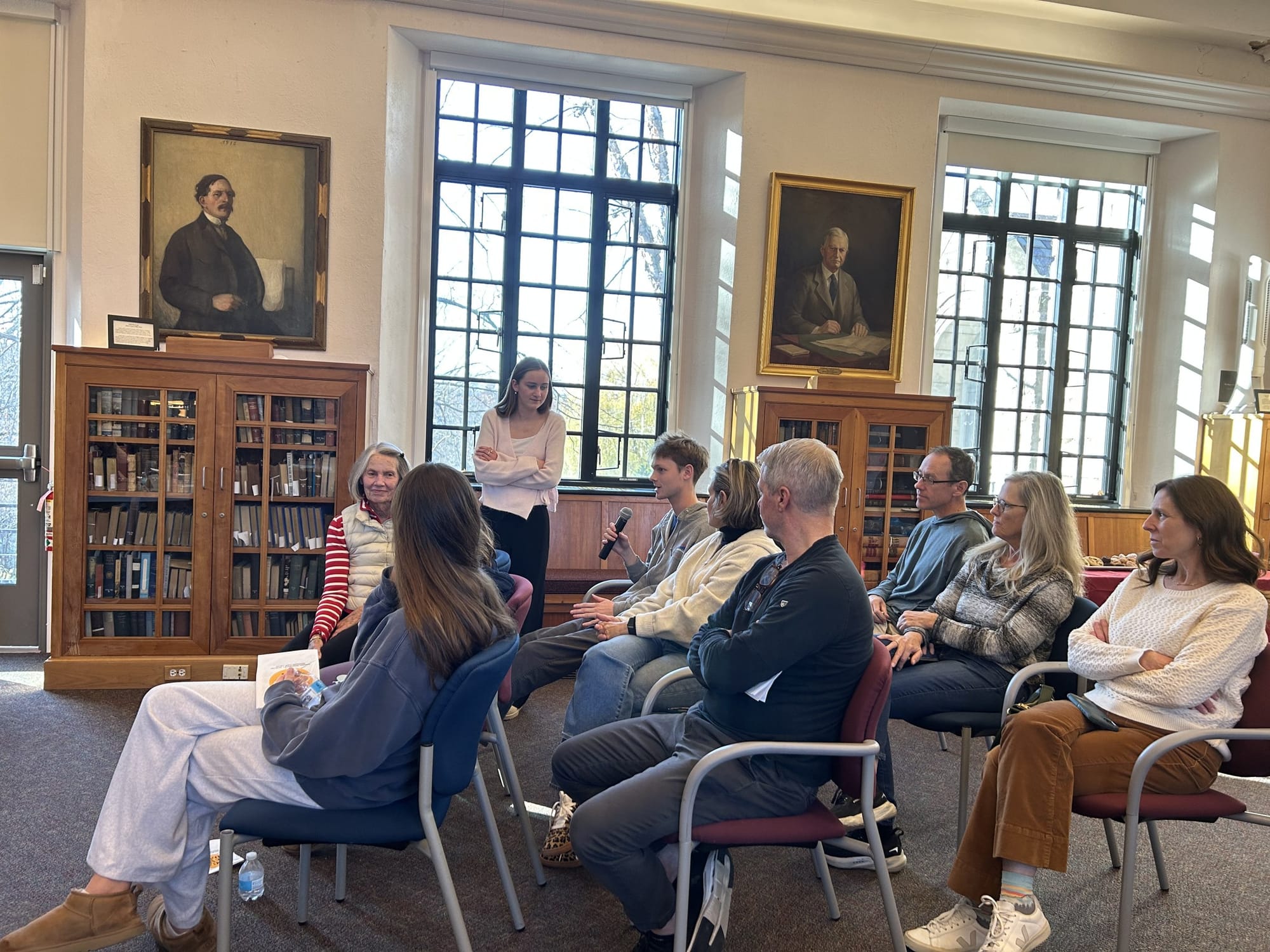
My teachers did the opposite. Penelope said journalism is full of older people willing to help younger writers. For me, those people were Mary Stoner and Susan Stempian.
When I told Grace afterward that she must be relieved the project was finally over, she corrected me: “Man, my project isn’t over.” Next, she wants to take news literacy into elementary schools, to children who still ask why about everything. Nobody has talked them out of it yet.
BEFORE YOU GO … Our reporting remains free and open to all. It is sustained by readers who choose to support it — by contributing so that routine, document-based local reporting continues without paywalls or promotional framing. Right now, 133 readers support The Marblehead Independent with monthly or annual contributions. Click here to become an Independent member.