Table of Contents
Get our free local reporting delivered straight to your inbox. No noise, no spam — just clear, independent coverage of Marblehead. Sign up for our once-a-week newsletter.
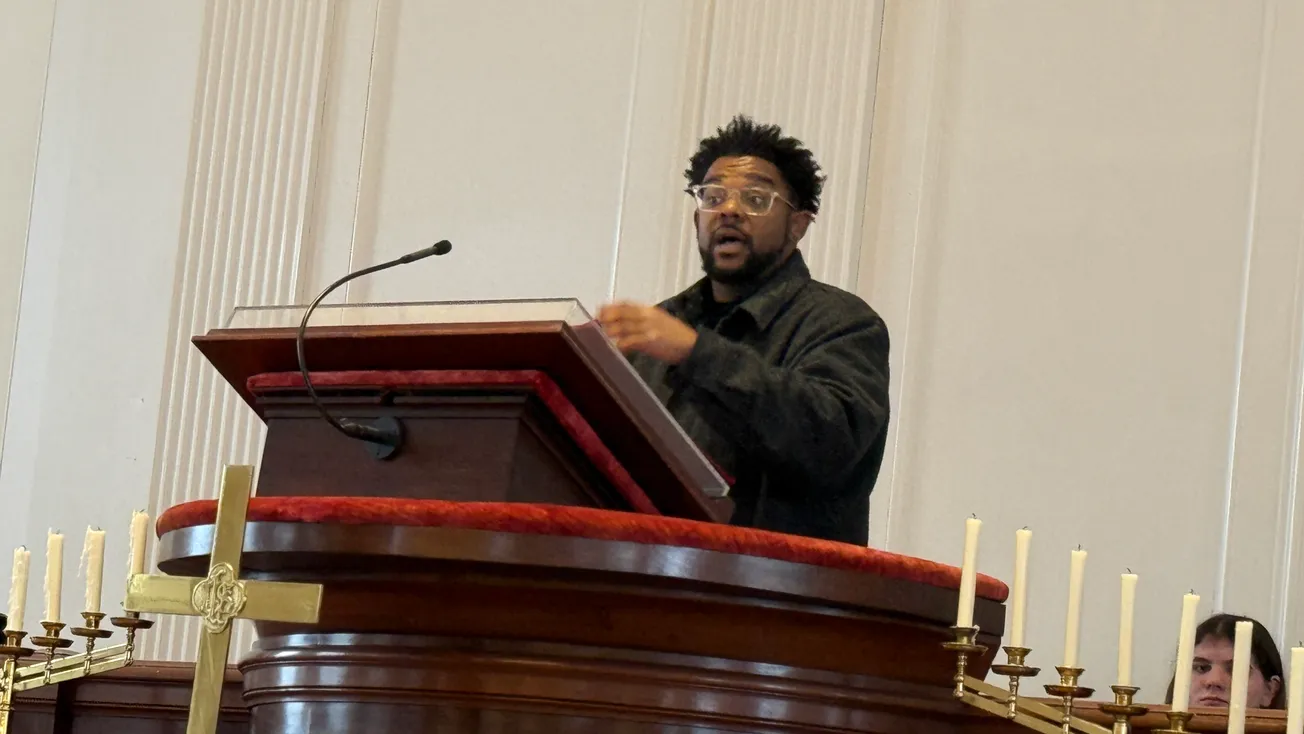
Winter light poured through tall windows at Old North Church as Brandon Mayes shifted between song and speech, his voice carrying across a full sanctuary. At the piano, Austin Marks responded line by line, building a live accompaniment as the morning unfolded into history, sermon and song.
History in harmony
The performance was part sermon, part history lesson, part reclamation of a soundtrack older than the Civil Rights Movement itself.
“These weren’t just songs,” Mayes told the crowd. “They were coded messages, spiritual armor and declarations of dignity.”
He sang fragments of “Wade in the Water,” then paused to explain how enslaved people encoded escape routes in hymns. He moved to “I Want Jesus to Walk with Me,” connecting the plea for divine companionship to marchers facing fire hoses in Birmingham, Alabama, in 1963. Between each spiritual, Mayes spoke about how Black Americans sang their resistance into existence long before Martin Luther King Jr. led protests through Southern streets.
The second annual Martin Luther King Jr. Community Breakfast drew 150 people the Washington Street church on Monday. The program mixed choral music, dramatic readings from King’s “Letter from Birmingham Jail” and a community dialogue about how Marblehead residents could respond to contemporary injustice. The Marblehead Racial Justice Team organized the event with six co-sponsors: the Marblehead Ministerial Association, Marblehead League of Women Voters, Marblehead Task Force Against Discrimination, Marblehead Alliance for Democracy, NAACP North Shore Branch and United Methodist Foundation.
Lou Meyi and Molly Blander, both with the Marblehead Racial Justice Team, welcomed attendees and explained the morning’s structure. St. Mary’s School Choir, directed by Mayes, opened the program with “Lift Every Voice and Sing,” inviting the audience to join. Voices wavered at first, then steadied as the choir carried the melody forward.
Words from Birmingham
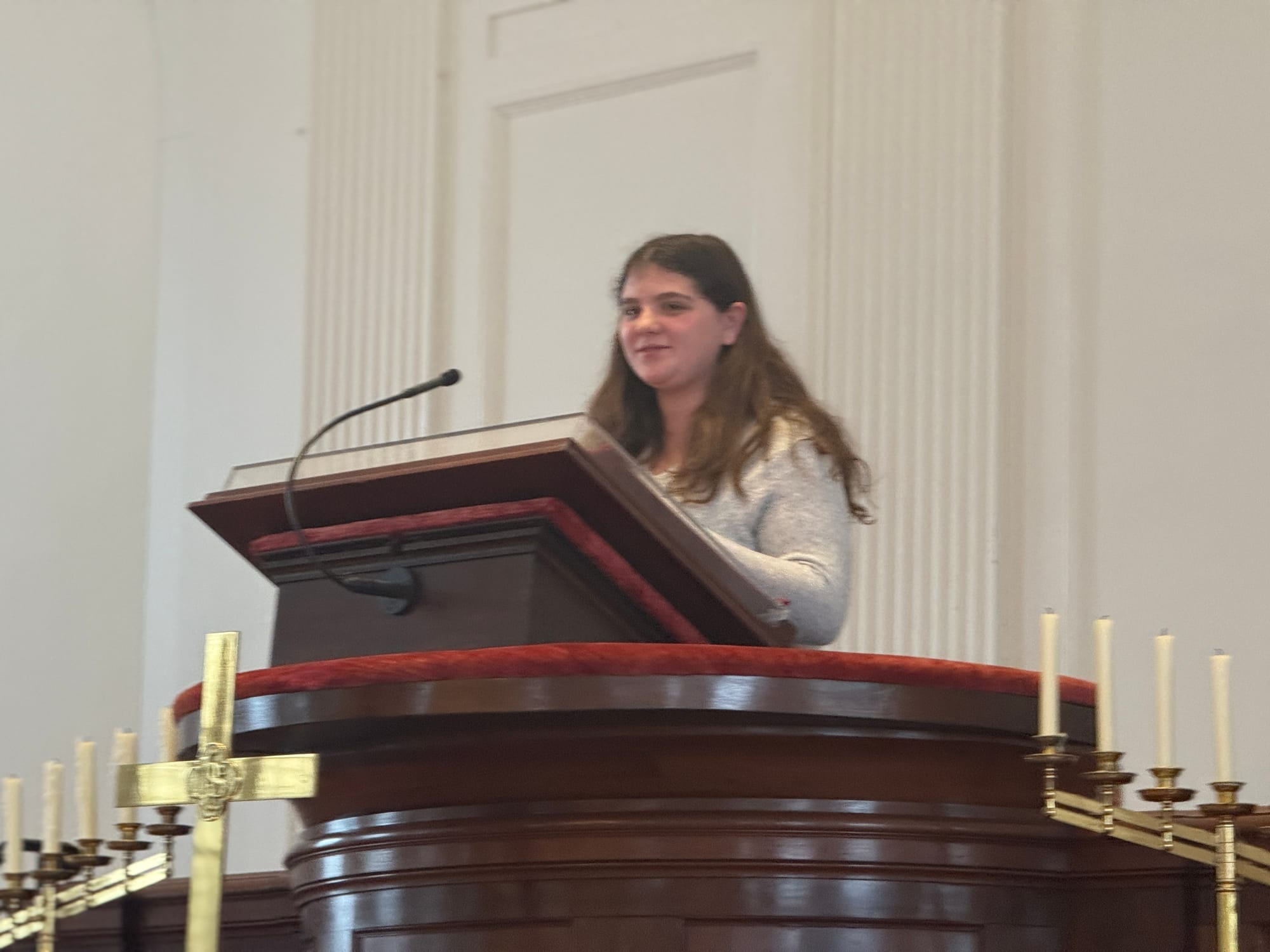
Seven readers took turns at the microphone: Theresa Peterson, Lynn Turner, Stephen Turner, Cyan Sueño, Jay Gould, Rebecca Axelrod, Greg Mancusi and Kathleen Coates. They delivered excerpts from King’s 1963 letter written from a Birmingham jail cell after his arrest for defying a court injunction against anti-segregation protests.
One reader spoke King’s words connecting Birmingham to Atlanta: “I am cognizant of the interrelatedness of all communities and states. I cannot sit idly by in Atlanta and not be concerned about what happens in Birmingham. Injustice anywhere is a threat to justice everywhere. We are caught in an inescapable network of mutuality, tied in a single garment of destiny. Whatever affects one directly, affects all indirectly.”
Another voice carried King’s critique of white moderates: “I must confess that over the past few years I have been gravely disappointed with the white moderate. I have almost reached the regrettable conclusion that the Negro’s great stumbling block in his stride toward freedom is not the White Citizen’s Counciler or the Ku Klux Klanner, but the white moderate, who is more devoted to ‘order’ than to justice; who prefers a negative peace which is the absence of tension to a positive peace which is the presence of justice.”
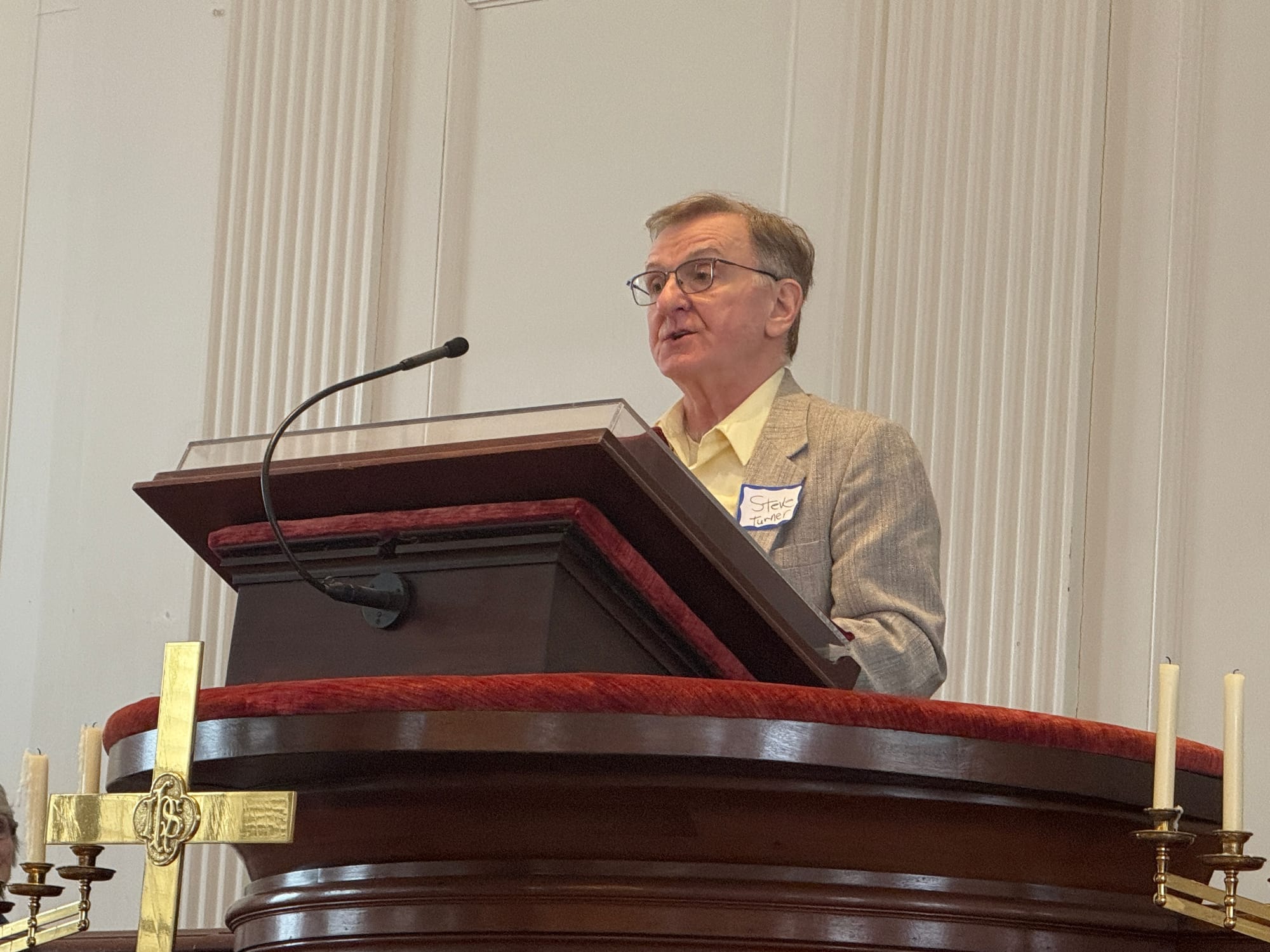
One of the most quoted passages followed: “We will have to repent in this generation not merely for the hateful words and actions of the bad people but for the appalling silence of the good people.”
After the readings, Donna Cotterell opened the floor for dialogue. An attendee referenced federal immigration enforcement actions and asked how Marblehead residents should respond.
“I think listening to those words, how would Martin Luther King approach in a non-violent way?” the woman said. “I feel in my heart for those people in Minneapolis in fear, for the threats about ICE action in Massachusetts.”
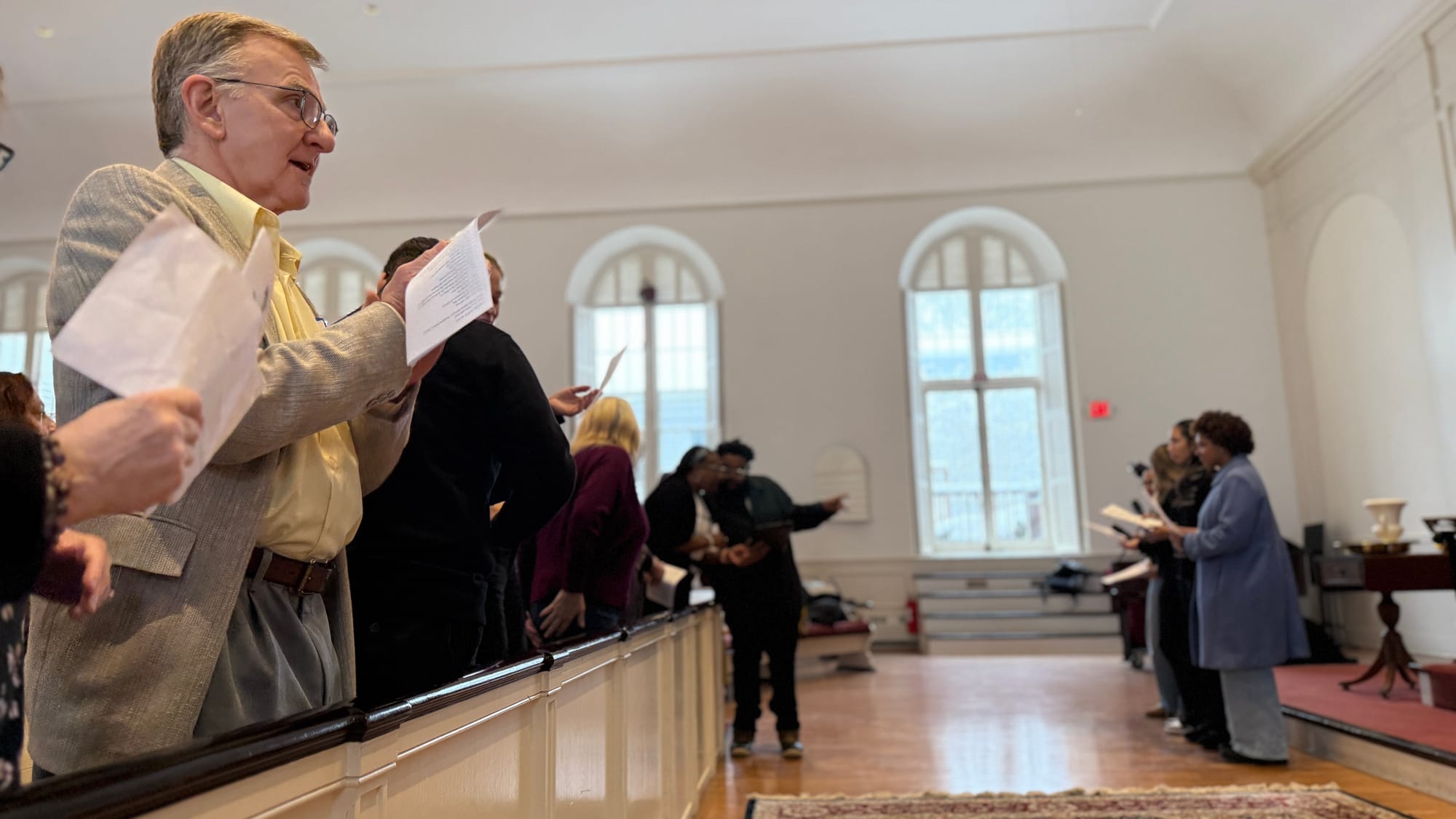
Another speaker compared immigration enforcement to Massachusetts Department of Children and Families interventions. “Massachusetts has 14,000 foster children, and people don’t know the truth,” the speaker said. “These are children forcefully taken from poor parents. Eighty-six percent is because of neglect. We need to stand up from poor parents like we are standing up from immigrants.”
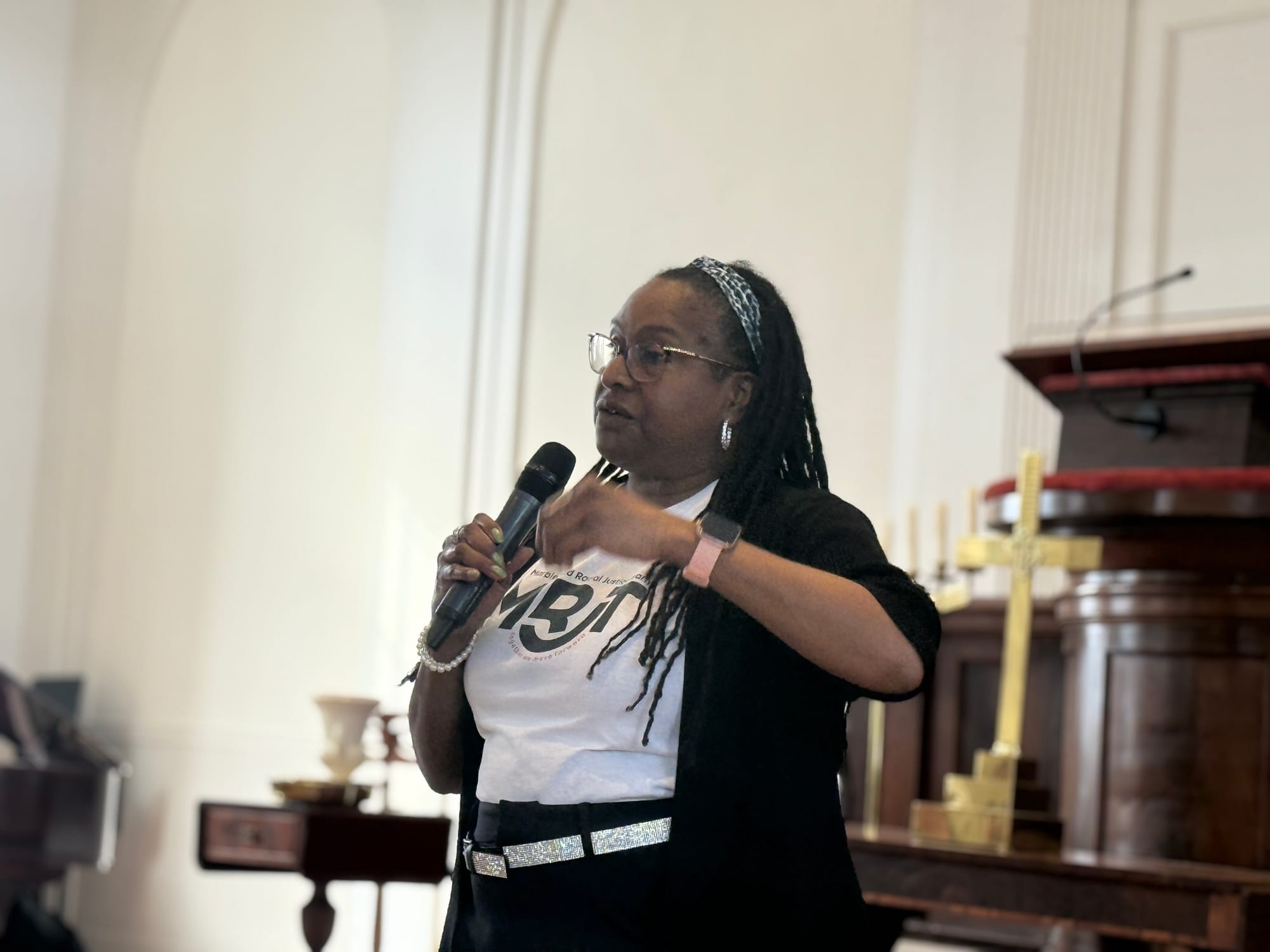
Kristin duBay Horton stood to deliver closing remarks. She addressed what she described as the disparate burdens of navigating daily racism.
“For the eight of us of color in this room, you all can just chill, because we’re doing it every day,” duBay Horton said. She recounted advising her daughter in Chicago to photocopy her passport, leave the original with white roommates and keep location services enabled. “For the rest of you who aren’t worried when you get pulled over, who don’t have to give your kids the talk… if you grew up with that privilege, you need to pick up the load.”
Dubay Horton explained that the establishment of Martin Luther King Jr. Day as a federal holiday transformed how she and her husband marked the date. When the couple first dated, they took the day off work to observe King’s birthday privately, even when employers did not recognize the holiday. “It made a huge difference in our lives when it became a national holiday,” duBay Horton said.
She said Marblehead’s history drew her family to the town, noting that the crew that rowed George Washington across the Delaware River was from Marblehead and included mixed-race sailors. “Marblehead has a long history of being one of the first places where freed slaves could own property and could live safely,” she said.
Ruth Ferguson was a senior in high school in East Long Meadow, when King was assassinated April 4, 1968.
“It happened in the evening,” Ferguson said. “It happened to be my mother’s 50th birthday.”
She learned the news via television. Her father worked in television, so the family always had it on. Her immediate reaction: “All of us stunned, of course, we were all upset. It was a very sad time.”
King’s death took on additional meaning for Ferguson when she married a legislative director for AFSCME New England. The American Federation of State, County and Municipal Employees represented the sanitation workers whose strike brought King to Memphis. “So the assassination of Martin Luther King has a number of different meanings to me,” Ferguson said.
Ferguson was 13 during the March on Washington. “I did not go, but I remember vividly watching it,” she said.
Asked what the turnout said about Marblehead’s character, Ferguson responded that “this town has a history of caring in general.” She acknowledged that every community has its history of discrimination but noted Marblehead’s Underground Railroad connections.
She referenced the book “The Crossing” about Washington crossing the Delaware, which mentions how Washington “had an issue with the Marblehead regiment because a lot of the other regiments didn’t want to camp near them, because they had too many black people.”
An inaugural award
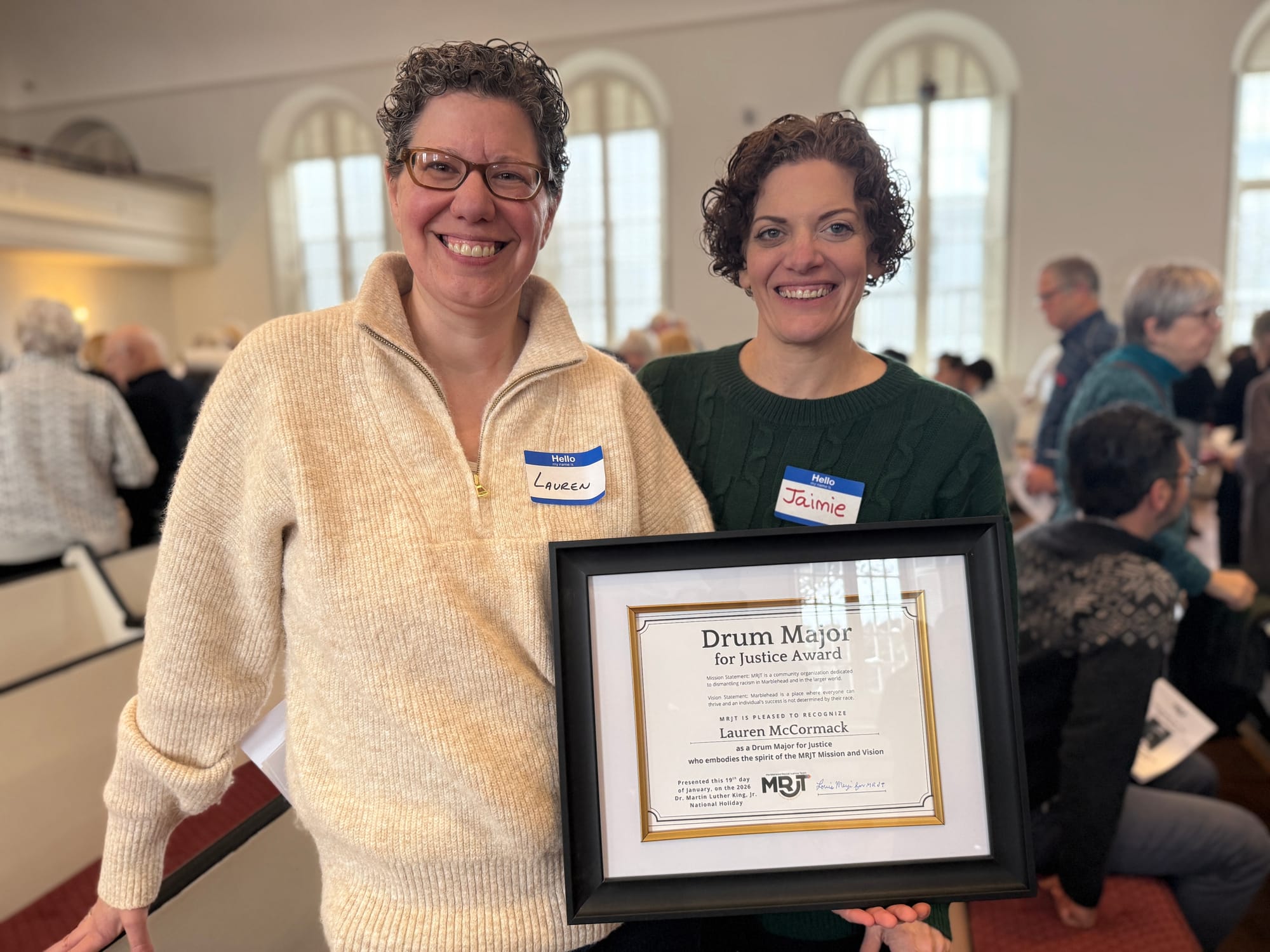
Meyi presented the Drum Major for Justice Award to Lauren McCormack, executive director of the Marblehead Museum since 2018. Meyi explained the title referenced King’s 1968 sermon imagining his own eulogy: “If you want to say that I was a drum major, say that I was a drum major for justice, say that I was a drum major for peace, say that I was a drum major for righteousness.”
Meyi cited McCormack’s work expanding the museum’s documentation of Marblehead residents of color, including exhibits on Lucretia Thomas Brown, Joseph Brown and the family of Jeremiah Lee’s enslaved workers. McCormack also hosted the Marblehead Racial Justice Team’s monthly Conversations on Race series when the library closed for renovation.
The program closed with “We Are a New and Unsettling Force,” a 2018 song from the National Poor People’s Campaign. Voices filled the sanctuary one last time, singing words about building power from below and refusing to wait for change to arrive on its own.