Table of Contents
EDITOR'S NOTE: Salem State University did not permit local news media to attend former President Barack Obama's Sept. 21 appearance, citing security concerns. The university posted video of the full conversation on its YouTube page Friday, Sept. 25. This story is based on that recording.
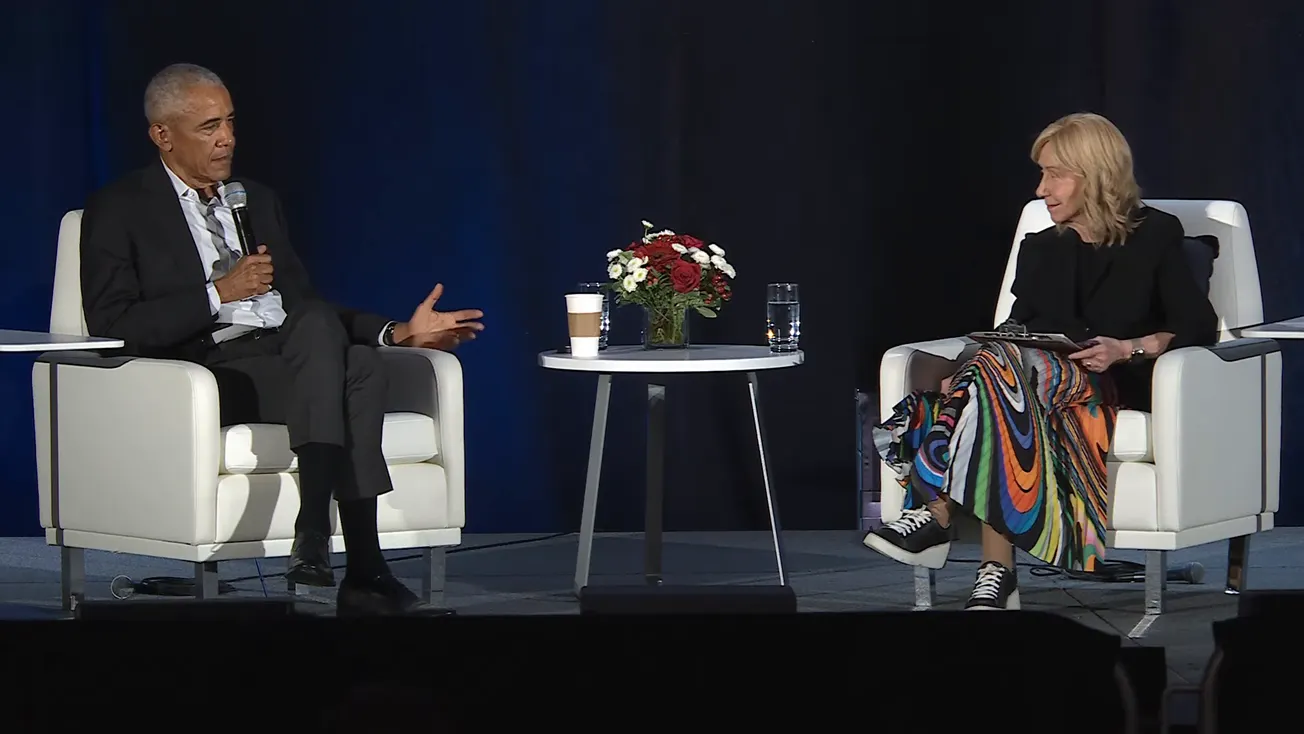
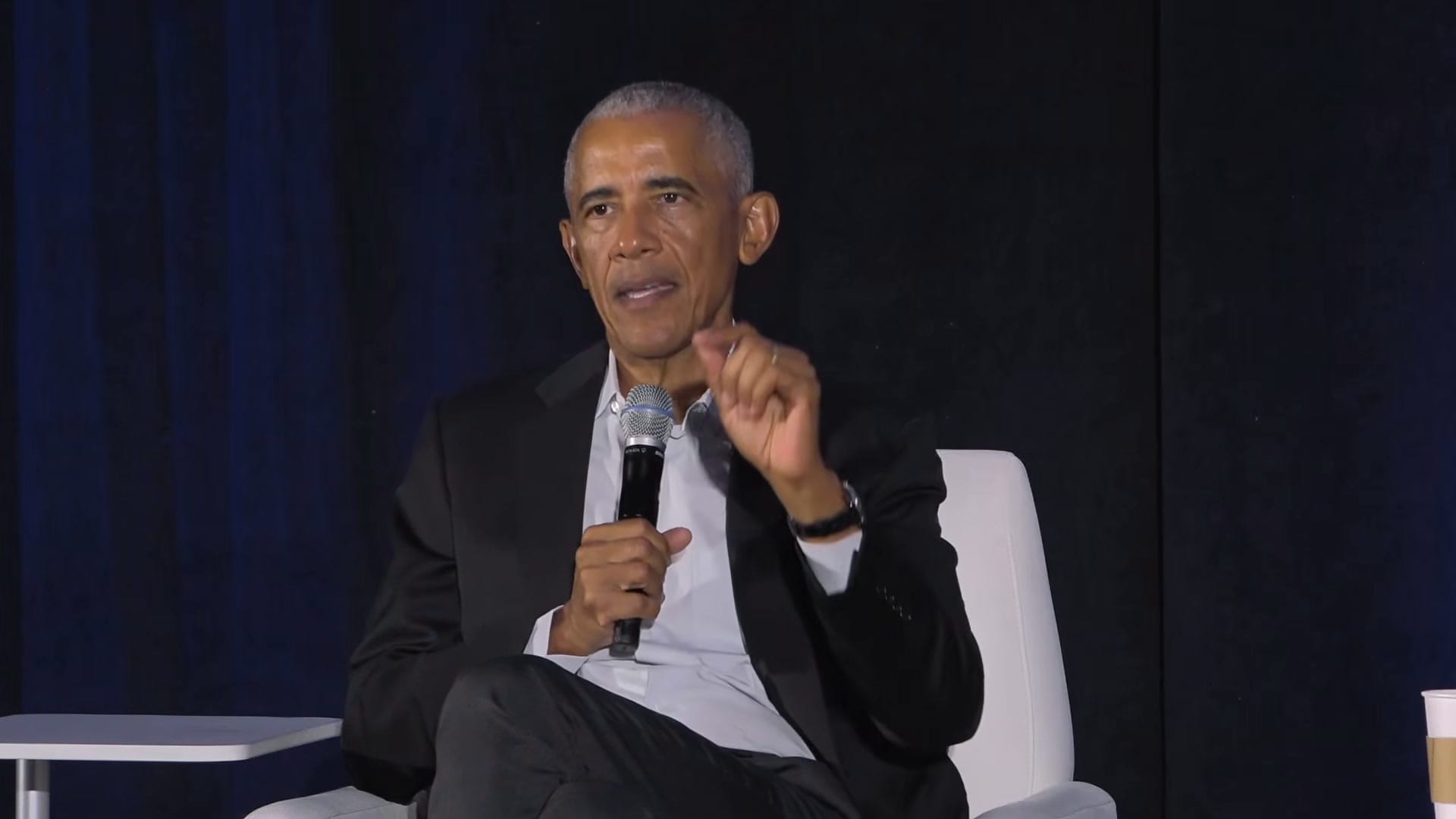
Former President Barack Obama crossed his legs in a white armchair, a paper coffee cup and a vase of red roses on the table beside him, and began with the view from the plane: the moon out over Salem, boats still in the harbor, "and it was just spectacular."
"I owe this state a lot," he said. "I owe the people here a lot."
The debt runs back to a July night in 2004, when Obama, an Illinois state senator few Americans had heard of, delivered the keynote address at the Democratic National Convention in Boston. On Sept. 21, facing presidential historian Doris Kearns Goodwin, he described that night as the product of a media world that no longer exists.
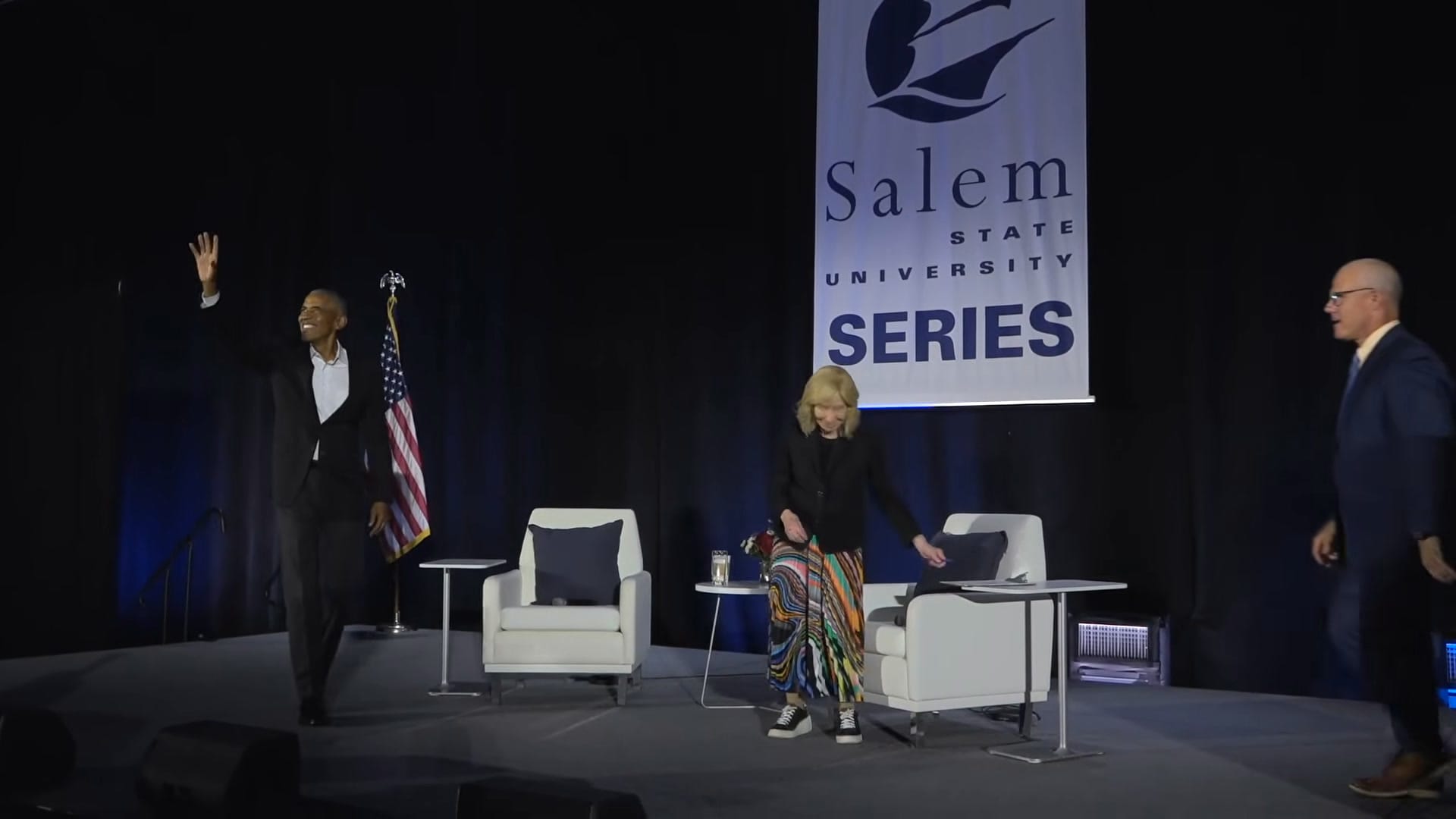
Their conversation, part of the Salem State Speakers Series, packed about 3,600 people into the sold-out O'Keefe Sports Complex at Salem State University, with hundreds of students, faculty and staff watching from the Sophia Gordon Center for Creative and Performing Arts. Obama is the fifth former president to headline the series, founded in 1982, after Gerald Ford, Jimmy Carter, George H.W. Bush and Bill Clinton.
"I know why everybody is here, so I will be brief," Salem State University President John Keenan said in his introduction.
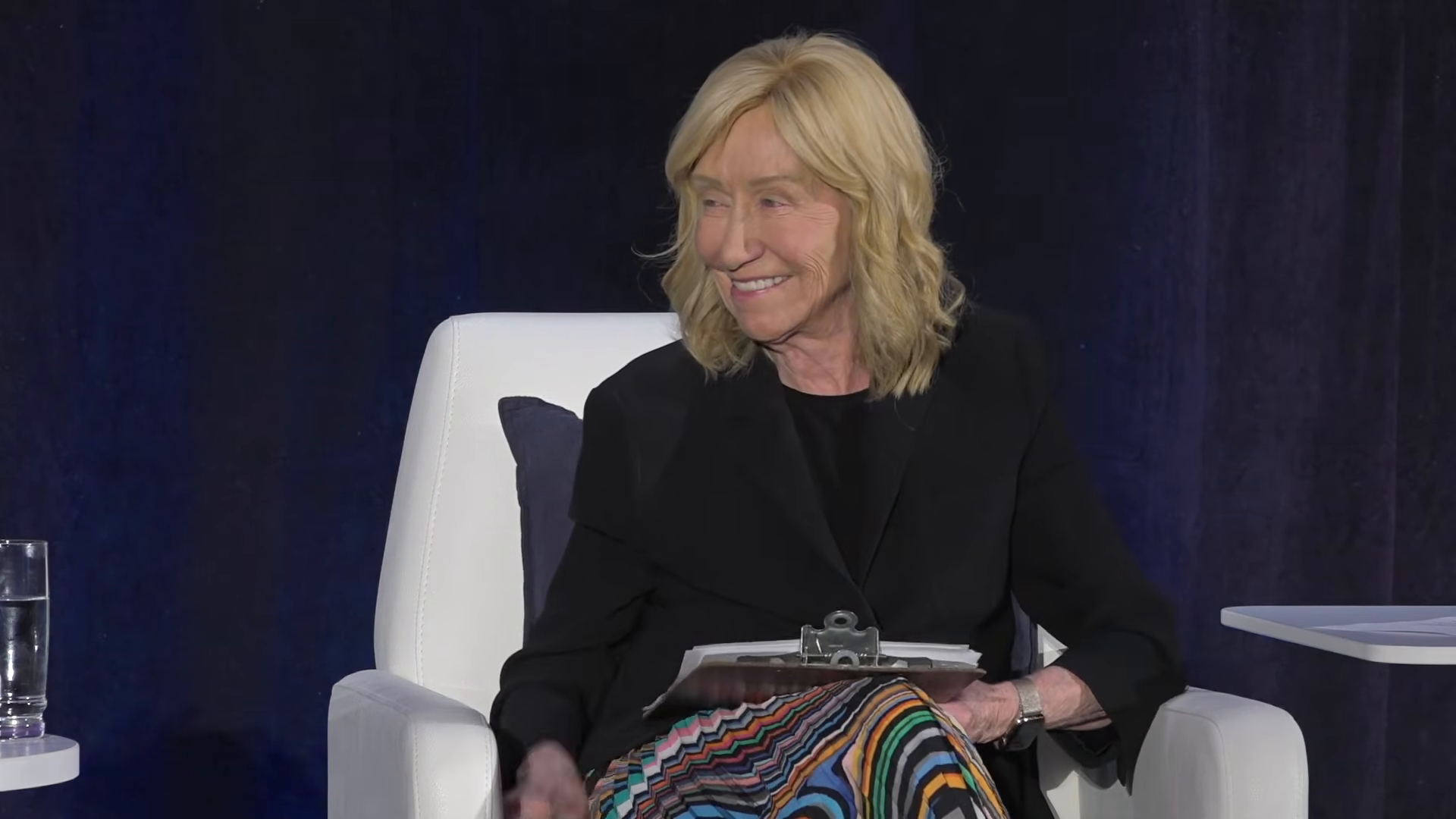
Goodwin, a clipboard in her lap, started with Boston. Obama said months of driving Illinois with paper maps — "you could never figure out how to fold it back up," he told the students — to fish fries and Veterans of Foreign Wars halls in conservative towns far from his Chicago district had already "confirmed my instinct that people were people."
Small-town crowds swell overnight
What the speech changed was the audience. In 2004, Obama said, the country still shared a media "monoculture," and perhaps 35 million or 40 million people watched him at once.
"Cable already existed, so we're not that old," he said.
The effect was immediate. "One day I could walk on the street, and then the next day, I couldn't," he said.
A post-convention RV tour planned for crowds of about 500 drew whole towns. His daughter, Malia, the president recalled, looked out the window and asked, "'Daddy, what are all those people doing?'" His communications director, Robert Gibbs, reached for "Jaws": "I think we need a bigger boat."
The man in that footage, Obama said, barely looked old enough to shave. "I cannot believe y'all ended up voting for me for president," he said. "I mean, I look like a baby."
Now, he said, the reality of someone reading The New York Times is "entirely foreign" to someone watching Fox News, and bridging that gap will matter more as artificial intelligence and deepfakes spread.
When Goodwin asked where he finds hope, Obama pointed to one side effect of studying the past: it "cures you of nostalgia."
"Yay for history!" Goodwin said.
Americans are less divided on the ground than their politics and media suggest, Obama argued, calling the polarized noise "in part, manufactured for a variety of interests." He renewed his call to end the Senate filibuster and recalled the stickers his chief of staff, Denis McDonough, printed for the White House. They read, "Fight cynicism."
Obama predicts court will reject ban
Goodwin then turned to the week's news: "the president's recent banning of CNN and Politico and MS Now."
President Donald Trump announced Sept. 18 that he was barring CNN, MS NOW and Politico from the White House over what he called "fake news." Their reporters' passes were seized the next day. The outlets sued Sept. 21, alleging First Amendment and due-process violations, and ABC, CBS, NBC and Fox News suspended White House pool coverage in solidarity. Justice Department lawyers argued the outlets' reporting endangered national security.
"I am not surprised that the current president wants to ban newscasts that are critical of him because he's that guy," Obama said.
What bothered him more, he said, was that no "substantial group of Republicans" had objected, even though a future Democratic president could turn the same power on Fox News. He called the other networks' decision to stop sending cameras "the appropriate response."
Citing his years teaching constitutional law, Obama predicted the ban would fall in court, even before judges Trump appointed. "This is kind of textbook," he said.
Early Sept. 24, U.S. District Judge Timothy Kelly, a Trump appointee, issued a 14-day temporary restraining order restoring the outlets' credentials, finding they were likely to succeed on their due-process claim. Reporters from all three were readmitted that day. The case continues, and Trump has said he would appeal any unfavorable ruling.
Obama's own White House once tangled with Fox. In October 2009, emails later showed, his aides asked the Treasury Department to leave Fox News out of pool interviews with pay czar Kenneth Feinberg. The administration relented after the other networks refused to participate without Fox.
Letters arrive in purple folder
The presidency, Obama said, seals a person off. His answer was paper. The White House received about 40,000 letters and emails a day, and he asked staff to pull 10 representative ones for him to read, delivered in a purple folder.
Some laid out monthly budgets that didn't work despite full-time jobs. A young Syrian refugee praised the food, especially pizza. Children lobbied for a law against homework. One father, in Obama's retelling, opened with "Mr. President, I generally think you're an idiot," then thanked him for showing up at his daughter's basketball games, a reminder to make time for his own family.
The letters now hang in an exhibit at the Obama Presidential Center in Chicago. "I start tearing up when I see them," he said.
The center's museum opens not with Obama but with the Declaration of Independence, a choice he tied to his belief that "politicians typically follow; they don't lead."
Asked to name the series' next speaker, Obama suggested Michelle Obama "because she's better than I," though not right after him, or "people be like, 'Why do we bother with him?'" He floated Pope Leo XIV, noting the pope is a White Sox fan.
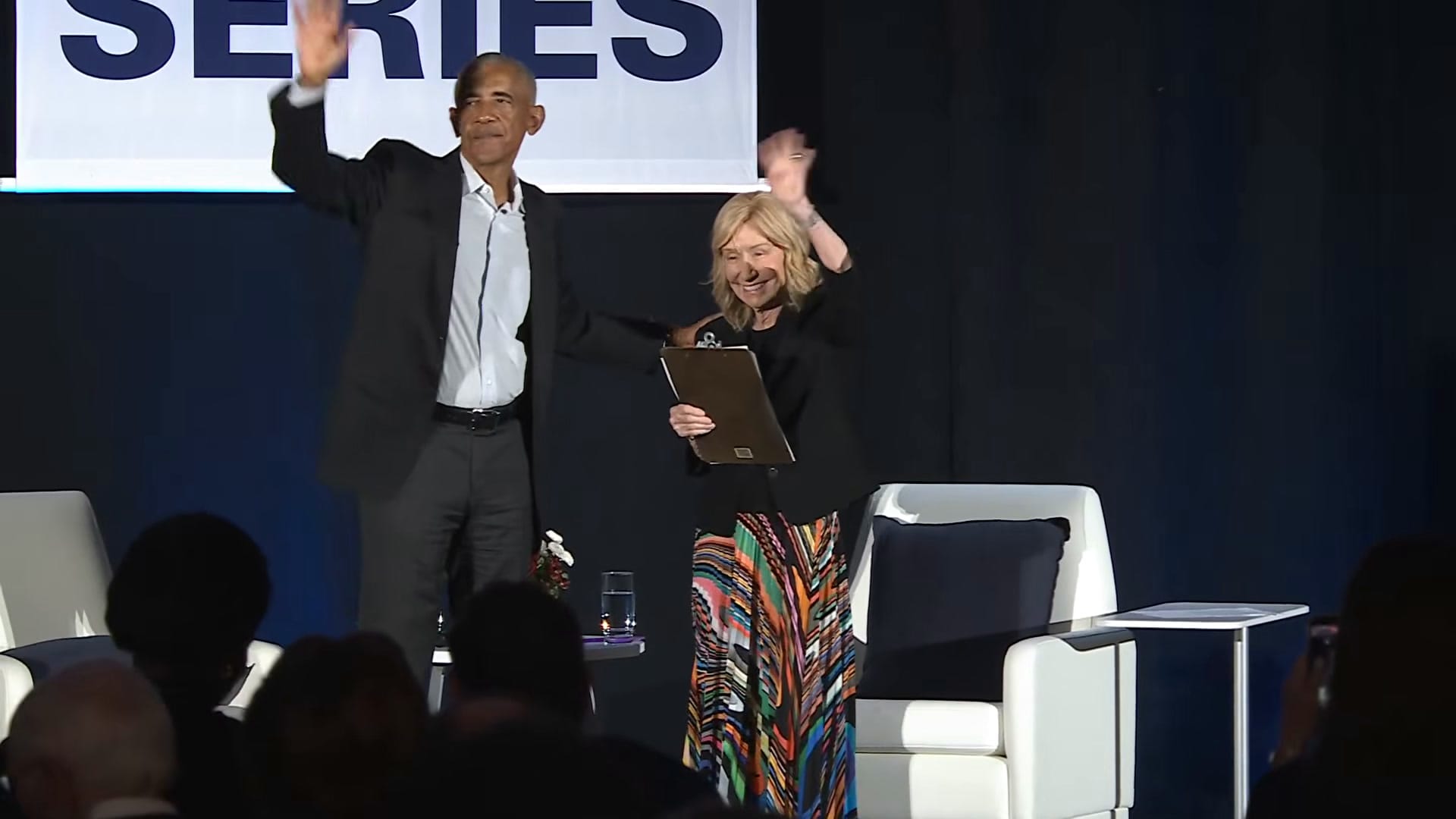
Then he turned serious. He urged the series to hand the microphone to younger voices and warned about "old men clinging to power" who fear "irrelevance and death." What people are starved for at the moment, he said, is "the ability to tell a moral and ethical story about how we live together in this moment."
"All right, I got to get out of here," he said.
Goodwin had one more line, and it came with a local accent: "You're wicked smart, as we'd say in Boston."