Table of Contents
Get our free local reporting delivered straight to your inbox. No noise, no spam — just clear, independent coverage of Marblehead. Sign up for our once-a-week newsletter.
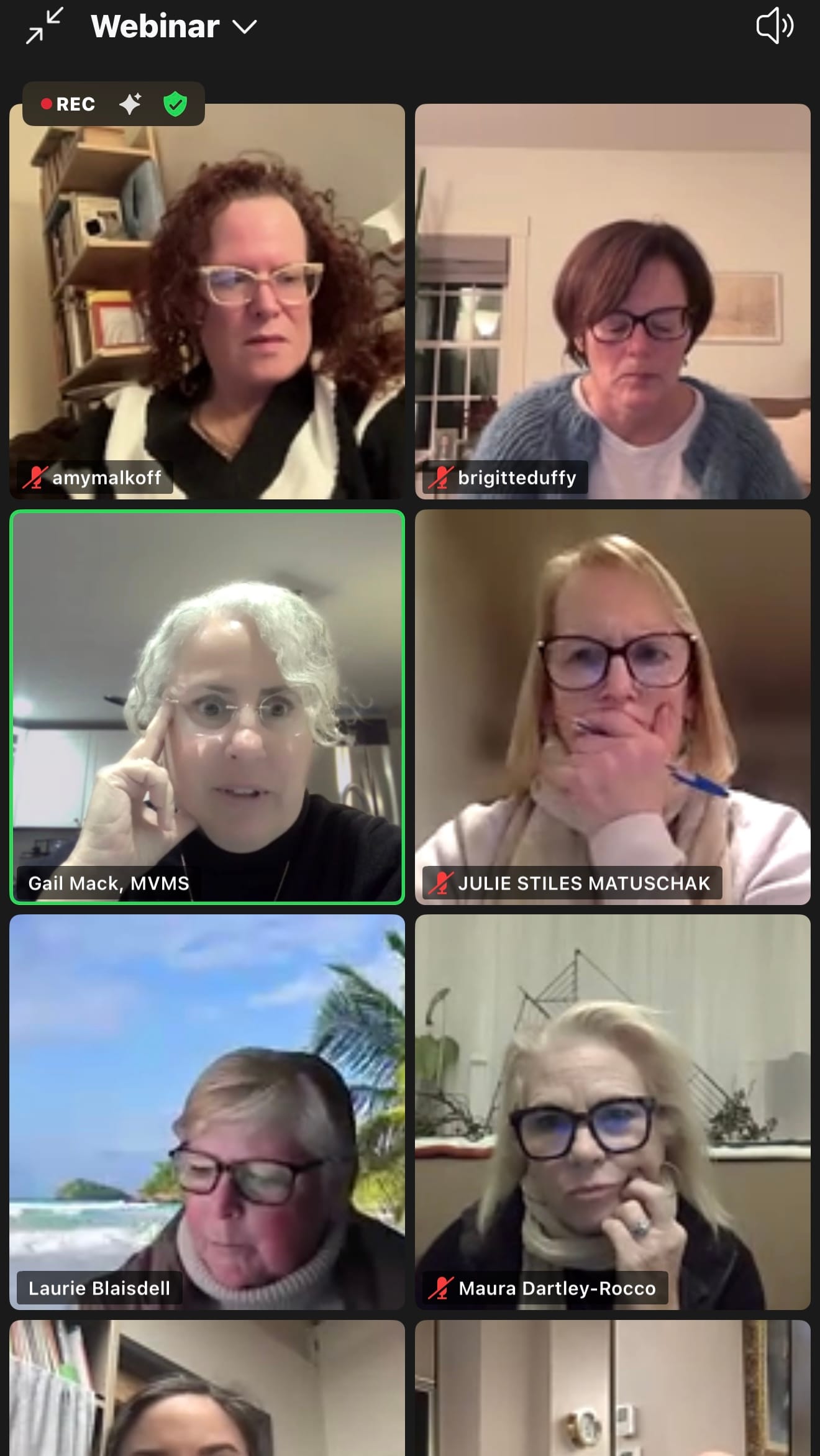
Town Administrator Thatcher Kezer and Building Commissioner Stephen Cummings told the Disabilities Commission on Wednesday that Marblehead has begun to make measurable progress on Americans with Disabilities Act compliance since completing its ADA Self-Evaluation and Transition Plan in 2023 but warned that the scale, cost and complexity of the remaining work will require years of sustained capital investment, careful prioritization and public support.
The update came during a virtual commission meeting focused on how the town is translating the findings of the ADA Self-Evaluation and Transition Plan — a comprehensive inventory of physical, digital and administrative barriers — into completed projects and future capital planning.
Kezer said the town’s capacity to address ADA issues improved significantly after Cummings assumed responsibility last summer for both inspectional services and oversight of municipal facilities, a role that had been fragmented for years.
“Officially, July 1 of last summer, [he] picked up that role,” Kezer said. “Since that time, the number of projects that we’ve been doing has grown exponentially. The projects we’re getting done — most are, all of them are coming in at or below budget.”
Cummings, who serves as building commissioner and superintendent of buildings, said ADA compliance is now embedded into facility work rather than treated as a separate obligation.
“When we’re working on facilities, the ADA compliance is implicit into any of the work that we’re doing,” Kezer said.
You’re able to read this work free because 81 Marbleheaders make it possible through monthly and annual contributions — and we endeavor to reach 100 members by Jan. 31 to keep this journalism strong. Click here to become an Independent member.
Findings show multimillion-dollar scope
The ADA Self-Evaluation and Transition Plan, completed in July 2023, audited 18 municipal buildings, 27 outdoor facilities and townwide digital and administrative practices. While the plan does not publish a single consolidated cost total, the itemized estimates across buildings, parks, playgrounds, beaches and cemeteries clearly place full compliance in the multimillion-dollar range.
For municipal buildings, most individual fixes are relatively modest but accumulate across facilities. Documented examples include an estimated $21,800 in accessibility upgrades at the Animal Control building, $25,150 at the Municipal Offices and Garage and $81,050 at Oko’s Building, where the largest cost driver is a proposed elevator estimated at $50,000 to provide vertical access between floors.
Outdoor facilities represent the largest share of projected ADA costs. The plan estimates $166,100 in improvements at Gatchell Playground, driven largely by a $50,000 playground resurfacing and extensive regrading to create accessible routes. Other playgrounds show similar patterns, including $81,850 at Gerry Playground and $118,300 at Orne Playground.
Recurring outdoor cost drivers include playground resurfacing, often estimated at about $50,000 per site; construction of accessible routes over grass, gravel or sand; regrading steep terrain; and retrofitting spectator seating and amenities.
“These sites represent the largest share of total projected ADA costs,” the plan notes, particularly because many lack any accessible route.
Recent accomplishments
Commission Chair Laurie Blaisdell pointed to Devereux Beach as a major recent success. Using a Massachusetts Office on Disability grant, the town installed Mobi-Mats to create accessible routes to the water, expanded access around the playground and upgraded restroom access.
“That was a big accomplishment,” Blaisdell said, crediting Cummings with leading restroom and ramp improvements. She noted that repainting accessible parking spaces at the beach is expected to be completed this summer.
Kezer also highlighted improvements to digital access, particularly the town website, which underwent multiple vendor transitions before landing with its current host. He said the core site is now accessible and readable but acknowledged continuing challenges with how public meeting notices are posted.
“The challenge we’ve had is the posting of meetings,” Kezer said. “What needs to change … is the electronic postings of meetings need to be a readable PDF document.”
He said scanned paper notices posted as images lack searchable text and are not readable by screen readers, a deficiency flagged in the ADA plan’s communications audit.
Mary Alley renovation a priority
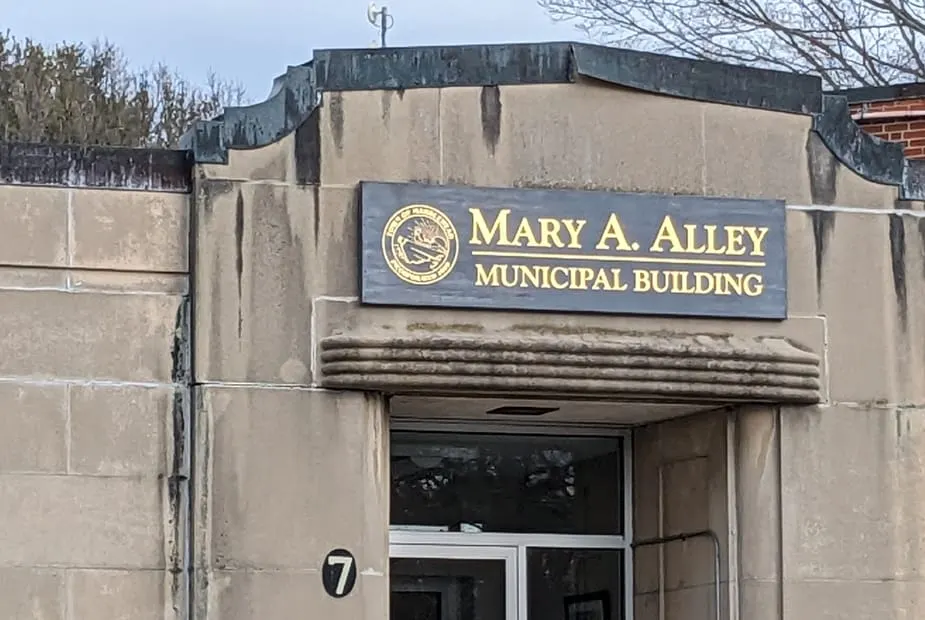
Much of the meeting focused on future projects, especially a major renovation planned for the Mary Alley Municipal Building, one of the town’s most frequently visited facilities at 7 Widger Road.
“One of the components of the project is the lower level where the meeting conference room is,” Kezer said. “The project is to redo that whole end of that wing to turn it into a legitimate public meeting venue.”
Cummings said the renovation will include fully ADA-compliant restrooms, improved entrances, reworked interior routes and upgrades to the building’s elevator, addressing multiple deficiencies identified in the ADA audit. The building audit estimates more than $20,000 in ADA-related fixes at Mary Alley, including regrading exterior routes, rebuilding ramps and correcting parking slopes, separate from broader renovation costs.
“There’ll be two accessible routes into the lower level,” Cummings said. “We’re creating three bathrooms in the conference room area.”
Kezer said the project is in final design, expected to go out to bid by the end of February, with construction potentially beginning in May.
Sidewalks, crosswalks and curb cuts
Beyond buildings, Kezer and Cummings outlined progress on sidewalks and curb cuts through the town’s Complete Streets program. The ADA plan identifies widespread noncompliance in sidewalks and crossings, with many curb ramps exceeding allowable slopes or lacking tactile warning surfaces.
“We’re allocating several $100,000 specifically to bring in all our crosswalks up the grade, up to ADA compliance,” Kezer said, noting that the town has hundreds of crosswalks and that work will take years to complete.
Small fixes, training gaps
Commission members raised concerns about smaller but persistent accessibility issues, including a water bottle filler protruding into the sidewalk at State Street Landing without cane-detectable protection.
“There may be some very small items that make a big impact,” Cummings said. “Like a cane tap on a bubbler — easy to accomplish.”
The ADA plan also identified uneven staff training and awareness across departments, recommending standardized ADA training and clearer internal procedures. Blaisdell said issues like the State Street fixture illustrate why training remains critical.
Funding remains the central challenge
Kezer also addressed hearing access at Town Meeting, particularly after meetings moved to the high school field house.
“We will work to secure … equipment for anybody who needs that,” Kezer said, explaining that the town plans to rent professional audio equipment and offer assistive listening devices upon request, with information posted on a dedicated town meeting webpage.
Kezer cautioned that future progress will depend heavily on funding as the town prepares its fiscal 2027 budget amid declining free cash.
“It’s going to be ugly,” he said. “When we come up with a balanced budget, it will decrease our capacity to do most of everything we just talked about.”