Table of Contents
Get our free local reporting delivered straight to your inbox. No noise, no spam — just clear, independent coverage of Marblehead. Sign up for our once-a-week newsletter.
Marblehead’s municipal light department held a nearly two-hour strategic planning session Tuesday to prioritize infrastructure investments over the next 24 months, with officials identifying utility-scale battery storage, overdue system maintenance and the future of the town’s aging diesel generation plant as top concerns.
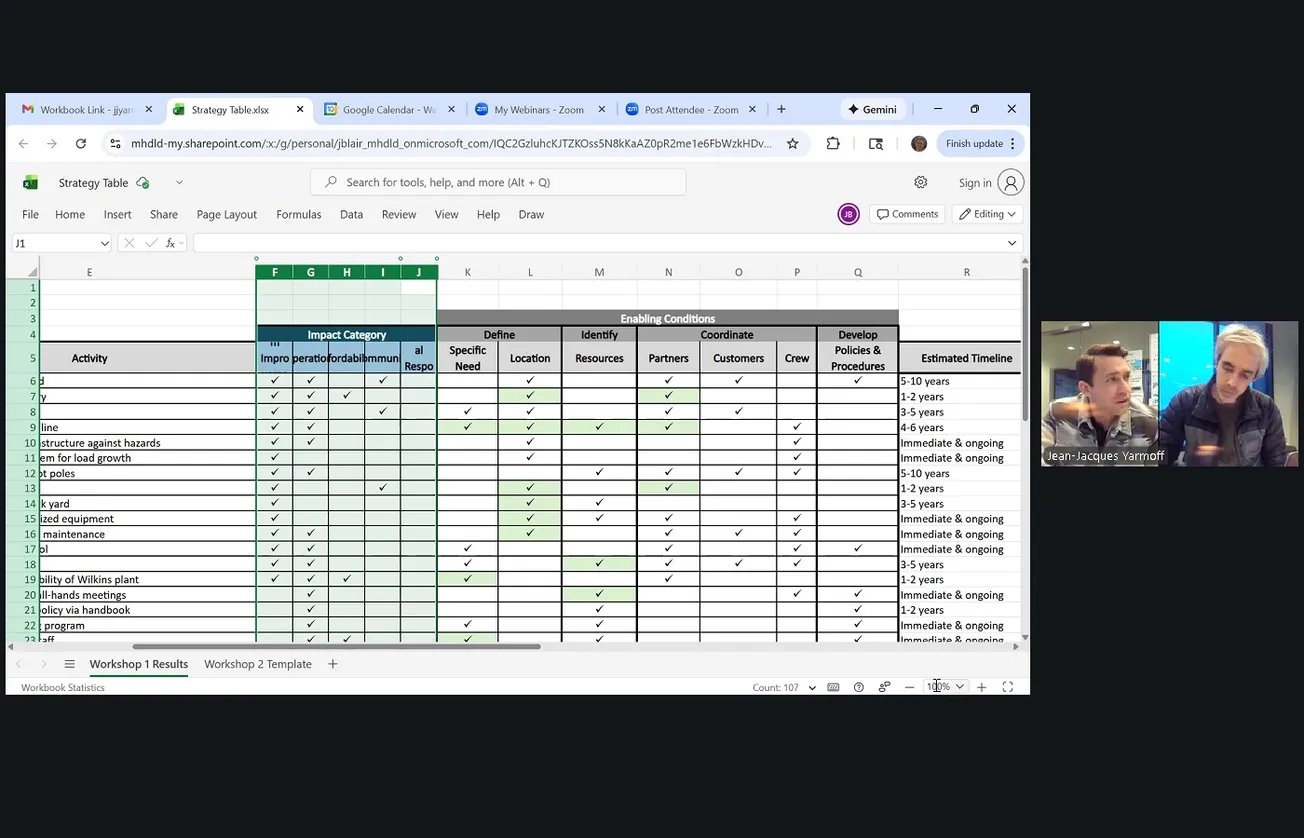
The Feb. 10 meeting brought together board members and department staff to evaluate more than 50 potential projects distilled from a list of over 130 items compiled from earlier workshops and board discussions. Light Commission Chair Jean-Jacques Yarmoff said he and Jonathan W. Blair reviewed all output from a previous meeting and consolidated the list into a more manageable format organized by category. Blair outlined a screening framework assessing each project across impact categories — system reliability, customer affordability, environmental responsibility and community development — along with enabling conditions like defined need, available resources and timeline.
Right now, 101 readers support The Marblehead Independent with recurring monthly or annual contributions, helping us keep doing this work as fiscal 2027 decisions come into view. This reporting turns up records into context you can actually use before votes are cast. Click here to become an Independent member.
Battery storage deemed high priority
The group designated the department’s first utility-scale battery storage project as a near-term, high-priority item. Blair described the wholesale electricity market structure as one where the department’s proportional demand relative to other customers in its transmission region determines its cost obligation.
“If we do nothing, and everybody else around us is installing batteries, we’re going to end up losing,” Blair said.
The department expects to sign the energy storage services agreement within two weeks. Blair said the project should be achievable within the two-year window and noted that once the first battery is commissioned, the department should immediately begin evaluating additional storage options. He said he expected battery duration to extend more rapidly than prices would fall for current four-hour lithium-ion technology, pointing to emerging eight- to 24-hour systems.
A microgrid concept to protect critical town facilities generated debate but landed as a low-priority, long-range item. Blair questioned whether the investment was warranted given existing backup generators and ongoing transmission hardening work.
Wilkins plant raises safety, financial concerns
The Wilkins generating plant, which houses two 2.5-megawatt diesel generators dating to 1975, drew considerable discussion. A department staff member described the facility’s control systems as temperamental, noting that operators must monitor two engines simultaneously using a panel that displays data for only one at a time.
Blair said the department had missed recent revenue opportunities because equipment failures prevented the plant from responding when dispatched by the grid. He estimated the net financial benefit of participating in the capacity market at roughly $20,000 in a good year.
Blair outlined a potential path: invest enough to make the plant safe and reliable, withdraw from the forward capacity market — an obligation he said could be unwound in about 18 months — and shift the generators to behind-the-meter peak shaving. He noted that the financial picture for a five-megawatt peak-shaving asset was projected at about $1 million in annual savings, potentially transforming the facility from a marginal earner to a significant cost-reduction tool. He also recommended building a decommissioning fund.
Infrastructure and stockyard priorities
The commission rated undergrounding distribution wires as a low near-term priority given complexity and cost — Yarmoff noted the expense runs several million dollars per mile — but acknowledged strong public interest and agreed to pursue community outreach and engineering assessments.
Backyard poles, which serve an estimated 200 to 500 ratepayers through lines running along backyard property boundaries, received 13 votes in the earlier workshop, making it the second-highest-scored item. Blair described the access challenges and suggested a phased approach: acquire better equipment for near-term maintenance while studying longer-term solutions.
Consolidating the department’s scattered stockyard into a single sheltered facility also earned near-term, high-priority status. Blair described a vision for a large metal structure with drive-through access, shelving for hardware and containment for oil-filled transformers. Yarmoff noted added urgency because yard space at one location was being displaced by the battery storage installation.
Rates, demand and workforce concerns
The group bundled dynamic rates, the Wilkins strategy and battery storage into a peak demand management sub-plan. Blair cautioned that seasonal patterns complicate rate design, noting January electricity sales had reached summer-level volumes because of heating demand that runs around the clock and cannot easily be shifted. Summer peaks reach 32 to 33 megawatts compared with roughly 20 in winter.
One board member flagged earlier survey results showing 55% of staff reported feeling good about their jobs, calling it a concerning figure. The materials do not specify when the survey was conducted, the total number of respondents or how the question was worded. Blair said the department planned to repeat the survey and cited the strategic planning process itself as one effort to strengthen staff engagement.
The commission adjourned shortly after 6 p.m. and plans to continue the discussion at a meeting scheduled for two weeks later.