Table of Contents
Get our free local reporting delivered straight to your inbox. No noise, no spam — just clear, independent coverage of Marblehead. Sign up for our once-a-week newsletter.
For 21 years, Marblehead voters approved new schools, seawalls and fire trucks while turning down nearly every request to raise taxes for the work that runs underneath them — the salaries, the services, the day-to-day operations of the town. They funded what they could see and touch. They balked at the rest.
On Tuesday, that pattern broke, and not by a hair.
With all six precincts reporting, voters approved Question 3, a $15 million operating override and the largest of three competing tiers on the ballot, 54.3 percent to 45.7 percent, 4,278 to 3,594. It is Marblehead's first operating override since 2005 and, at more than five times the size of the $2.73 million measure approved that June, by far the largest the town has ever passed.
Voters also backed the two smaller operating tiers — Question 1, a $9 million increase, with 66.7 percent, and Question 2, a $12 million increase, with 61.9 percent. But the three were competing, not cumulative: only the highest-dollar question to pass takes effect, and Question 3's approval makes the other two moot. The wider margins on the smaller tiers showed how much support narrowed as the price climbed.
Separately, voters approved Question 4, a $2.3 million override for curbside trash, recycling, yard waste and disposal, with 67.4 percent, 5,326 to 2,580 — the most lopsided result of the night. It keeps trash collection funded through the tax levy rather than the per-household fee officials had floated as the alternative.
Taken together, the two surviving questions — the $15 million operating override and the $2,298,575 trash override — add more than $17.3 million in permanent taxing capacity to a town that had not approved a general operating increase in more than two decades.
What it costs a household
Town materials estimated the $15 million override would add about $1,538 a year to the tax bill on a median home valued at $998,600, phased in over three years and reaching the full amount by fiscal 2029. The first year's increase was pegged at roughly $430, building from there. The two smaller tiers would have cost the median homeowner less — about $919 a year under the $9 million option and $1,230 under the $12 million — which is part of why their yes margins ran higher.
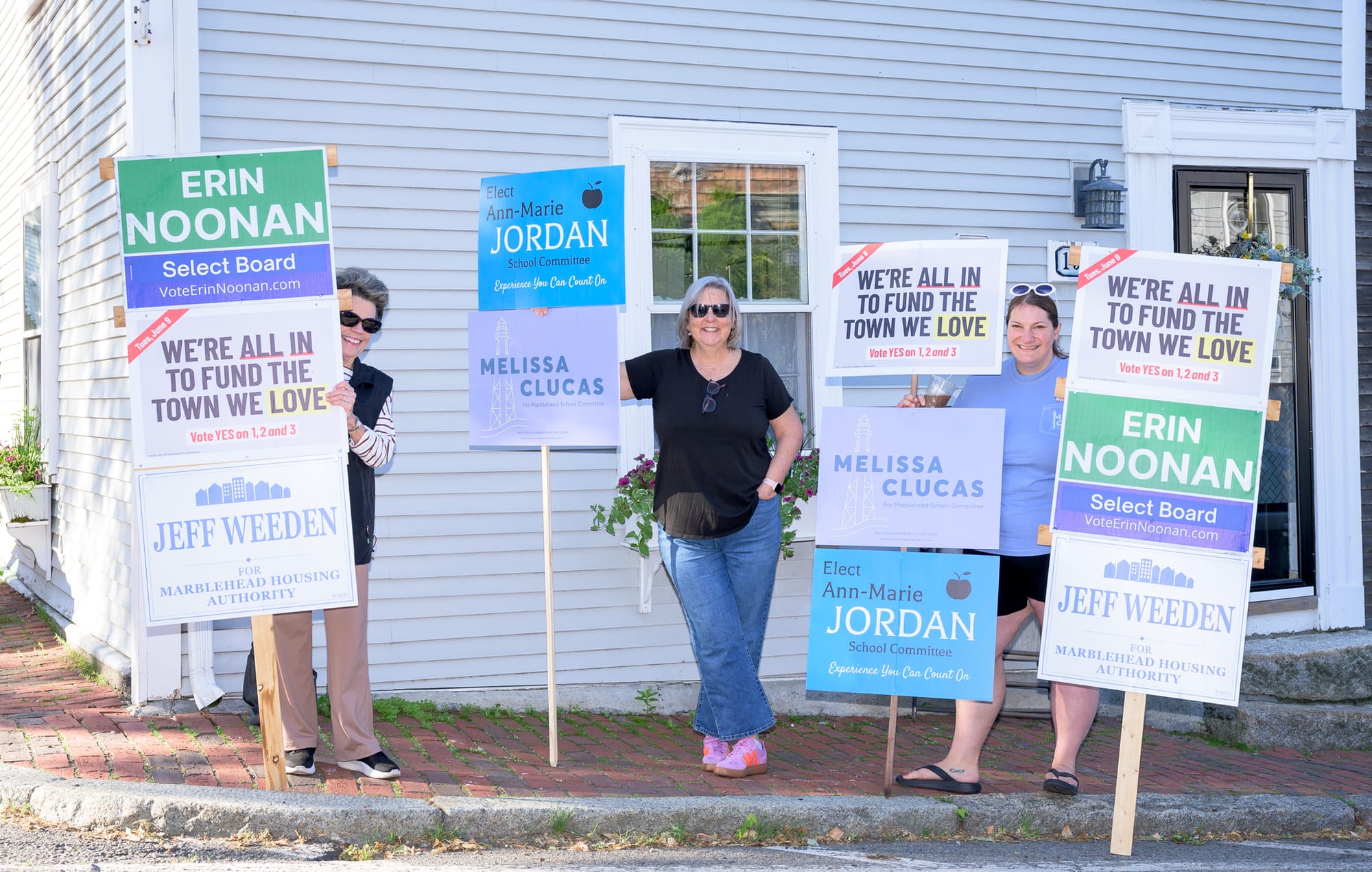
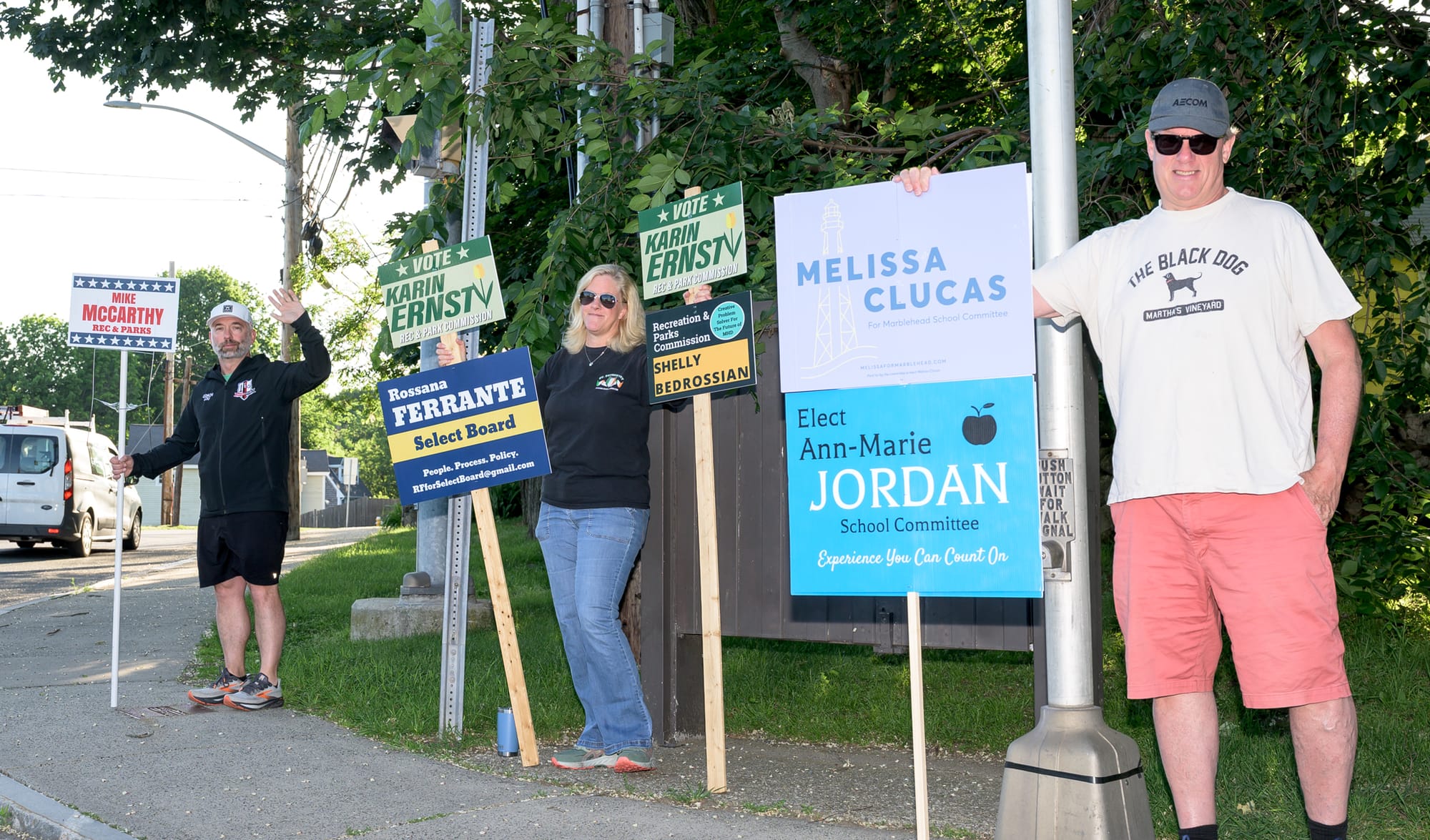
Opponents put the number far higher. Better Way Marblehead, the committee that campaigned for a no vote on Questions 1, 2 and 3, worked the sidewalks outside the polls with signs reading "$7,500+ per household every three years, forever." The gap between the town's roughly $1,500-a-year estimate and the opposition's figure was never reconciled in public, and it framed much of the spring debate: supporters described a manageable annual increase, opponents a permanent and compounding burden.
Opponents of the override effort said they remain concerned about the long-term impact on taxpayers.
"Better Way Marblehead remains very concerned that the ramifications of this override will not be fully recognized by taxpayers for a few years and will negatively impact Marblehead residents who may already struggle with affordability," spokesperson John DiPiano said.
Tuesday outcome cut against four decades of Marblehead history. Since Proposition 2½ took effect in 1982, town voters have approved 68 of 84 debt exclusions for capital projects — an 81 percent pass rate — but only three of 21 operating overrides, according to a Marblehead Independent review of every ballot question in that span. The last operating override passed June 15, 2005. The two most recent attempts, in 2022 and 2023, both failed.
The starkest rejection came June 15, 2010, when voters were handed 10 override questions and rejected all 10, casting 21,065 yes votes against 37,027 no — a wipeout that arrived 18 months after the financial crisis.
Officials and former finance leaders have long traced the divide to a single distinction: voters trust a request they can pin to one thing. "Debt overrides are transparent, specific and directly accountable," Select Board member Moses Grader, a former Finance Committee chair, said in the run-up to the vote. "Operating budgets are generally not as clear. Too many discretionary components. Less accountability around why increases are happening." Jack Buba, another former Finance Committee member, put it more bluntly, calling debt exclusions "an end run around Prop. 2½" that let voters fund buildings while withholding money from the budgets those buildings generate.
What changed this year was the size of the gap officials said they were staring at. Chief Financial Officer Aleesha Benjamin projected a structural shortfall of roughly $7 million in fiscal 2027, widening to $11 million in fiscal 2028 and $15 million in fiscal 2029. The current $128 million budget leans on $7 million in one-time free cash to cover recurring costs. Town Administrator Thatcher Kezer has said health insurance alone rises 15 percent to 17 percent a year, against the 2.5 percent annual levy growth Proposition 2½ permits. Trash collection costs are projected to climb $800,000 to $1 million in fiscal 2027 alone — the pressure behind Question 4.
“The comprehensive, long-term override that voters approved today was made possible through unprecedented collaboration,” Vice Finance Committee Chair Molly Teets. “We now have a shared responsibility to our residents to continue working together to ensure every tax dollar is managed thoughtfully, efficiently and in a way that delivers the greatest benefit to our community.”
She added, “I look forward to being a part of it.”
'For the first time in 21 years'
Matt Hooks, co-chair of For Marblehead, the committee that campaigned for the override, said the result stunned even its backers. "We're blown away," he said. "For the first time in 21 years, Marblehead said yes to a general override and did so at a level that truly addresses our long-term financial challenges and makes meaningful investments in our future."
Hooks said the work was not over. Residents were making real financial sacrifices, he said, and the new money "needs to be properly monitored and stewarded." Some residents, he added, would need help absorbing the override's cost — an acknowledgment that the same $1,500-a-year increase that reads as manageable for some households lands harder on others, particularly older residents on fixed incomes.
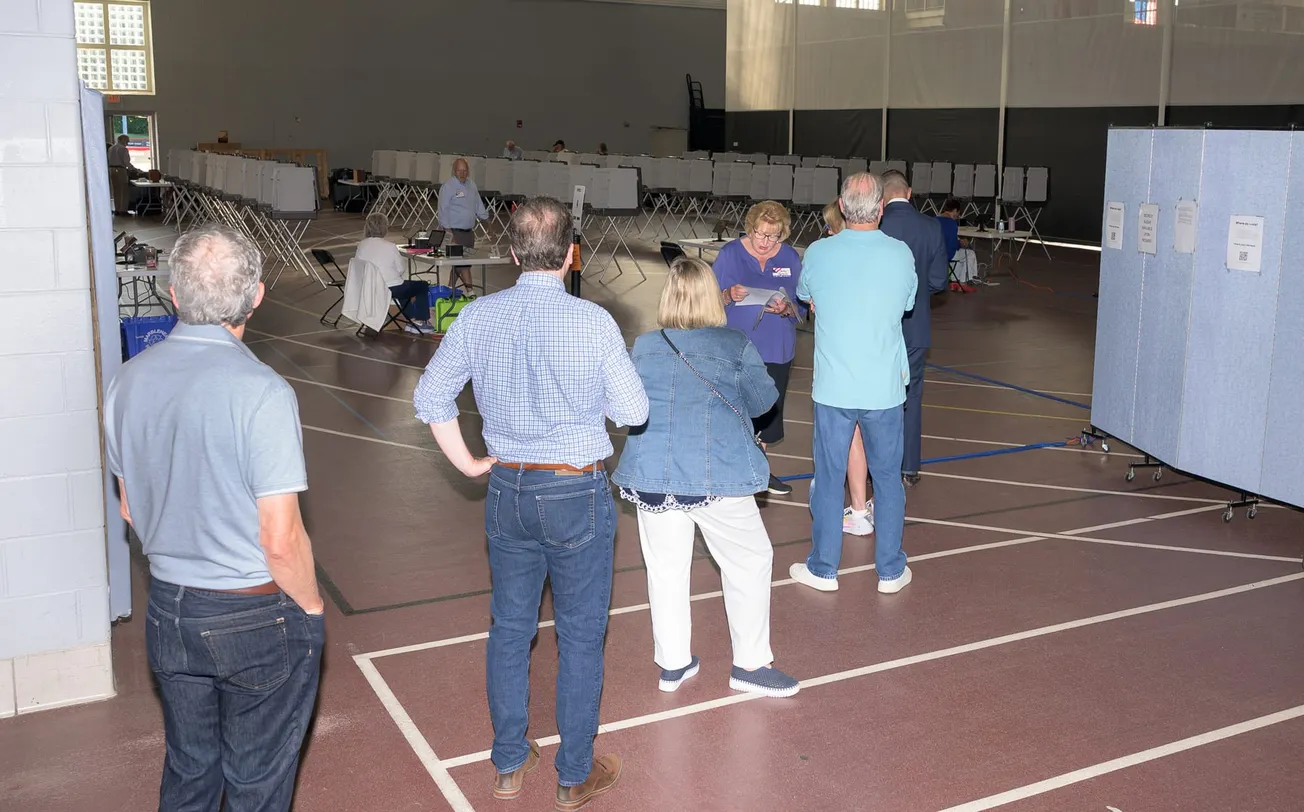
Turnout ran heavy. A total of 8,092 ballots were cast, or 47.5 percent of the town's 17,040 registered voters — well above the 39.7 percent who turned out in 2025 and higher than any annual town election in the Independent's records dating to 2006. The override did not slip through on a light turnout; it carried with more residents watching than in any recent year.
The decision now moves from voters to town officials, who will build the coming year's budget around the new levy capacity. In a joint statement, Kezer and Benjamin thanked residents who "took the time to review, research, and carefully consider" the questions and said the vote reflected "a commitment to investing in the community." They returned to the theme of trust that ran through the campaign. "We are humbled by the trust that voters have placed in the Town's leadership," they said. "With that trust comes a responsibility to continue operating with transparency, accountability, and fiscal discipline."
That is the test the vote leaves behind. For 21 years, Marblehead agreed to borrow for the things it could see — schools, seawalls, fire trucks — while refusing to raise the levy for the salaries and services that keep them running. On Tuesday, by 684 votes, it changed its mind, and handed its officials both the money and the burden of proving the doubters wrong.
Reporting and writing provided by Chris Stevens, a Marblehead Independent stringer, Sophia Harris, editorial director at Essex Media Group, and columnist Brenda Kelley Kim.