Table of Contents
Get our free local reporting delivered straight to your inbox. No noise, no spam — just clear, independent coverage of Marblehead. Sign up for our once-a-week newsletter.
On the second floor of Marblehead Little Theatre, costume racks and busy wardrobe crew circle director Alex Dietrich like the layered disguises her characters will soon inhabit. But Dietrich’s mission for “A Little Night Music,” opening next Friday, Jan. 23, is the opposite of artifice. She seeks what she calls “the liminal space” between opera and musical theater, between comedy and melancholy, between the masks people wear and the truths they finally speak. In Stephen Sondheim’s elegant 1973 musical, set during Sweden’s luminous midsummer, couples paired with the wrong partners converge for a weekend where desire, regret and timing finally come due.
“A Little Night Music” arrived at a pivotal moment in Sondheim’s career. Fresh from the conceptual world of “Company,” the composer found Hugh Wheeler’s book adaptation of Ingmar Bergman’s 1955 film “Smiles of a Summer Night” confining.
“He couldn’t find a concept for it,” Dietrich explained during the interview, surrounded by costume racks.
A mentor challenged him, she said: “You need to write a score worthy of this great book.”
Sondheim’s answer, Dietrich said, was to compose almost entirely in waltz time (three beats per measure, creating a lilting, circular rhythm), giving the show what the New York Times called “a celebration of 3/4 time” that created a flowing, circular feeling of people orbiting each other emotionally.
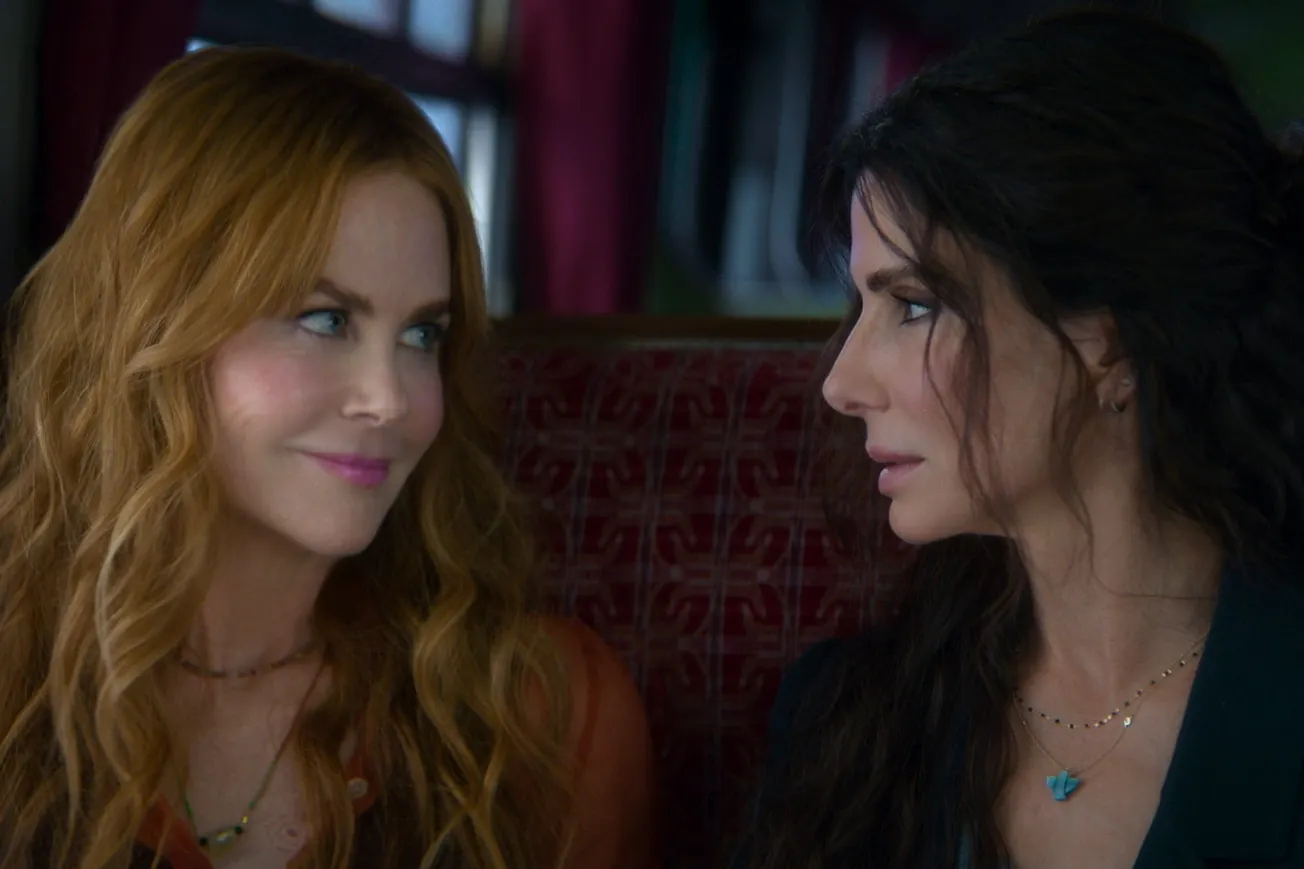
The plot follows Fredrik Egerman, a lawyer whose marriage to young Anne remains unconsummated after 11 months. When he reconnects with Desiree Armfeldt, a former lover and actress, romantic complications ensue. Everyone converges at the country estate of Desiree’s mother, Madame Armfeldt, for a weekend where secrets cannot stay hidden and Fredrik’s son Henrik harbors dangerous feelings for his stepmother.
You’re able to read this work free because 81 Marbleheaders make it possible through monthly and annual contributions — and we endeavor to reach 100 members by Jan. 31 to keep this journalism strong. Click here to become an Independent member.
For Dietrich, a mezzo-soprano who performed in the show in her 20s, returning to “Night Music” at 40 carries profound personal resonance. This is not her first encounter with Sondheim’s demanding work. She has directed “Into the Woods” and “Sweeney Todd,” and performed in “Company,” building a deep relationship with the composer’s intricate scores.
“I was afraid that I was not yet ready to let it breathe like that,” she said of returning to “Night Music.” “I hadn’t lived enough life to return to it.”
The show’s thematic architecture rests on Madame Armfeldt’s observation that the summer night smiles three times: for the young who don’t know better, for the fools who think they know everything and finally for the old who have learned from their mistakes.
“And then the third smile is death,” Dietrich noted.
The grandmother character, she explained, teaches her granddaughter that people live, make mistakes, think they’ve learned from those mistakes — but only truly understand when the cycle completes.
The production’s design concept emerged from Dietrich’s desire to position the audience as intimate observers rather than entertained guests.
“I wanted the audience to feel like they were looking through a garden hedge and they just happened to be seeing either into someone’s house or into someone’s life or into someone’s yard,” she explained.
The set features plants and grass at the bottom, overhanging branches and flowers at the top, framing the show’s action.
“It’s almost like you’re looking through a picture frame,” she said. “It’s like this is all its own encapsuled world.”
This voyeuristic framing allows the language to do the heavy lifting.
“There’s no jokes thrown to the audience,” she said. “There’s no, I call it schmacting, but like dumbing down the words. It’s letting the words speak.”
Dietrich’s casting philosophy prioritizes authenticity and lived experience. The company ranges from 12-year-old Ida Pelikhov as young Fredrika Armfeldt to Sue Brother in her 70s as Madame Armfeldt.
“I wanted everyone to be close to the age of their character,” she said. “It’s more to let the audience fully believe that who they’re looking at is who they’re looking at. No one’s wearing old age makeup. No one’s pretending to be a kid.”
“I have a big quest for truth,” she explained. “I like to see people with lived experience play real characters.”
She pivoted to what makes MLT exceptional.
“Not every community theater can do Sondheim,” Dietrich acknowledged, noting the score’s complexity with its shifting time signatures and waltz-based structure demands musicians as much as actors.
But the effort serves a larger purpose, she said: “I think it highlights the best of Marblehead Little Theatre. I think we have so much incredible talent. I think we also have so much we can do in our space that people don’t know is possible.”
The rehearsal process departed from convention.
“For this show, I staged more of the show before they learned the music,” Dietrich revealed.
The cast spoke Sondheim’s lyrics as dialogue before singing them. She cited Sondheim’s famous attention to diction in master classes: “He will catch things like the sounds that letters make,” she said. “If you elide two of the similar two letters that are side by side. He’s like, ‘I placed it twice and I want two sounds.’”
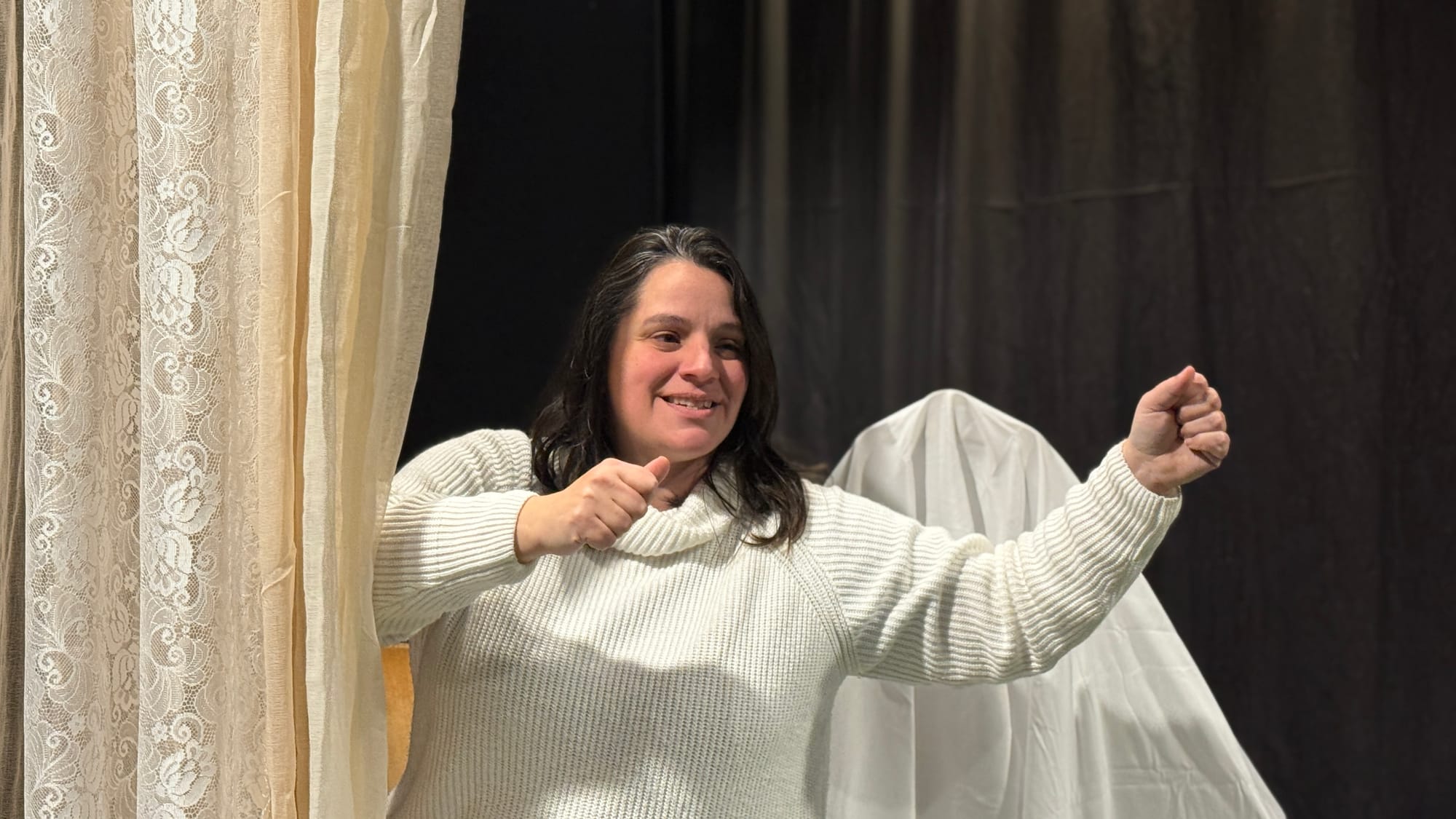
Embedded in the production is a theatrical secret visible only to those who know to look. The five Liebeslieder singers, German for “love song singers,” function as a Greek chorus. Dietrich has costumed them as different time periods to represent “ghosts of the Armfeldt family” working to heal the family across generations.
“My secret is, is that when all five of them have touched Madame Armfeldt at the end, she’s allowed to die,” Dietrich said. “If you’re watching, you can track them.”
What Dietrich hopes audiences take from the production is “a multi-sensory appreciation for love they’ve given and love they’ve received.”
She elaborated: “I think about past romantic relationships for myself, and I don’t have regret or remorse for having given away parts of my heart. And I think that this show allows people to either fully appreciate the relationship they’re in or fully give grace to past ones that helped you become a better human.”
She goes on to argue the show’s emotional core lies in characters “choosing to be more selfless, choosing to give, even if they’re not going to receive.”
“A Little Night Music” runs Jan. 23 through Feb. 1 at Marblehead Little Theatre, 12 School St. Music and lyrics by Stephen Sondheim. Book by Hugh Wheeler. Orchestration by Jonathan Tunick. Produced by Andrew Barnett and Lisa Fama. Directed by Alexandra Dietrich and assistant director Benjamin Richter. Music direction by Thom Smoker. A cast reception follows the opening night performance. Tickets range from $25 to $35. The production is presented through special arrangement with Music Theatre International. The show is sponsored by Barbara and Michael Schaefer, with additional support from Paul Leitner, Dayle Persons and Burke Insurance. For tickets and information, visit mltlive.com.