Table of Contents
Get our free local reporting delivered straight to your inbox. No noise, no spam — just clear, independent coverage of Marblehead. Sign up for our once-a-week newsletter.
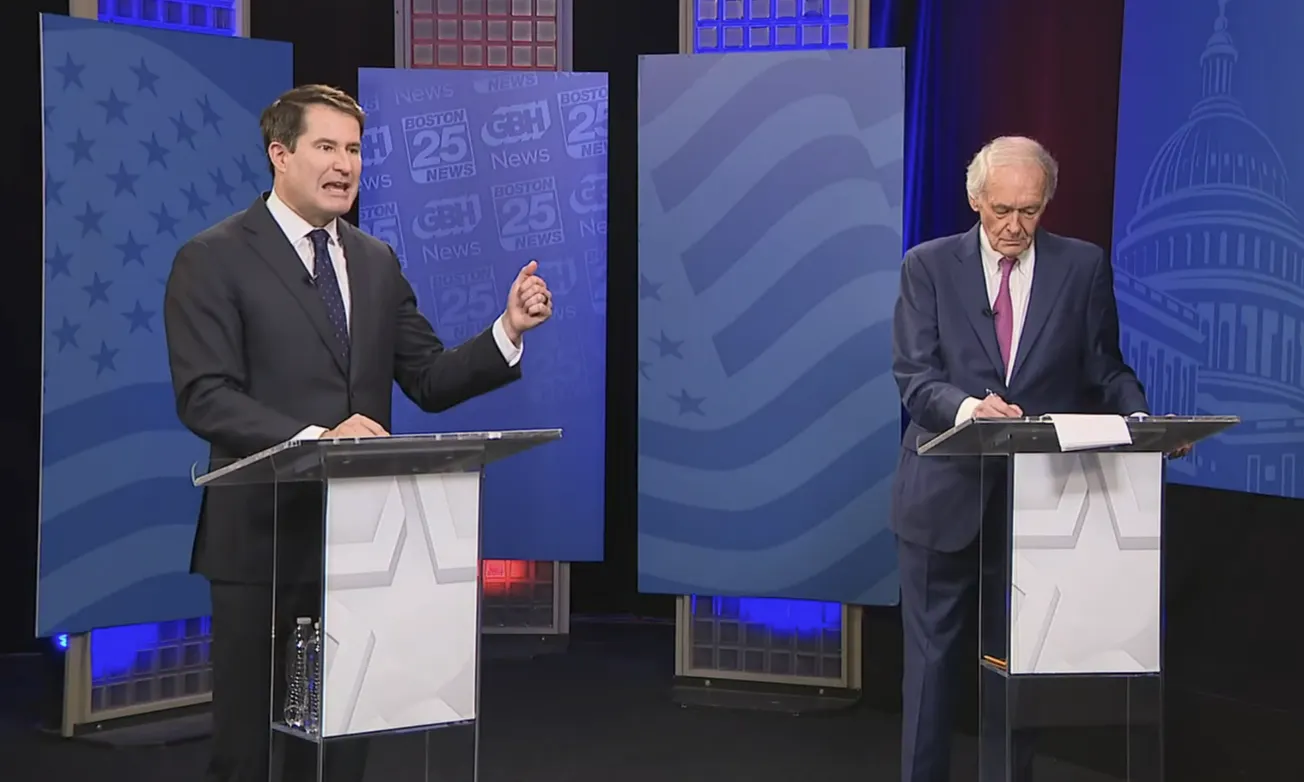
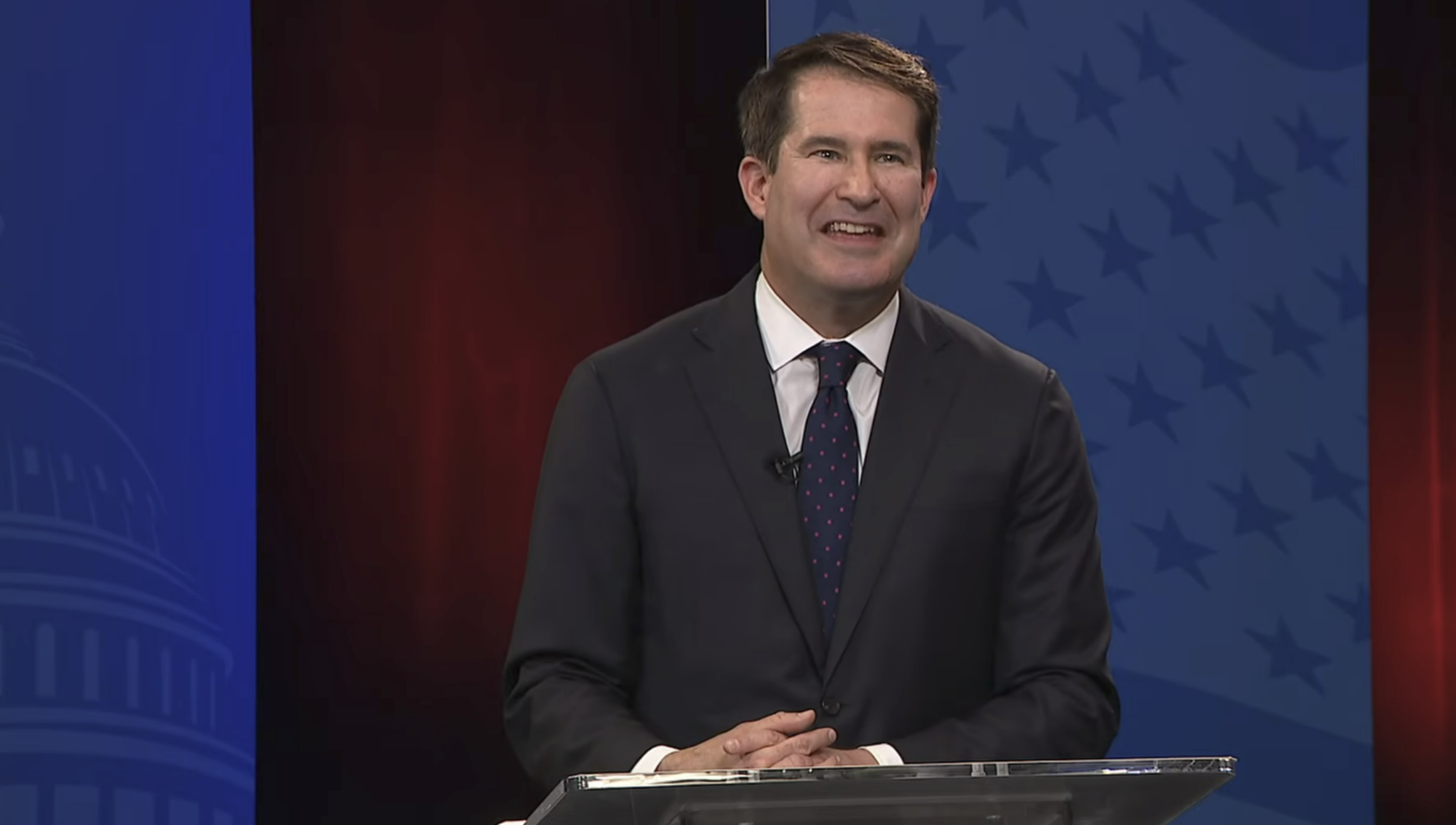
U.S. Rep. Seth Moulton opened by saying he was not running against U.S. Sen. Ed Markey’s policies. Twenty-four minutes later, he asked Markey why he had taken a meeting on behalf of Jeffrey Epstein.
The two Democrats met Monday at 7 p.m. at the Boston 25 studios in Dedham for the second debate of the U.S. Senate primary, produced with GBH News and carrying questions from viewers and from the media partners El Planeta and the Bay State Banner. Answers ran 45 seconds, rebuttals 30. The primary is Sept. 1, early voting begins Aug. 22 and one debate remains, on Aug. 20.
Both men spent the hour accusing the other of corruption. Only one of the accusations came with names attached to it.
Markey’s runs like this: Moulton sits on the House Armed Services Committee, political donors from private equity gave him early access to investments in Divergent, Oura and Web AI that the public could not buy, and he then voted for defense budgets. Markey raised it six times, including in his closing statement, and each time he named the companies, the committee and the remedy — divest, and make the practice illegal. What he never produced was a filing, a date or a dollar figure beyond “millions.” Neither moderator asked him for one.
The Epstein question had none of that scaffolding. Pressed by moderator Adam Reilly for specifics, Moulton said only that Markey’s name appears “repeatedly” in the newly released files “in the context of doing a favor for one of Epstein’s pals who was sex trafficking women.” Then he pivoted to town halls.
PolitiFact reported the next day that the underlying document is a 2015 meeting between Markey and colleagues of the lobbyist Bob Crowe about Karim Wade, a Senegalese politician who had been sentenced at home for corruption. Crowe forwarded an email about the meeting to Epstein, who was paying Wade’s legal fees and had paid Crowe’s firm $100,000. Nothing in the email indicates Markey knew Epstein was involved.
Markey’s denial did not track the question he was asked, which was about a lobbyist, not a client.
“I have never met Jeffrey Epstein. I don’t know Jeffrey Epstein,” he said. “What you are doing right now is absolutely reprehensible.”
He recovered by turning the exchange into an argument about evidence itself. “You asked for specifics, Adam. You’re not getting specifics from him. He’s not giving you the details.”
Moulton’s own defense was a denial plus a counteraccusation. He said the holdings are legal, disclosed and his wife’s, and that attributing them to his committee seat is sexist. “Senator Markey, you and I both married up,” he said. Then he brought up the 1996 telecommunications deregulation law Markey wrote, which he said followed $400,000 in telecom lobbyist money.
Questions here, answers overseas
The debate’s other pattern was geographic. Questions asked about Massachusetts and answers arrived in the Middle East.
Kerry Kavanaugh opened with cost of living and housing. Moulton answered it, proposing a ban on private equity purchases of single-family homes, regional rail and universal pre-K. Markey used his 45 seconds to fault Moulton for missing a floor vote on U.S. Sen. Elizabeth Warren’s housing bill, then reached Trump’s defense budget and the war in Iran. The next 3 minutes were about Iraq.
Asked how he would lower the highest electricity bills in the country, Markey’s first words were, “First, we have to end the war in Iran.” Moulton’s answer opened on Markey’s 50 years of energy work, then went to the 2002 Bush administration, then to U.S. Sen. Chuck Schumer and Marco Rubio, and never reached a utility bill until Kavanaugh interrupted to ask whether he had any thoughts on energy costs. He did: end the war, restore the wind and solar tax credits, expand generation. It was the sharpest piece of moderating in the hour.
The Iran timeline never got the same treatment. Markey put the start of the war in the spring, then said it began last June, then dated Moulton’s $1 trillion budget vote to six months after that. Kavanaugh, introducing a later question, described the conflict as a little more than five months old. Nobody reconciled the three.
Neither moderator separated authorization from appropriation, either. A defense authorization sets policy and spending ceilings; a separate appropriations bill releases the money. Markey called the December vote “the money that’s being used in the war.” Moulton said he voted against “this year’s defense bill.” They may not have been describing the same bill, and no one asked.
Moulton invoked Markey’s Iraq war vote five times, twice with the emotional weight he has built the campaign on.
“I have seen Americans lose their lives because of your vote to send us to war in Iraq,” he said. “So do not question my commitment to peace in the Middle East.”
Markey never said how he voted. He voted for the authorization on Oct. 10, 2002, one of three members of the state’s 10-member House delegation to do so. Later, asked to name one vote he would take back, he named the 1993 North American Free Trade Agreement. Moulton, asked first, named none, and instead described a vote he does not regret.
One apology, refused
The transgender athletes exchange produced the only apology of the night. Reilly read Moulton his 2024 comment about not wanting his daughters run over on a playing field.
“I deeply recognize your trauma, and I’m sorry if my comments hurt you,” Moulton said. “That was not my intention.”
He cited a 100 percent rating from the Human Rights Campaign, a score that measures how a member voted on the bills that organization selected to track in a given session rather than a member’s conduct generally. Markey took the apology as an admission and escalated, saying Moulton had blamed transgender children for the party’s 2024 loss.
“He just took the whole playbook of MAGA and Trump,” he said. He put the number of transgender athletes in the NCAA at 12; the association’s president told a Senate panel in December 2024 that he knew of fewer than 10 among roughly 510,000 athletes.
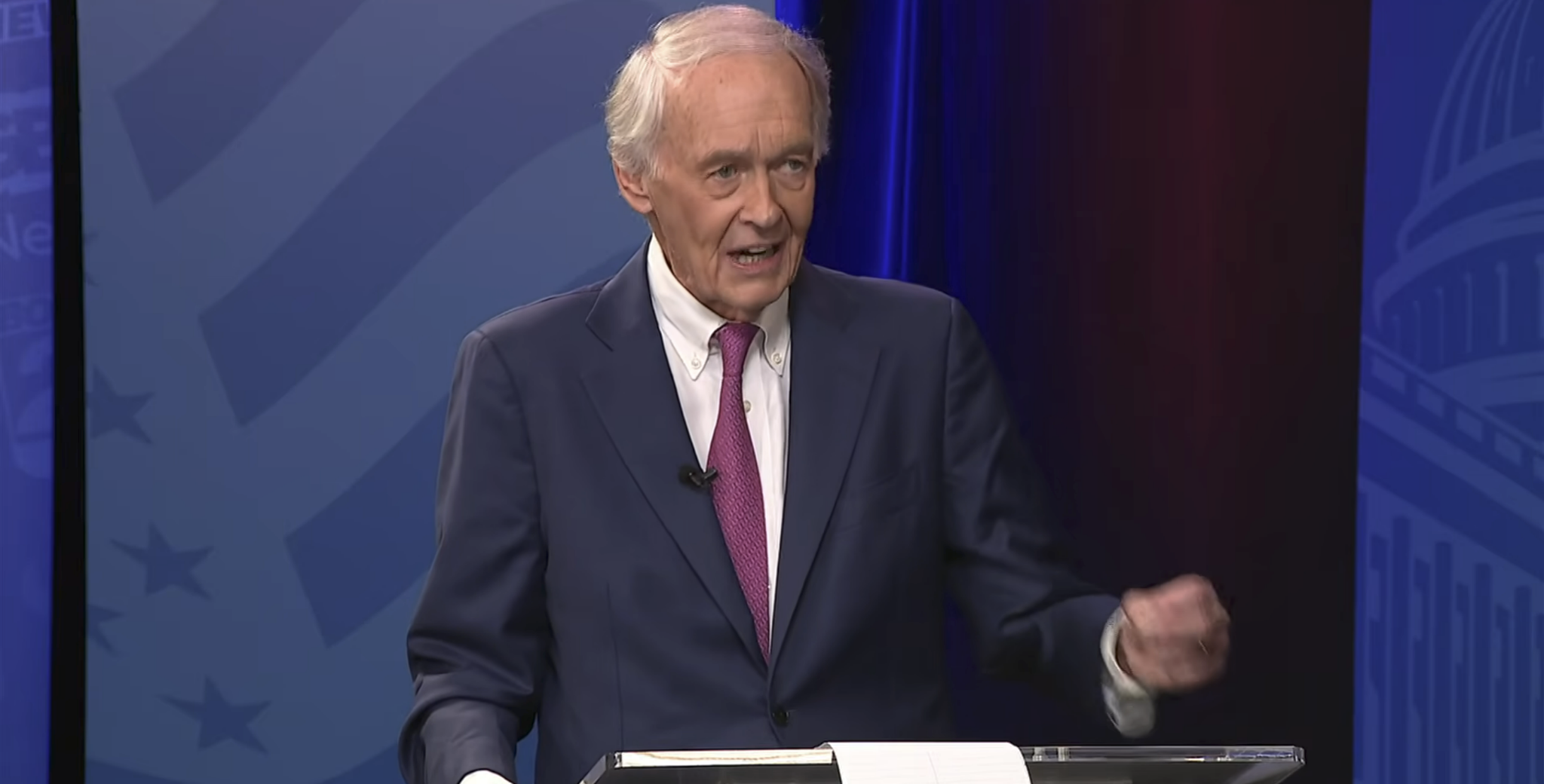
Reilly then asked Moulton the question directly: Does he still fear his daughters being run over by a male or formerly male athlete. “My kids are young; they play co-ed sports,” Moulton said. “But the point I made is that as Democrats, we can’t have that debate.”
Neither man stated a rule for who plays where. Other questions went unanswered outright. Asked whether he spends more time in Malden or Maryland, Markey talked about his father driving a milk truck and about the housing vote Moulton missed. Asked whether he supports term limits, he said, “Well, we have term limits. They’re called elections,” and returned to Oura and Divergent. Asked whether he would be running if Markey were 65, Moulton asked what Markey would accomplish in six years that he had not accomplished in 50.
What went unresolved
They agreed on more than either wanted to concede: abolishing the federal immigration enforcement agency, another government shutdown if needed, restoring the wind and solar credits, letting communities veto data centers, calling Israel’s conduct in Gaza criminal. The one clean divide is Medicare for All against Moulton’s public option.
Two flat contradictions were left standing. Markey said Moulton has taken $350,000 in corporate political action committee money in this race; Moulton called that patently false and said the Boston Globe and the Boston Herald have reported that Markey took such money after pledging not to.
“That is absolutely untrue,” Markey said. Markey said the mayors of Lynn and Salem have endorsed him; Moulton said they endorsed before he entered the race; Markey said they did not.
The numbers went unaudited too. Moulton credited the 988 mental health hotline he wrote with cutting teen suicide by 11%, on its own, without saying what population or baseline the reduction is measured against, so the figure cannot be converted into lives. Markey said one in nine teenage girls contemplated suicide and one in four attempted it; federal survey data runs the other way, with roughly three in 10 high school girls seriously considering it and about one-in-eight attempting.
Half an hour after asking about Epstein, Moulton closed by telling voters they had heard two visions, one of them “steeped in attacks, the Trump sort of style of attacking your opponent.” Markey closed by naming the private equity deals again. Neither man had produced a document.