Table of Contents
Get our free local reporting delivered straight to your inbox. No noise, no spam — just clear, independent coverage of Marblehead. Sign up for our once-a-week newsletter.
Marblehead’s Seth Moulton won his way into Congress in 2014 by telling North Shore Democrats that a nine-term incumbent, Rep. John Tierney, had stayed too long. Twelve years later, he made the same argument against Sen. Ed Markey to Democrats statewide. They rejected it by nearly 30 percentage points.

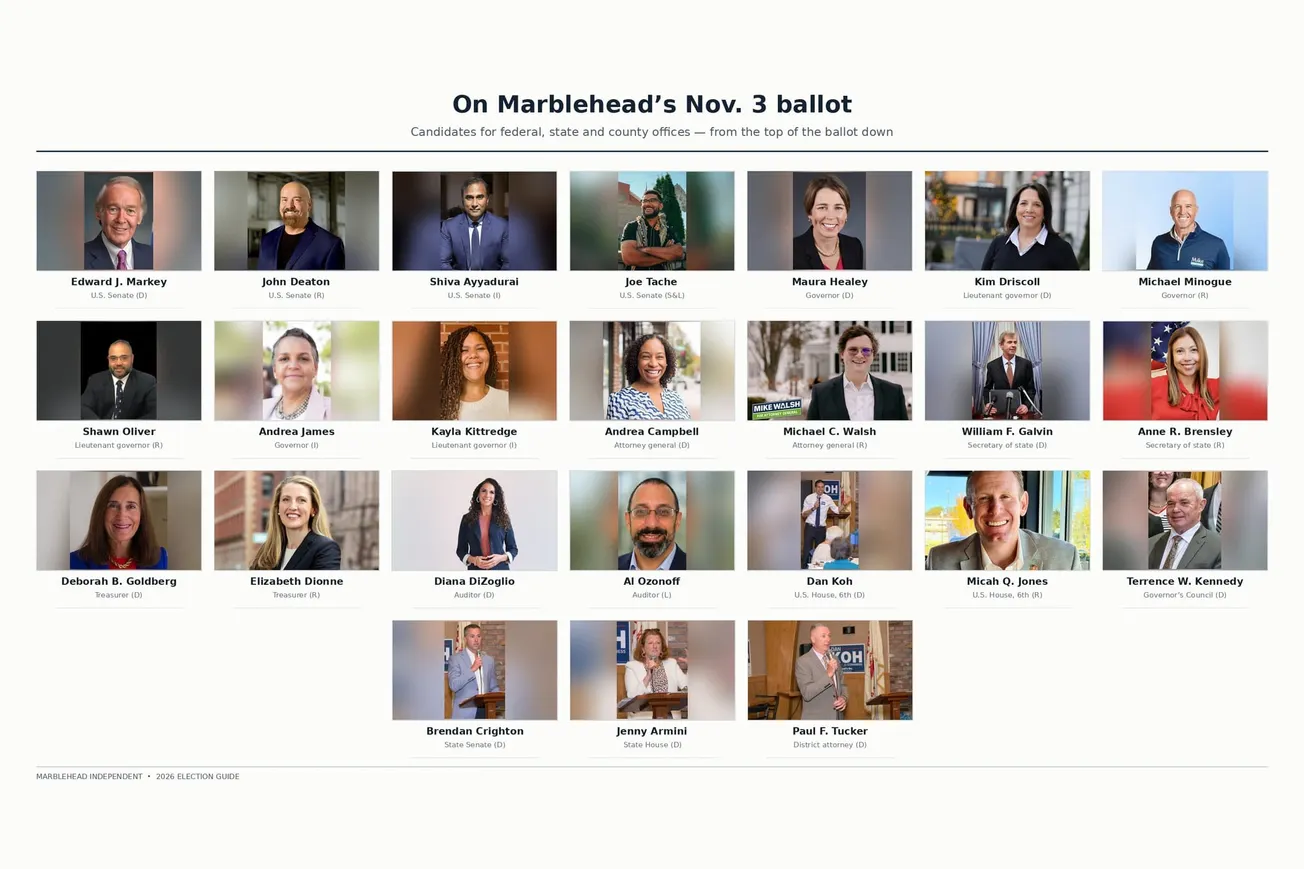
At 10:24 p.m. Tuesday, The Associated Press called the race for Democrat Dan Koh, a former Biden White House aide from Andover who won a six-candidate September primary, over Republican Micah Q. Jones for the 6th Congressional District seat Moulton gave up to run for Senate. AP also called Markey’s reelection over Republican John Deaton soon after polls closed; with about 81 percent of the expected vote counted early Wednesday, Markey, who said on the campaign trail that this term would be his last, led 63.8 percent to 31.7 percent, according to NBC News. Moulton, 48, a Salem Democrat in his sixth term, remains the district’s representative until Jan. 3, 2027.
Since 1997, a Salem politician has held the seat. Koh, 41, of Andover, brings ties to former Boston Mayor Martin J. Walsh rather than a combat résumé; the Boston Globe reported he will become the first Asian American elected to represent Massachusetts in Congress.
His 12 years produced two outcomes that pull in opposite directions: a pair of mental health laws likely to outlast his tenure and a final political wager that ended it.
Laws that outlast him
In 2019, Moulton and Republican Rep. Chris Stewart of Utah introduced the National Suicide Hotline Designation Act. President Donald Trump signed it in October 2020, putting 988 in federal statute as a three-digit suicide and mental health crisis number and letting states charge phone fees to pay for local call centers. The number went live nationwide in July 2022.
Moulton co-wrote the bill; a president signed it; regulators, states and call centers built and staffed the service. By its second anniversary, counselors had answered more than 10 million calls, texts and chats, according to Moulton’s office, which cited the federal Substance Abuse and Mental Health Services Administration.
Moulton first filed the Brandon Act in 2020, named for Navy Petty Officer 3rd Class Brandon Caserta, who died by suicide in 2018 after seeking help. Its core provision, letting service members request a mental health evaluation outside their chain of command, became law in the fiscal 2022 defense authorization bill President Joe Biden signed in December 2021. The Pentagon did not sign an implementation policy until May 2023.
“Shame on the Pentagon bureaucrats who took 15 months,” Moulton said then.
The rest of the ledger is thinner. He co-led a 2020 bipartisan House Armed Services task force on competing with China; his high-speed rail bills never passed, so they authorized no money, let alone appropriated any.
Insurgent’s limits
A Marine who served four tours in Iraq and criticized the war that sent him there, Moulton built a national profile fighting his own party. He ran briefly for president in 2019, flew to Kabul without authorization during the 2021 evacuation and, in July 2024, called on Biden to end his reelection campaign.
Moulton’s break with Nancy Pelosi began two years before the fight that defined it. After Democrats’ 2016 losses, he endorsed Rep. Tim Ryan of Ohio in a long-shot bid to unseat Pelosi as House Democratic leader, and by June 2017 he was among the Democrats pushing for her to step aside. When Democrats retook the House in November 2018, Moulton circulated a letter signed by 16 current and incoming Democrats who pledged to vote against her for speaker, and he drew criticism from constituents at a town hall in his district.
The revolt ended in a deal. In December 2018, Pelosi said she would serve no more than four more years as speaker and backed limits on how long the party’s top House leaders could hold their posts. Moulton and other holdouts then dropped their opposition. “Nancy Pelosi showed real leadership by agreeing to these reforms,” he said. On Jan. 3, 2019, he voted for her, and she won the gavel with 220 votes while 12 Democrats backed someone else. Pelosi kept the pledge, giving up the Democratic leadership after the 2022 election.
The Senate challenge, launched in October 2025, required giving up his safe House seat. Moulton said he agreed with Markey on most issues but the party could not wait six more years. Markey, 80, answered that “it’s not your age that matters, it’s the age of your ideas,” and claimed the progressive lane.
That contrast hardened around remarks Moulton made to The New York Times days after the 2024 election, when he said he did not want his daughters “getting run over on a playing field by a male or formerly male athlete.” A top aide resigned. He stood by the substance, yet in January 2025 voted against the House bill to bar transgender athletes from girls’ and women’s school sports nationwide. At an Aug. 3 debate, he apologized: “I’m sorry if my comments hurt you. That was not my intention.” Advocates called it qualified.
At the same debate, Moulton said Markey’s name appeared in Justice Department Epstein files as someone who met with a lobbyist working for Jeffrey Epstein; his campaign then posted a graphic calling Markey “part of Epstein lobbying effort.” PolitiFact rated that claim Mostly False. The Globe reported the campaign produced no further evidence of a direct link, and WBUR found Moulton had taken $2,000 from the same lobbyist. GBH reporter Adam Reilly suspected the attack helped Markey, a judgment the returns cannot test.
Close to home
AP results on Sept. 4 gave Markey more than 573,000 votes to about 311,000 for Moulton, 64.8 percent to 35.2 percent of votes counted in the Democratic Senate primary.
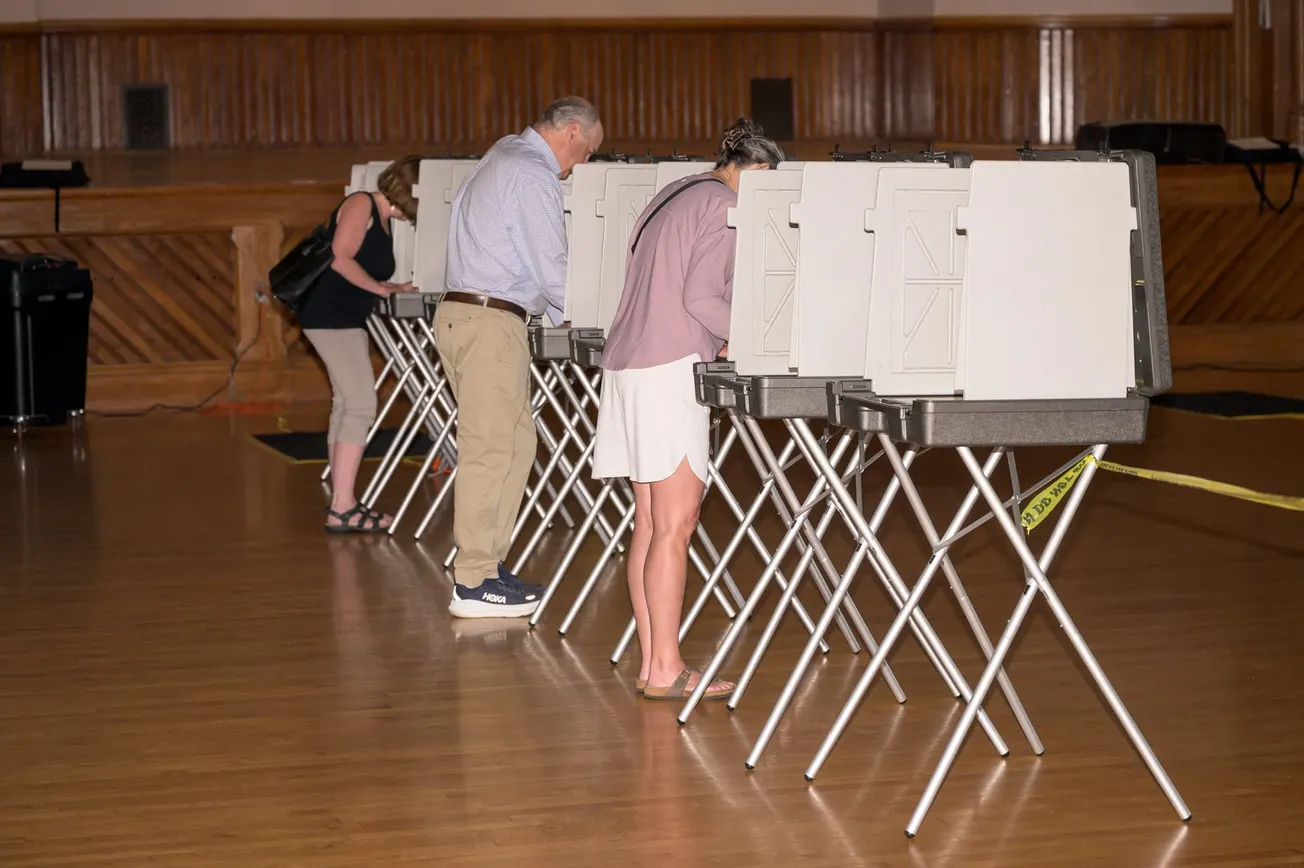
Moulton carried 12 of Massachusetts’ 351 cities and towns, mostly North Shore towns such as Boxford and Topsfield, plus Dover and Wellesley outside his district. His best showing was in Marblehead, where he grew up, with 60.7 percent of the town’s Democratic Senate primary vote. In Salem, his birthplace and home, Markey won 66.6 percent of the city’s vote in that primary. On Tuesday, Marblehead gave Markey 6,916 votes to 3,331 for Deaton.
Returns cannot explain individual choices, but they show a coalition of a hometown and towns Boston.com noted are among the state’s wealthiest per capita. The city anchoring his own district preferred the incumbent he called too old.
The two halves of Moulton’s record do not cancel. The 988 law changed a public service that has fielded millions of contacts; the Senate loss changed mainly his own standing. His most durable work came from bipartisan drafting and pressing agencies to follow through, not from the confrontational instinct that first made his name.
In his September concession statement, Moulton said challenging the establishment “isn’t easy, but it is necessary.” On Jan. 3, he loses the seat he gave up to try.
BEFORE YOU GO … Our reporting remains free and open to all. It is sustained by readers who choose to support it — by contributing so that routine, document-based local reporting continues without paywalls or promotional framing. Right now, 132 readers support The Marblehead Independent with monthly or annual contributions. Click here to become an Independent member.