Table of Contents
Get our free local reporting delivered straight to your inbox. No noise, no spam — just clear, independent coverage of Marblehead. Sign up for our once-a-week newsletter.
Marblehead's latest attempt to comply with the state's MBTA Communities law is now in the hands of state housing officials, as town planners advance a scaled-back multifamily zoning plan built largely around Tedesco Country Club and an existing smart-growth district.
Community Development and Planning Department Director Brendan Callahan and Town Planner Alex Eitler said town staff submitted on Dec. 2 a revised MBTA zoning proposal to the Executive Office of Housing and Livable Communities for a preliminary compliance review.
State review comes before public rollout
Planning Board member Marc Liebmab explained why officials chose to seek state feedback first.
“We have gone back and forth extensively about this, and it’s kind of a chicken and egg situation,” he said. “At one point, we thought it would be good to go to the public prior to the EOHLC, and ultimately we realized that we don’t want to present this” without confirmation from the state.
Officials told state reviewers “that this is a preliminary plan,” Liebman said. “However, it is possible that, after public outreach, there will be some modifications made to the plan, and they have acknowledged that, and they’re aware of that.”
The immediate goal is to determine whether the concept works. “Does this fly, which we have no reason to believe that it won’t,” Liebman said.
He said officials “believe this plan to have merit and to be viable. Our counsel agrees with that, and even the design review parameters that we wanted to add seemed to pass muster.”
The move marks the first concrete step since Marblehead voters overturned a previously adopted MBTA zoning bylaw in a July 8 referendum, placing the town out of compliance with Section 3A of the state Zoning Act. The law requires 177 MBTA communities to create at least one zoning district of "reasonable size" where multifamily housing is allowed as of right at a minimum density of 15 units per acre.
Select Board Chair Dan Fox told the Independent that the town that zoning Tedesco could meet state requirements without triggering the neighborhood impacts that fueled some but not all of the opposition to Marblehead’s previous zoning plan.
The approach reflects a careful political calculation as town leaders work to restore eligibility for millions of dollars in state grants
This reporting takes time, access and context. Independent, reader-supported journalism means no paywalls, no algorithms — just facts, for everyone in Marblehead. We run on an $80,000 annual budget, and 95 percent of every dollar goes straight into journalism, not profit. You’re able to read this work free because 60 Marbleheaders already make it possible through annual and monthly contributions — and we endeavor to reach 100 members by Dec. 31 to keep this journalism strong. 🟦 Click here to become an Independent member.
New district map centers on Tedesco
Earlier this fall, Town Administrator Thatcher Kezer said the goal is to place an MBTA zoning article on the warrant for the May 2026 annual Town Meeting, with help from state-funded consultants assisting on mapping and unit-capacity calculations.
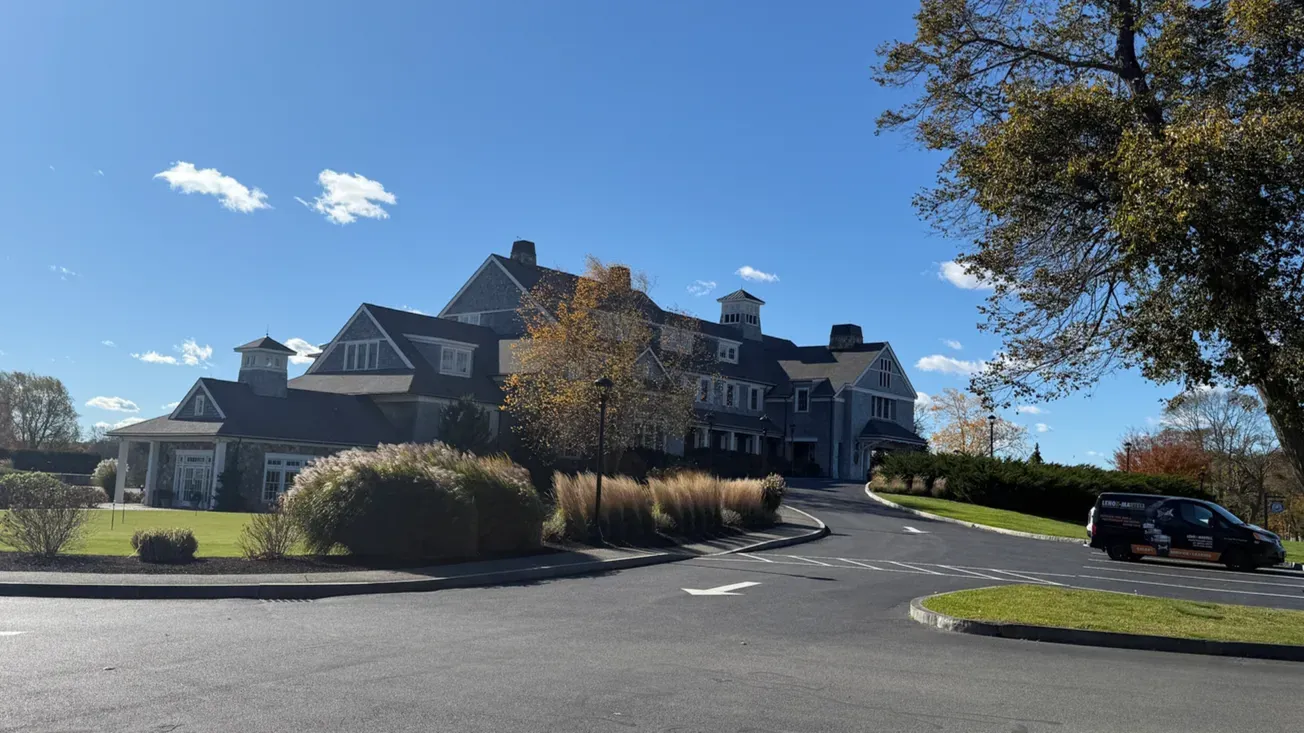
Under the updated concept now before state reviewers, the town's primary MBTA zoning district would encompass all of Tedesco Country Club's land within Marblehead, paired with a small slice of the nearby "Glover" 40R smart-growth district on the Swampscott line.
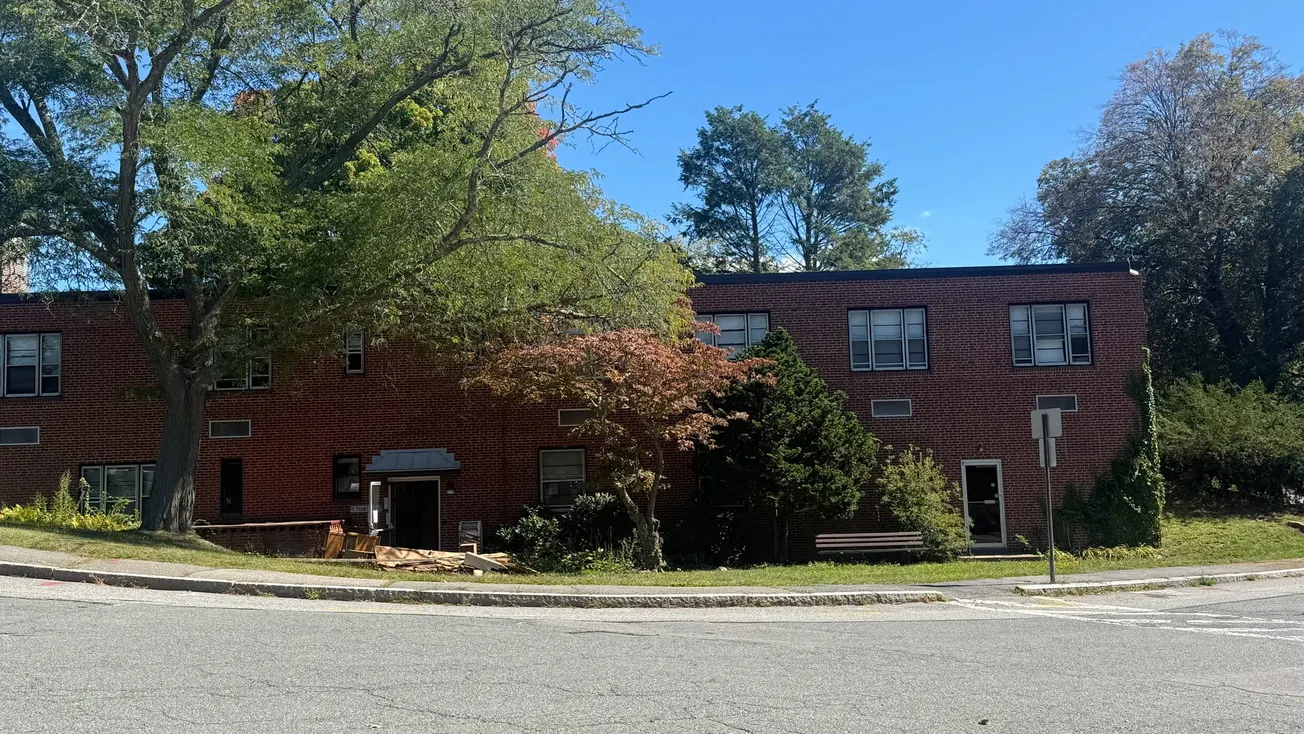
Only one of the earlier proposed overlay areas — Broughton Road — remains in the draft. Two others that featured prominently in prior debates, Pleasant Street and Tioga Way, have been removed from the MBTA map, according to Callahan and Eitler.
Many residents are likely to focus first on what has been taken out of the district rather than what remains, particularly the decision to drop Pleasant Street and Tioga Way after opposition during last year's MBTA debates. The Planning Board tried to respond to that feedback while still meeting the state's unit-capacity requirements.
The Glover component is relatively small on the Marblehead side of an existing 40R district that already allows denser development than the MBTA rules would require.
Tighter design rules meant to ease aesthetic fears
Officials have said the new plan could come with detailed design-review rules attached to the MBTA zoning districts. Working with the town's planning consultant, local officials will ask state staff to allow a much more specific set of architectural standards than appeared in the failed 2025 proposal.
The draft would:
— Require pitched roofs, rather than flat-roofed, full-height boxes.
— Require exterior siding that resembles traditional shingle or clapboard, barring stucco, metal panel systems and other highly commercial materials.
— Require operable windows to be double-hung, echoing the style of surrounding houses.
— Fold in a detailed landscaping standard as part of site plan review, calling for a grass strip between the sidewalk and the street, tree-lined streets and shrubs in front of buildings so projects read as residential rather than industrial.
Those provisions are aimed directly at one of the loudest complaints during the last MBTA fight, when residents circulated photos of tall, flat-roofed apartment blocks in Salem and Swampscott as cautionary examples.
Residents were not only worried about density, traffic and school impacts but also about the visual character of any new buildings, with many saying they did not want Marblehead's gateways to resemble regional commercial corridors. That concern drove the town back to the state to see how far the zoning could go in requiring traditional residential forms and materials.
After a repeal, a new approach
The revised plan comes after a turbulent year in which Marblehead first adopted, then repealed, an MBTA zoning bylaw.
Town Meeting voters narrowly approved an initial MBTA overlay in May 2025, a year after rejecting a similar plan in 2024. Two months later, a citizen-initiated referendum repealed that bylaw, leaving Marblehead among the small group of MBTA communities still out of compliance, losing access to competitive state grants and facing possible legal action from the attorney general.
Voters made clear last year that they did not support the earlier plan, and the Planning Board's task now is to produce a new proposal that follows the law while aligning as closely as possible with Marblehead's existing residential character.
Even if the state signs off and Town Meeting approves the new zoning, no construction would be automatic. Section 3A requires communities to allow multifamily housing as of right in at least one district of reasonable size, but it does not mandate that any particular project be built. Actual development at Tedesco, Glover or Broughton Road would still depend on private landowners and market demand.
For now, Callahan and Eitler said the key development is that the plan has been submitted and is under review — with a determination expected in early January. Town leaders expect that once the state responds, the next phase will shift to Marblehead residents, who will weigh in on whether this version of MBTA zoning should stand.