Table of Contents
No paywalls. No algorithms. Just local reporting, delivered with accuracy and care. Subscribe to The Independent newsletter ›
This town’s mariners saved Gen. George Washington’s army three times in 1776 —and now millions of viewers will see why.
When the third episode of Ken Burns’ monumental documentary series “The American Revolution” arrives on PBS Tuesday at 8 p.m., Marblehead and Gen. John Glover’s regiment of local mariners will be featured “extensively.”

“Marblehead mariners and John Glover feature extensively in Episode 3 from the evacuation of Long Island to their action on Manhattan and the Christmas’ Crossing of the Delaware,” PBS’ Jordan Lawrence told the Independent.
The episode — “The Times That Try Men’s Souls” — underscores how Marblehead’s seafaring traditions, honed over generations on the Atlantic, offered Washington capabilities found nowhere else in the Continental ranks. It revisits the three pivotal moments of 1776 — the miraculous withdrawal from Long Island, the stand against the British at Kips Bay and the perilous Delaware crossing — each shaped by Marblehead sailors whose command of wind, water and resolve helped carry a fragile nation through its darkest hours.
Meanwhile, the documentary makes clear that Marblehead in 1775 ranked as one of colonial America’s busiest ports, recognized by British commanders as a strategic threat. Marblehead Harbor teemed with fishing vessels and merchant ships. The wharves groaned under mountains of salt cod bound for markets across the Atlantic. The men who worked those boats had spent their lives reading weather, managing vessels in heavy seas and functioning as teams under pressure.
British targeted Marblehead as privateering threat
The British understood Marblehead’s strategic importance immediately. As the documentary points out in Episode 2 —“An Asylum of Mankind,” Vice Admiral Samuel Graves, commander in chief of His Majesty’s North American Station, announced he planned to lay waste to Marblehead, Salem, Cape Ann, Ipswich, Newburyport, Portsmouth, Saco, Falmouth and Machias because “all of them were bases from which privateers, Patriot raiders, menaced British shipping.”
The threat was not idle. The town’s mariners were inflicting serious damage on Crown supply lines.
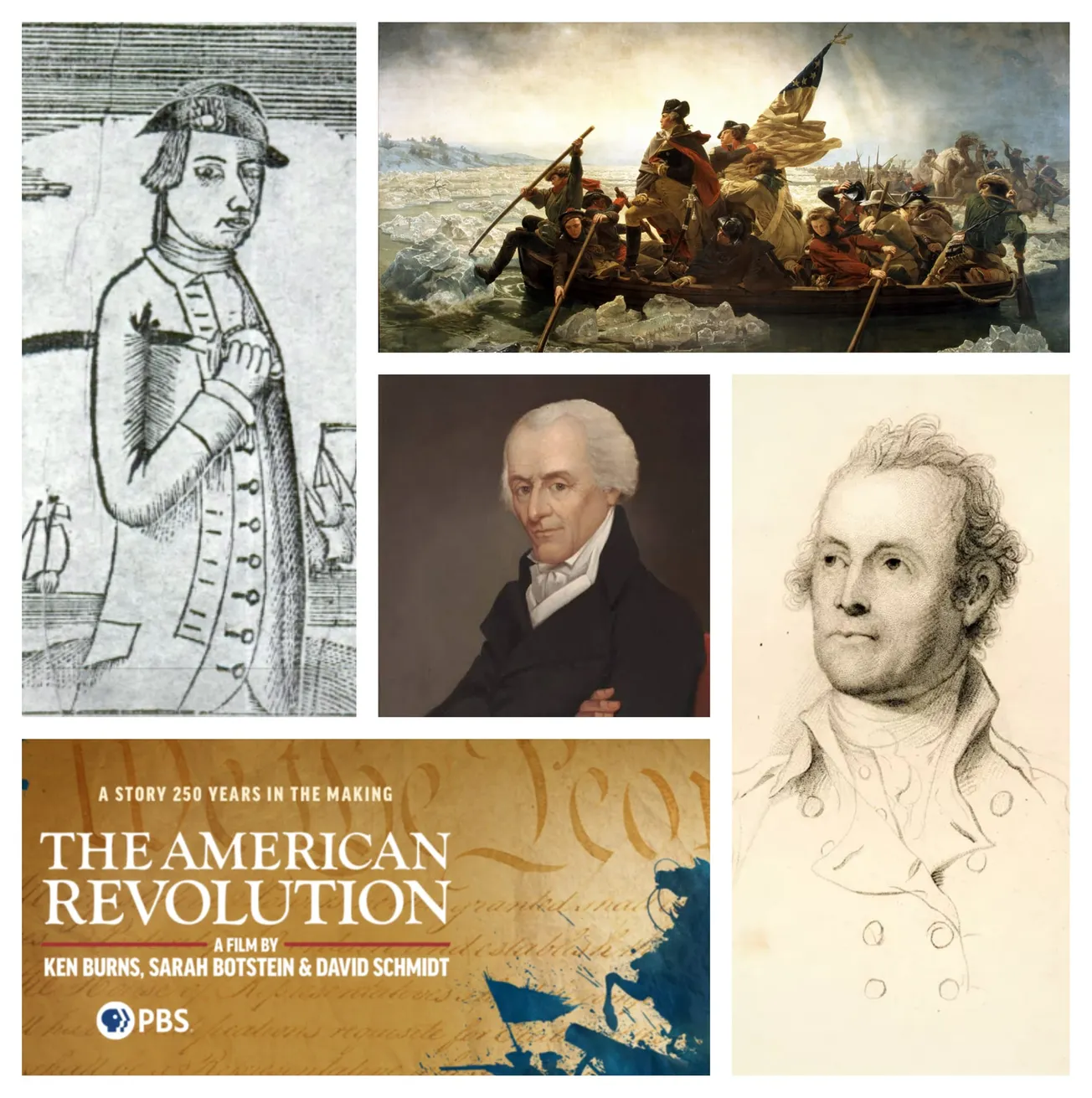
Among the most successful of these early naval leaders was Capt. John Manley of Marblehead. The documentary identifies Manley as “the most successful Patriot commander” in the war’s opening months, noting he “managed to seize seven British vessels before the end of the year, including an ordnance ship, its hold filled with 100,000 flints, 2,000 muskets, and 30,000 cannonballs, all of it badly needed by the Continental Army.”
Later in the war, as Episode 5 — “The Soul of All America” — details, Manley commanded the privateer Cumberland. The documentary quotes teenager John Greenwood, who sailed with Manley, describing the ship’s distinctive flag: “Captain Manley’s flag was a very singular one, with a pine tree painted green and under the tree the representation of a large rattlesnake cut into 13 pieces, then in large black letters, ‘Join or Die.’”
It takes time to gather transcripts, verify details and trace Marblehead’s role across centuries. Your membership funds that depth of reporting. Join as a member ›
Escape from Long Island: ‘Everyone’s gone’
But Episode 3 centers on Gen. John Glover and the regiment of Marblehead mariners he commanded through the Revolution’s darkest months. The documentary makes the case that what those men accomplished in 1776 saved Washington’s army from destruction three separate times.
The first crisis came in August following the disastrous Battle of Long Island. Washington’s army, 9,000 men trapped on Brooklyn Heights with their backs to the East River, faced annihilation. British forces under Gen. William Howe had outmaneuvered the Americans and were preparing to finish them off.
The documentary describes Washington’s desperate situation and his solution: “To man his mismatched flotilla, he would call on 2 regiments of seasoned mariners and fishermen, Black and White and Native American, from Massachusetts coastal towns. Colonel John Glover of Marblehead led one of the regiments.”
What happened next became legend. The documentary provides vivid detail of the evacuation: “All through the night, John Glover and his men from Marblehead sailed or rowed or paddled back and forth undetected, ferrying more than 9,000 men as well as horses, artillery, and baggage wagons to safety in Manhattan.”
Historian Rick Atkinson, featured in the series, explains the stakes: “When dawn breaks, the British realize everyone’s gone. They see the last of the boats disappearing across the river in the traces of fog. And they fire a few shots pointlessly at this retreating gaggle, including Washington in one of the last boats, and the Americans escape to Manhattan Island and get away to fight another day.”
Without Glover’s mariners, the Revolution ends on Long Island.
Two weeks later, on Sept. 15, the Marblehead regiment proved their worth again at Kips Bay on Manhattan’s east side. When British forces launched an amphibious landing supported by naval bombardment, Connecticut militia units broke and ran. The American line collapsed.
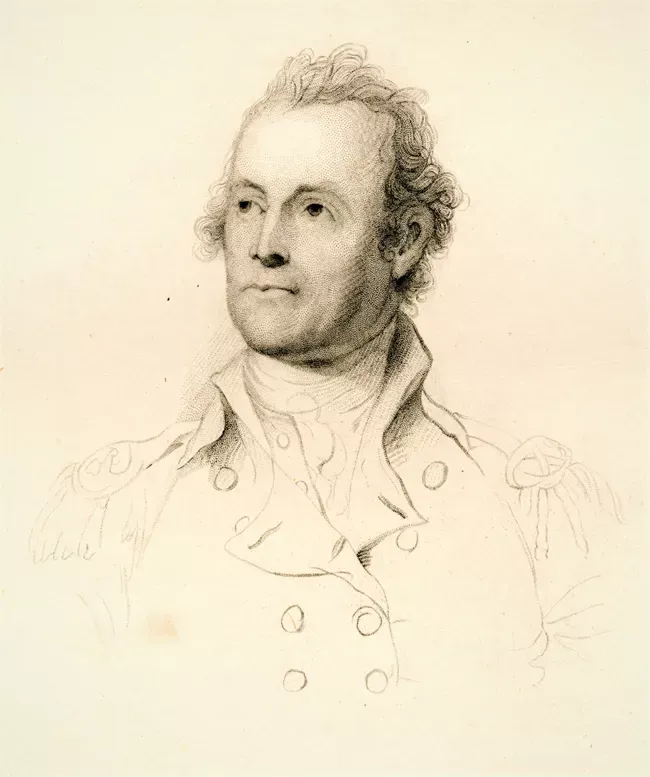
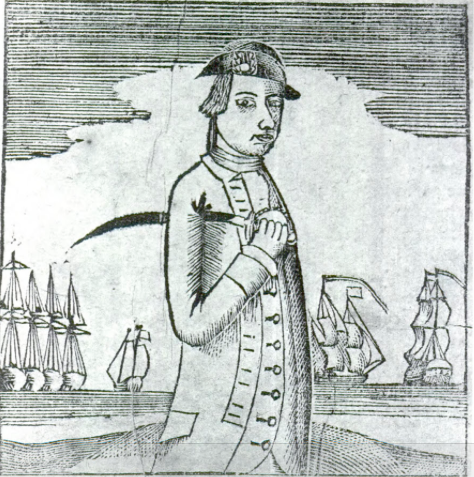
The documentary depicts Washington’s fury and helplessness as his men fled. Then: “Colonel John Glover and his regiment from Marblehead, Massachusetts, which had just made Washington’s escape from Long Island possible, rushed up and were able to slow the British advance.”
The Marblehead mariners, many of whom had faced down Atlantic gales and enemy privateers, held their ground against British regulars. They slowed the enemy advance long enough for other Continental units to withdraw in order rather than in rout.
Marblehead has never stood on the sidelines. Join the readers who make it possible for us to show up for this town’s story. Become a member ›
Christmas crossing: ‘The times that try men’s souls’
But the most famous action came on Christmas night 1776. Washington’s army, reduced to fewer than 3,000 effective troops, was disintegrating. Enlistments were expiring. Morale had cratered after months of defeat. Washington needed a victory immediately.
His plan required what has been called “The Crossing of the Delaware River” at night during a winter storm to surprise the Hessian garrison at Trenton, New Jersey. The river ran thick with ice floes. Snow and sleet reduced visibility to near zero.
The documentary quotes Thomas Paine, whose words were inspiring Patriots up and down the river that Christmas: “These are the times that try men’s souls: The summer soldier and the sunshine patriot will, in this crisis, shrink from the service of their country; but he that stands by it NOW, deserves the love and thanks of man and woman.”
Then the narrator continues: “A freezing rain began to fall at dusk as the Americans clambered into the ferry boats and cargo vessels that made up Washington’s hastily assembled fleet. The river was fast-running and filled with swirling, jagged pieces of floe ice. Somehow, Colonel John Glover and his Massachusetts sailors from Marblehead, the same men who had rescued Washington’s army after the Battle of Long Island and stopped the British advance following Kips Bay, now managed to get all 2,400 men, some 50 horses and 18 field pieces across safely.”
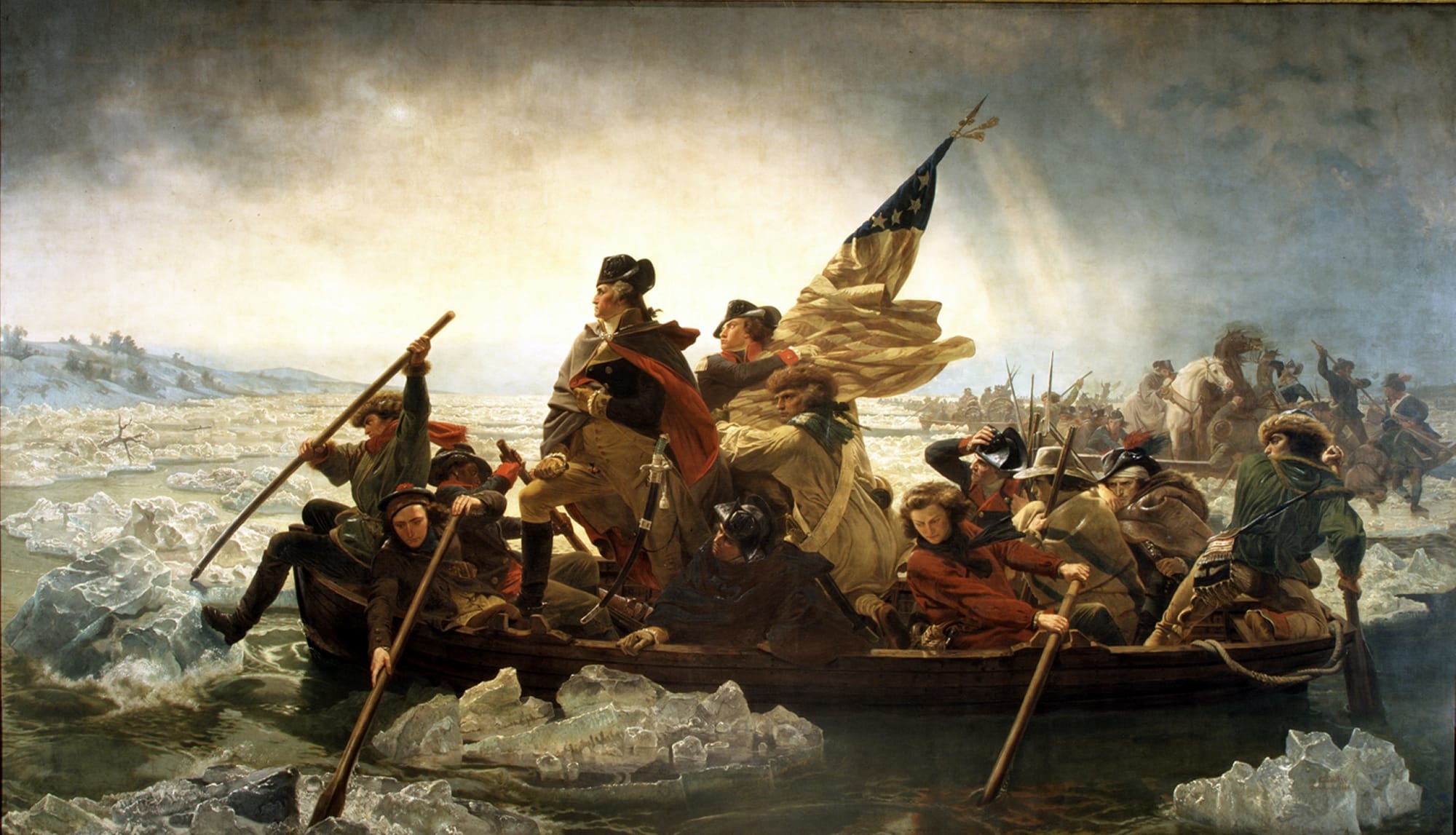
The crossing took nine hours instead of the planned four, but the Marblehead sailors got every man, every horse and every cannon to the New Jersey shore. The resulting attack on Trenton succeeded brilliantly. Washington captured nearly 1,000 Hessians, seized desperately needed supplies and proved the Continental Army could still fight and win.
None of it happens without Marblehead mariners.
Episode 4 — “Conquer by a Drawn Game” — features Glover, whom actor Josh Lucas voices in a speaking role, and Episode 5 highlighting Marblehead’s Elbridge Gerry is voiced by Tracy Letts. Gerry, a Founding Father, signed the Declaration of Independence and later became vice president under James Madison.
Strong local journalism isn’t automated — it’s reported, verified, and delivered with care. Sign up for The Independent newsletter ›
Burns’ new six-part, 12-hour documentary is considered the filmmaker’s most ambitious project in years, arriving just ahead of the nation’s 250th anniversary. Burns alongside co-directors Sarah Botstein and David P. Schmidt spent nearly a decade on the project.
The documentary represents a major national platform for Marblehead’s contributions to American Independence. The town’s story will now reach millions of viewers who will understand what Marbleheaders have always known: when America needed saving in 1776, Marblehead showed up.
Marblehead residents can watch Episode 3 on PBS via WGBH Channel 2, the PBS app, PBS.org, or on-demand through YouTube TV, Hulu Live, or any streaming service that carries PBS.