Table of Contents
Get our free local reporting delivered straight to your inbox. No noise, no spam — just clear, independent coverage of Marblehead. Sign up for our once-a-week newsletter.
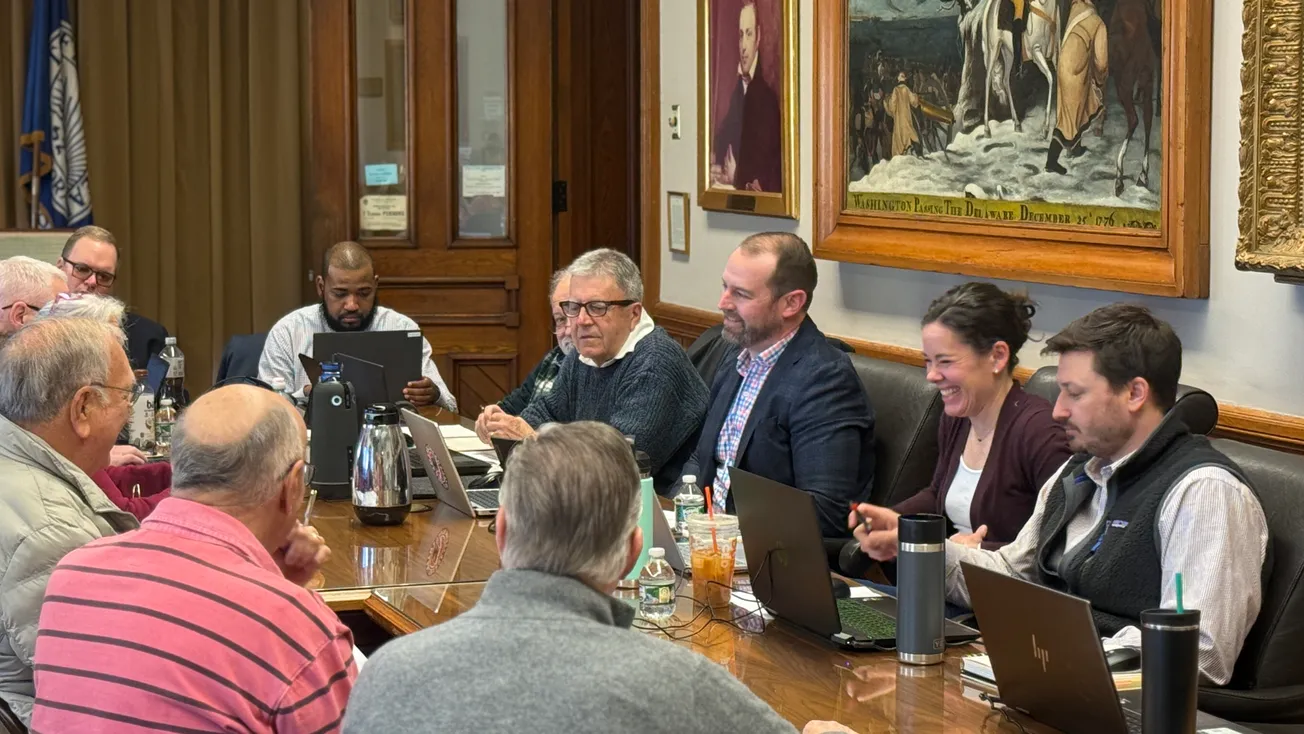
The Planning Board spent Thursday night pushing ahead on two major housing fronts: rebuilding Marblehead’s MBTA Communities zoning plan after noncompliance shut the town out of millions in state grant funding and revising the accessory dwelling unit bylaw to align with state rules.
The board received a progress report on Marblehead’s effort to regain compliance under the MBTA Communities Act. The town’s previous zoning plan was repealed by voters last summer, and the state later confirmed Marblehead was ineligible for a wide range of competitive grants.
According to state records, noncompliance shut the town out of more than $2.8 million in programs, including funds for Abbot Hall, the Marblehead Rail Trail, coastal resilience projects and a transportation grant that previously supported Council on Aging shuttle vans and more than 5,000 senior rides.
Marblehead requested and received state technical assistance earlier this year to rebuild its plan. The Executive Office of Housing and Livable Communities is now working with the town and consultants to reassess potential zoning districts, density requirements and infrastructure considerations.
On Wednesday, members discussed coordinating with Swampscott on the Glover property, where zoning on both sides of the town line will shape any future redevelopment. Chair Robert Schaeffner noted the history: “Both towns tried developing that site 30 years ago, and they couldn’t. The differences in the two towns’ zoning by laws made it difficult.”
A subcommittee will meet with consultants next week to review early modeling work and compile feedback from board members, a session expected to shape the first outline of the new compliance framework before it returns to the full board.
Officials said the revised plan will also include broad public outreach to rebuild trust after last summer’s repeal. Select Board Chair Dan Fox has previously said the town must hold “real conversations with people throughout town” to understand objections to the original proposal and identify workable alternatives. Once the consultant team incorporates that public input, a revised draft will come back to the Planning Board for further refinement.
Board member Marc Liebman — the MBTA zoning liaison — said the renewed state oversight makes regional cooperation especially important as the board prepares to review those early zoning models next week.
After the MBTA update, the board reviewed changes to Marblehead’s accessory dwelling unit bylaw following a ruling from the attorney general’s office. The state struck one sentence from the bylaw that allowed certain ADUs to require a special permit, which is prohibited under the statewide ADU statute.
Town Counsel Adam Costa explained that the town must instead use a Section 6 “finding” when an ADU may intensify an existing nonconformity. “There is an ability to say no to a finding, but it’s a lesser threshold than a special permit,” he said.
Board members questioned how often the town can still deny an ADU. Barton Hyte raised an example of an ADU built “two feet from the lot lines” on a corner lot. Costa said the board can deny a project if it creates a clear safety issue, but state law limits how often towns may block by-right units.
Parking also drew concern. Because most of Marblehead is within a half-mile of a bus stop, ADUs in most neighborhoods cannot be required to include their own parking spaces. Hyte said downtown already feels tight. Schaeffner said he generally finds parking “within a block.”
The board agreed to send the ADU changes to Town Meeting to keep Marblehead’s rules consistent with state law.
Both zoning tracks — MBTA Communities and ADUs — will return to the Planning Board in the coming weeks as Marblehead works to restore compliance, regain grant eligibility and update local housing rules.
BEFORE YOU GO: We’re on it.
At The Marblehead Independent, we think those details matter. We believe residents deserve clear, accessible reporting on the zoning debates that influence everything from affordability to seniors’ options to the character of whole neighborhoods.
We are a small, reader-powered newsroom. It costs just $80,000 a year to keep this work going — enough to sit through these meetings, follow the modeling, explain the rulings and trace how state law intersects with local decisions.
If our coverage helps you understand what MBTA Communities compliance means, how ADU rules are changing, or why these choices affect Marblehead’s future, please consider supporting The Independent. A small monthly contribution or a one-time gift directly funds more of this essential civic reporting.
🟦 Click here to become an Independent member
🟦 Click here to make a one-time contribution
Be Independent, with us.