Table of Contents
Get our free local reporting delivered straight to your inbox. No noise, no spam — just clear, independent coverage of Marblehead. Sign up for our once-a-week newsletter.
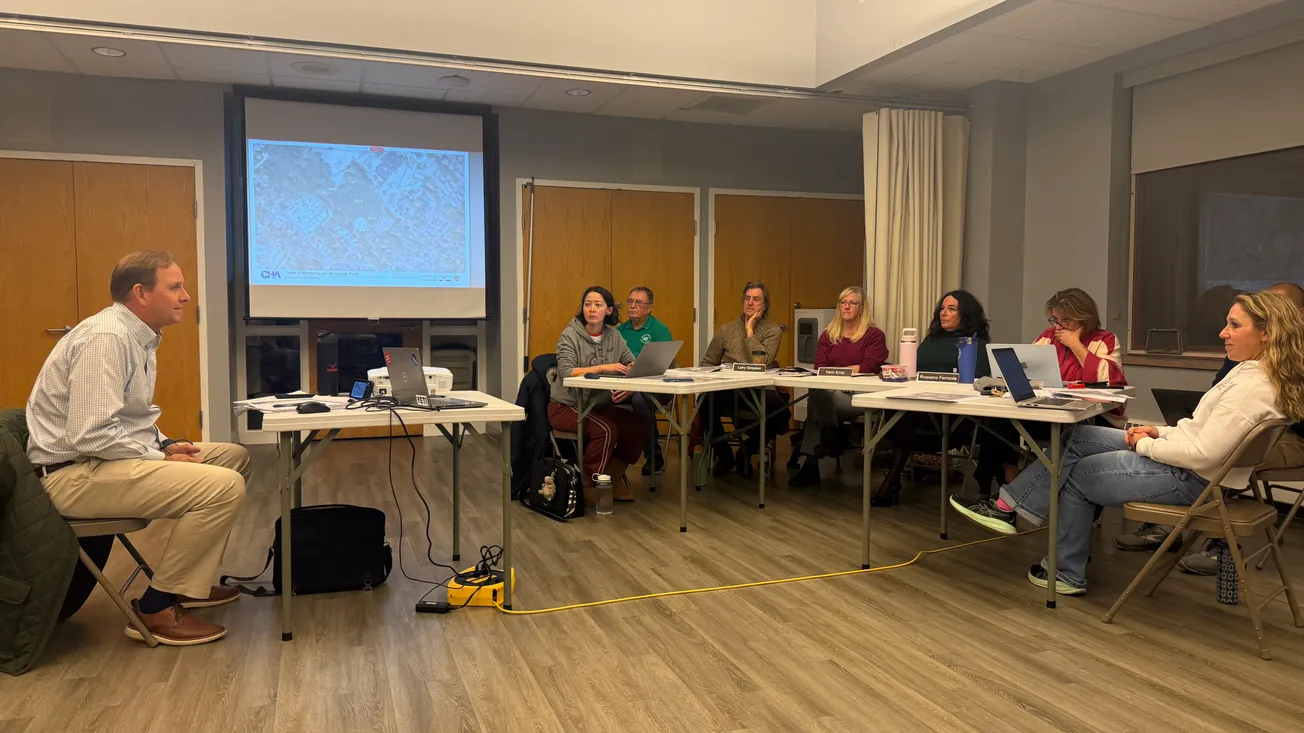
The Recreation and Parks Commission and the local community got their first detailed look at two design concepts for the Reynolds Park Sports Complex on Tuesday, viewing plans that would modernize the aging Green Street hockey rink with a covered pavilion and rebuild the adjacent softball field while reorganizing parking and traffic flow.
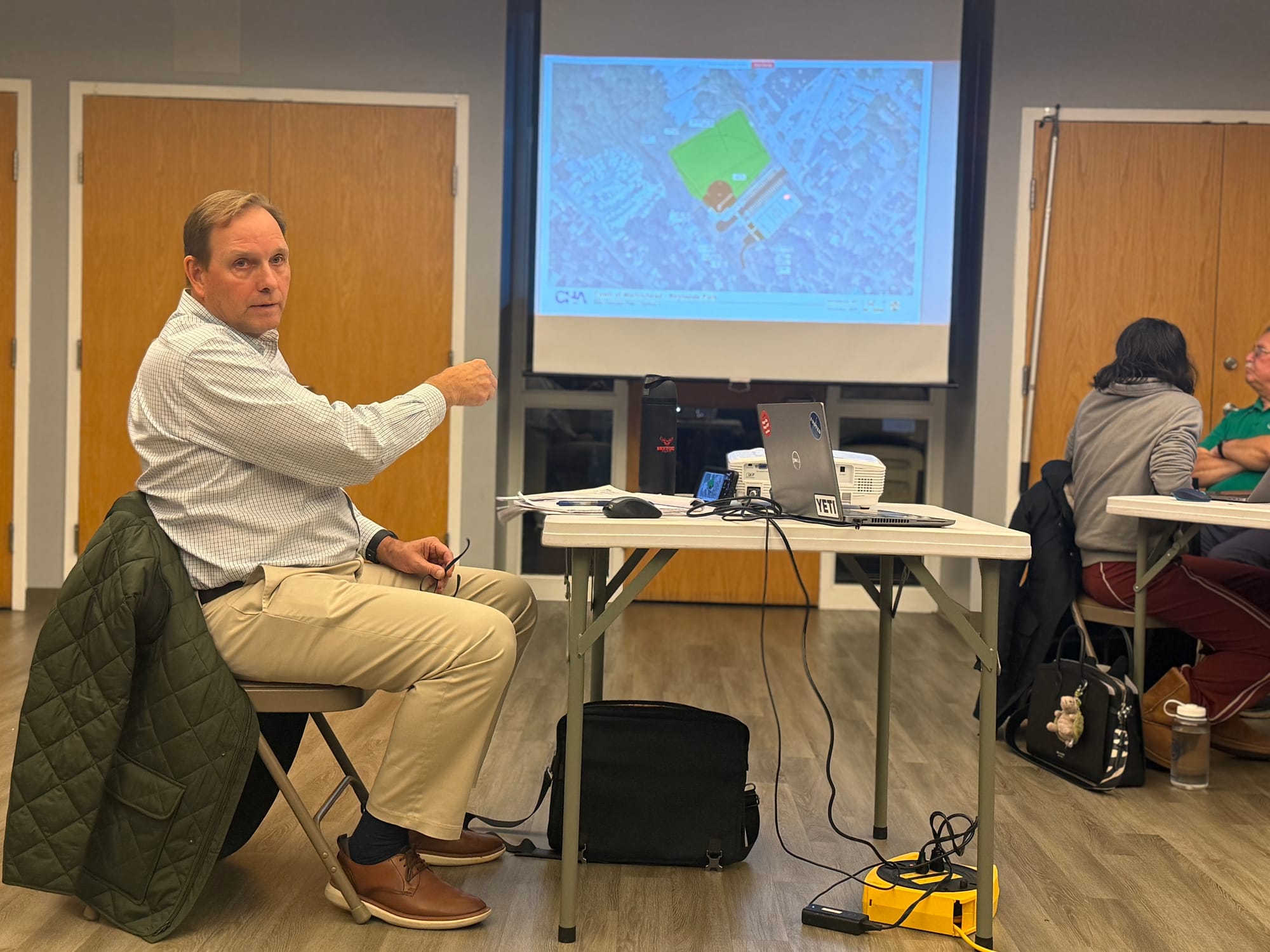
The presentation by CHA Consulting’s Mike Moonan, the project manager, showed neighbors and commissioners how the town might transform the park using the $3 million Larz Anderson bequest left to Marblehead in 2016.
Two concepts show covered rink, field options
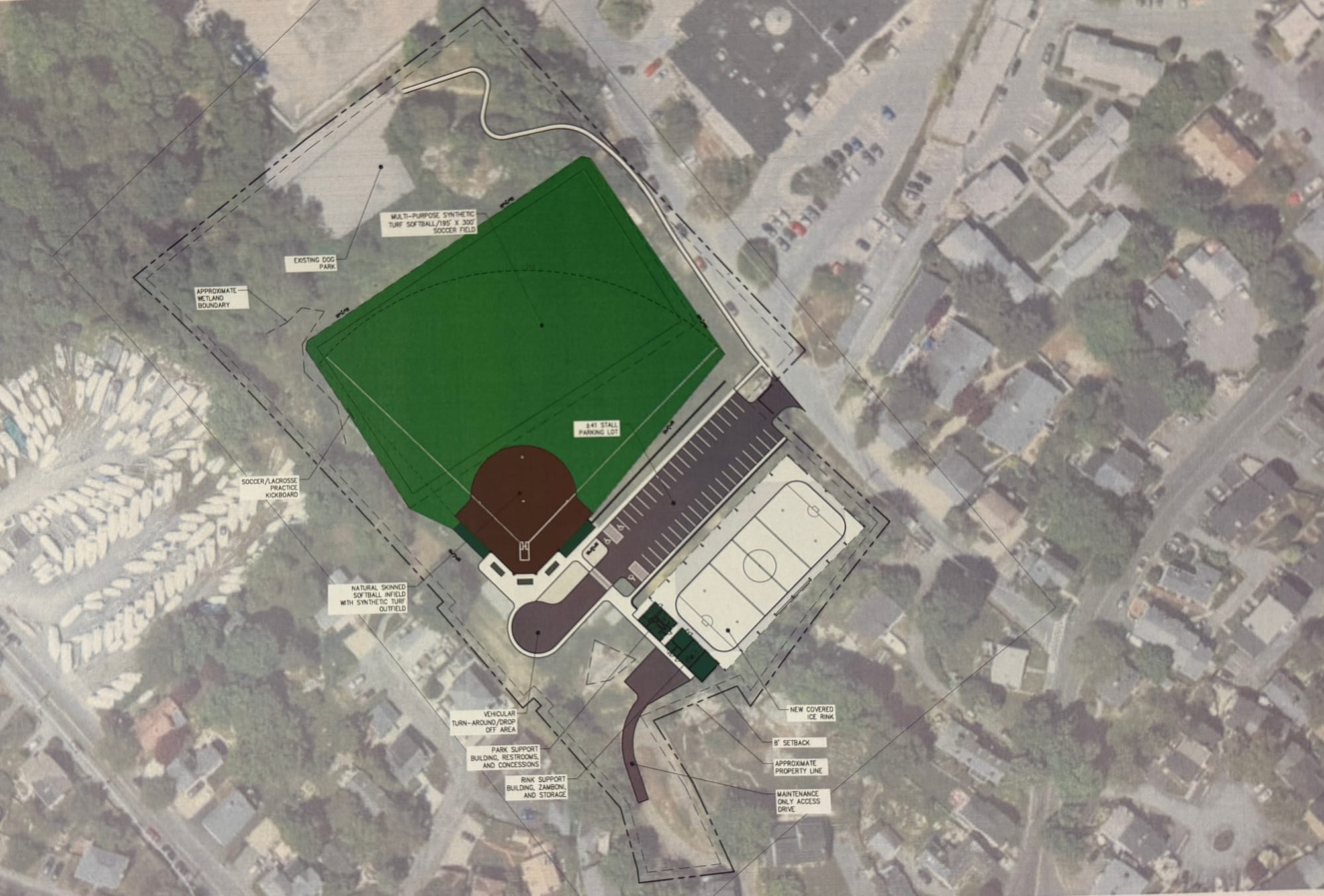
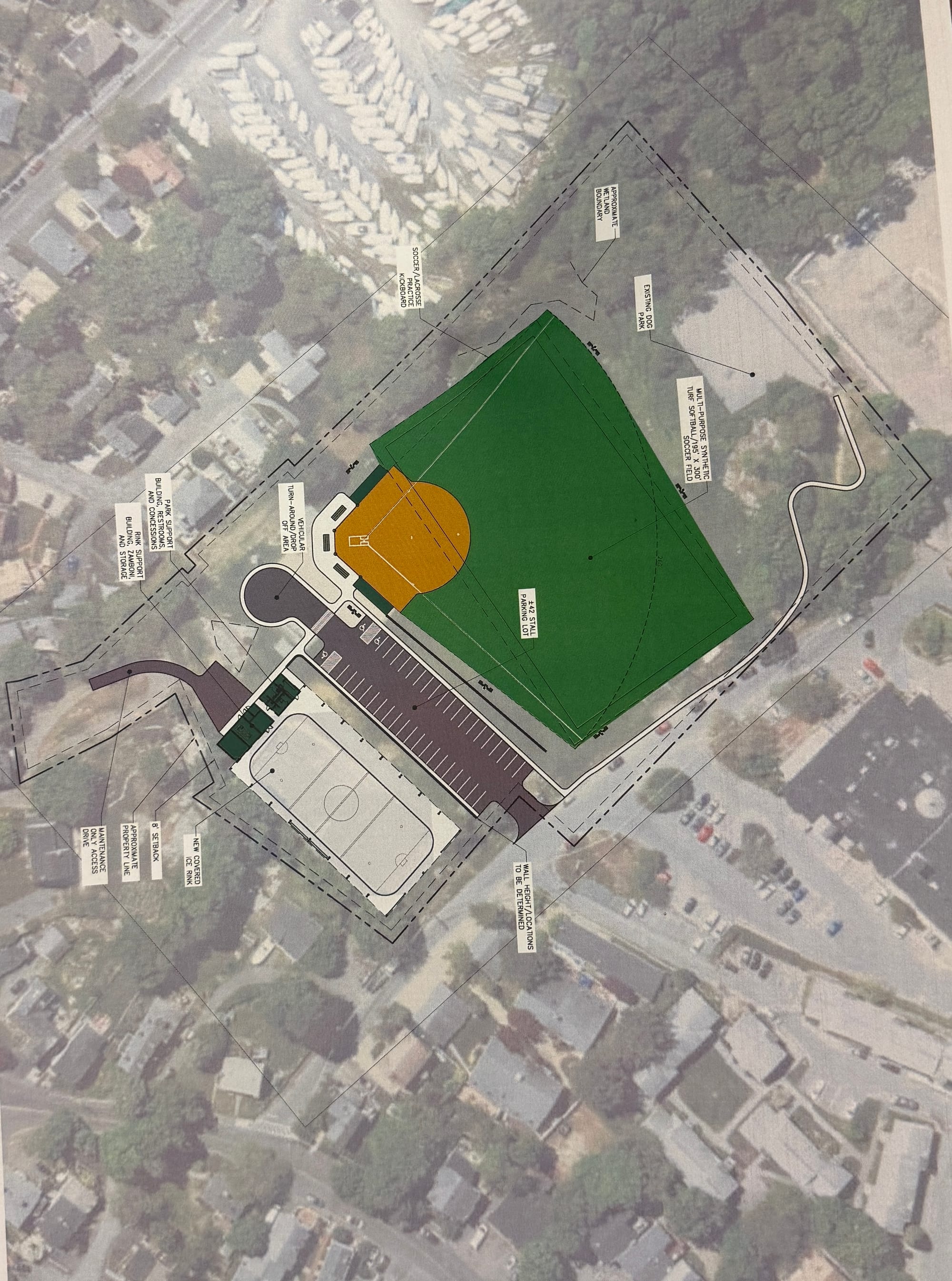
Both concepts feature a refrigerated 70-foot by 170-foot ice rink beneath an “airnasium” roof, a renovated ballfield with soccer overlay and formalized 90-degree parking accessed from a one-way loop. The two options differ primarily in the softball infield material: Concept 1 uses natural skin, while Concept 2 employs synthetic turf.
Recreation and Parks Commissioner Shelly Curran Bedrossian said the plans build on five community engagement meetings where parking, traffic, noise and field sustainability emerged as the biggest pain points. She told the commission that Charter School pickup and dropoff traffic already creates significant backups on Green Street regardless of park activity, and the new parking configuration could actually improve safety.
“We want to create a weather-independent sports facility,” Moonan told commissioners. “It’s going to be pay for play, rented sort of by the youth sports programs. It’s going to need a part time employee to drive a Zamboni.”
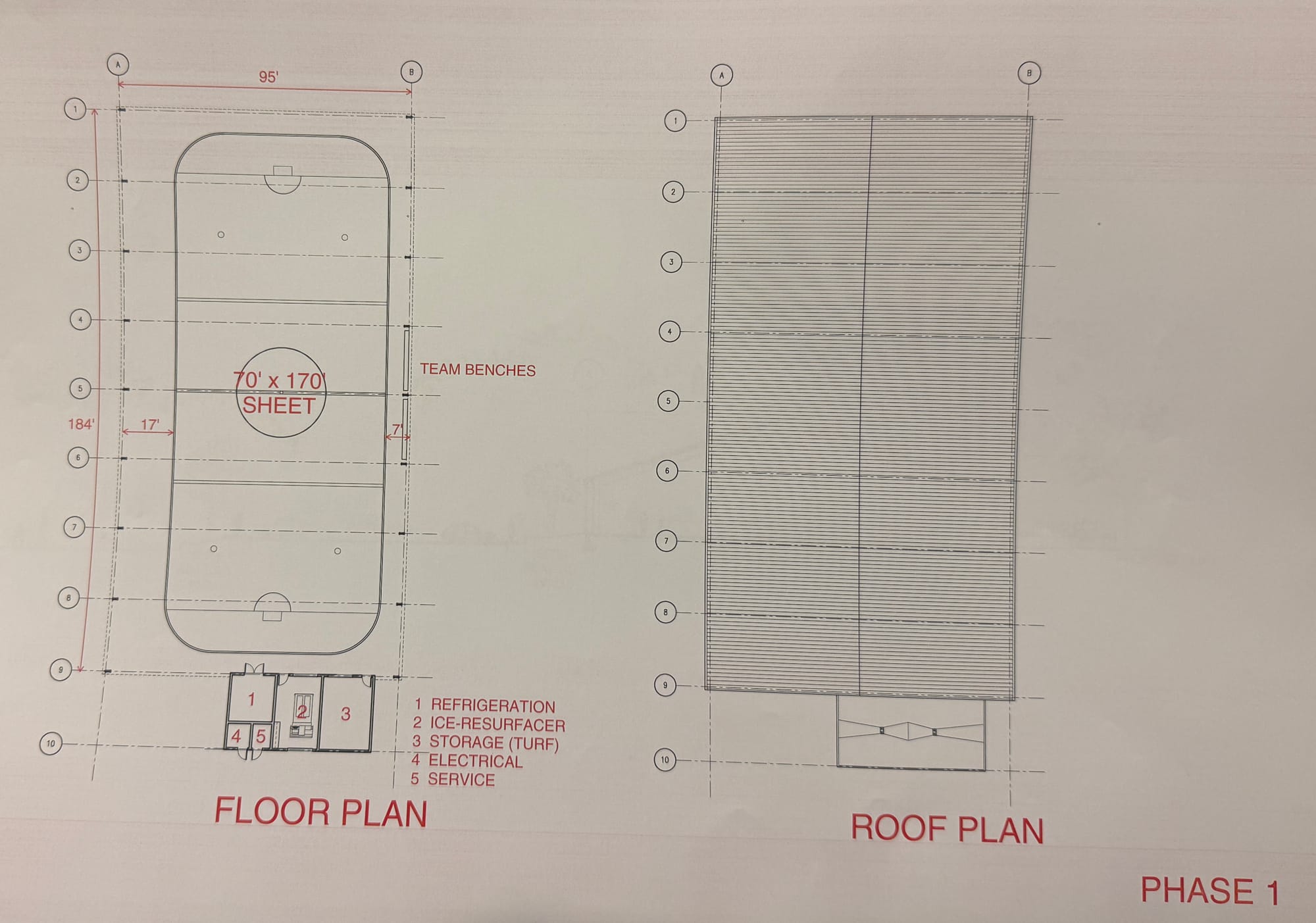
The current rink measures 170 feet by 70 feet, or 85 percent of regulation size, which Bedrossian said prevents high school or league games while preserving neighborhood scale. The new rink would maintain that footprint but add a pavilion-style roof, new boards and glass, refrigeration and a modular turf system allowing conversion to a covered practice field for 20 weeks annually when ice is not installed.
Phase 1 construction, projected to cost $2.639 million and fully funded by the Anderson bequest, would include a $635,000 refrigerated base, $835,000 pavilion-style roof, $195,000 in boards and glass, $109,000 in modular turf and $175,000 for a Zamboni and garage, with the town considering a used resurfacer for $50,000. A support building would house refrigeration equipment, ice-resurfacer storage, turf storage, electrical and service rooms. All is subject to change.
A future Phase 3, budgeted at $493,000, would add restrooms and a concession building that could be combined with the rink support structure for construction efficiency. Town Planner Alex Eitner recommended separating this phase to pursue federal grant funding for accessibility improvements.
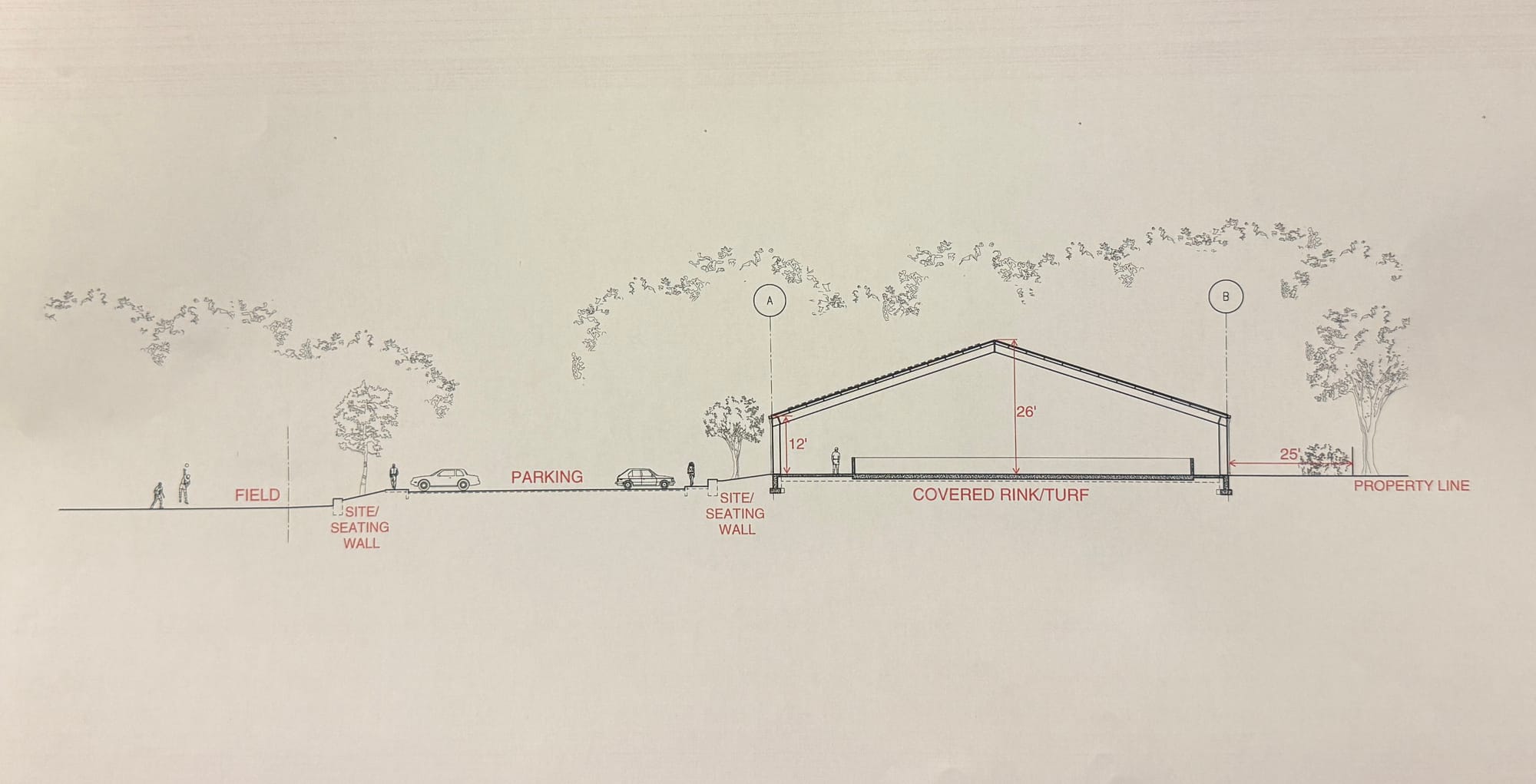
Moonan said the design includes retaining walls to manage an eight-foot elevation change between the rink and field levels, creating seating areas for spectators. Solar panels on the rink’s southwest-facing roof would supplement but not fully power the refrigeration system. Sound mitigation strategies under consideration include curtains on the airnasium sides, upgraded Plexiglas and roof materials selected for noise dampening, with options including metal or fabric.
Neighbors worry about property valuation, noise
Anna Rigo, who lives on Lime Street directly opposite the hockey rink, told commissioners she had not received a meeting agenda and wanted to understand what would happen to the property.
“I have dents in my garage door,” Rigo said. “So I appreciate finding a net that was finally put up here recently, but I’ve been doing this six years, and that’s why I had these dents. So I’m very interested in protecting my property. I’m also concerned about traffic.”
Ron Fillmore and Martin Ball, who live together in a Pond Street home abutting the park, expressed deeper worries about noise, property values and quality of life. Ball’s grandfather once owned land extending to the former town dump, and the men said the site was once a rose garden.
“We get the brunt of everything,” Fillmore said. “I’ve had my windshield smashed from a hockey puck. The balls come over the fence all the time.”
Fillmore questioned whether the airnasium roof would be metal or fabric and how sound from the Zamboni would be controlled. Ball said the project backs up to his yard and worried about his home’s desirability.
Studies, interdepartmental review next
Commissioner Karin Ernst asked whether team benches could be moved from the neighbor-facing side of the rink to the more public park side. Architect Karl Leabo, participating by Zoom, said the original concept had teams facing the ice but shifting benches west would direct noise toward open space rather than residences. Moonan said the rink had been rotated slightly and moved about 25 feet west to align with parking and push support buildings further from property lines.
Both concepts show approximately 41 parking spaces, pathways connecting to the dog park and underground drainage chambers beneath the field. Moonan said raising the field slightly above existing grade would help manage groundwater, which he expects to encounter given site characteristics and proximity to wetlands flagged in one corner of the property.
Wetland delineation surveys began the week of Nov. 1, followed by field and dog park topographic surveys. Geotechnical coring is scheduled for mid-to-late December, and a noise study is tentatively set for Dec. 1 when Marblehead Youth Hockey will stage a street hockey game “as loud as possible” to measure ambient versus activity noise levels.
Bedrossian said a Dec. 1 meeting with department heads will explore utility efficiencies and generate preliminary cost estimates for each phase.
Commissioners settled on both concepts move forward to interdepartmental review, with final selection to follow once geotechnical data and pricing are available.
The commission directed residents with additional questions to submit comments by email, noting future presentations would allow more interactive discussion once engineering studies provide definitive answers about site constraints and construction feasibility.
BEFORE YOU GO: If Reynolds Park matters to you, support this work
If this reporting on Reynolds Park has helped you understand this project — or if you simply want someone there when the next plan comes up for a vote — please consider supporting The Marblehead Independent.
It costs just $80,000 a year to keep The Independent running — to pay our lead reporter and editor, maintain our technology stack, show up at the meetings that shape Marblehead’s future and pursue enterprise stories. Annual/monthly contributions, or a one-time annual gift, directly funds more coverage of Marblehead’s parks, playing fields neighborhoods and town government. There’s no paywall; we believe everyone in town deserves access. But when those who can chip in choose to do so, we can keep doing this work — and do more of it.
🟦 Click here to become an Independent member
🟦 Click here to make a one-time contribution
Be Independent, with us.