Table of Contents
Get our free local reporting delivered straight to your inbox. No noise, no spam — just clear, independent coverage of Marblehead. Sign up for our once-a-week newsletter.
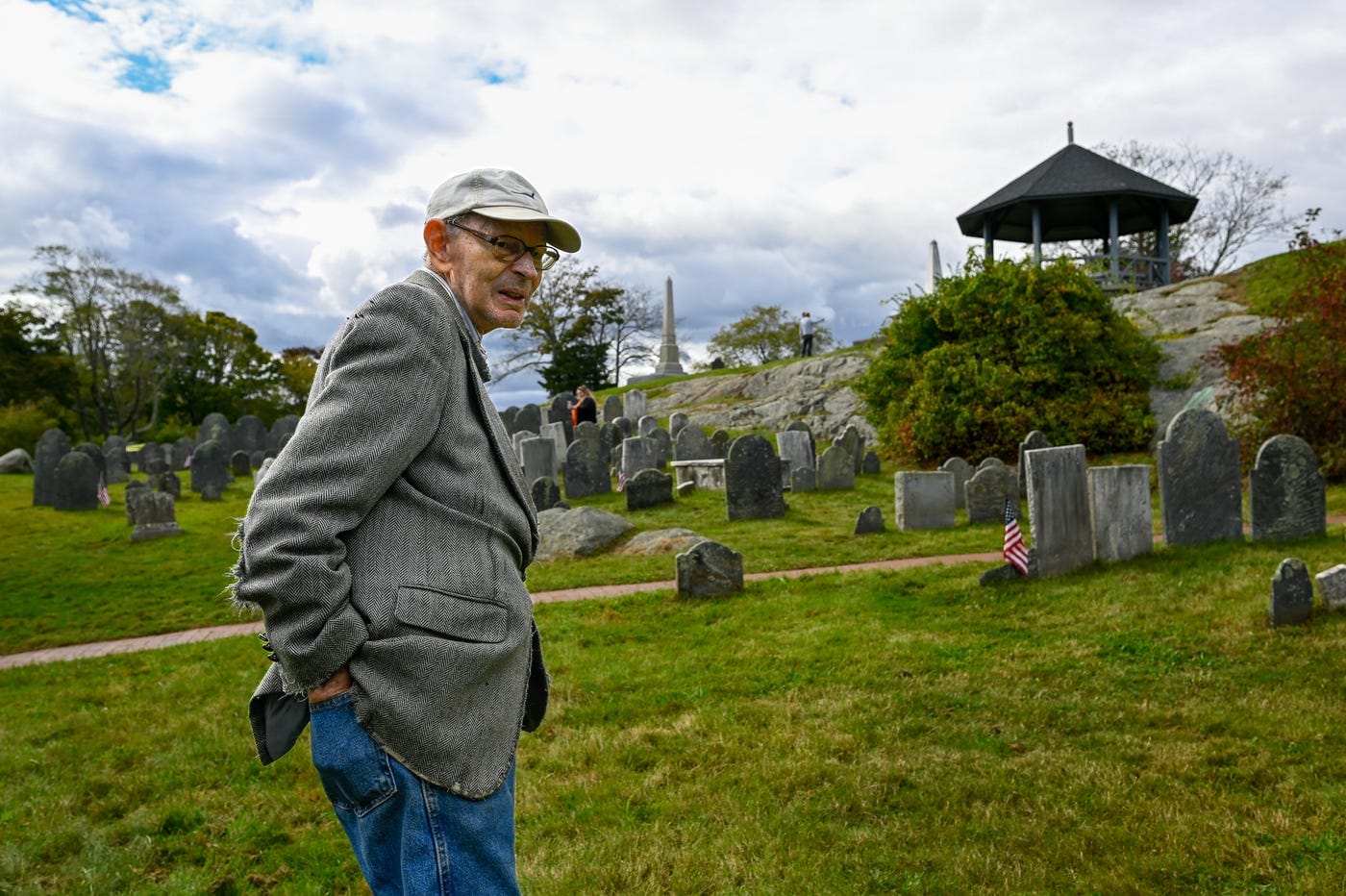
Standley H. Goodwin, a Marblehead engineer who contributed to the Apollo missions that put Neil Armstrong on the moon and who photographed and cataloged nearly every headstone on Old Burial Hill, died Monday. He was 88.
His sister, Harriett Gowell, confirmed his death by phone Tuesday morning. Patty Pederson, president of the Marblehead Museum board of directors, said he had been sick for a while and under hospice care.
Stone by stone
Except for two weeks after his birth, Goodwin lived almost his entire life in a Norman Street bungalow that town property records date to 1937, the year before he was born. Old Burial Hill was his back yard, and Redd's Pond, where he raced model yachts for more than six decades, lay within view.
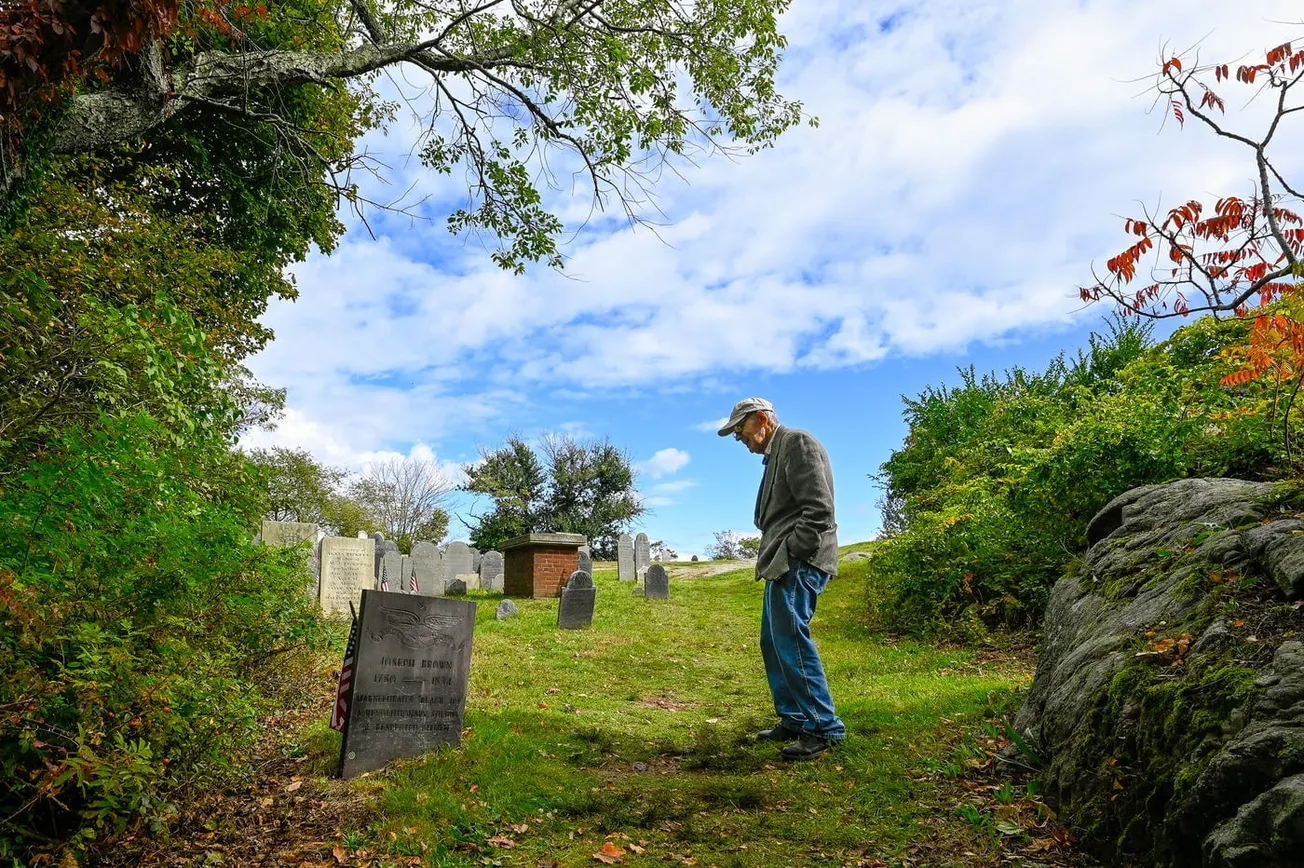
In the late summer of 2014, at 76, he began photographing the headstones on the hill, though he had never taken pictures before, Gowell said. He used a $120 point-and-shoot camera.
“I bought it for him,” she said. "It did the job.”
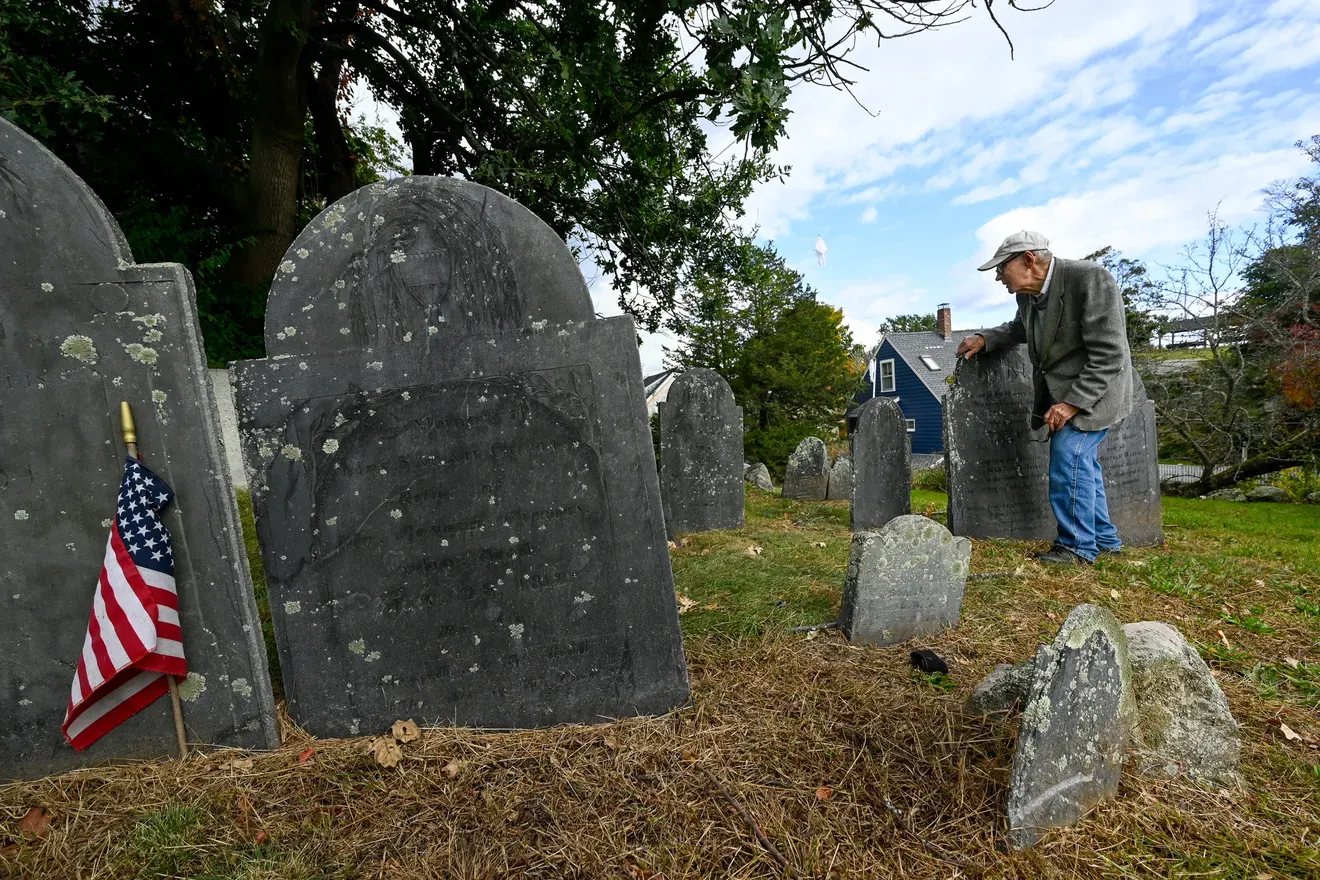
He worked close to the ground, a tarp under him when the grass was wet, and shot some stones again and again.
Lauren McCormack, a former executive director of the museum, wrote in an email that he "would wait hours until the sun was in just the right place to take photographs, and then spent additional hours on the computer touching up the images."
The town's Old Burial Hill Cemetery Archive now holds about 700 images of 657 headstones and monuments, in volumes that carry Goodwin's name. Where inscriptions had worn away, the town notes, vital records and a 1937 Daughters of the American Revolution transcription filled the gaps.
He studied the carvers as much as the dead. In 2015 he gave a museum lecture titled "The Art of the Tombstone on Old Burial Hill." "The workmanship on the stones is absolutely amazing," he said.
The Select Board appointed him to the Old Burial Hill Committee in 2016. Pam Peterson, a former executive director of the Marblehead Museum and a fellow member, called him its most dedicated. He recommended restorations, she said, and paid toward them every year.
He was born June 22, 1938, in Salem hospital because his mother needed a cesarean section, which the old Mary Alley Hospital on Franklin Street did not perform.
His father, Emerson Standley Goodwin, fished for lobster out of Little Harbor on a boat named for his daughter — “Harriett G.” His mother, Gretta Mae (Caswell) Goodwin, looked after the house and later worked at the town's electric light office. The middle initial "H" in Standley’s name stands for Henry, after his grandfather, Henry Emerson Goodwin.
Boyhood on Redd's Pond
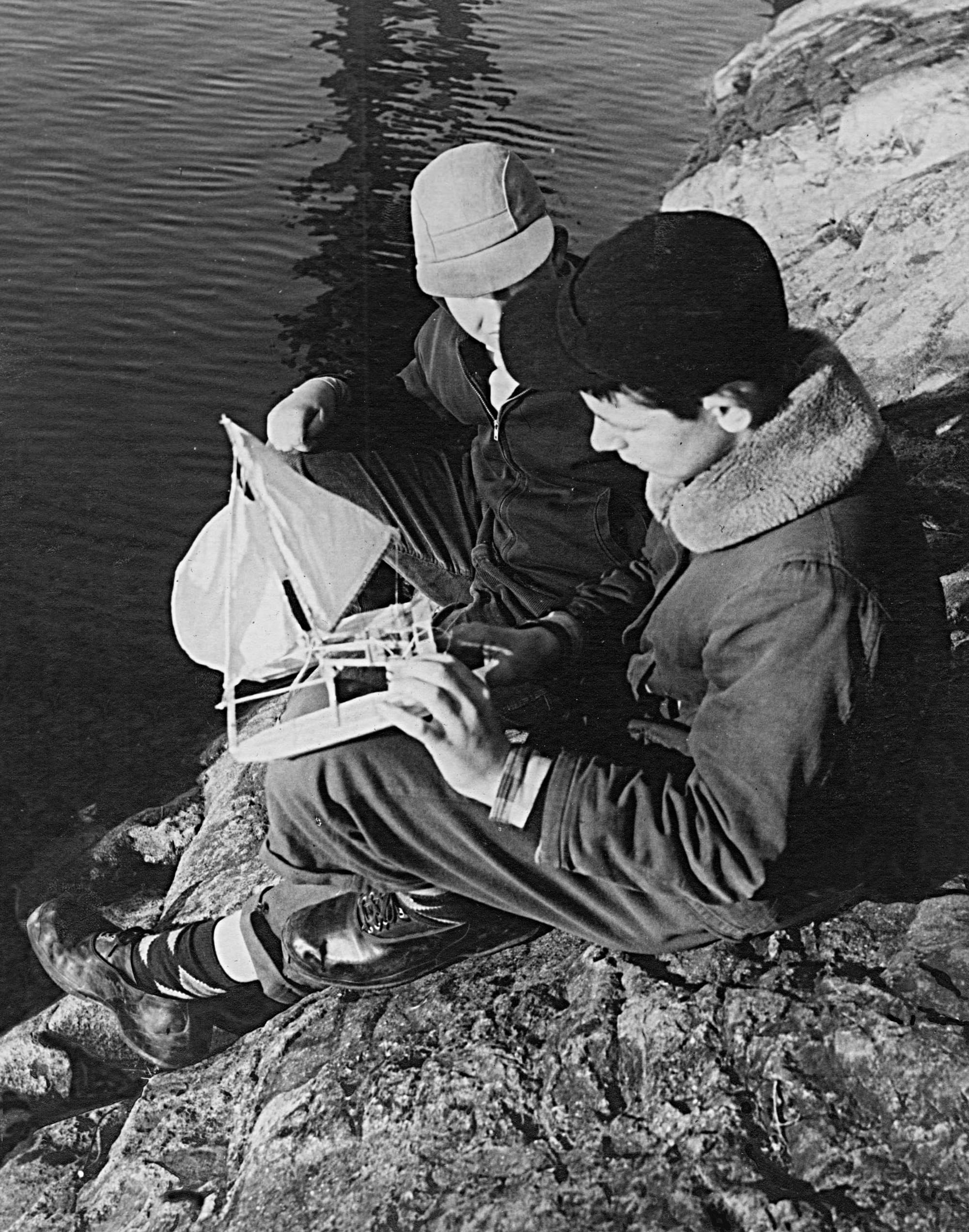
Goodwin built his model yachts from the time he was a little boy.
“They were a great love of his,” his sister said. “He spent hours and hours building them because they had to meet very specific specifications.”
As a boy, in the 1940s by her guess, he also built a remote-controlled balsa-wood airplane and flew it at night. She'd never seen anything like it.
He joined the Marblehead Model Yacht Club in 1954, the year he turned 16, and found it barely alive.
"The older members were having meetings, but they weren't sailing," he told the 01945 magazine. "There were a half-dozen younger kids who got interested all at the same time; we kind of resurrected the affair, and we've been sailing there ever since."
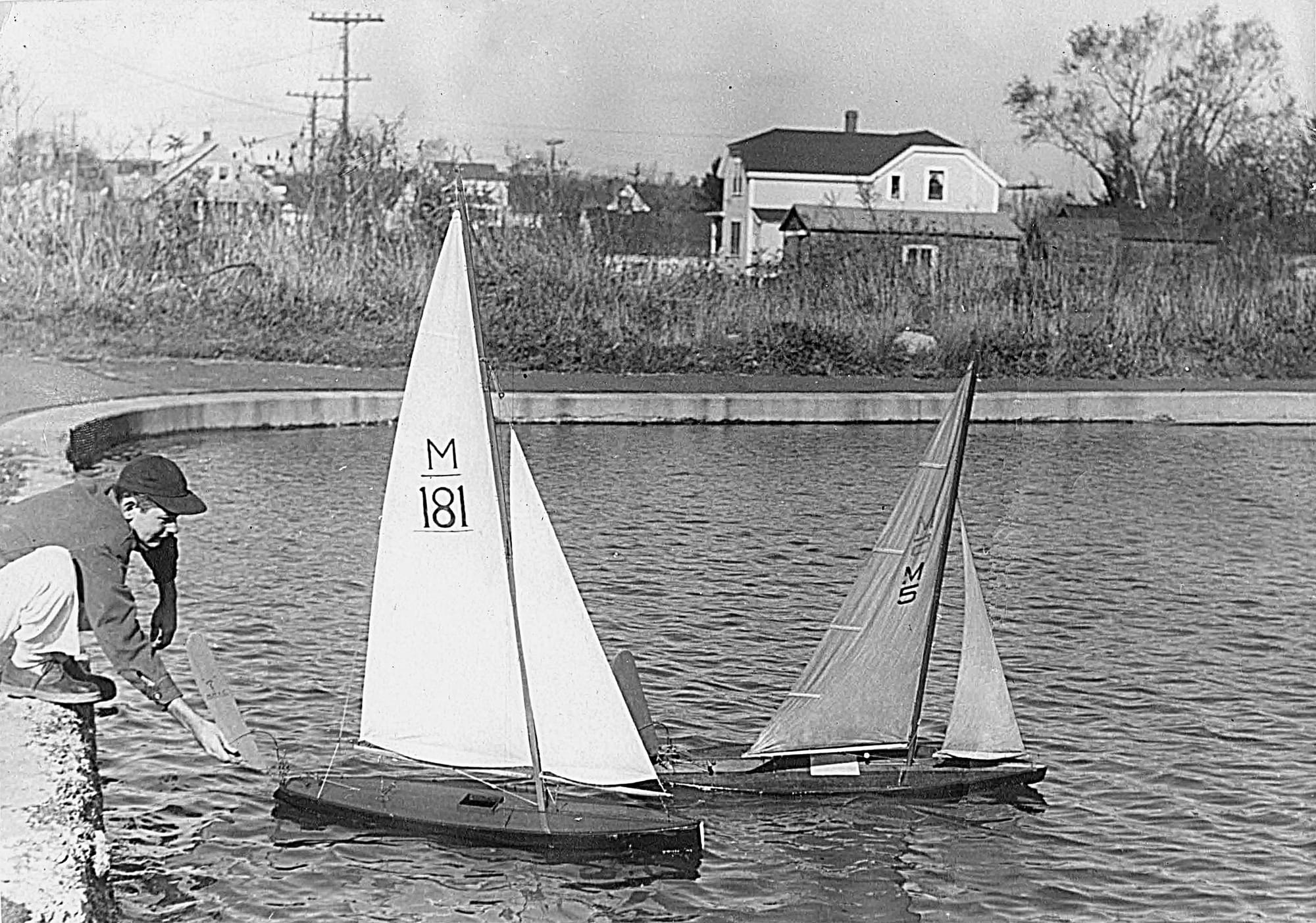
The boats of his boyhood sailed free, steered by vanes, with no radio to rescue a bad start. Rocks hid below the pond's surface, and the wind bent around the trees. Those trees, Biff Martin told the magazine, make it nearly impossible to show up and win.
Goodwin won anyway. In June 1961, he took a 13-race series that ended in a 10-knot northeaster, The Marblehead Messenger reported. The runner-up, John Snow, had finished second seven straight times.
A decade later, model yachting split between two rival national bodies, one loyal to free sailing and one pushing radio control. Each crowned a champion in 1971. Goodwin won both, with the same boat, Warrior I, according to the U.S. Vintage Model Yacht Group.
By 2021, boats, sails and plaques filled every corner of his house, including those from eight national championships. At one, in Toronto in 1974, the profile said he "came out of nowhere" to win.
He sailed until about two years ago, his sister said, when he realized he couldn't cross the rocks at the pond without watching his feet.
"You can't sail a boat looking at your feet," she said with a chuckle.
Martin, the club’s current commodore, has know Goodwin since the age of 3. Some summers they were the only two sailing, meeting Sunday mornings for 10 races.
"He's a piece of work," Martin told 01945. "Every time that I've gone to Redd's Pond I've gone to beat him, even when we were kids. He's pretty good at what he does, but sometimes — sometimes — I can beat him. And he knows it."
Standley, the engineer
Goodwin graduated from Marblehead High School in 1956. He earned a degree in aeronautical engineering from the Massachusetts Institute of Technology in 1961 and a master's degree in 1962, his sister said.
Goodwin spent his career at Draper Laboratory, the Cambridge laboratory that began as MIT's Instrumentation Laboratory. In 1961, NASA hired it for the first major Apollo contract: design the system that would steer astronauts to the moon and home again.
He worked on accelerometers, instruments that tell a spacecraft how much it is speeding up or slowing down. The laboratory counted his 1965 report on testing one among its Apollo work.
Each Apollo command module carried three accelerometers at the center of its guidance system, according to the laboratory's 1971 final report to NASA. They measured every push of the rocket engines and every tug of the atmosphere and fed those numbers to the onboard computer. More accurate instruments, the report said, meant more efficient maneuvers, fuel savings and greater reliability.
"When I was 12, I knew I wanted to be involved in aerospace," he told The Salem News in 2015.
He had worked at the laboratory for 51 years, including on missile-guidance systems. Asked whether he celebrated the moon landing, he said, "I found it interesting."
"He never talked about any of that," his sister said.
Peterson met him about 2010, when he started using the museum's archives while still working at Draper. He kept consulting there after he retired, she said.
"We always knew which days he had been to Cambridge because he had his go to work clothes and his work at home clothes," Peterson wrote in an email.
He stood apart, arms folded
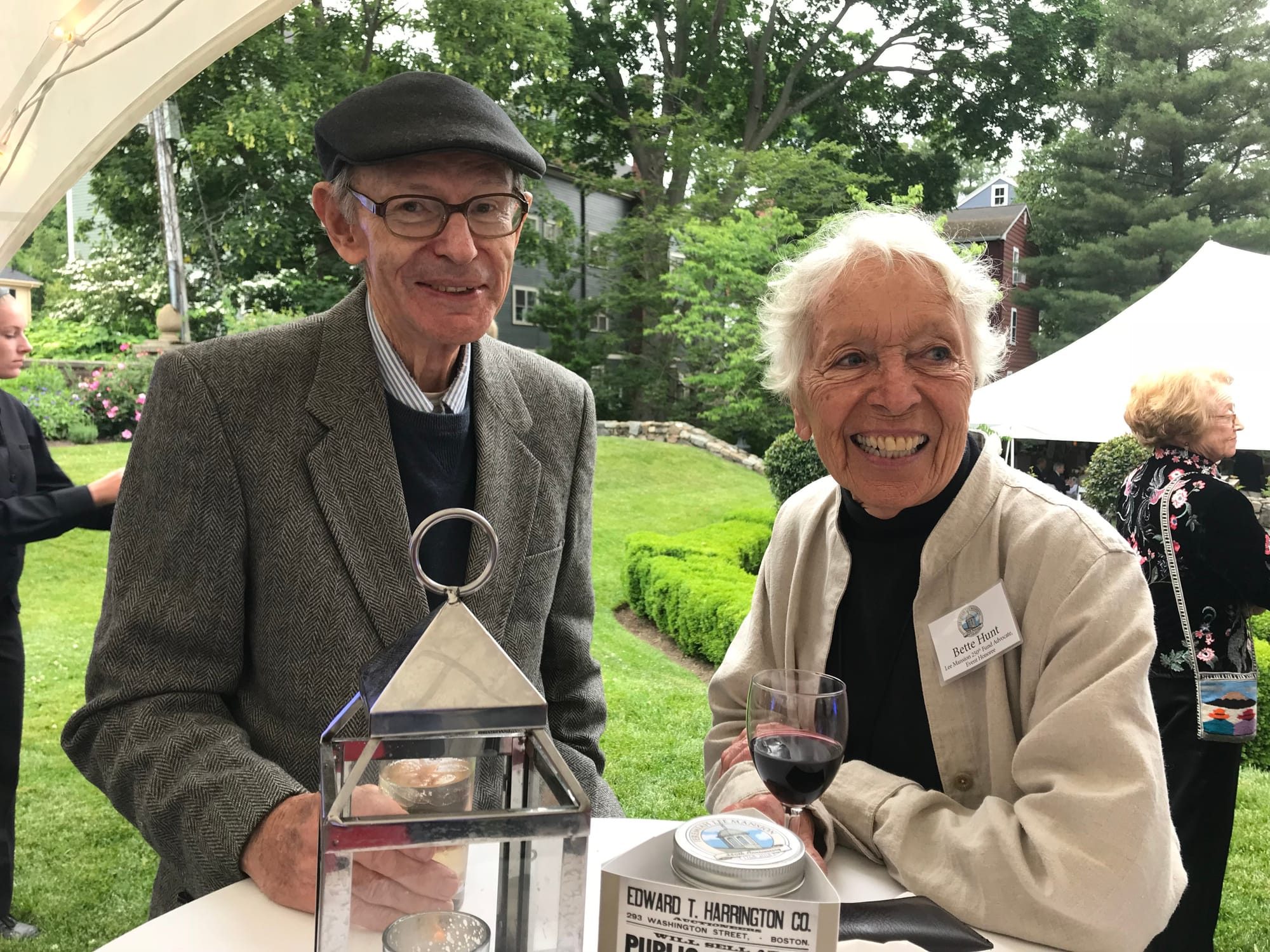
Bette Hunt, a fellow historian known for her walking tours, remembers a photograph from one of them.
She is in the right-hand corner, she said, pointing something out to the group. Goodwin stood apart from them – practically in another zip code — with his arms folded.
“That’s Standley,” she said, adding they shared a great friendship. “He‘d call me: ‘Care for a visit?’ He’d come over to talk.”
She characterized his writing and research as “meticulous” and “spot on.” That is high praise coming from Marblehead’s town historian emerita.
The two appeared together in an MHTV program on the Great Gale of 1846, which Hunt hosted. Goodwin explained that his great-great-grandfather had skippered the schooner Warrior, lost with all hands when the hurricane struck Marblehead's fleet on the Grand Banks. The only wreckage to come home, he said, was the stern of the Warrior's small boat. A survivor's account read in the program names the skipper as Sands Stanley.
Credit he would not take
At the museum, Goodwin scanned research notes for genealogists, cataloged archival items, including thousands he donated from his family's collection, and led tours of the Jeremiah Lee Mansion as a docent, McCormack wrote. He lectured, and in 2013 he joined the museum's board.
More than a decade ago, Pederson said, he came to her house for lunch almost every day to talk about the museum and the town. He "became almost like a second father to me in some ways," she said.
In April 2021, with his donation and support from his attorney Pat Lausier and National Grand Bank, the museum bought Jeremiah Lee's Brick Kitchen and Slave Quarters at 157 Washington St. Built from 1766 to 1768, it served the Lee Mansion as a carriage house and detached kitchen and, according to reminiscences, as the quarters of people whom Lee enslaved.
"Without him, there really was no way the museum could have afforded to purchase the building," McCormack wrote. He helped plan its rehabilitation, she said.
The restored building opened to the public June 1. Its second floor holds the Standley Goodwin Research Center. He "did so much, and he didn't want people to know how much he really did," she said.
His burial at Waterside Cemetery will be private. Pederson said the museum is planning a celebration of life with Lausier, who was close to Goodwin.
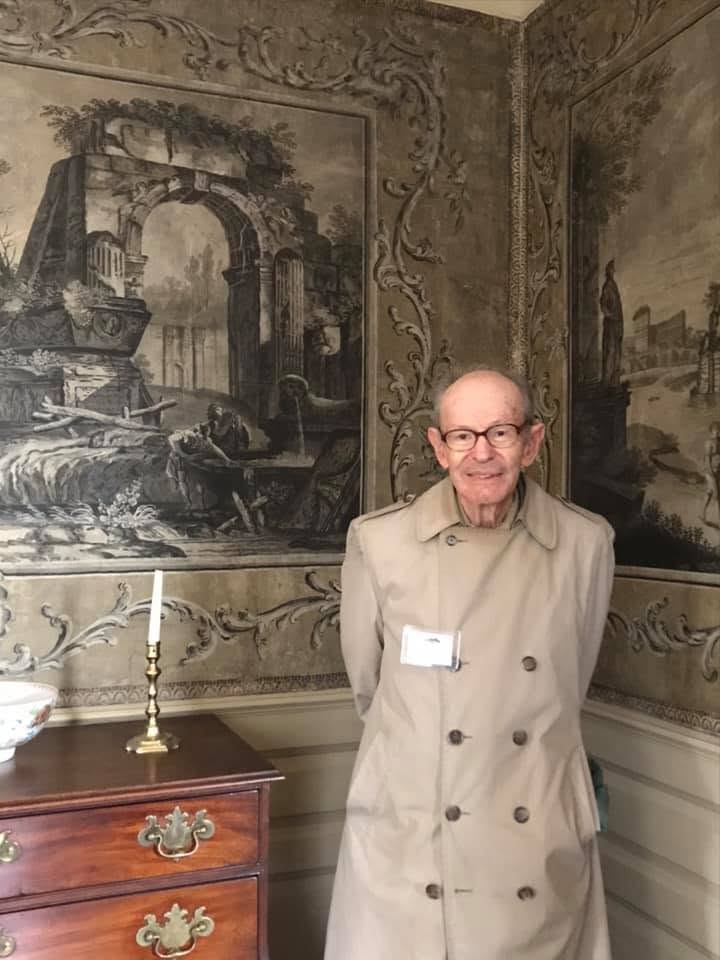
Goodwin never married and had no children, and he is survived by his sister and her daughter.
"He had a wonderful life," Pederson said, "and he did it on his own terms."
In November 2015, Goodwin greeted Pederson at his door for an interview and told her he had put on his best dress shirt, she wrote.
They spent the morning walking Old Burial Hill. Asked for a mystery, he named George Carew, who came from Barbados and Jamaica and died in 1750 at 27. No records explained who Carew was or how he died, Goodwin told her. His best guess was that Carew came by ship to trade spices.
"I got a picture of him with that tombstone, and I never forgot that," Pederson said.
He had not been able to solve it.
"I have wondered about him for years," he said.