The Fourth: a parade, a Declaration and fireworks over the harbor
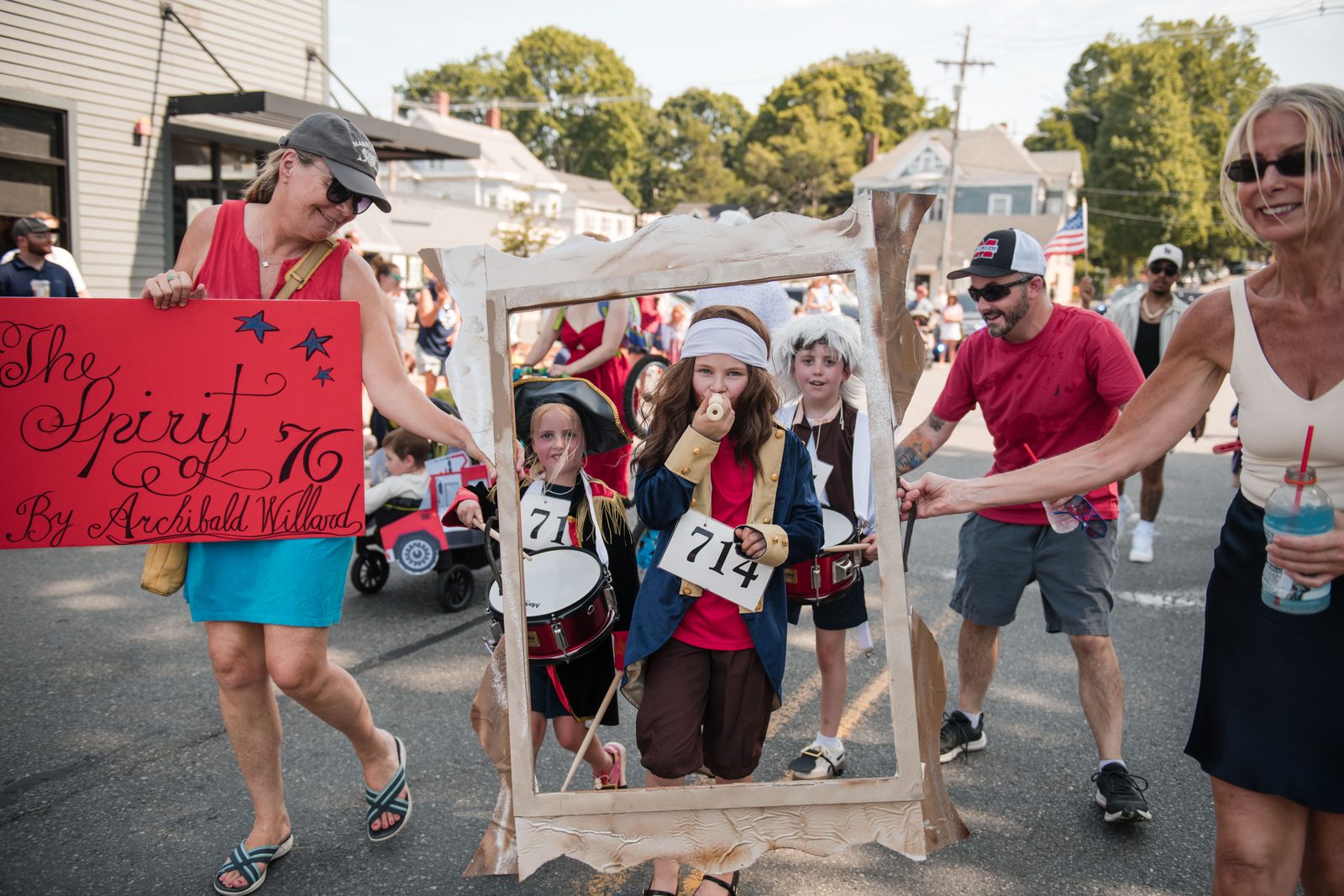
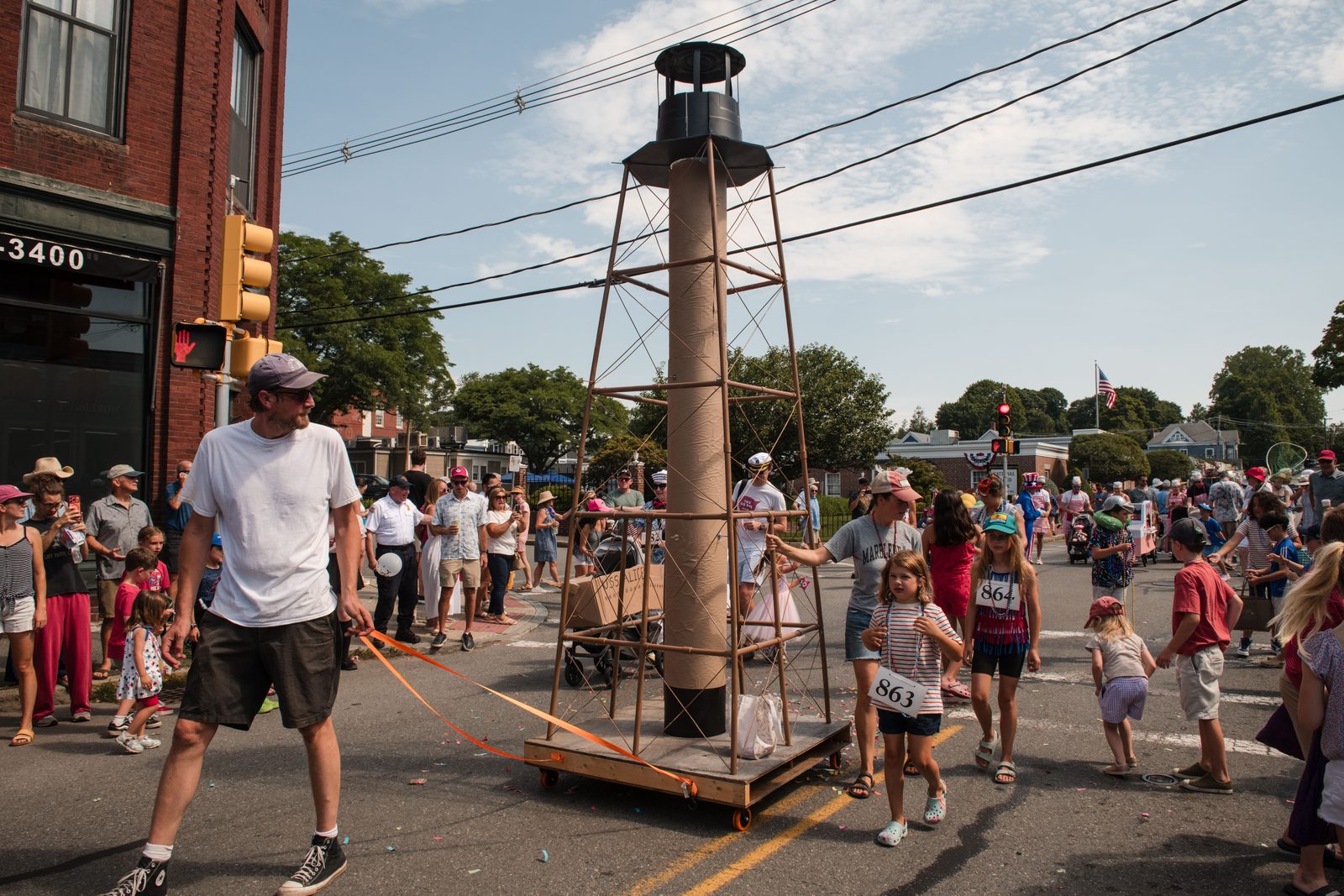
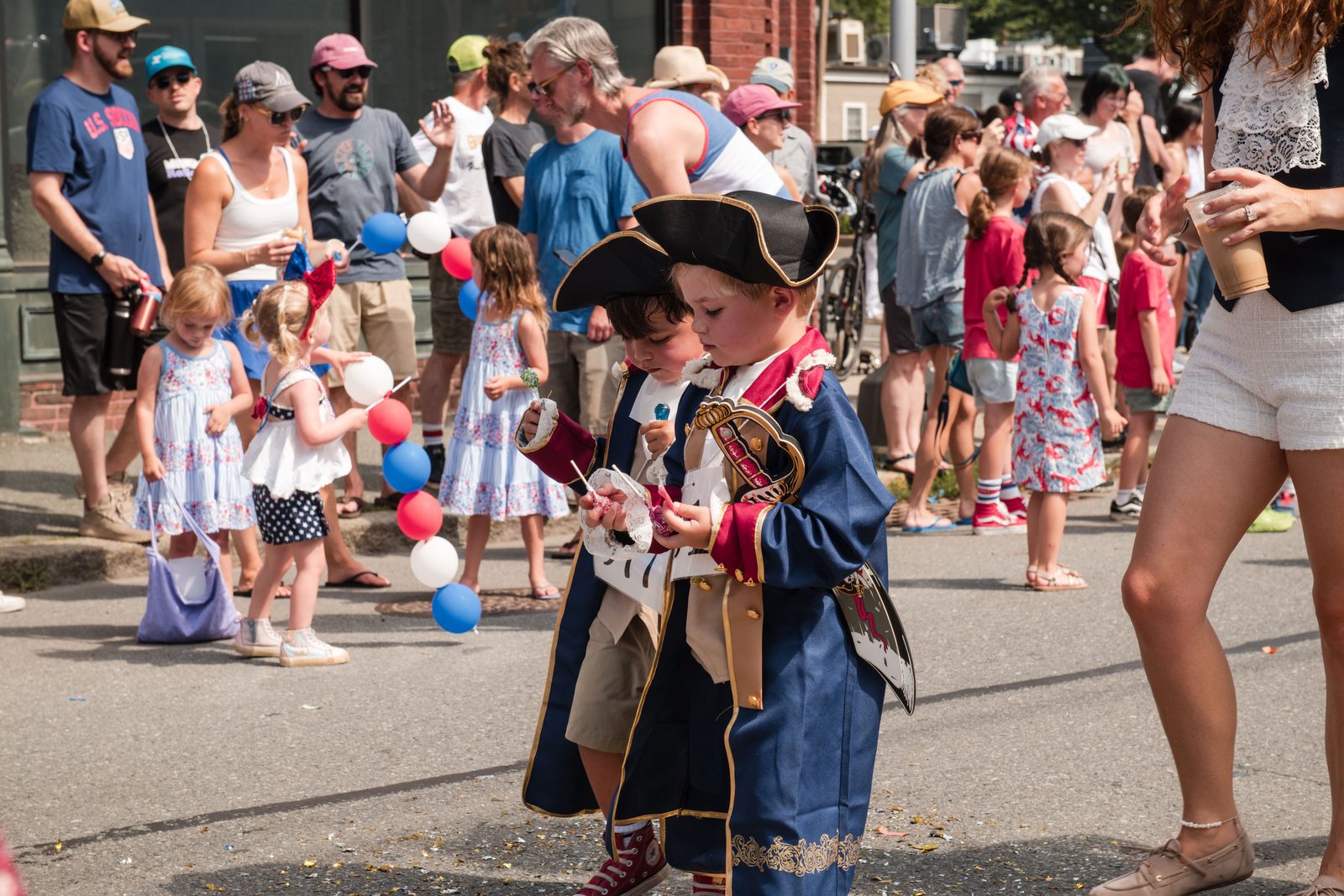
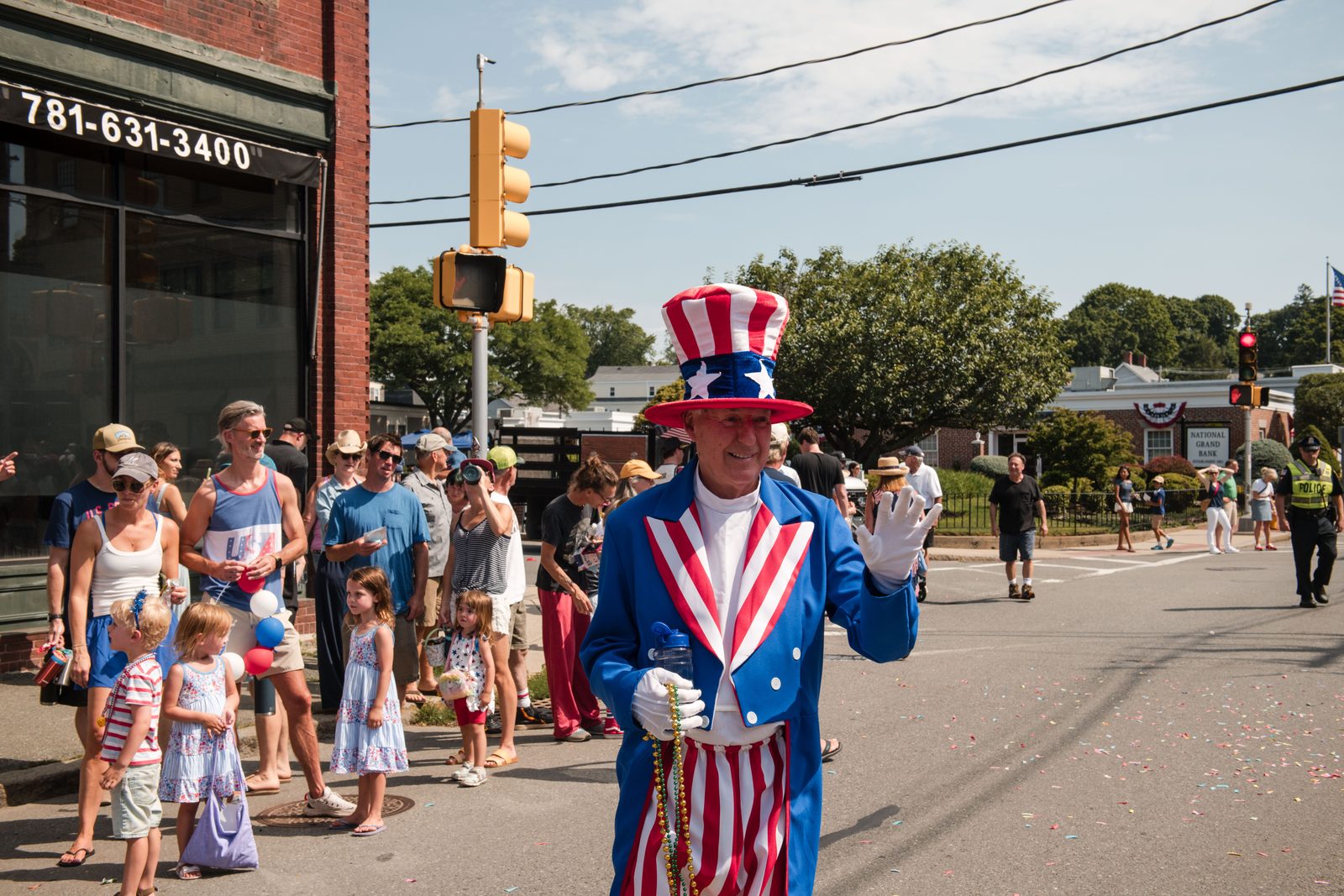
The Fourth is Marblehead’s day of days, and it opens the way it always has — not with a marching band and a reviewing stand but with the Horribles Parade, the town’s homemade ramble down through Old Town, where the one rule is that you make the costume yourself. This year the country was turning 250 and the whole parade seemed to know it: 1776 and 2026 painted on a bedsheet, a fife-and-drum trio posed inside a torn gilt frame, Uncle Sam waving a gloved hand between the strollers and the wagons.
Then came the long, hot middle of the day — a Declaration read aloud in the room where ‘The Spirit of ’76’ hangs, a crew out on a barge stacking the shells that would end it — and, after dark, the thing the whole town waits for: the fireworks, up over the water and doubled in the harbor, with half of Marblehead on the beach to watch.
The Horribles Parade
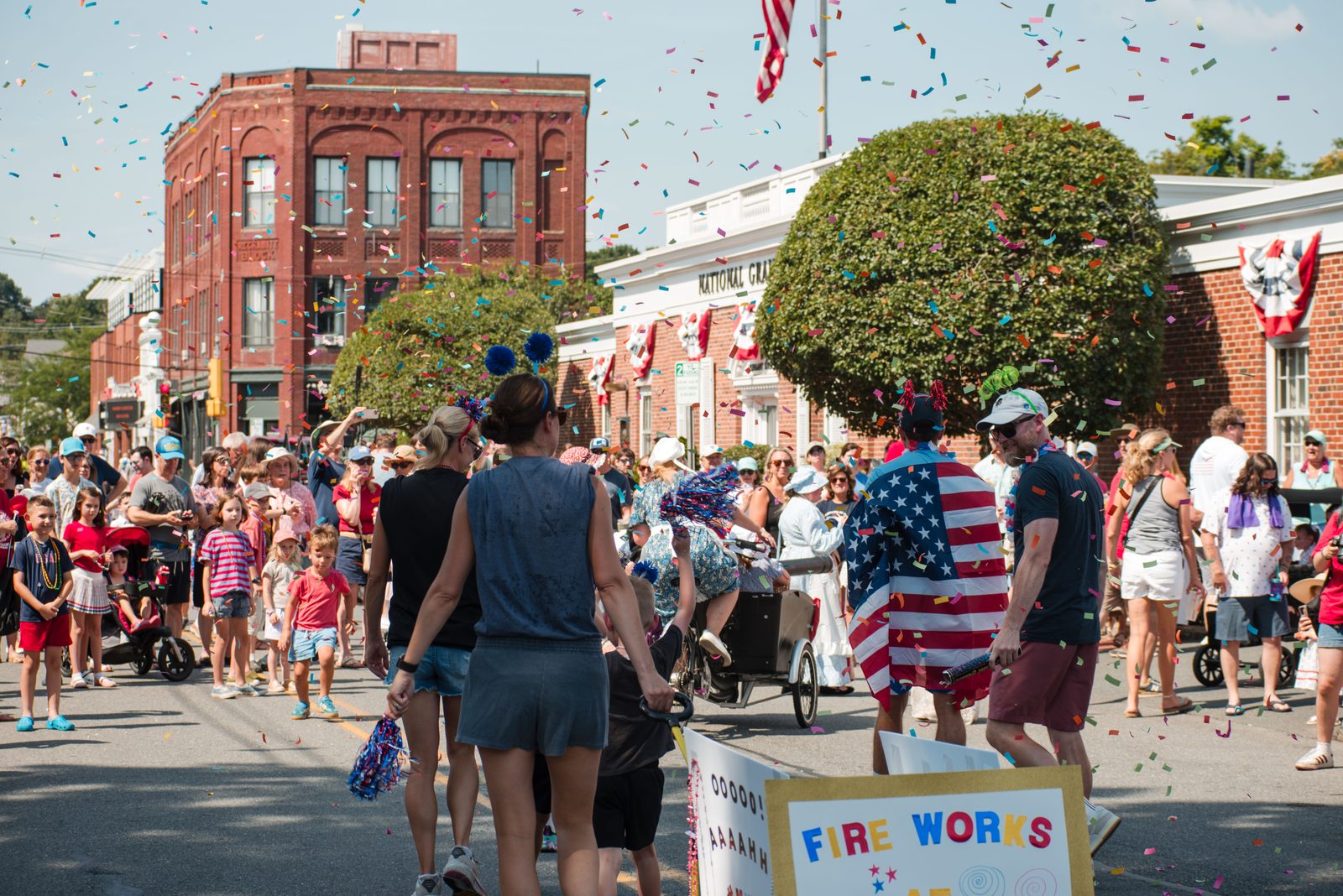
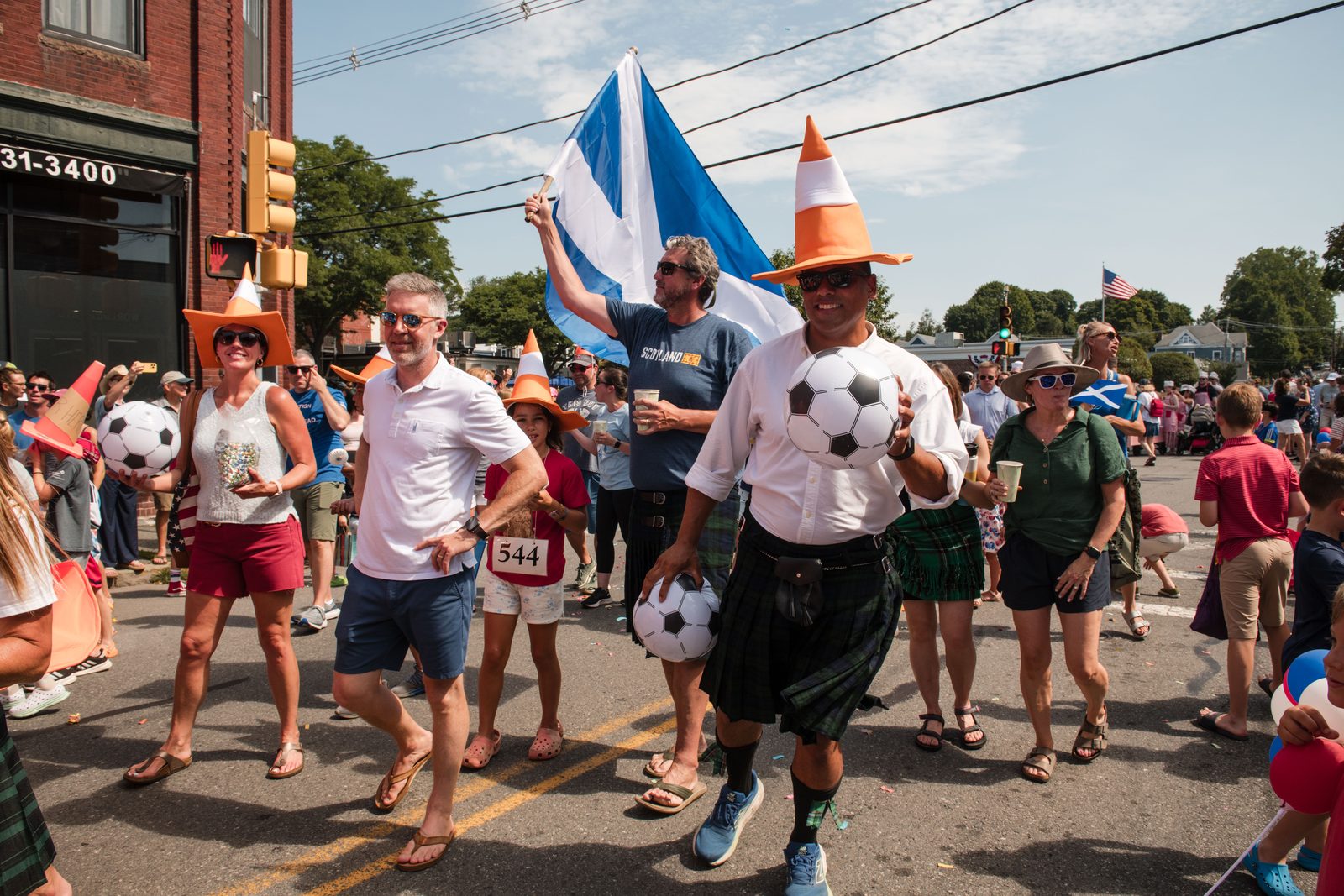
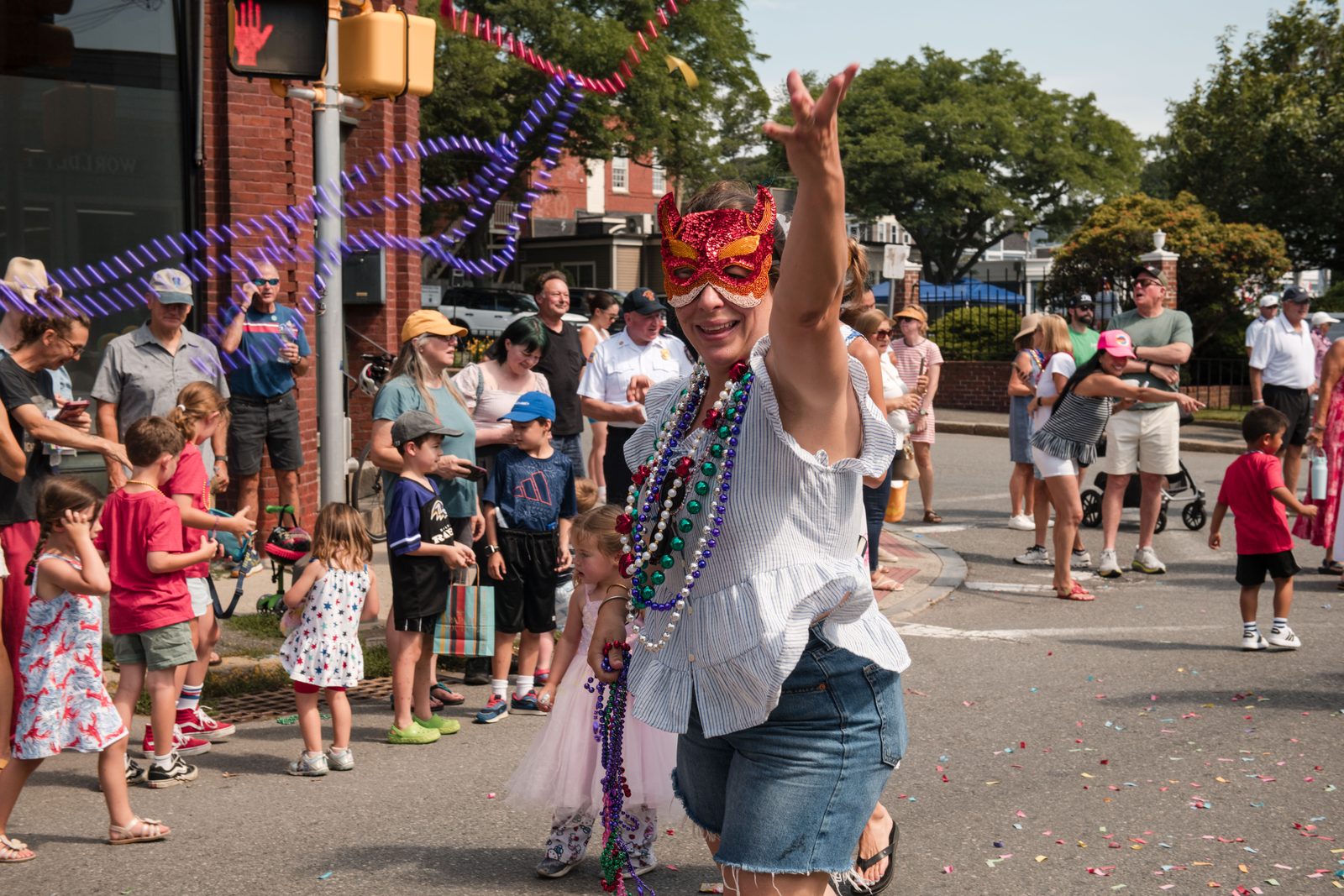
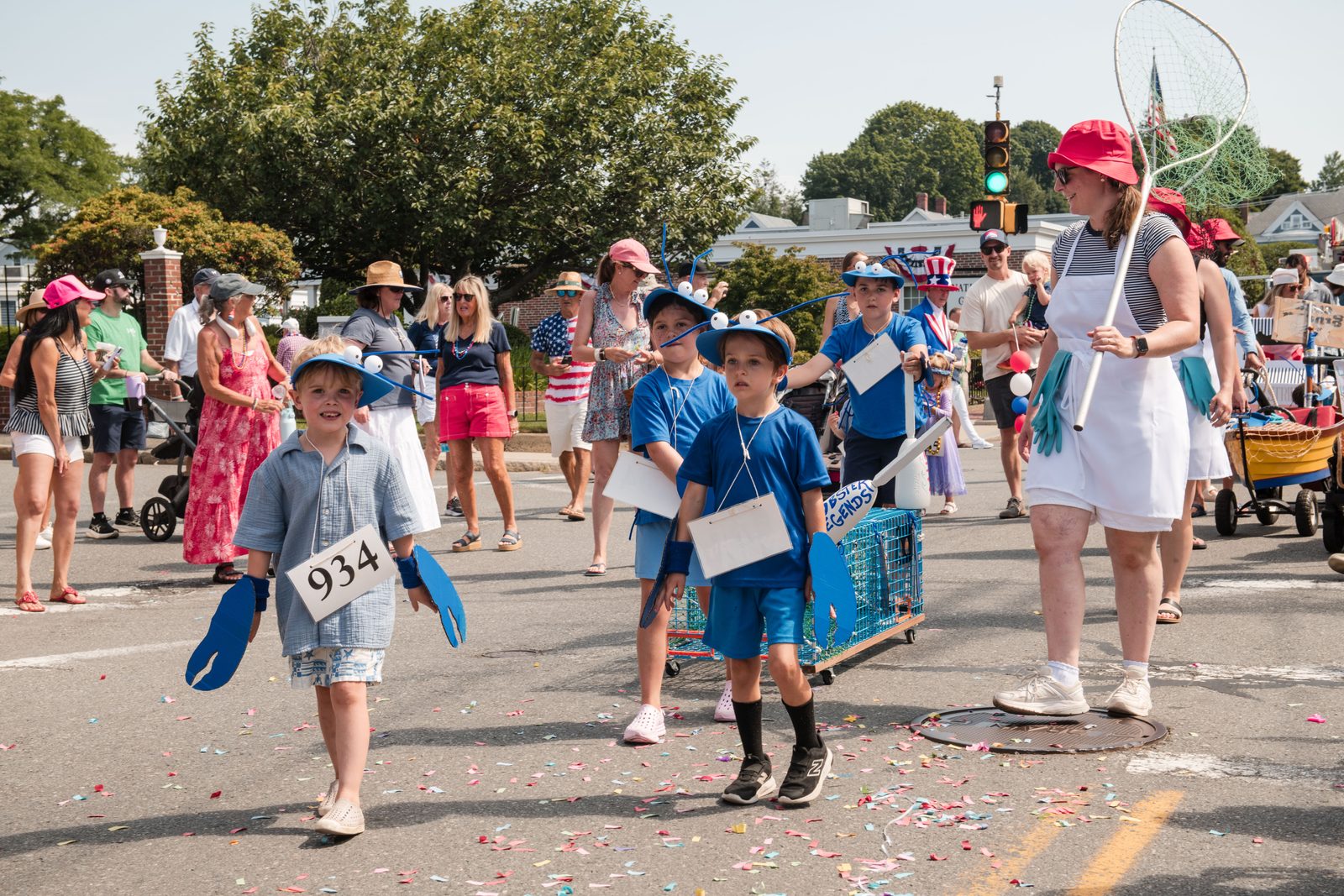
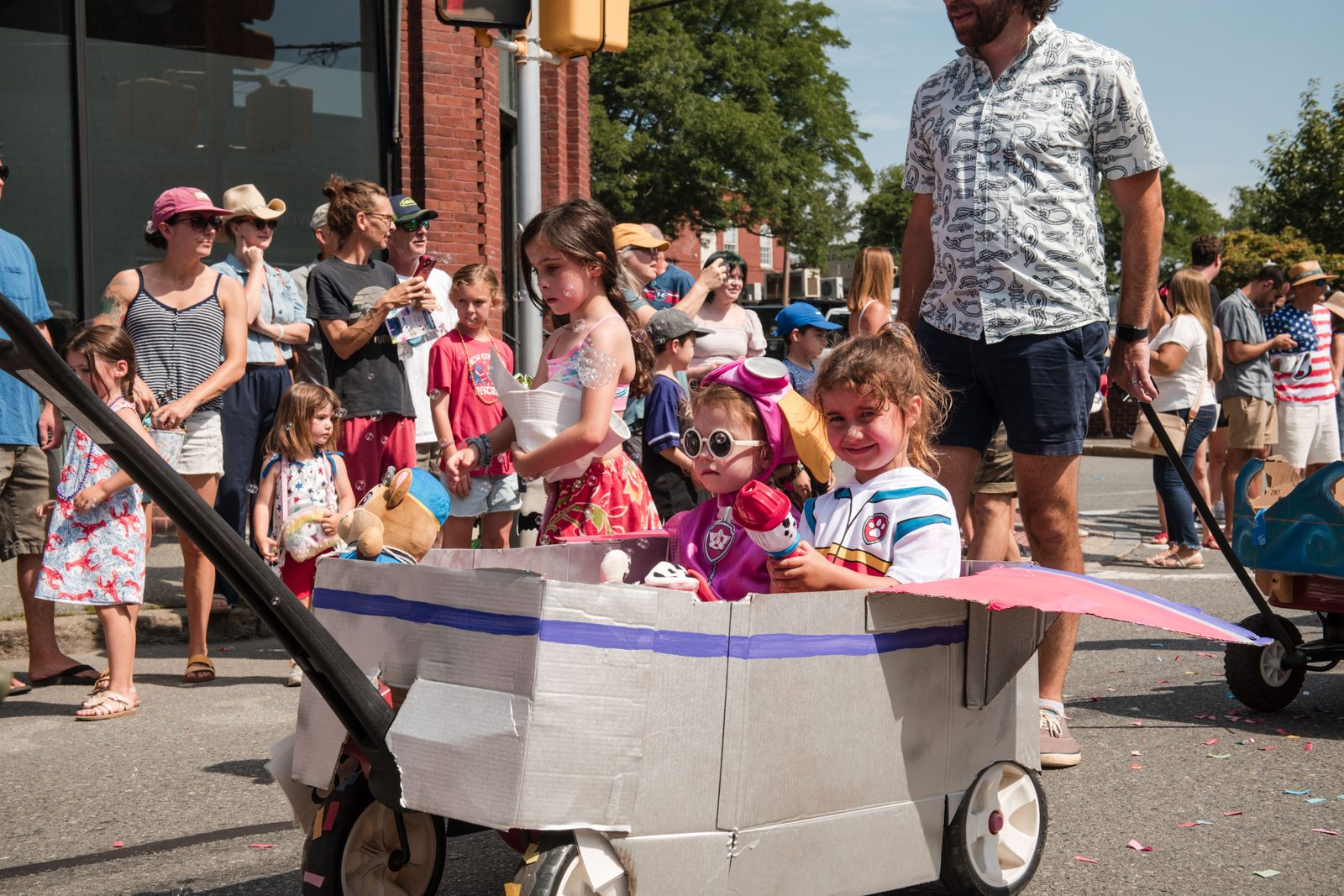
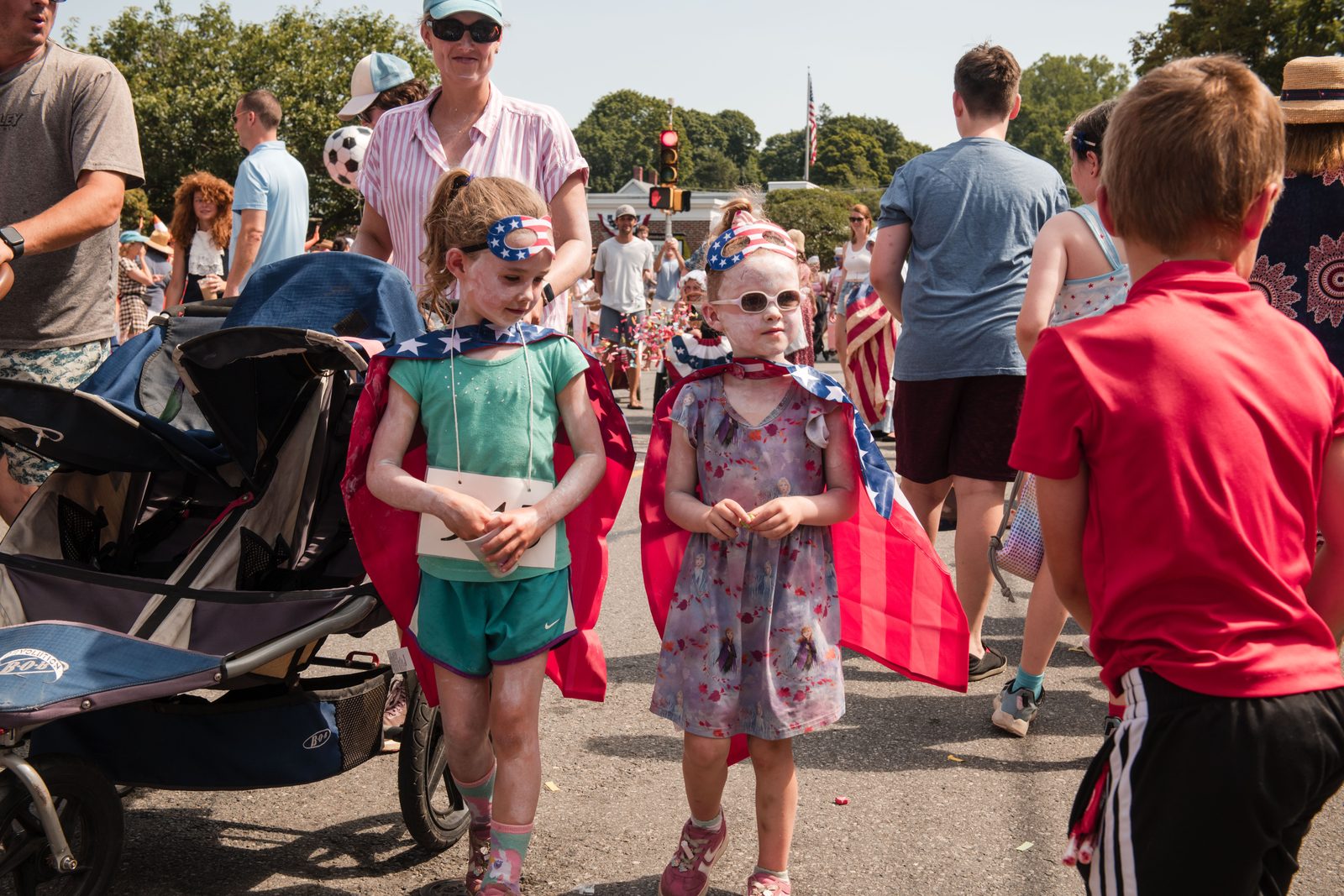
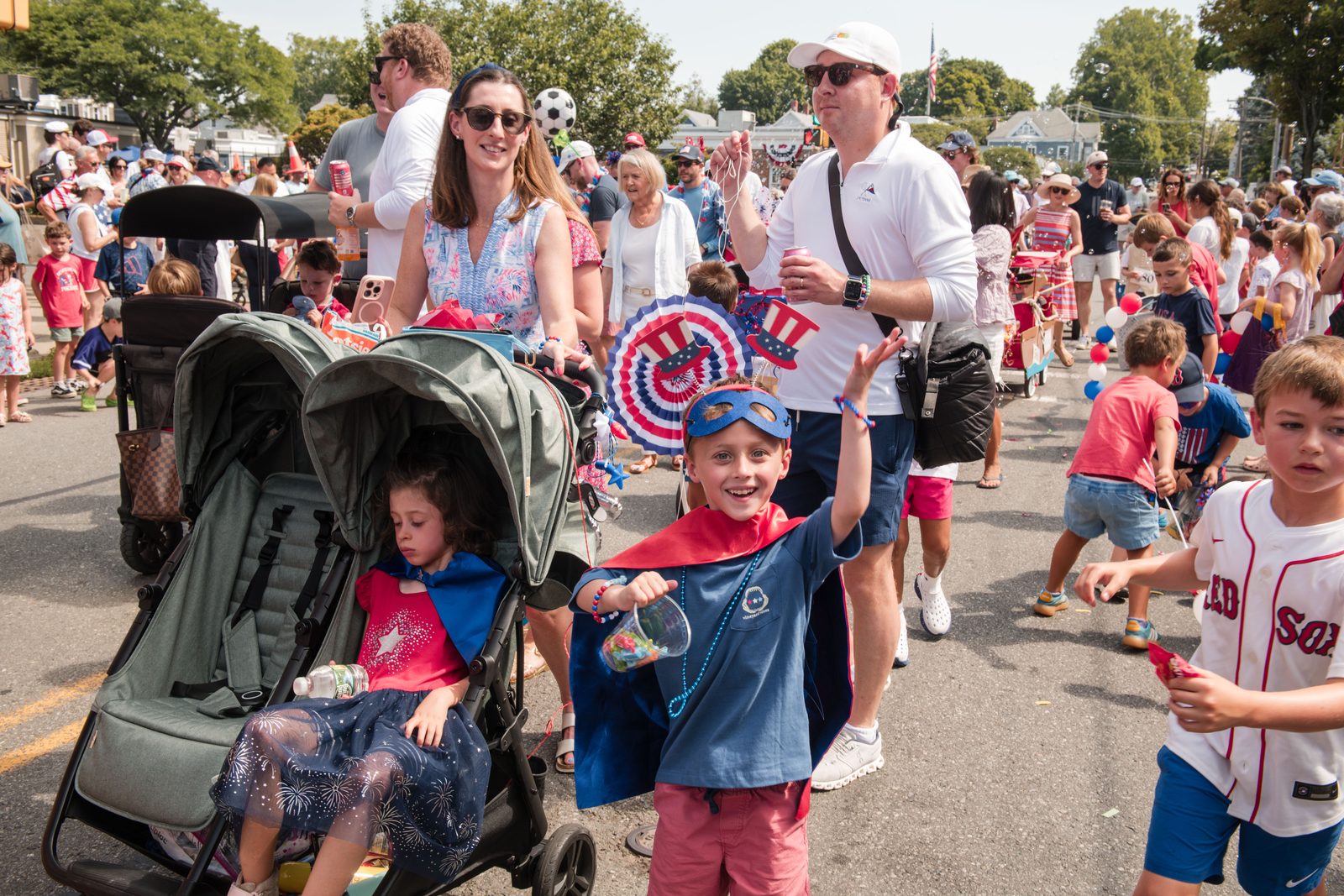
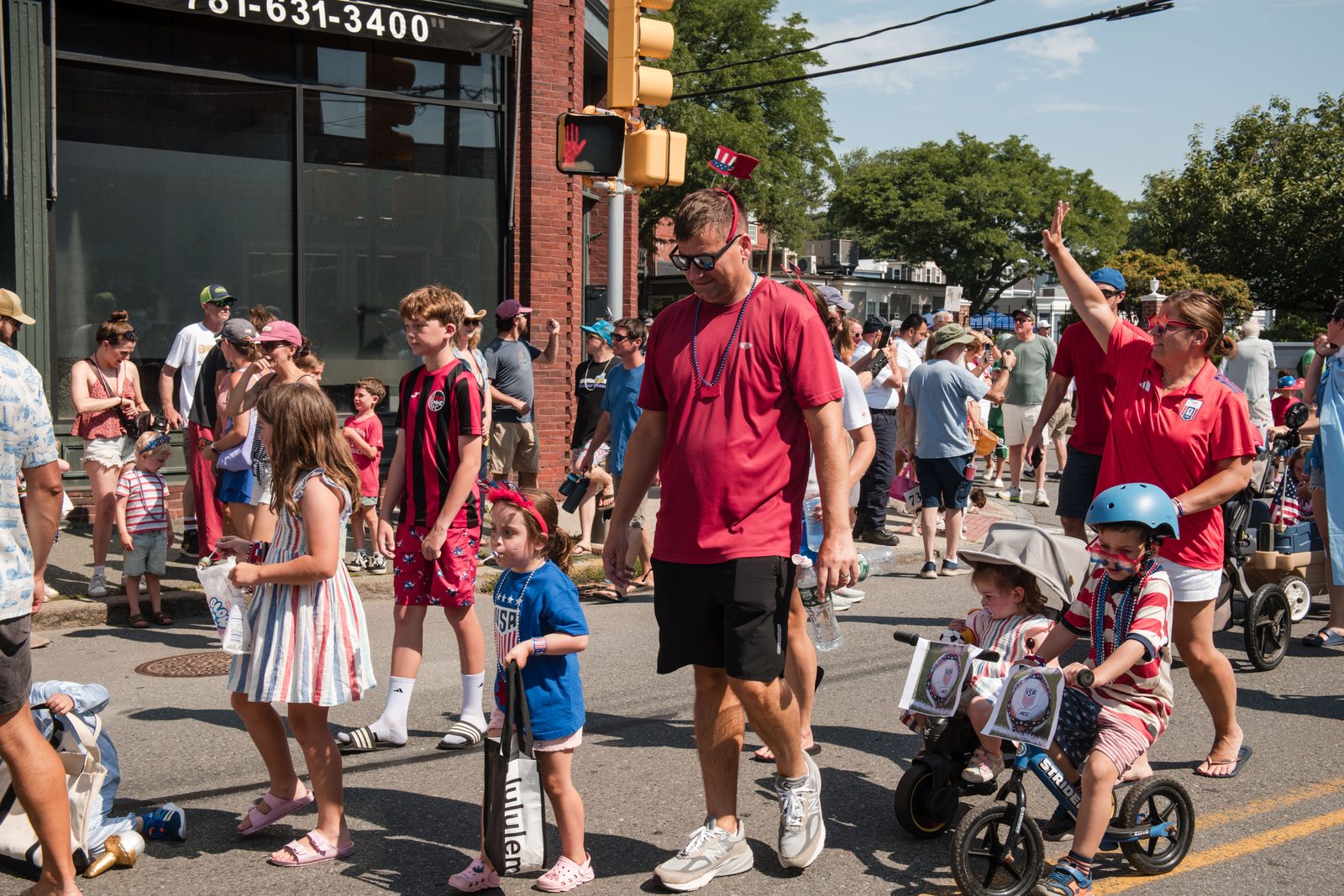
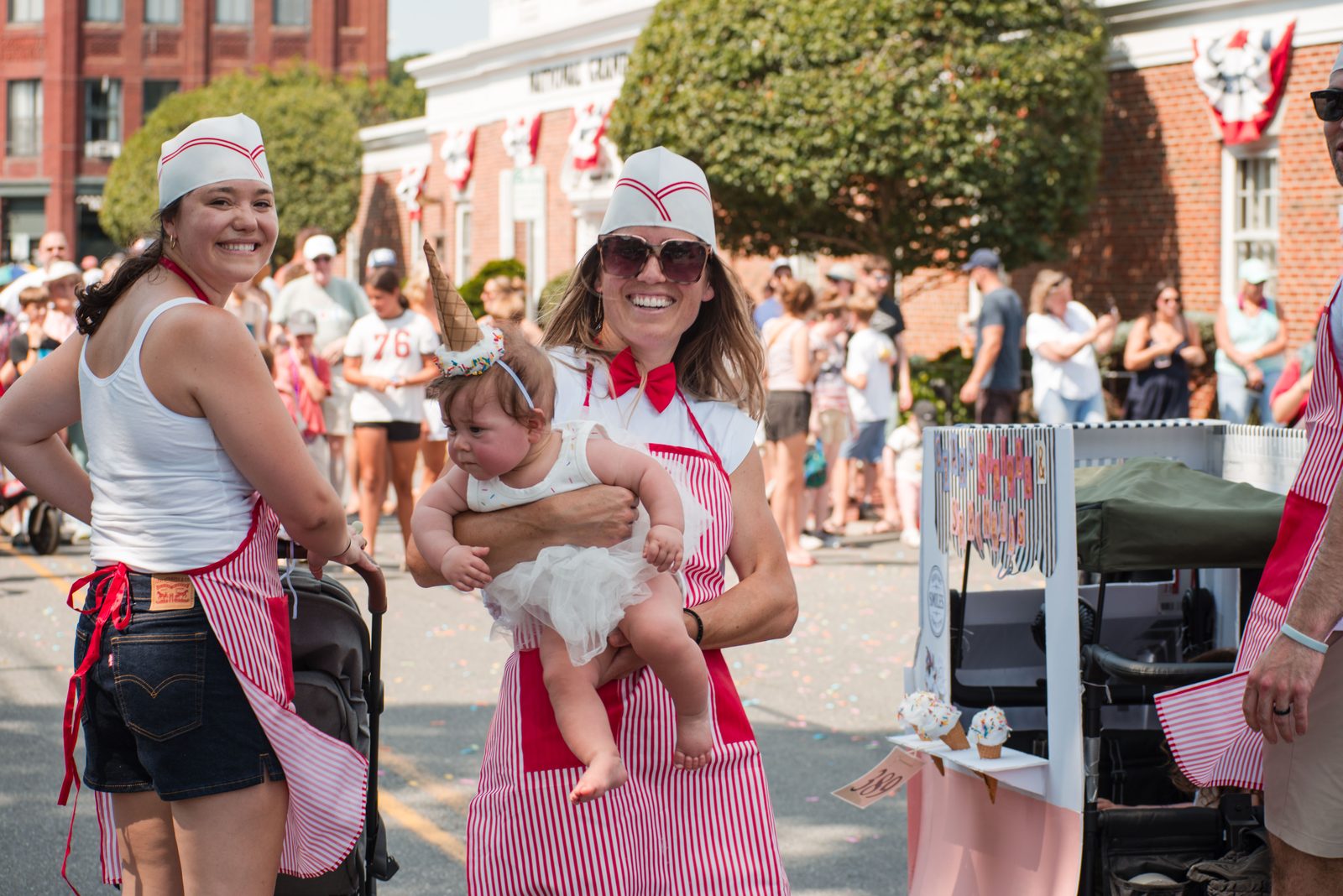
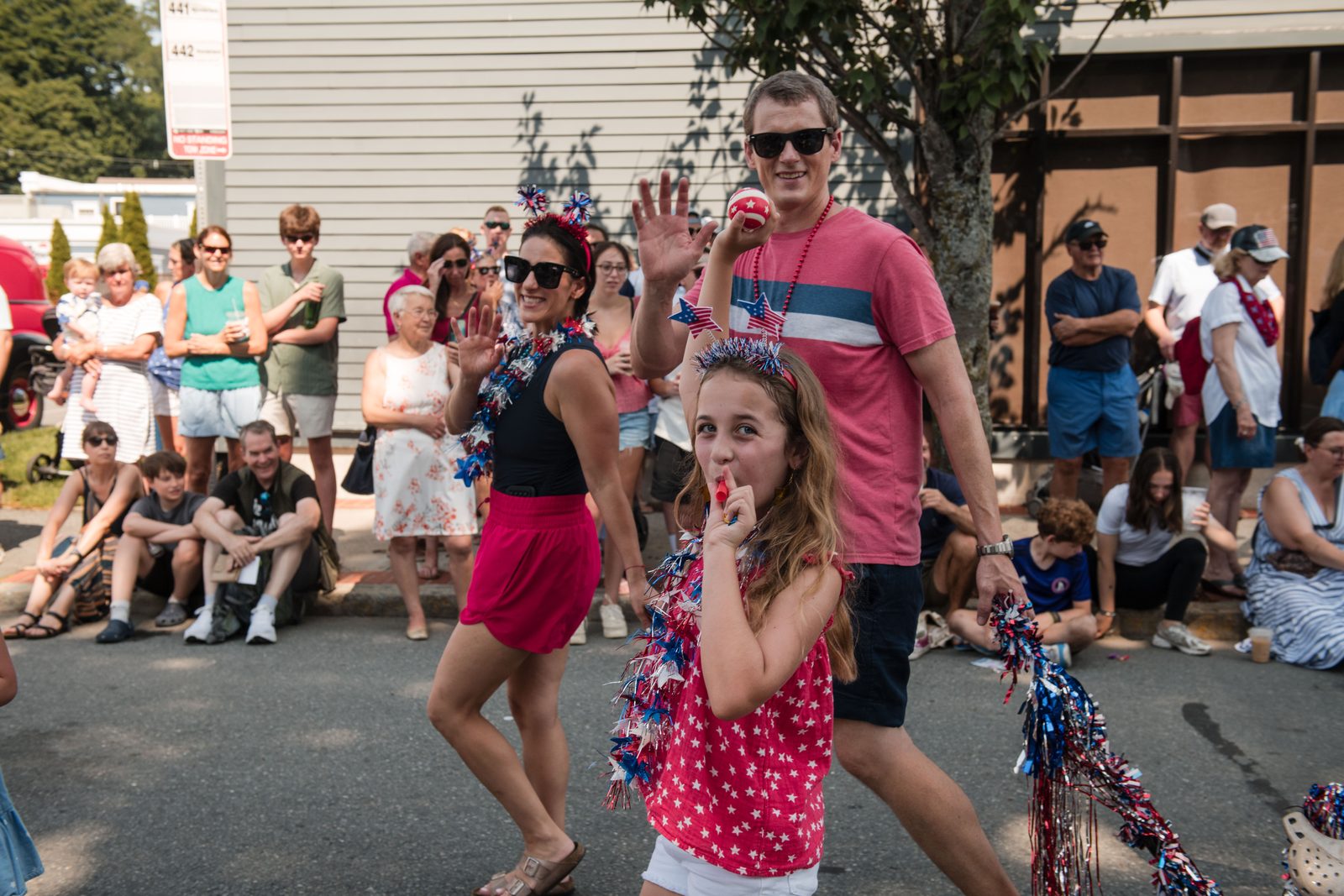
The Horribles Parade is Marblehead’s homemade morning ramble through Old Town, put on each Fourth by the Gerry 5. There is no marching band and no reviewing stand; you decorate a wagon, a bike or yourself, you line up, and you go. The result is part costume contest, part editorial cartoon, part candy giveaway — marchers fling Tootsie Rolls and Dum-Dums to the children packed three deep along the curb, and the pavement turns to a drift of wrappers and confetti by the time the last stroller passes.
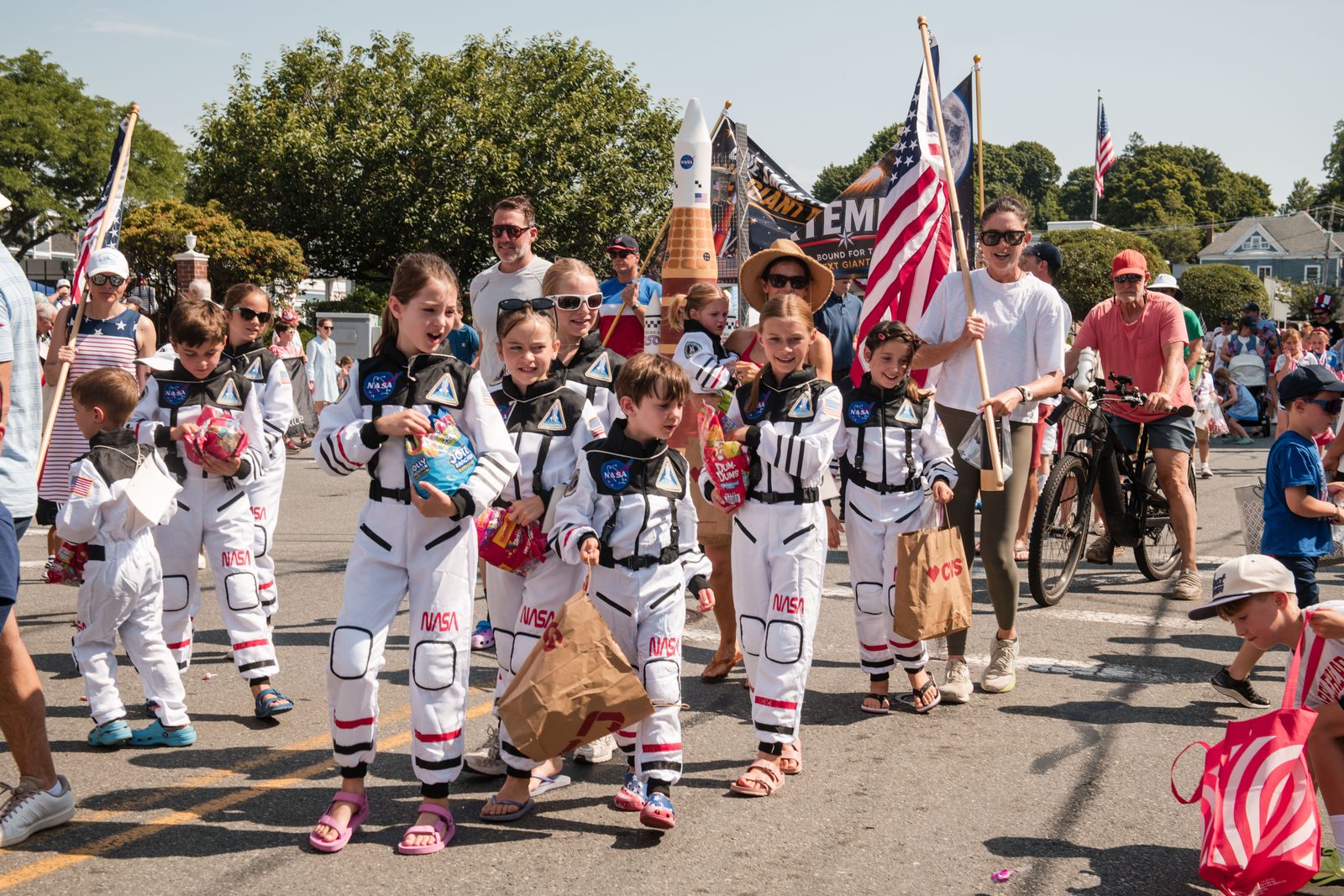
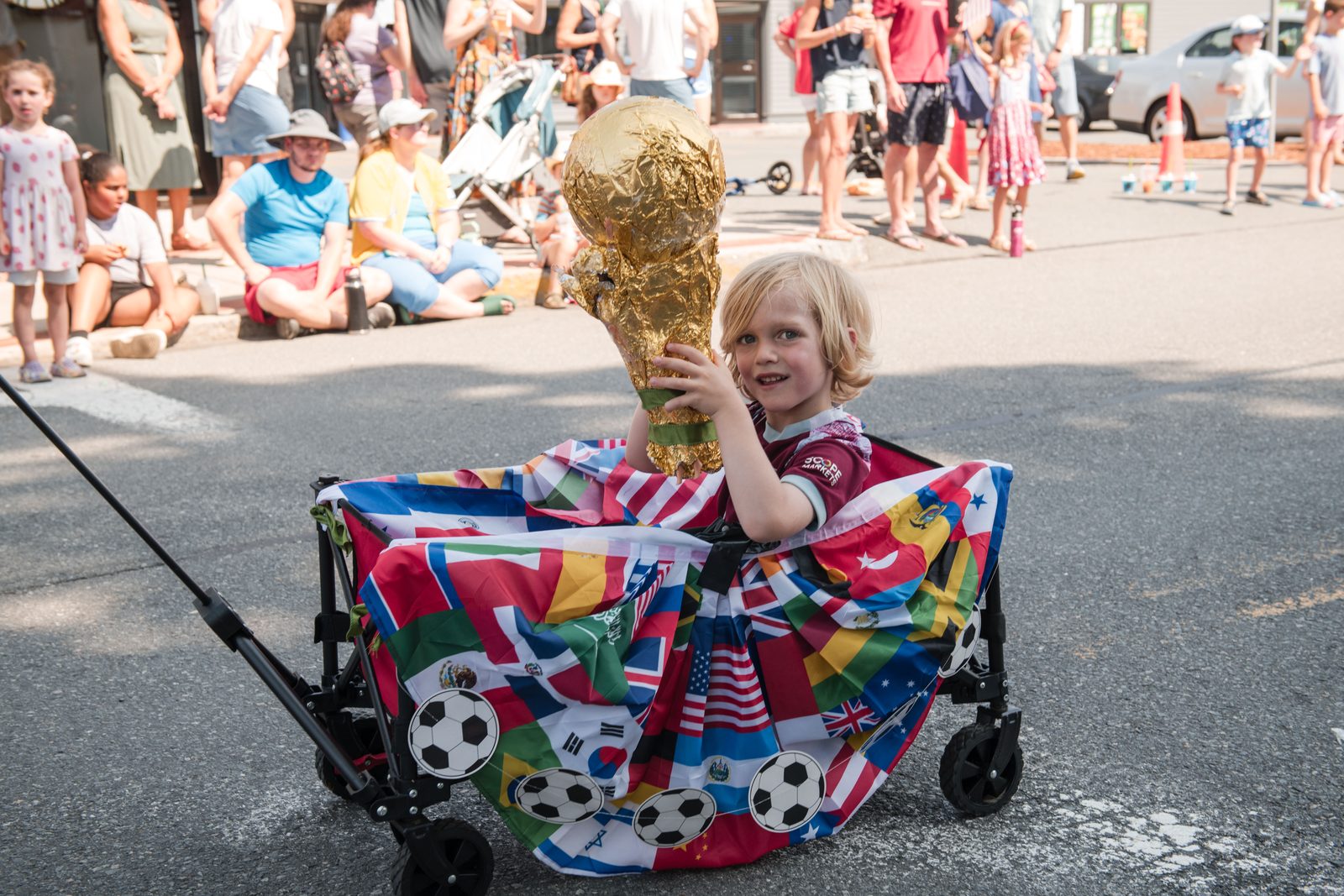
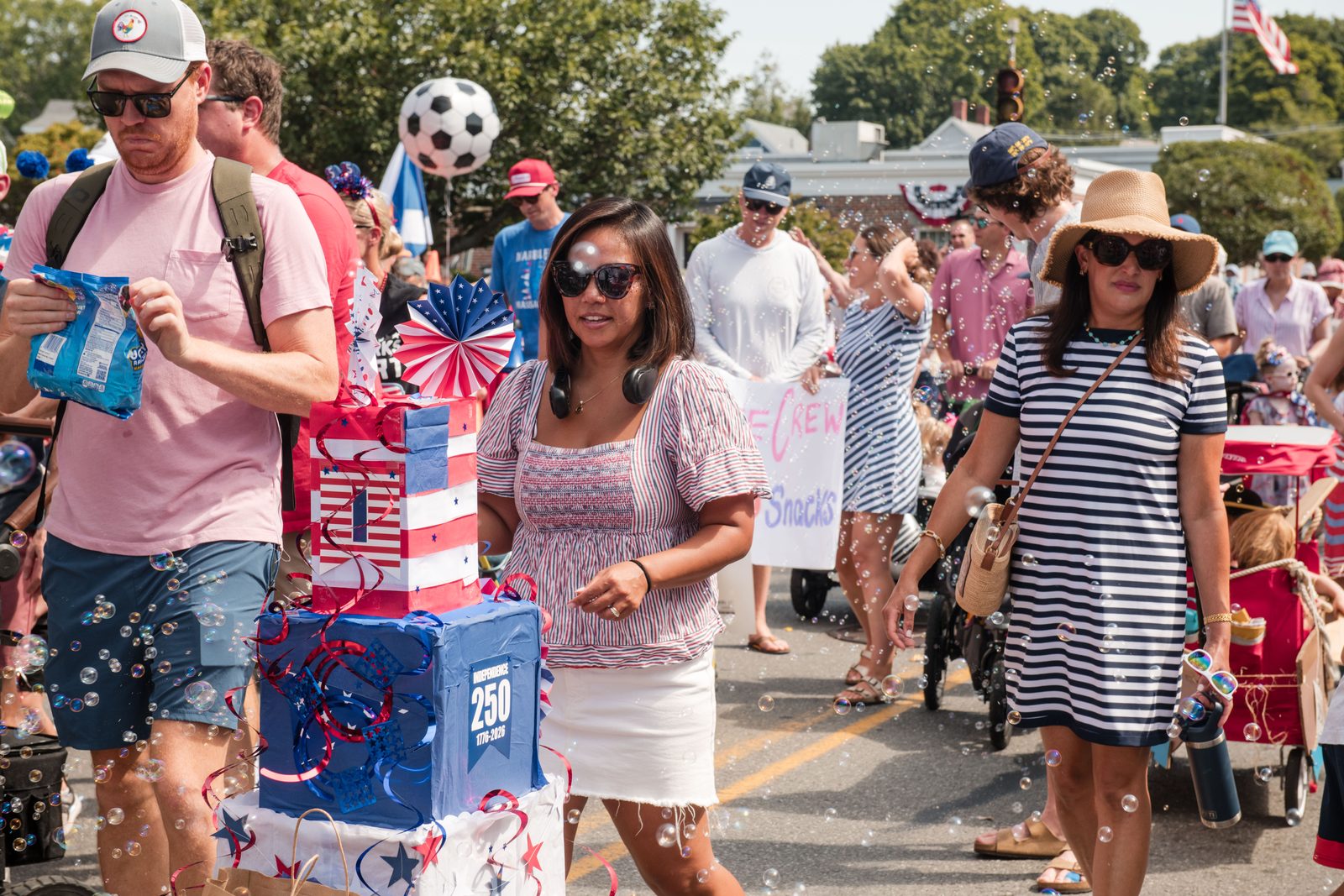
Two themes ran through it this year. One was the semiquincentennial: a hand-lettered ‘1776–2026’ banner, a boy in a tricorn beating a snare, three children posed as Archibald Willard’s ‘Spirit of ’76’ inside a ragged gold frame. The other was the World Cup, currently playing out in North America this summer — Scotland flags and kilts, a homemade trophy held overhead, orange traffic cones worn as hats by a contingent that had clearly been at it a while. In between marched the perennials: NASA astronauts trailing a cardboard rocket, a crew of blue cardboard lobsters, an ice-cream stand built onto a stroller, Uncle Sam himself and a papier-mâché Marblehead Light rolling by on furniture dollies.
A Declaration, read aloud
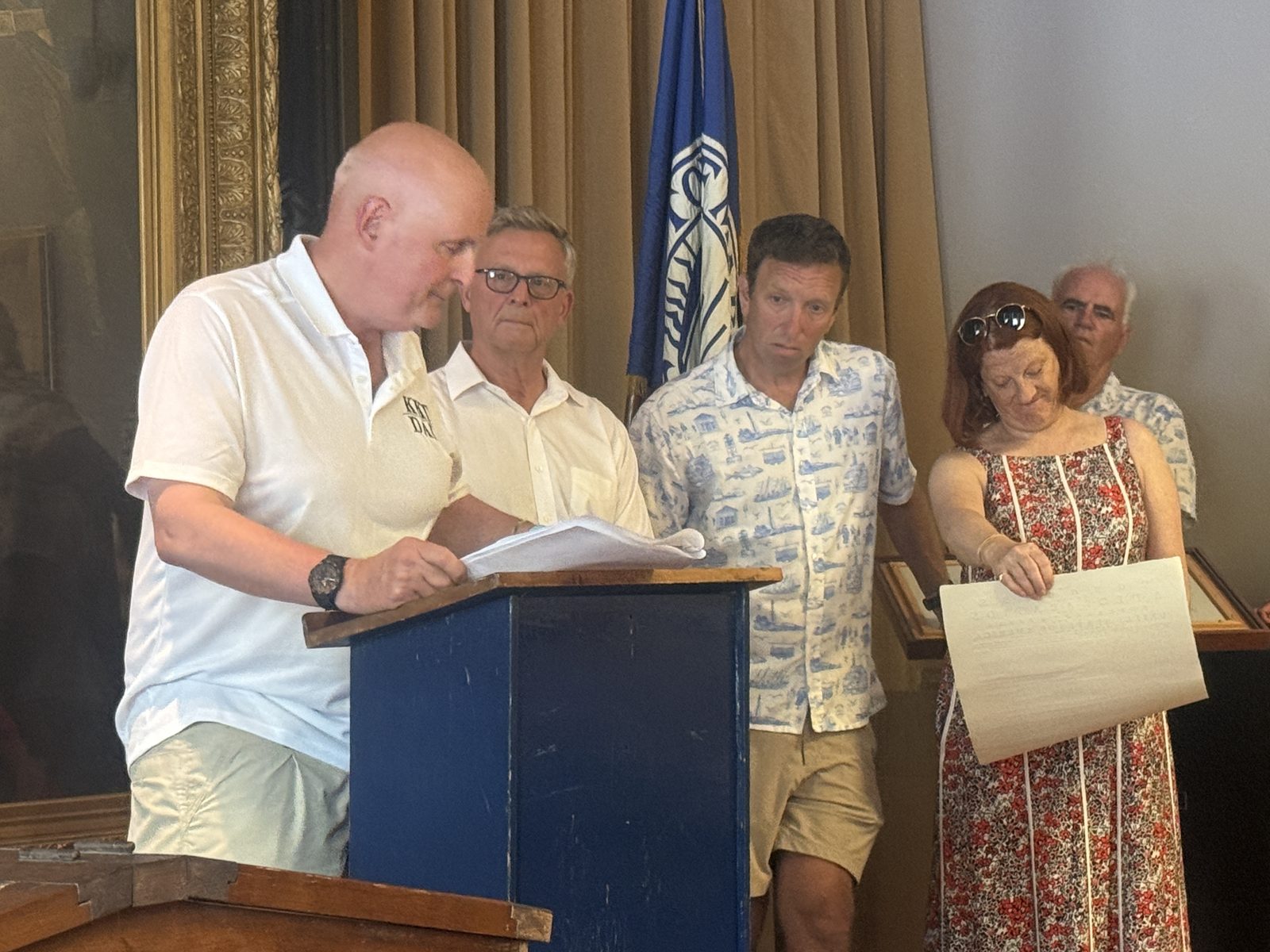
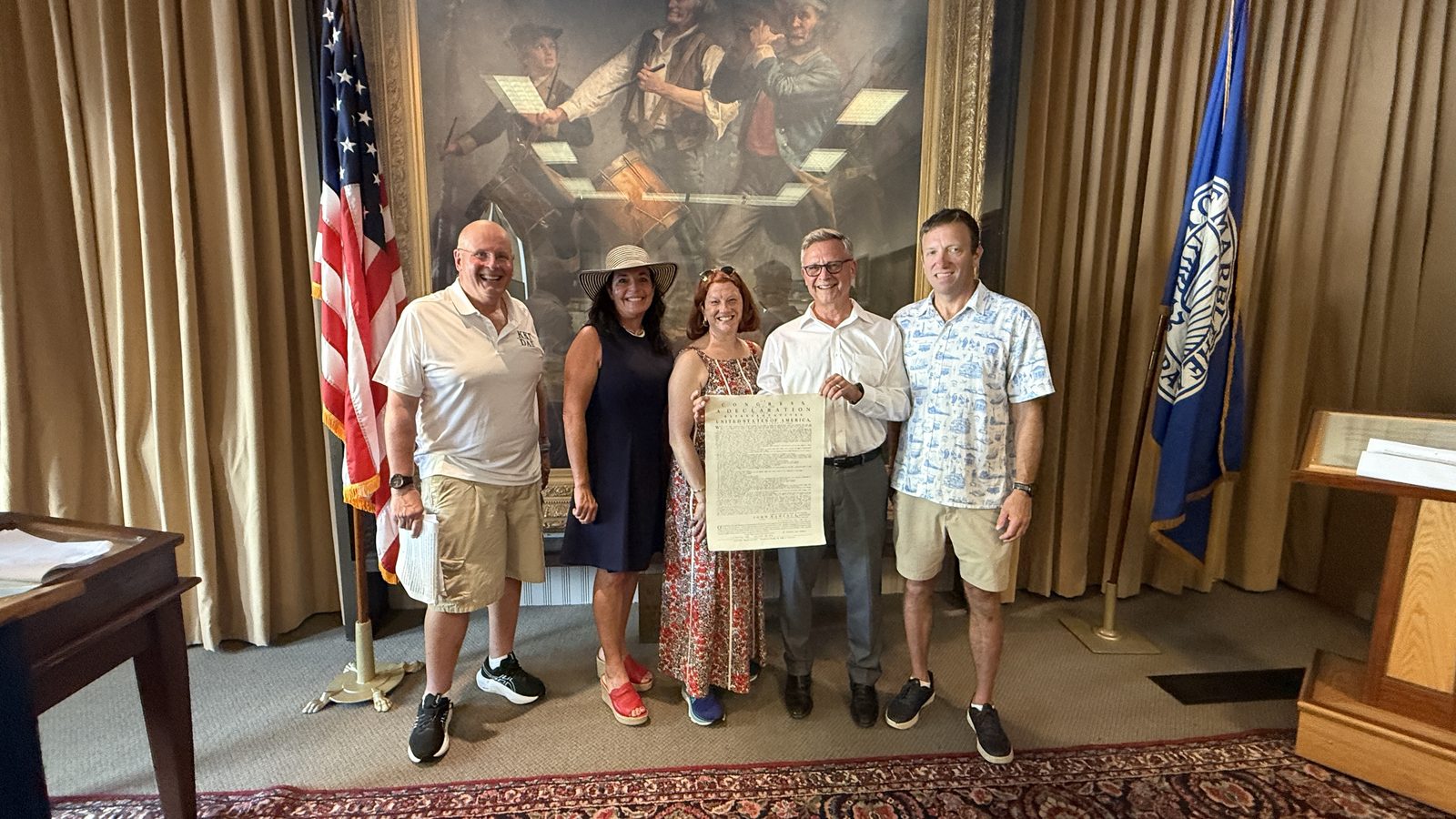
Late that morning, in the second-floor room at Abbot Hall where Archibald Willard’s ‘The Spirit of ’76’ hangs, members of the Select Board read the Declaration of Independence out loud. Marblehead has done this before — the reading was once a Fourth of July staple here — and it came back this year for the nation’s 250th. State Rep. Jenny Armini presented the town with a replica of the Ezekiel Russell printing of the Declaration — one of the three Charters of Freedom, alongside the Constitution and the Bill of Rights — produced on a Franklin-era press and distributed to every city and town in Massachusetts as part of the state’s Revolution 250 commemoration. In 1776, Armini noted, Massachusetts was the only colony to order the document read aloud from every pulpit and copied by hand into each town’s records, and it is the only state repeating the practice this year.
A parade on the water
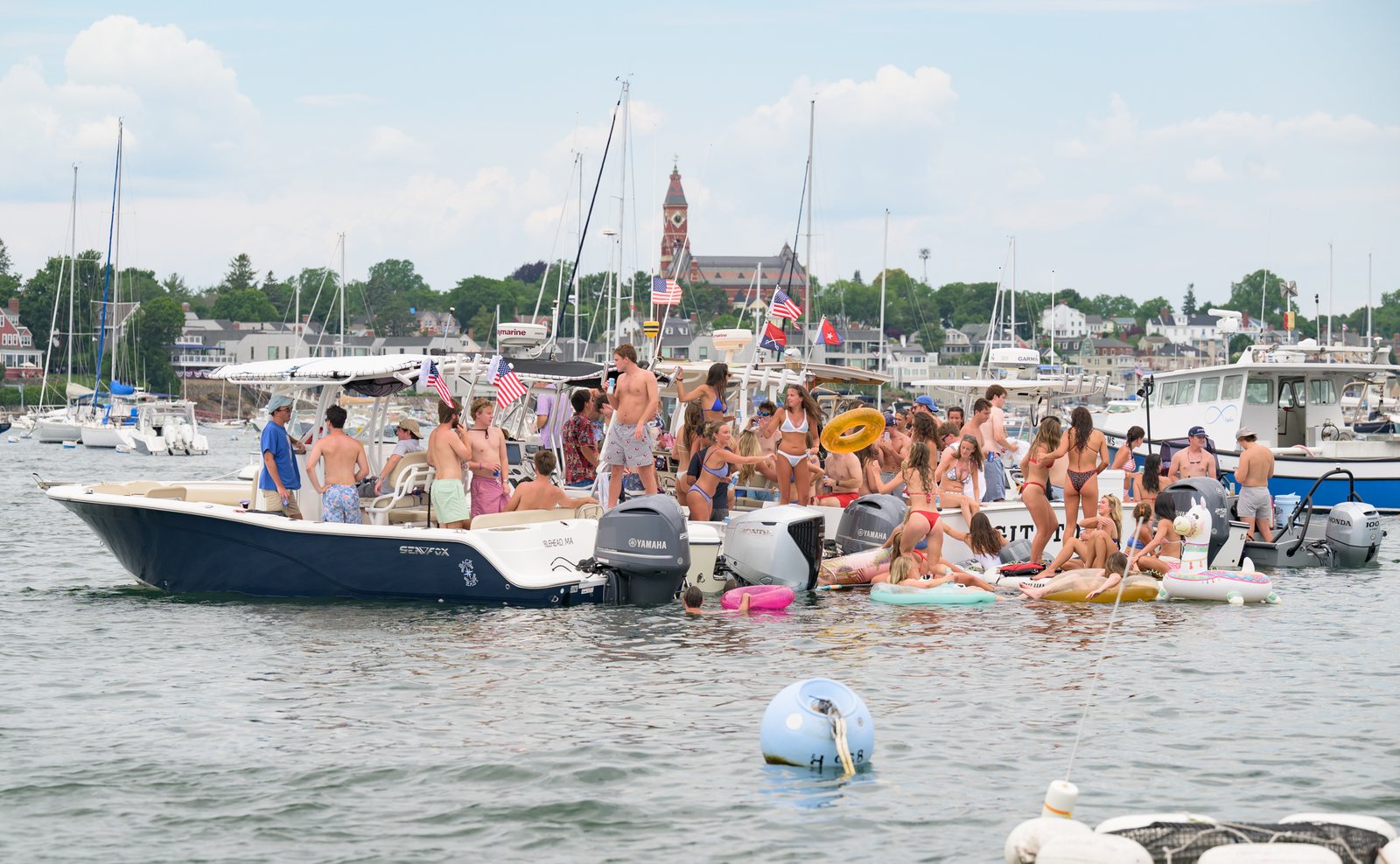
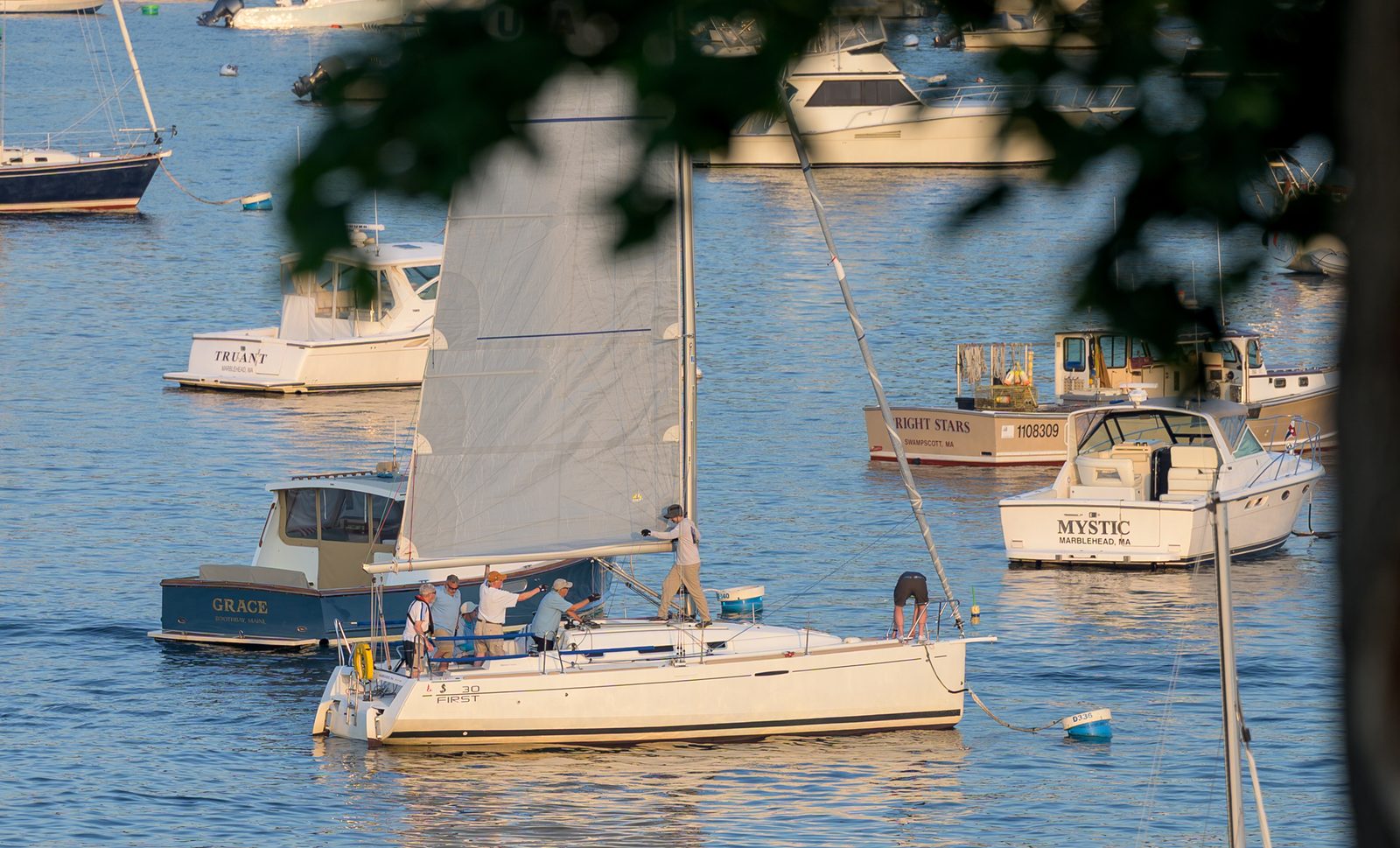
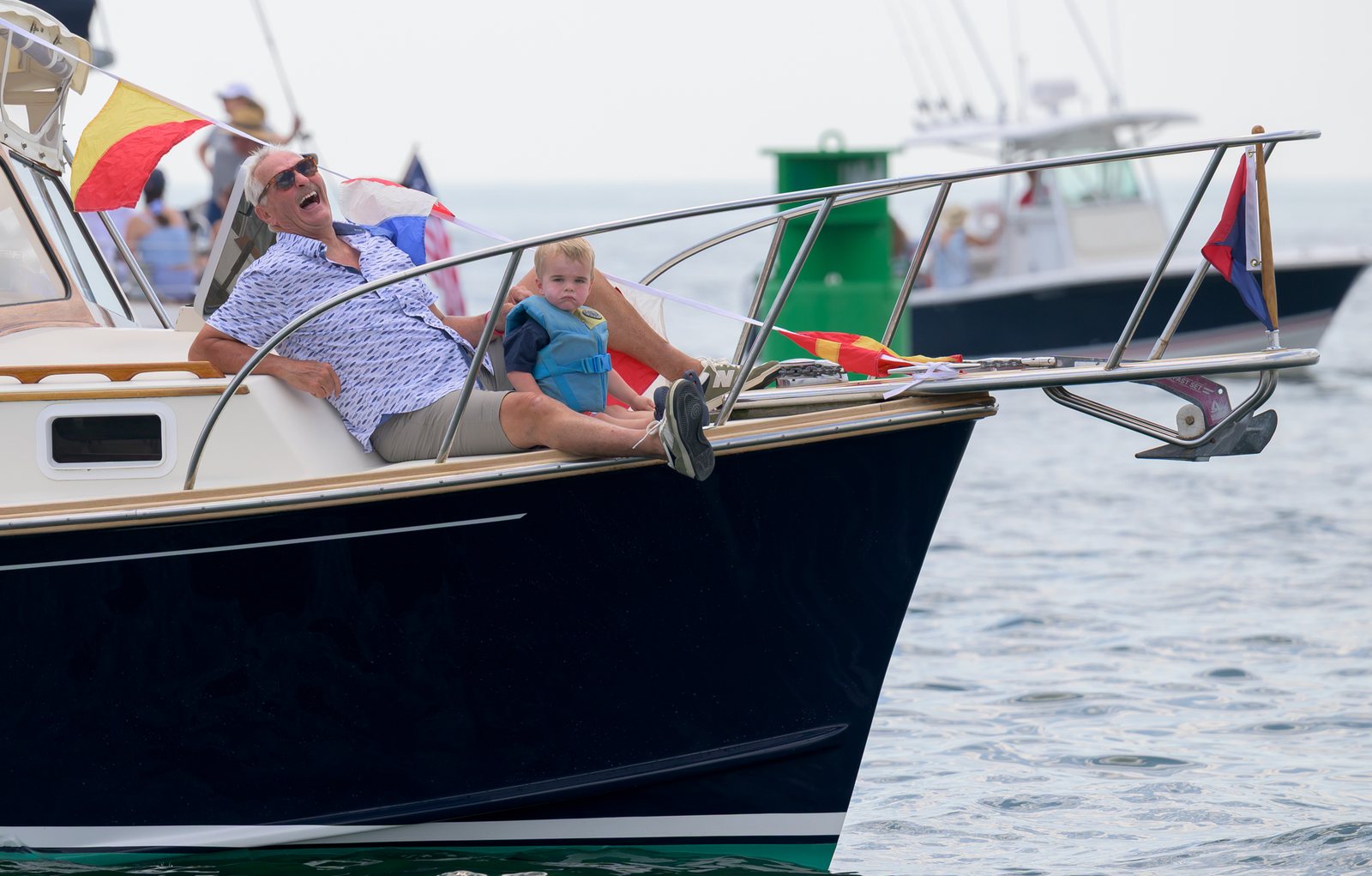
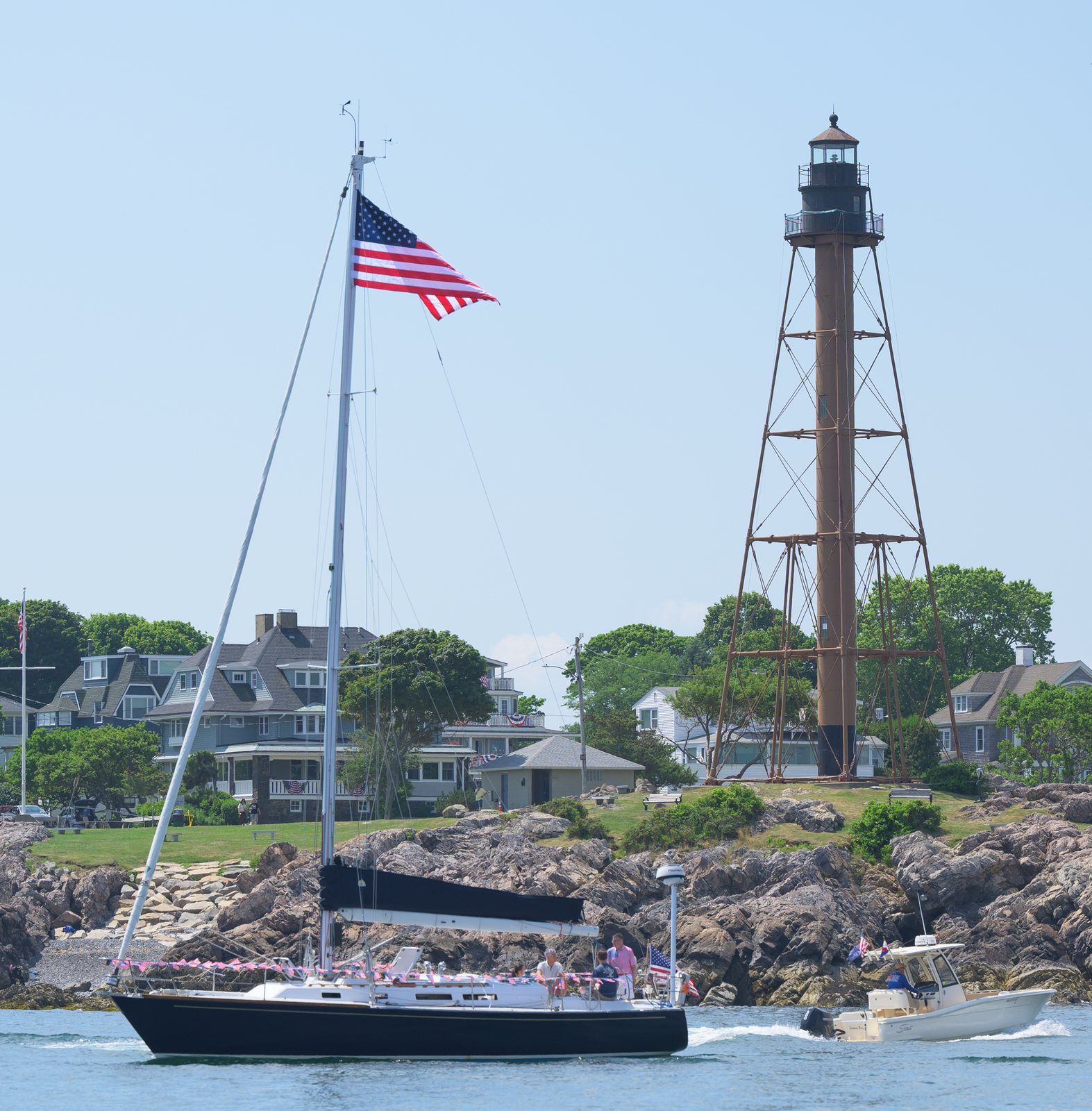
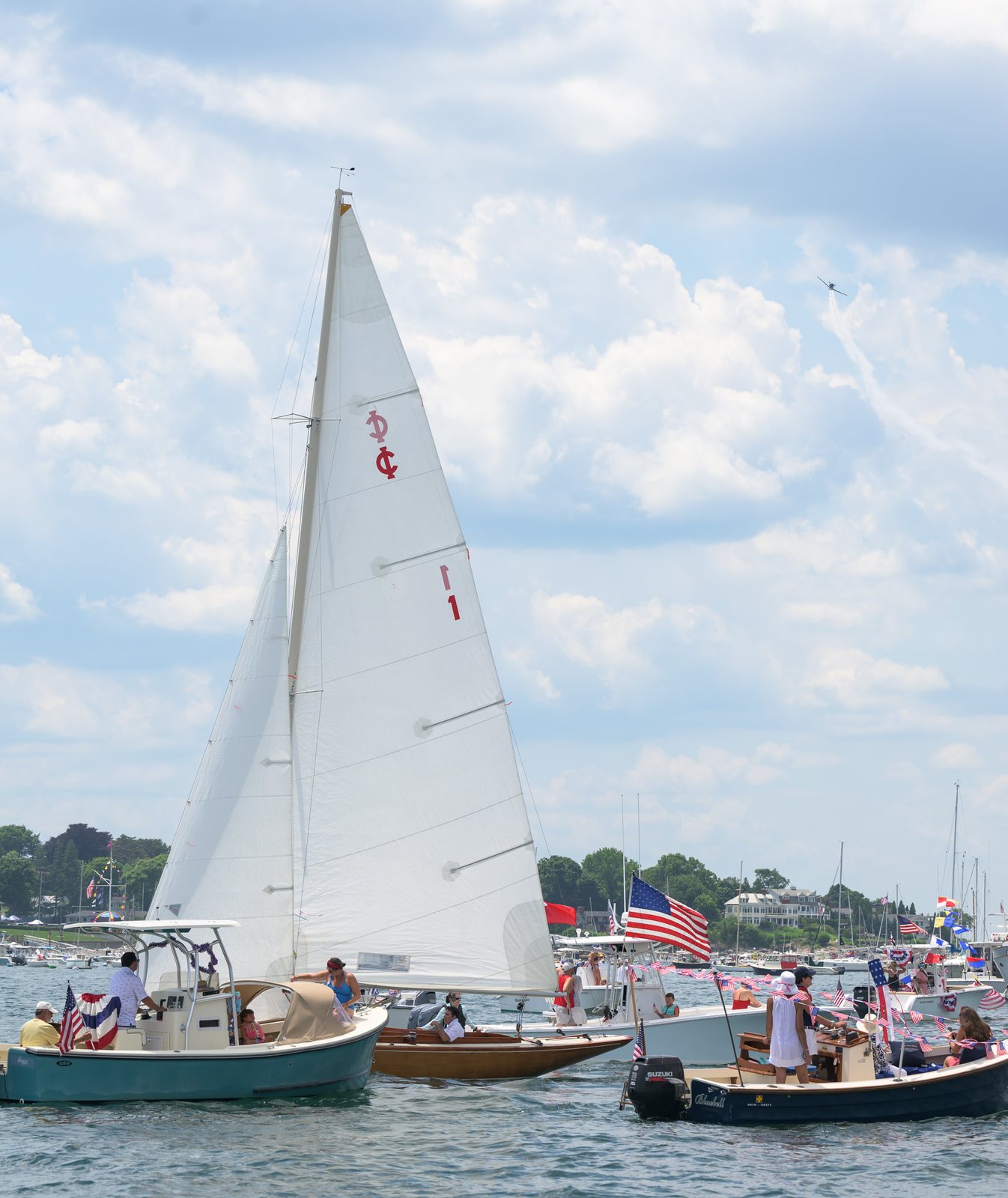
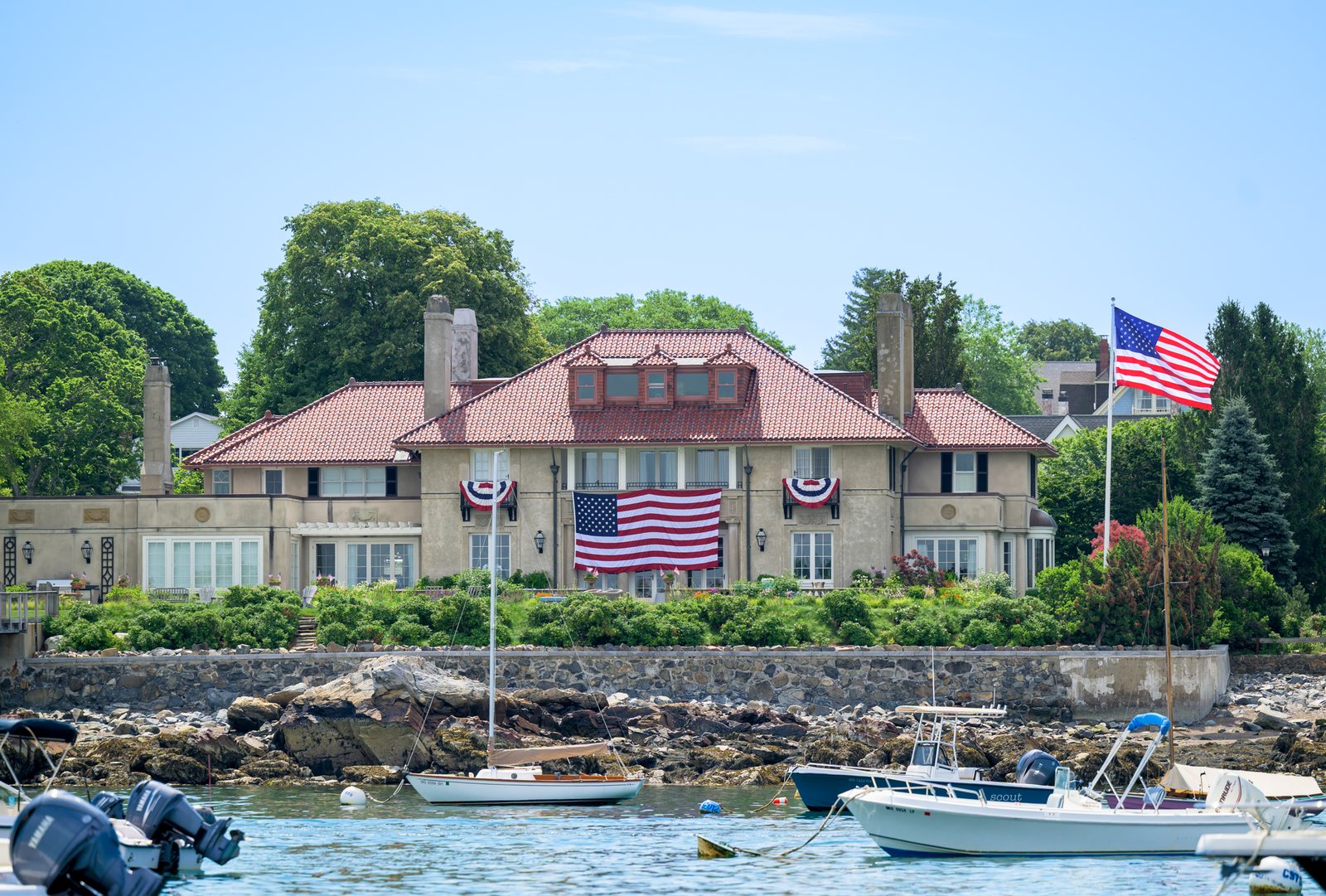
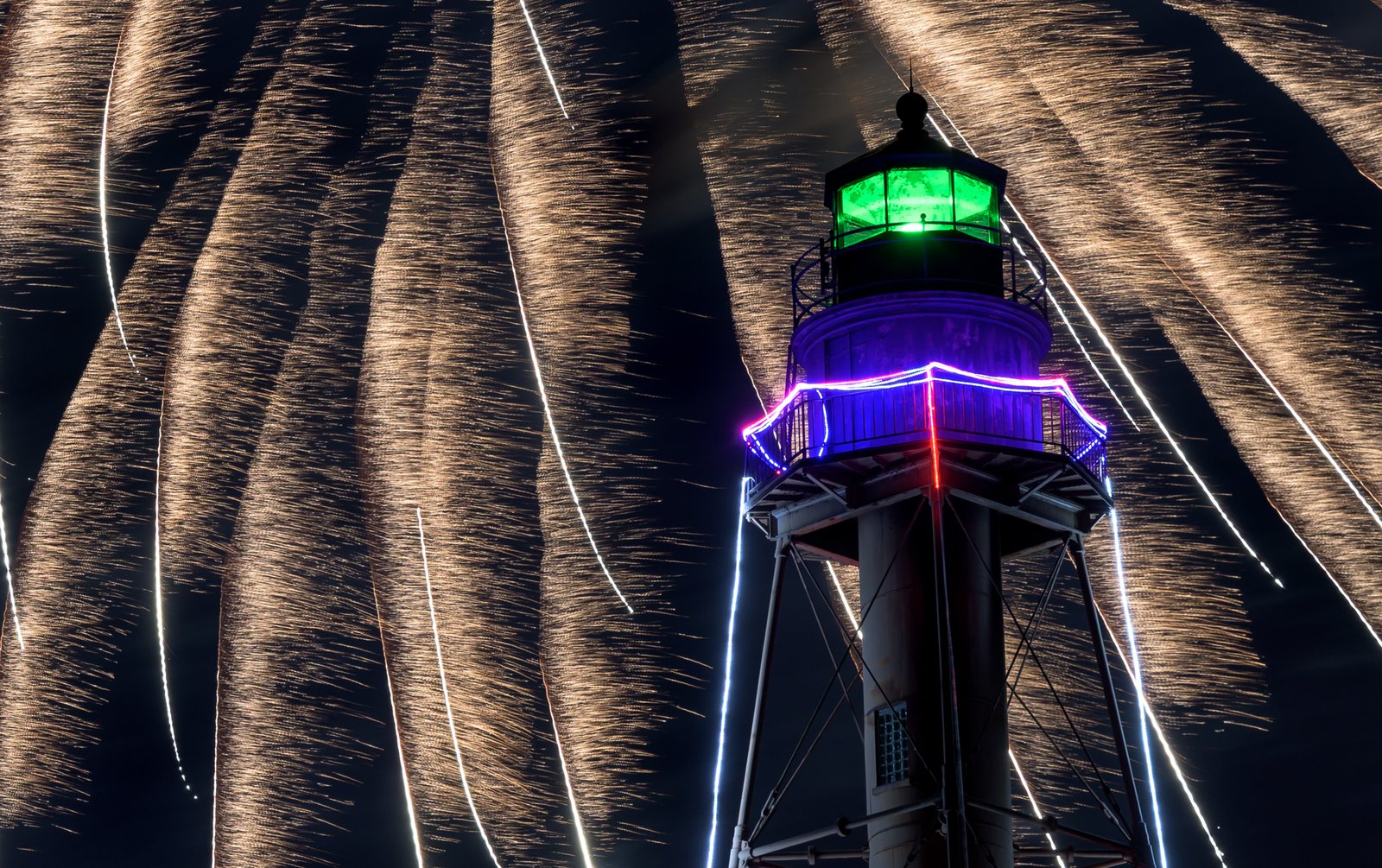
By late morning the harbor had a parade of its own. The inaugural Marblehead Harbor patriotic boat parade — the creation of Price Williams — drew more than 100 boats, from sailboats and center-consoles to dinghies and a few working lobster boats, each dressed in flags and bunting. They mustered near the 1MH buoy around 11:30 and stepped off at noon behind a marshal boat, skippers keeping in touch on channel 71, then wound through the mooring field past Abbot Hall and the lighthouse — many carrying the town’s 250th motif — before rafting up off the shore to swim, drift and wait out the afternoon.

Getting the fireworks over the harbor
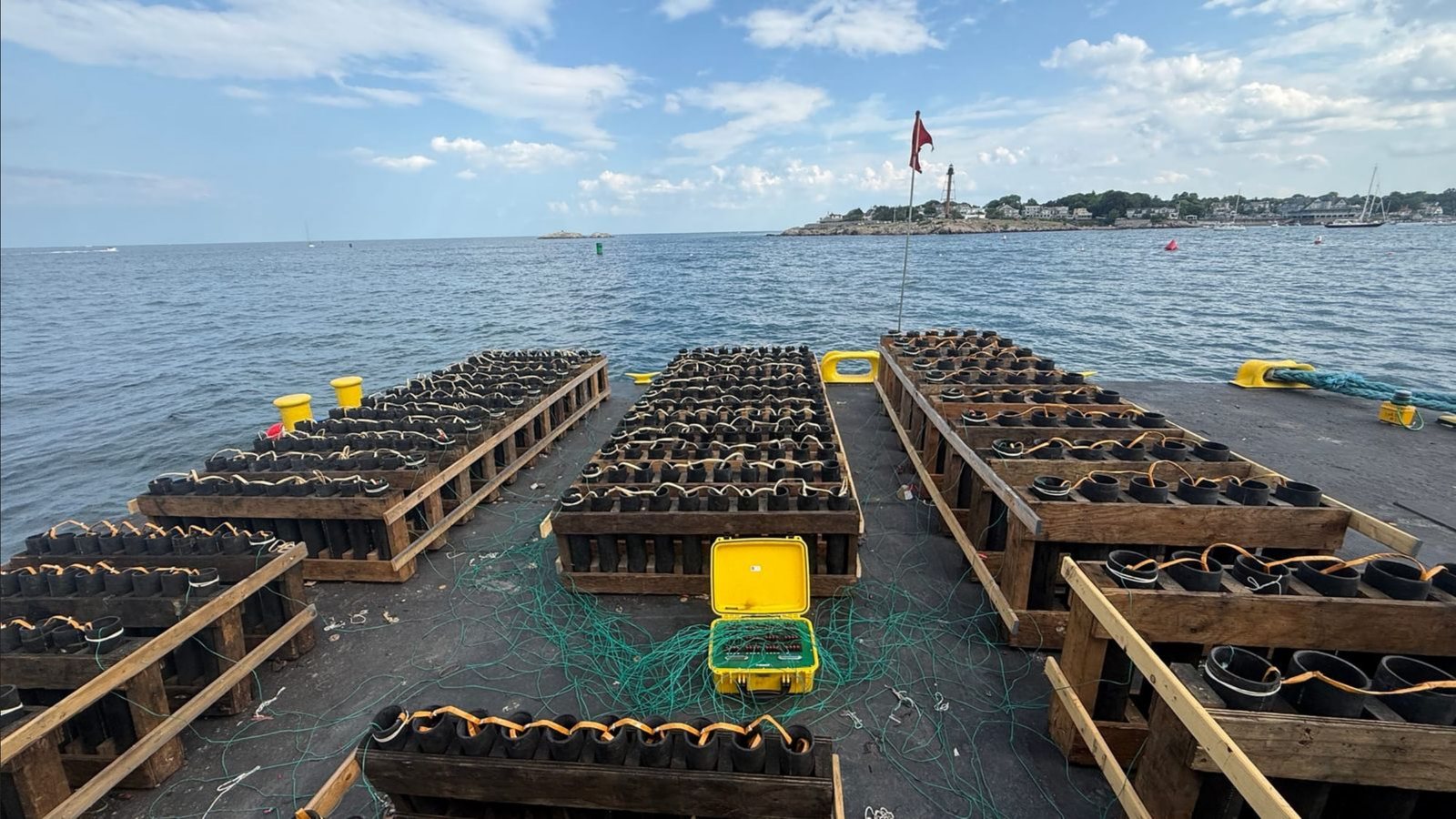
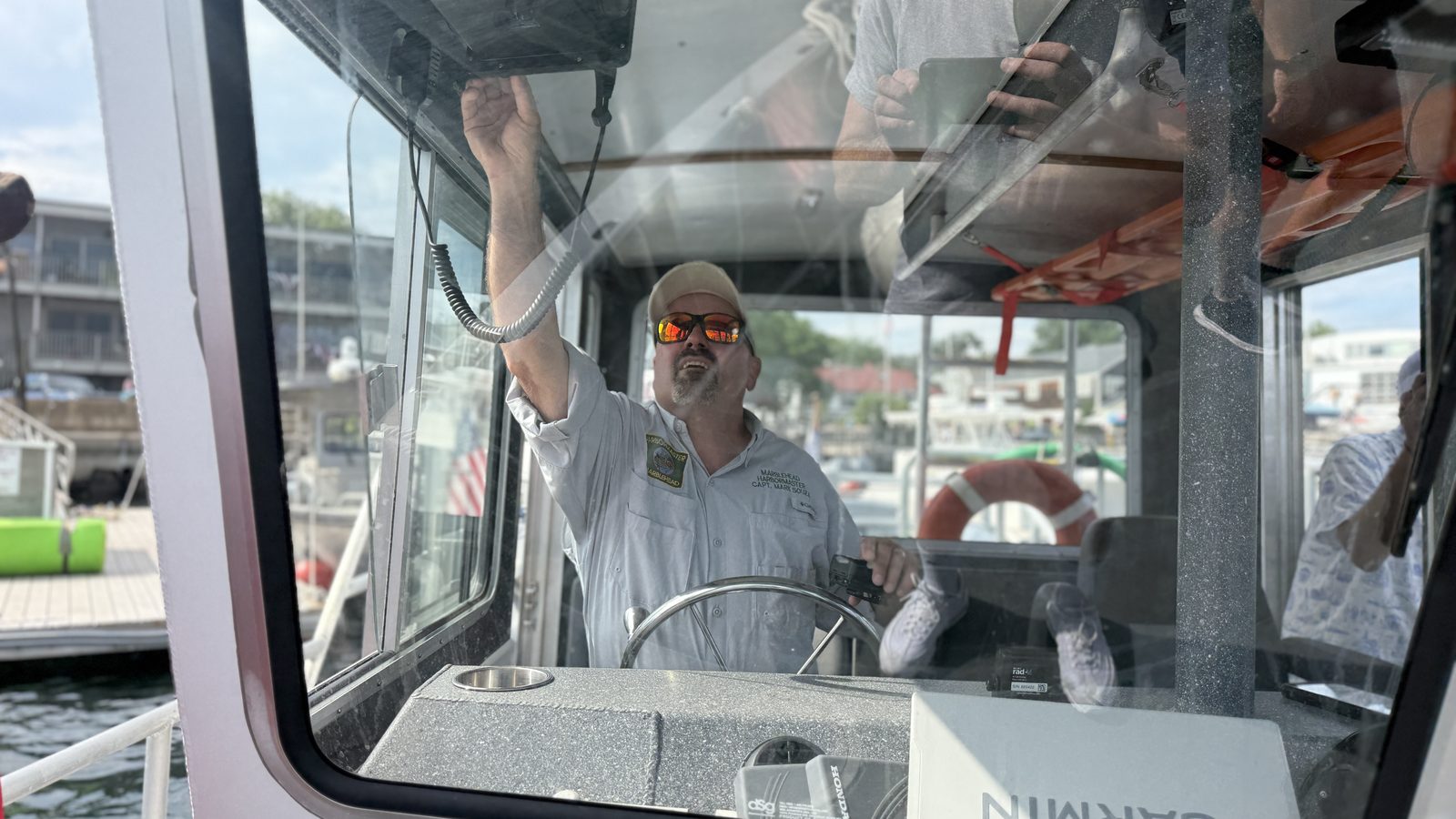
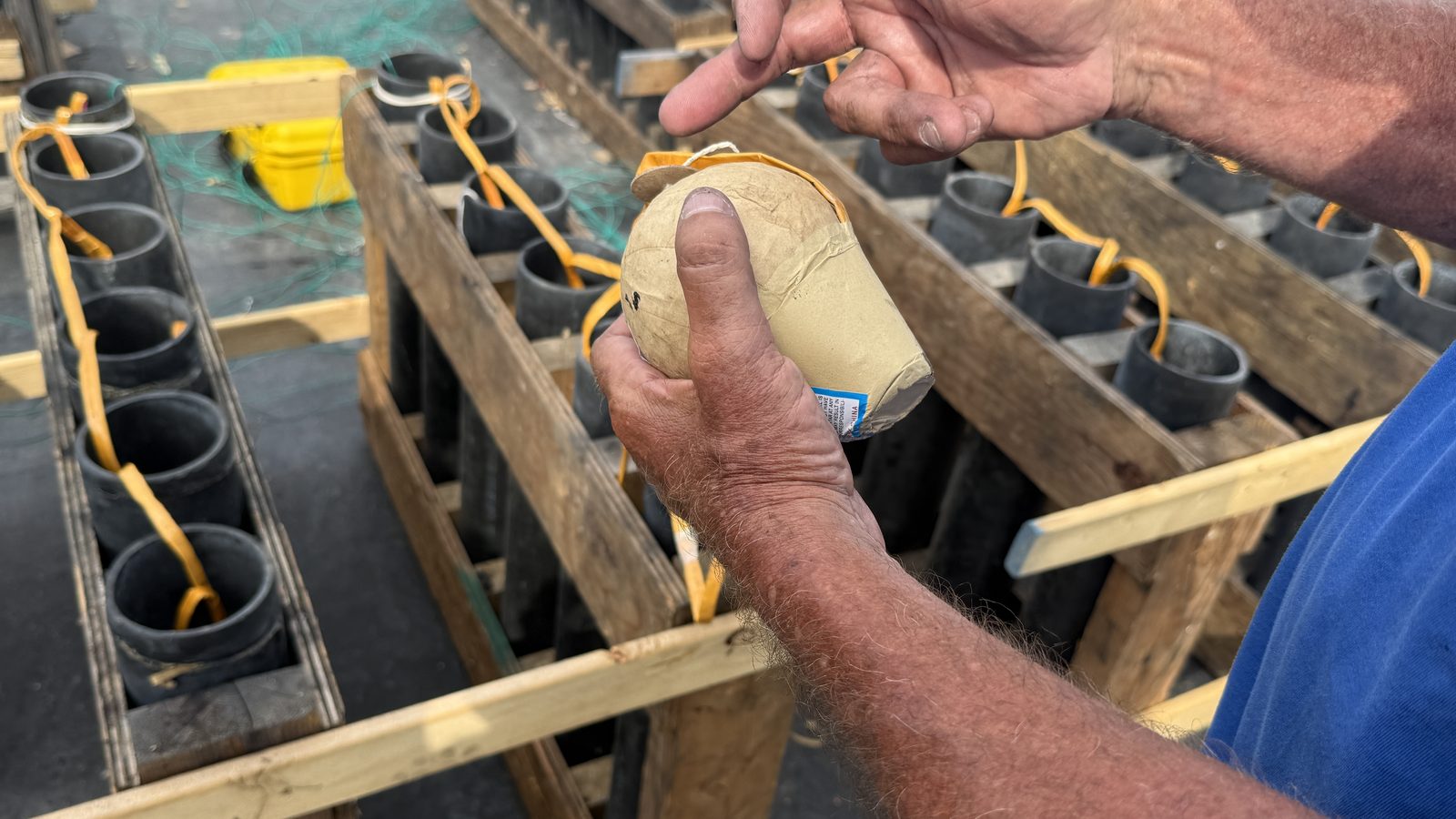
Out on the water, the day’s biggest event was still being built. Marblehead sends its fireworks up from a barge anchored in the harbor, and by afternoon the crew from the pyrotechnics company had it ready, the deck packed with a honeycomb of mortar racks wired to an electronic firing box, each shell lowered into its tube by hand. The harbormaster’s launch worked the moorings nearby — part of the small machinery of permits, inspections and safety zones that has to click into place before a single shell goes up. How all of that comes together is its own story, one we’ll tell separately.
The harbor illumination
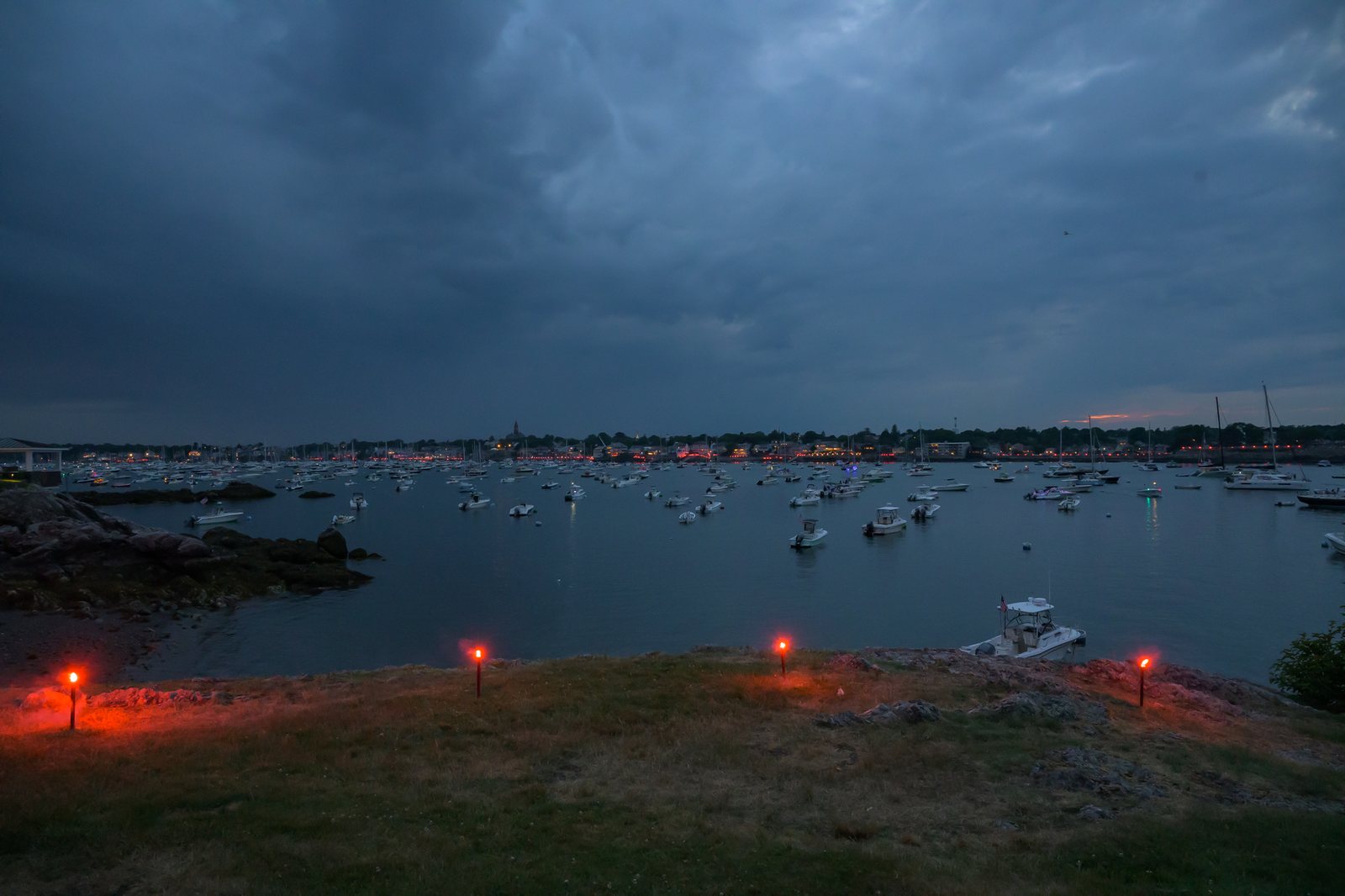
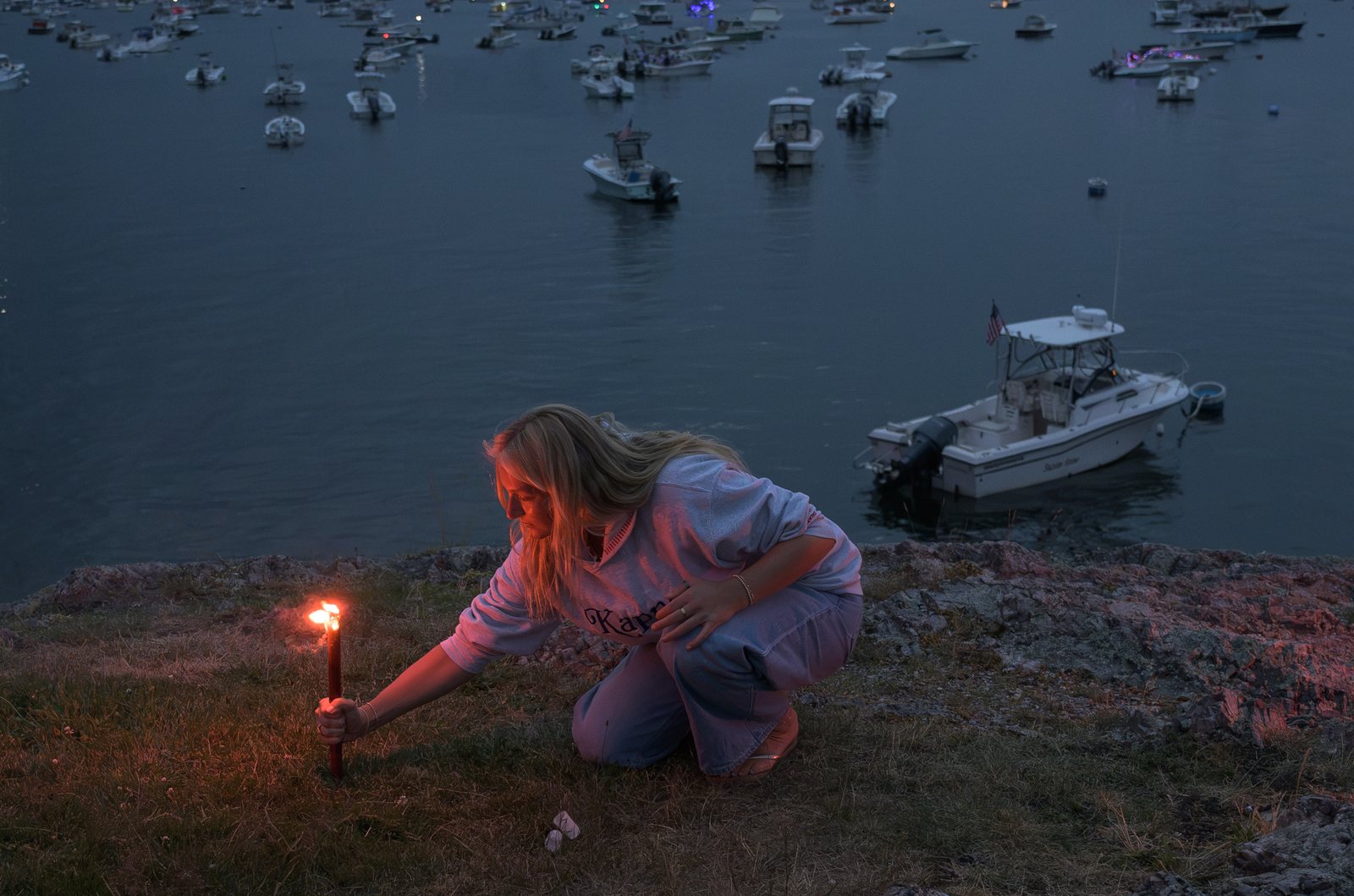
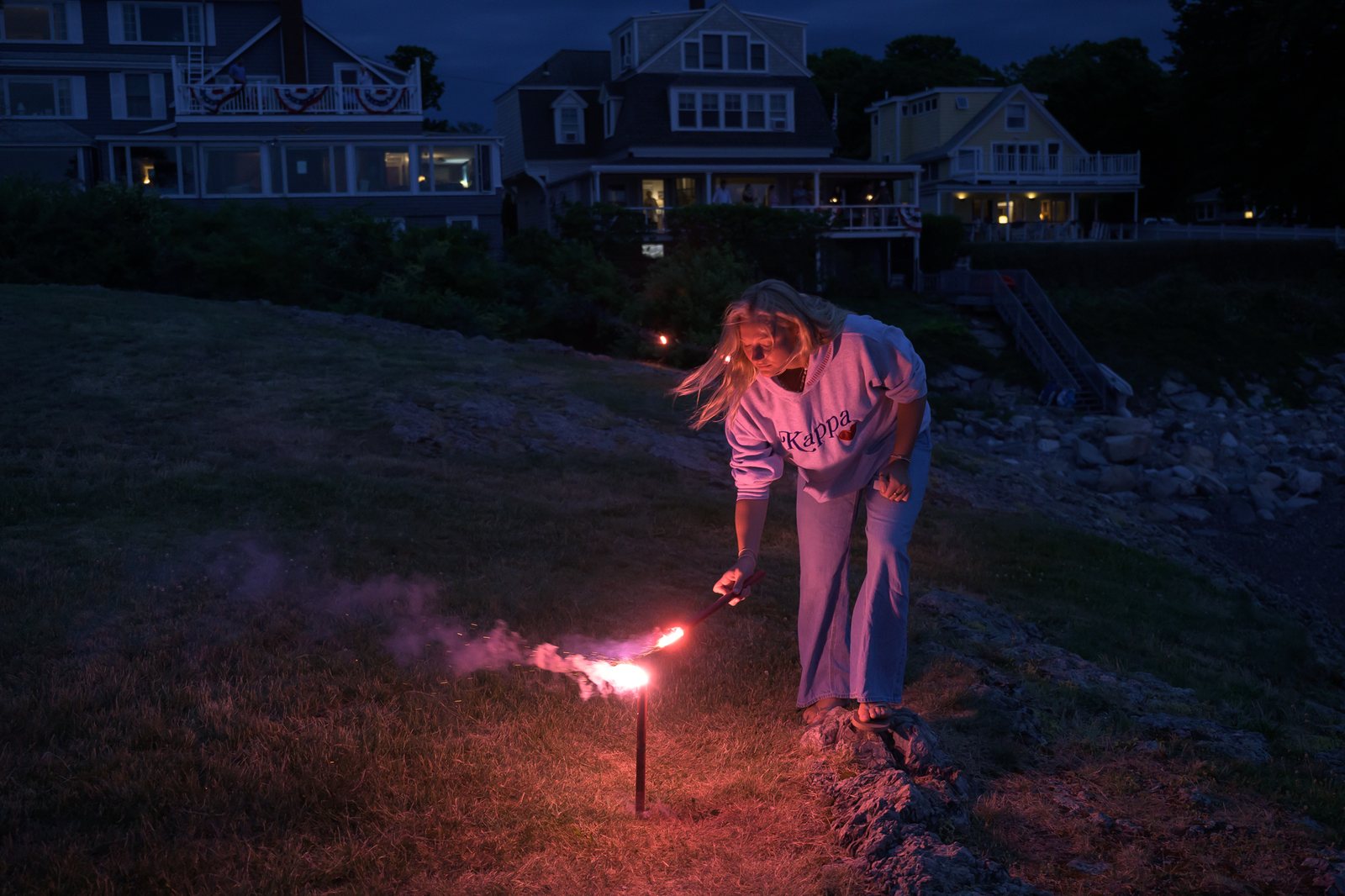
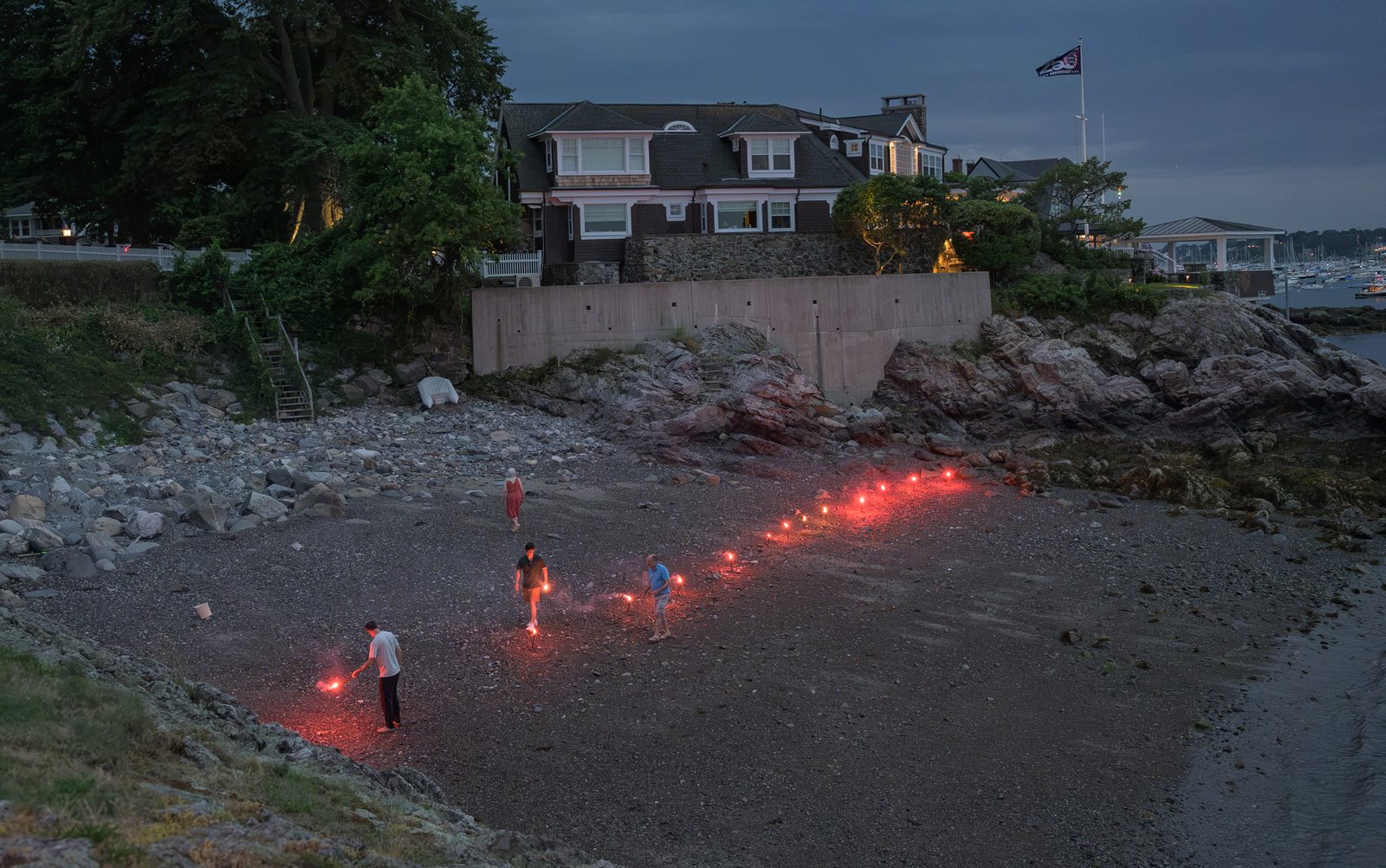
Before the first shell, the shoreline lights itself. As dusk settles, families along the Neck and around the harbor stake red marine flares into the grass and the shingle and touch them off, until a ring of red fire outlines the water and doubles in it. It is the quieter half of the night — the harbor packed with moored and decorated boats, the flares hissing and smoking in the last blue light, the whole crowd waiting for dark.
Fireworks over the harbor
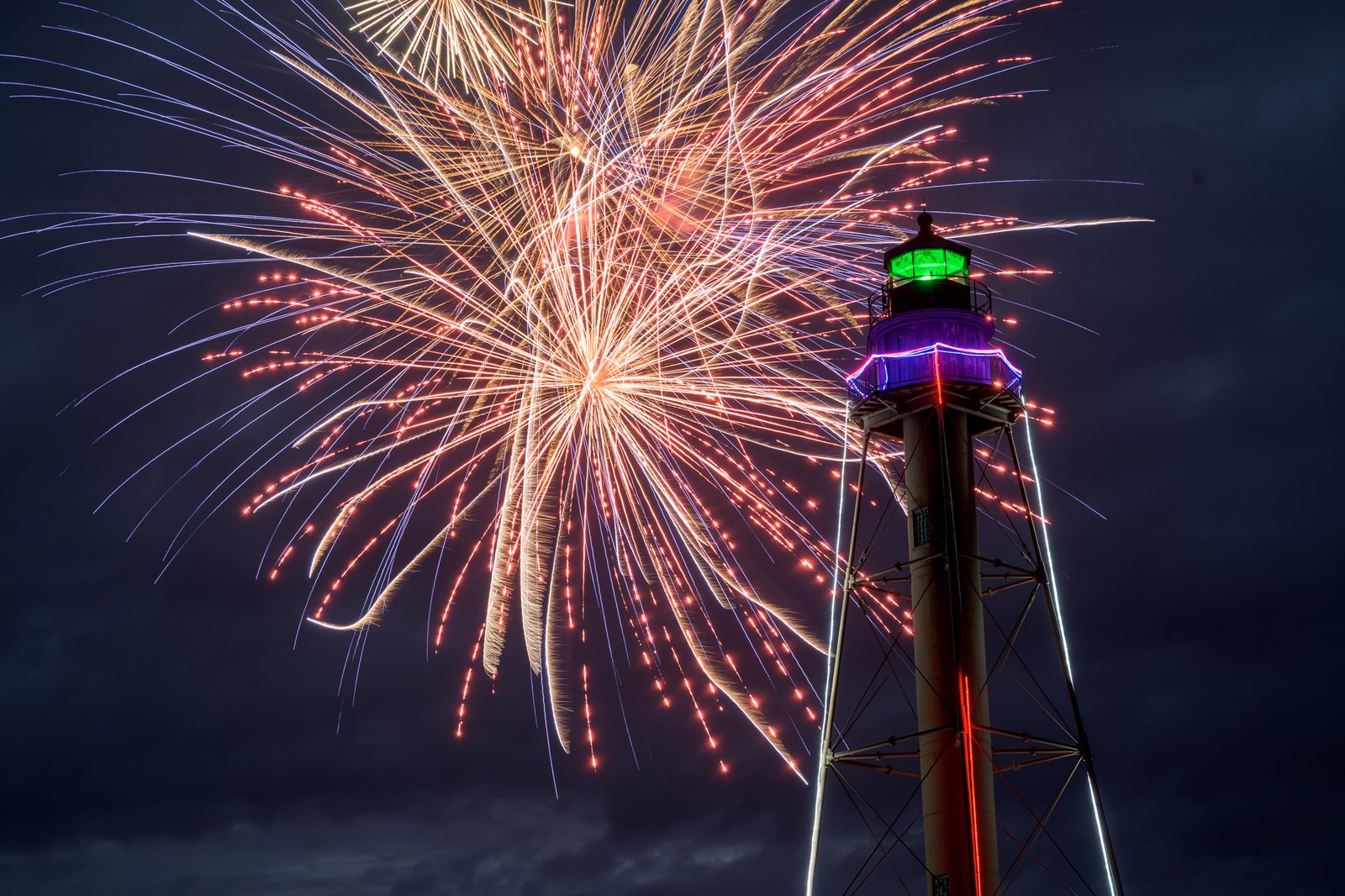
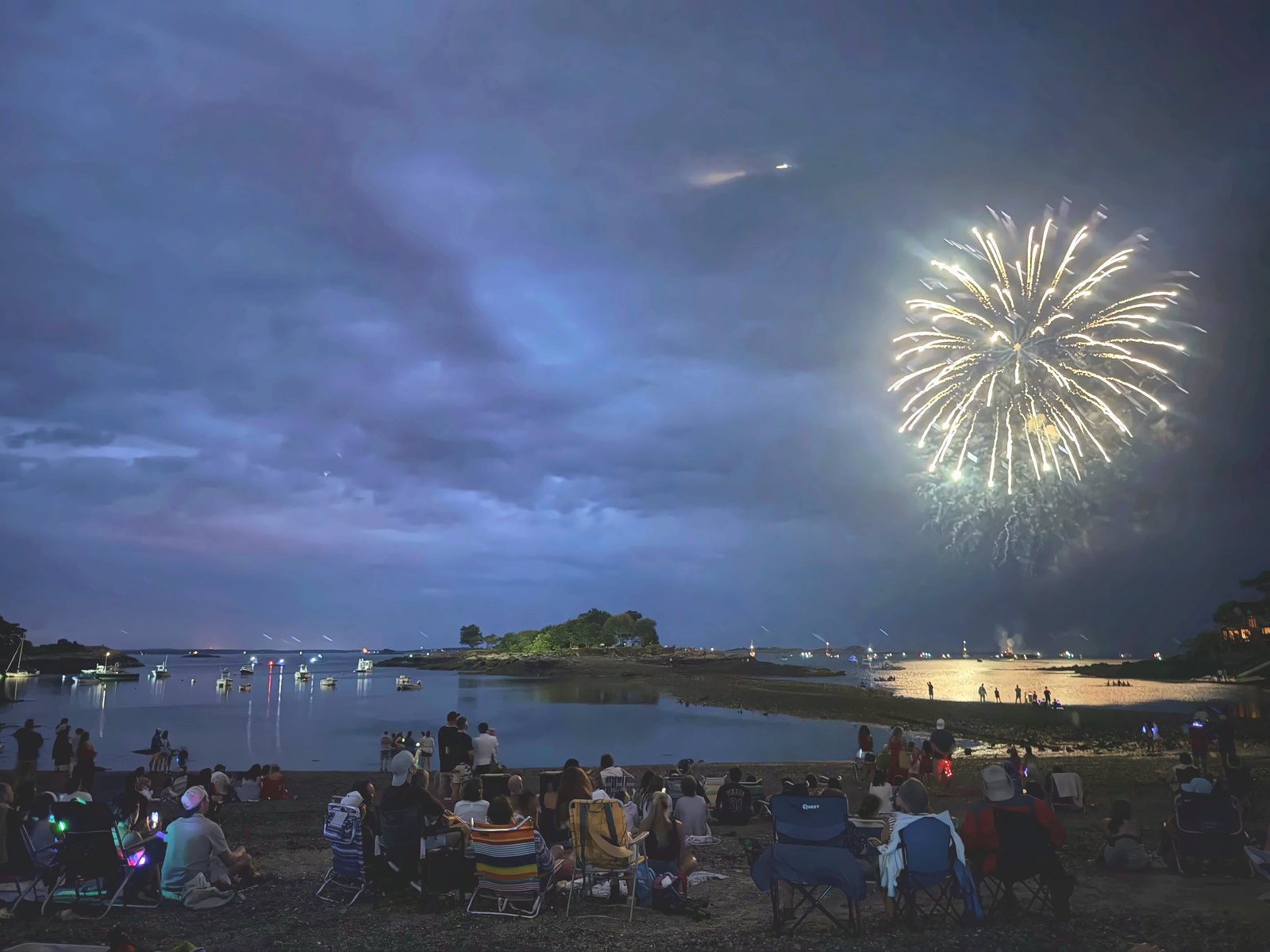
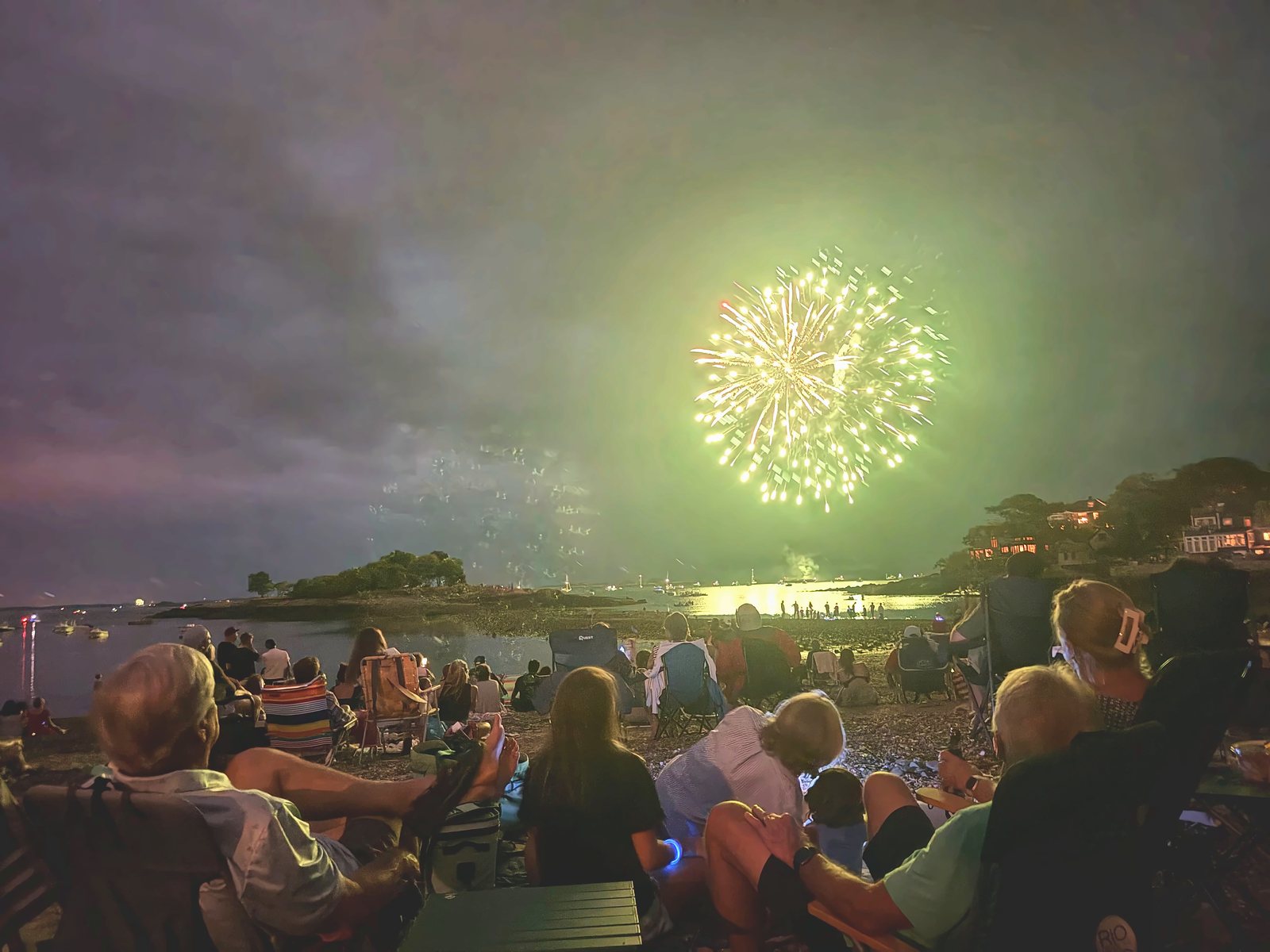
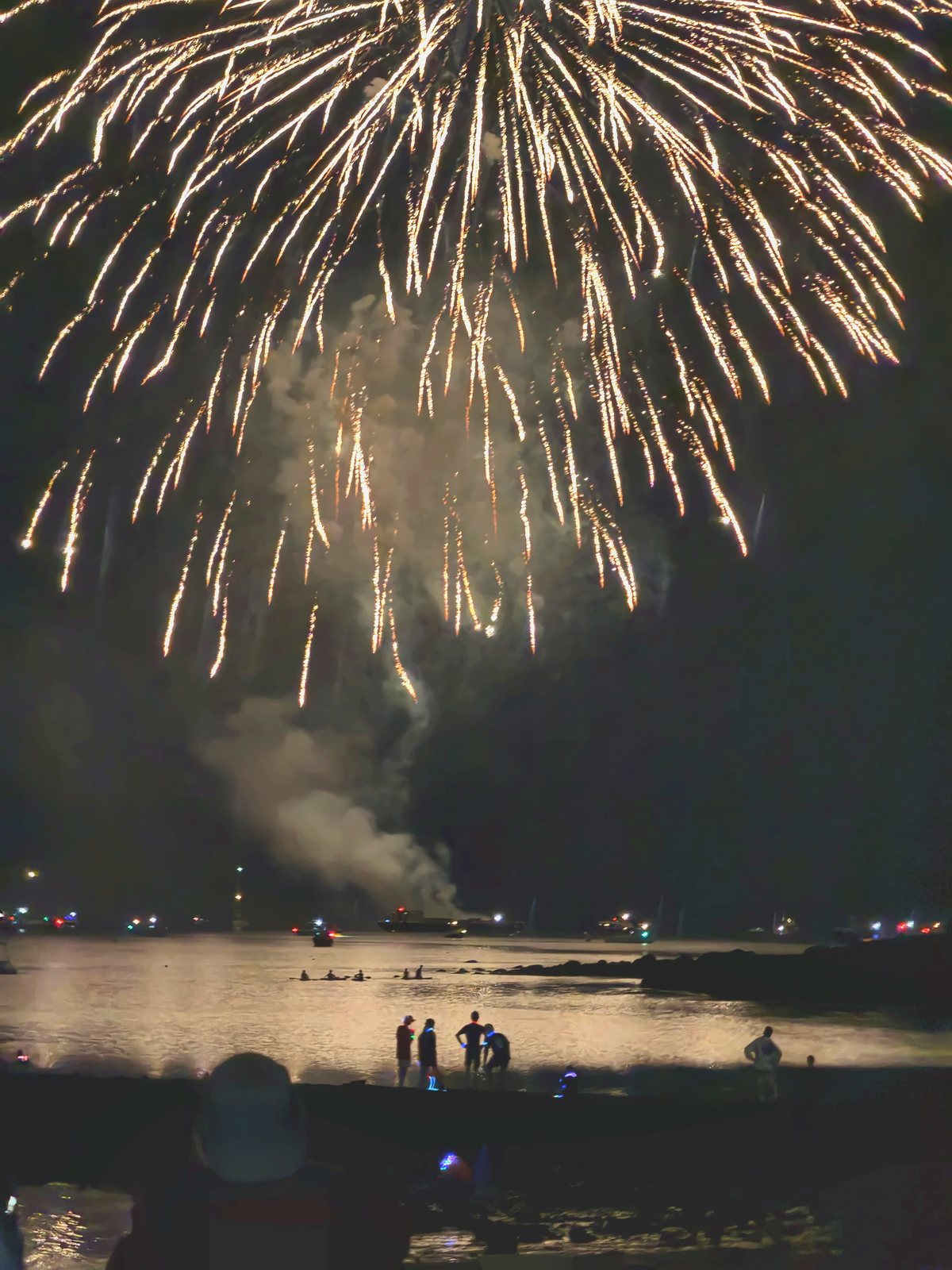
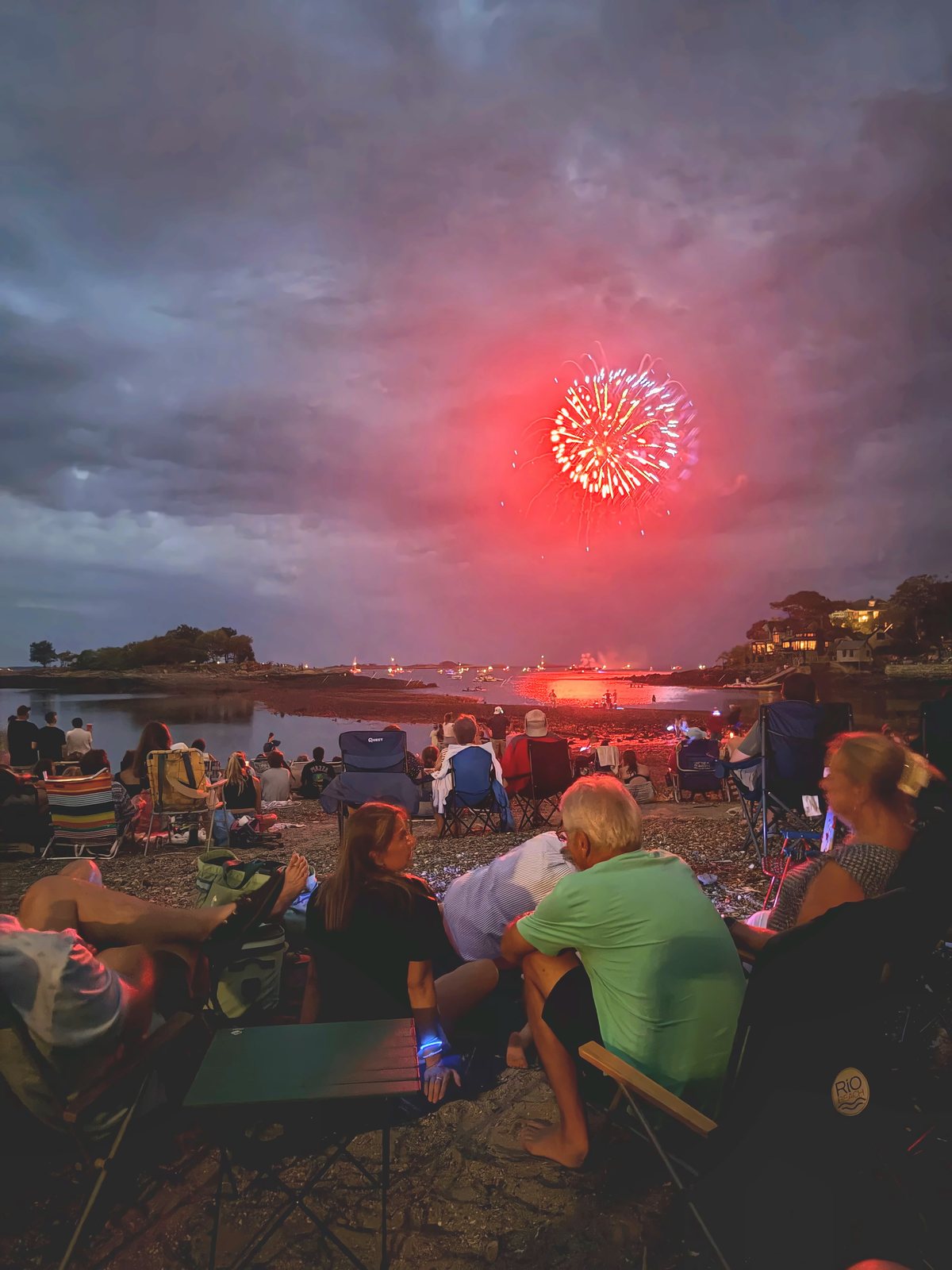
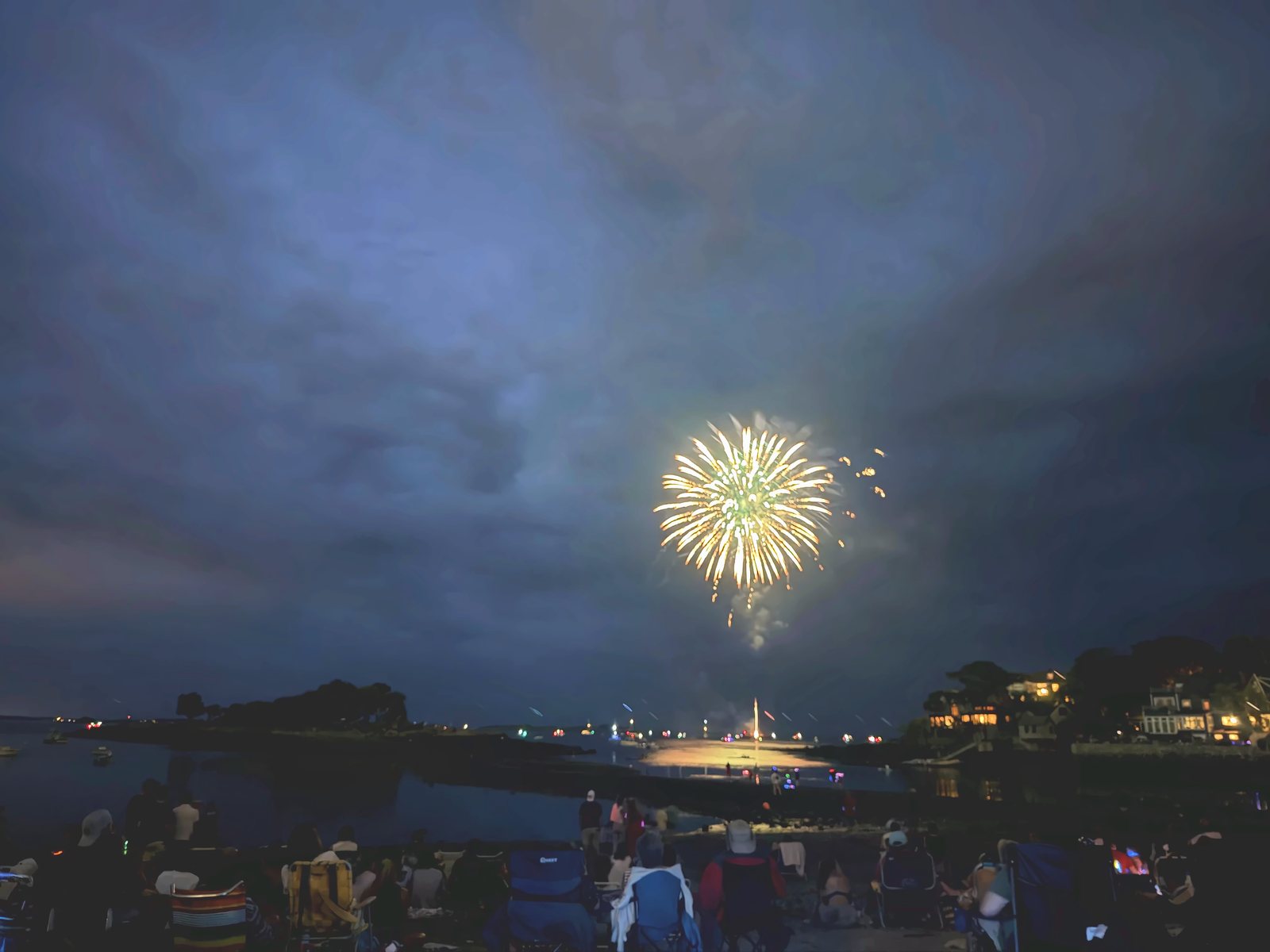
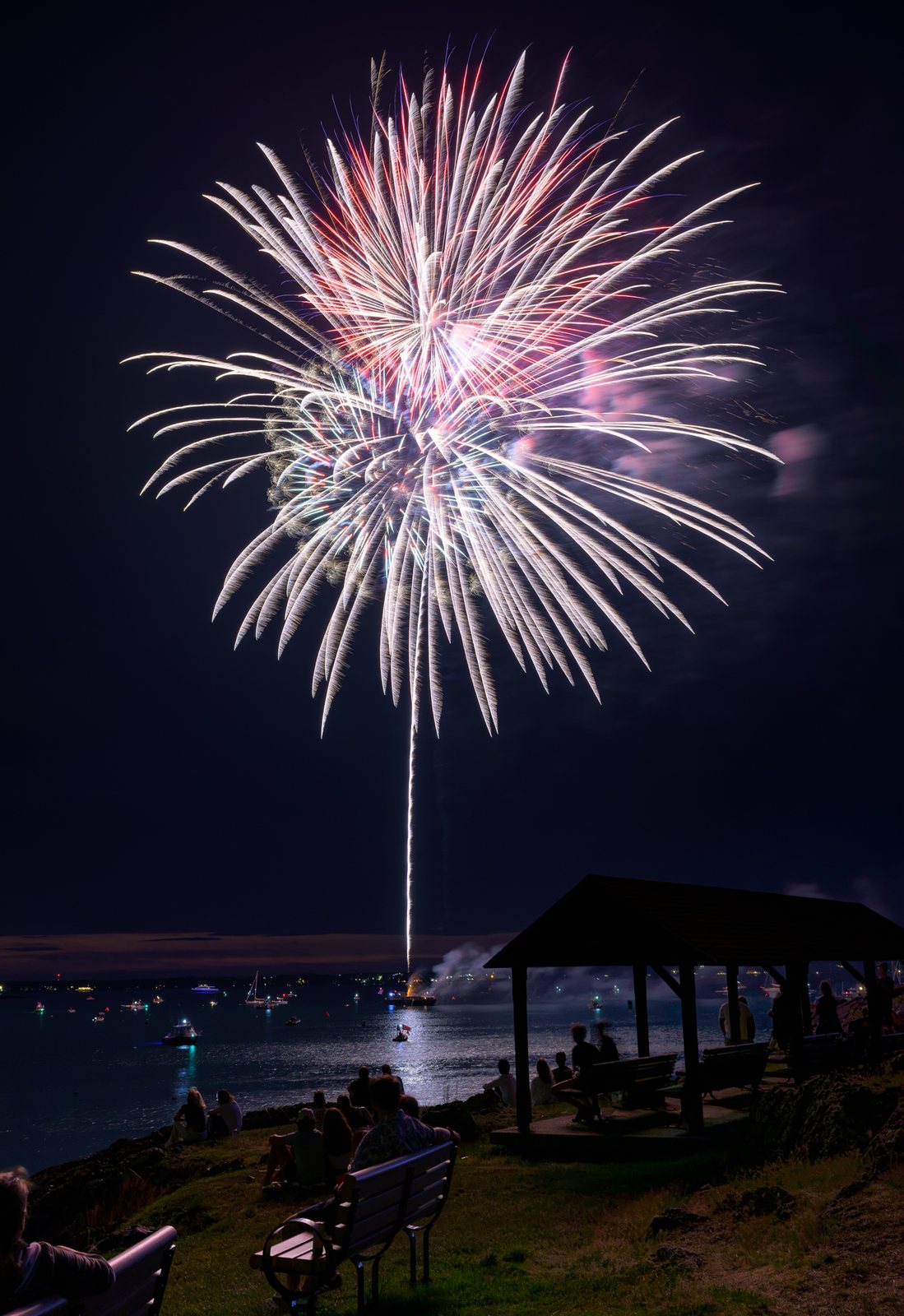
The wait for dark is its own Marblehead institution. Families stake out the beach hours ahead with folding chairs and coolers, children trail glow sticks along the tide line, and the boats crowd in behind the barge until the harbor is a floating grandstand. Then the first shell goes up, and the whole crescent of shoreline goes quiet and bright at once.
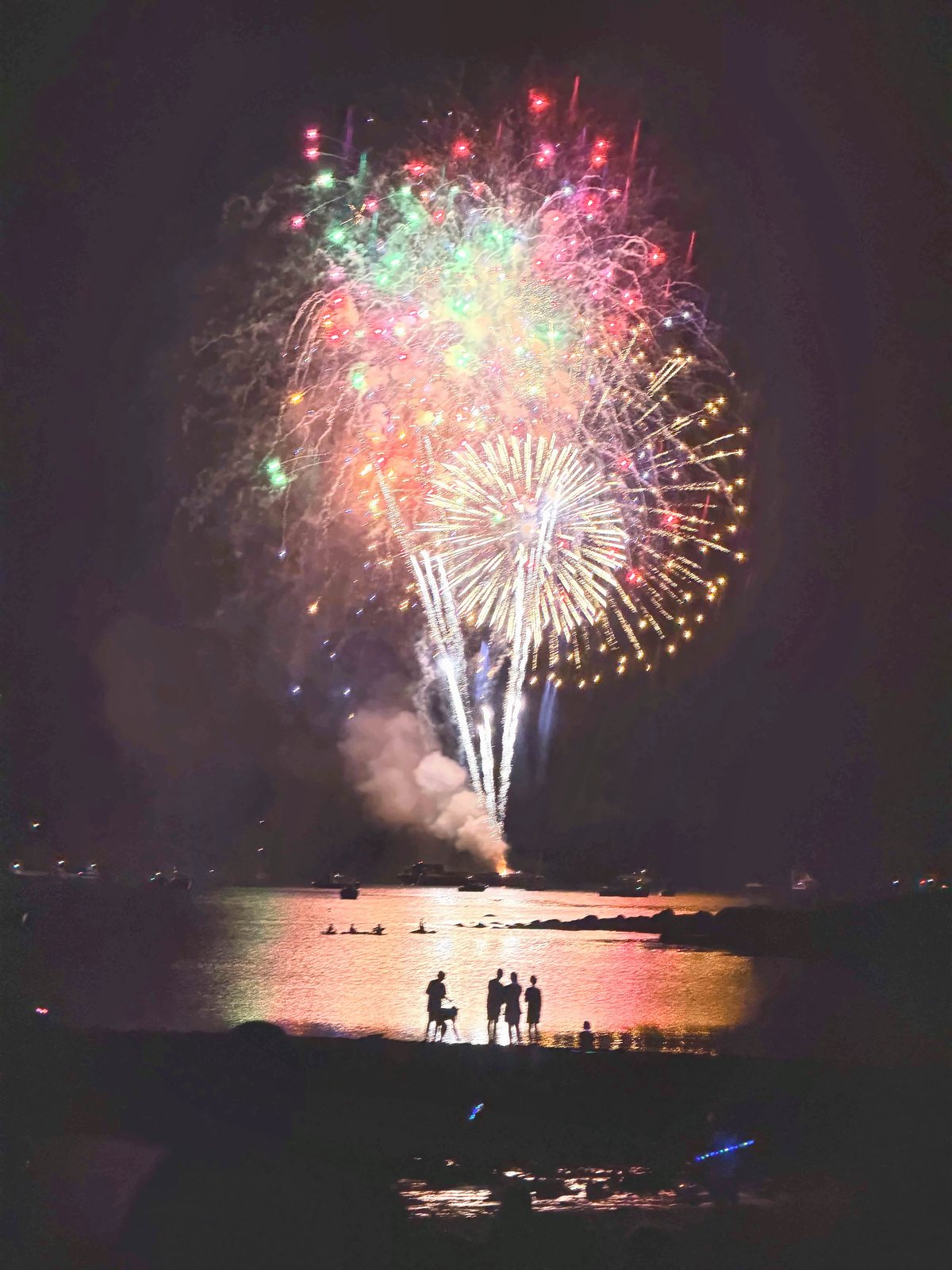
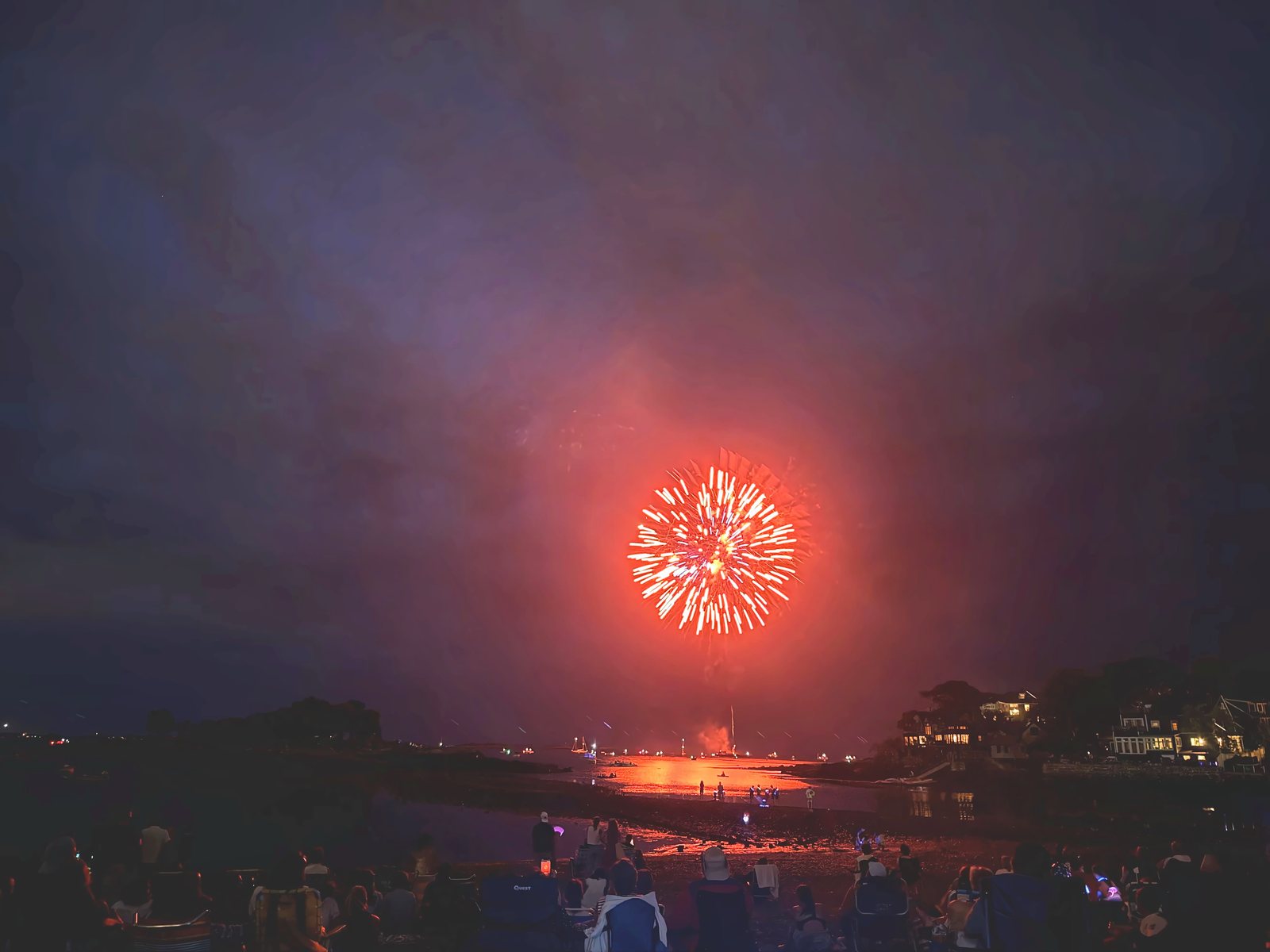
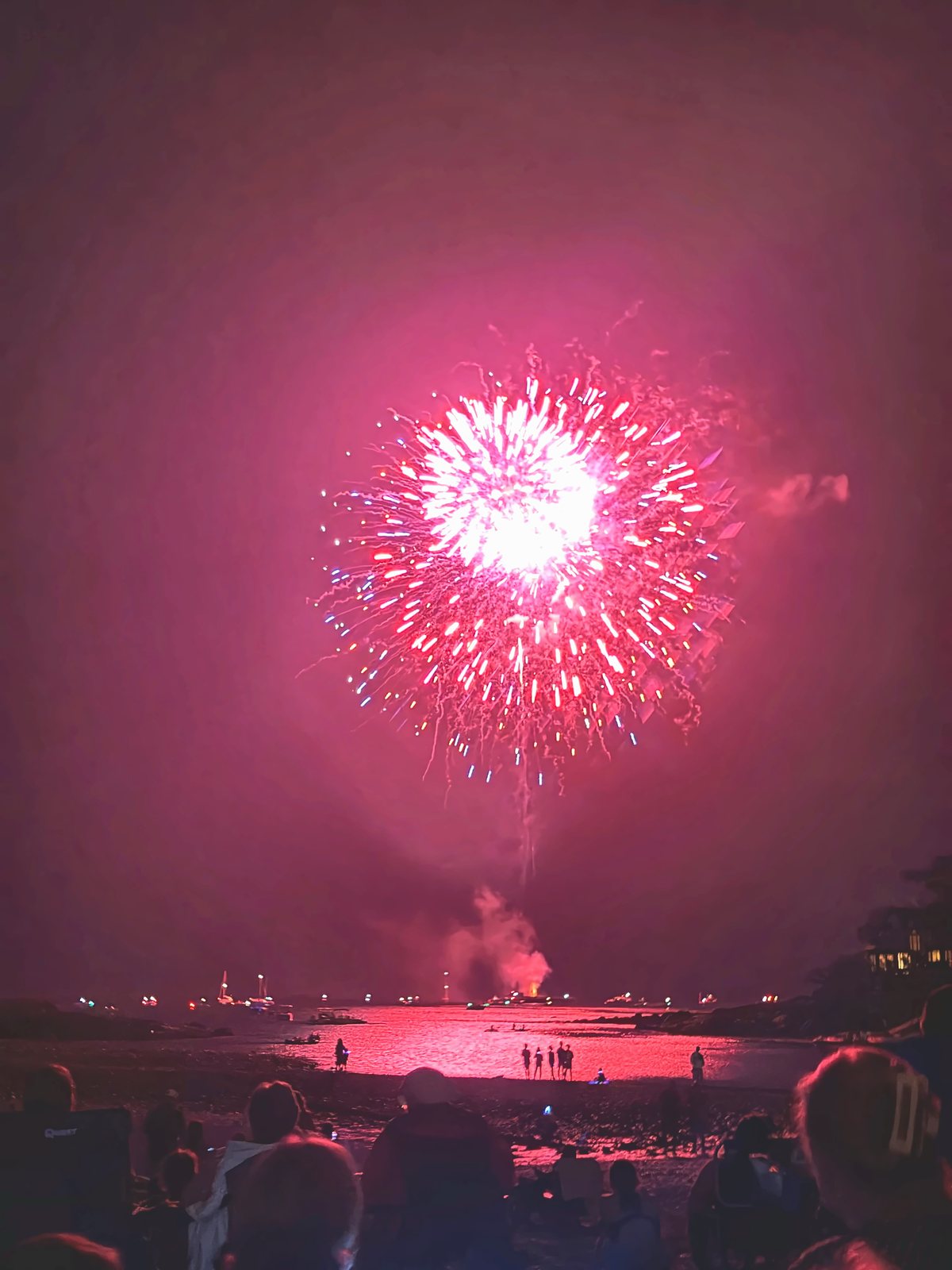
They came up green and gold and red over the water, each burst printed a second time on the harbor below it, smoke drifting off the barge between rounds. On the beach the silhouettes barely moved — chins up, phones up, the smallest kids on shoulders. Some 500 to 600 shells, wired to 440 igniters and fired electronically, went up over about 20 minutes; when the finale finally emptied the sky, a cheer went up along the shingle like a roar and carried out over the boats.
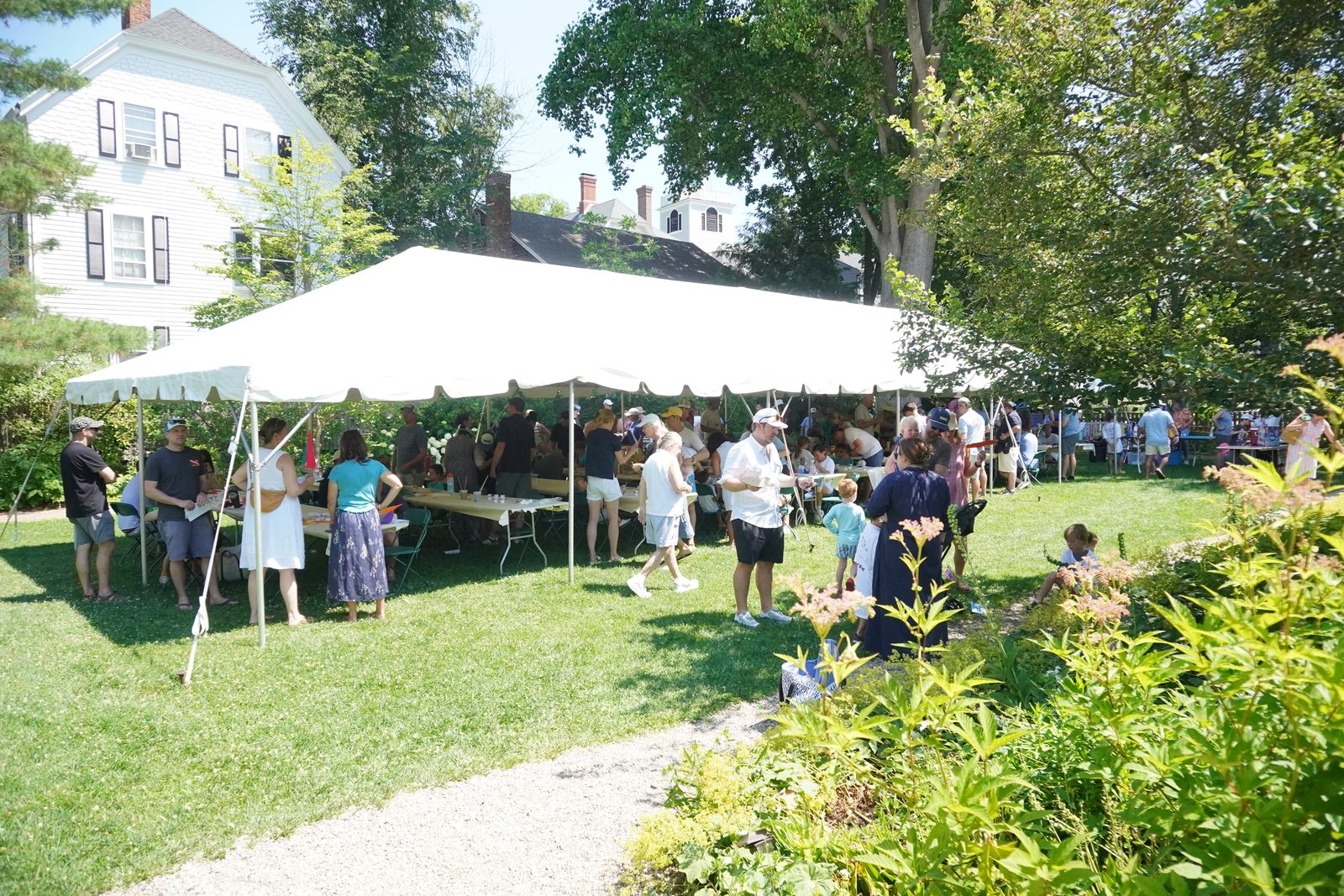
Building boats in the Lee Mansion garden
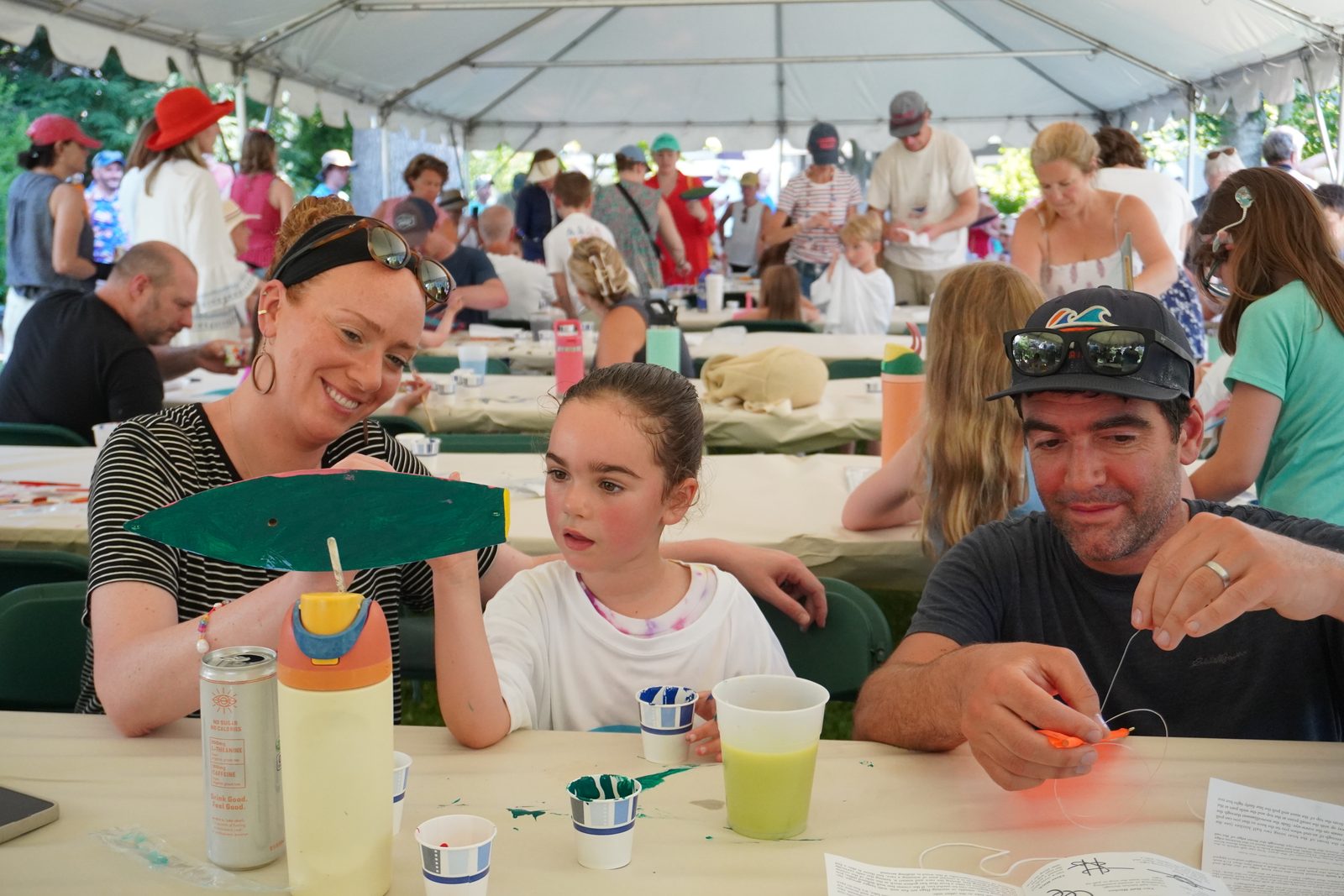
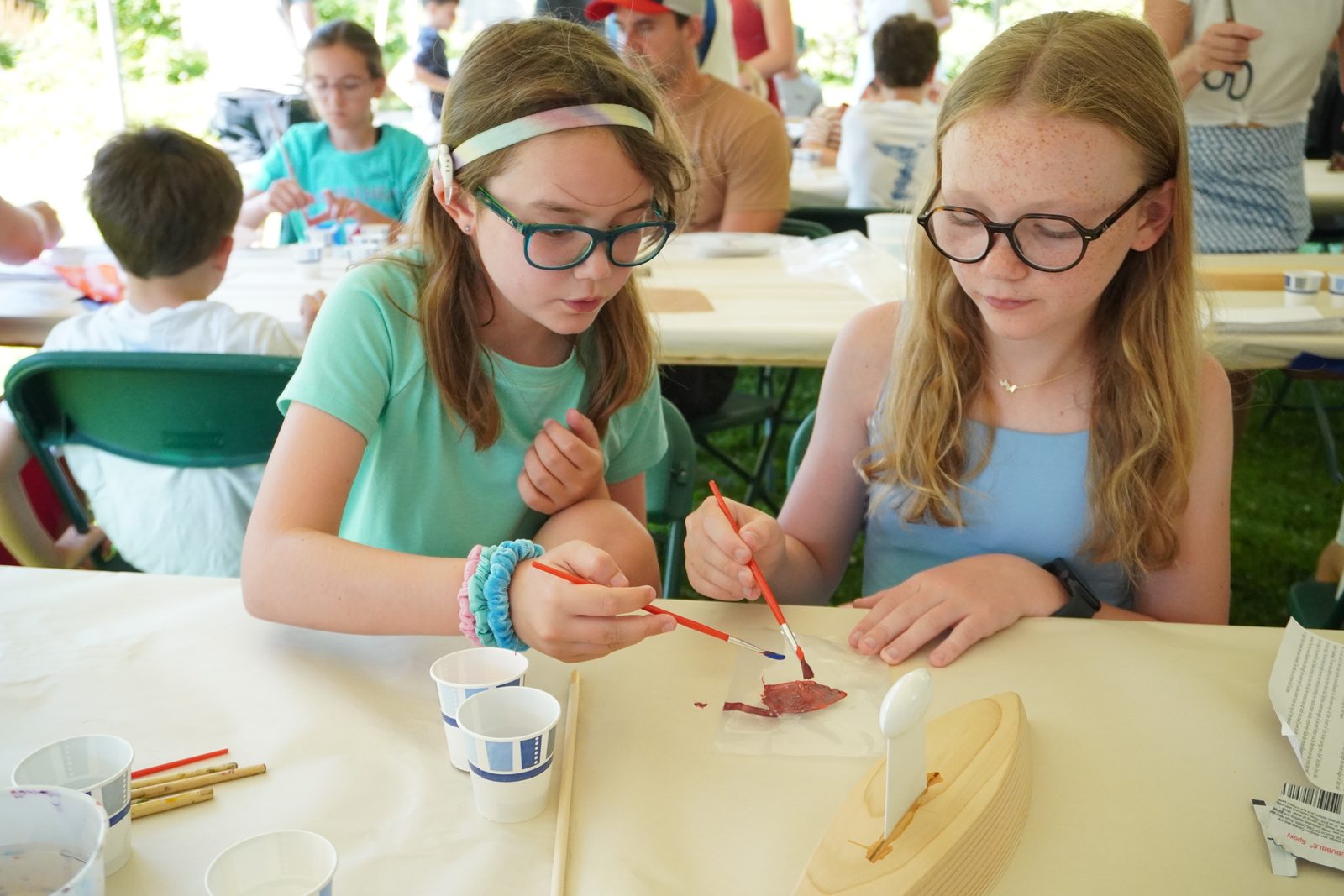
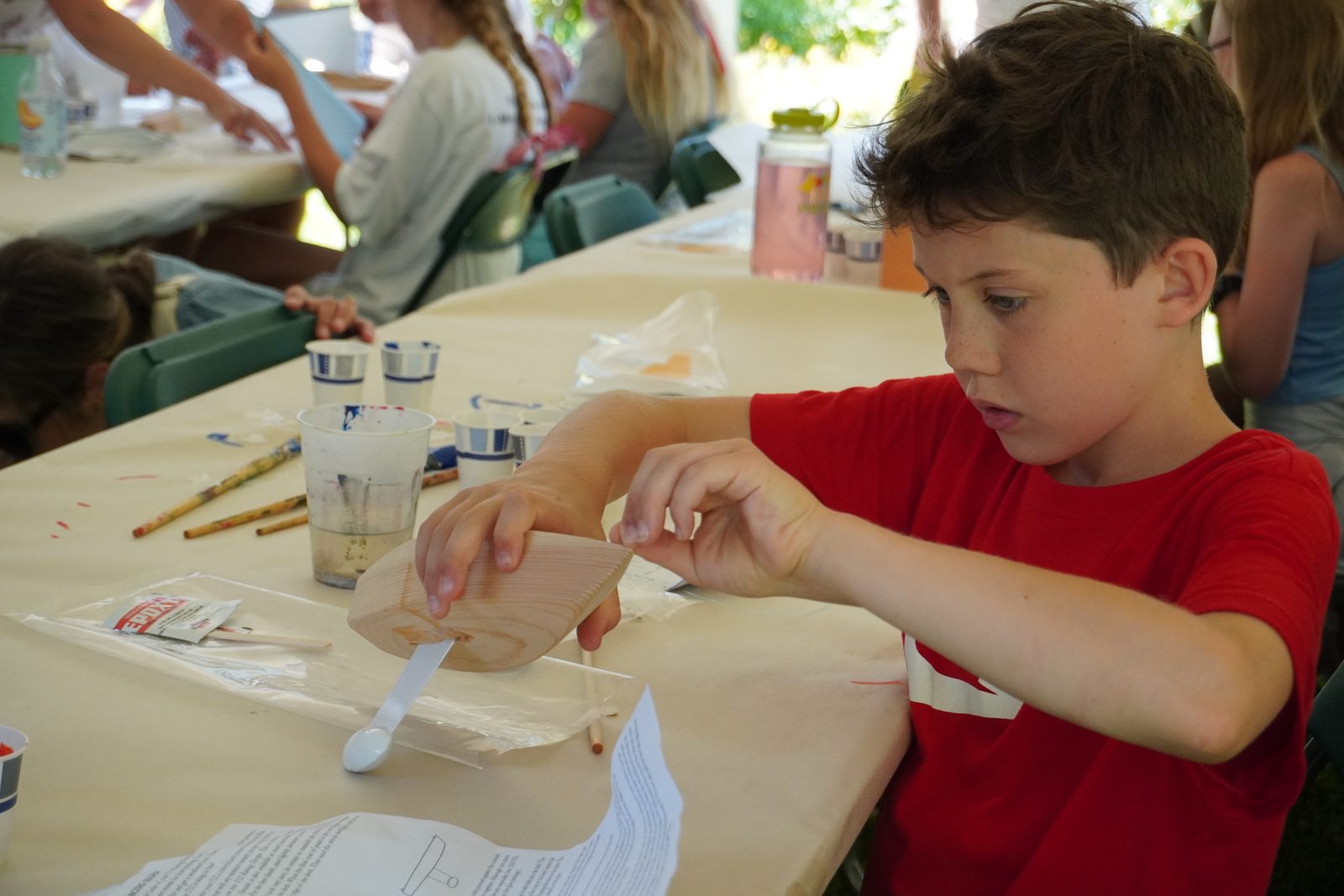
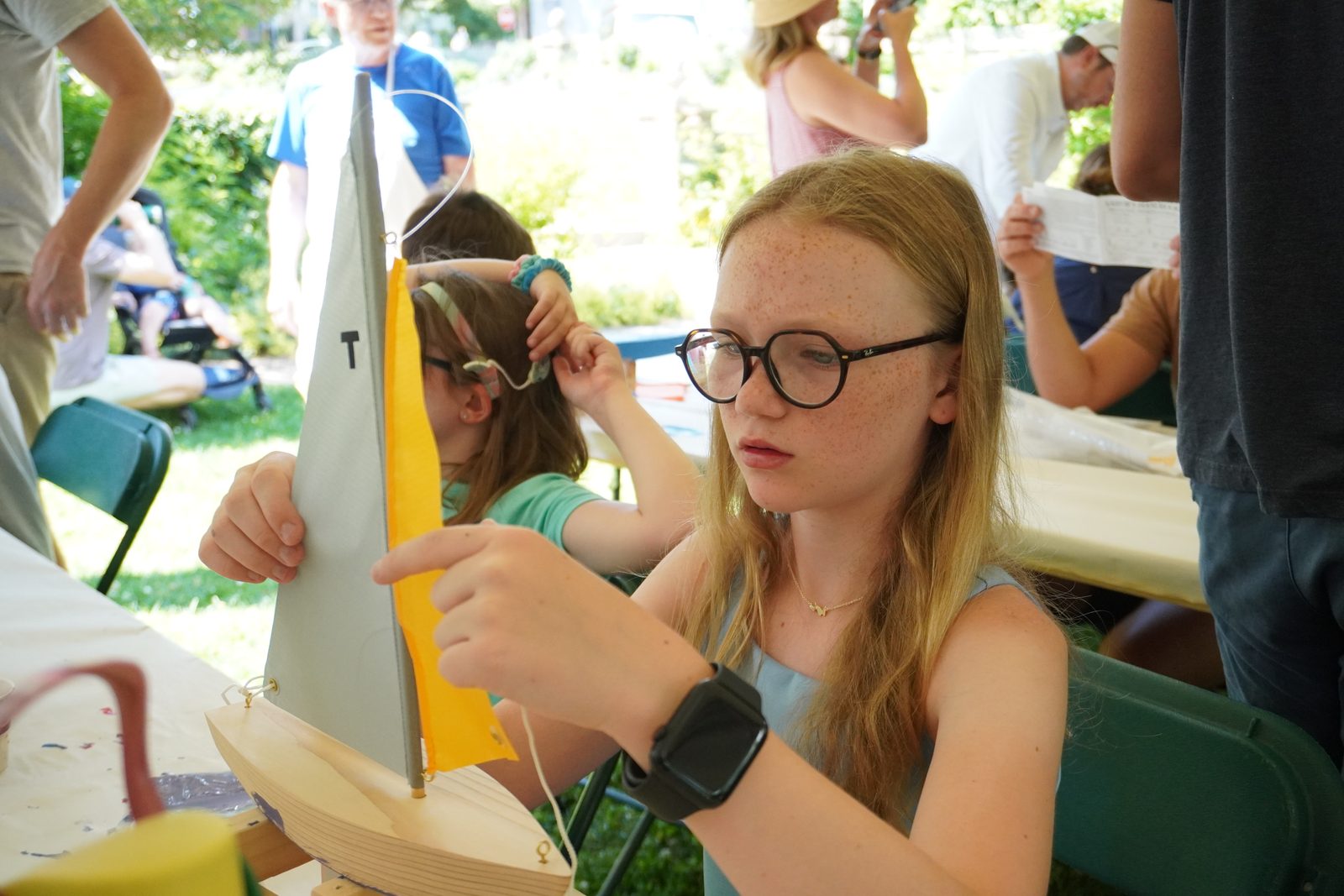
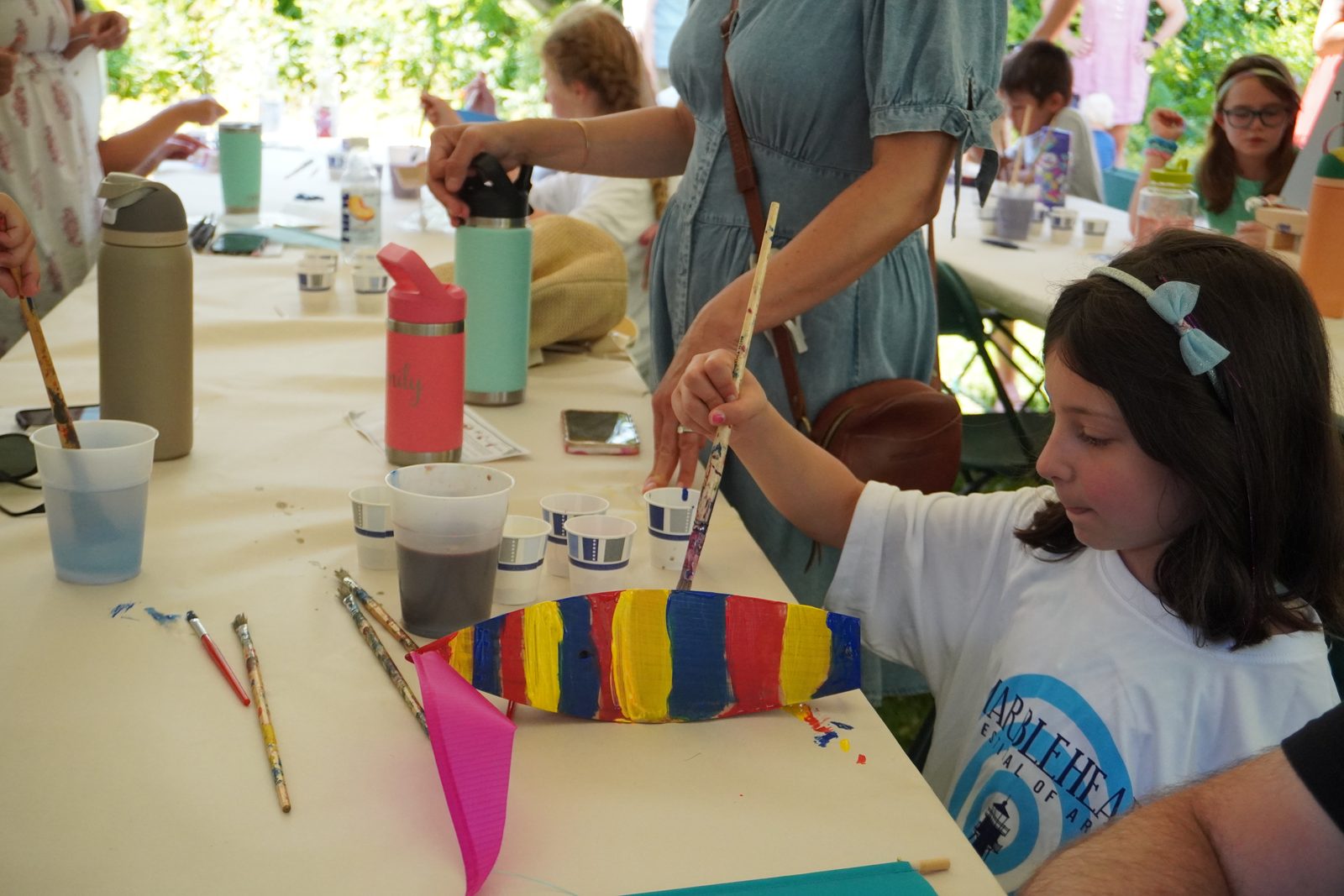
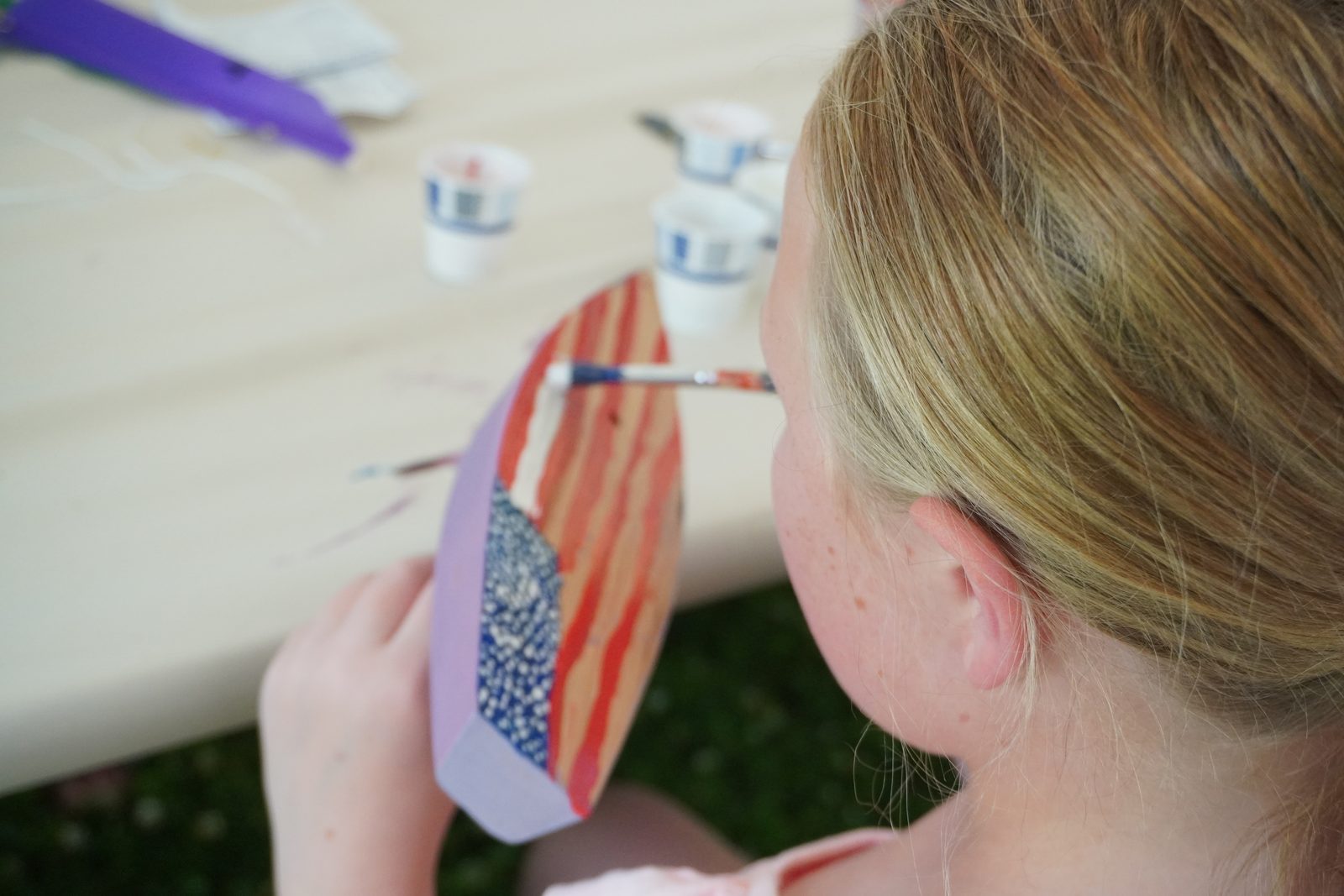
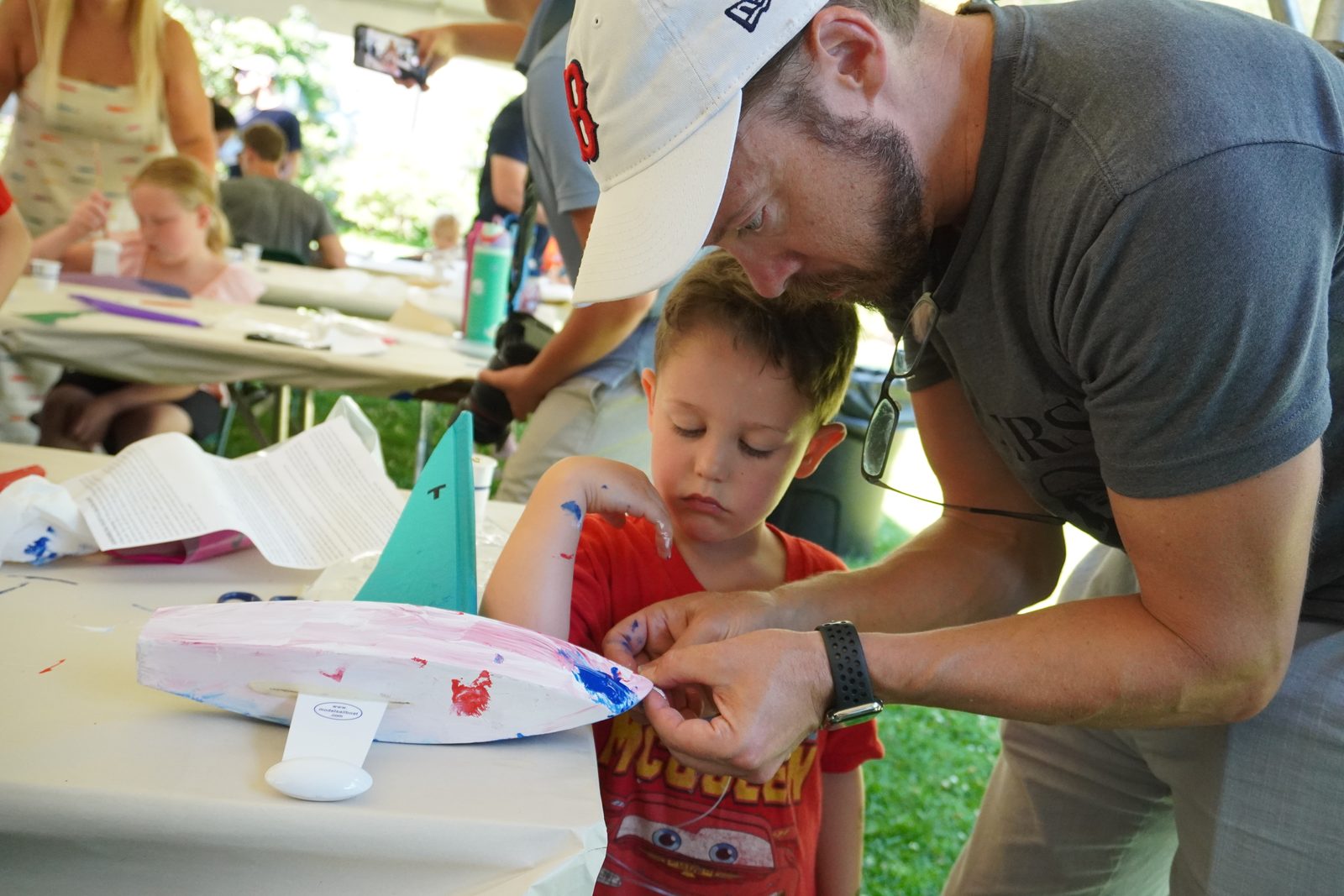
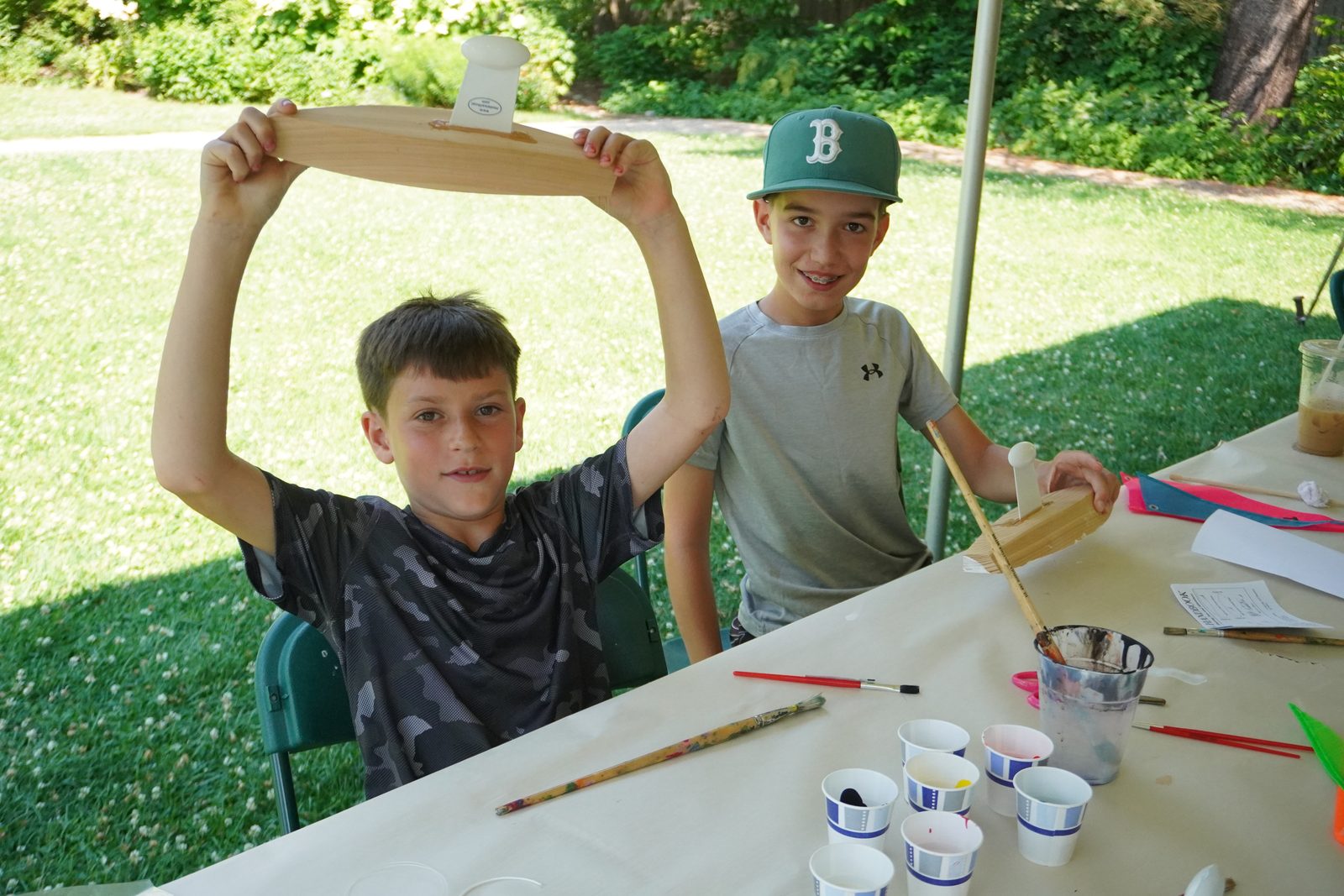
By Friday, the festival had handed the Jeremiah Lee Mansion garden to its youngest builders. Under the big white tent — the one meant for this year’s literary readings before dangerous heat sent them back to their usual home at the Unitarian Universalist Church — the Festival of Arts ran its boat-building workshop, and families bent over long tables gluing, painting and rigging small wooden sailboats. A boy held a finished hull up to the light like a trophy; a girl painted the stars and stripes onto hers; a father steadied a toddler’s brush.
On the second floor of Abbot Hall that same afternoon, Jeanette Cibelli and Jack Banagis — a couple who have been dating a year — talked about being back in Marblehead full time for the first summer. Cibelli had come up to her mother’s hometown from New Jersey her whole life; it was at last year’s festival that Banagis first met her family. Every year they seek out the same vendor, Maura Connor, whose coastal watercolors they collect. The crowds, Cibelli said, don’t feel like crowds here — “everyone’s decided to be here” — and Banagis agreed the week reads as “a vibe rather than an inconvenience.” Jeanette’s mom, Stacey Clark Cibelli, has a piece of her own family in the harbor: the Stacy Clark, the harbormaster’s boat, named for her great-grandfather. A decorated cod modeled on Amsterdam had caught Jeanette’s eye — she had studied there.
Building a boat at the Lee Mansion
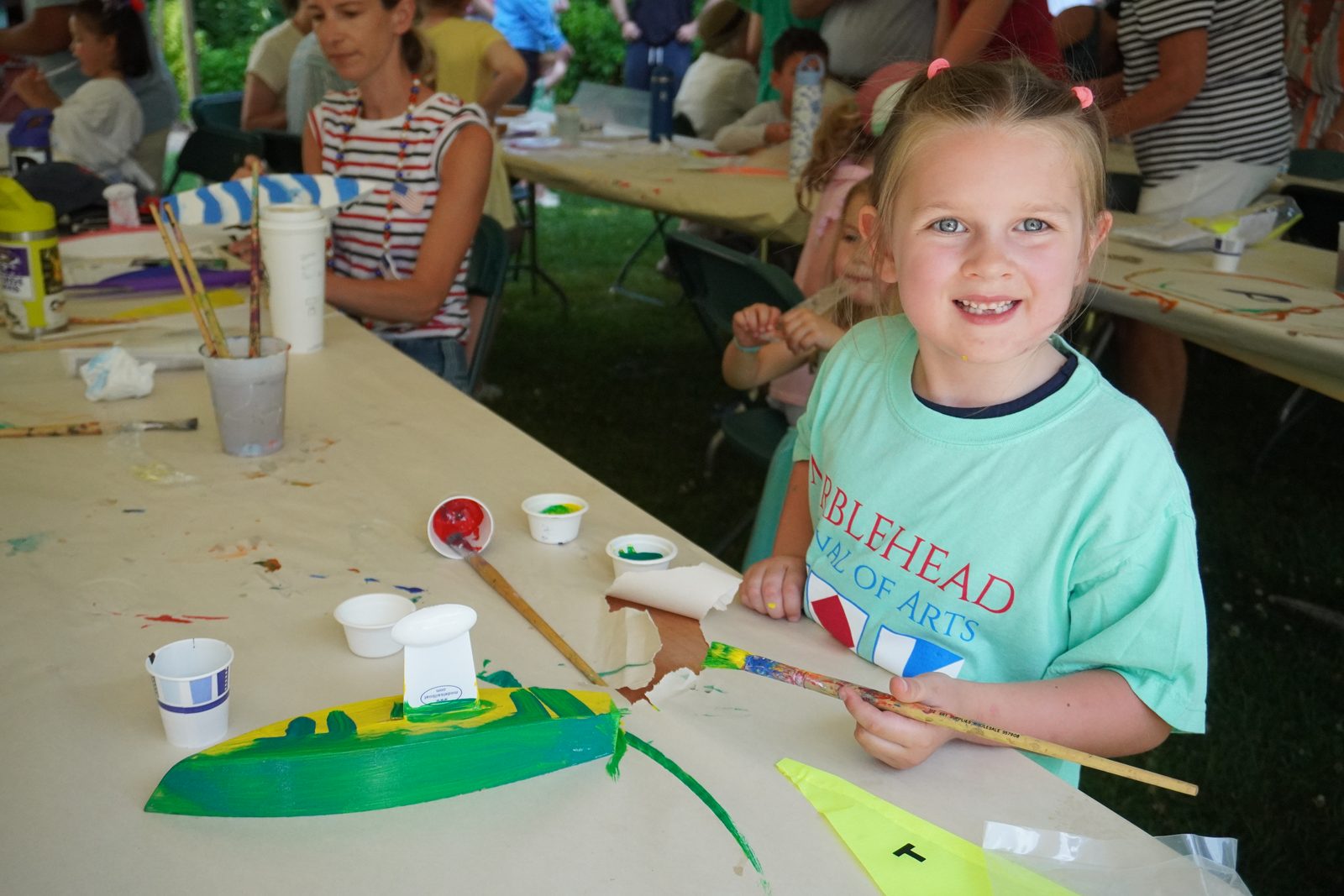
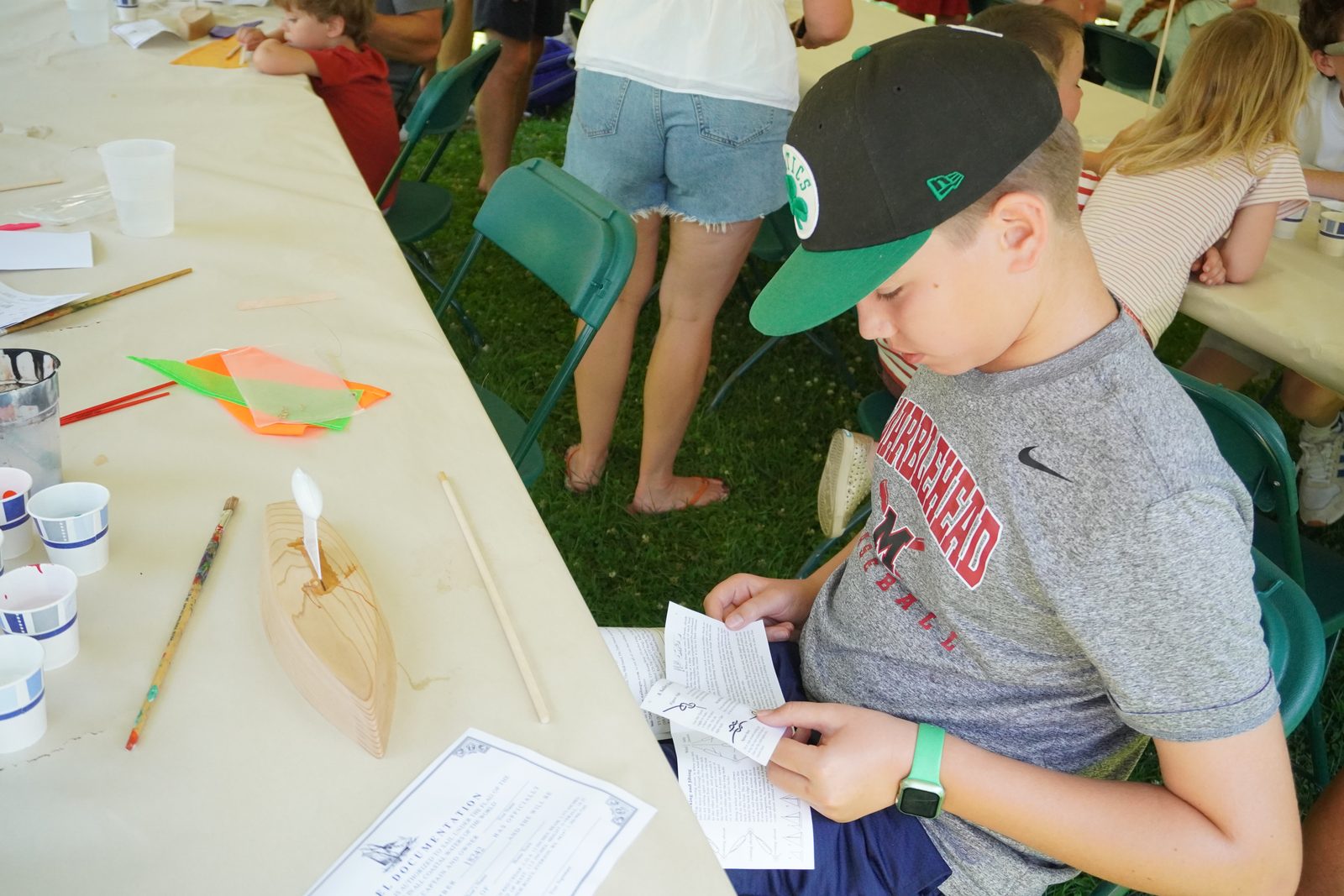
Every kit began the same: a pre-cut wooden hull, a dowel for a mast, a square of sail and a length of string to rig it. What happened after that was up to the builder. Along the paper-covered tables, children painted their hulls out of Dixie cups of red, blue and yellow — stripes, stars, a solid electric green, a wash of every color at once. A boy in a Marblehead baseball shirt studied the instruction sheet before he picked up a brush. Another in red worked epoxy along a seam. A father leaned in to thread a paper sail onto his son’s mast while the boy held the hull steady with both hands.
A finished boat got a name. On a mock ‘Vessel Documentation’ certificate — authorized, it read, to sail under the flag of the United States — a builder filled in a sloop number and a home port, then carried the whole thing off two-handed, careful as something that might still spill. The paint was usually still wet. Nobody minded.
Among the tents
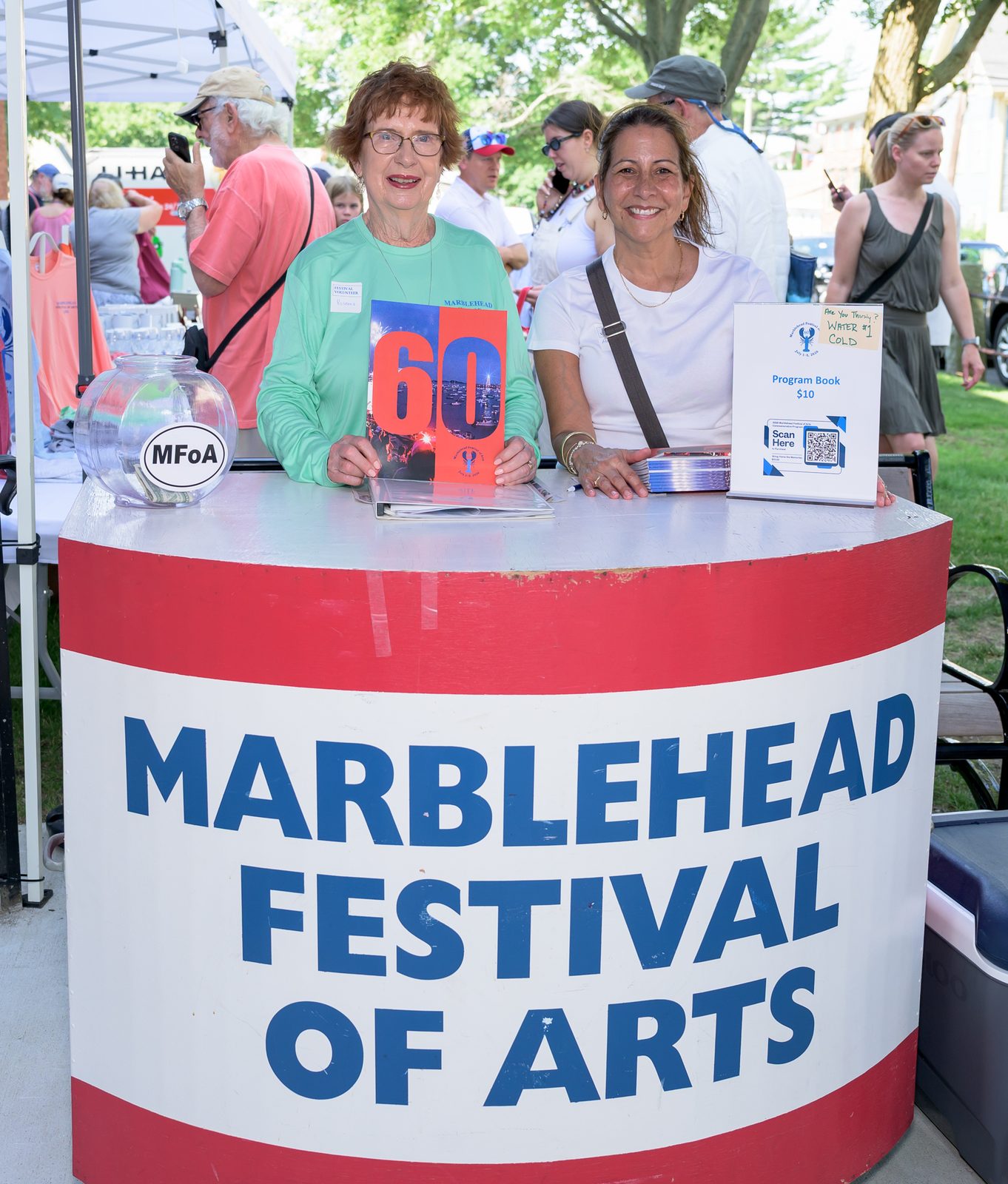
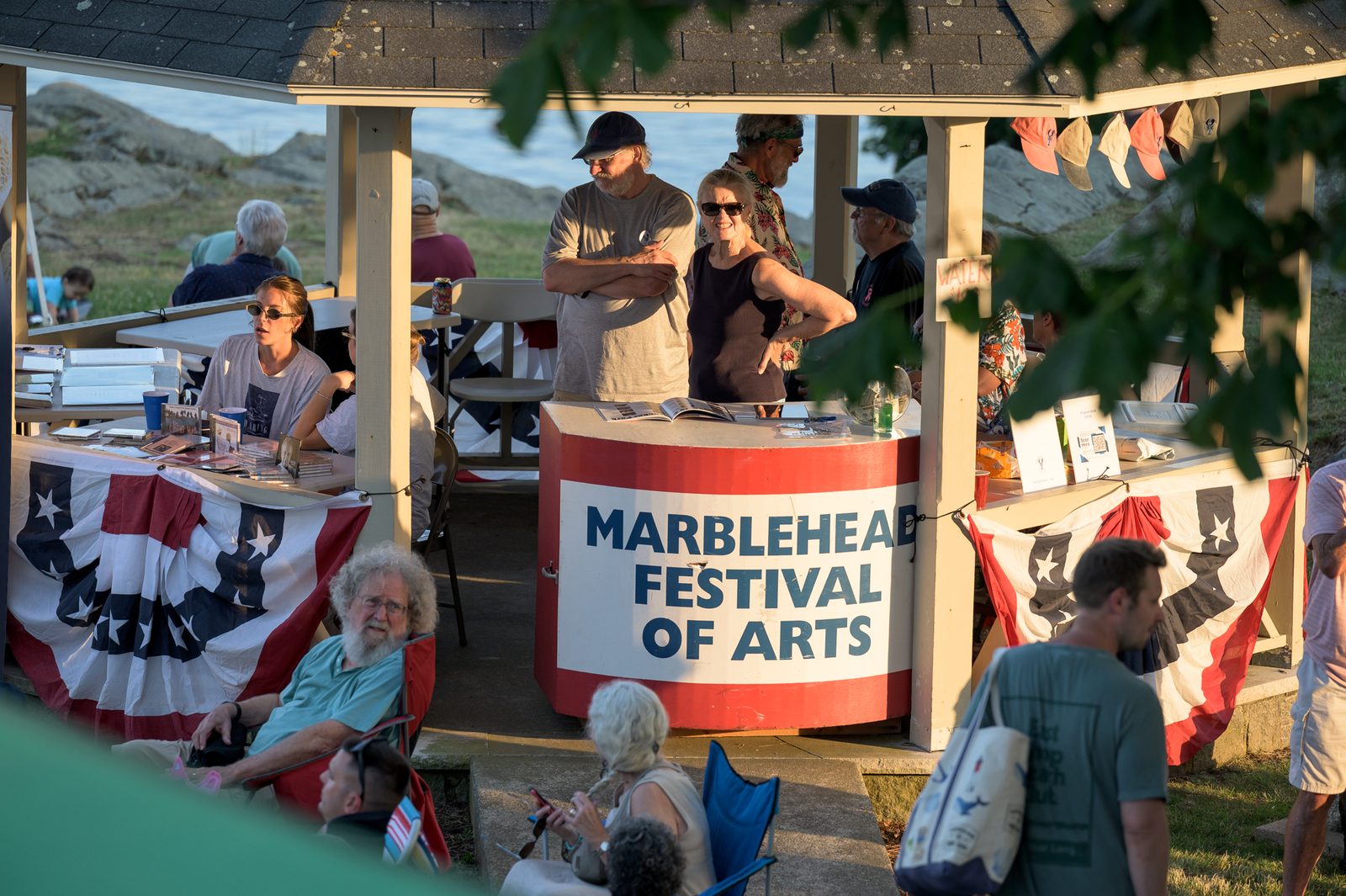
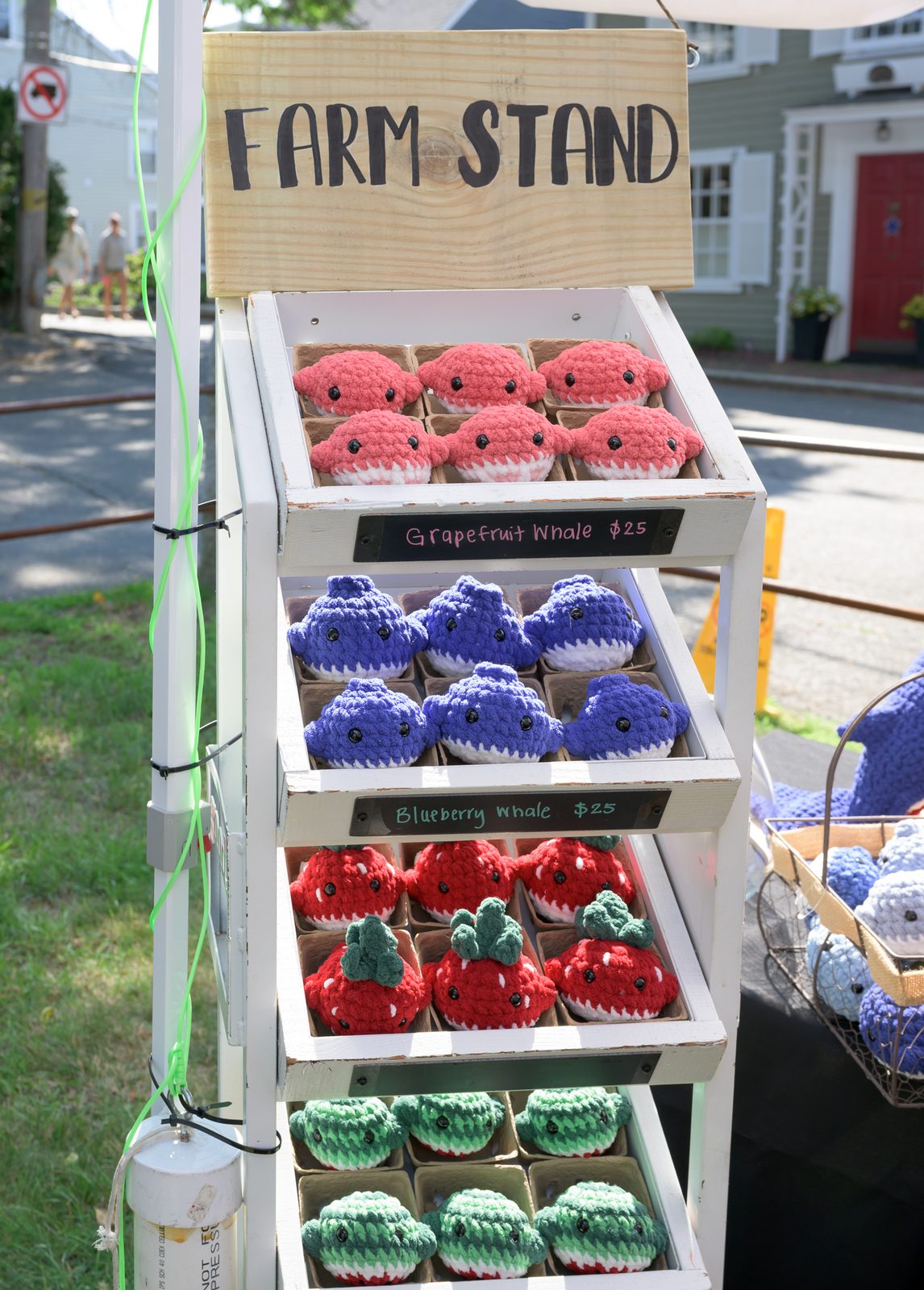
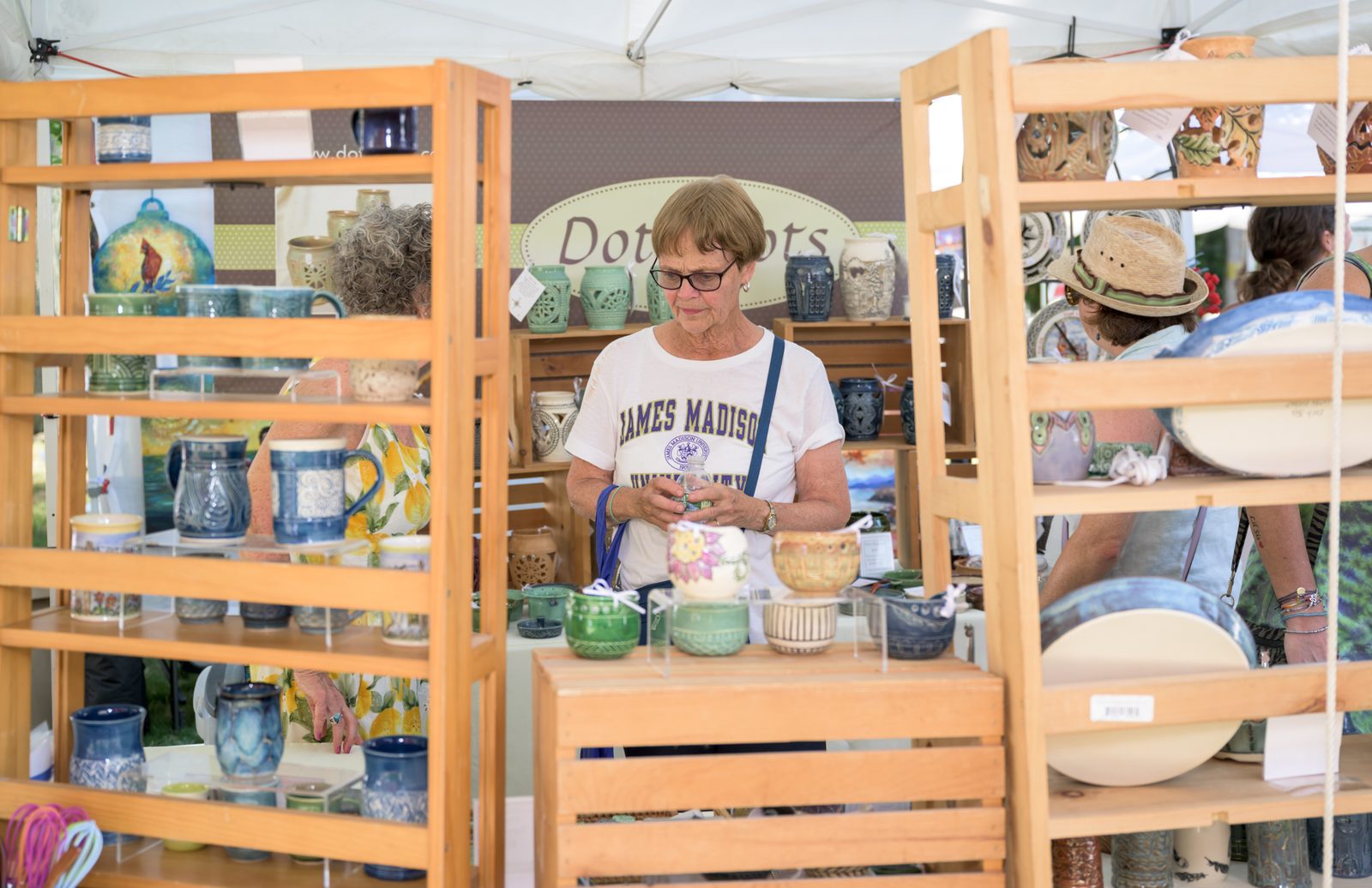
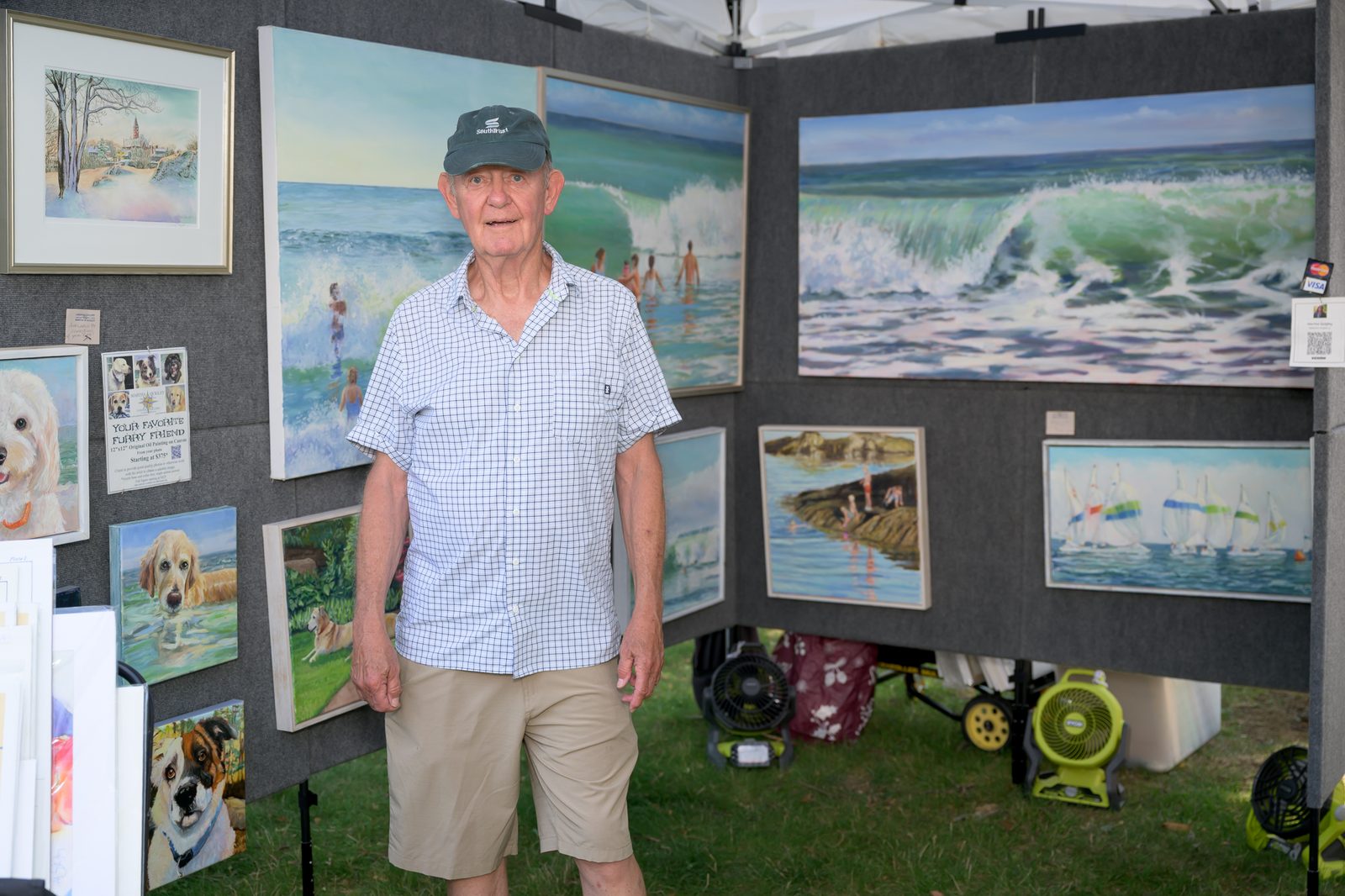
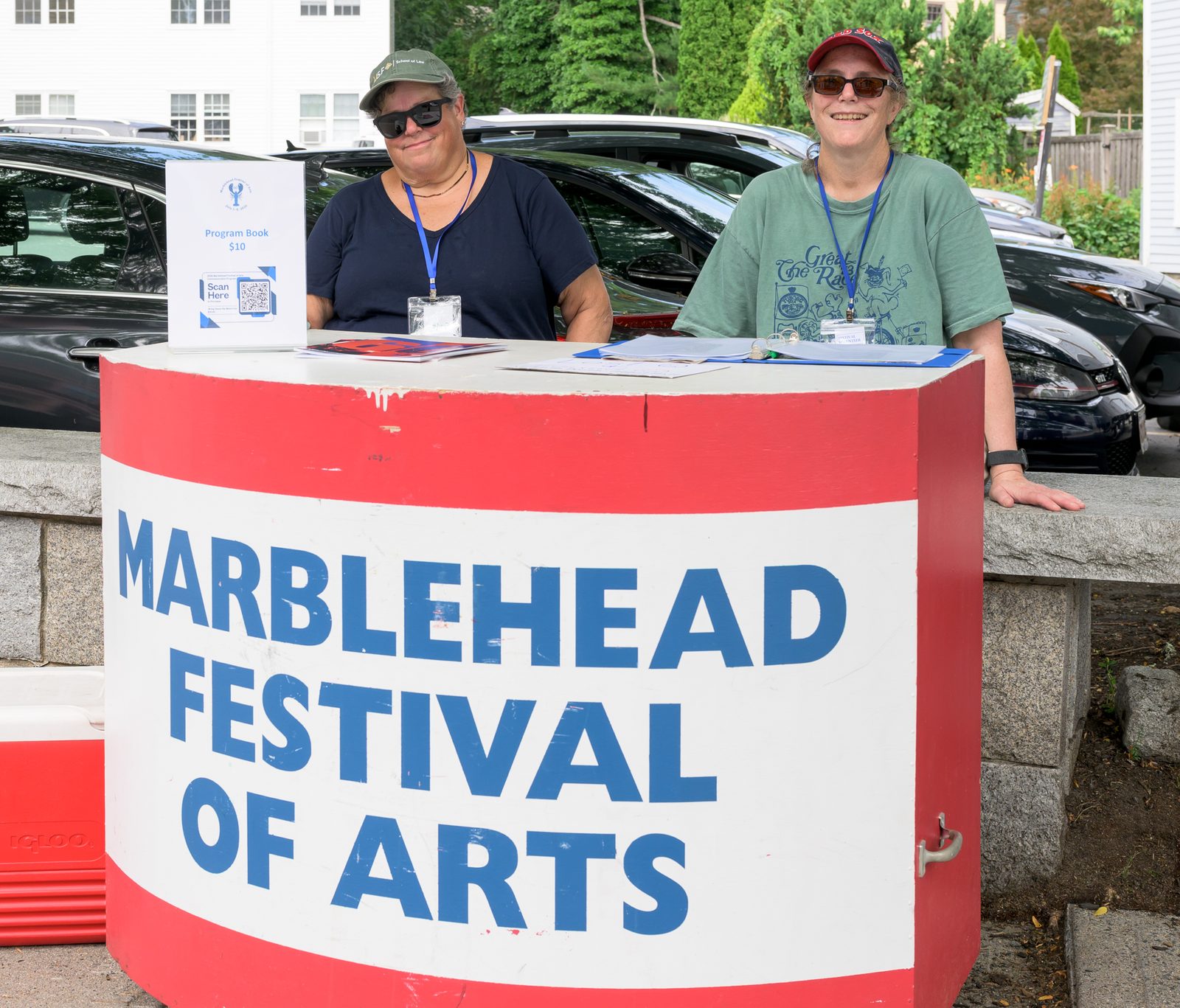
On the lawn of Abbot Hall, the festival’s vendors had their booths open under white tents. At the information booth, volunteers sold the sixtieth-anniversary program book. Under the canopies the work waited to be looked at: thrown pots on pine shelves, oil seascapes stacked three deep, a farm stand of crocheted whales priced like produce. Shoppers picked things up, turned them over, set them down and moved on.
Indoors, out of the heat
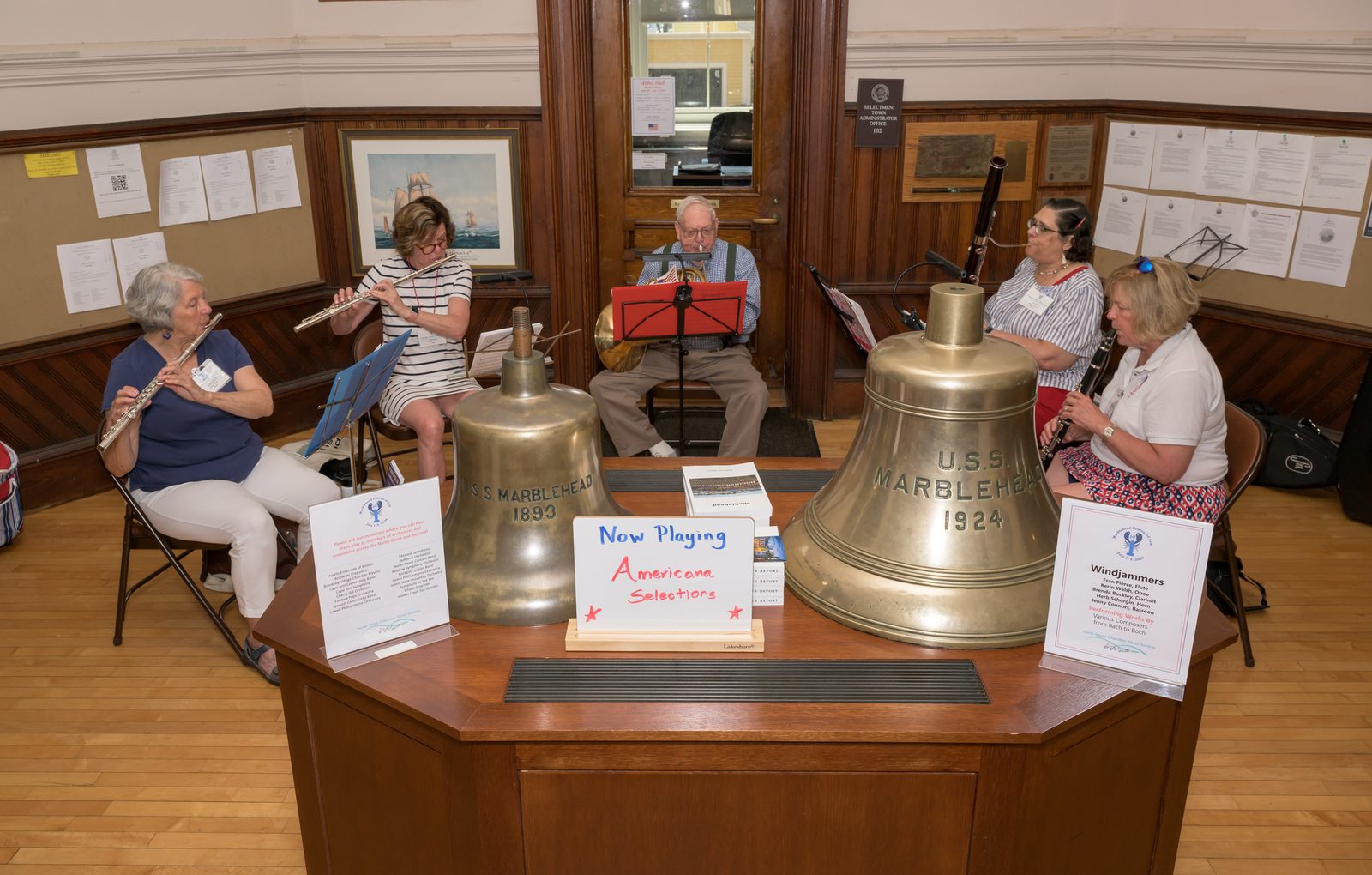
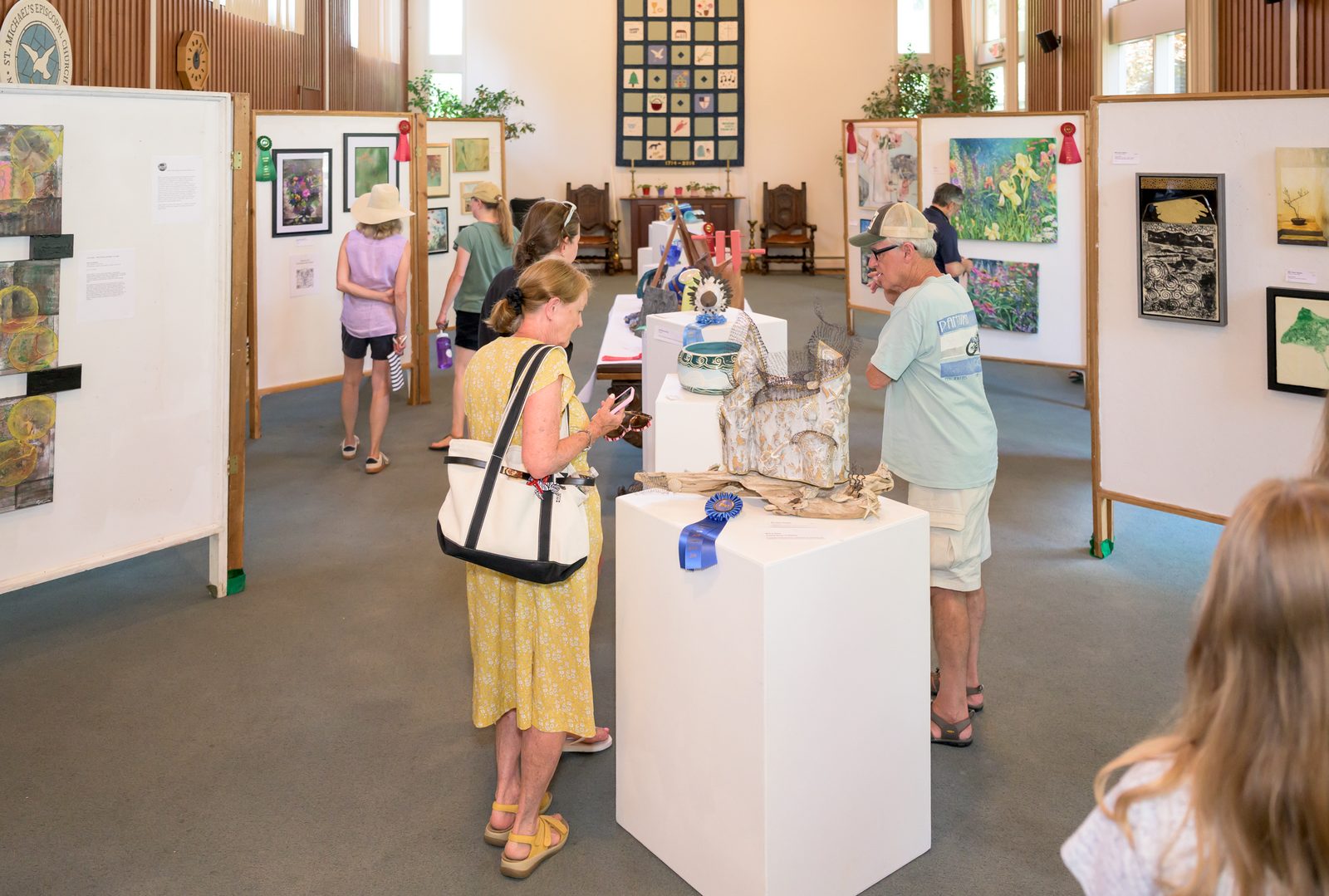
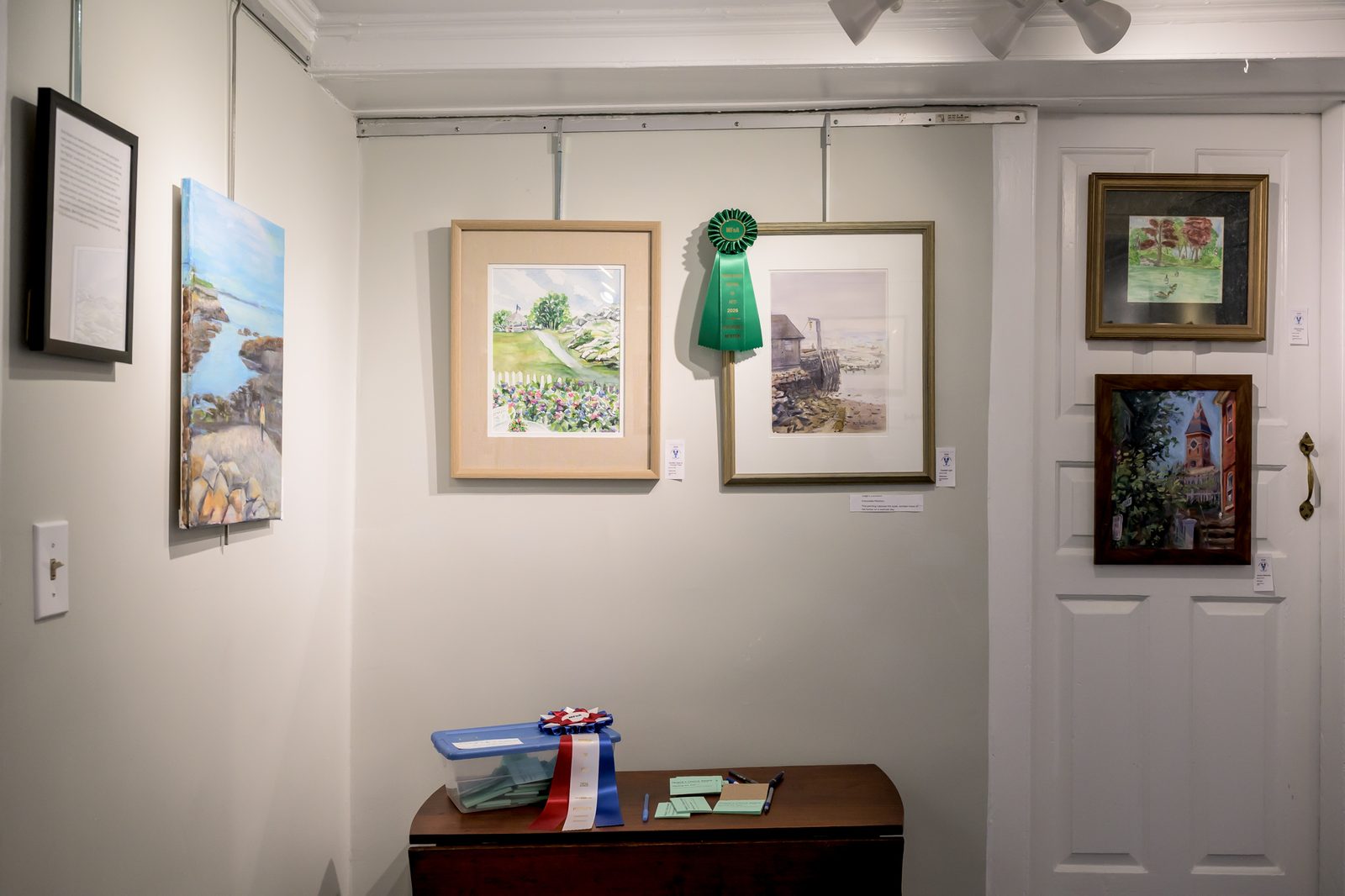
Where there were walls and shade, people took a break from the heat inside. In the foyer of Abbot Hall a woodwind quintet played Americana between the two bronze bells of the U.S.S. Marblehead. A few blocks away, inside St. Michael’s, the juried show hung under the church’s dark beams — framed watercolors, a table of ceramics, ribbons pinned beside the winners. People moved slowly from piece to piece, reading the little cards.
Down to Redd’s Pond
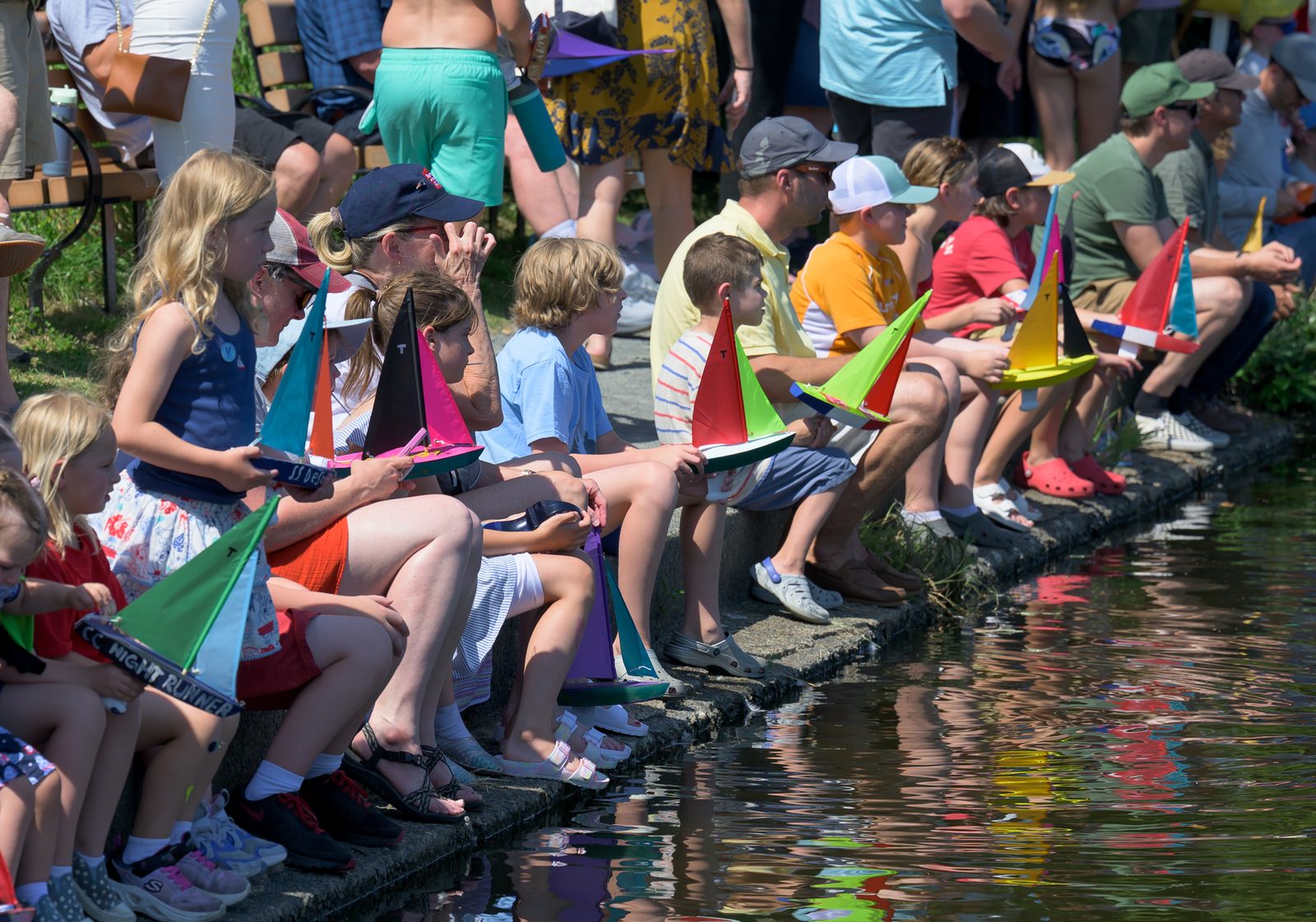
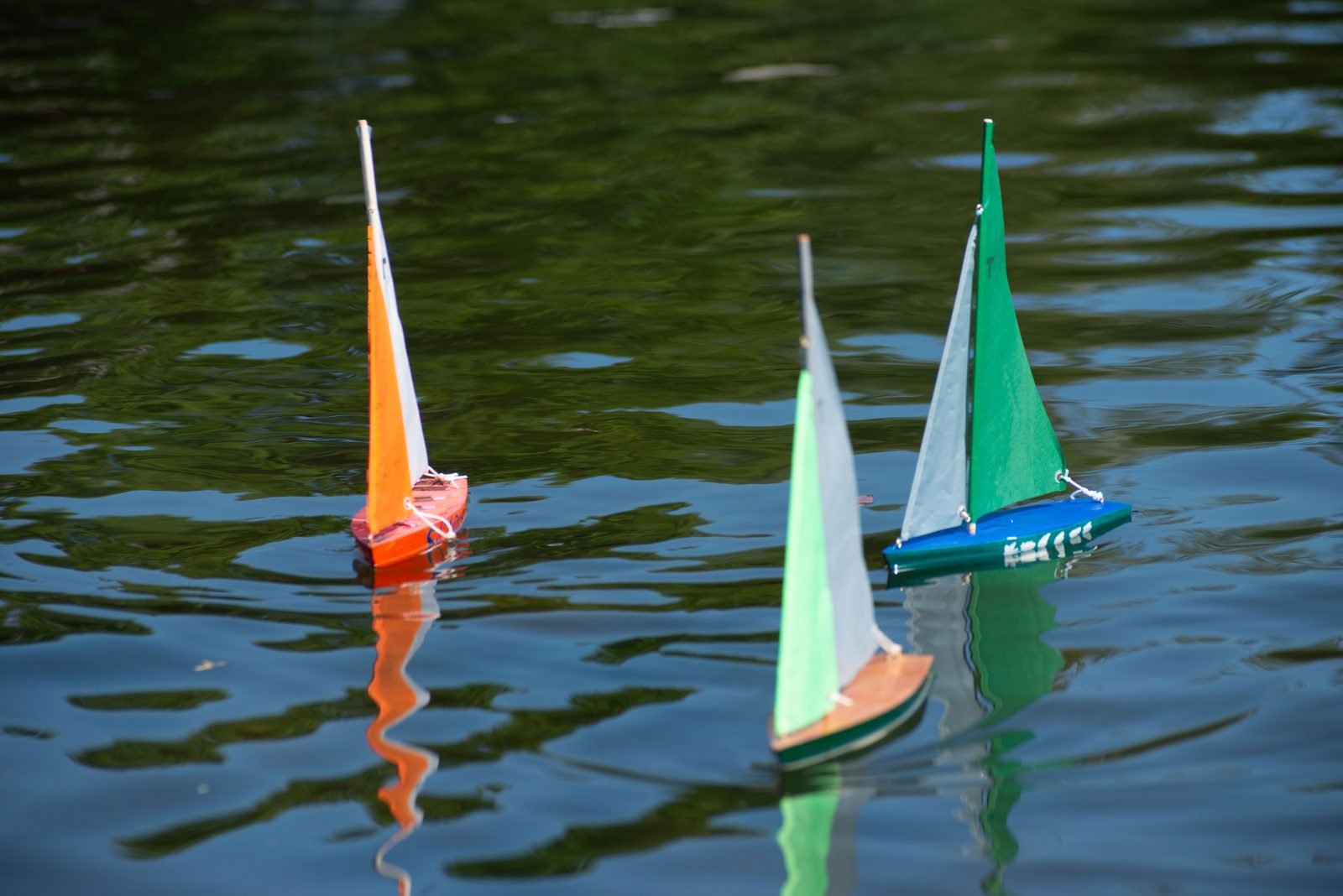
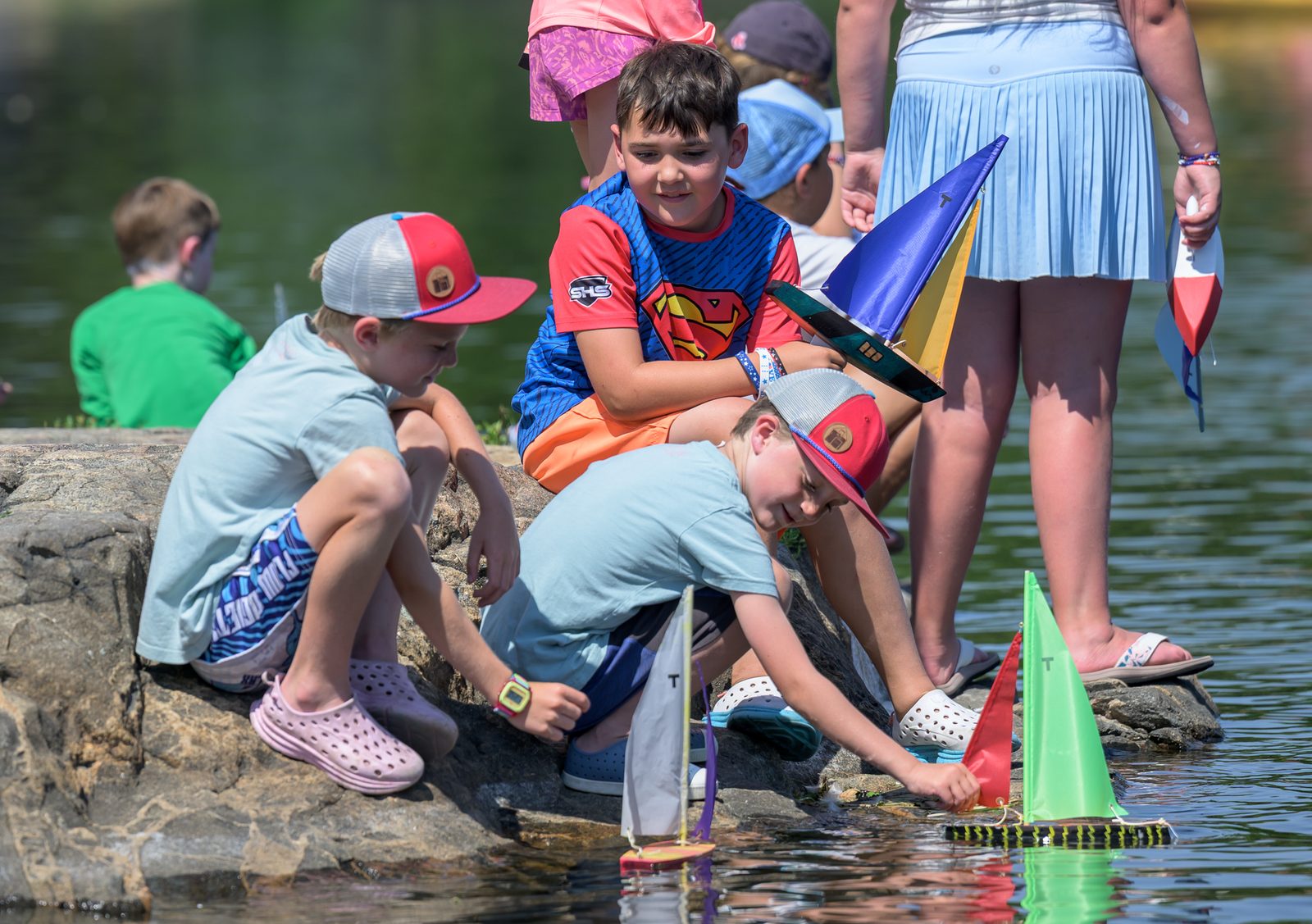
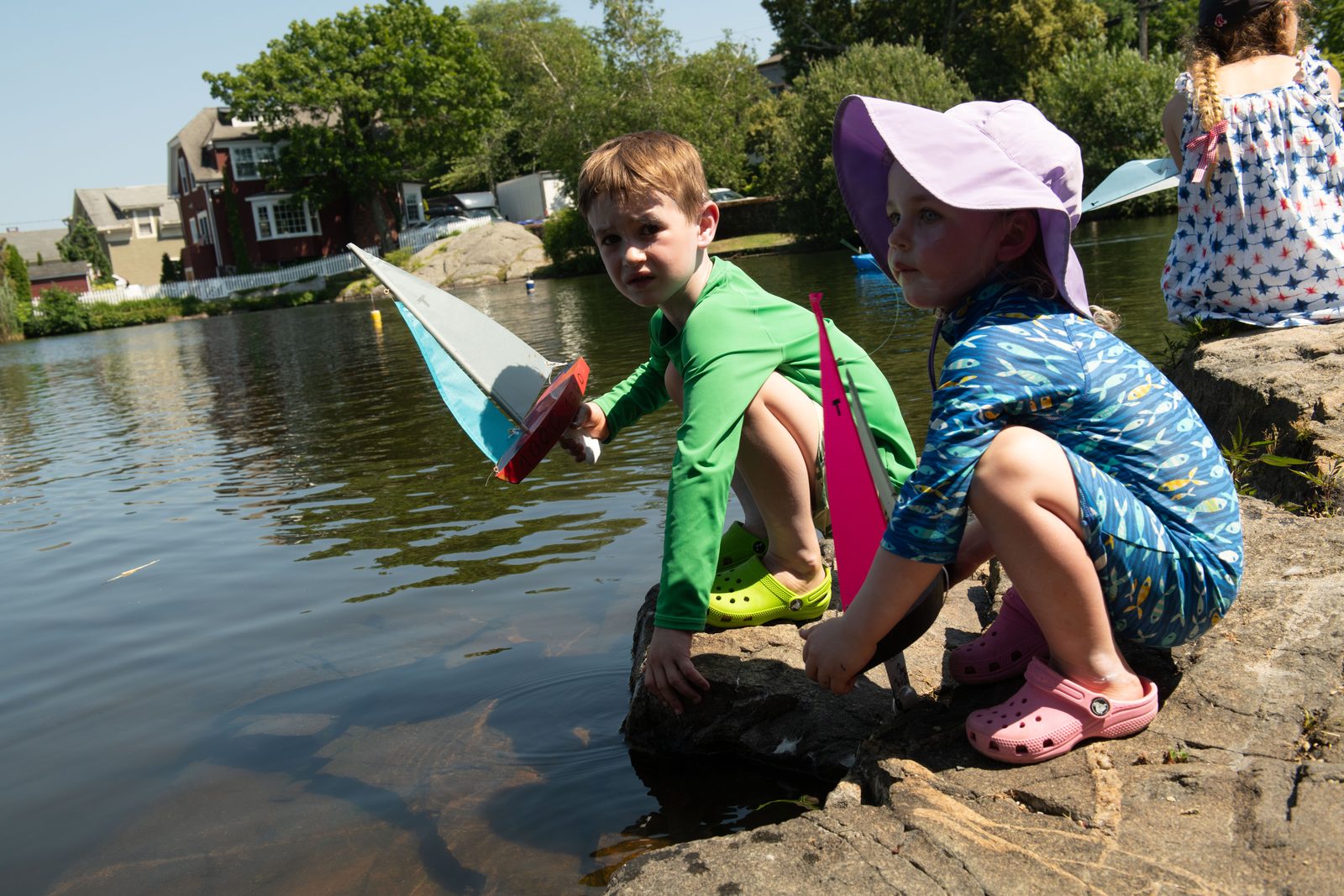
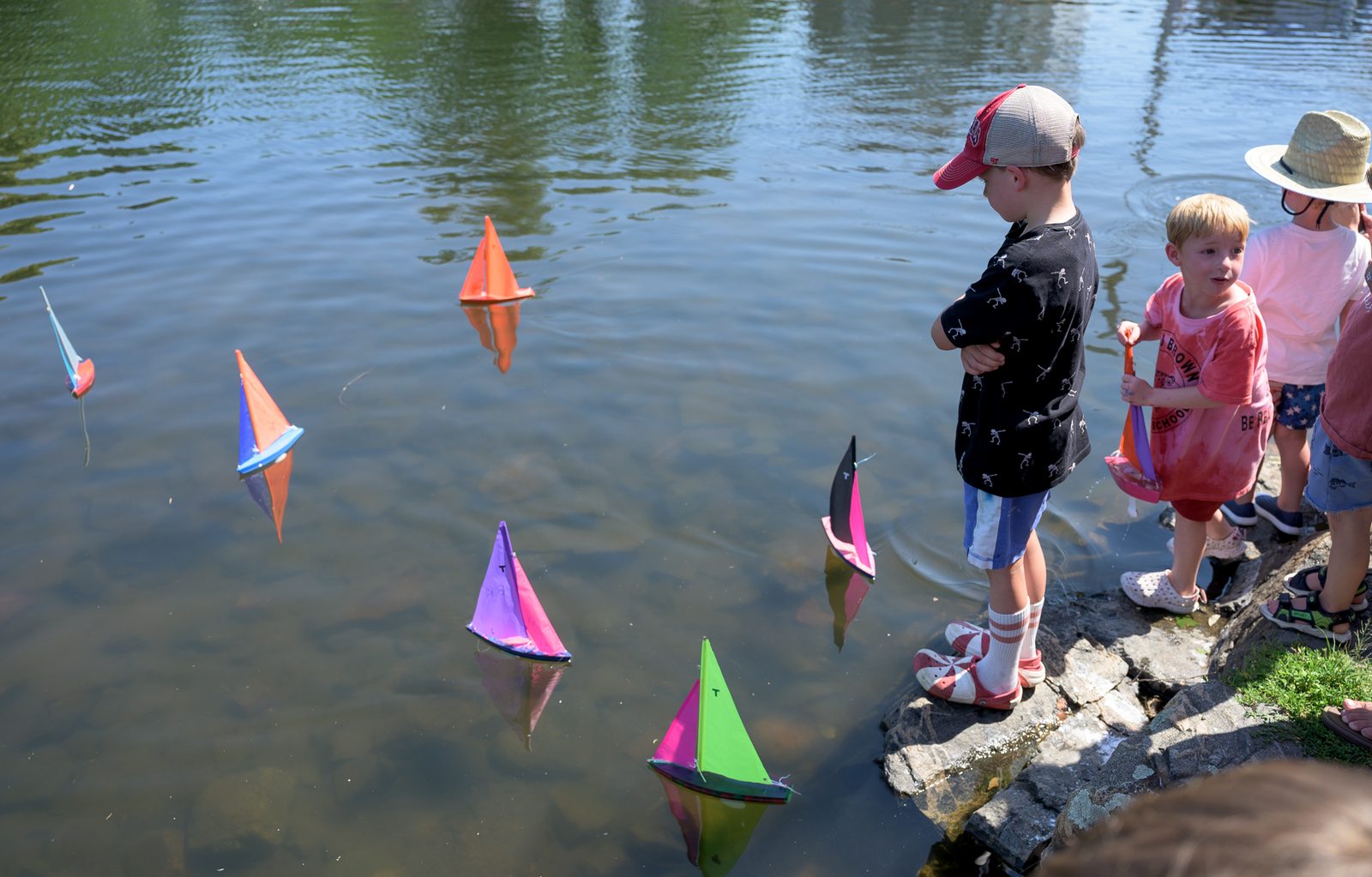
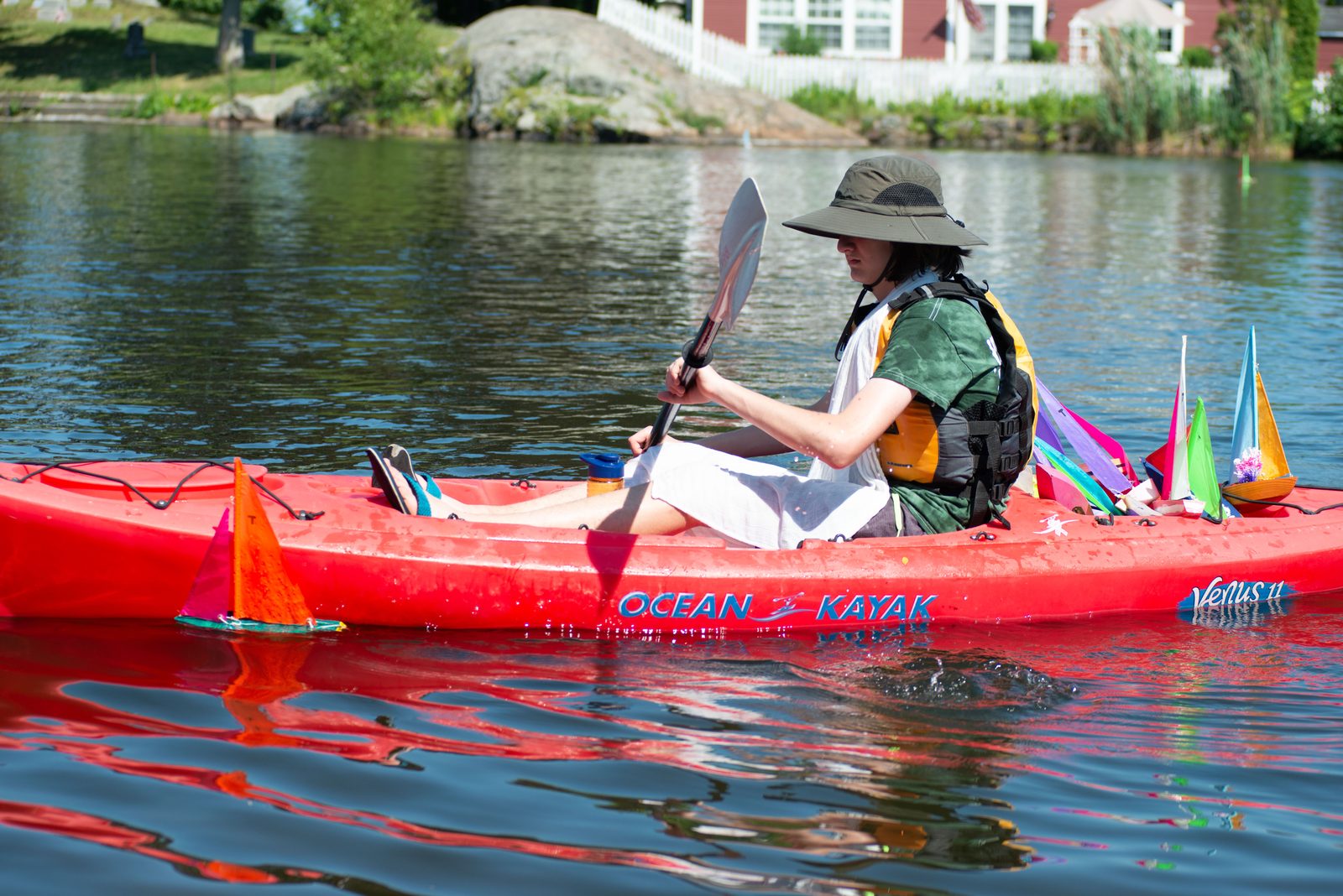
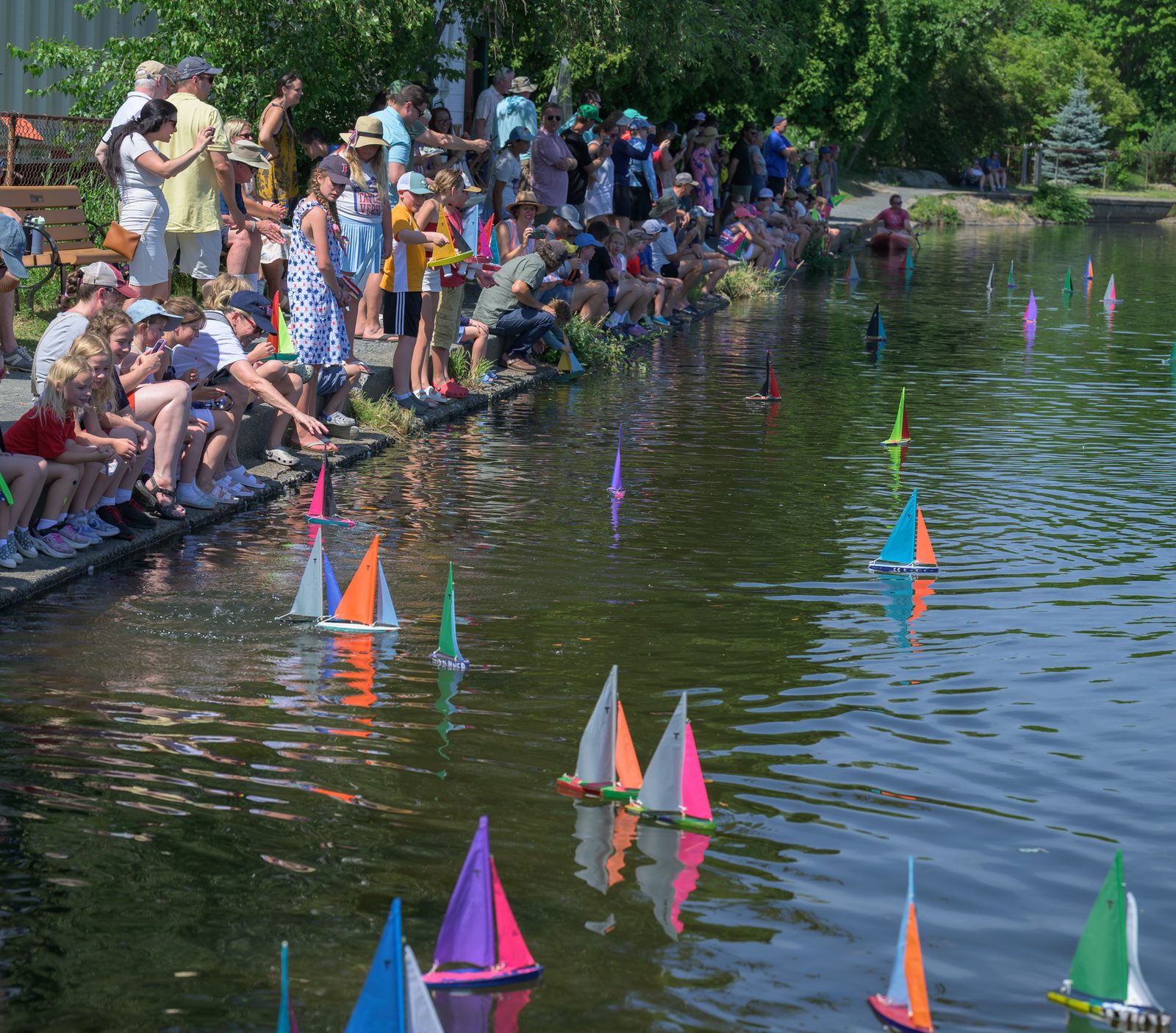
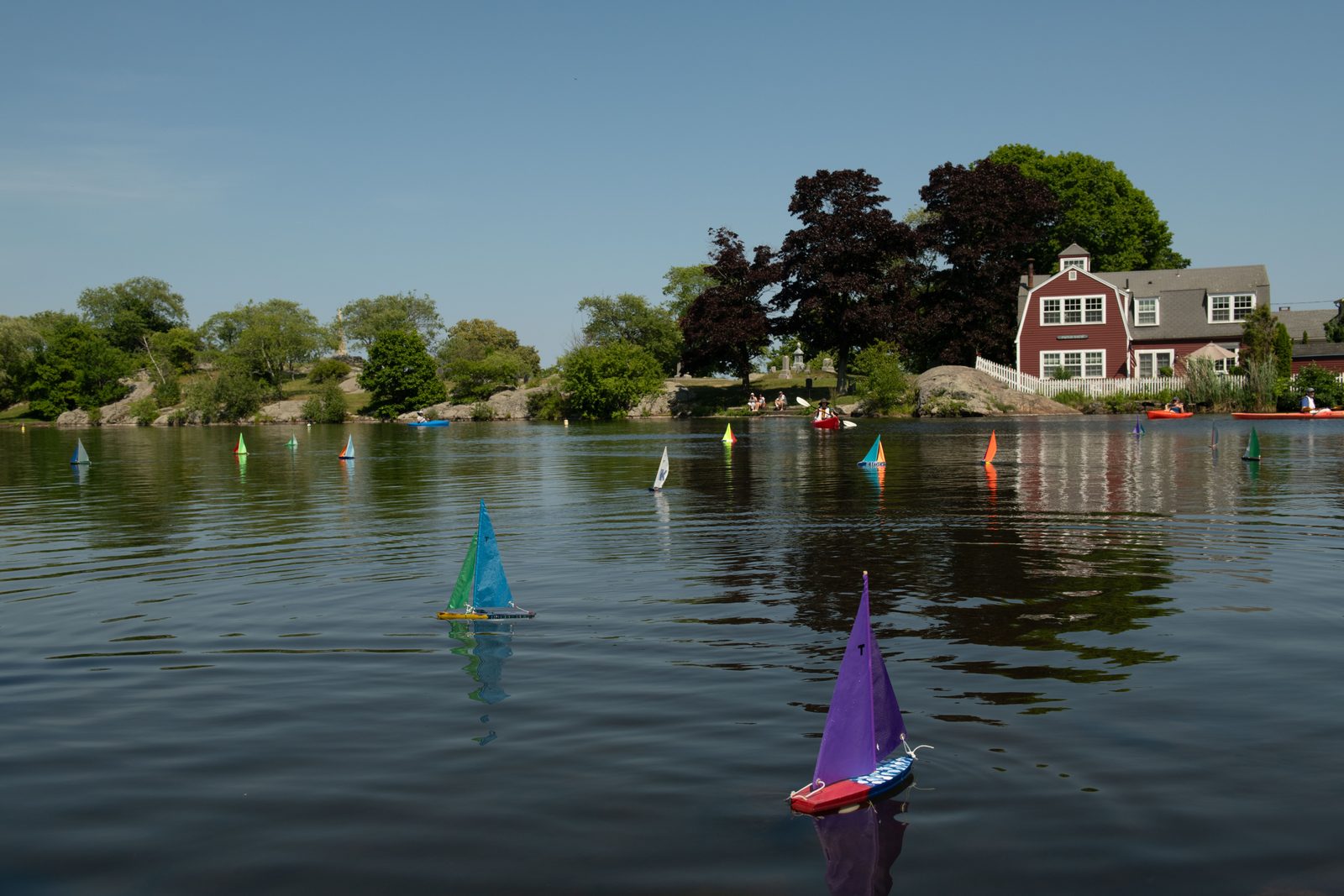
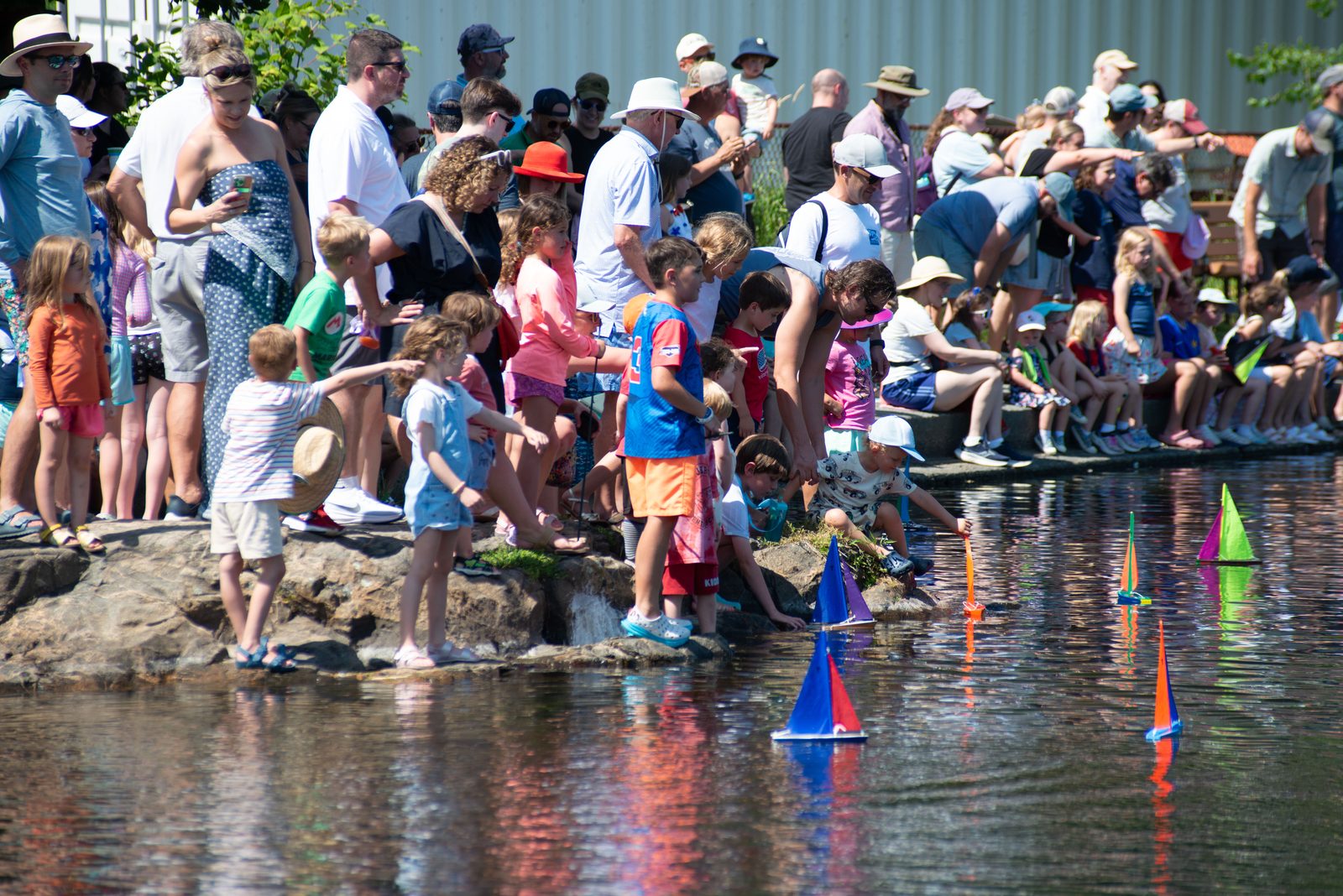
By afternoon the crowd had drifted to Redd’s Pond, where the festival launched its smallest boats. Along the granite rim children sat with hand-built sloops in their laps — sails of green, pink and orange, one hull lettered CC NIGHT RUNNER — waiting for a turn on the water. They set them down at the edge and pushed. Some caught the breeze and went; some stalled a foot out and had to be fetched by a boy in a kayak, paddling a slow circuit to gather the strays. Now and then a single boat found the wind and crossed the whole pond alone, its bright sails doubled in the still water.

The hot one: judged shows, authors and the 250th
Thursday was the hot one. Marblehead hit 100 degrees — a July 2 record — and did the only sensible thing, which was to surrender to it. Festivalgoers moved from shade to shade and took the day à la carte: a little art in the cool of the Old Town House, the exhibits at midday, the concert at Crocker Park once the light went soft. Steve Rood’s second day followed the festival indoors to the judged shows, sat with the authors among the shelves, and stood on the post office steps as the town marked 250 years. Everywhere the camera turned, the same two things kept surfacing: the people who make this festival, and the people who keep coming back for it.
Beat the Heat
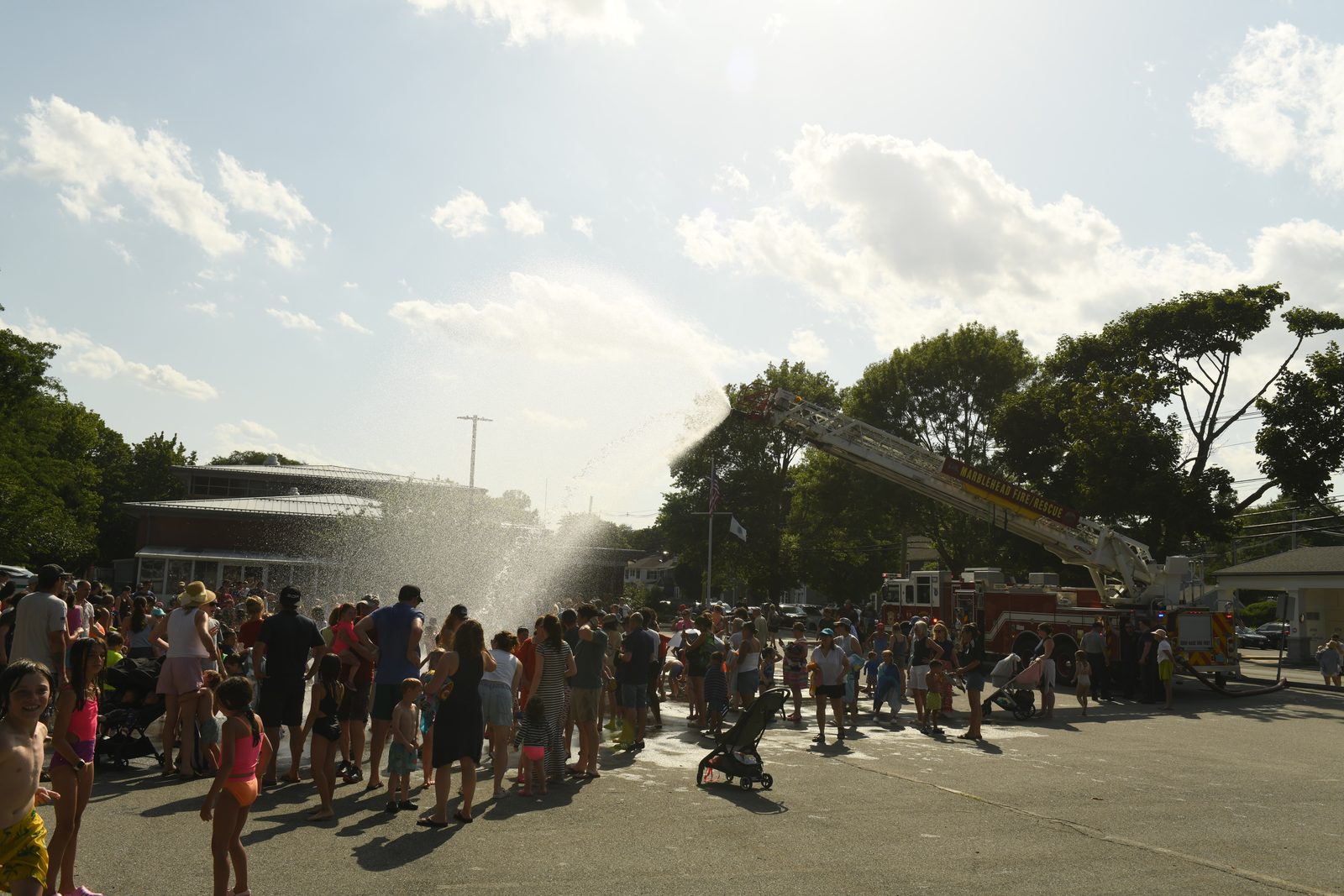
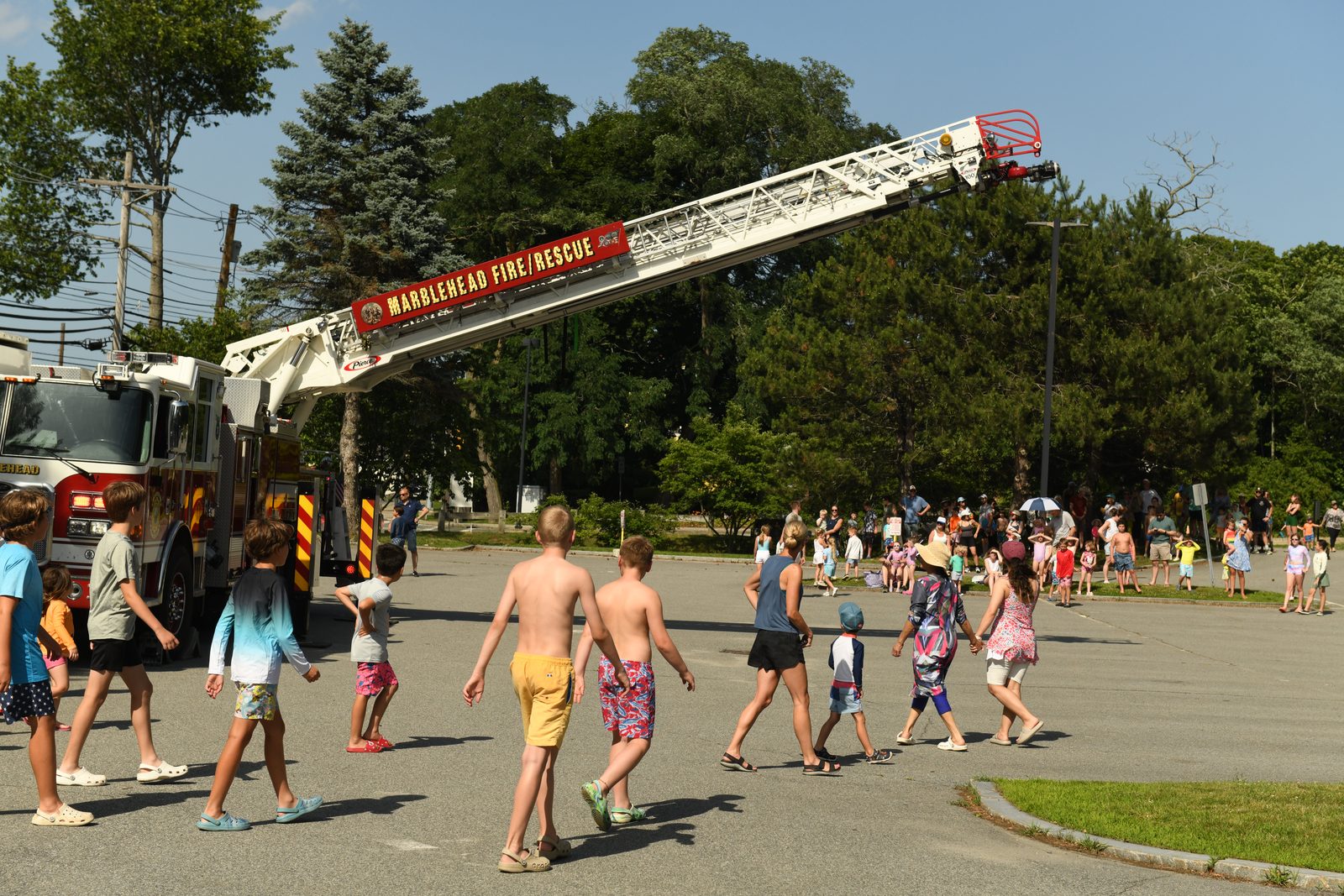
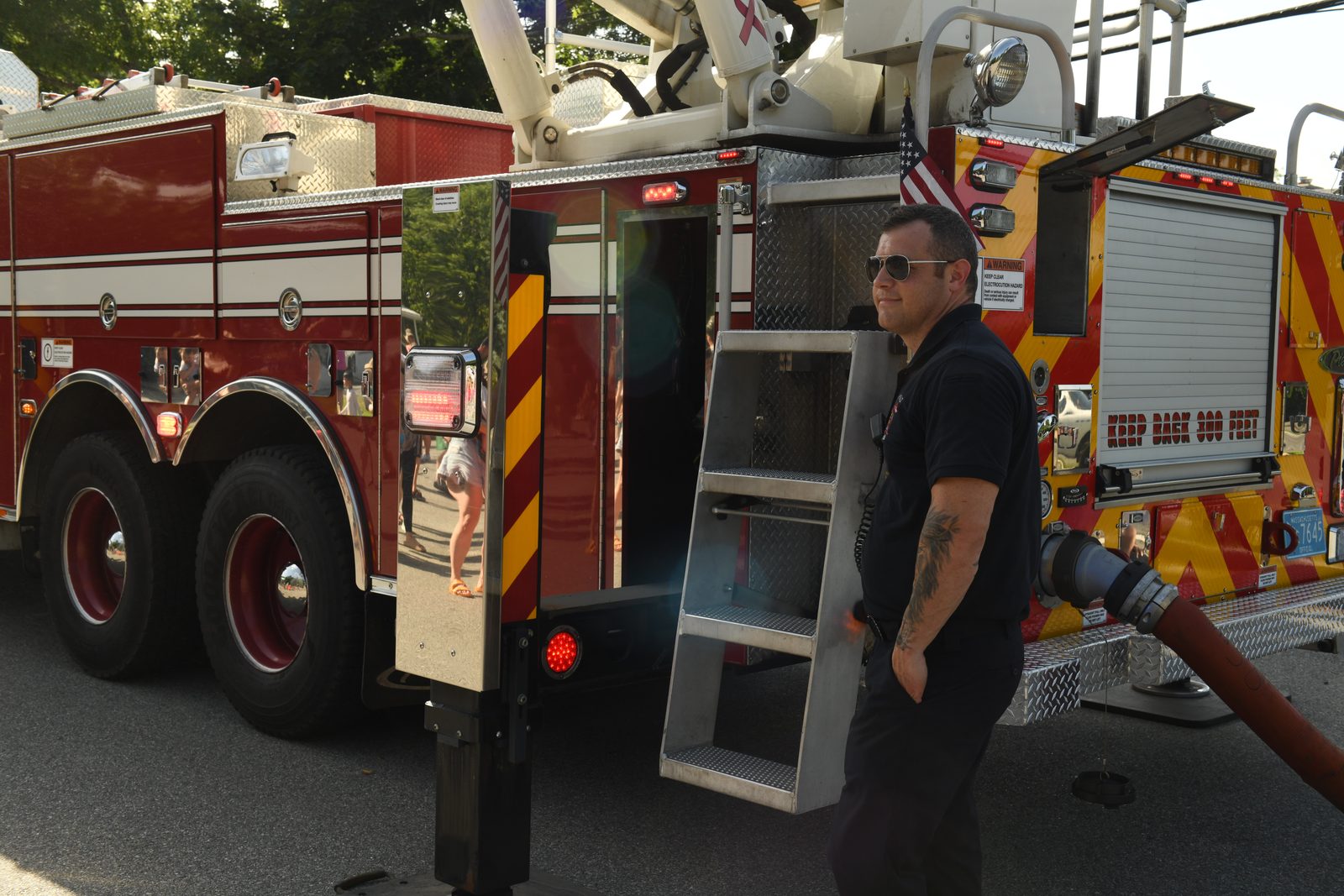
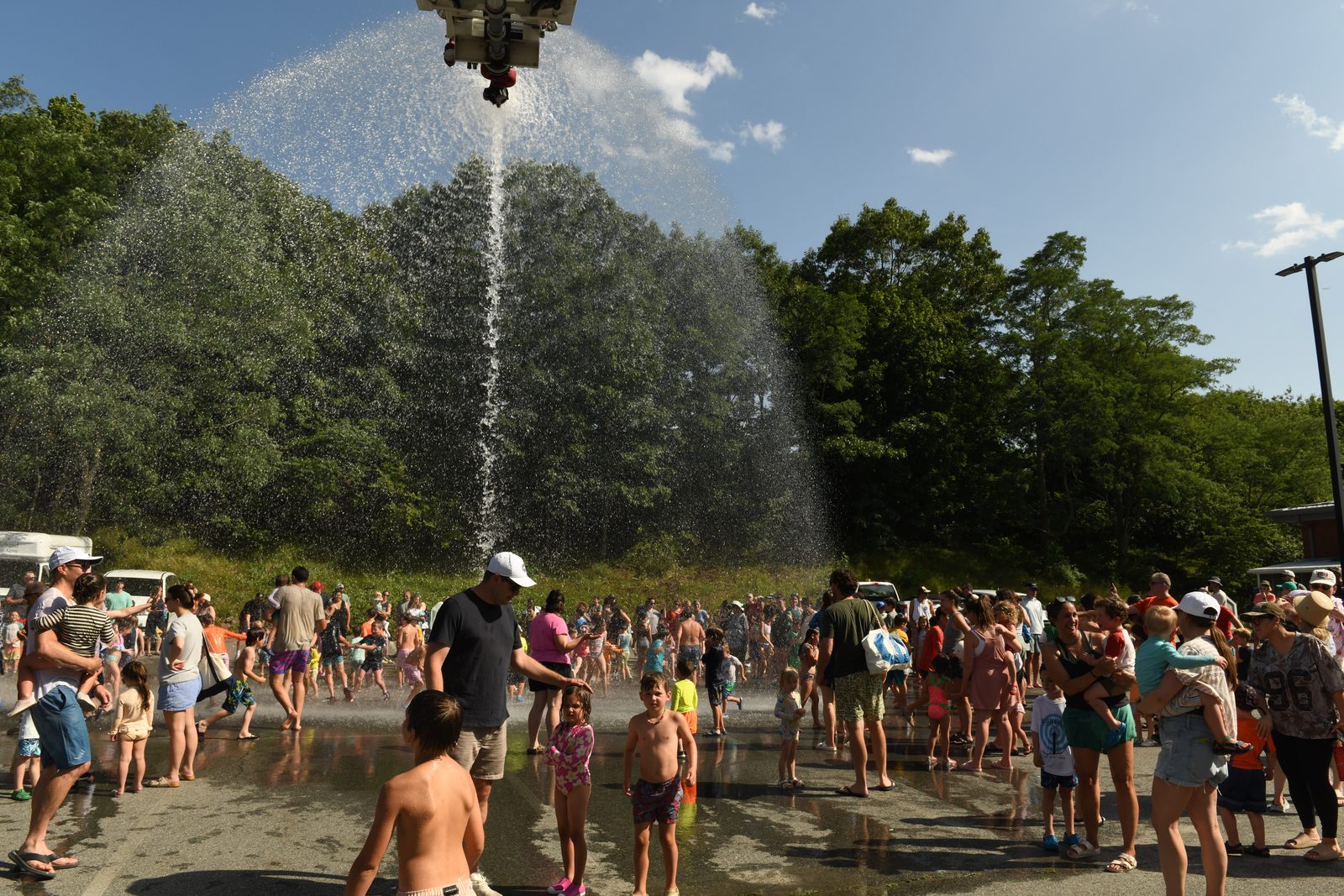
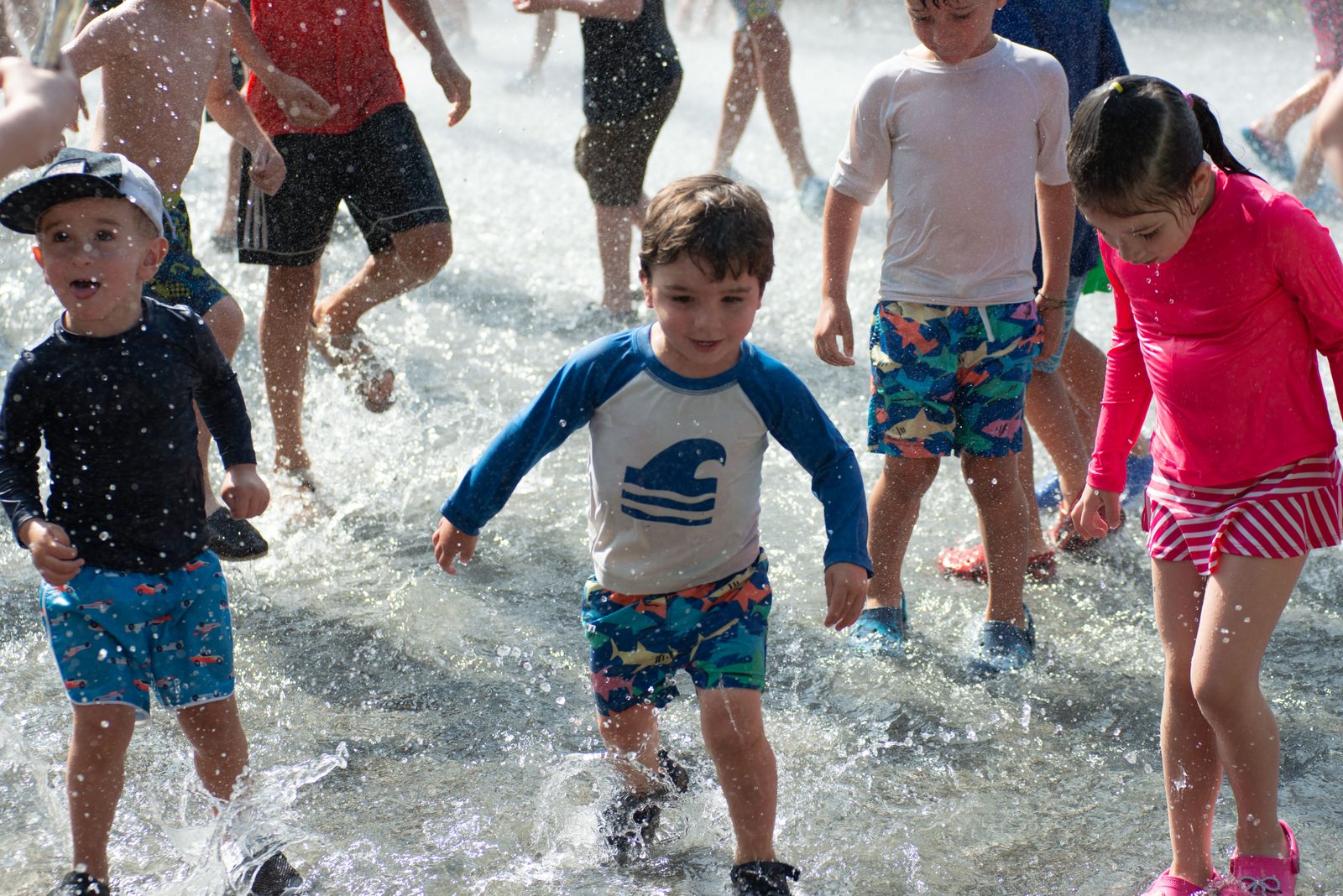
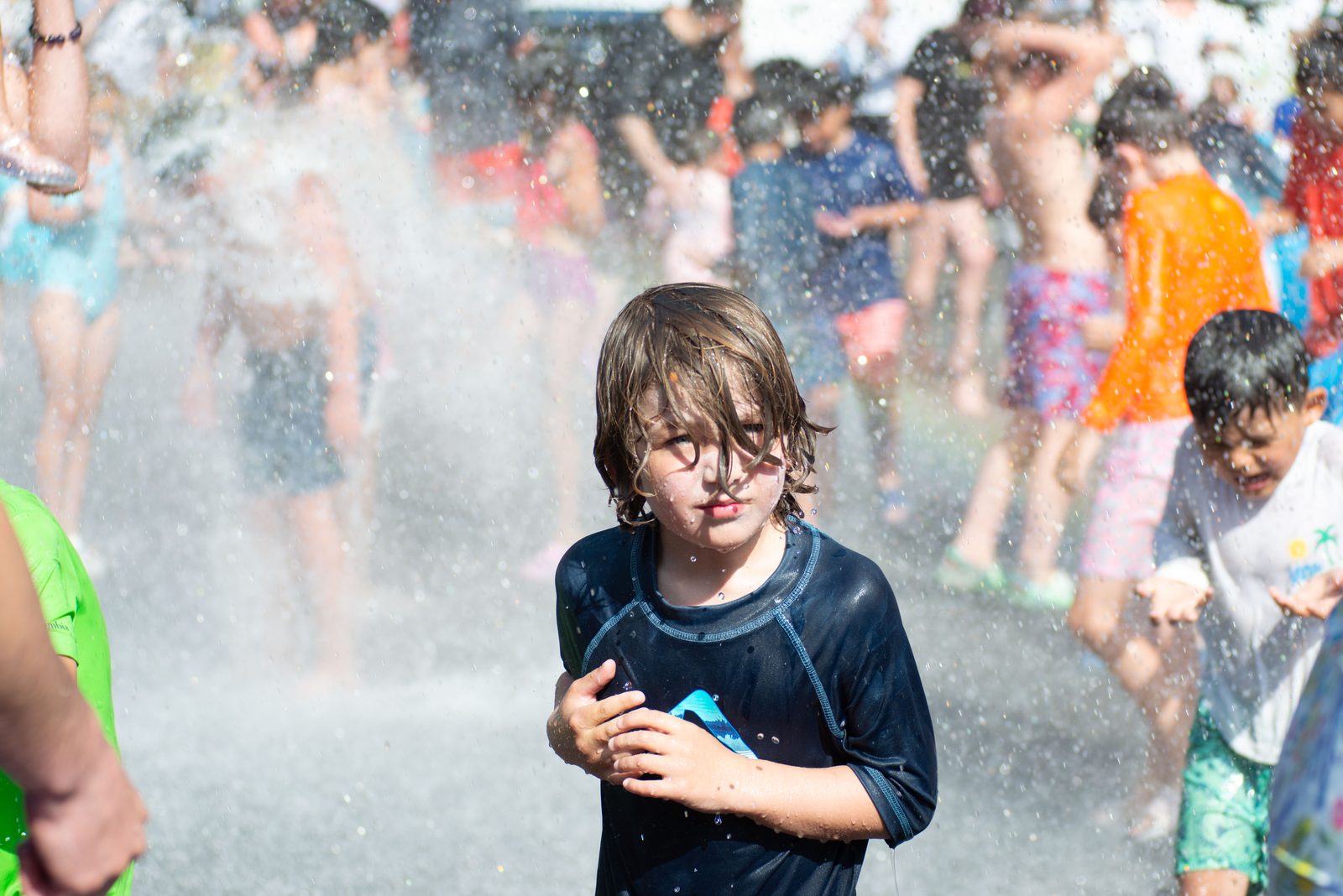
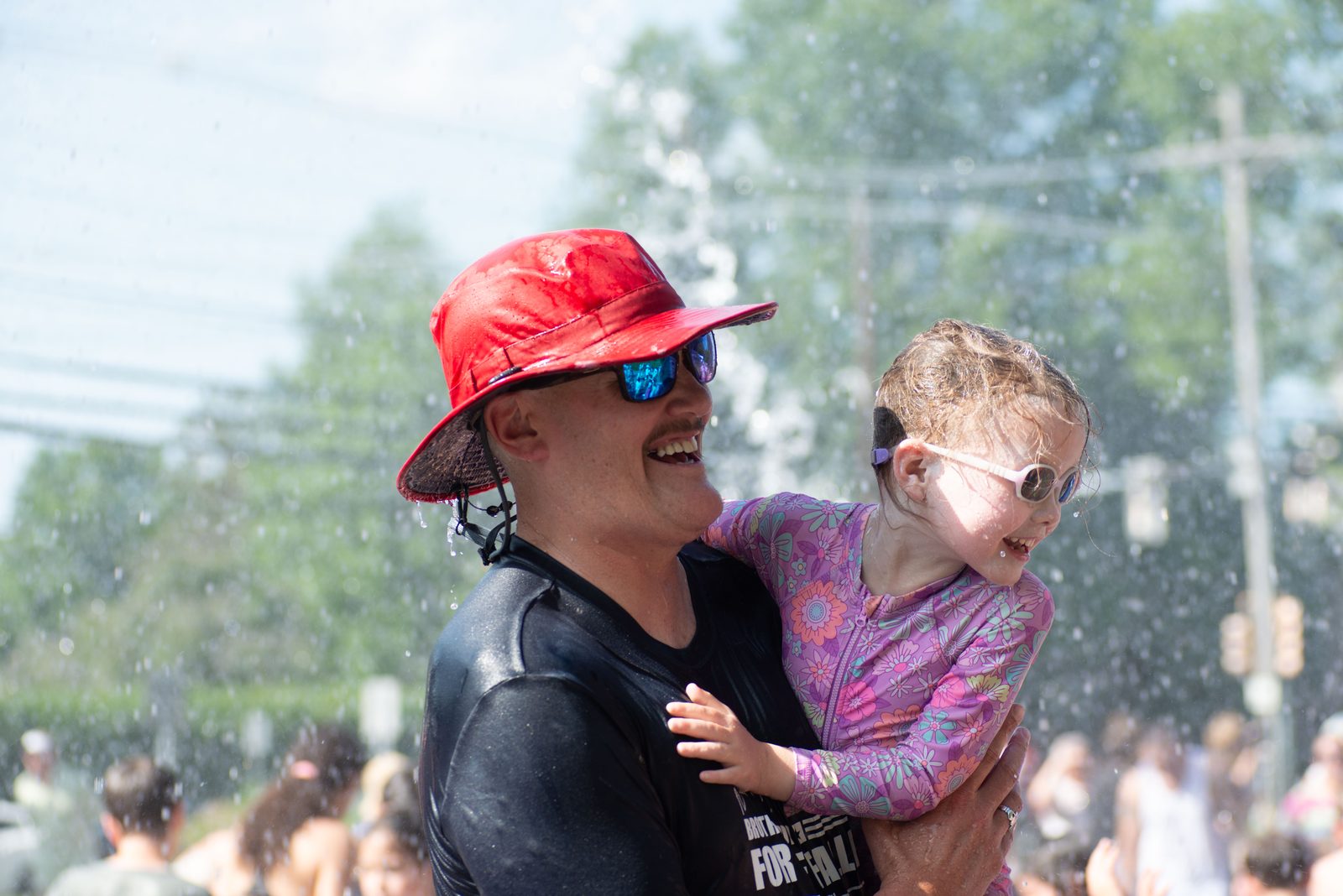
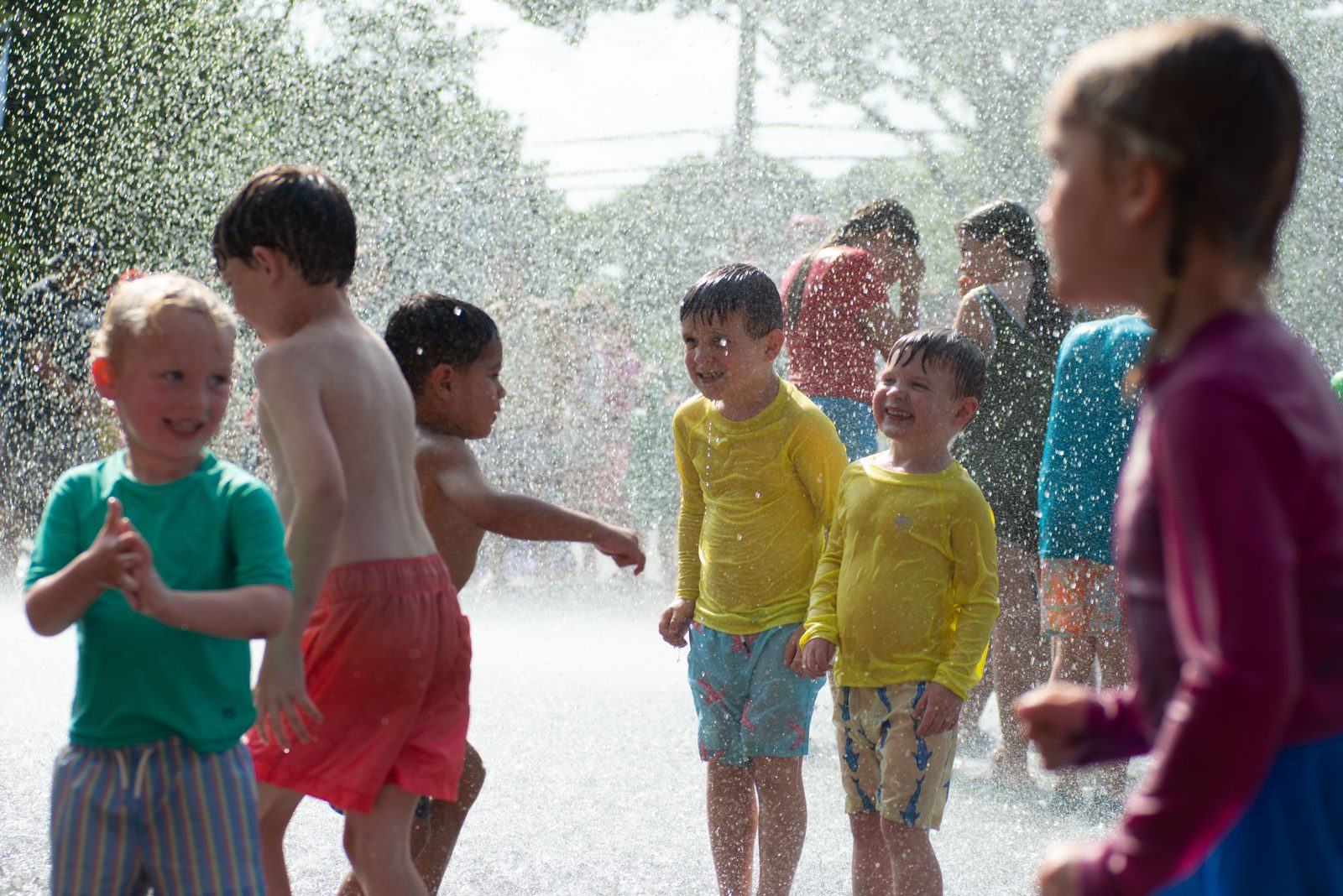
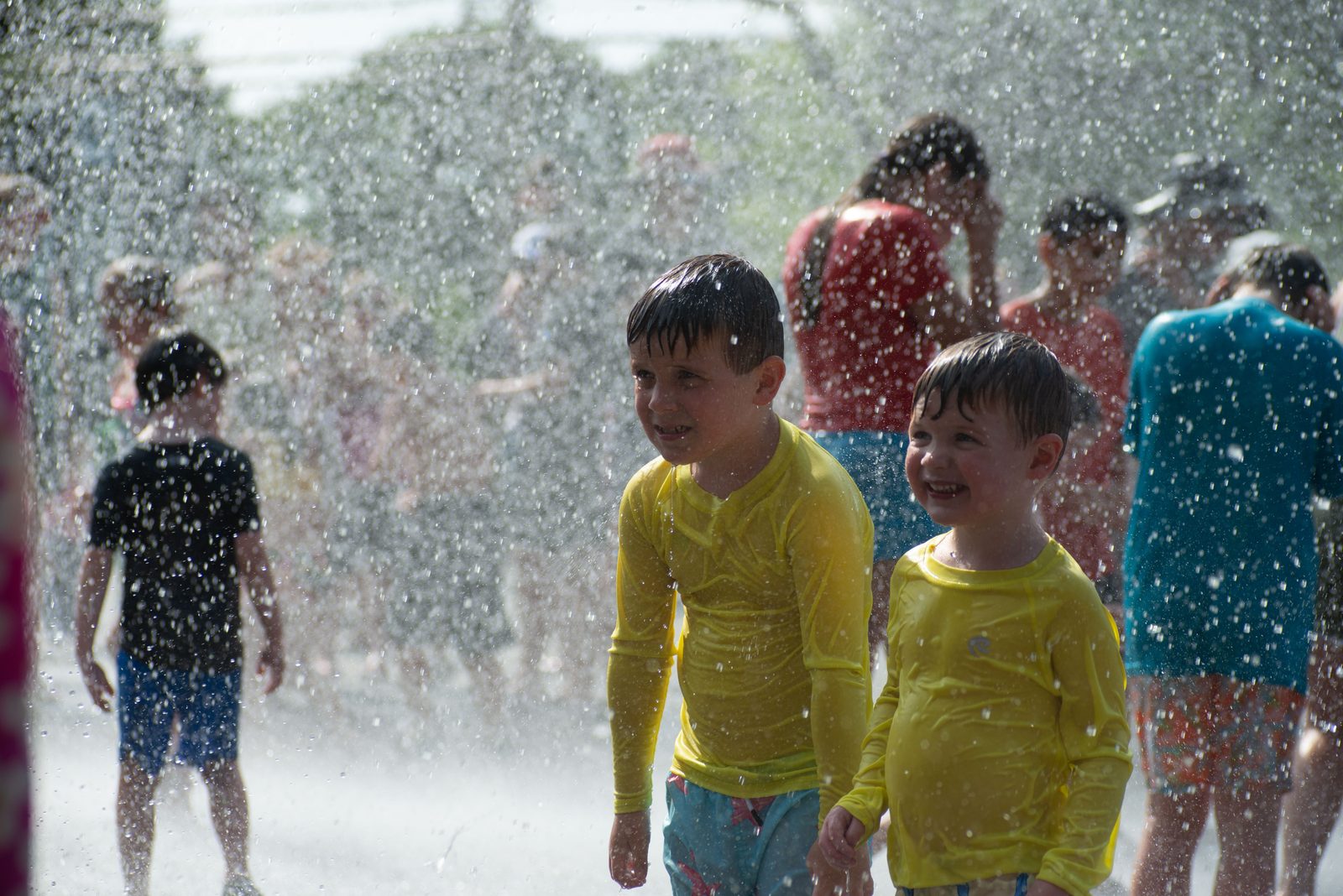
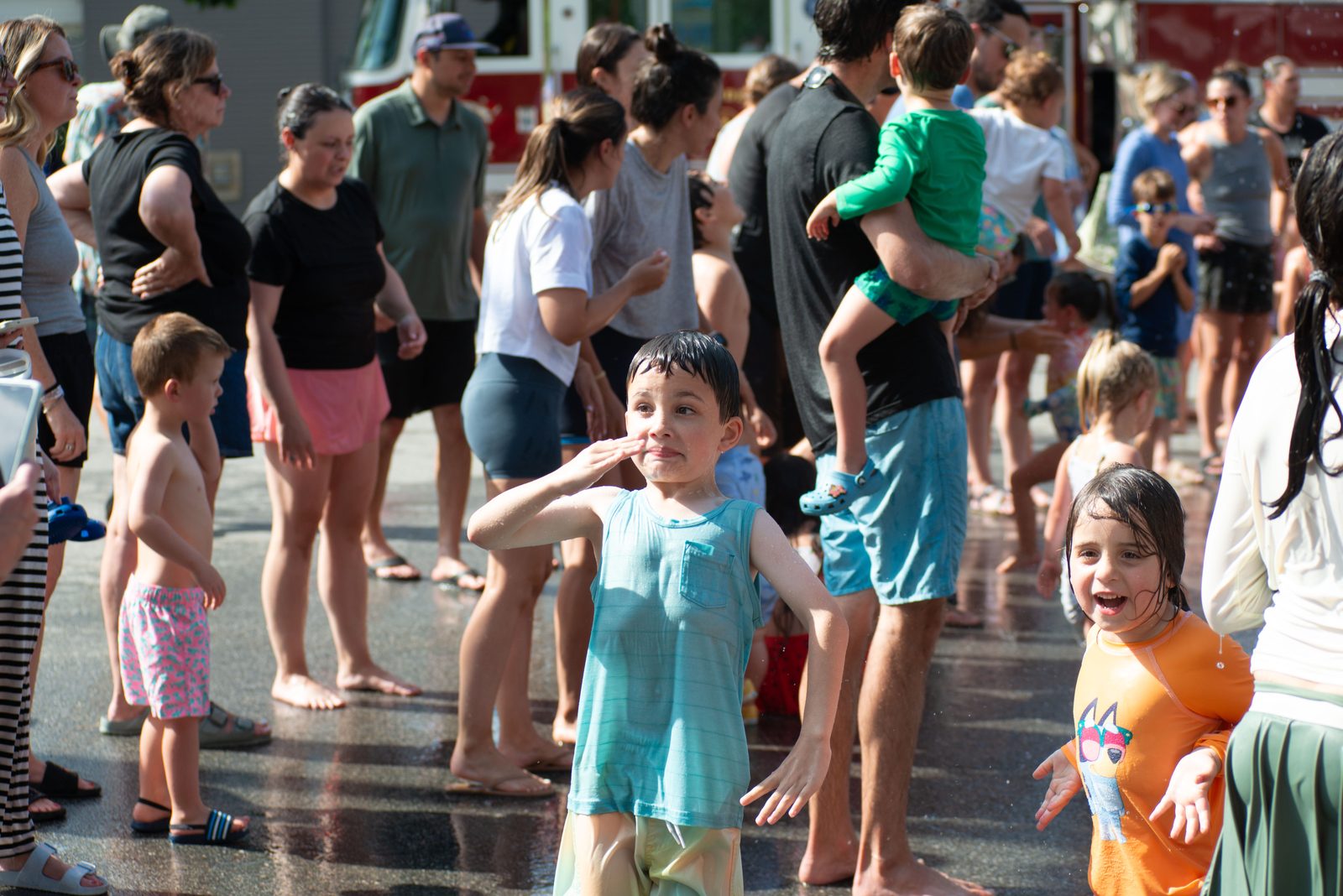
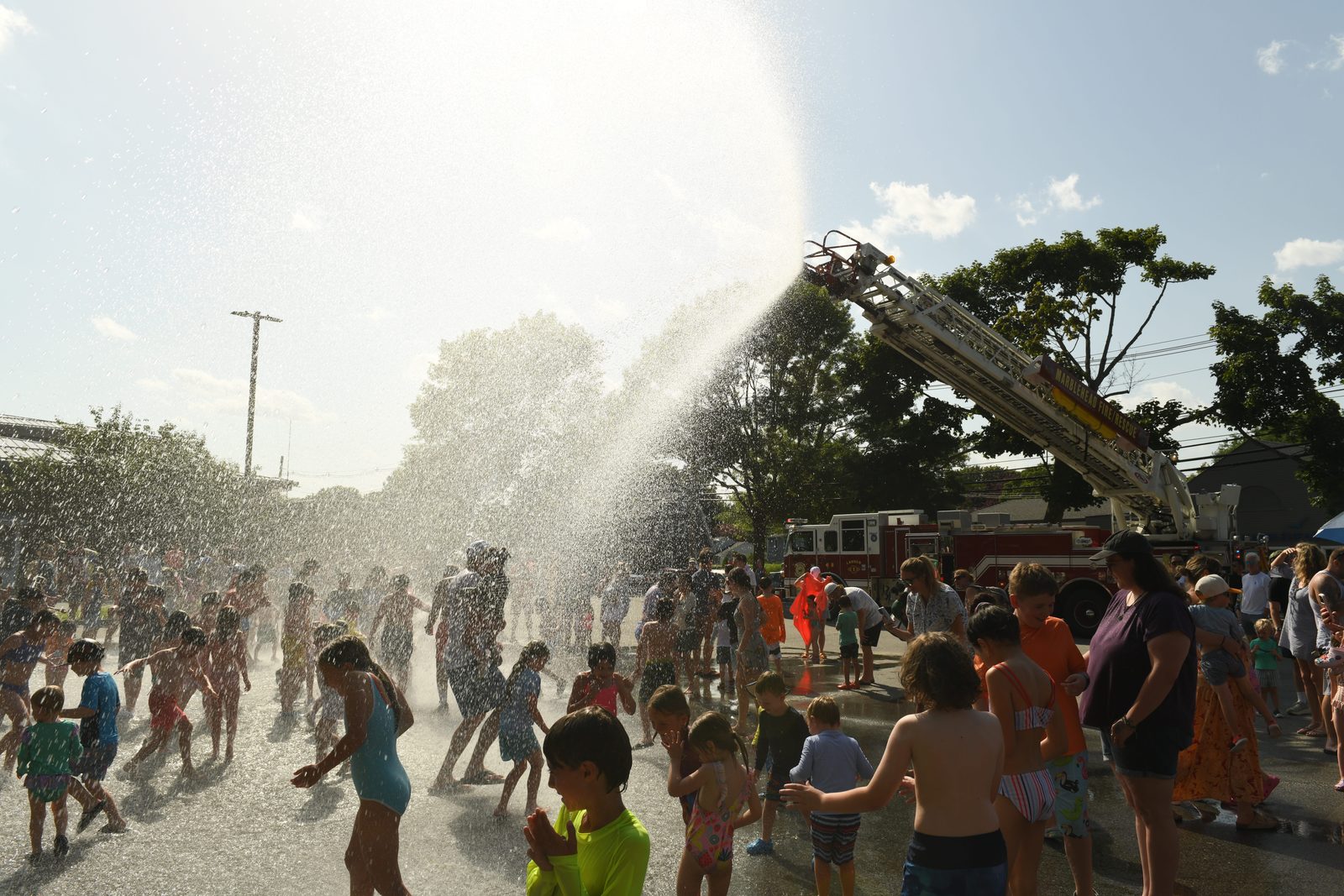
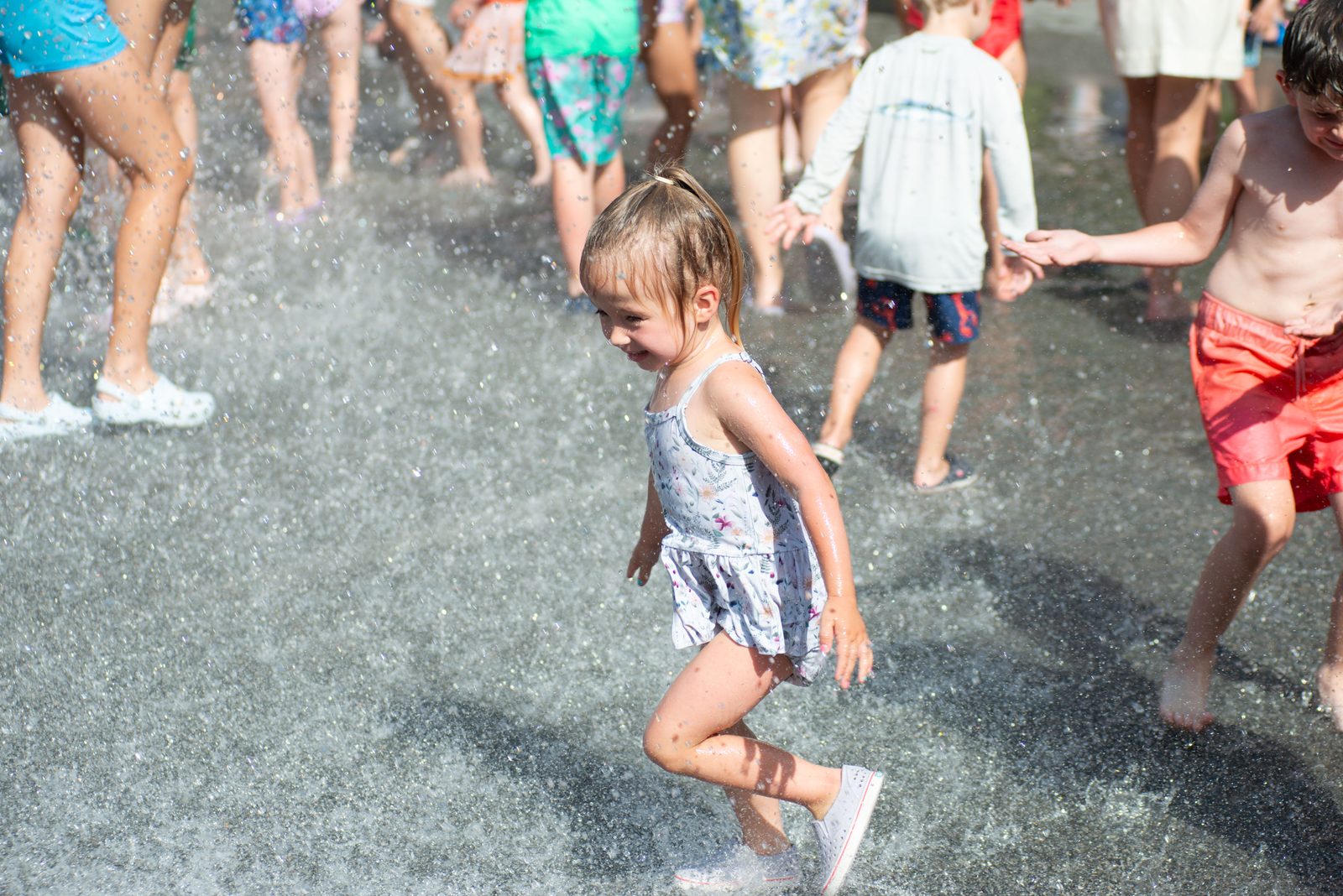
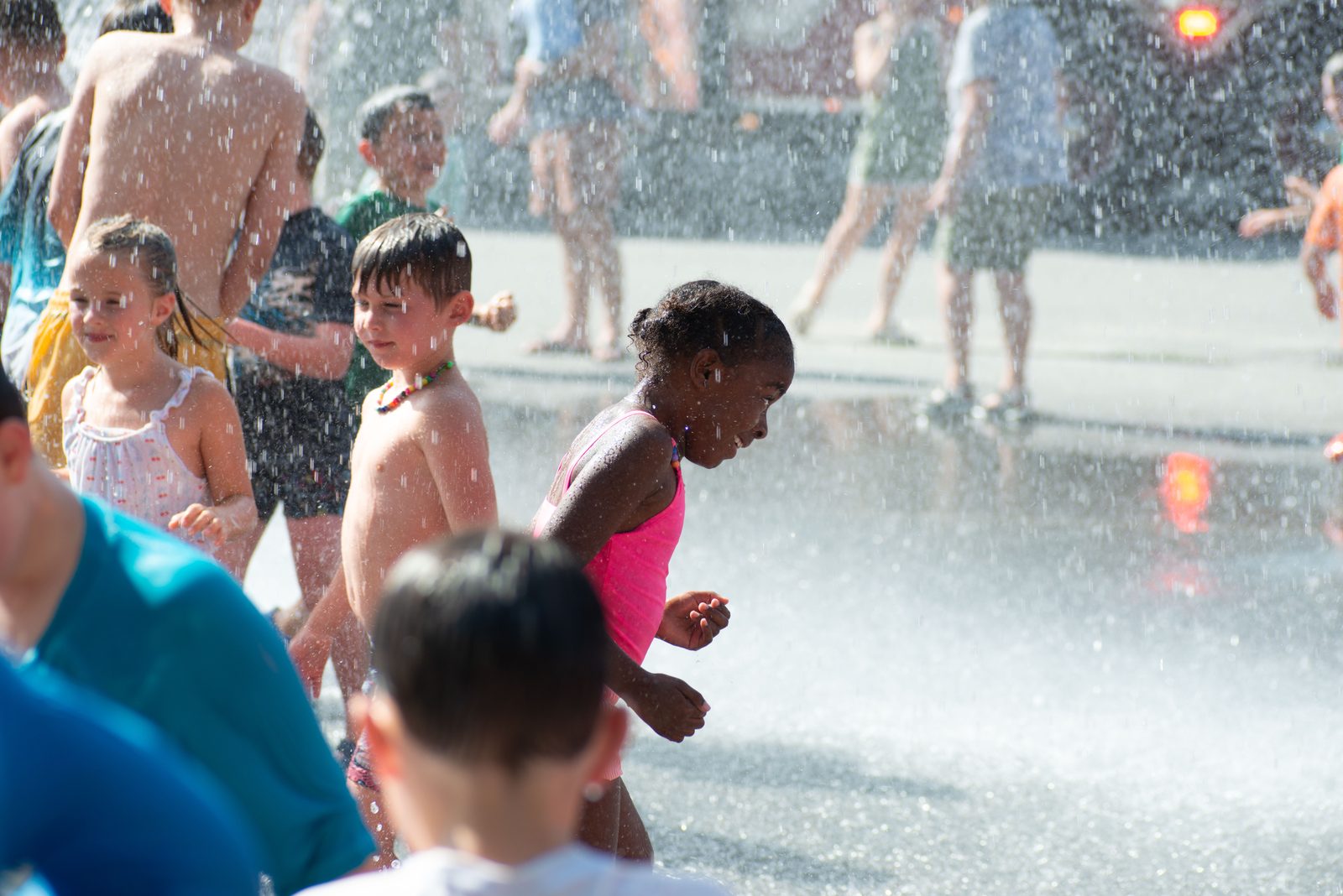
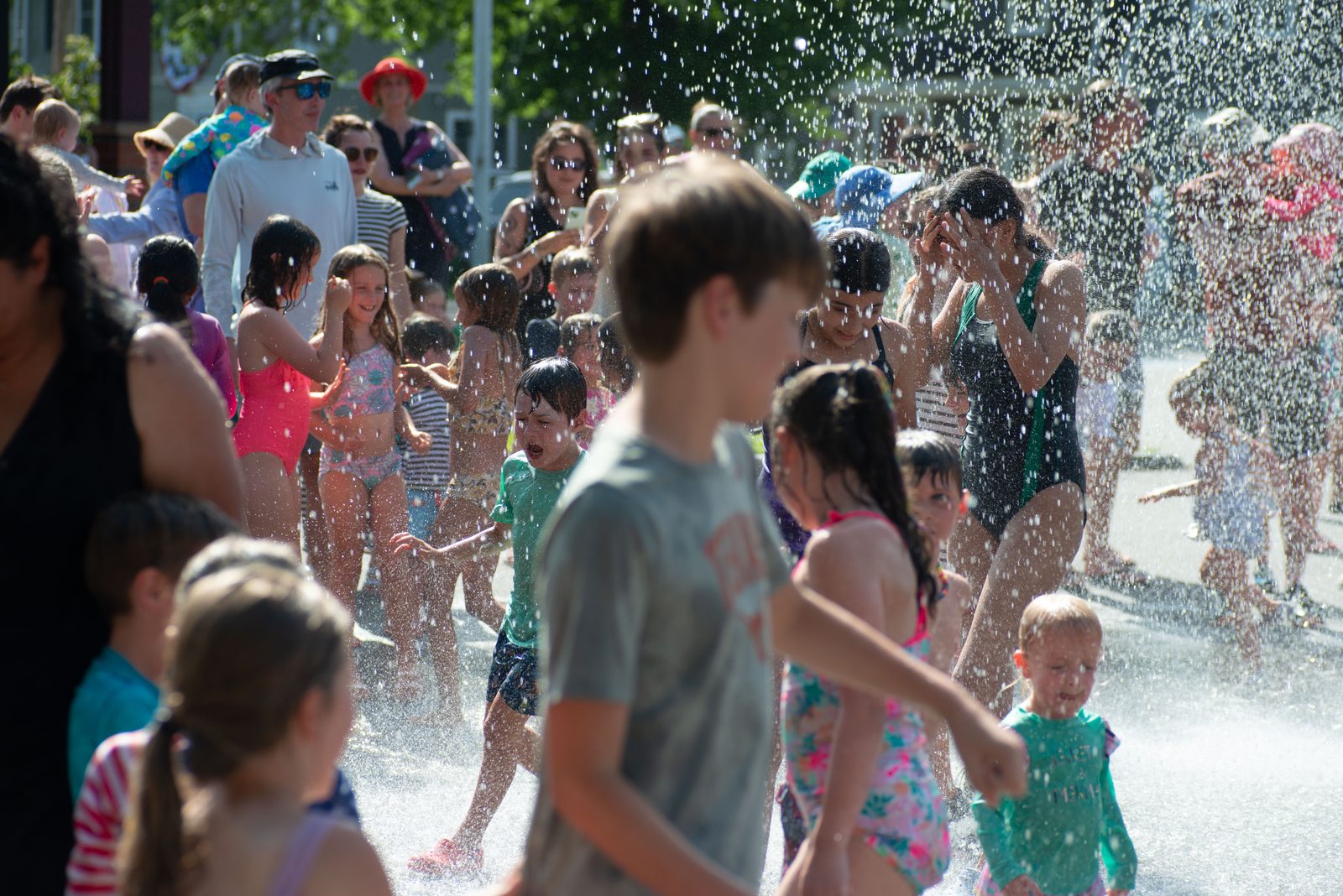
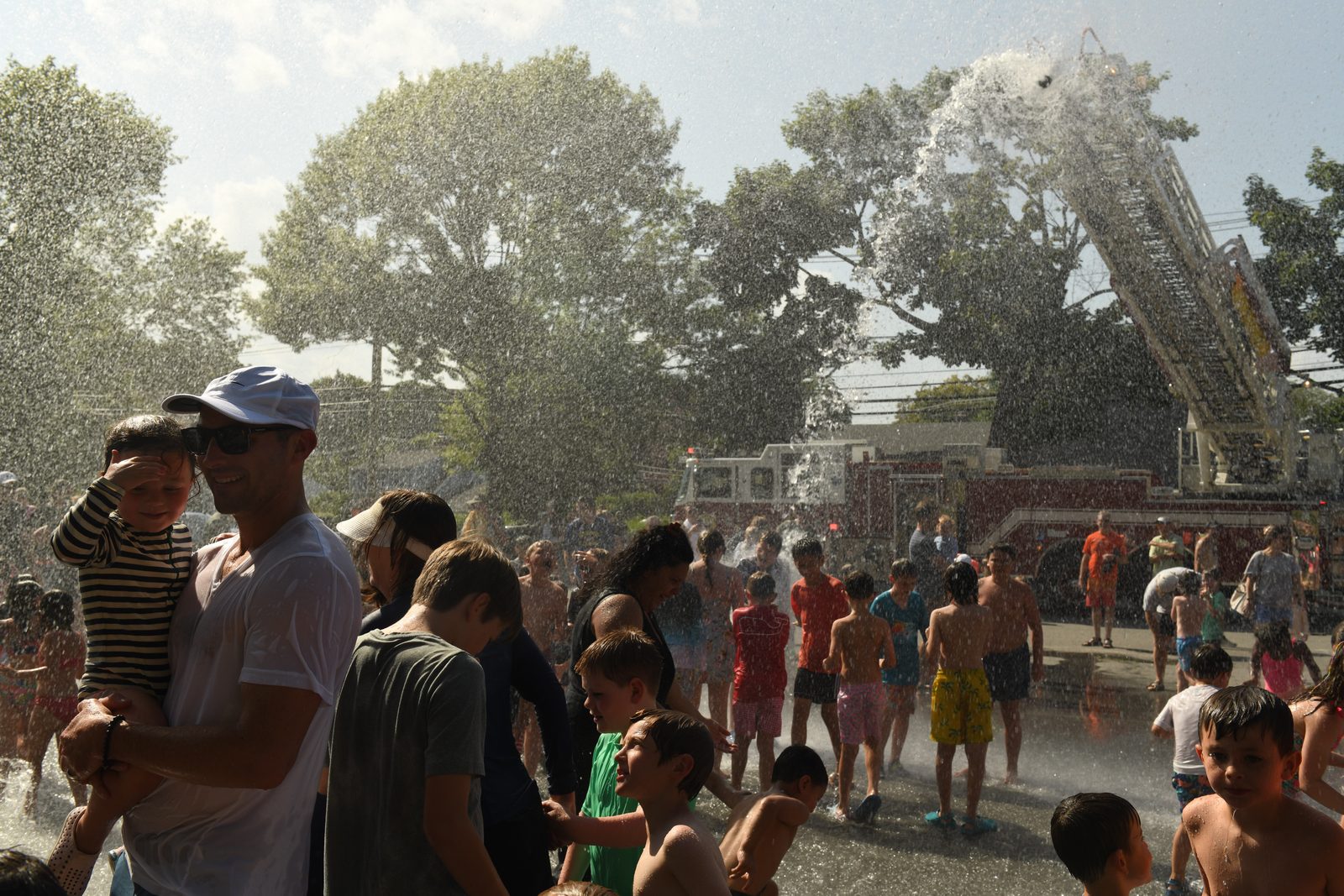
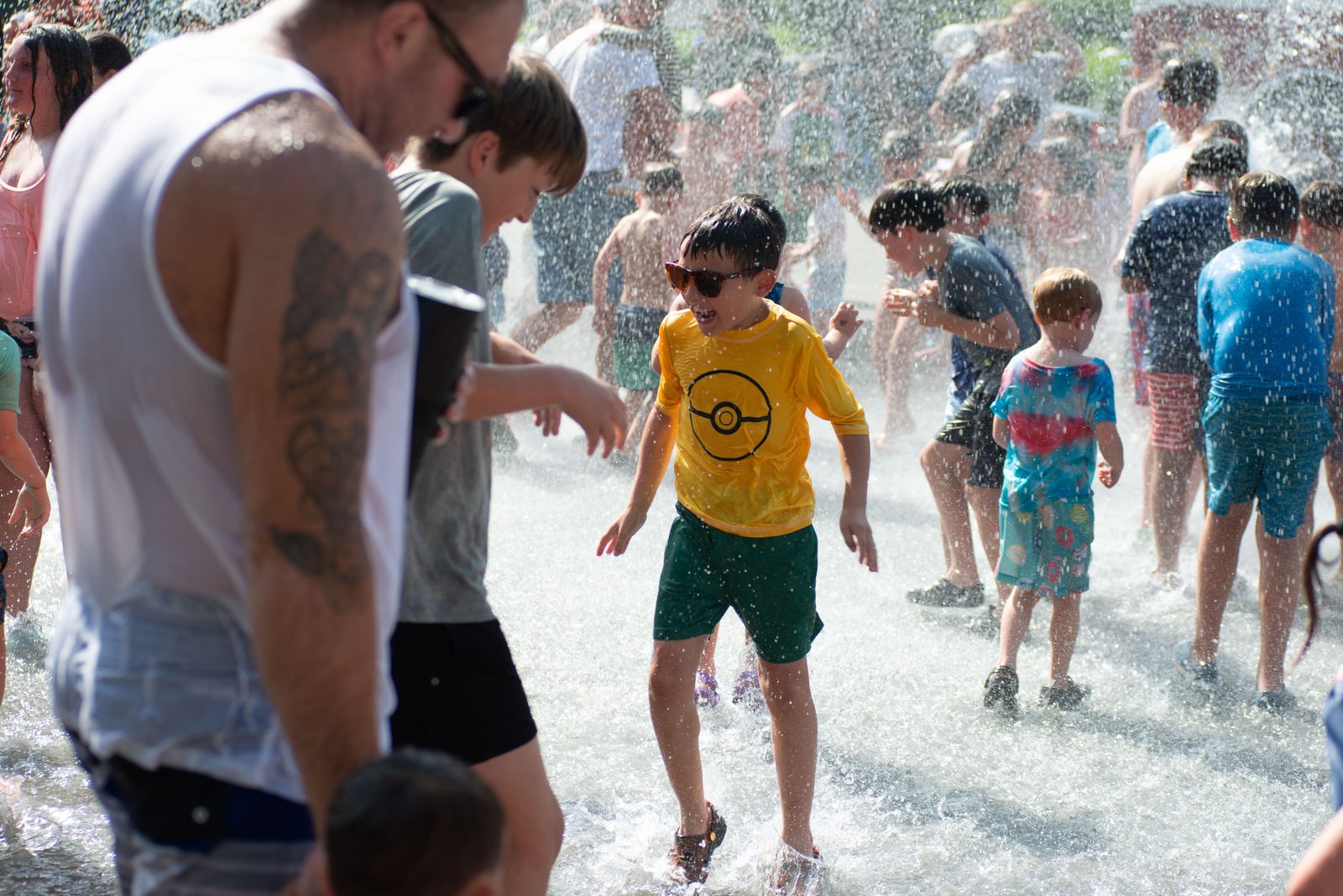
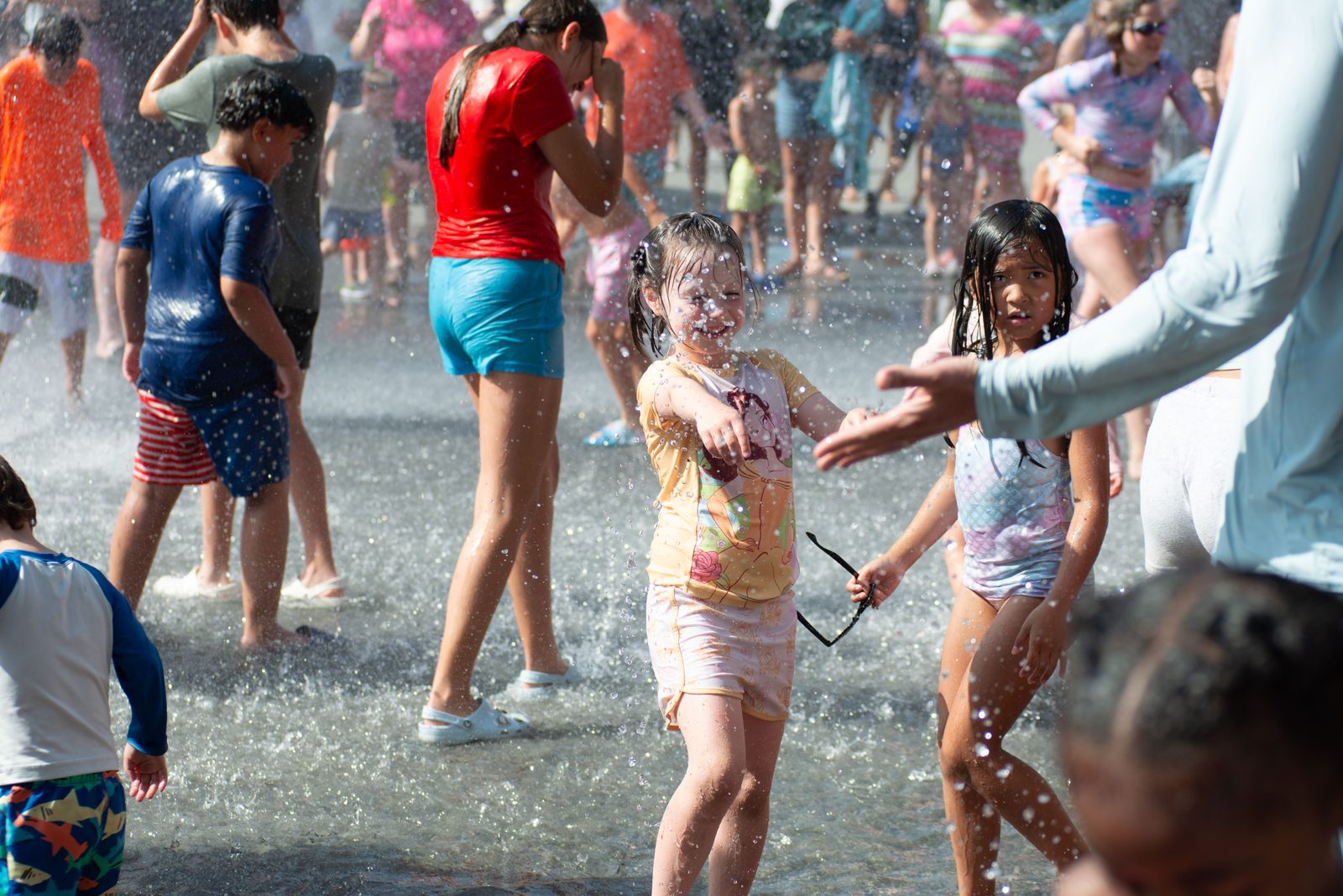
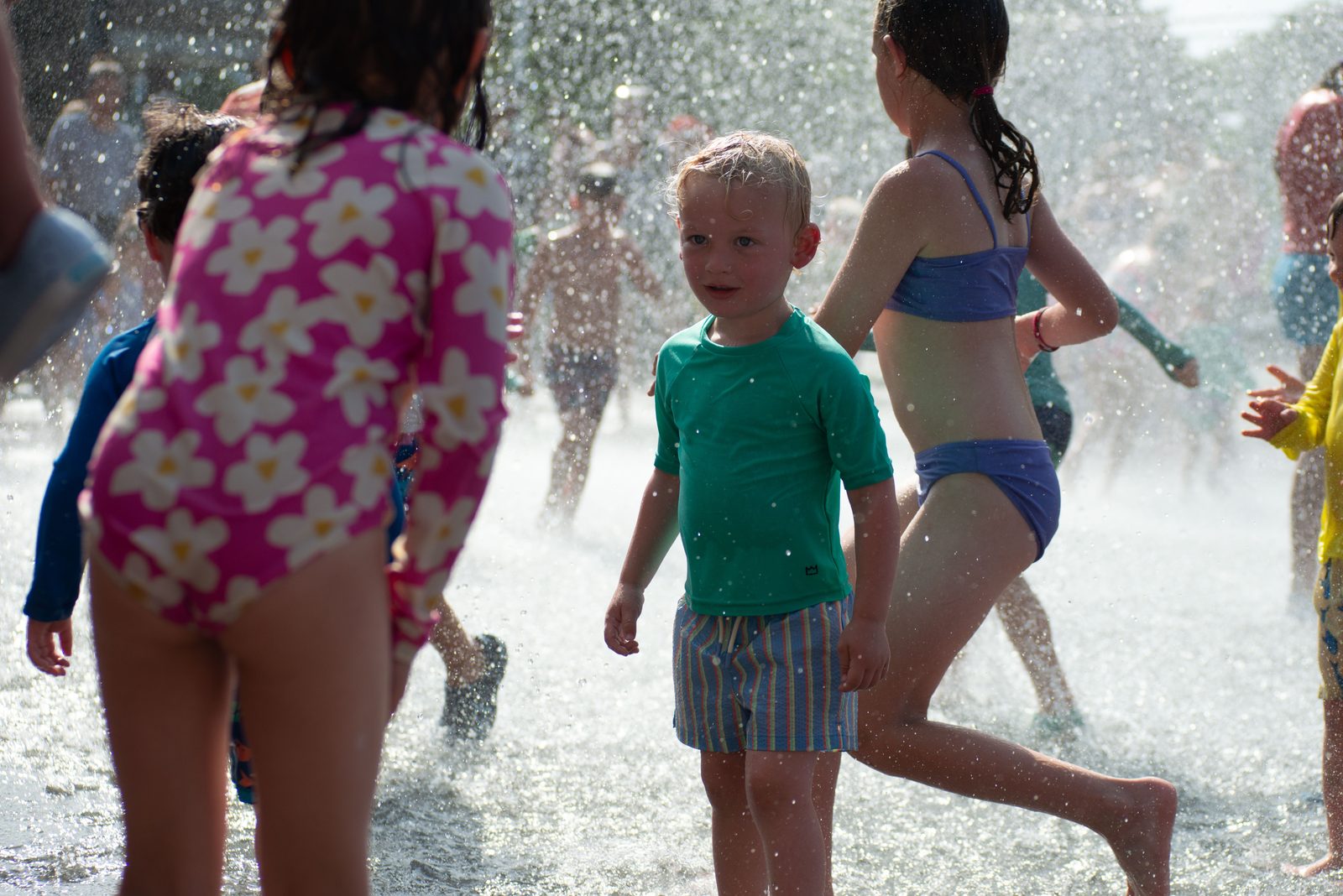
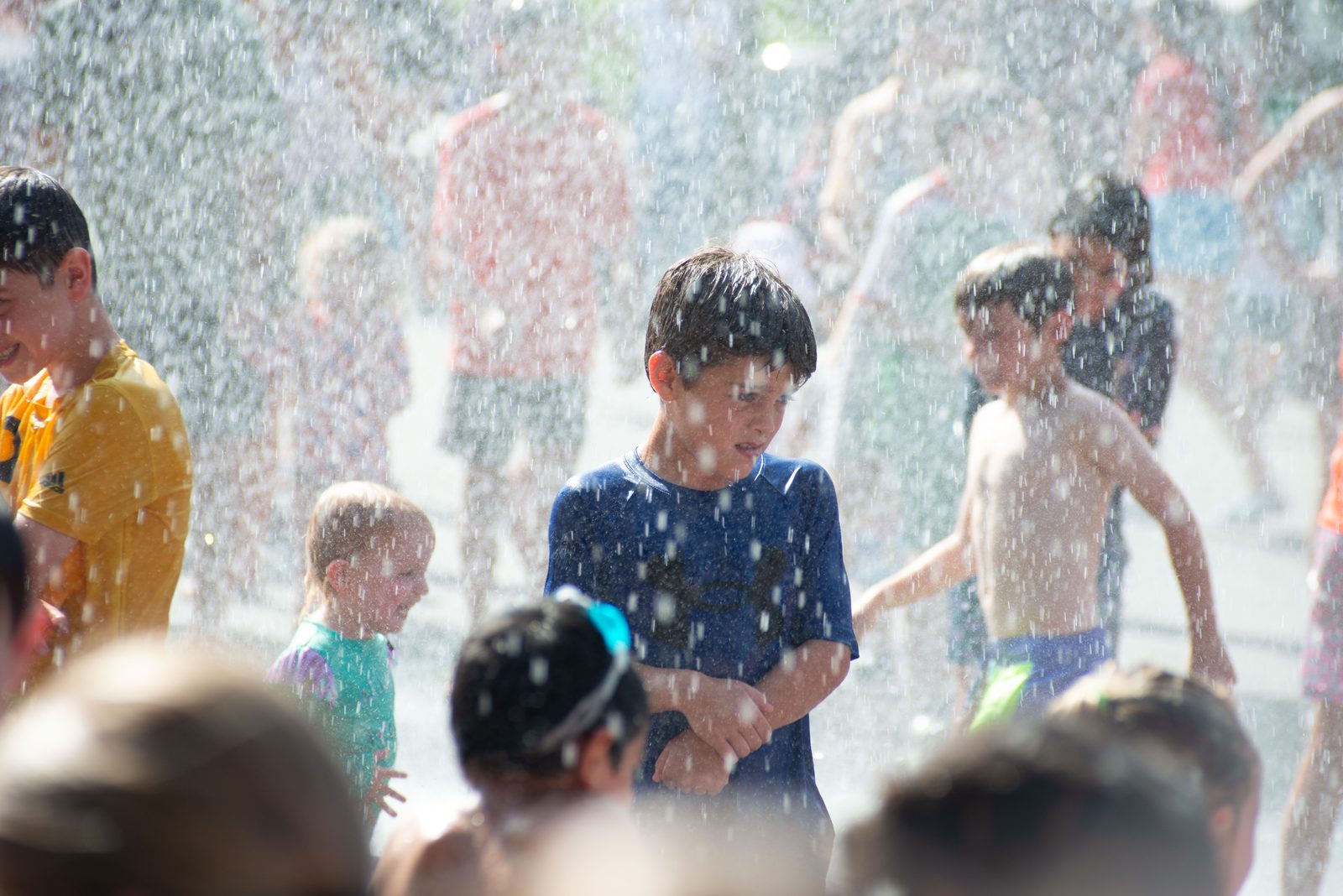
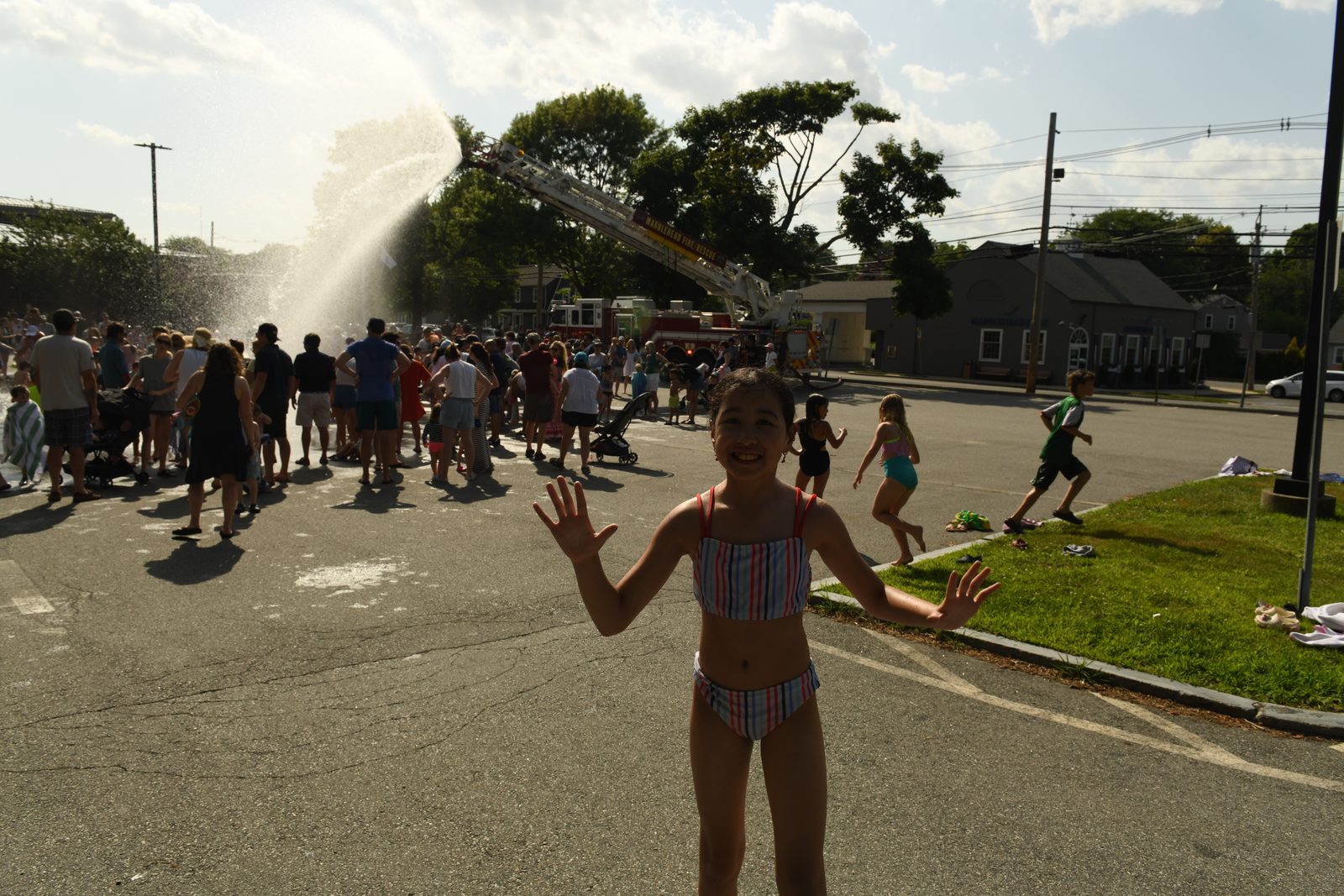
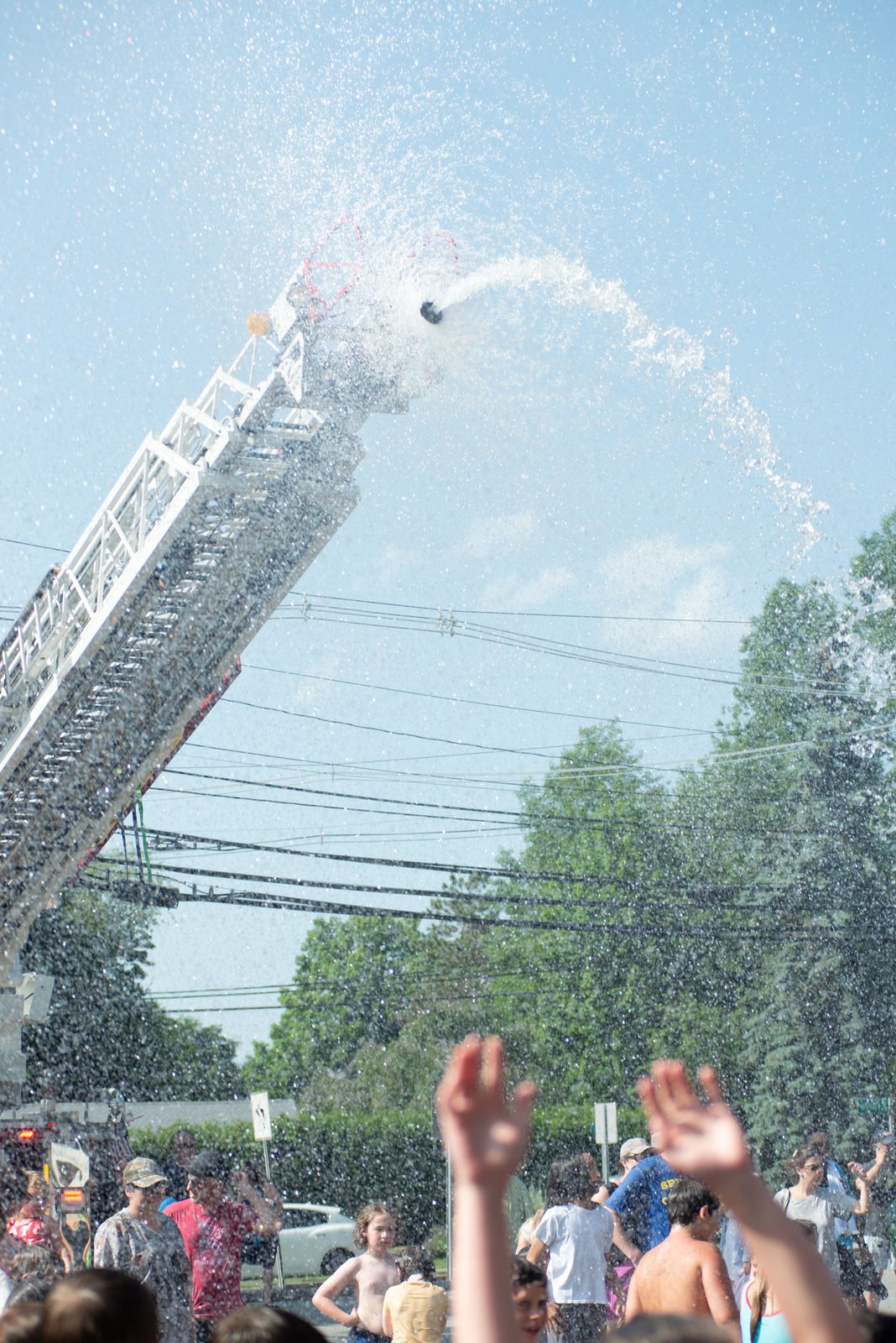
The relief came on a ladder. As the heat peaked on July 2, the Marblehead Fire Department ran a “Beat the Heat” cool-down at the Community Center: it raised the aerial ladder on a Fire & Rescue truck, turned a line to the sky, and let a fine arc of water fall over the pavement like rain on command. Hundreds of children — and more than a few parents — ran straight into it. For an hour the lot was a splash pad: toddlers in ruffled suits, boys in soaked rash guards hugging themselves against the sudden cold, a girl throwing both hands up at the camera mid-shriek. It isn’t on the festival program, but it may have been the truest thing the town did all day.
The exhibits, judged and hung
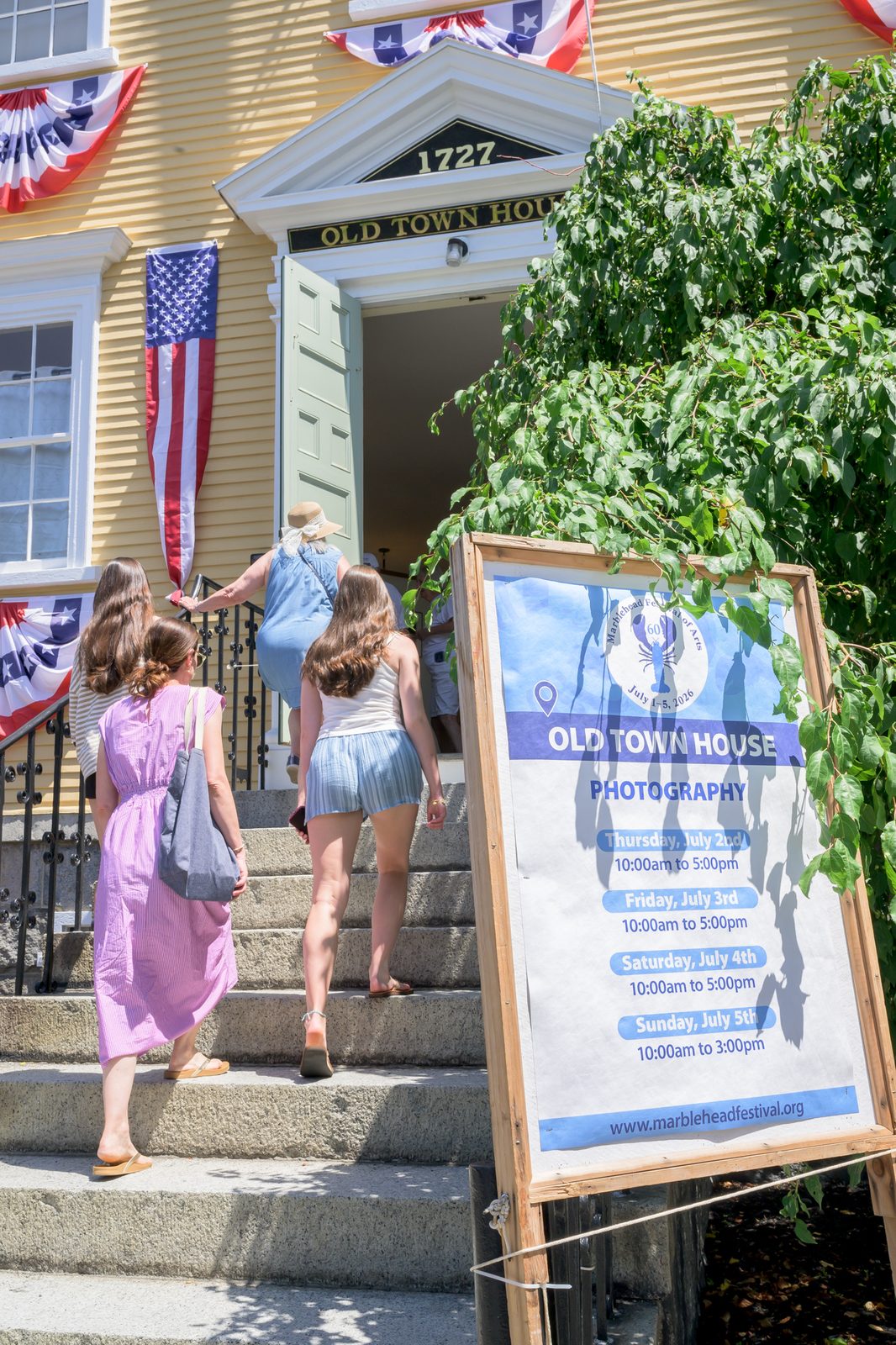
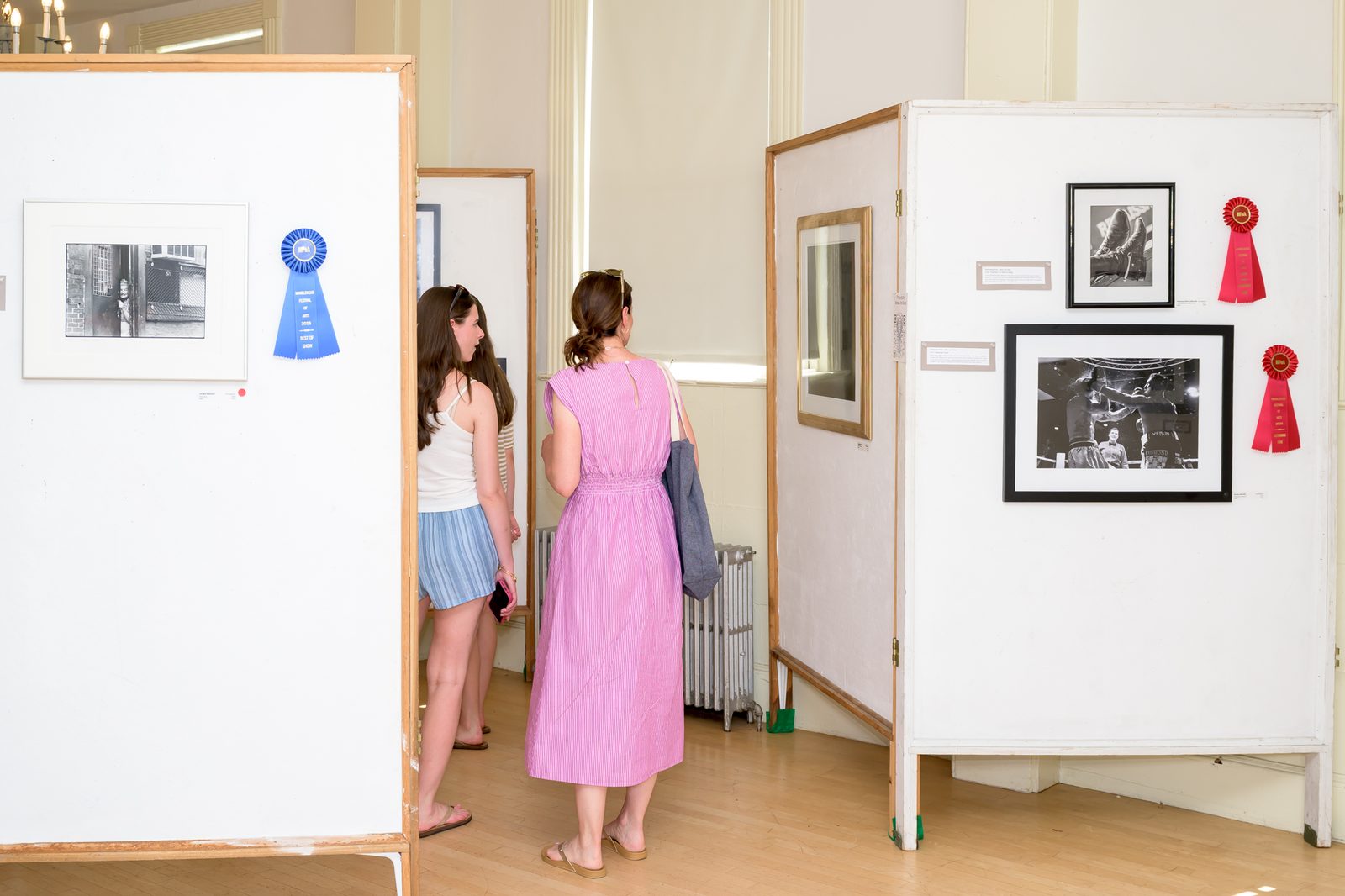
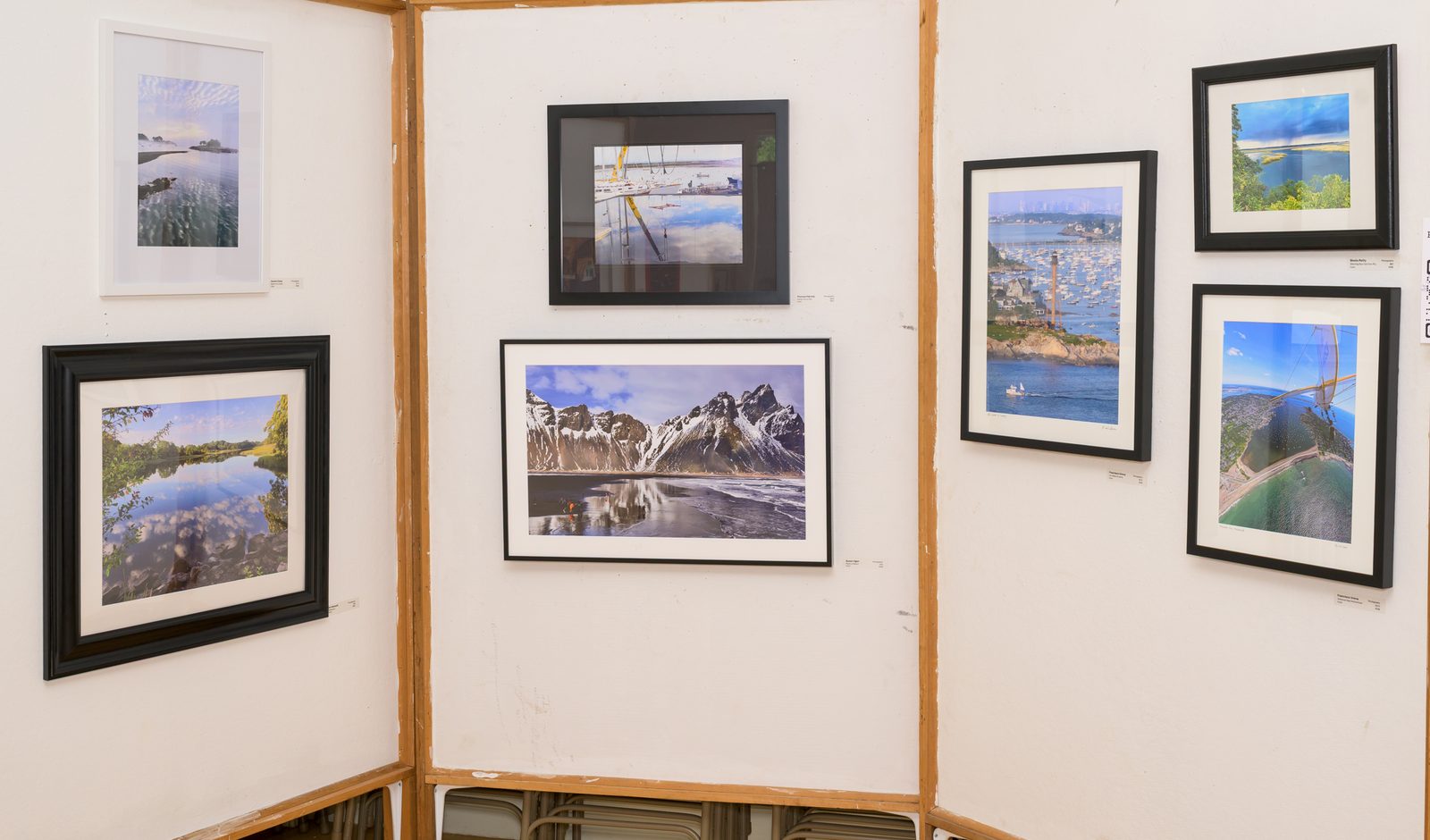
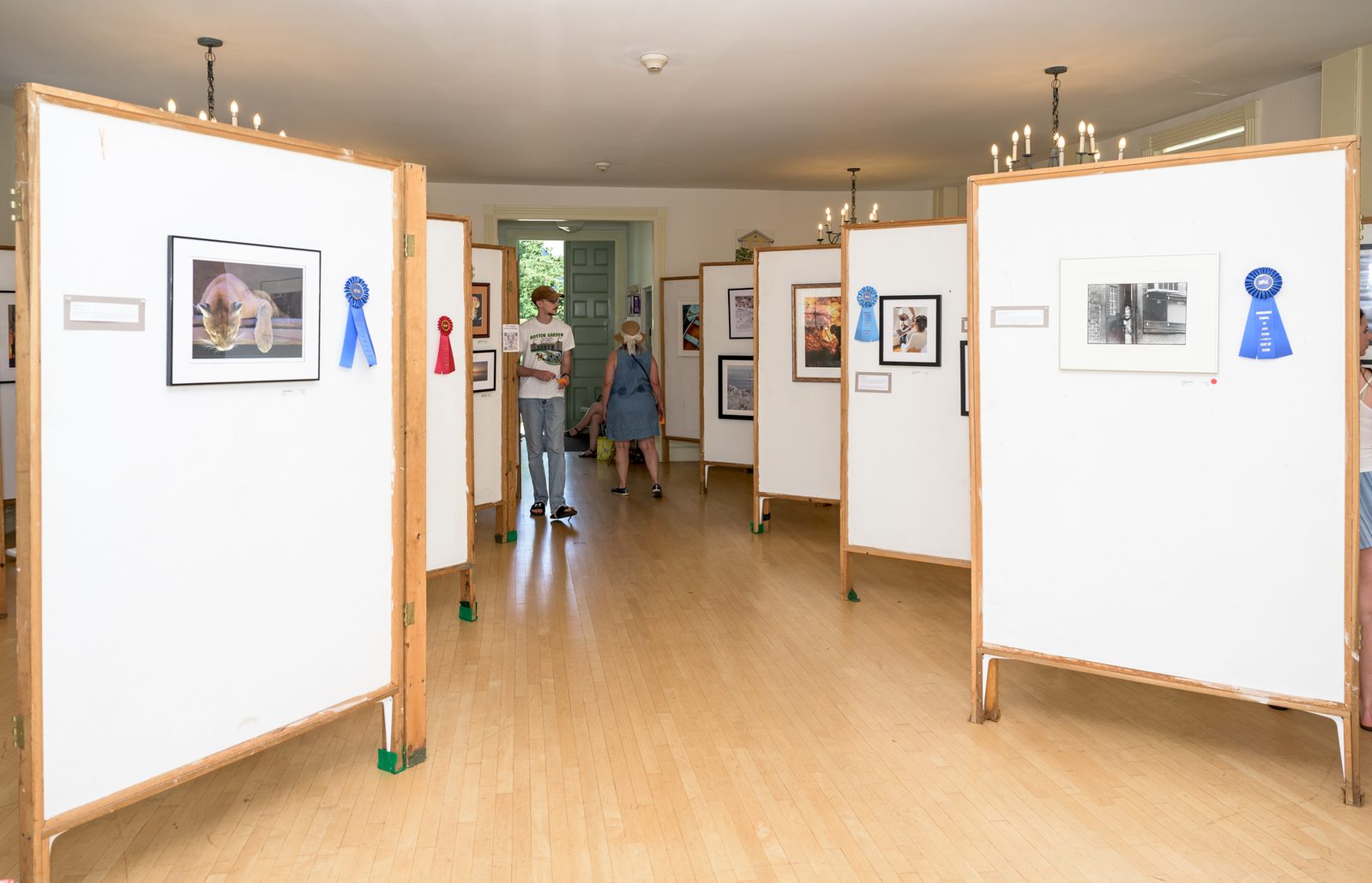
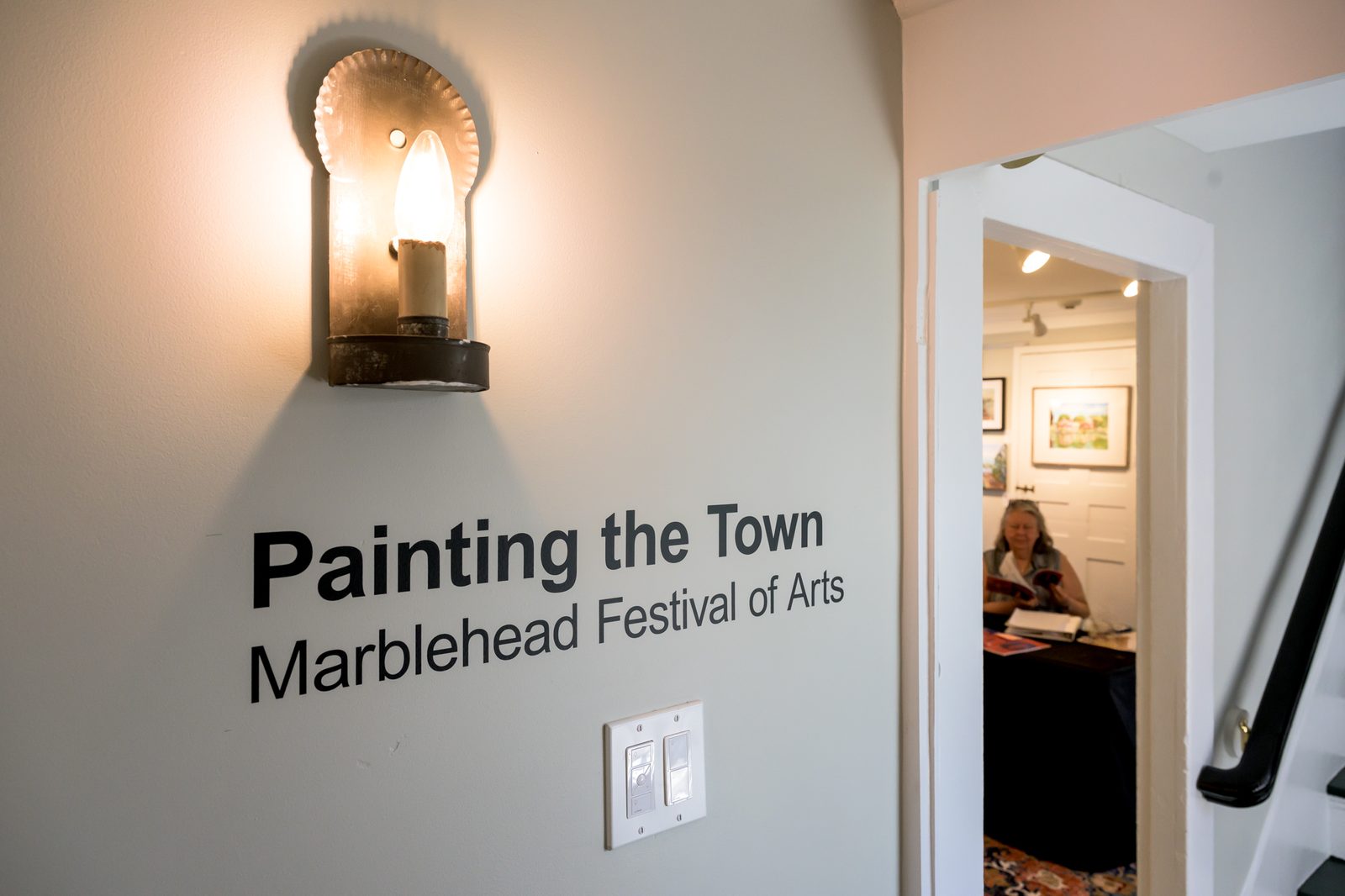
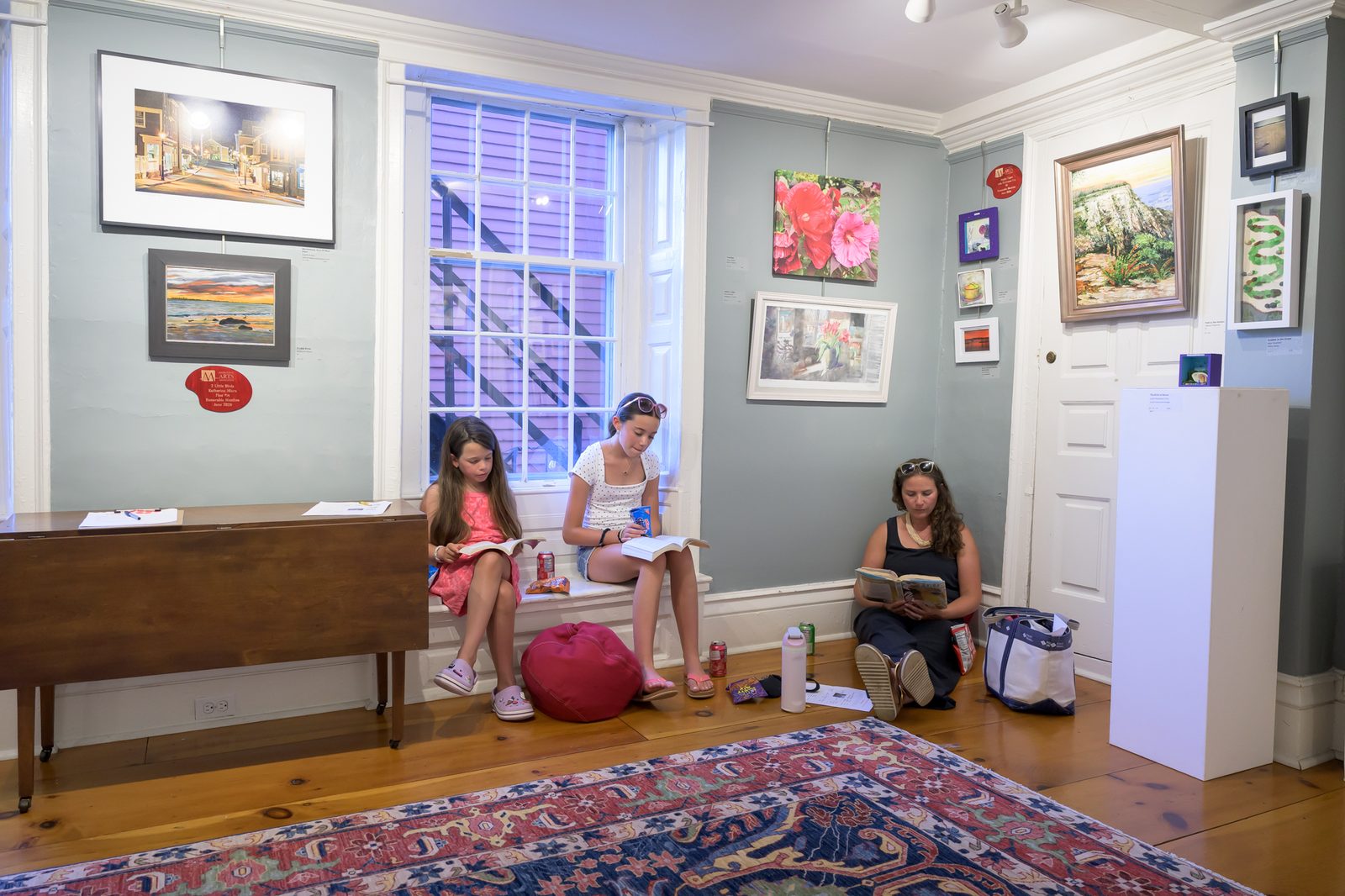
Upstairs in the Old Town House, the photography exhibit drew a steady line up the bunting-draped steps. Tammy Nohelty knows that line well, though this year she was over at Abbot Hall, overseeing the painting. A former Marblehead Public Schools art teacher, she entered the festival’s photography show for 25 years and then chaired it for 15 alongside Maggie Smist; with Mary Alice Alexander she started the decorated-cod auction for the 50th, and this year she came back to co-chair painting. She was full of the details only a chair notices. This was the first year the festival took its entries online and judged them blind — the judge sees a number, not a name — and it changed the volume: painting alone drew 154 pieces, the most the show has ever taken. “This year we went to online entries,” Nohelty said, still marveling a little at not having everyone haul work in, store it for a month and haul it back out. The painting judge, Sandra Lovelock, gave Best of Show to Todd Zalewski, who took the drawing category the same night. “It looks like a photograph,” Nohelty said of his winning painting — hyperrealism, and, she added, iconically Marblehead.
In photography, the black-and-white Best of Show went to Ulrike Welsch for “Peekaboo,” a woman glimpsed in a doorway in Boston’s North End, shot a couple of years ago and printed full-frame with a black border. Welsch, who has submitted to the festival on and off for years, seemed genuinely surprised. “It hasn’t been for a long time that I got anything,” she said, standing on the grand staircase to Abbot Hall’s auditorium. Of her winning photo, she said she had been looking for something small and human: “I always was trying to find something positive.”
Authors among the shelves
The Literary Festival had been running all week alongside the galleries and the concerts — readings, panels, workshops and writing contests — and Thursday afternoon brought back one of its favorites: a Moth-inspired storytelling hour, patterned after NPR’s Moth Radio Hour, in which audience members stood up one after another to tell true stories, live and without notes, five minutes each. It is a free event, and a returning one — the festival brought it back after last year’s proved a hit.
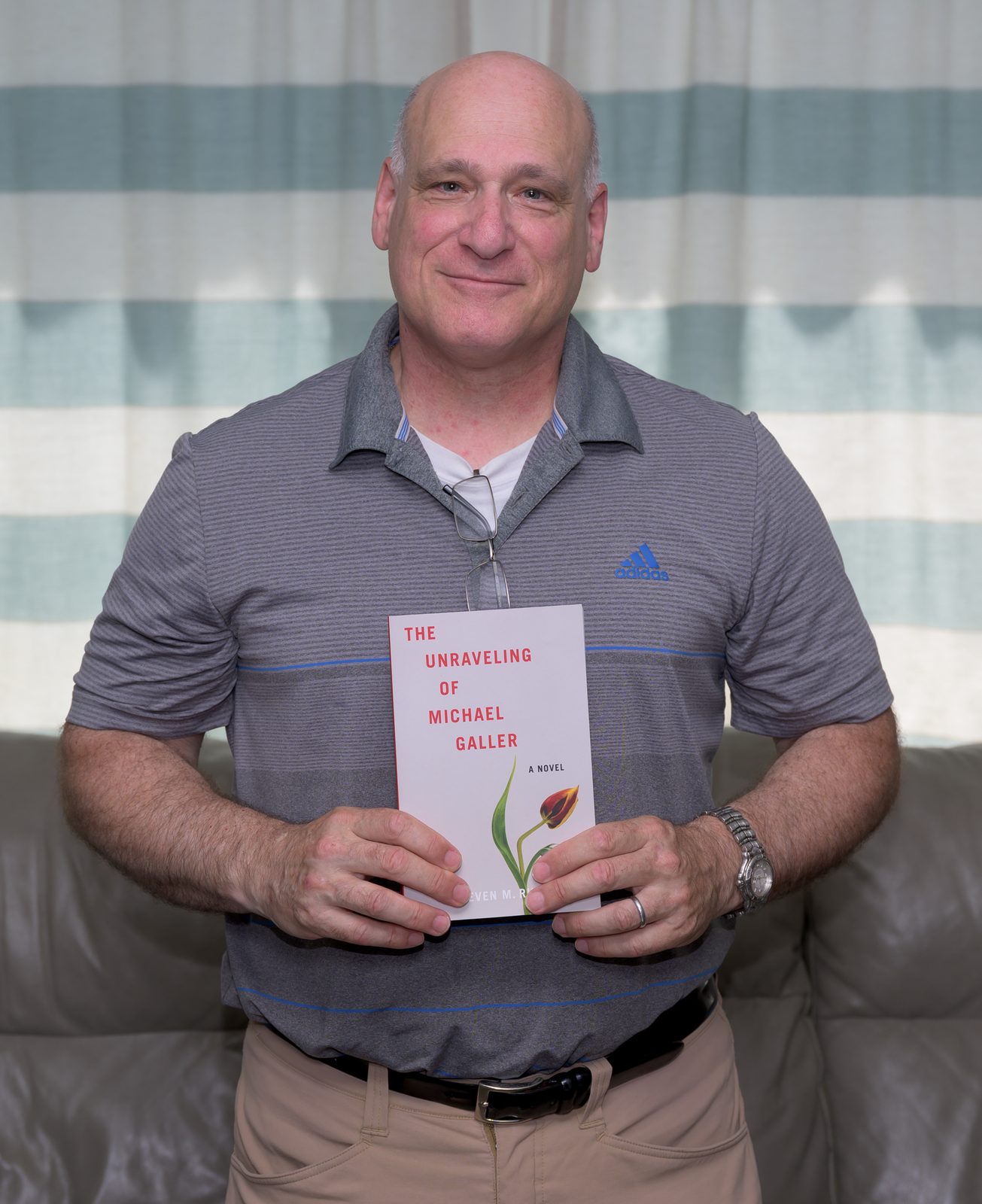
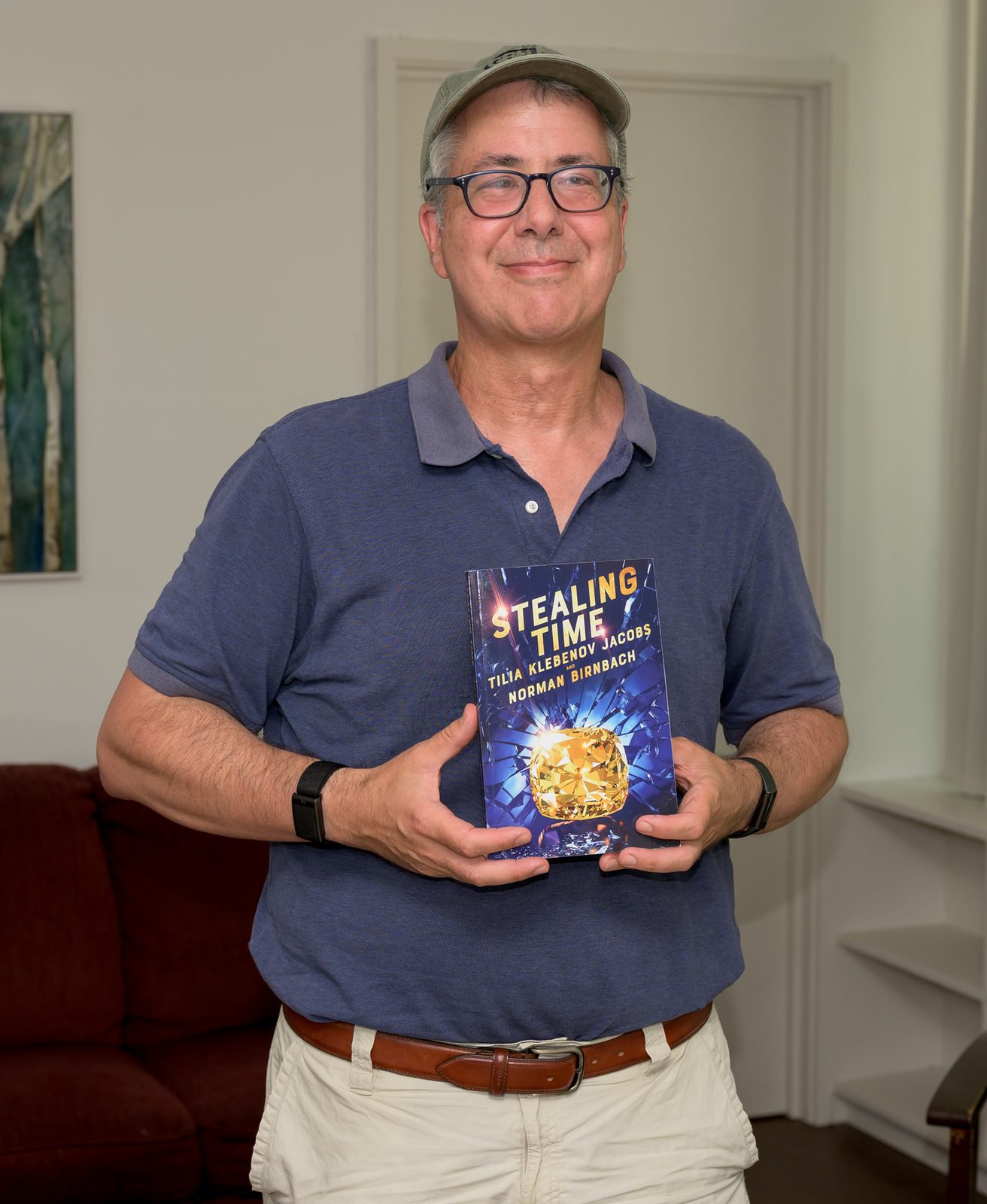
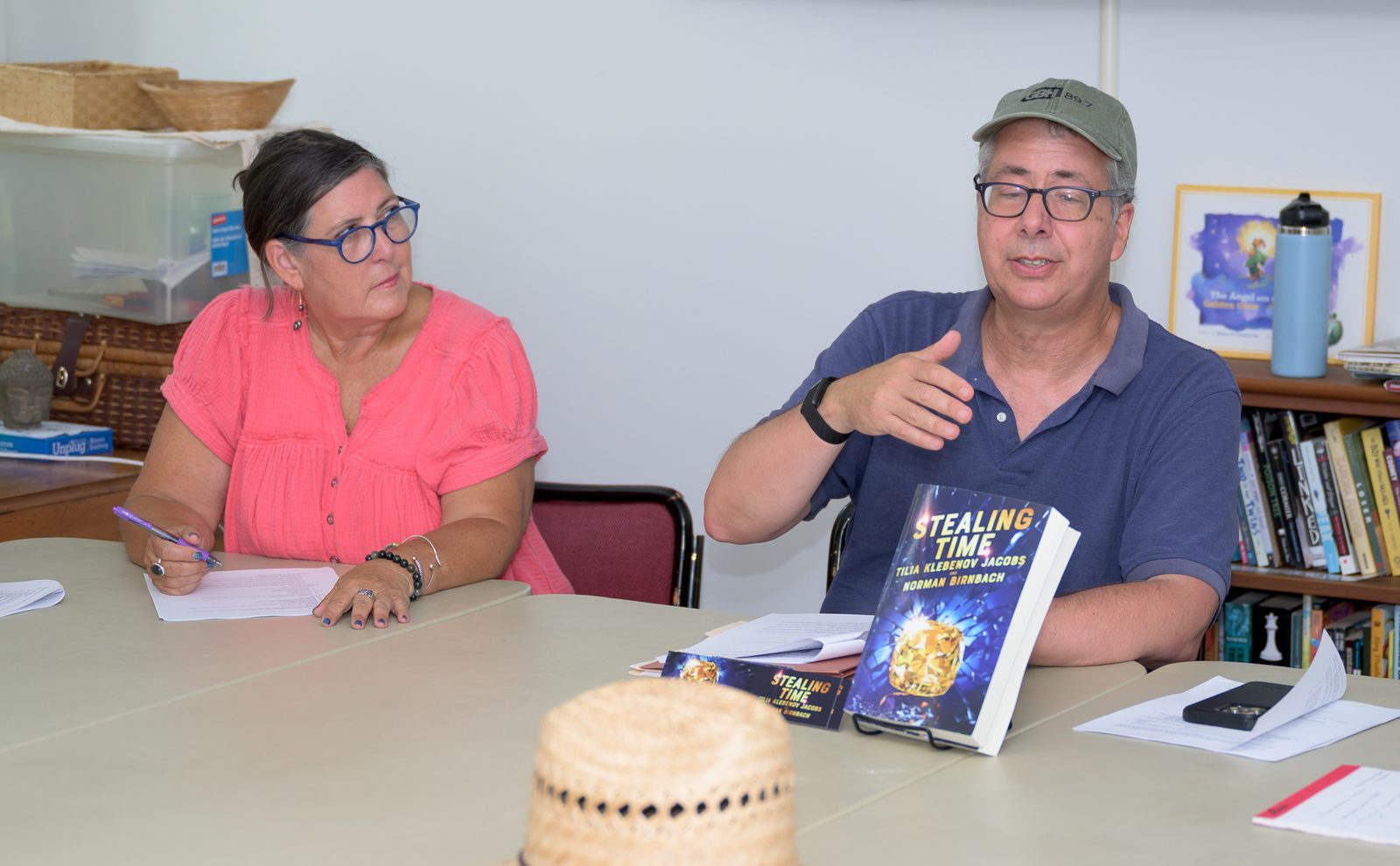
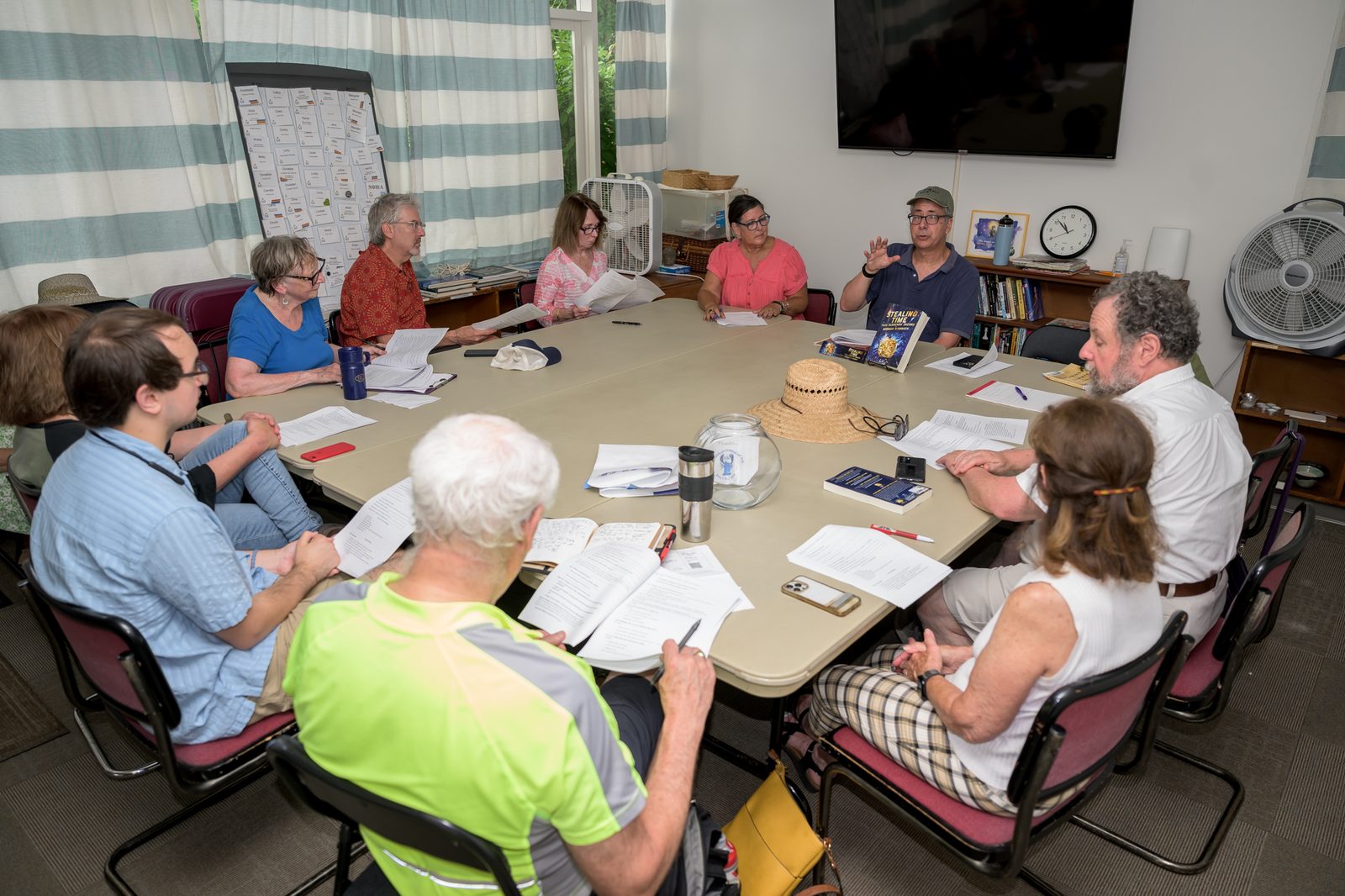
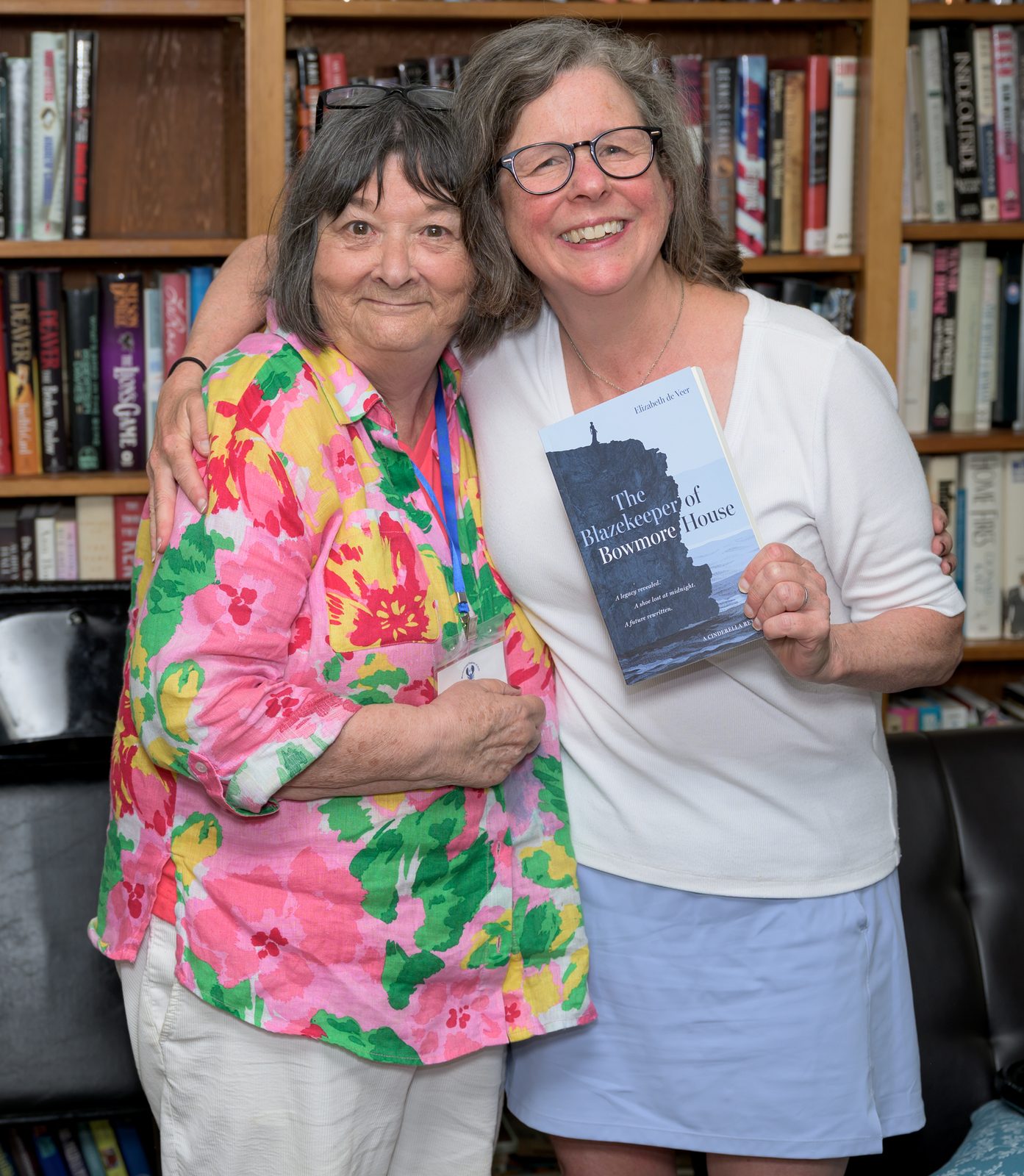
Down among the used books, the authors took their turn as well. Copies of “Stealing Time,” by Norman Birnbach, and Steven M. Rubin’s “The Unraveling of Michael Galler” went up for the camera; at the next table, a workshop bent over printed manuscripts, marking them line by line.
A ceremony at the post office
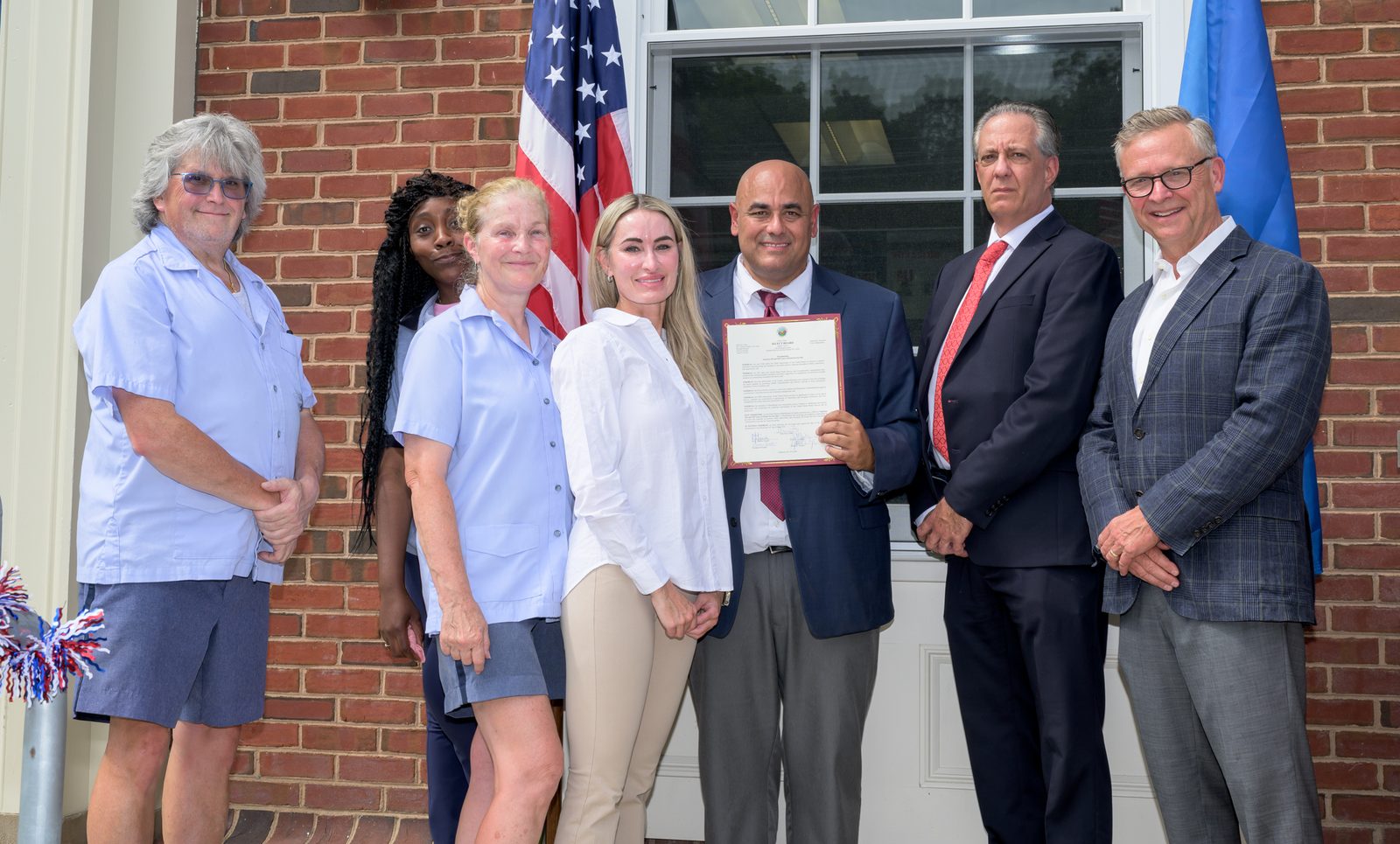
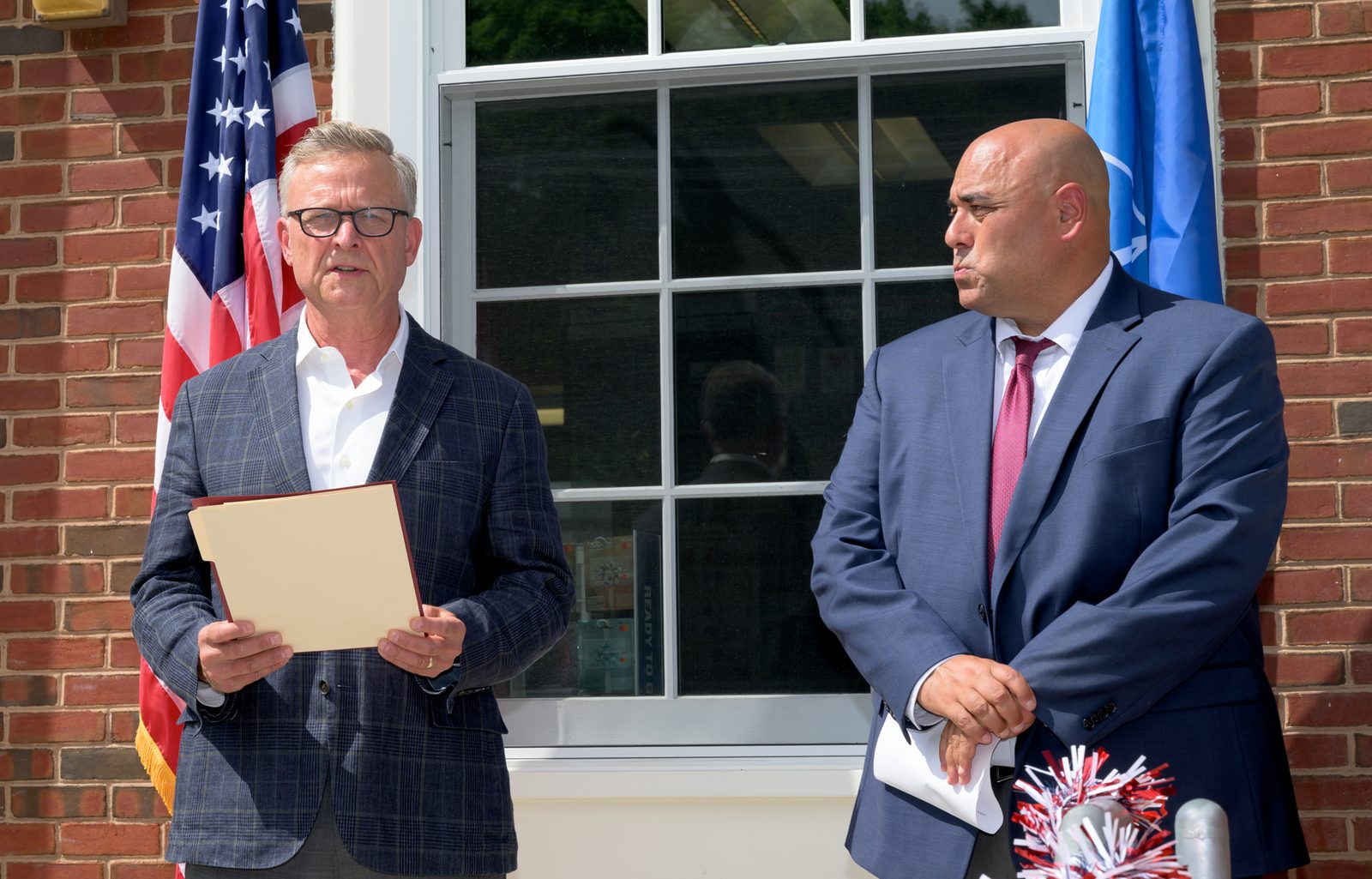
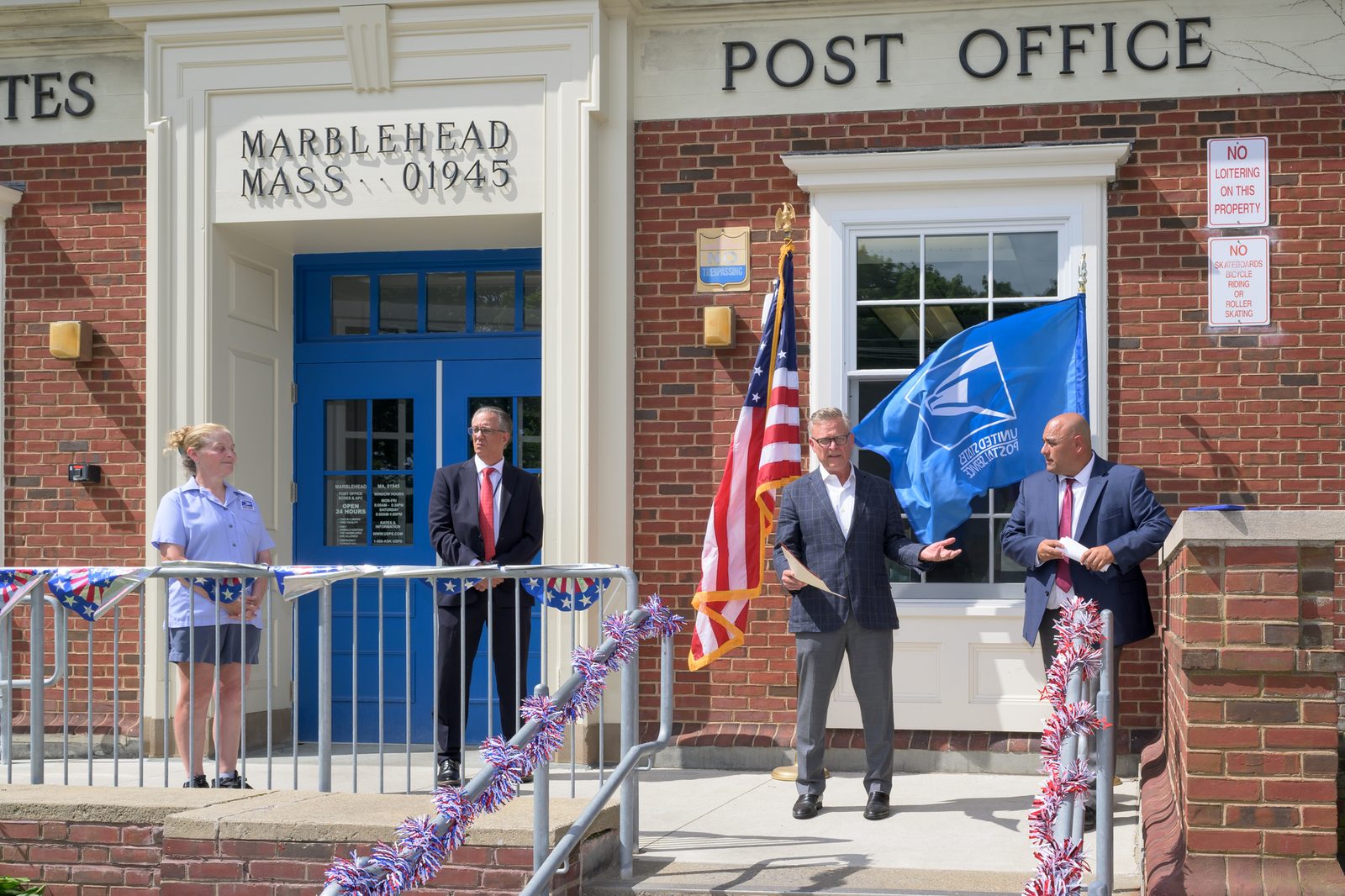
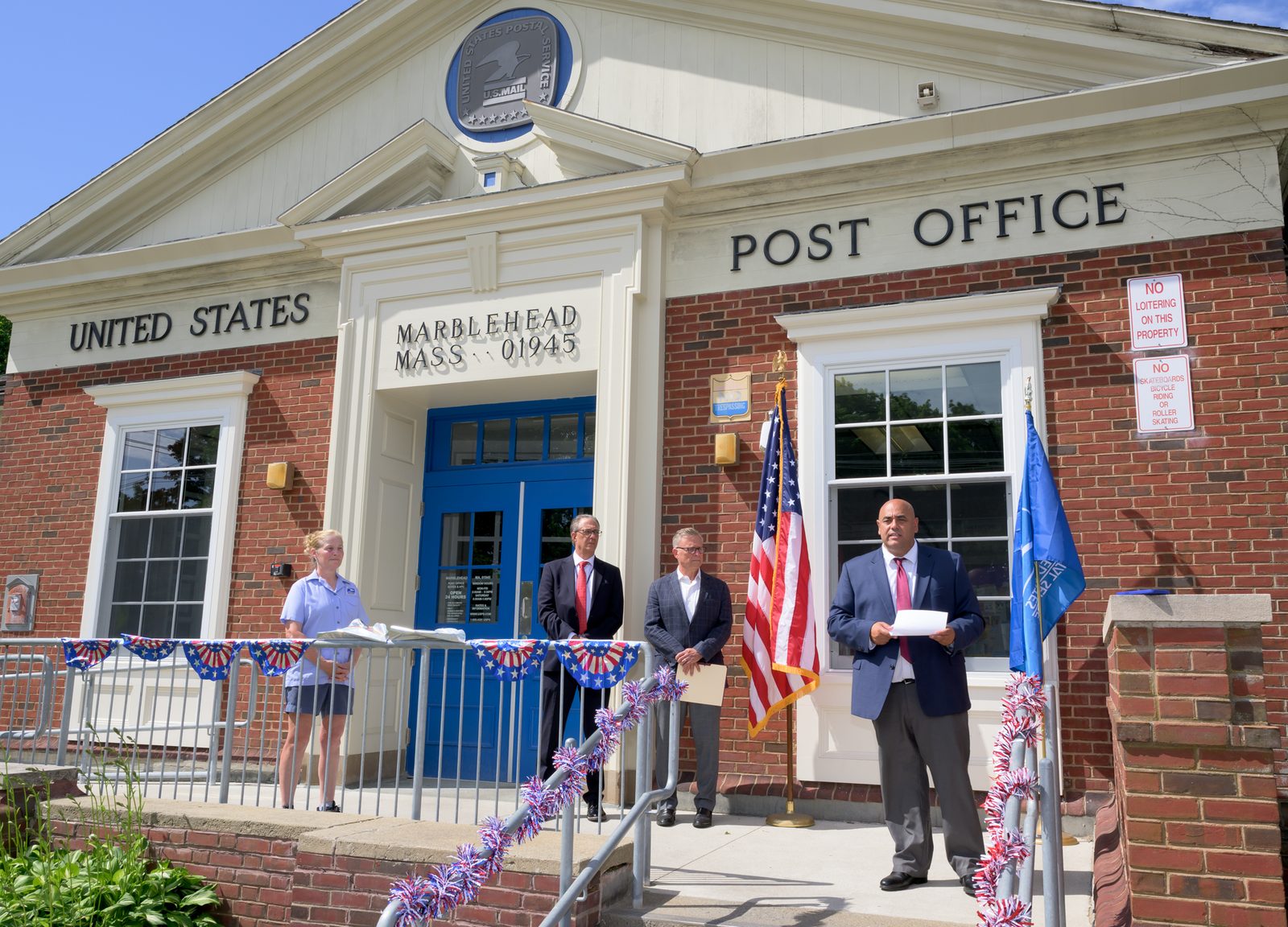
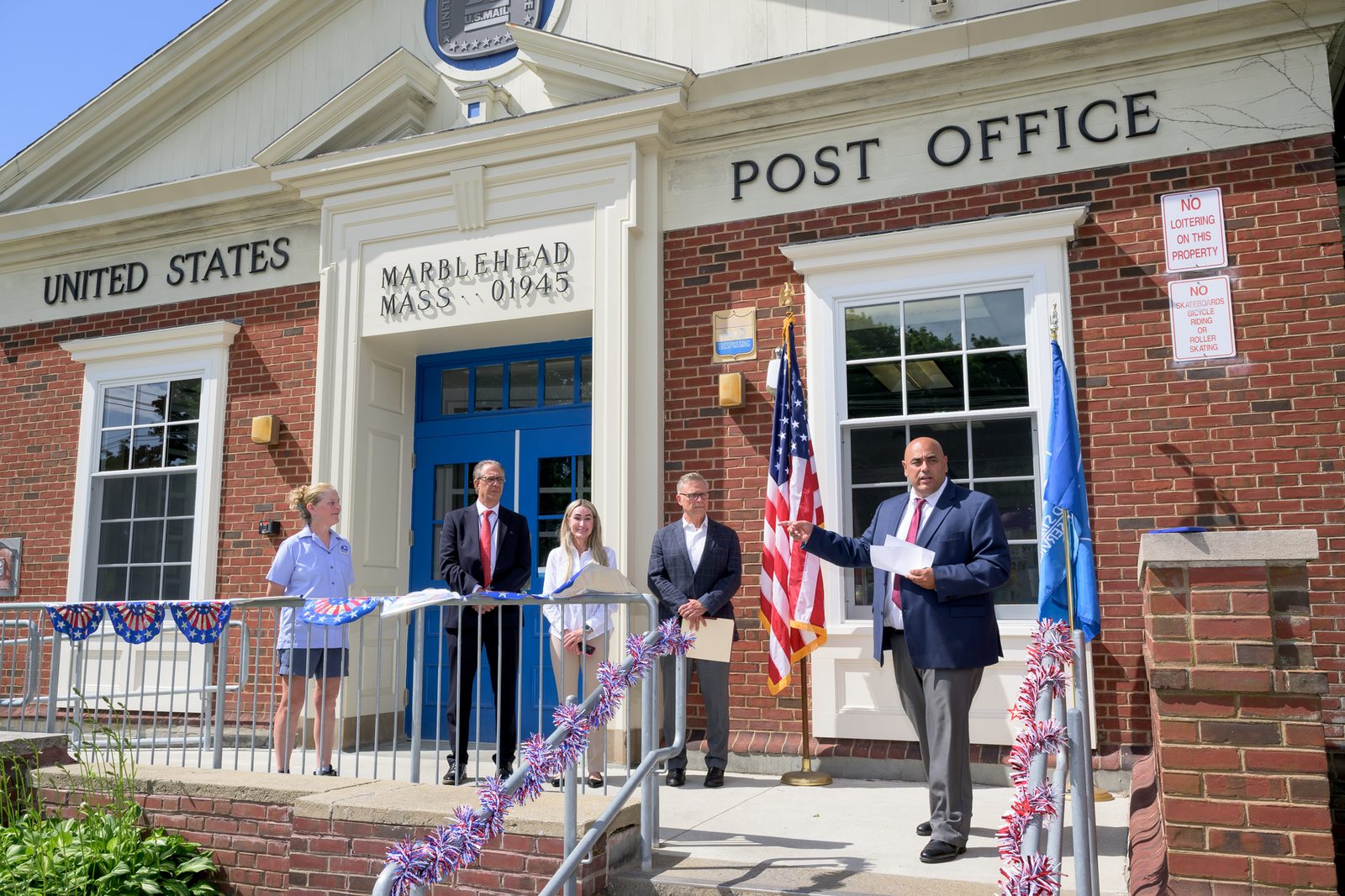
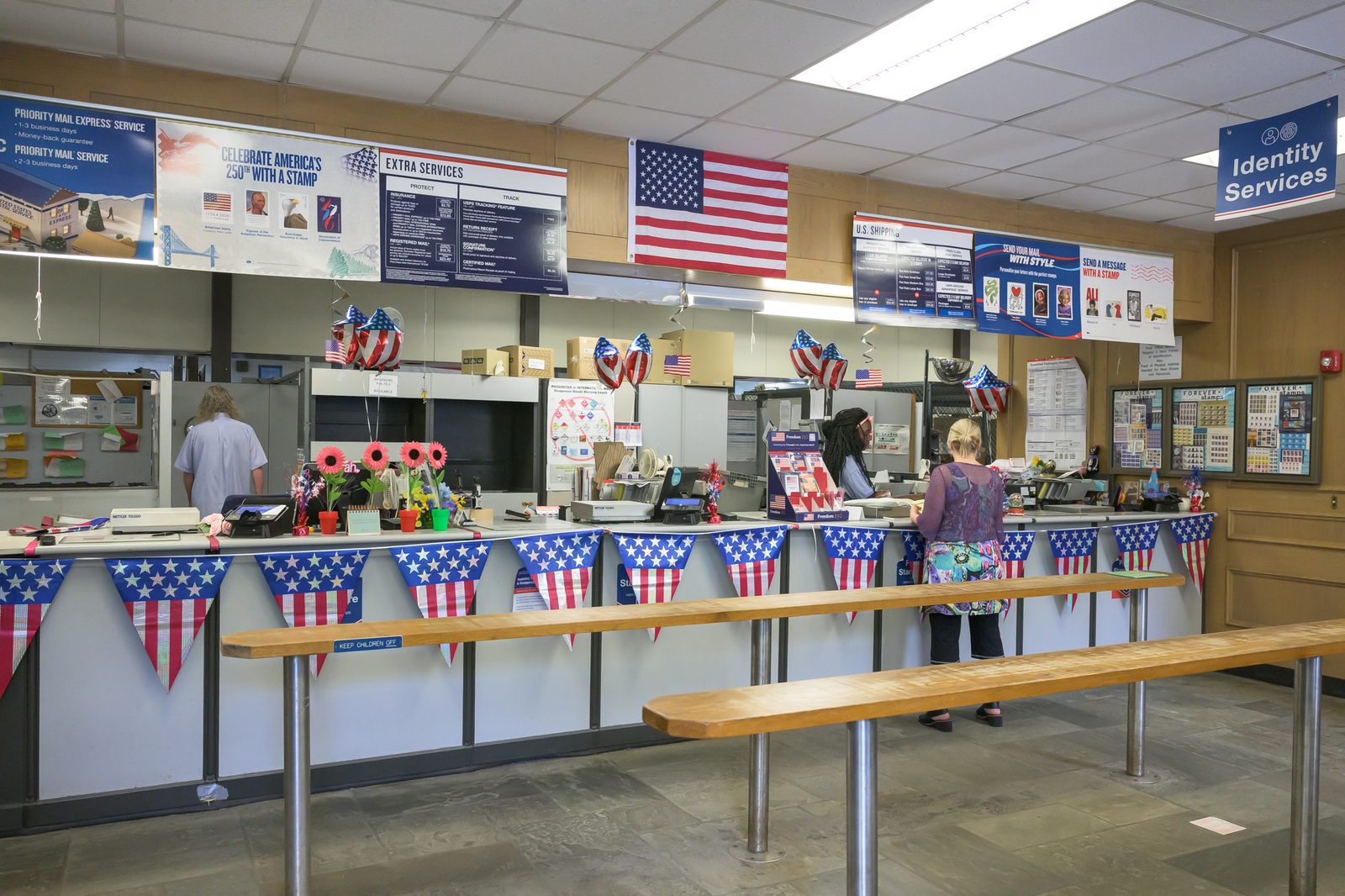
While it wasn’t part of the festival proper, the Smith Street post office had dressed up, too, on Thursday morning. Inside, bunting and balloons ringed the counter under a banner for the nation’s 250th-anniversary stamps; outside, postal workers and town officials crowded the steps for a Select Board proclamation, read aloud beneath the eagle seal as staff and guests lined the railing.
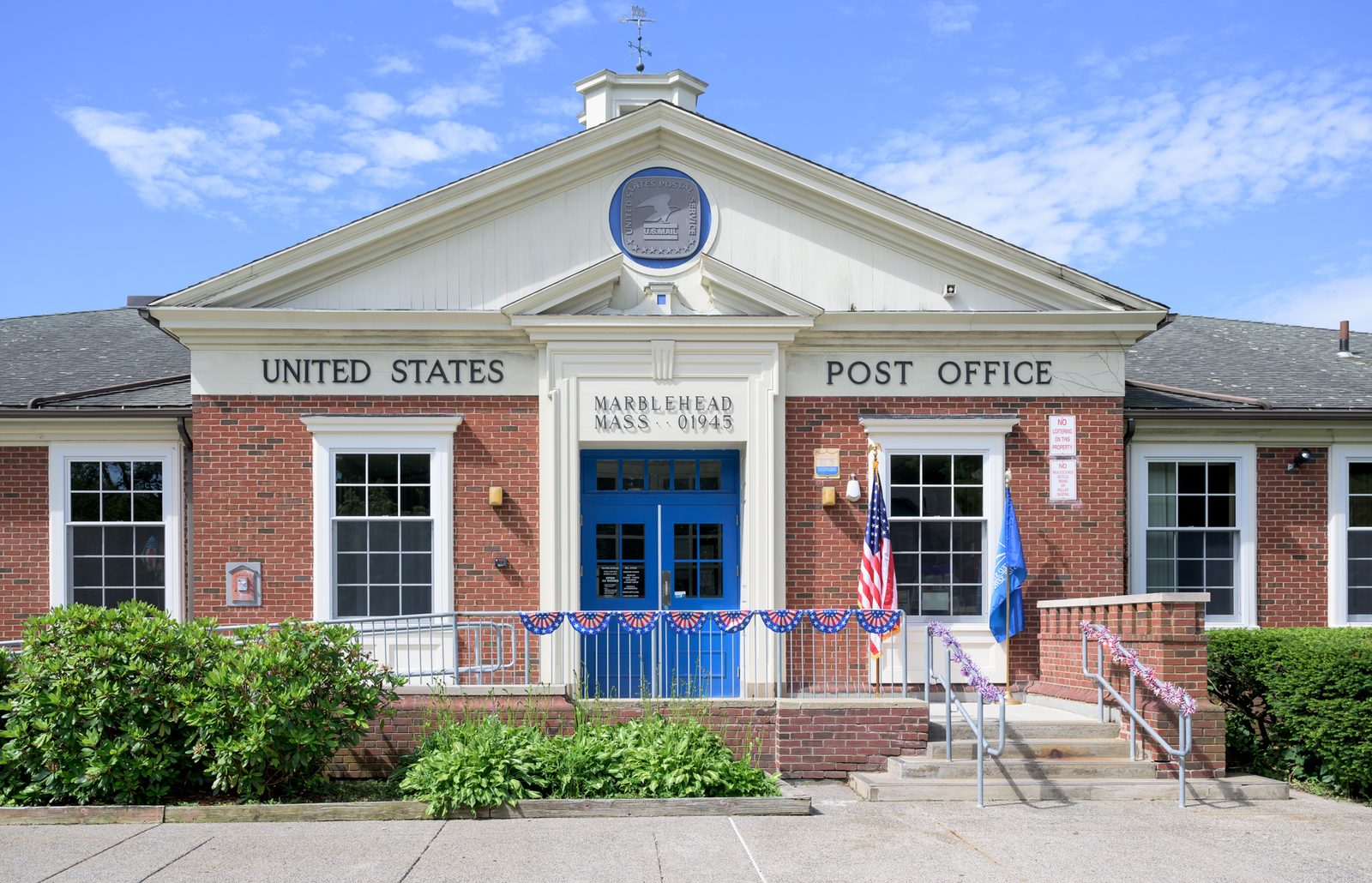
Around town, dressed for the 250th
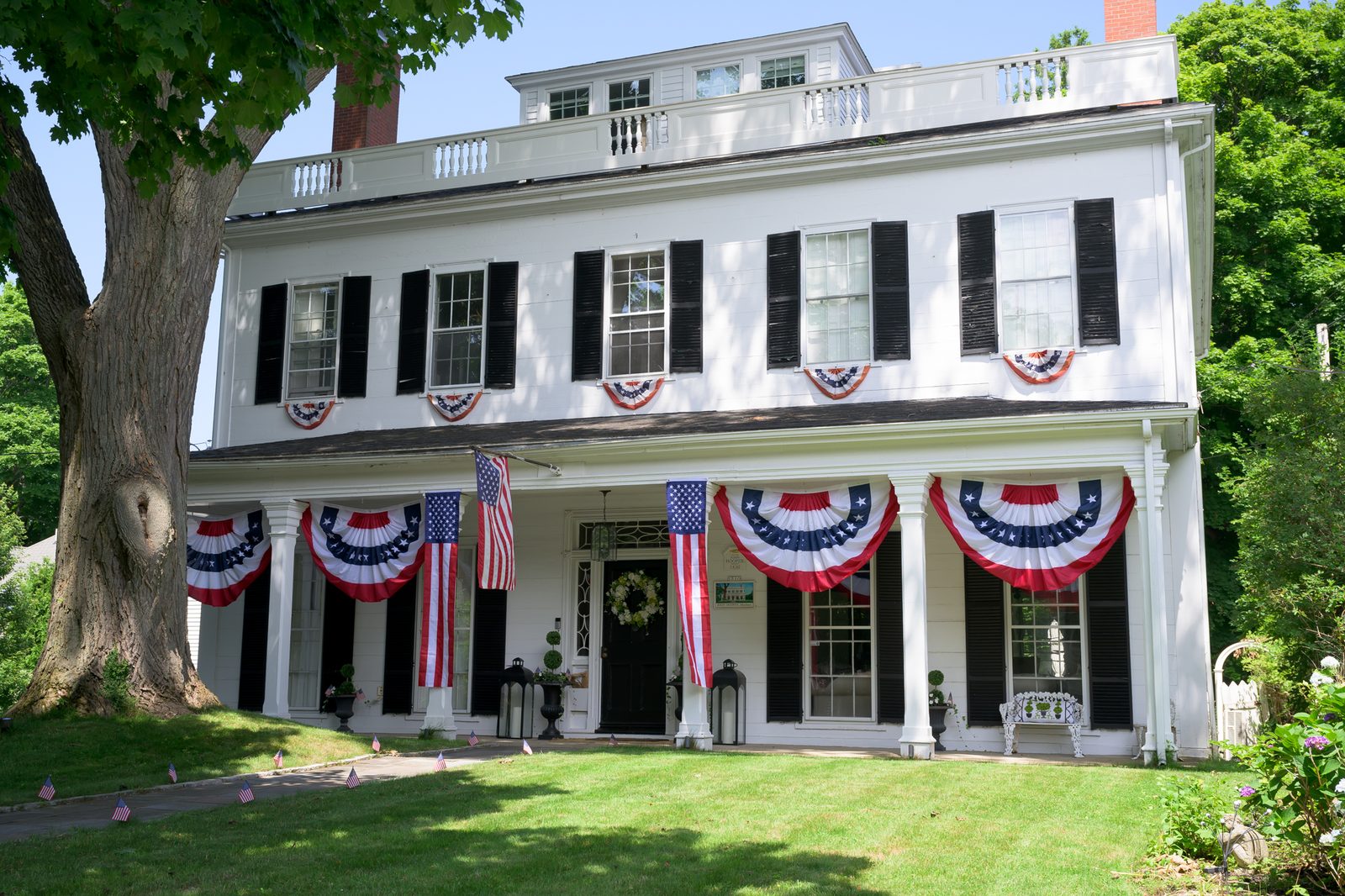
Out on the streets, the people who make this festival theirs were easy to find. At her booth, ceramicist Stephanie Verdun painted red lobsters onto blue-and-white — her Fourth of July specialty, coastal and floral motifs the rest of the year — while friends and family kept her supplied with cold drinks. Verdun once ran a children’s art studio in town, Out of the Box, and still drifts over to the student show because she misses teaching kids. Ask her what the festival wouldn’t be without and she doesn’t hesitate: the Harbor Illumination, and a spot in the park to watch the flares come up on the water.
For Jamie Osborn and her daughter, Alyin de Jong, the festival is a family fixture. De Jong graduated from Marblehead High in 2024, when her own work hung in the student exhibition; she studies architecture now at the Savannah College of Art and Design, and she still reads a photograph the way an artist does — one image on the wall, she said, “makes it feel warm, and like nostalgia.” The Osborns belong to the Dolphin Yacht Club and planned to take in both the new boat parade and the old land one; the street fair had been called off for the heat. As for spending the Fourth anywhere cooler, Osborn wouldn’t hear of it. “I can’t imagine celebrating the Fourth without being here.”
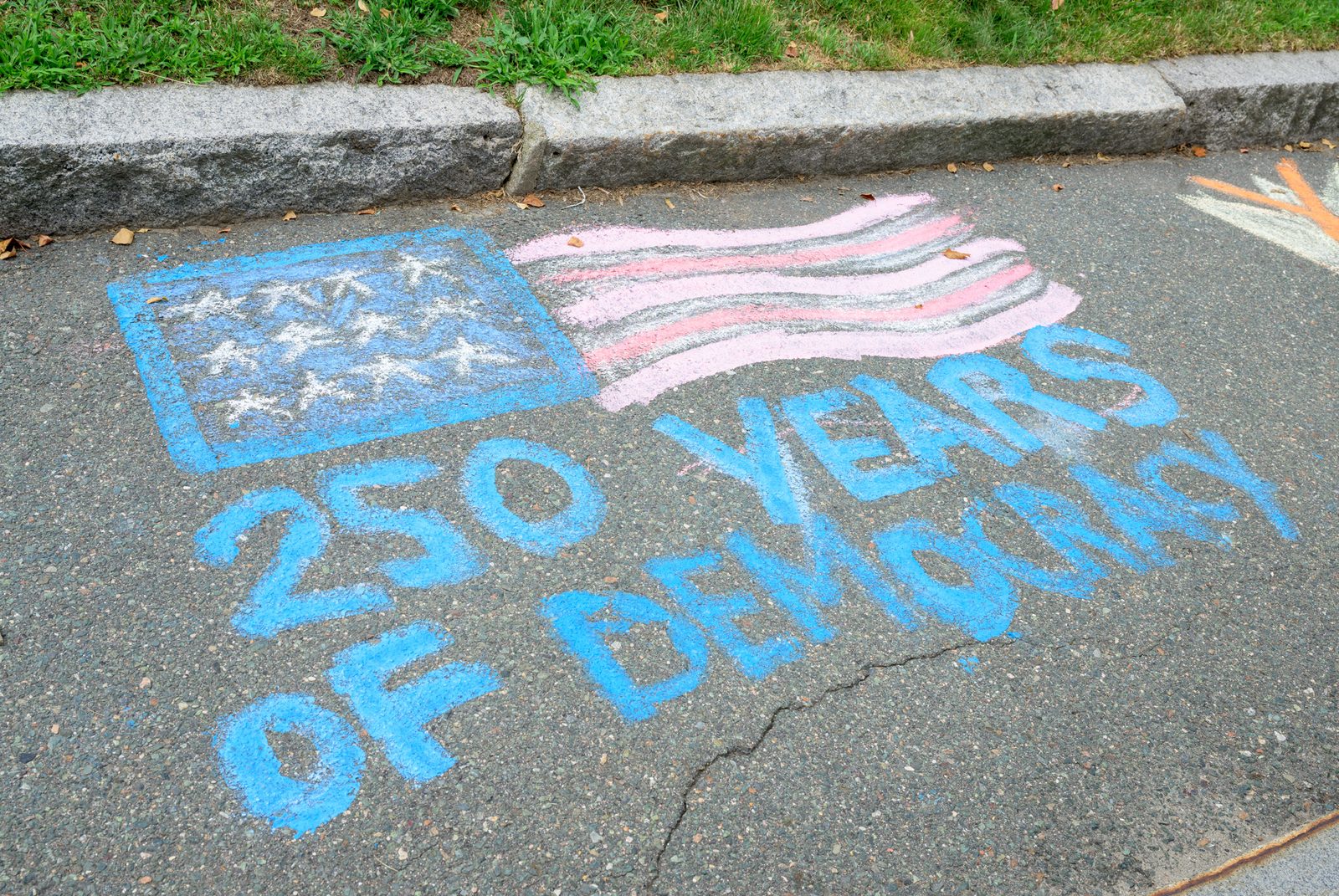
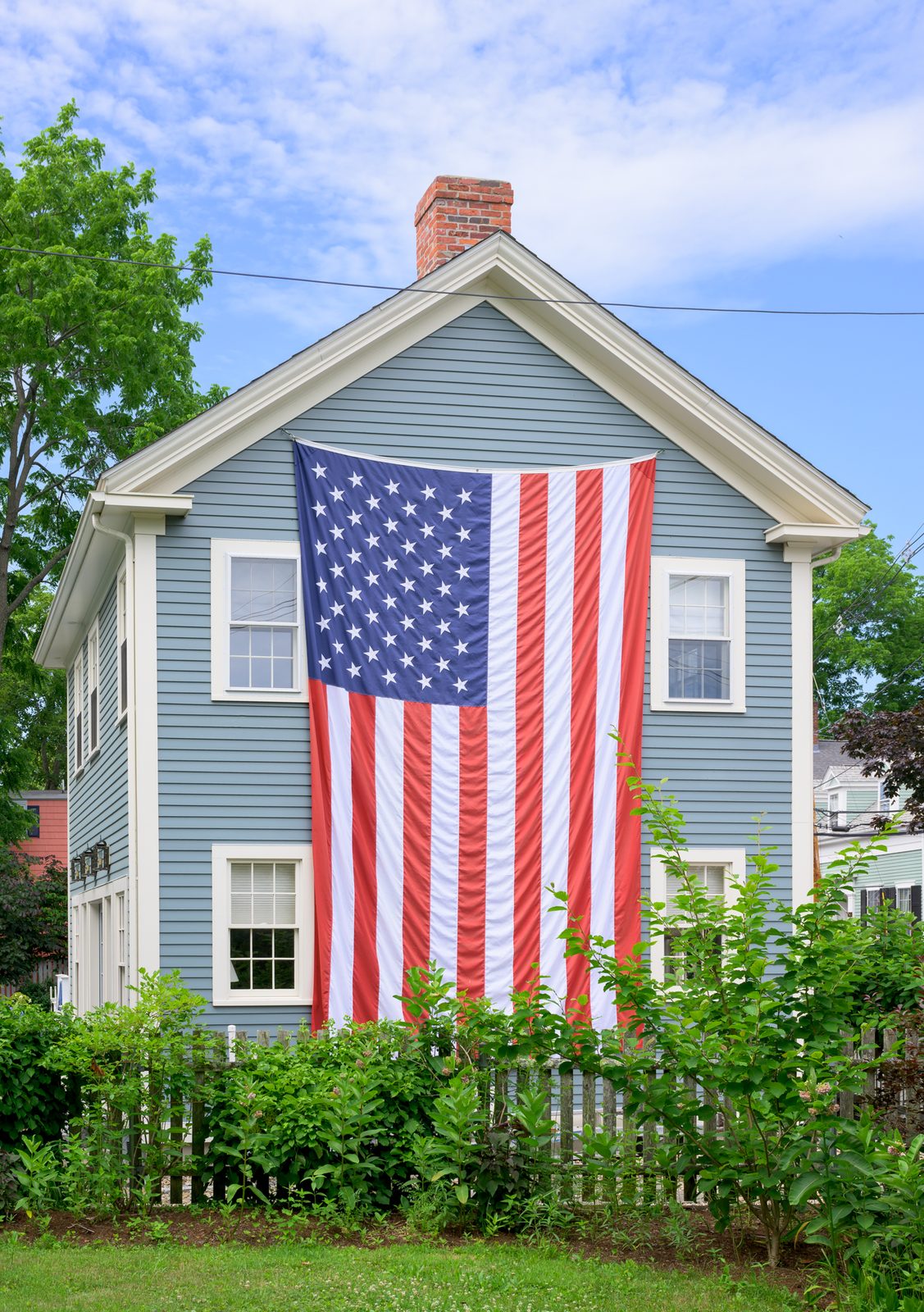
Horns over the harbor
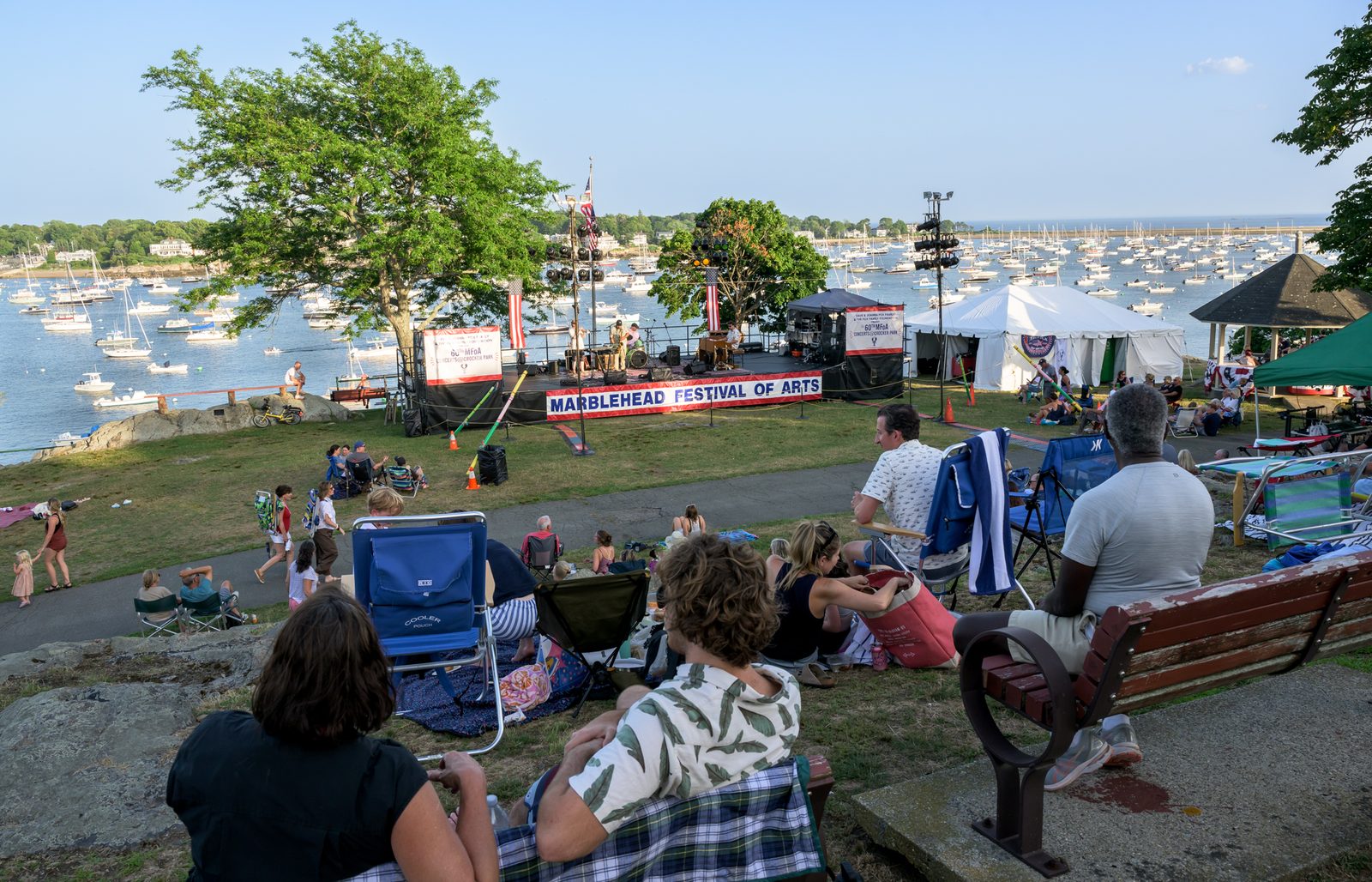
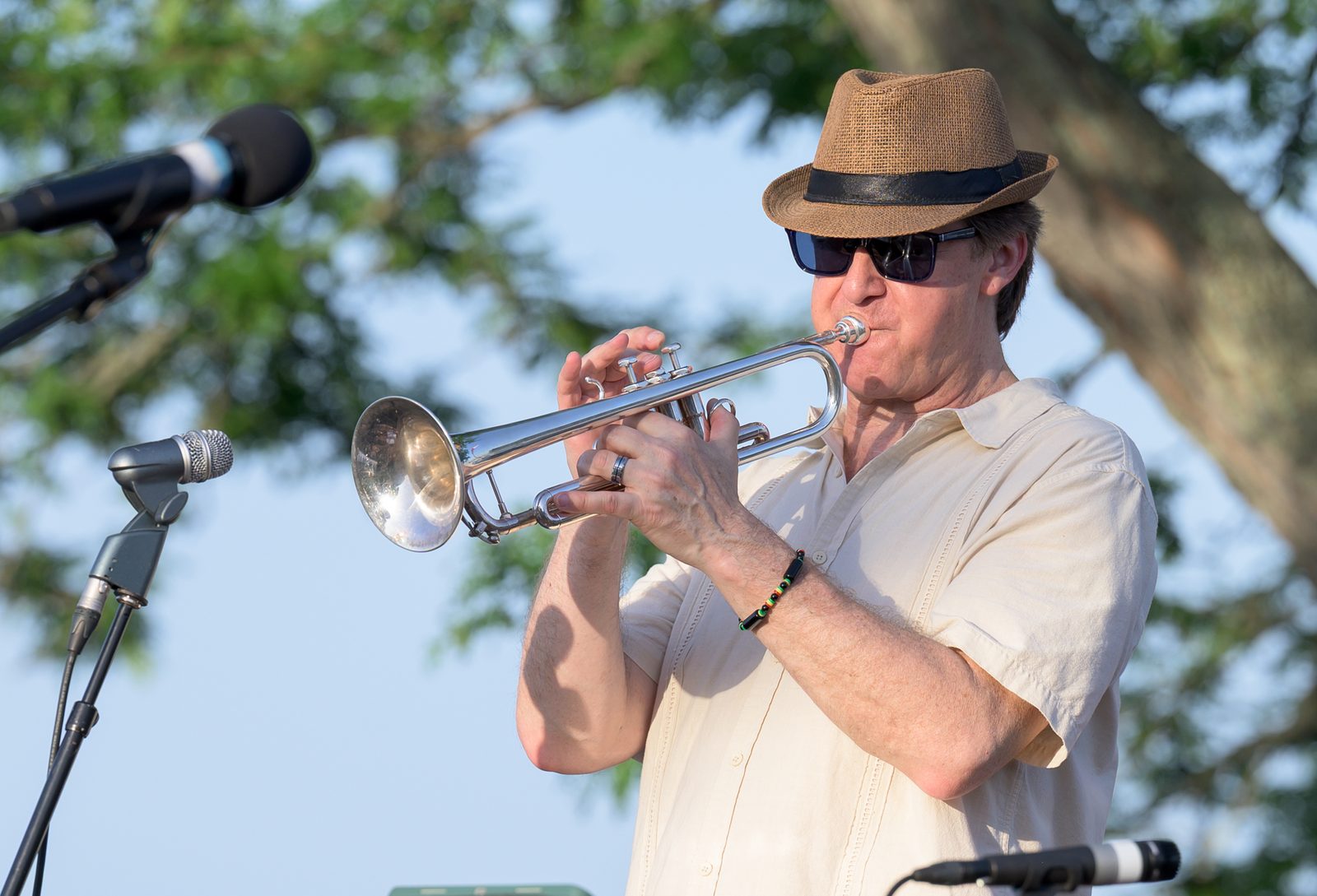
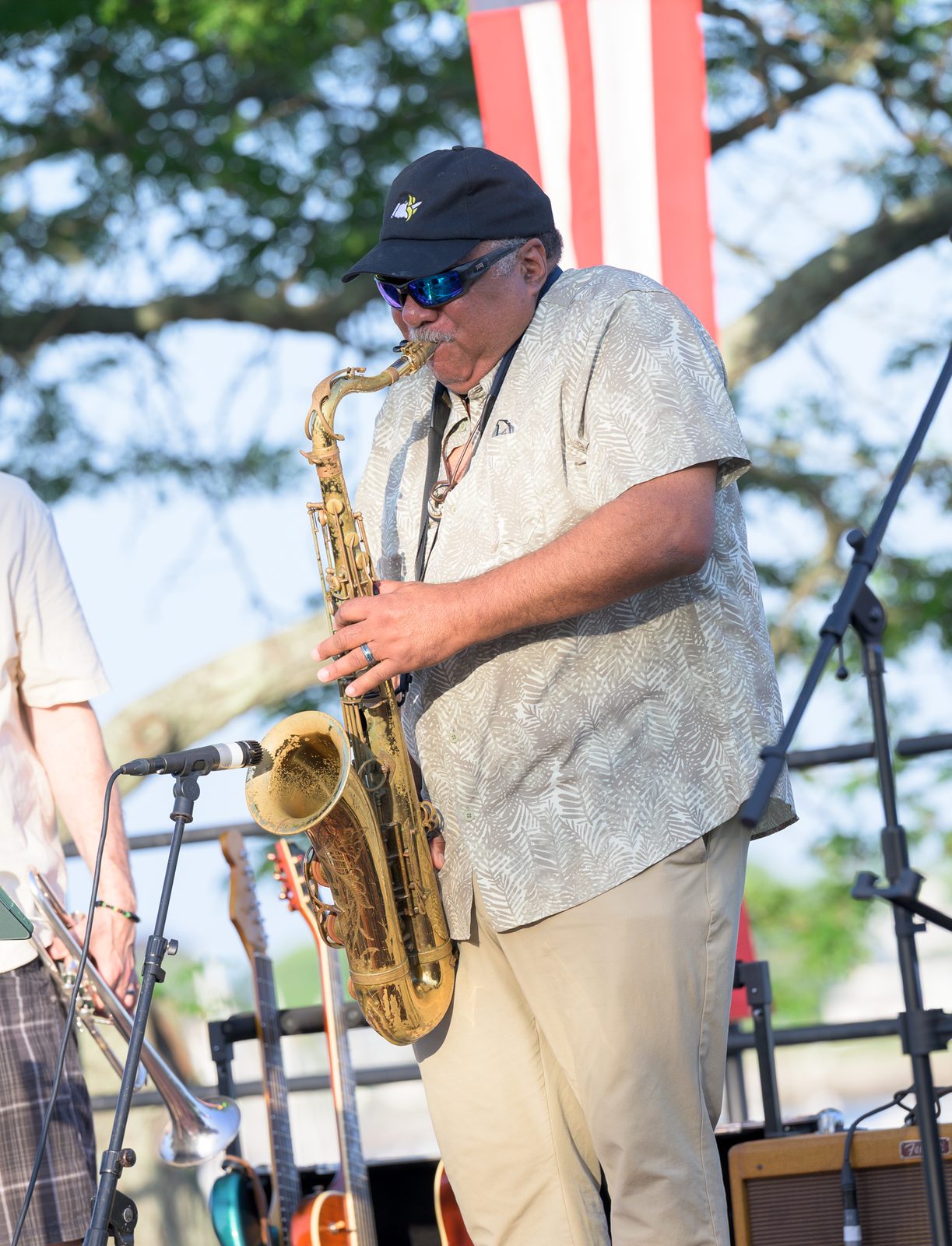
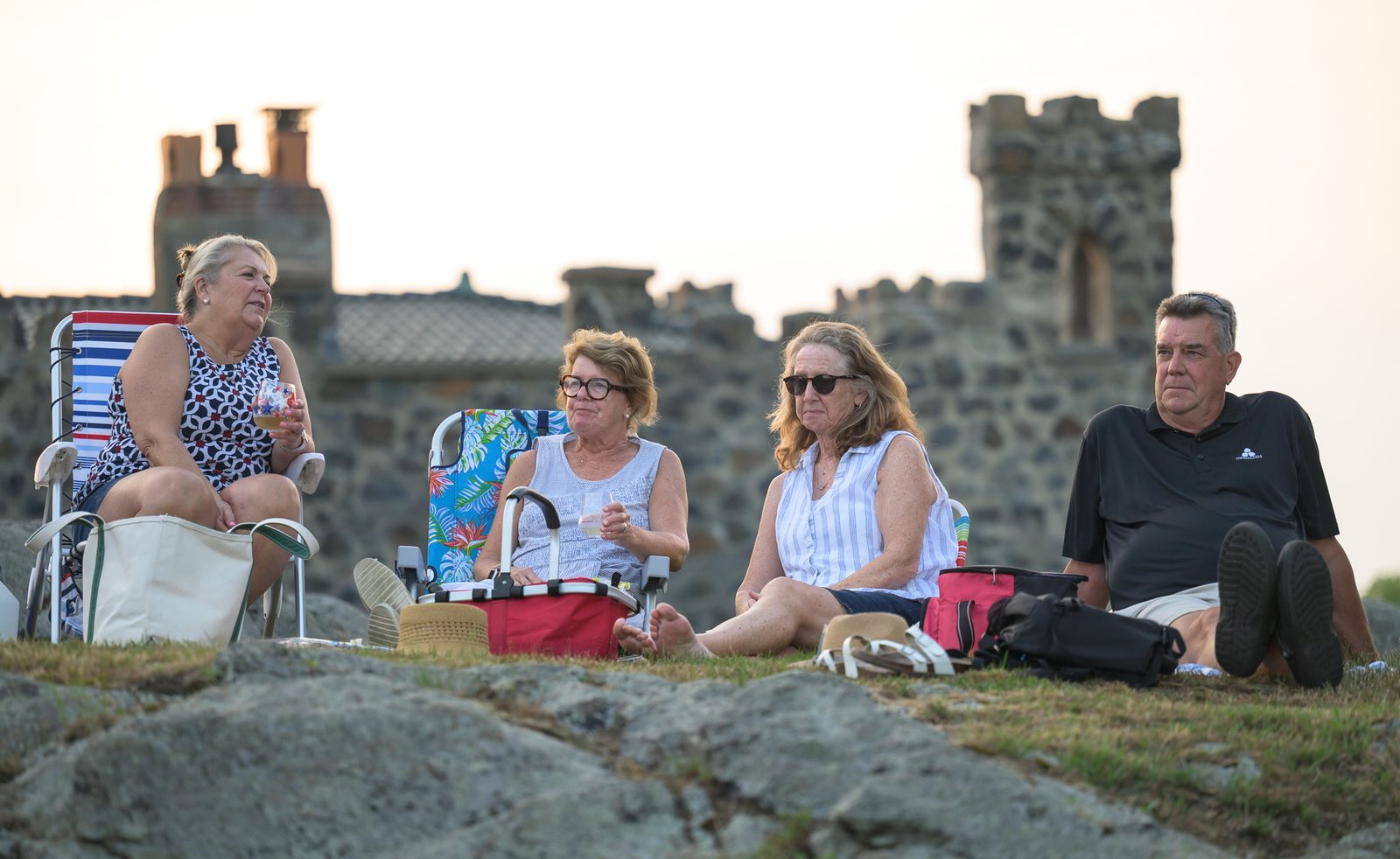
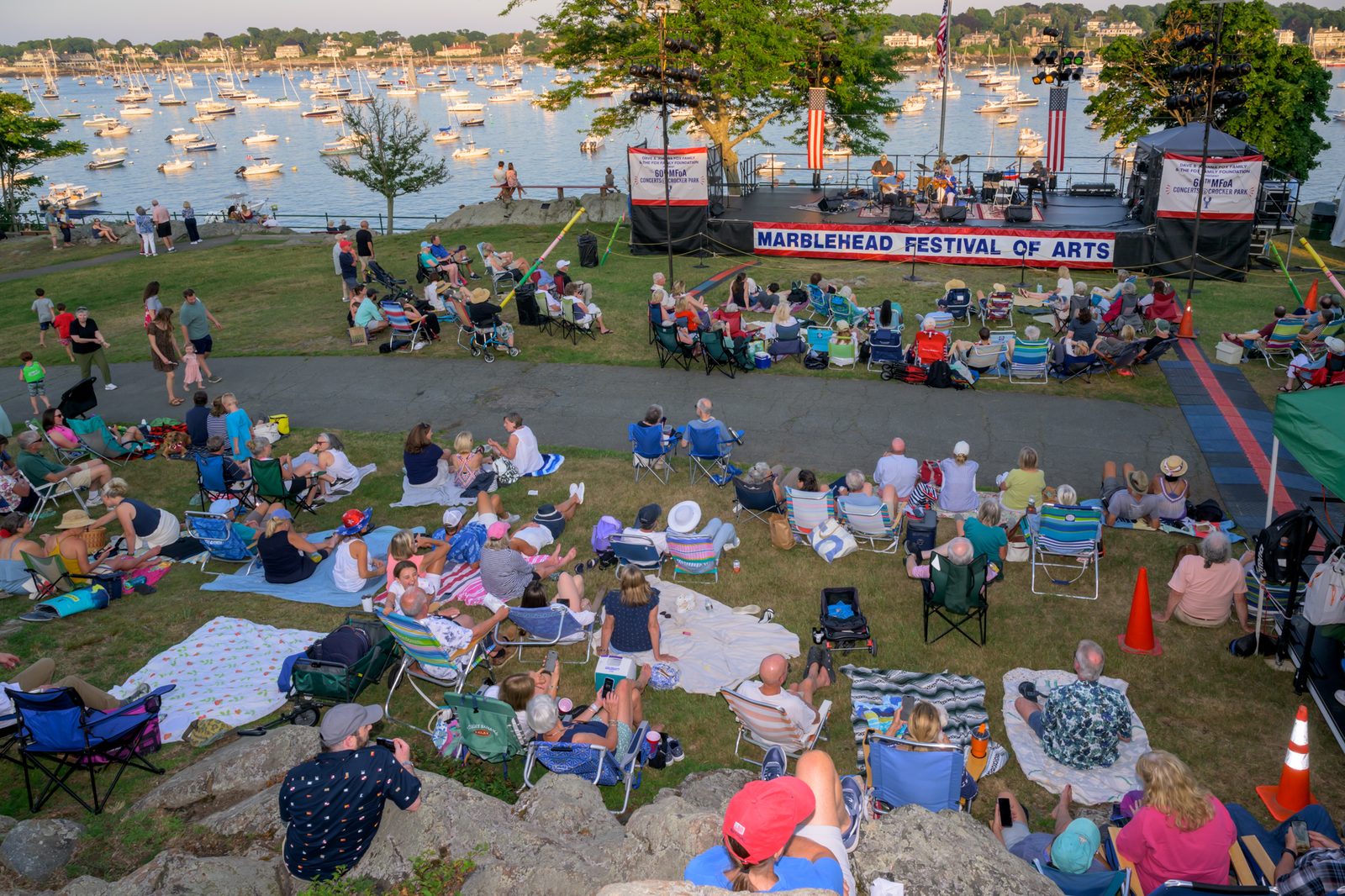
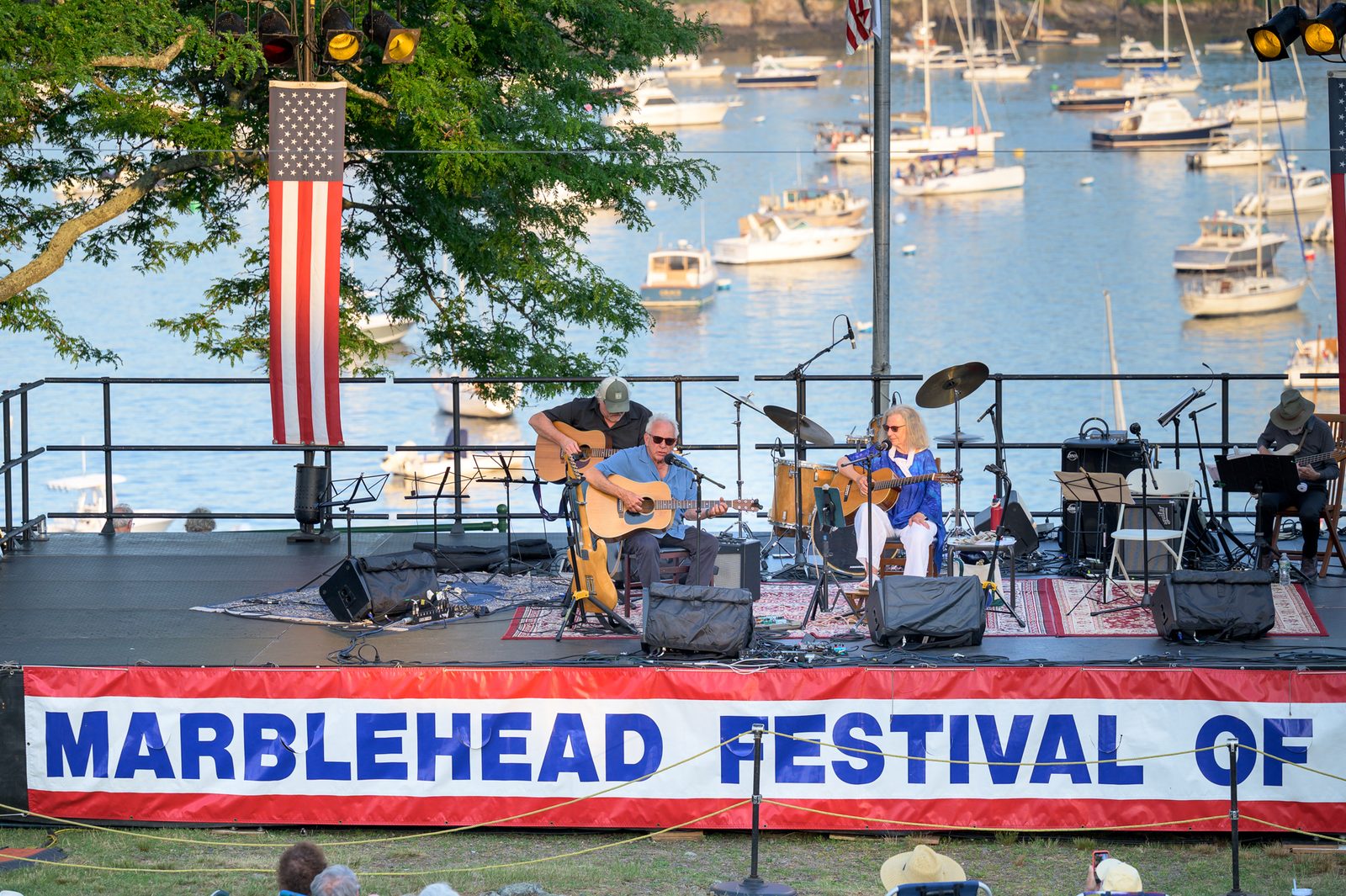
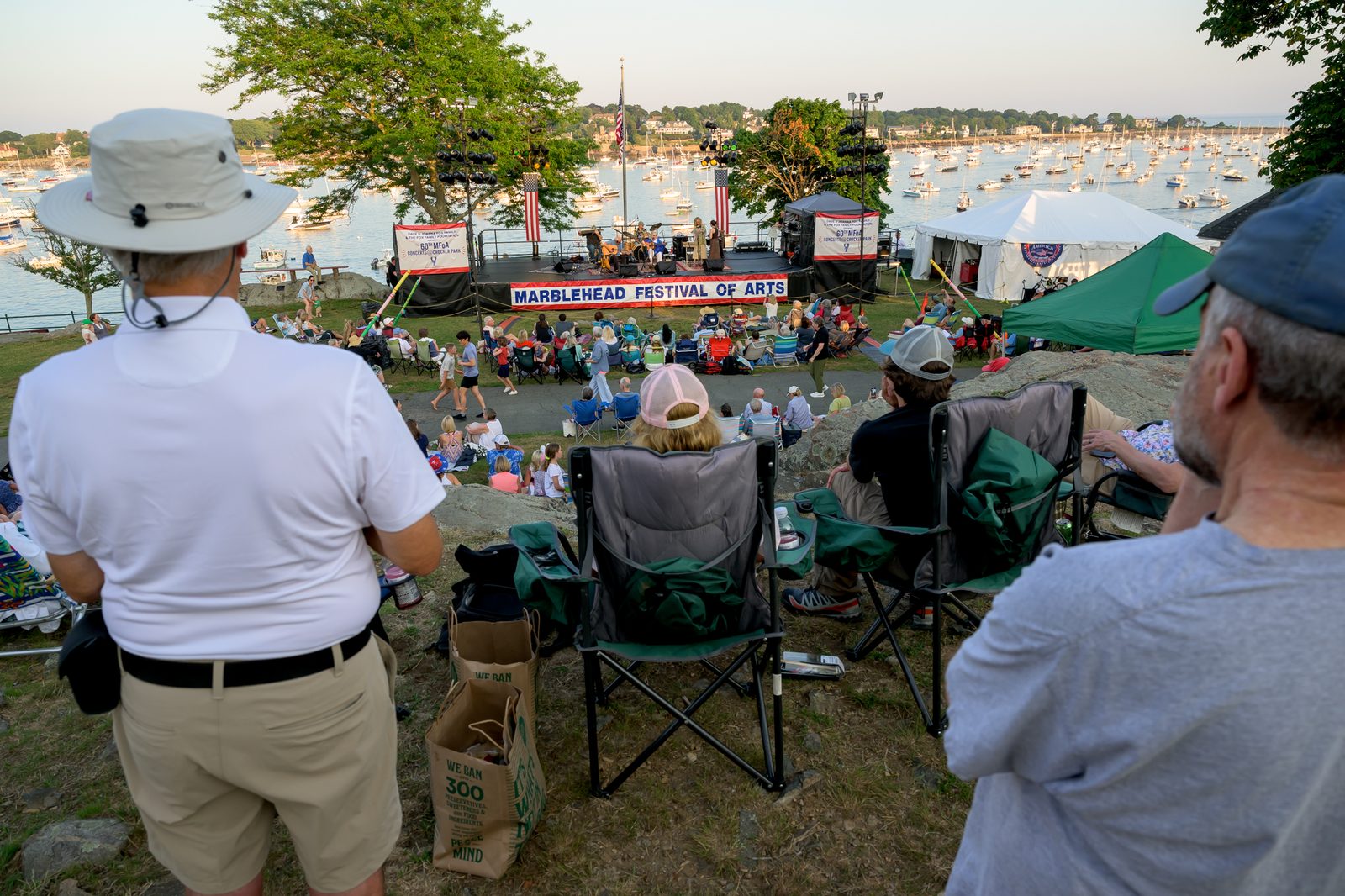
The stage came back to Crocker Park for the evening, and this time it swung. A band set up under the vertical flag banners with the harbor at its back, and a horn section led the way — trumpet and saxophone trading lines while the moored fleet swung on the tide behind them. On the slope above, the crowd did what Marblehead does at Crocker Park: unfolded beach chairs, spread blankets over the granite, and settled in as the light stretched long. Below a castellated stone tower a foursome tipped their chairs toward the water. The banner strung across the front of the stage spelled it out for anyone arriving late — MARBLEHEAD FESTIVAL OF ARTS — sixty years of it, and the horns carrying out over the boats.
Opening day, from the galleries to the water
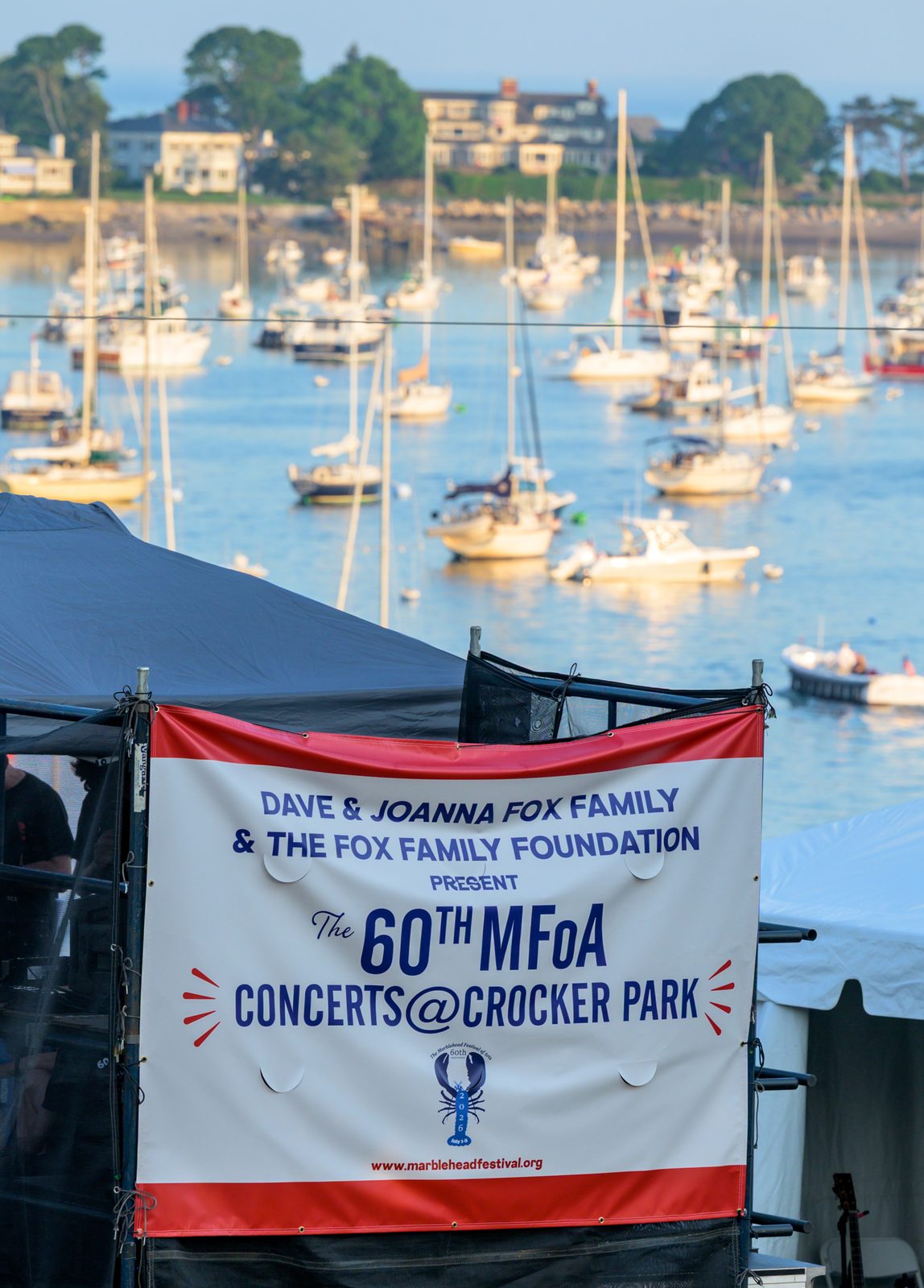
At dawn the lawn was empty and the banner was already up. In the earliest of Steve Rood’s opening-day frames, Marblehead Harbor lies still and blue behind the stage scaffolding at Crocker Park, where a red-bordered banner announces the 60th MFoA Concerts and the lobster on the anniversary logo carries the dates like a badge: July 1–5, 2026. By nightfall that same lawn would vanish under beach chairs.
Between the two — the empty grass and the full one — the first day of the Festival of Arts ran through the galleries, up the granite steps of Abbot Hall, and back down to the water for music at sunset. Sixty years in, the town still turns out for all of it.
The art goes up
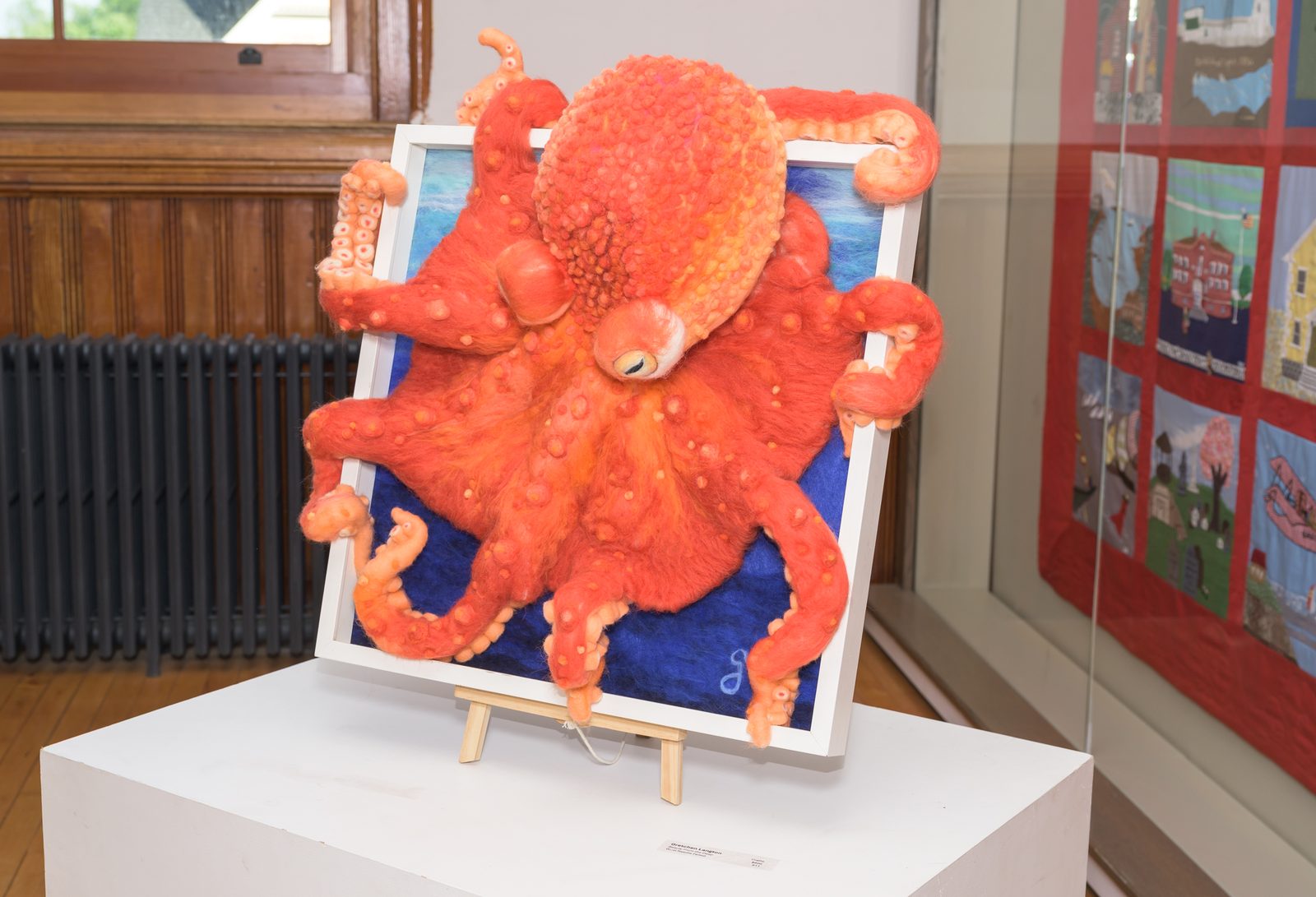
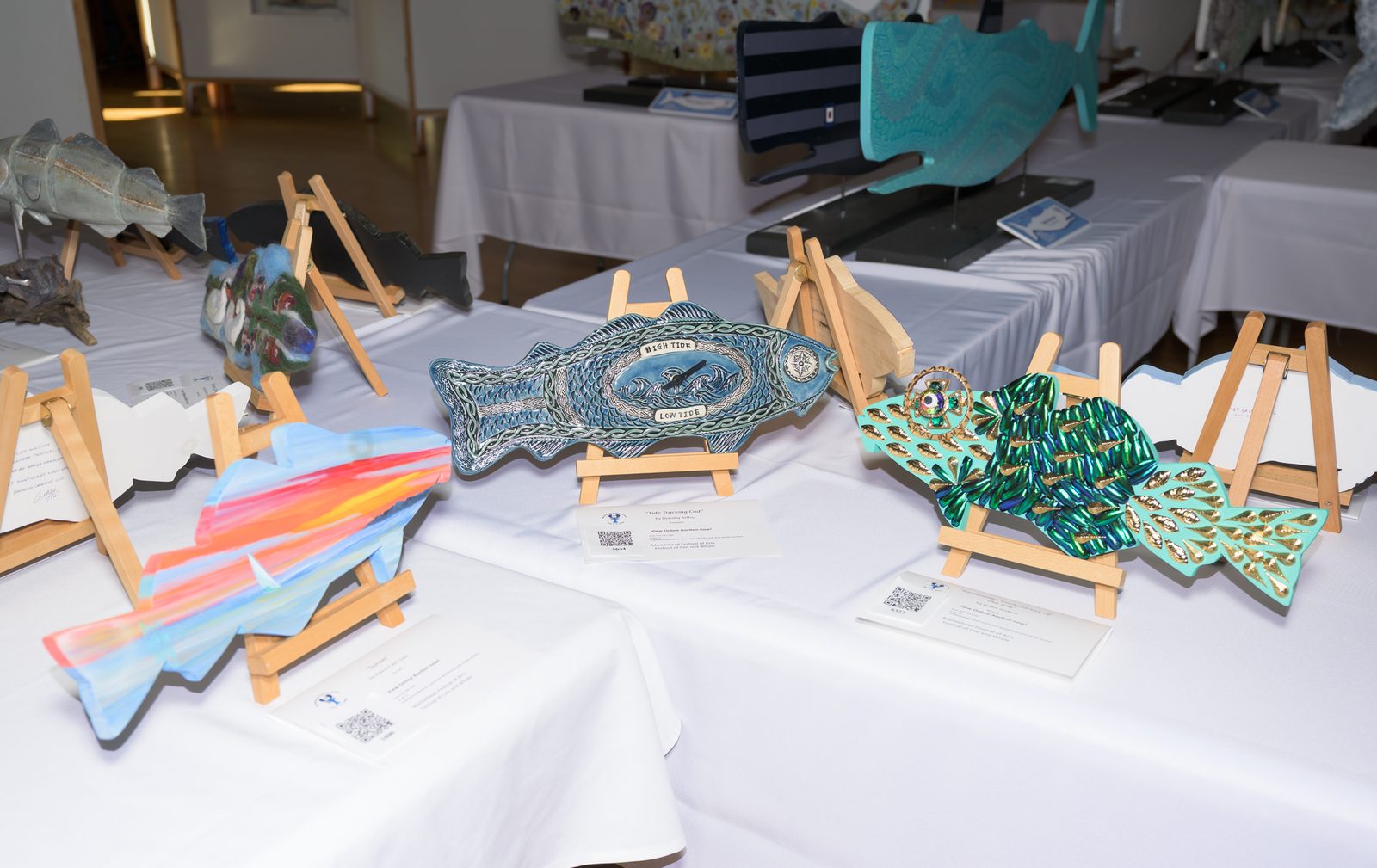
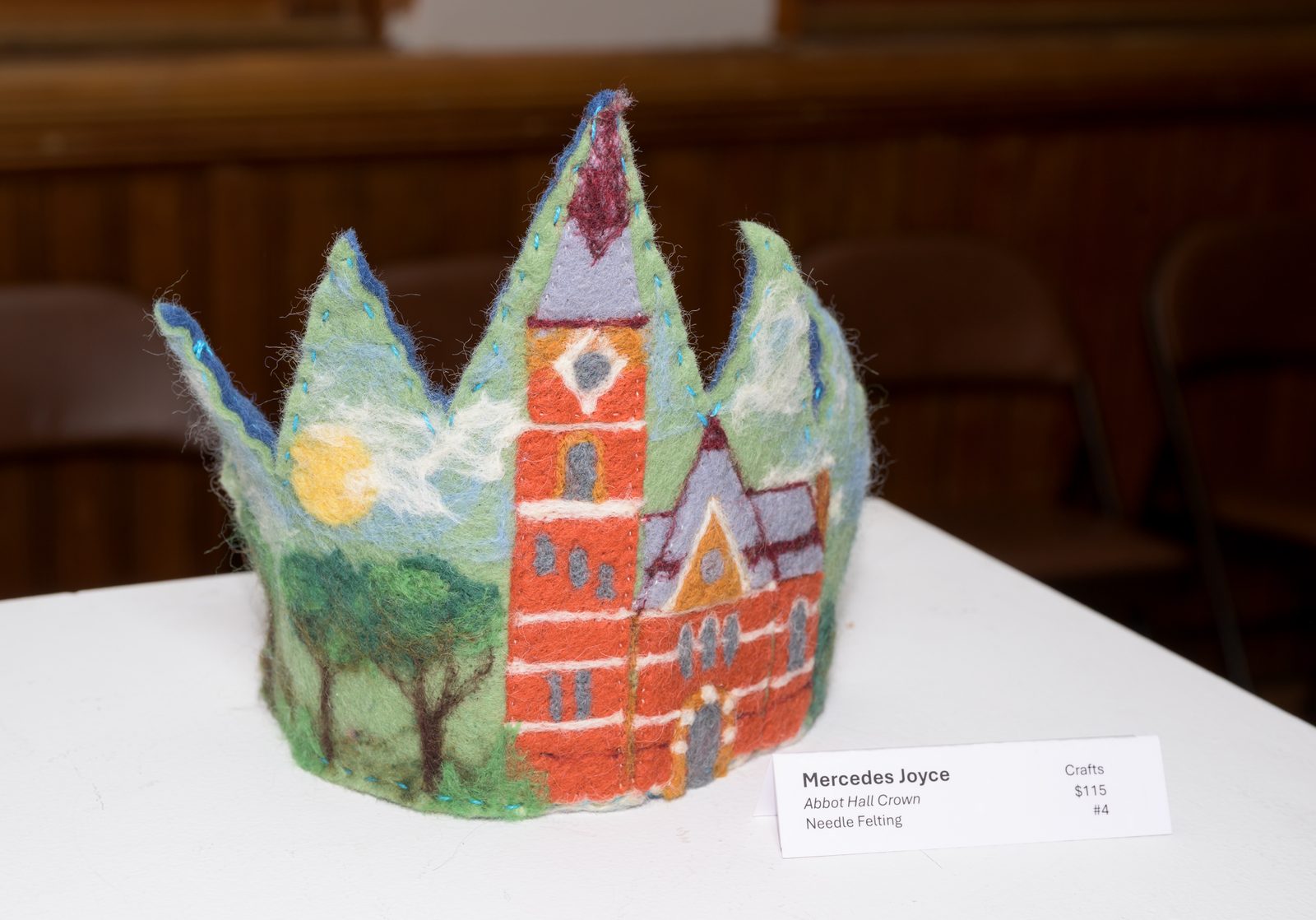
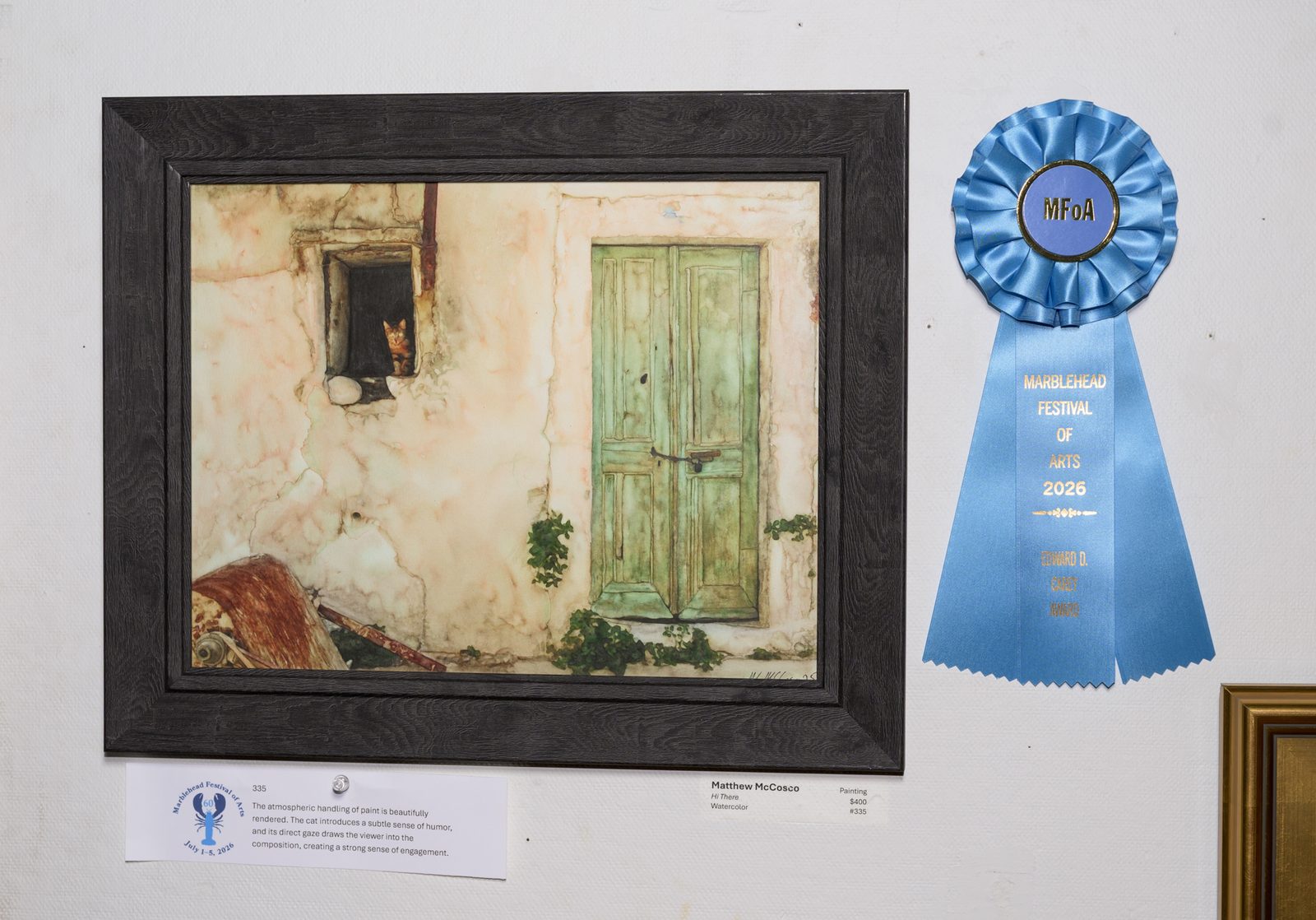
An orange octopus was trying to escape its frame. Needle-felted, its tentacles curling over all four edges, it hung in the crafts exhibit a few feet from Mercedes Joyce’s felted “Abbot Hall Crown” — the town’s brick landmark rendered in wool and tagged at $115. This is the range the festival lays out on the first day. Along the white-clothed auction tables, decorated cod stood on easels, one carved with Celtic knotwork and doubling as a tide clock. In the painting room, a pale-blue rosette — the Edward D. Carey Award — hung beside Matthew McCosco’s watercolor “Hi There,” a tabby peering from a cracked plaster wall, its gaze fixed on whoever stopped.
Words, spoken and written
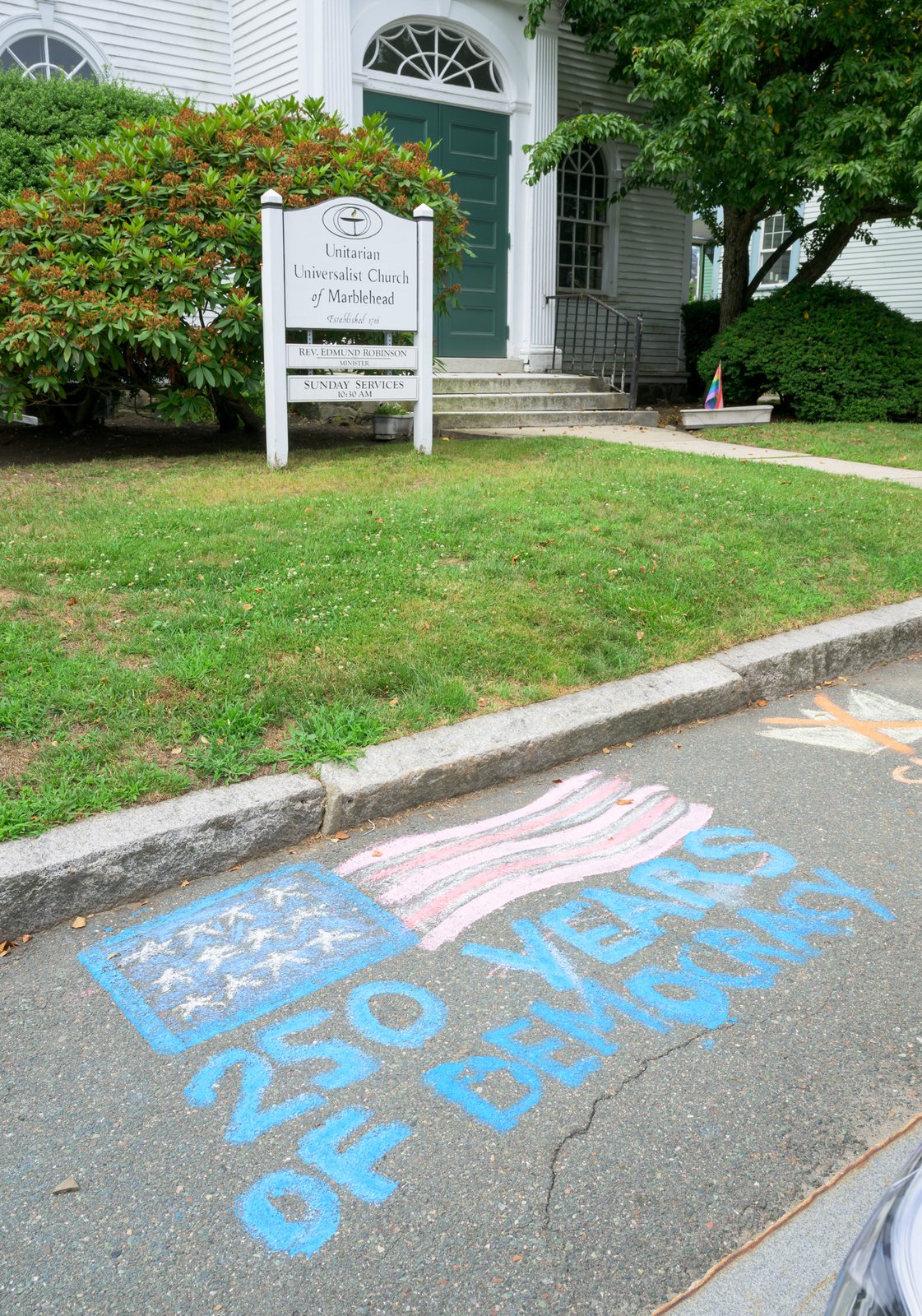
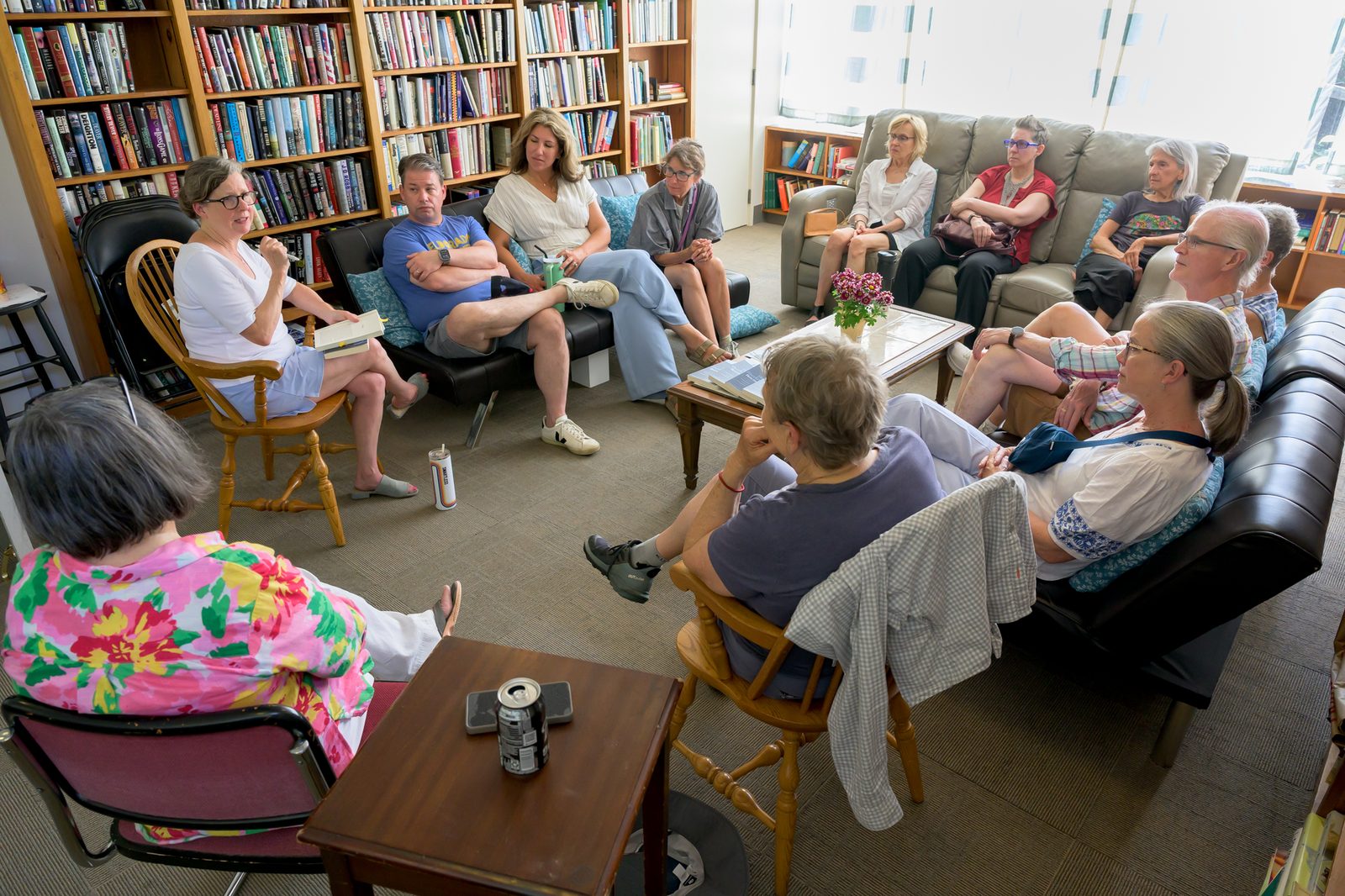
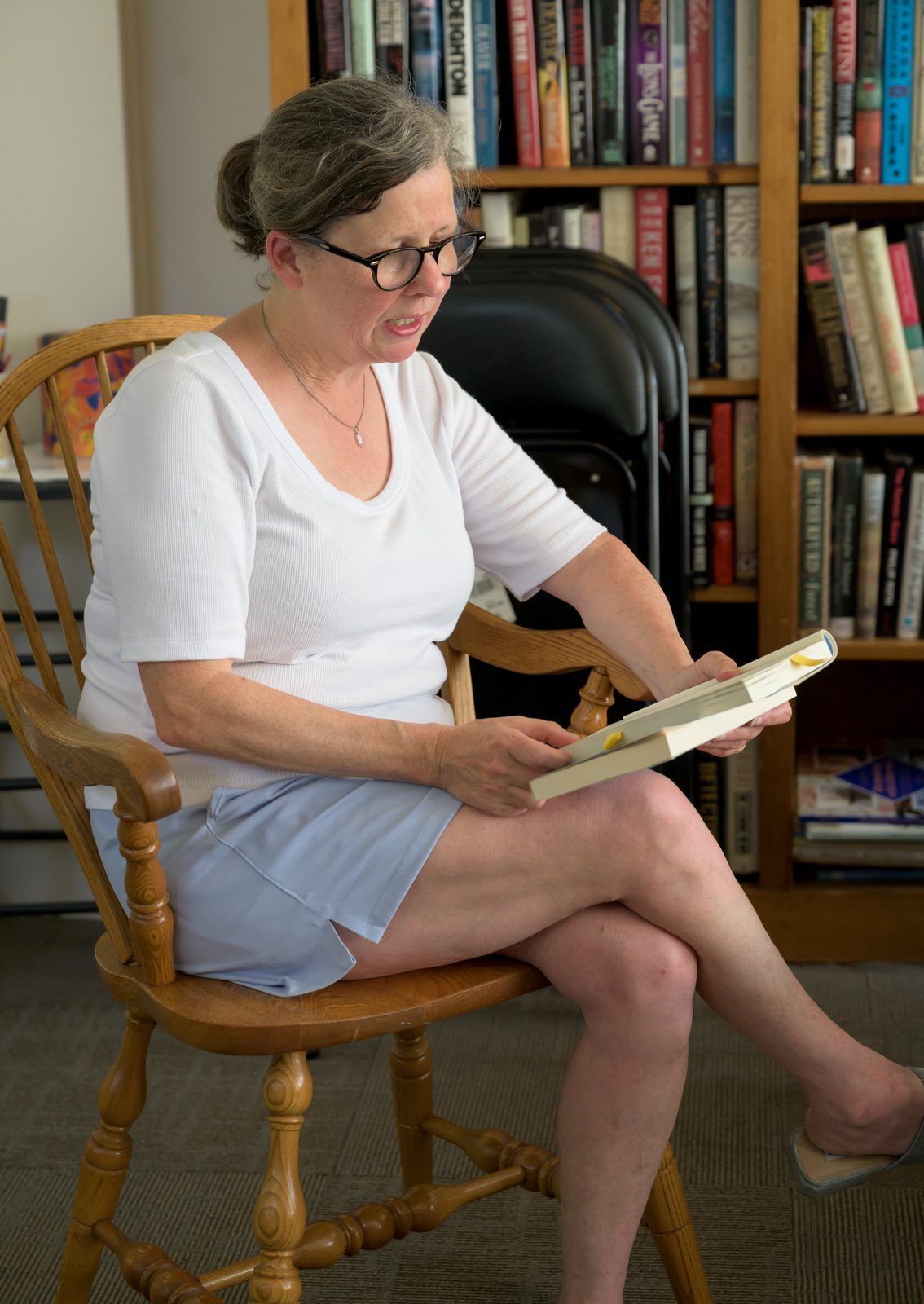
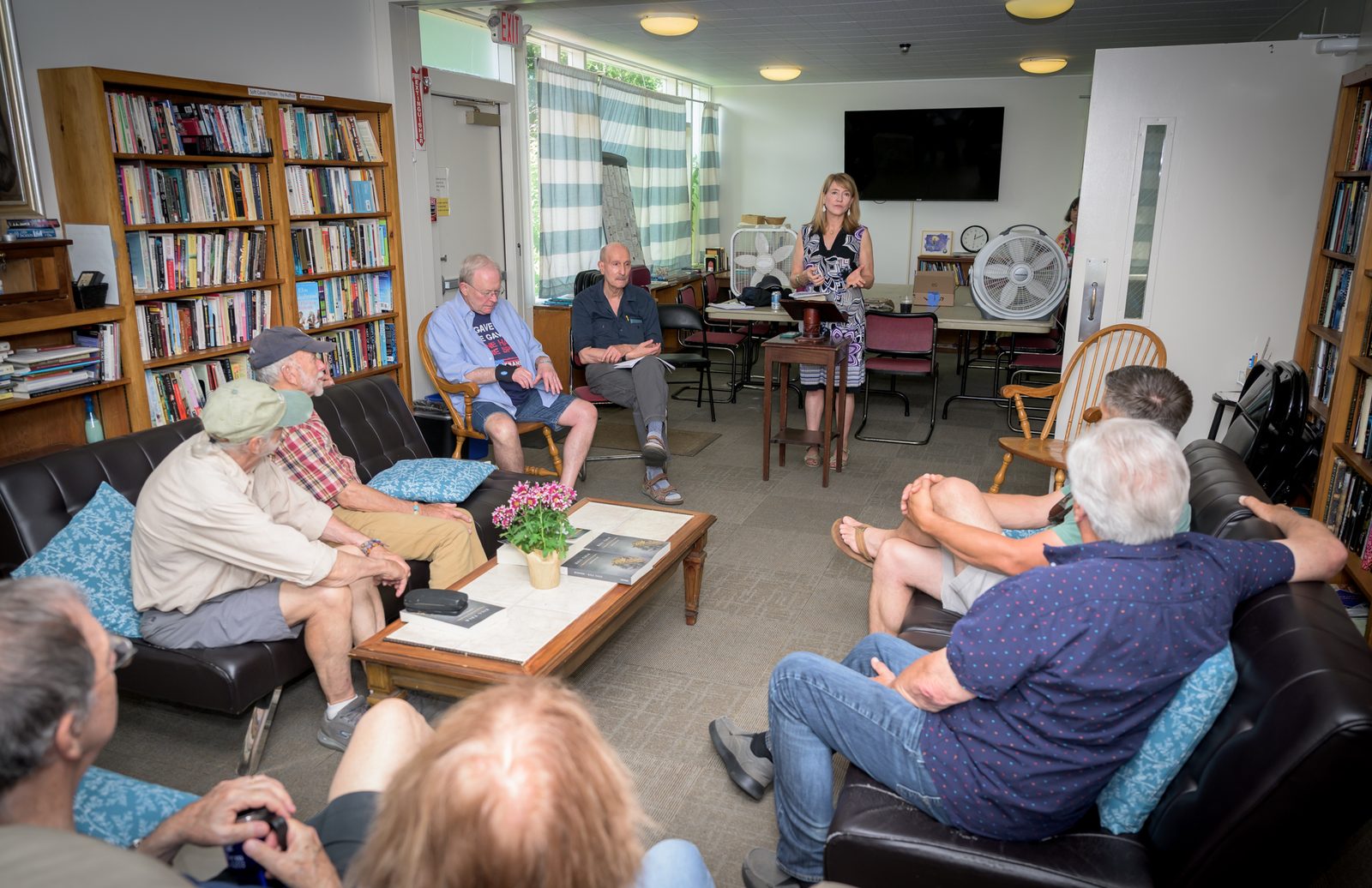
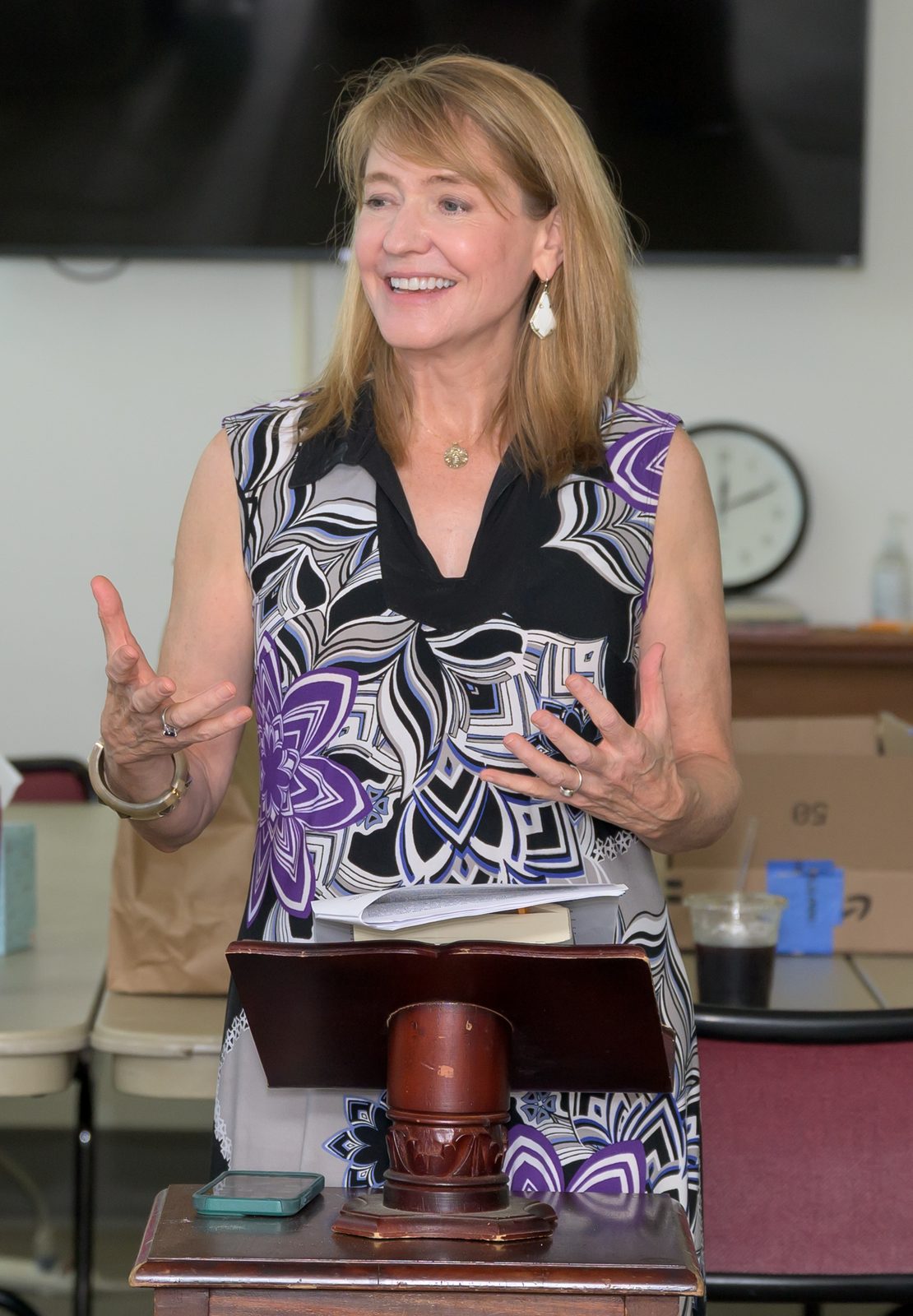
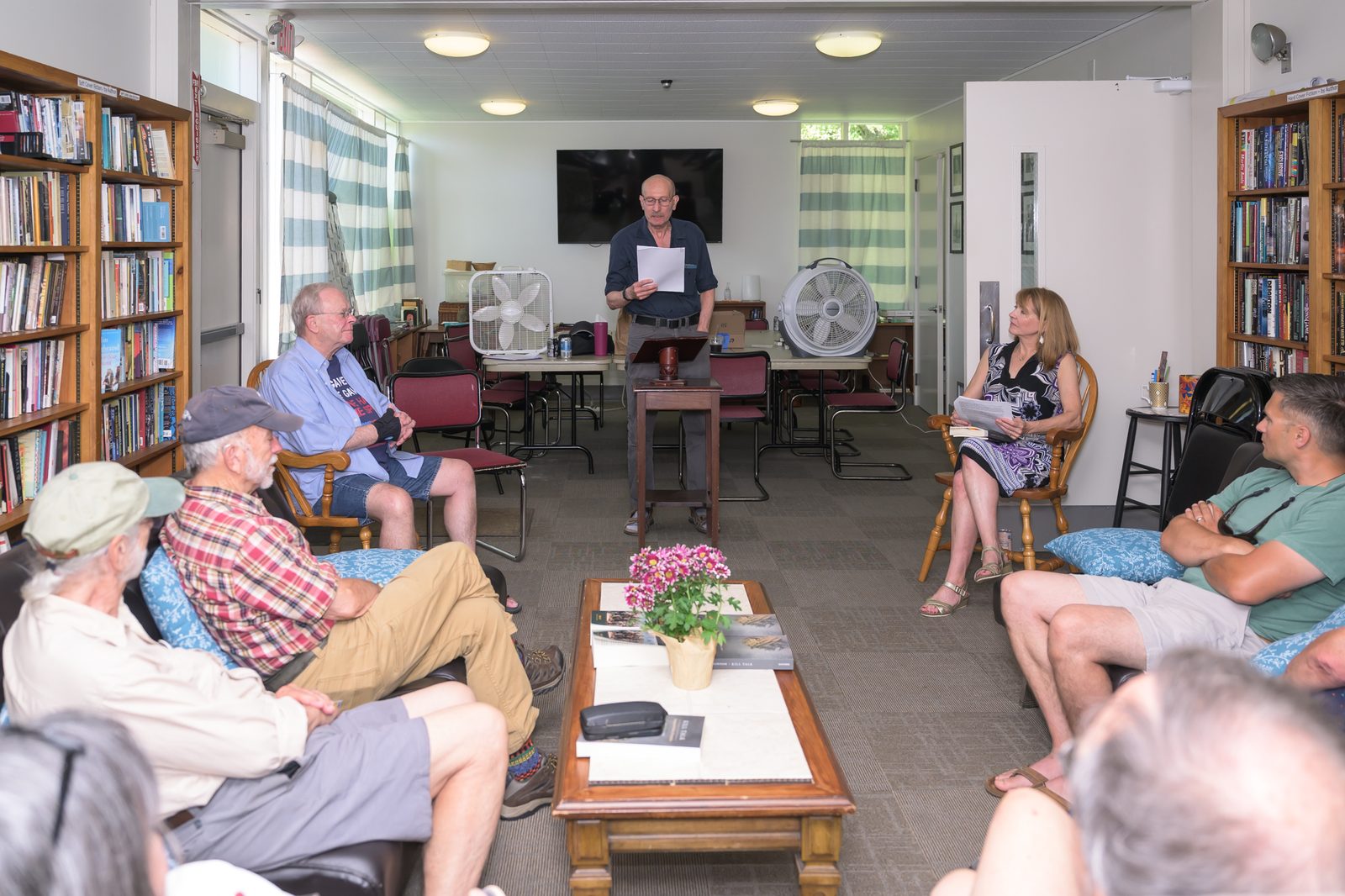
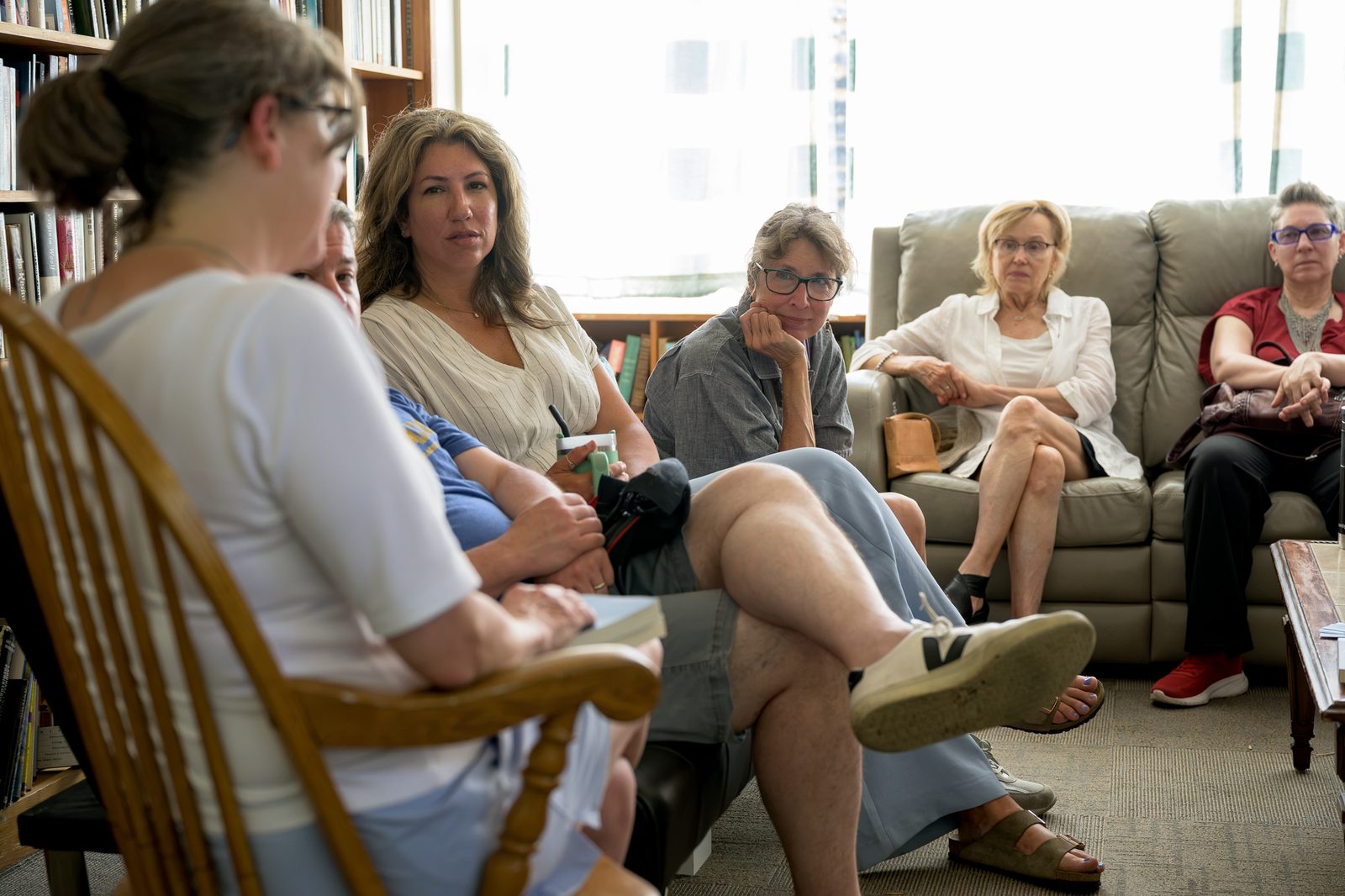
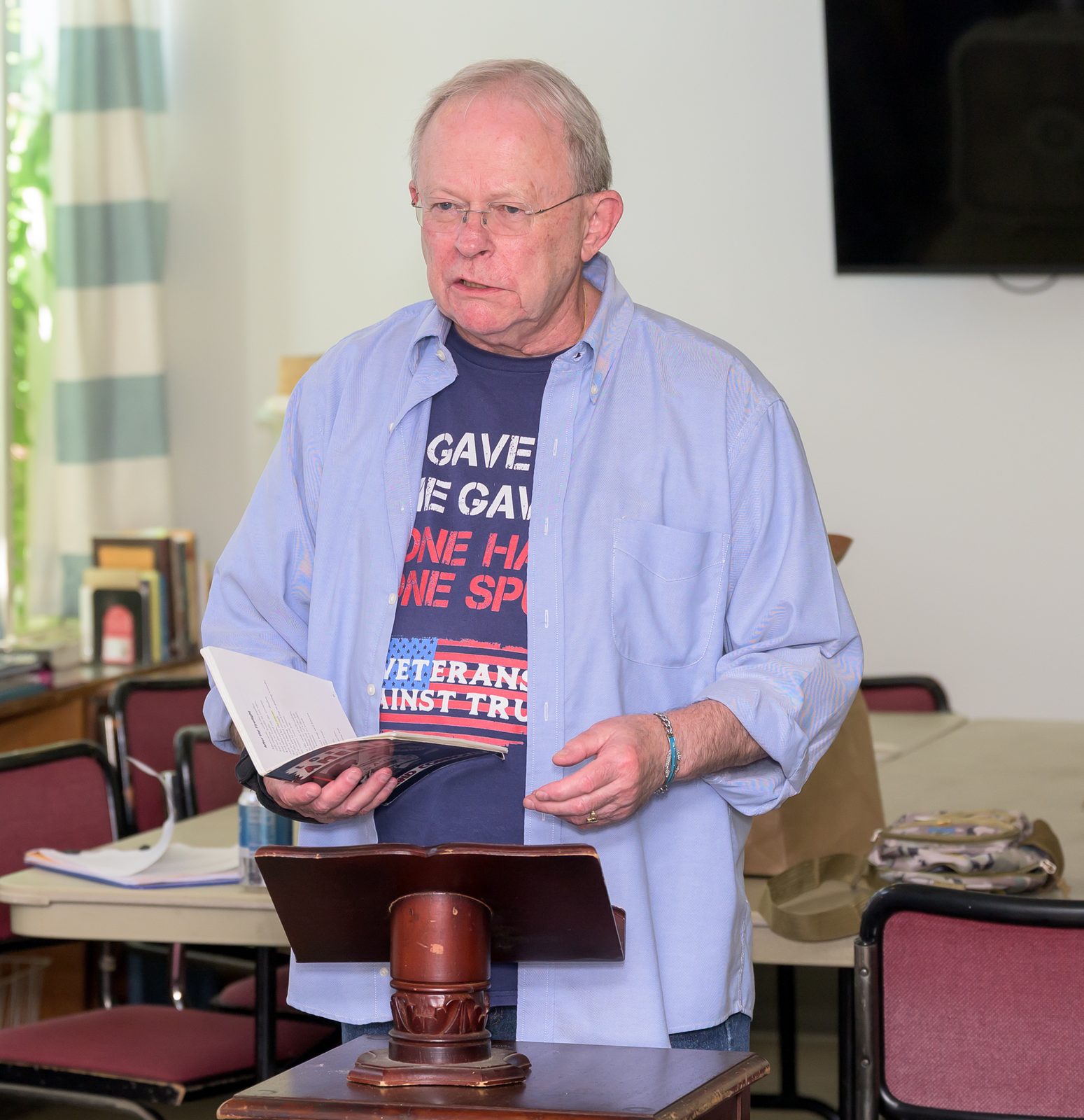
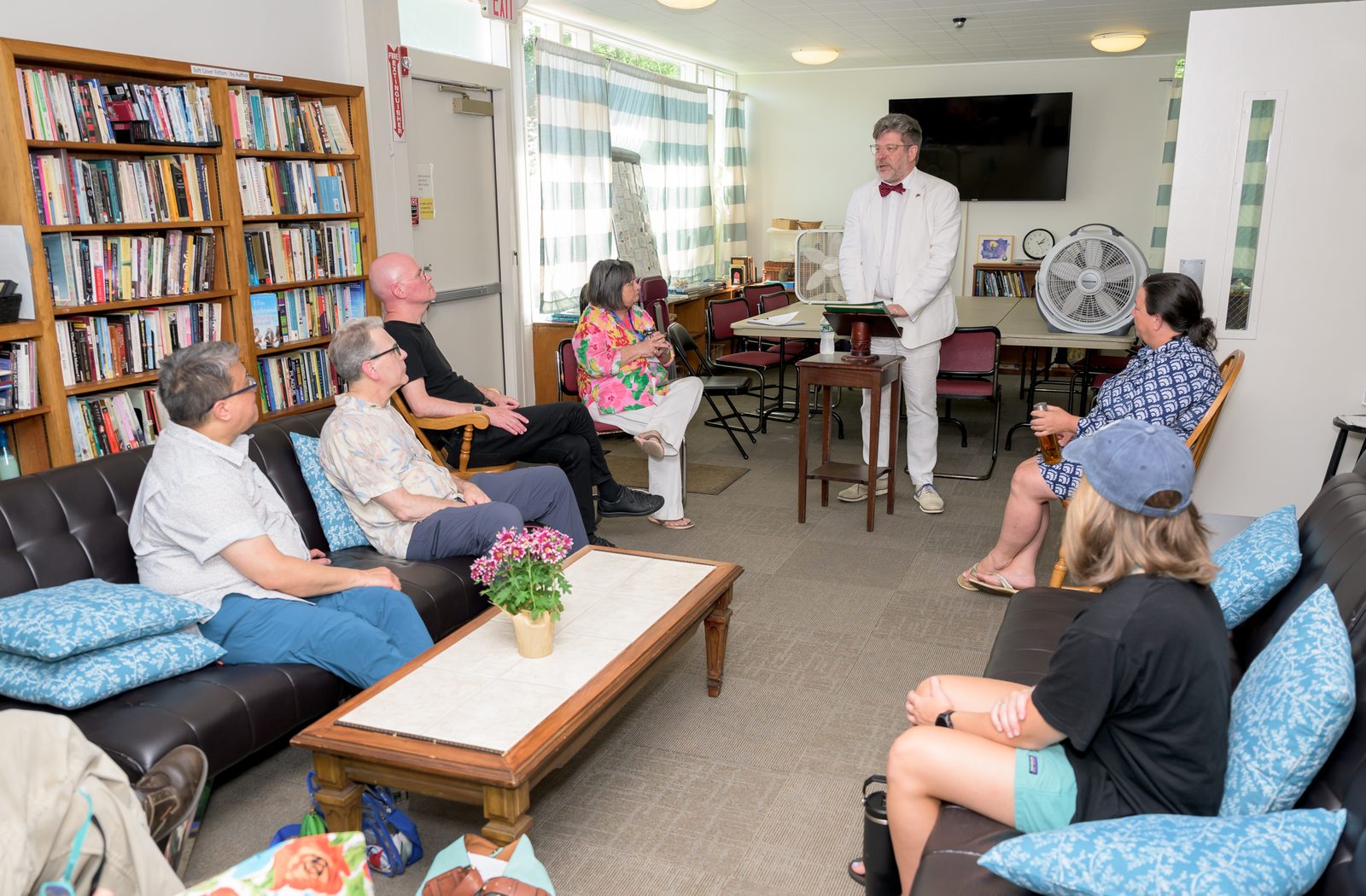
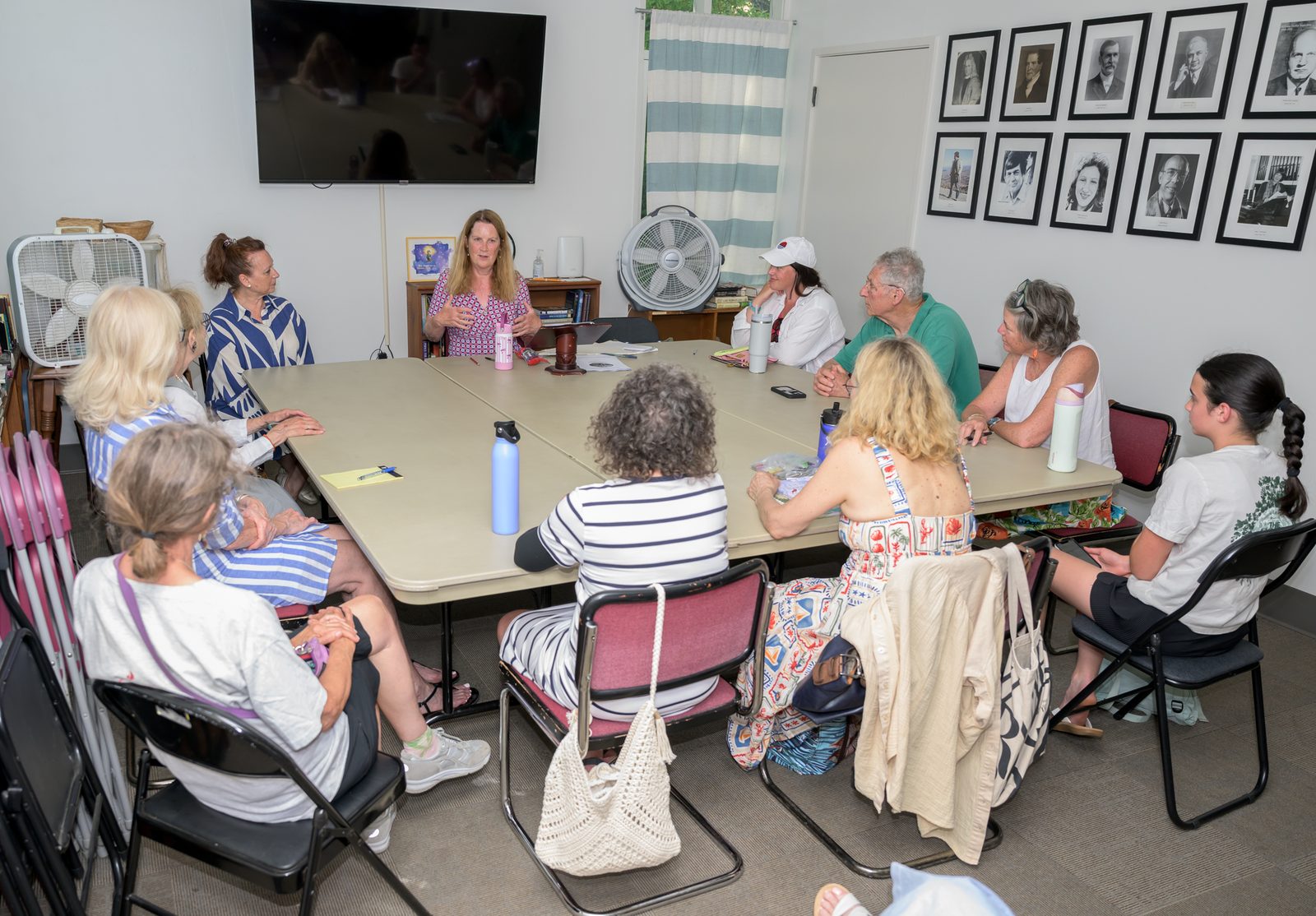
The Literary Festival Committee had planned to try the garden of the Jeremiah Lee Mansion this year, but dangerous heat sent it back to its usual home at the Unitarian Universalist Church on Mugford Street, and the readings settled into a room walled floor to ceiling with secondhand paperbacks. A discussion leader worked through a stack flagged with yellow sticky notes while a dozen listeners ringed the room on couches and Windsor chairs.
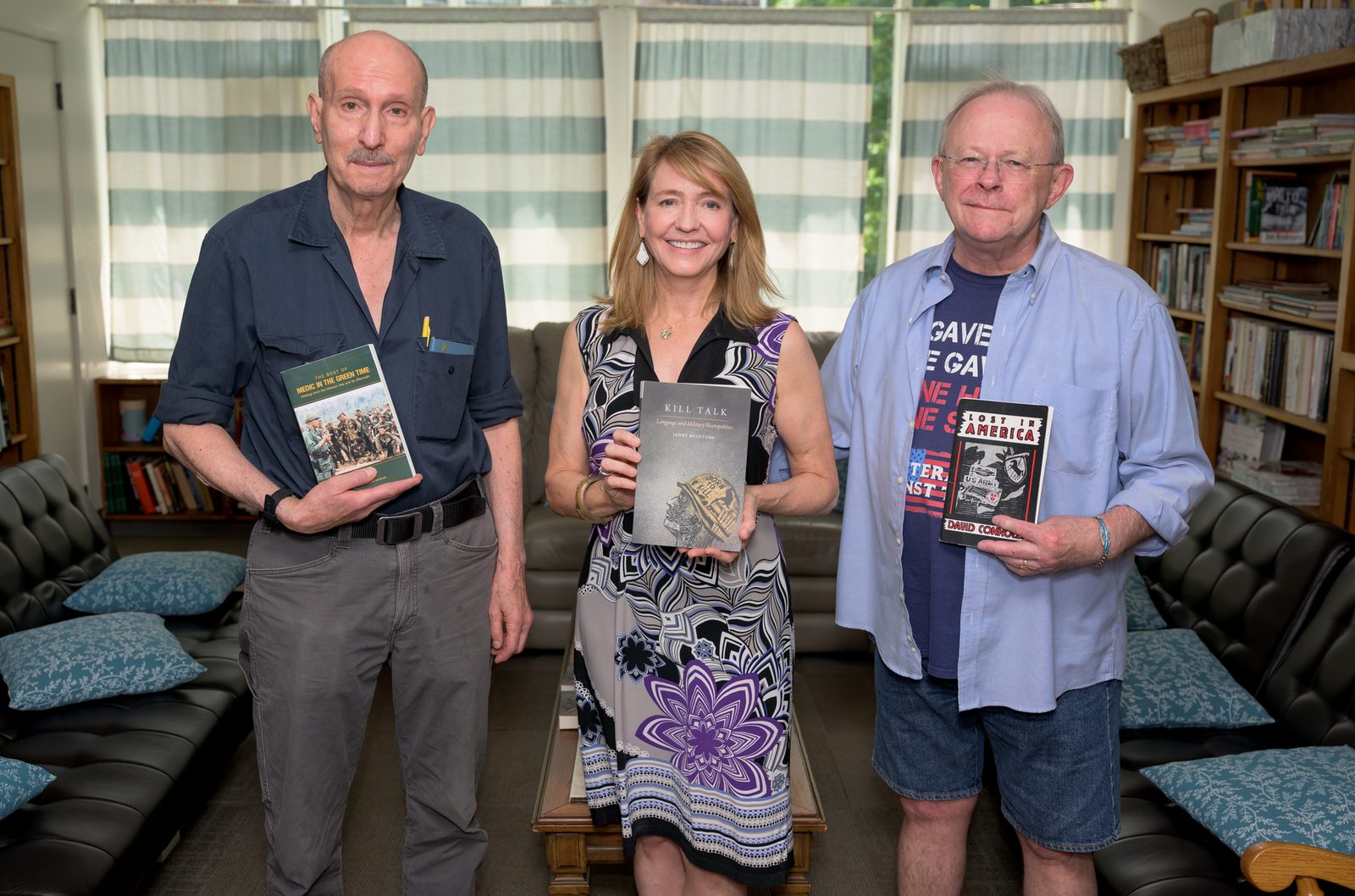
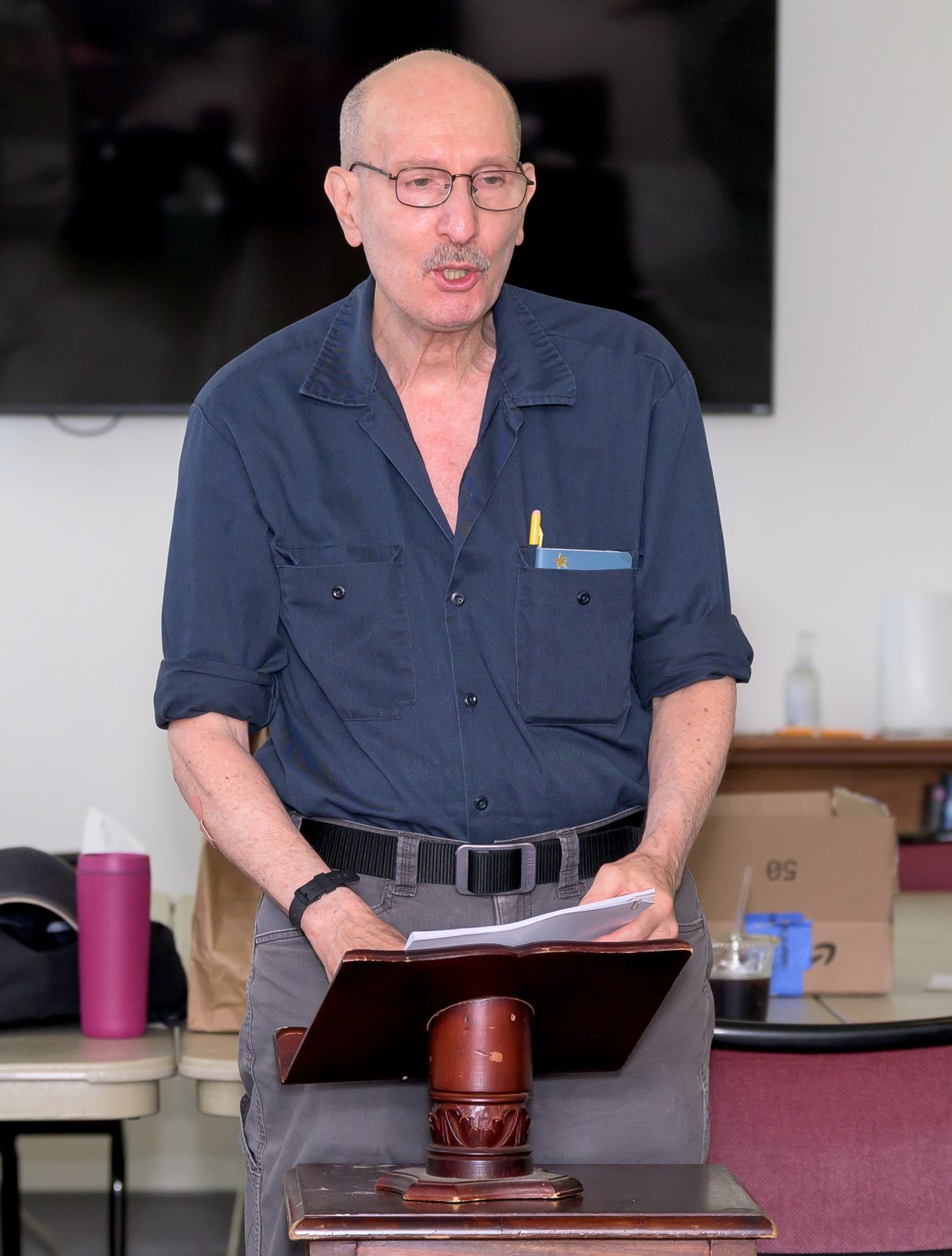
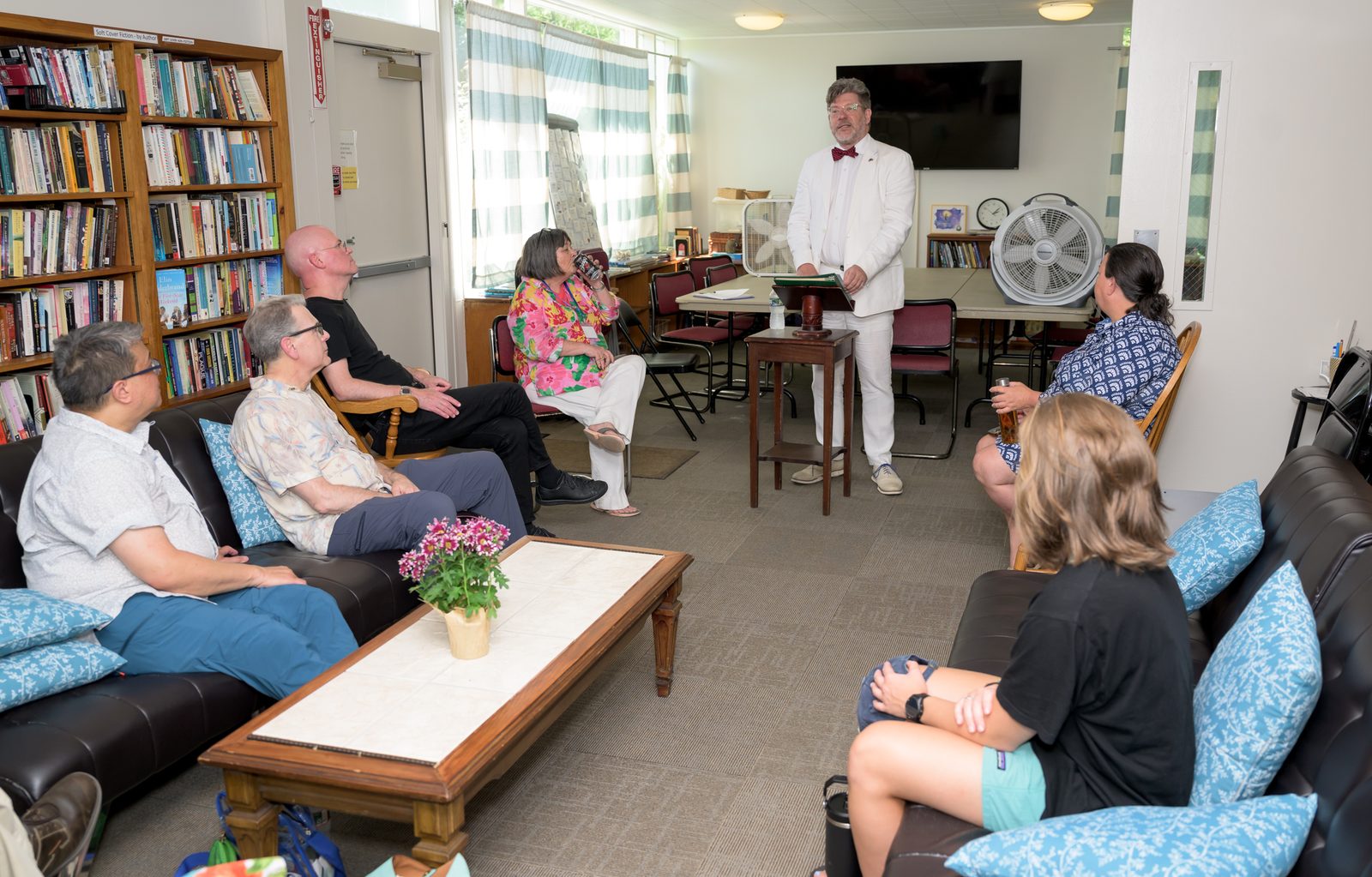
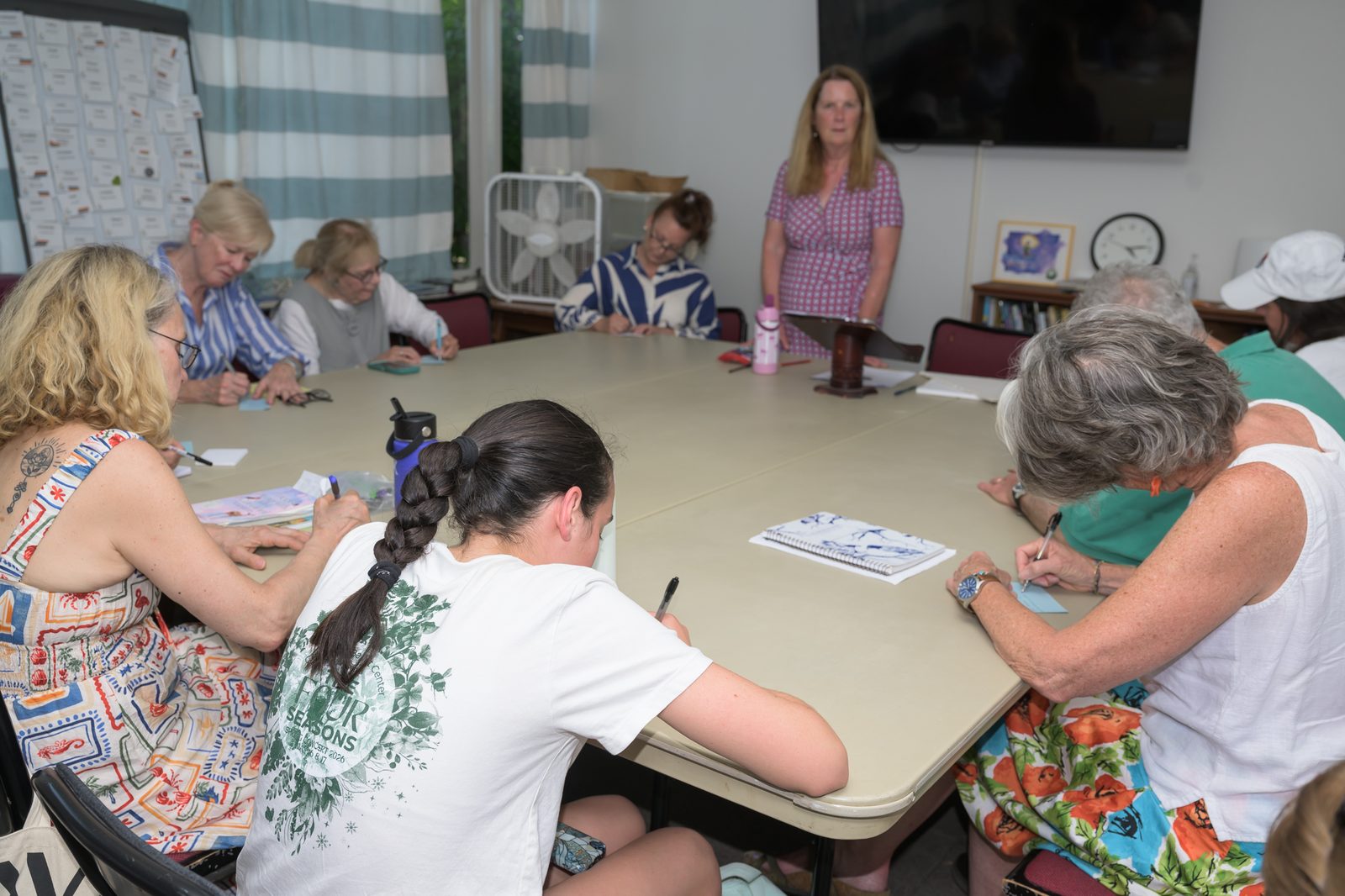
The afternoon turned heavier at a session on the literature of the Vietnam War, where three writers set out three books between them — the anthology “The Best of Medic in the Green Time,” Janet McIntosh’s “Kill Talk” and David Connolly’s “Lost in America.” At another reading in the same room, a man in a white linen suit and a red-and-navy bow tie, an American flag pin on his lapel, read from a green binder. Across the room, Áine Greaney’s writing workshop put pens to paper: a girl with a long braid at one folding table, writers several times her age at the next, every head bent over the same blank page.
Certificates at Abbot Hall
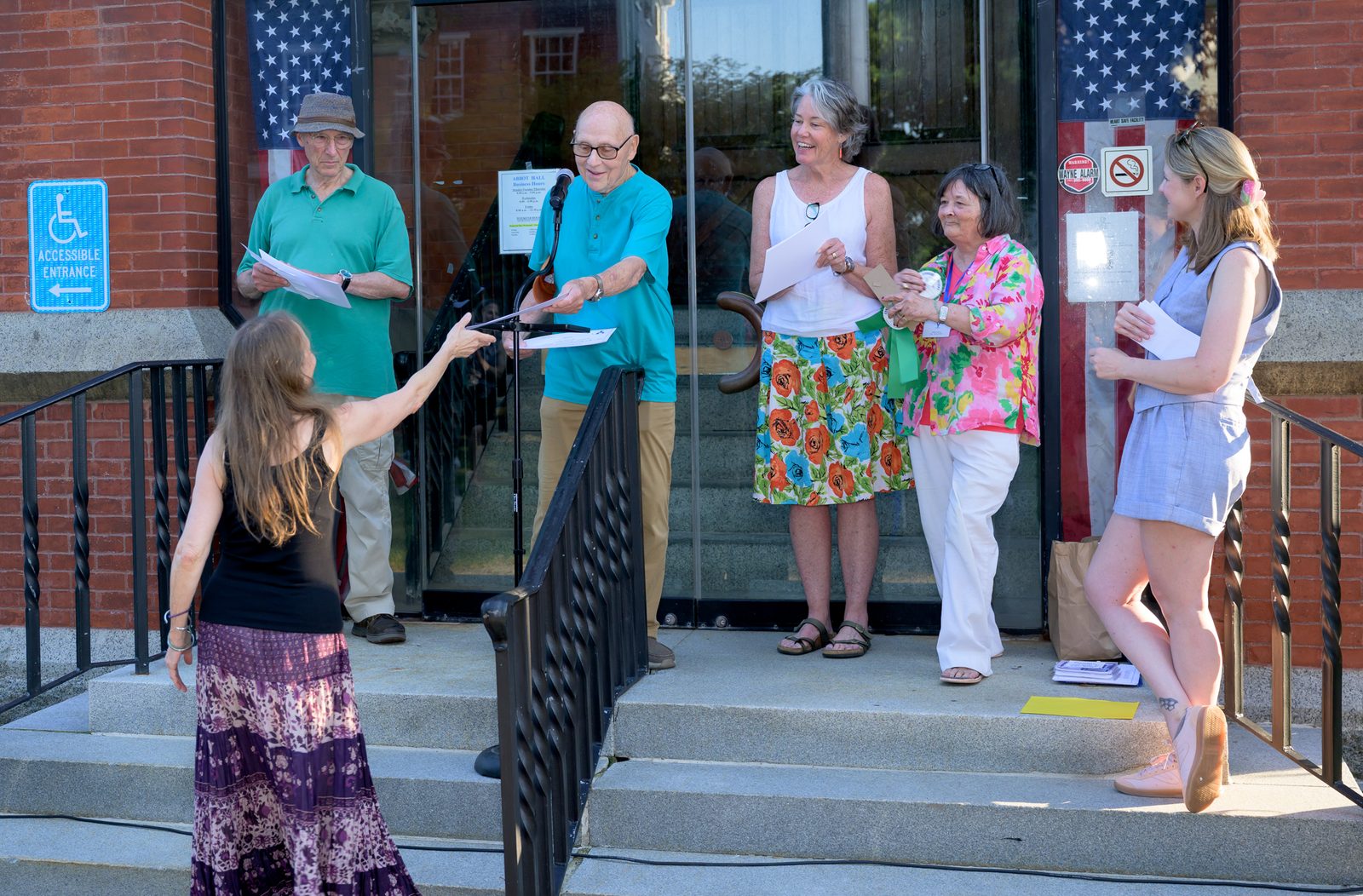
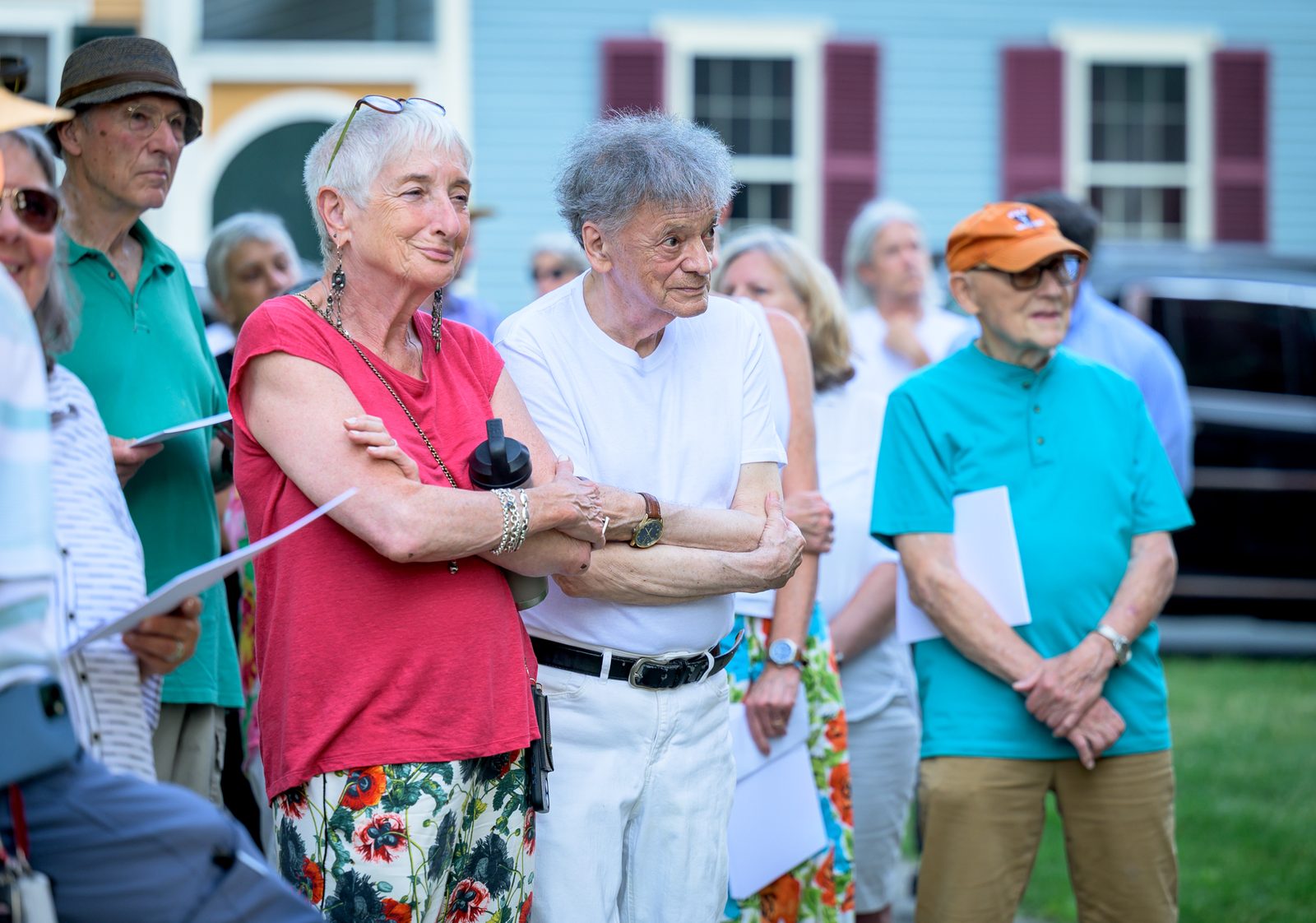
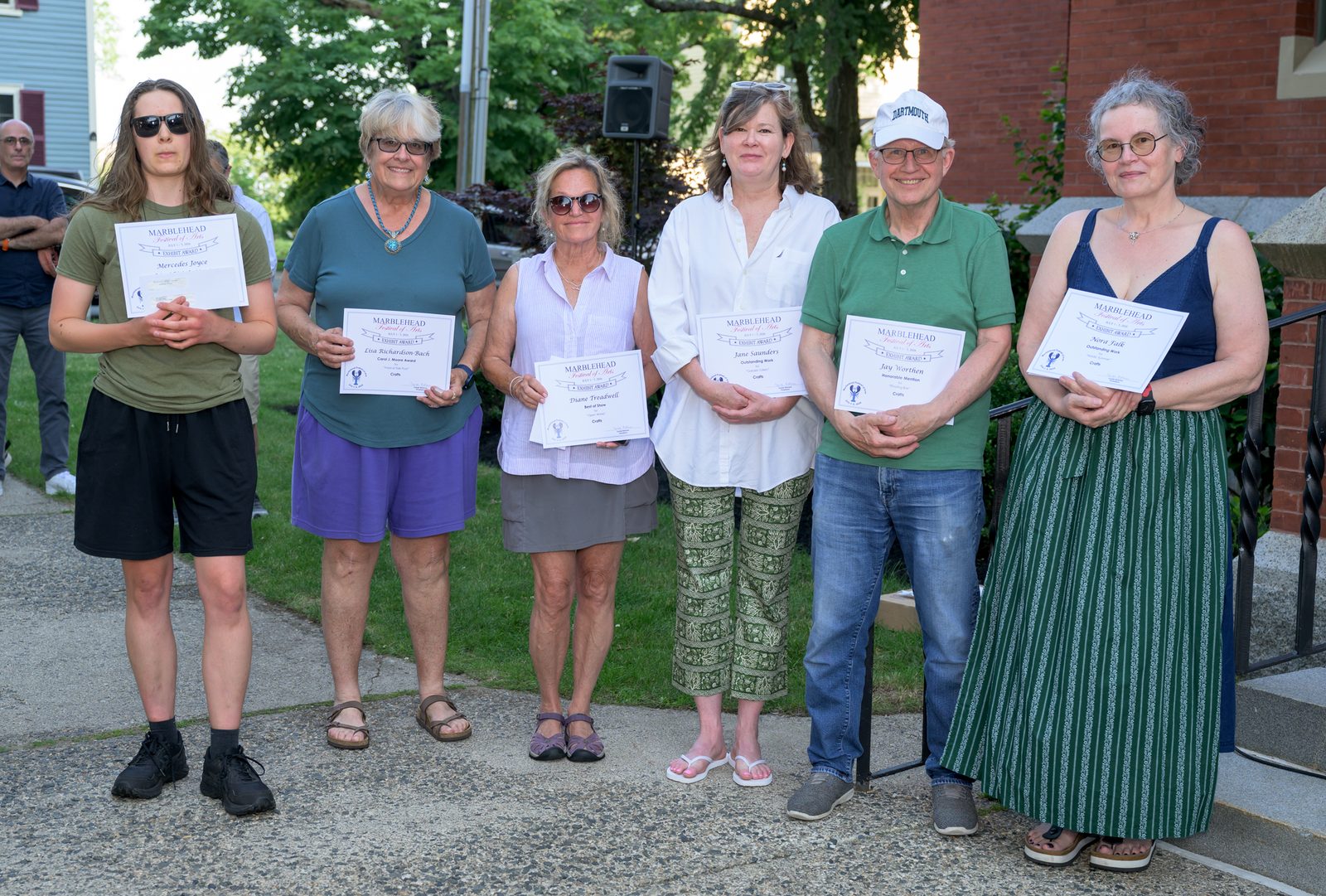
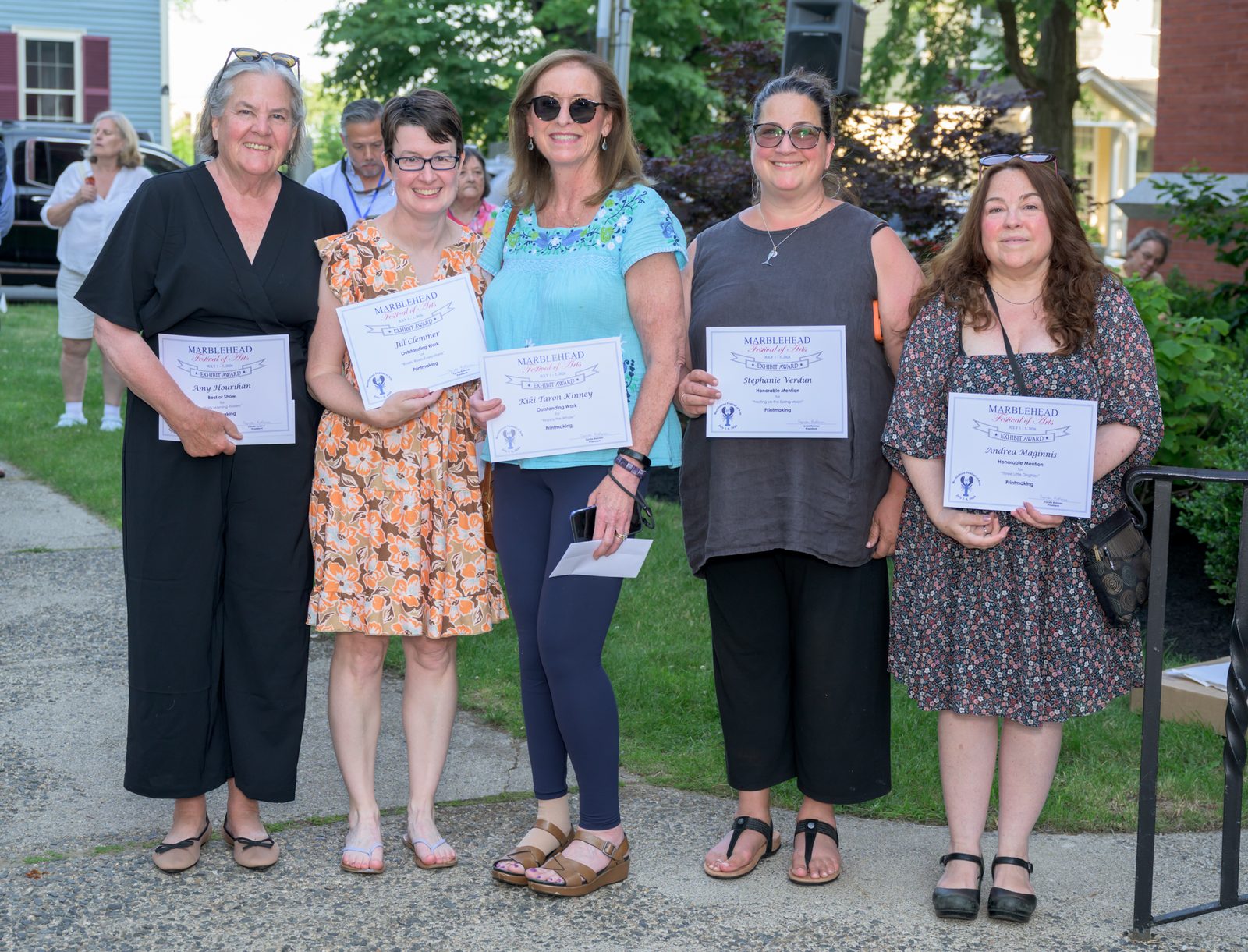
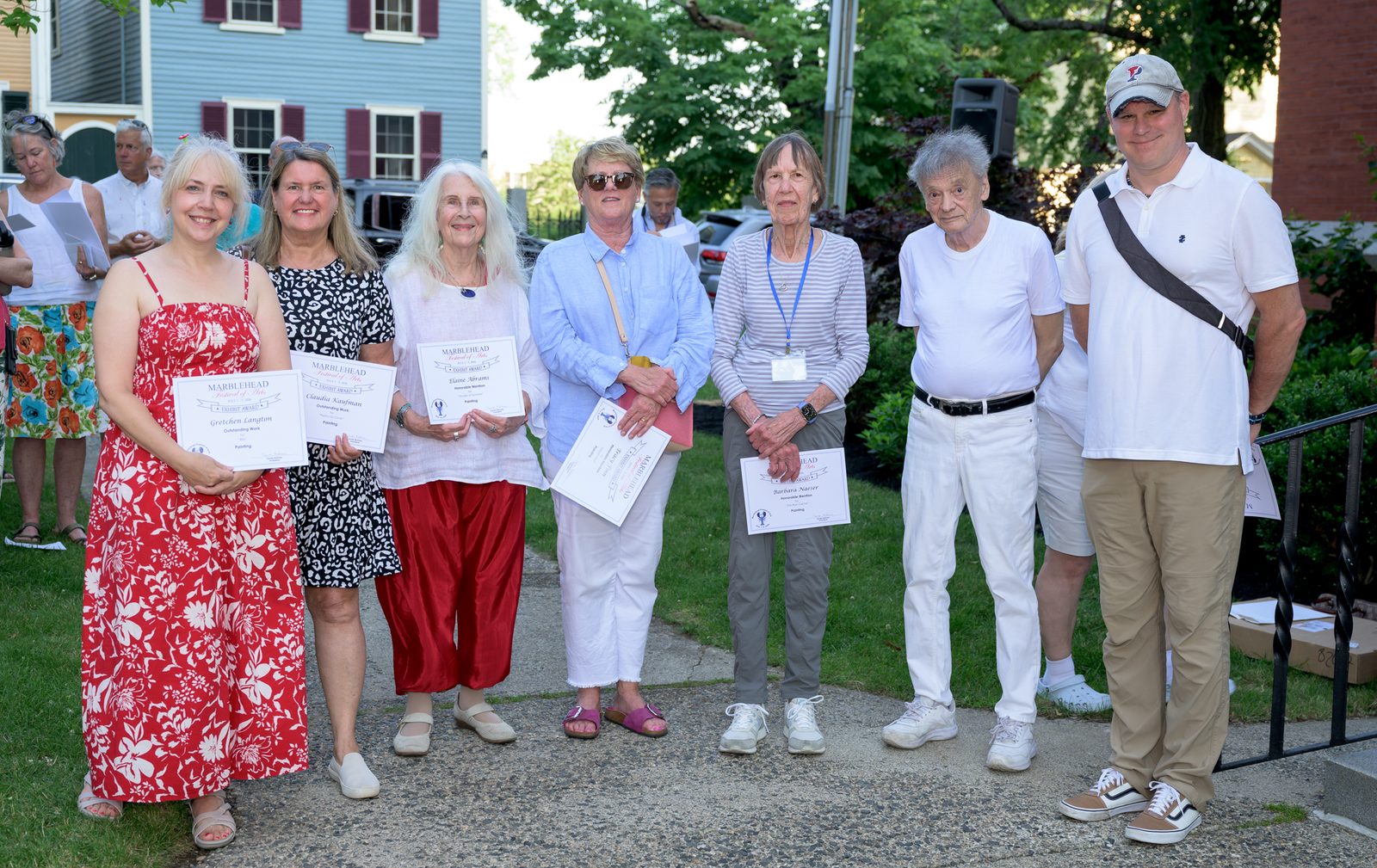
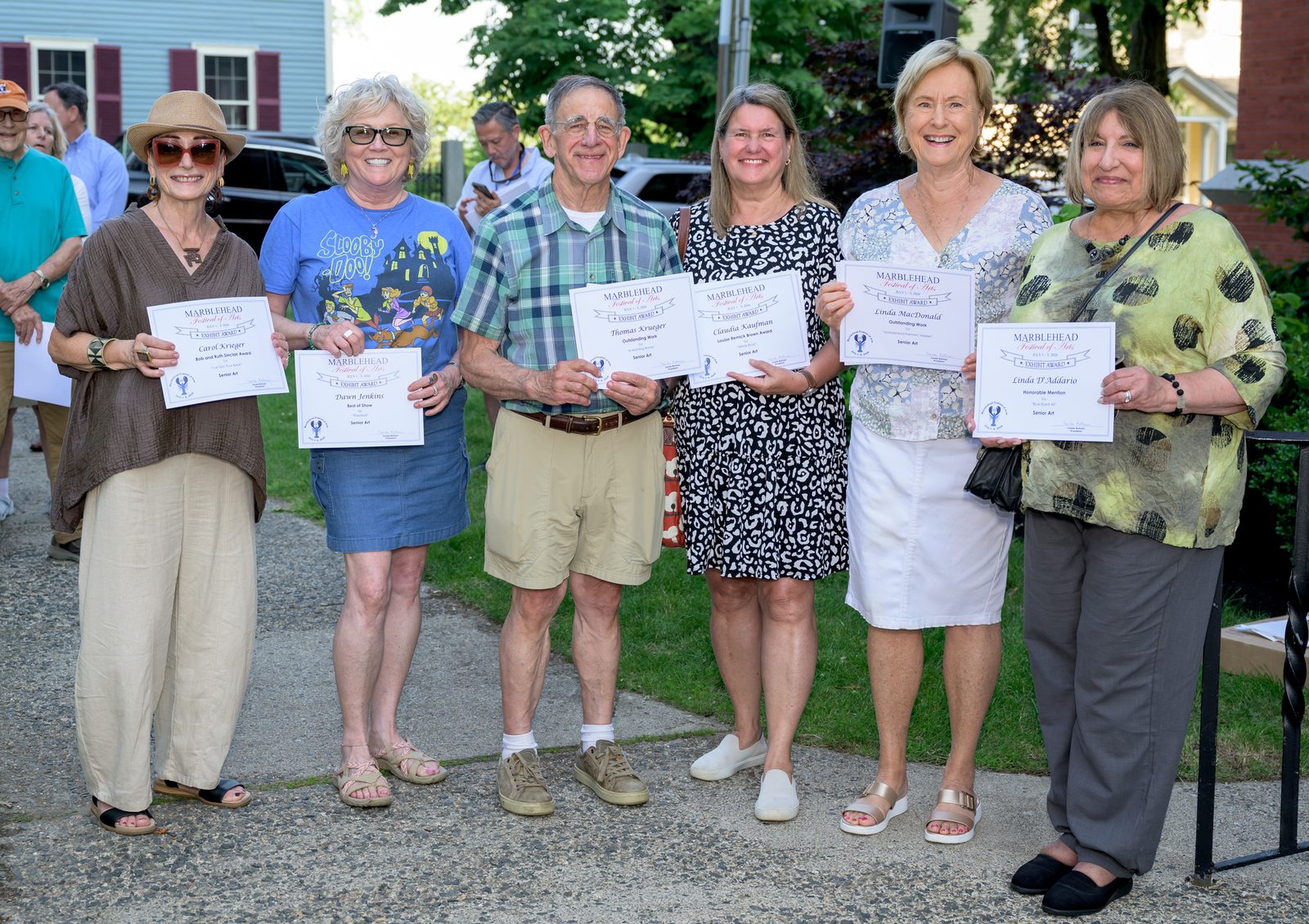
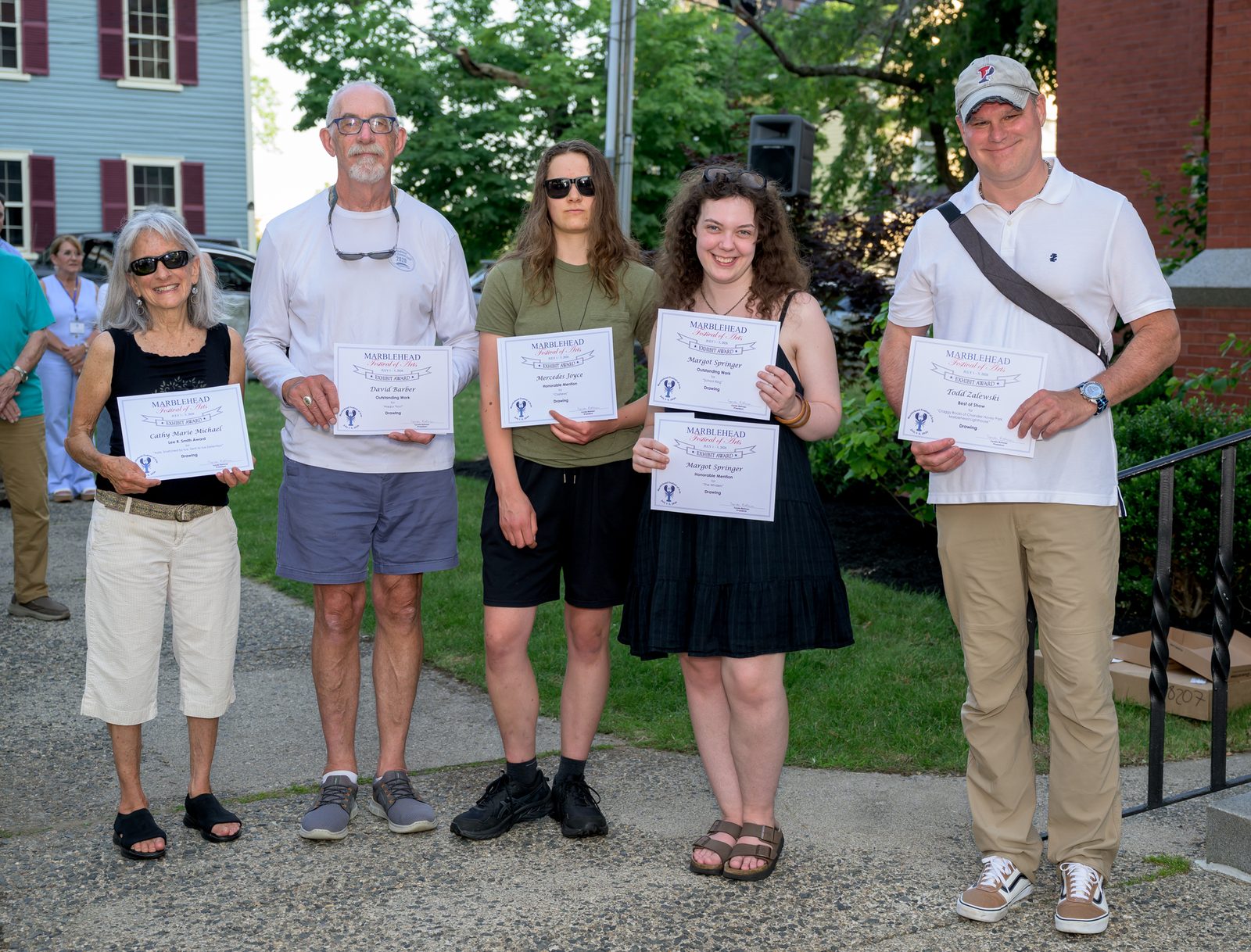
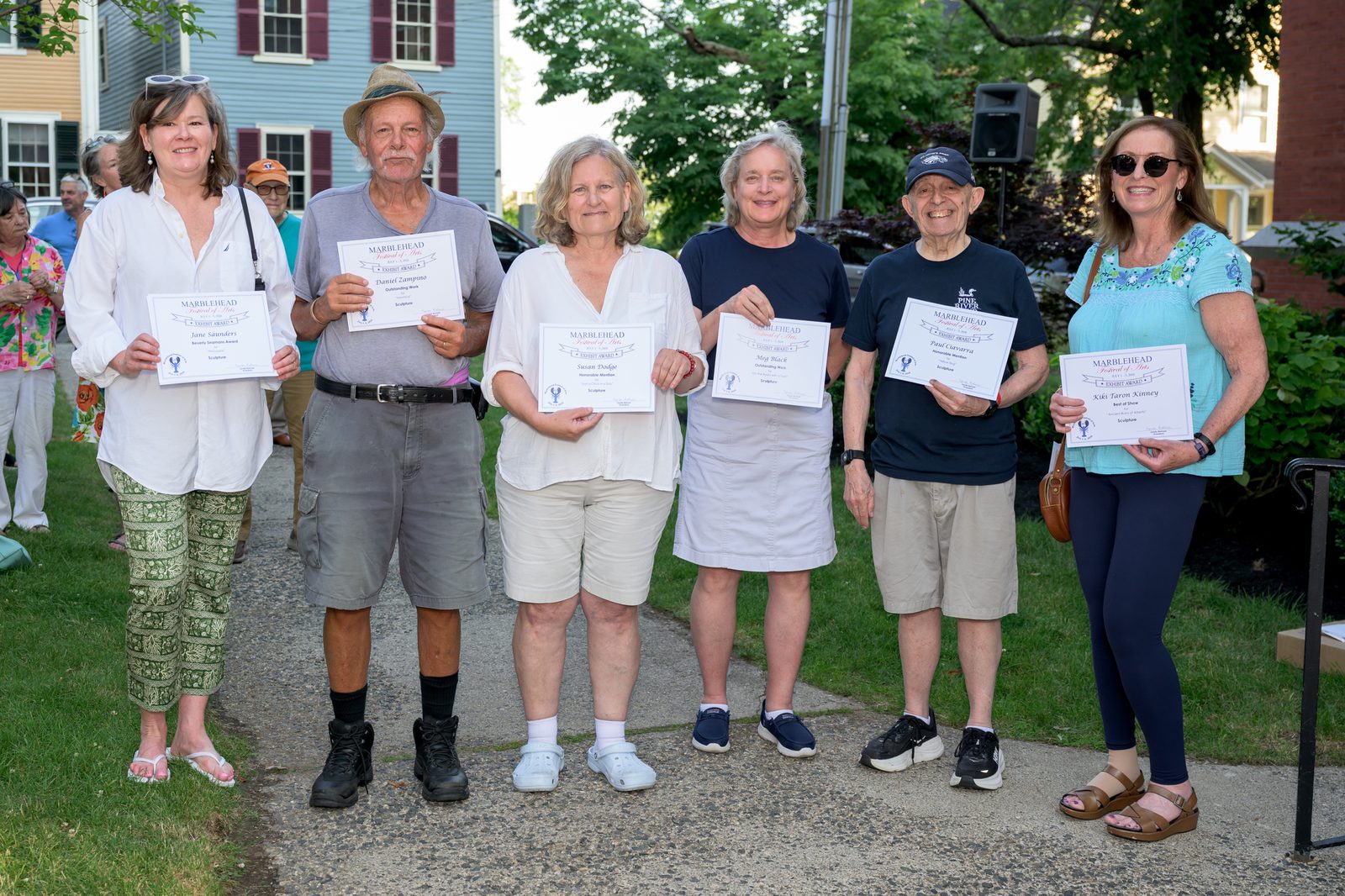
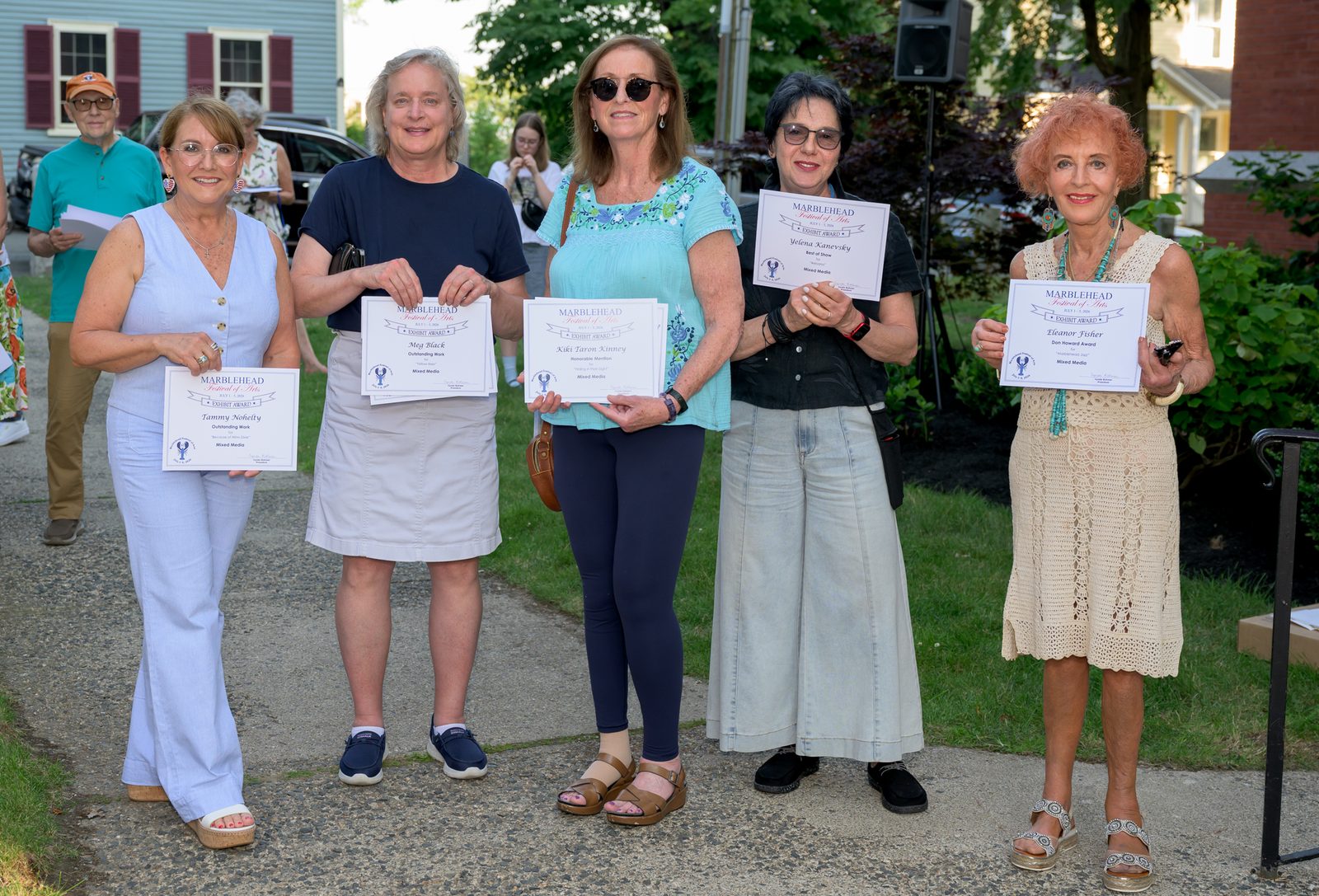
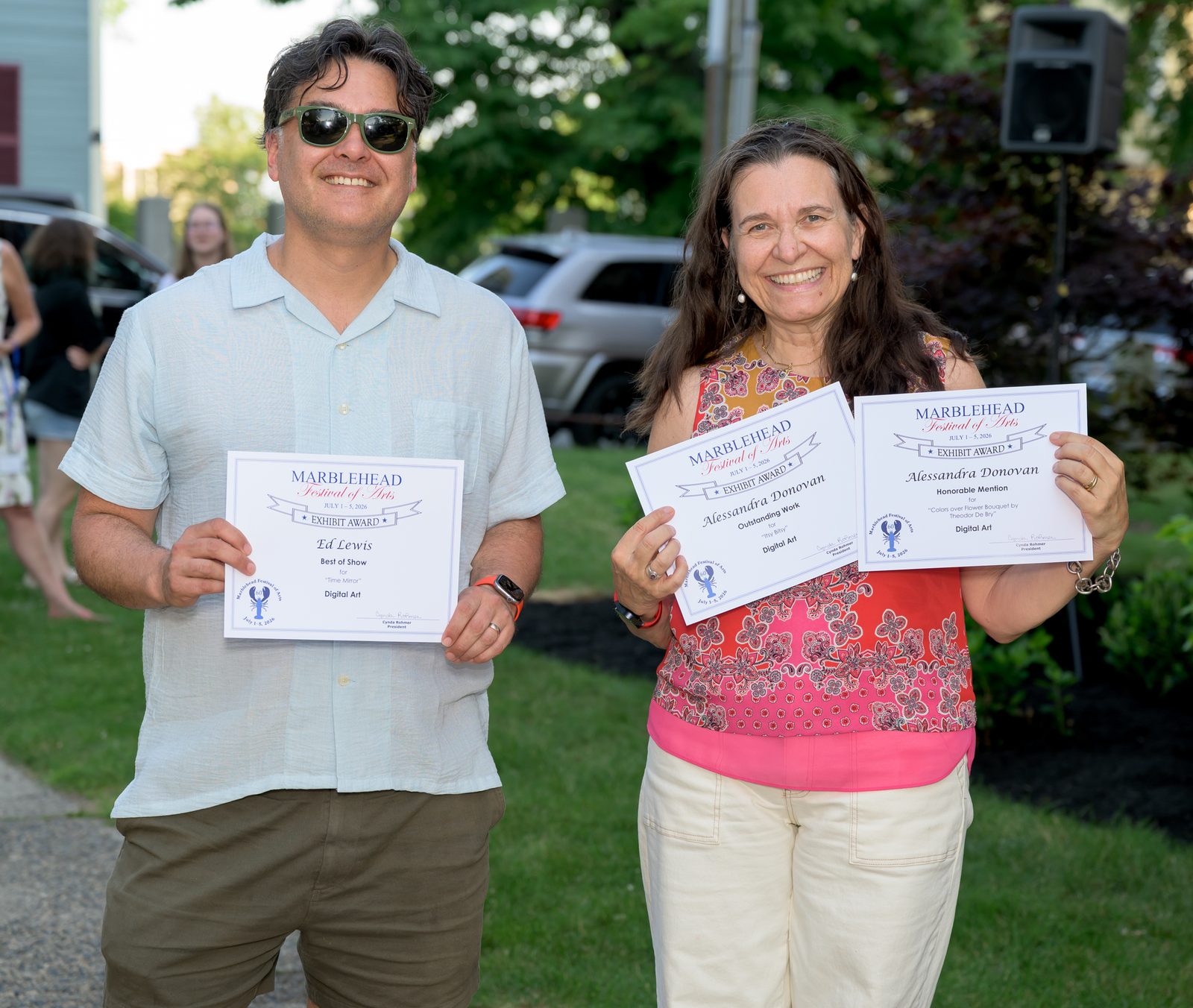
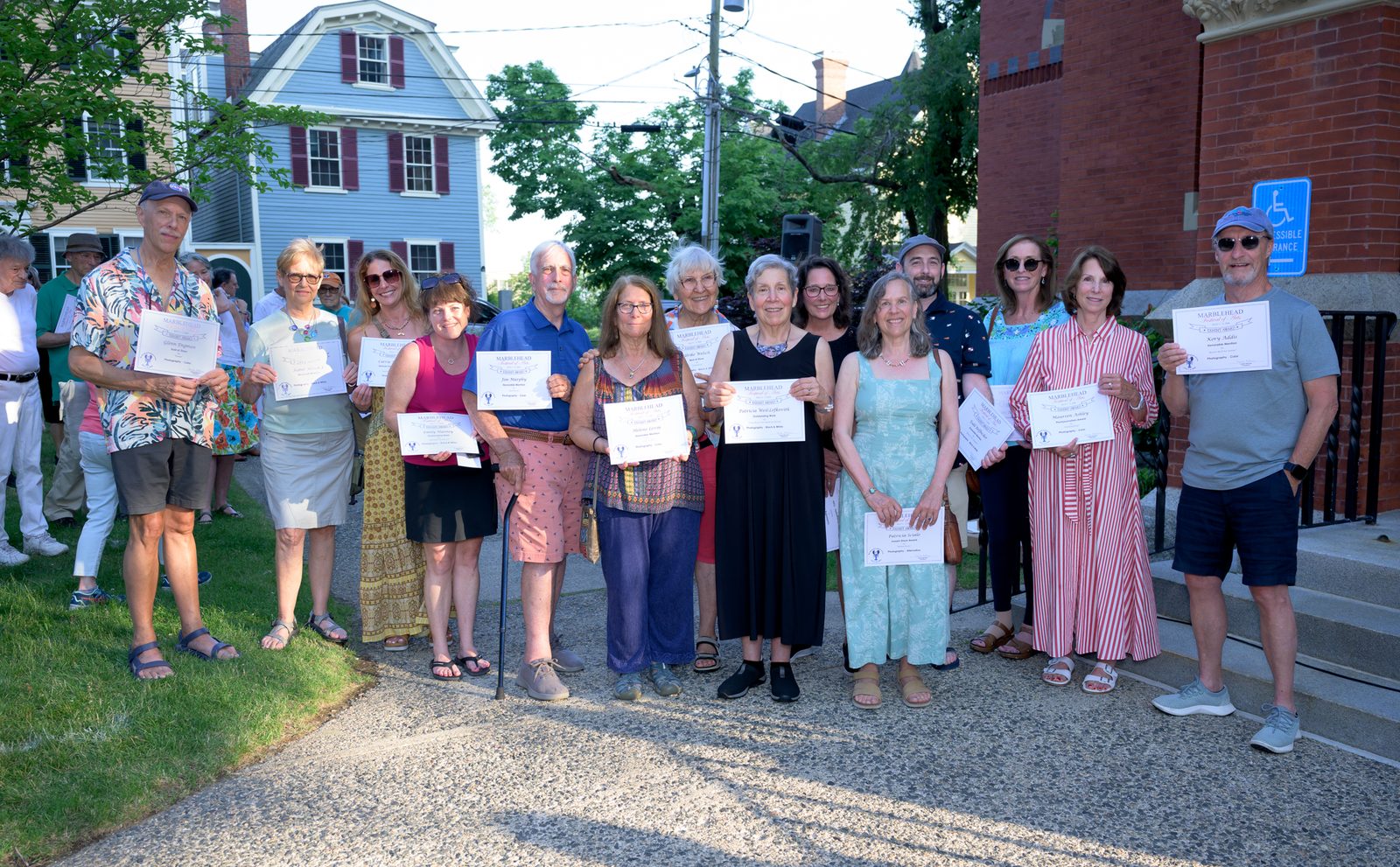
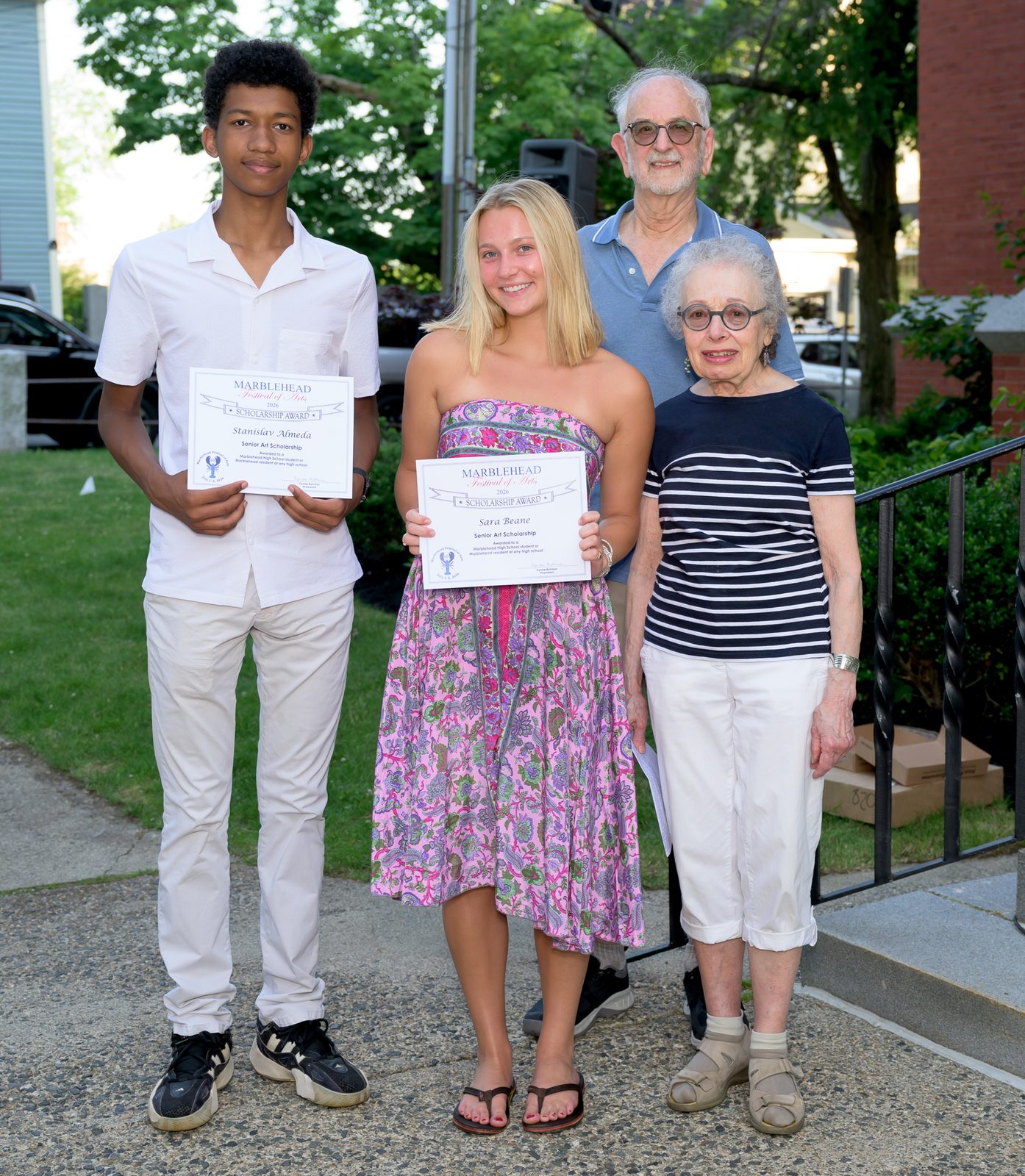
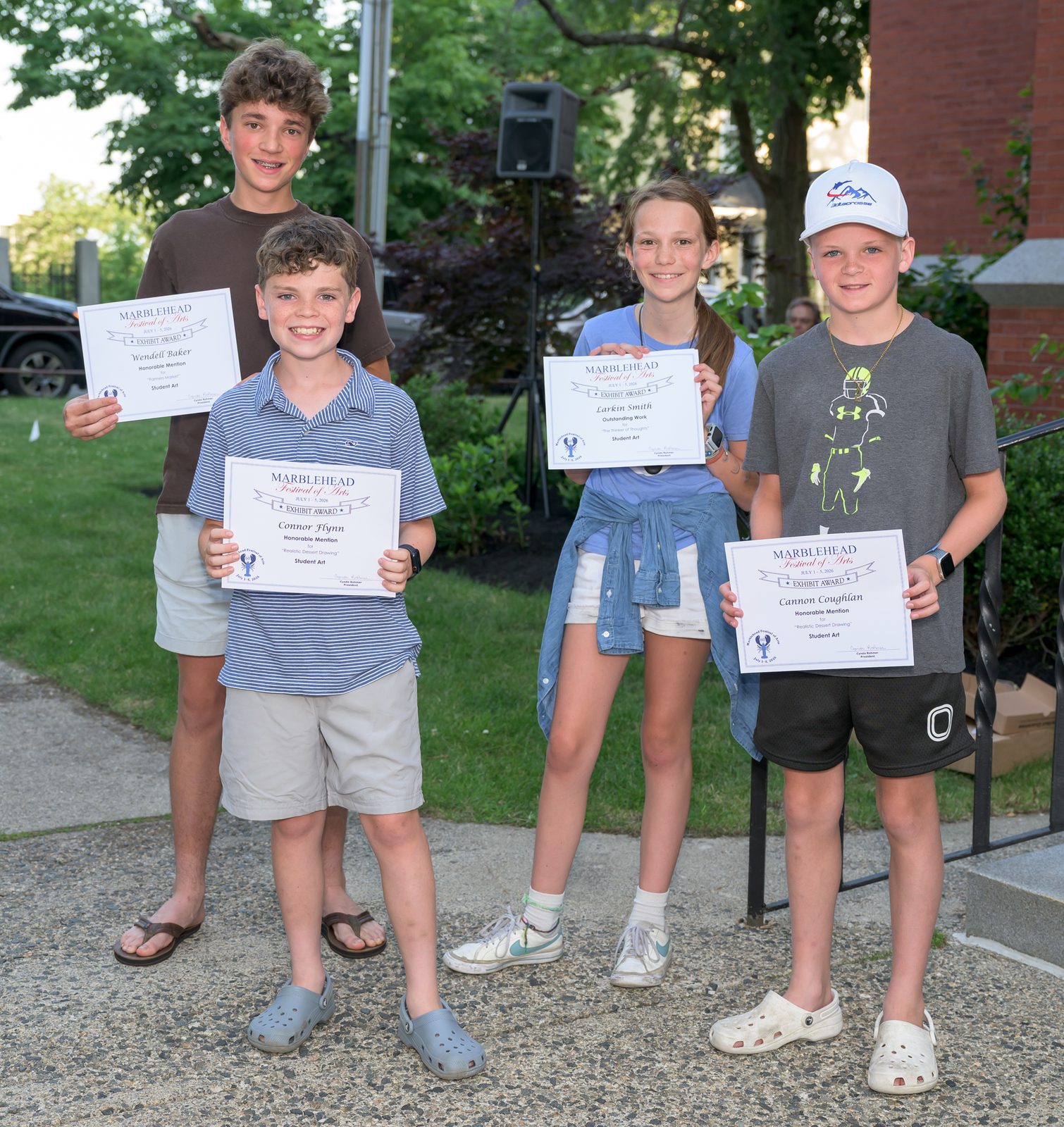
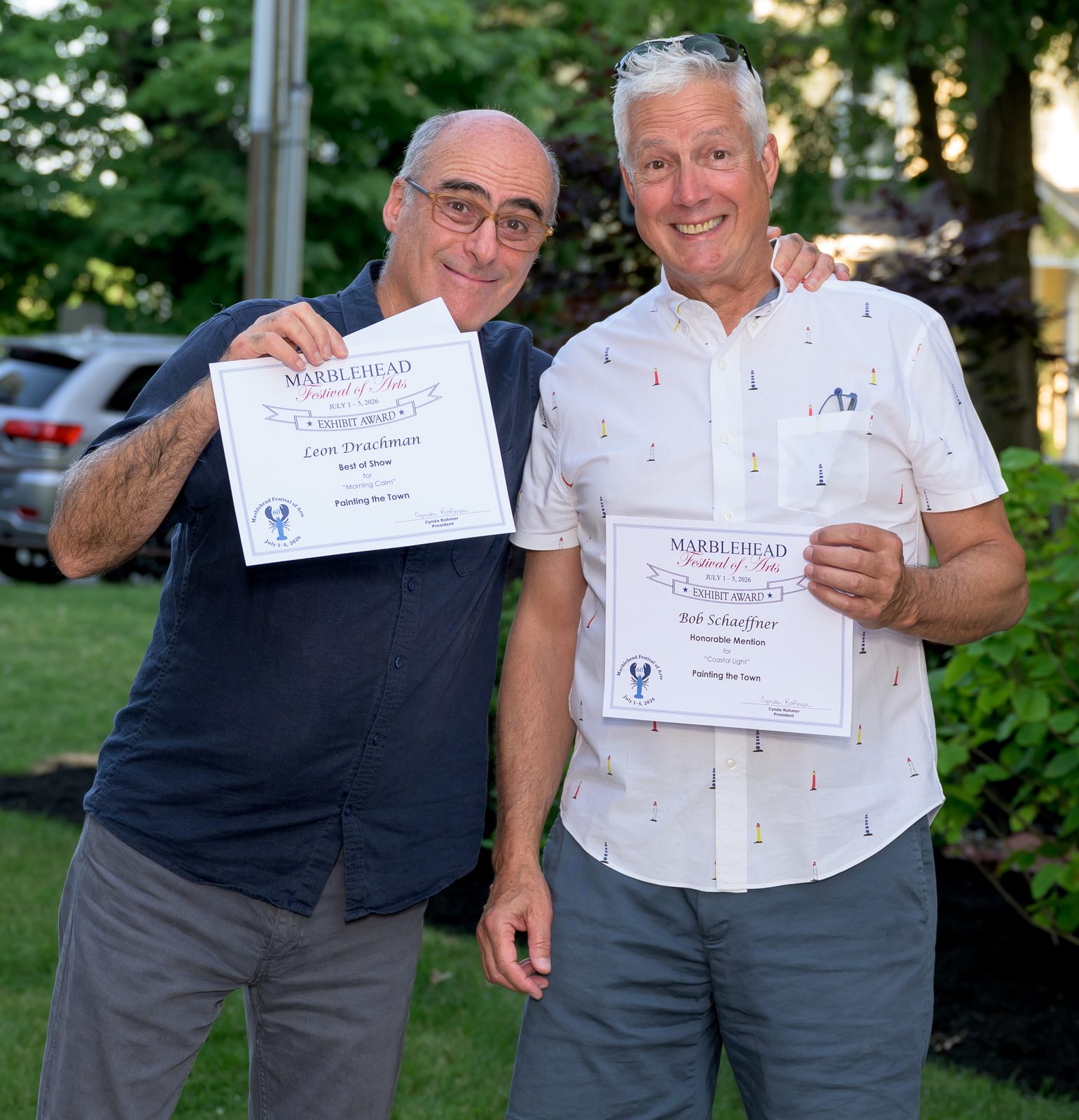
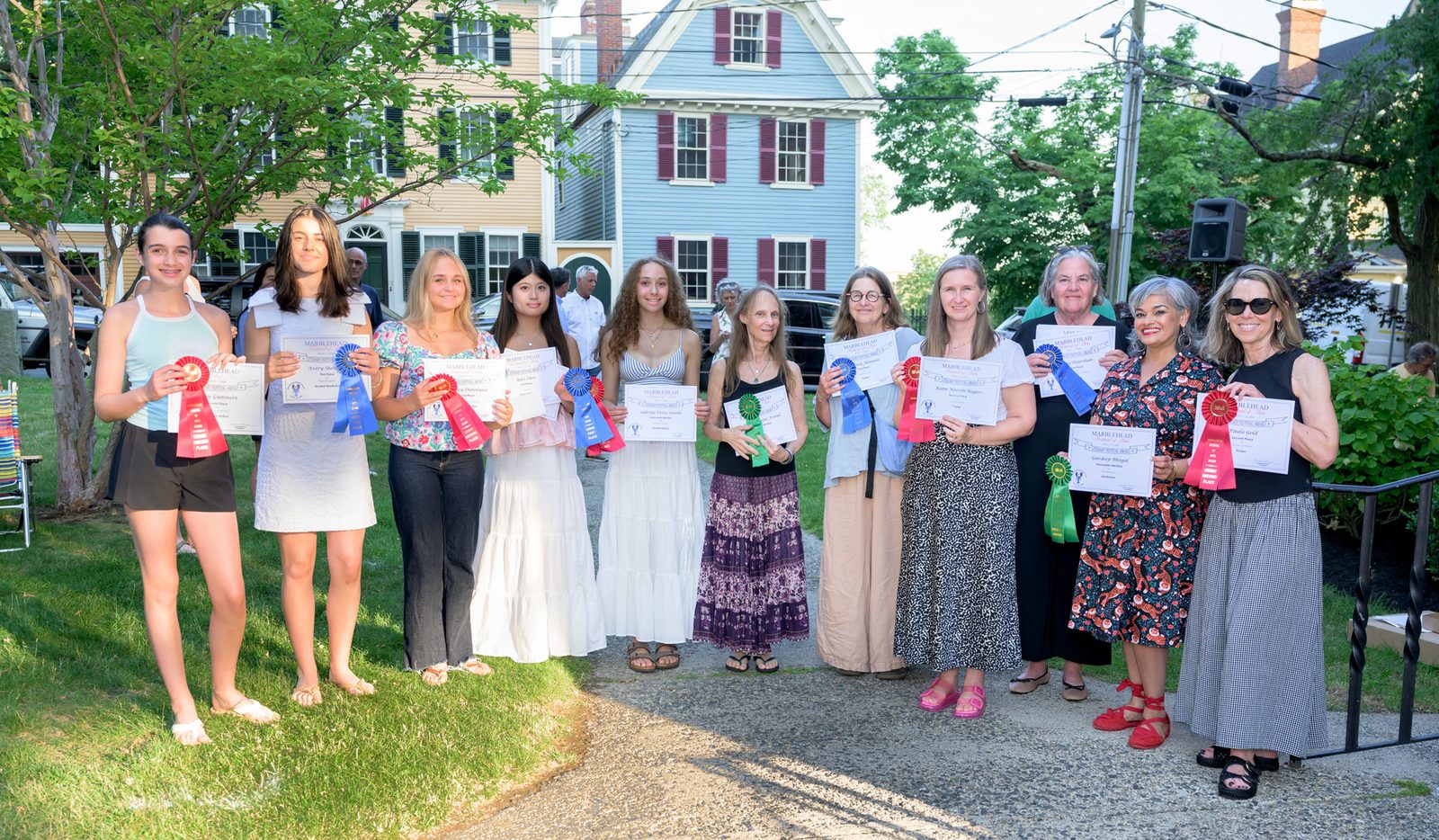
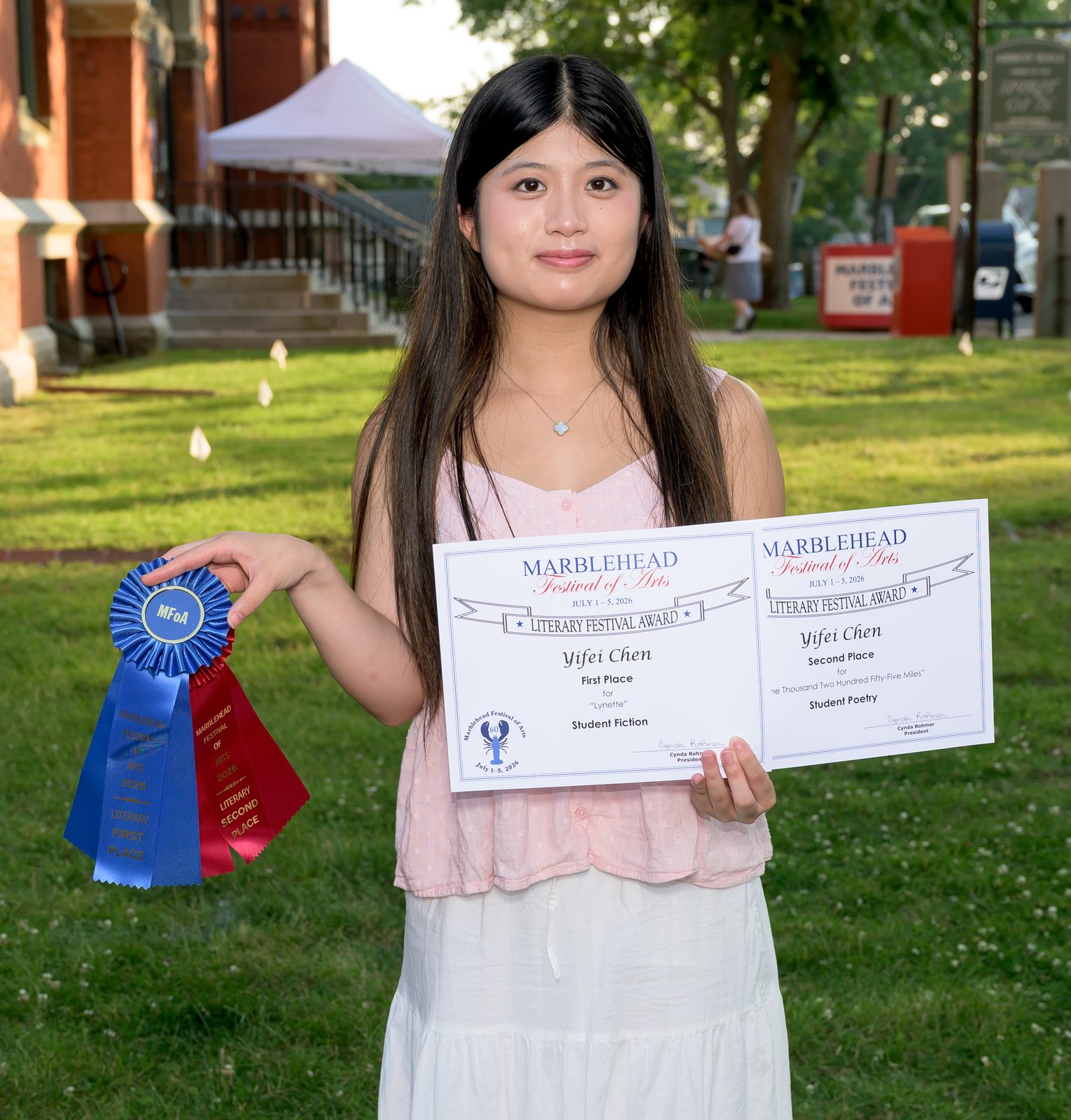
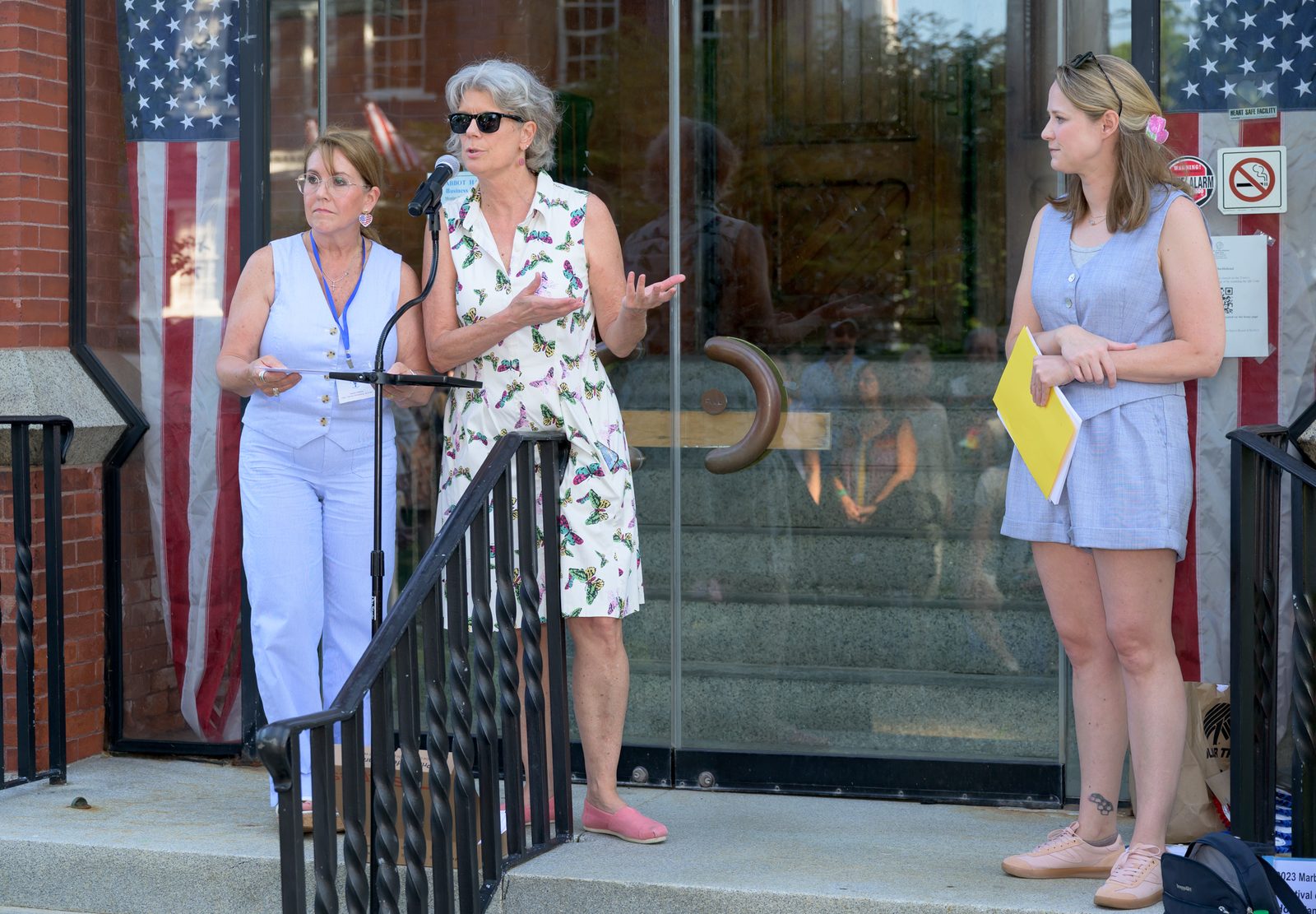
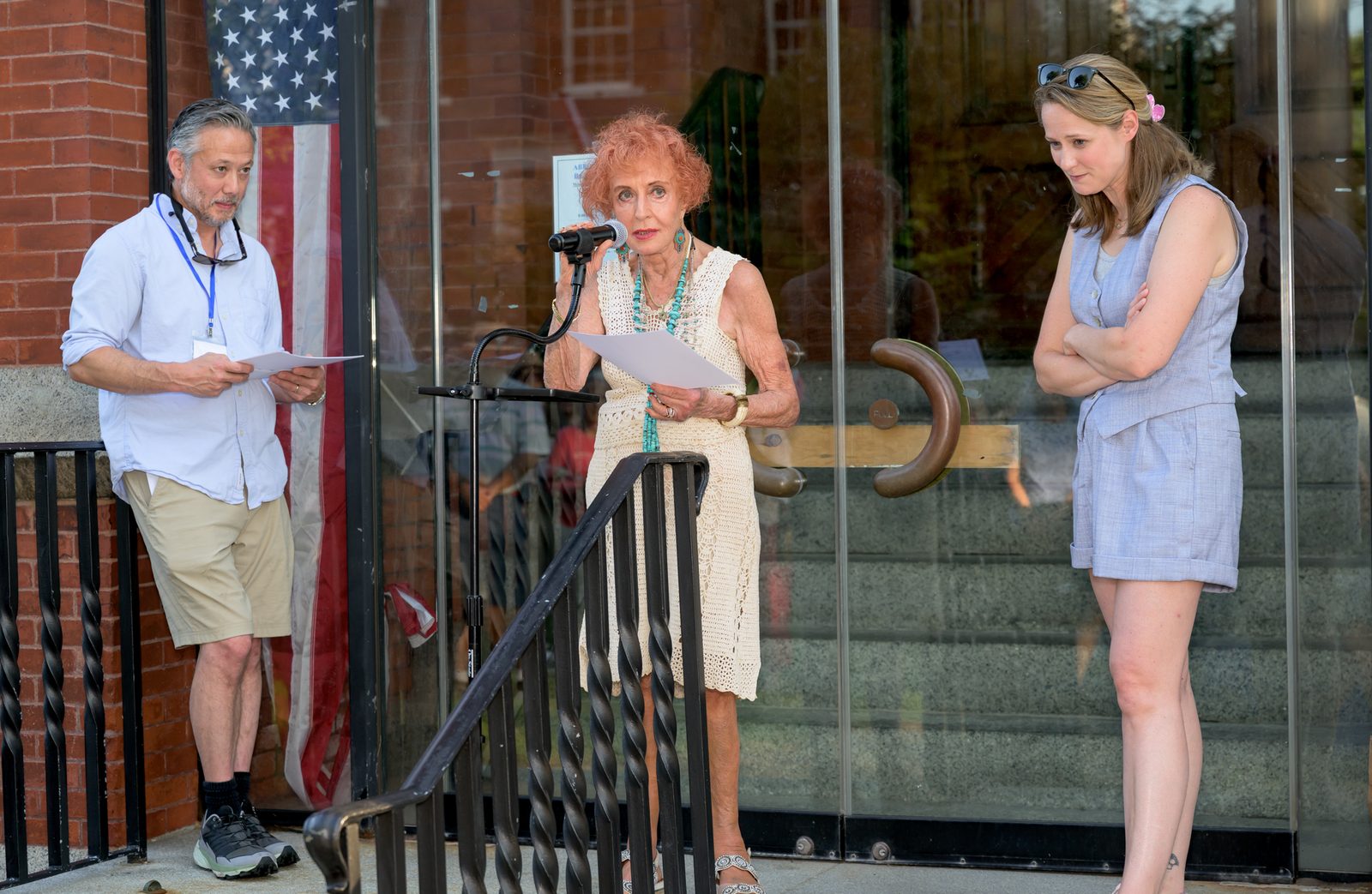
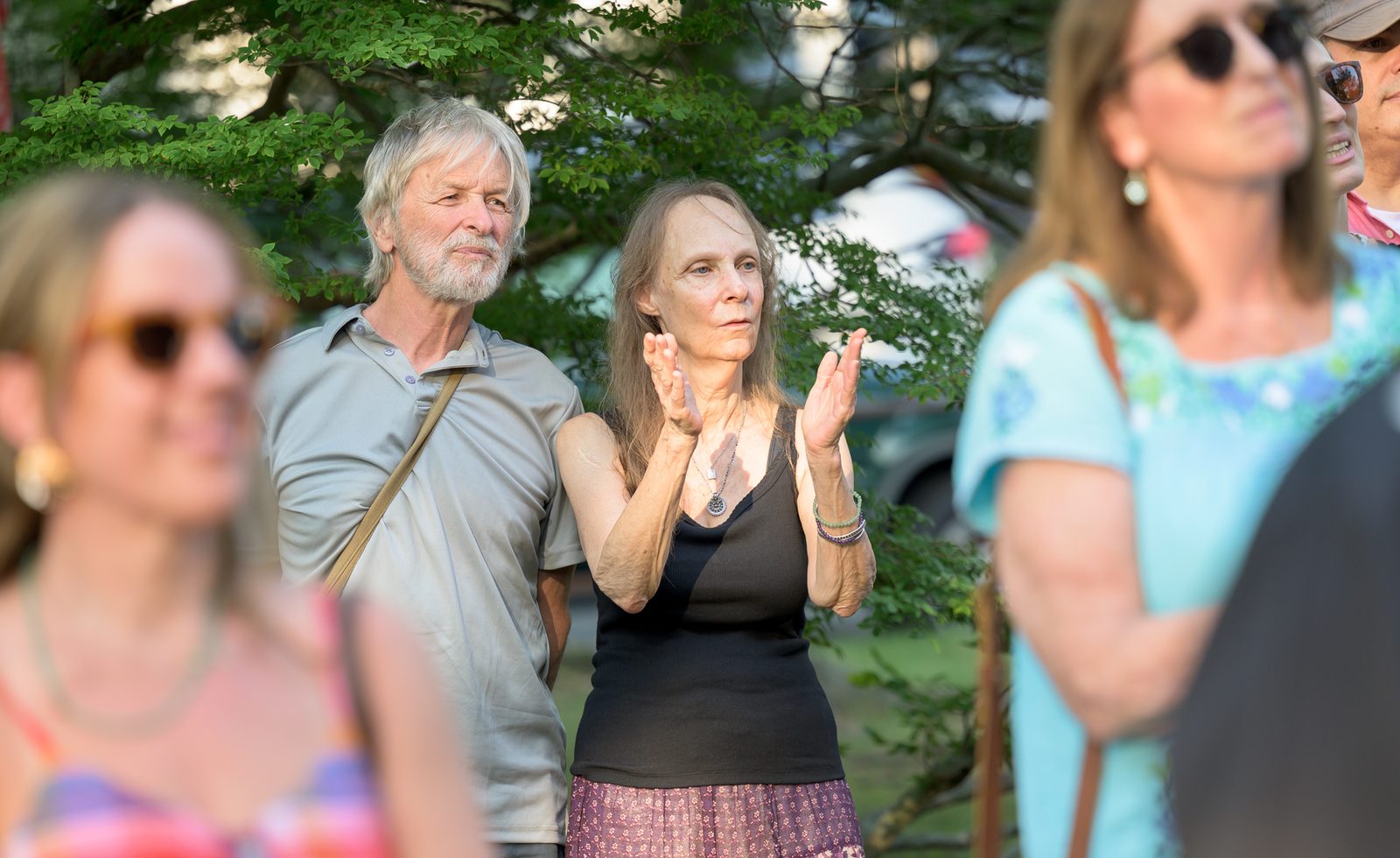
By early evening, the ceremony had taken the granite steps of Abbot Hall, a flag on either side of the glass doors and neighbors packed onto the lawn below. The awards came category by category — crafts, printmaking, painting, drawing, sculpture, mixed media, digital art, photography, senior and student art — each set of winners lining up along the brick with white certificates. The youngest were the hardest to miss, grinning in Crocs and a lacrosse cap.
Music at golden hour
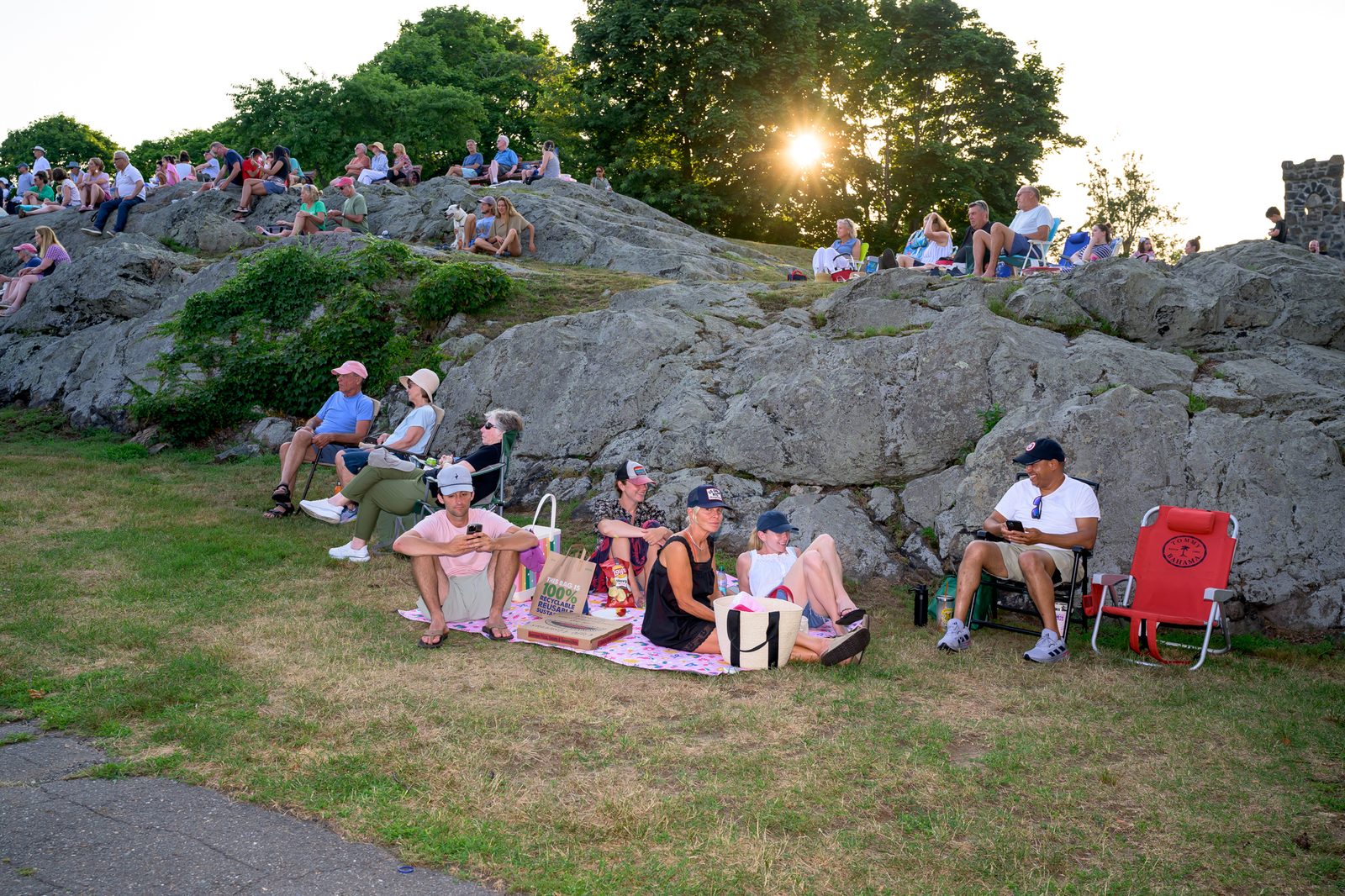
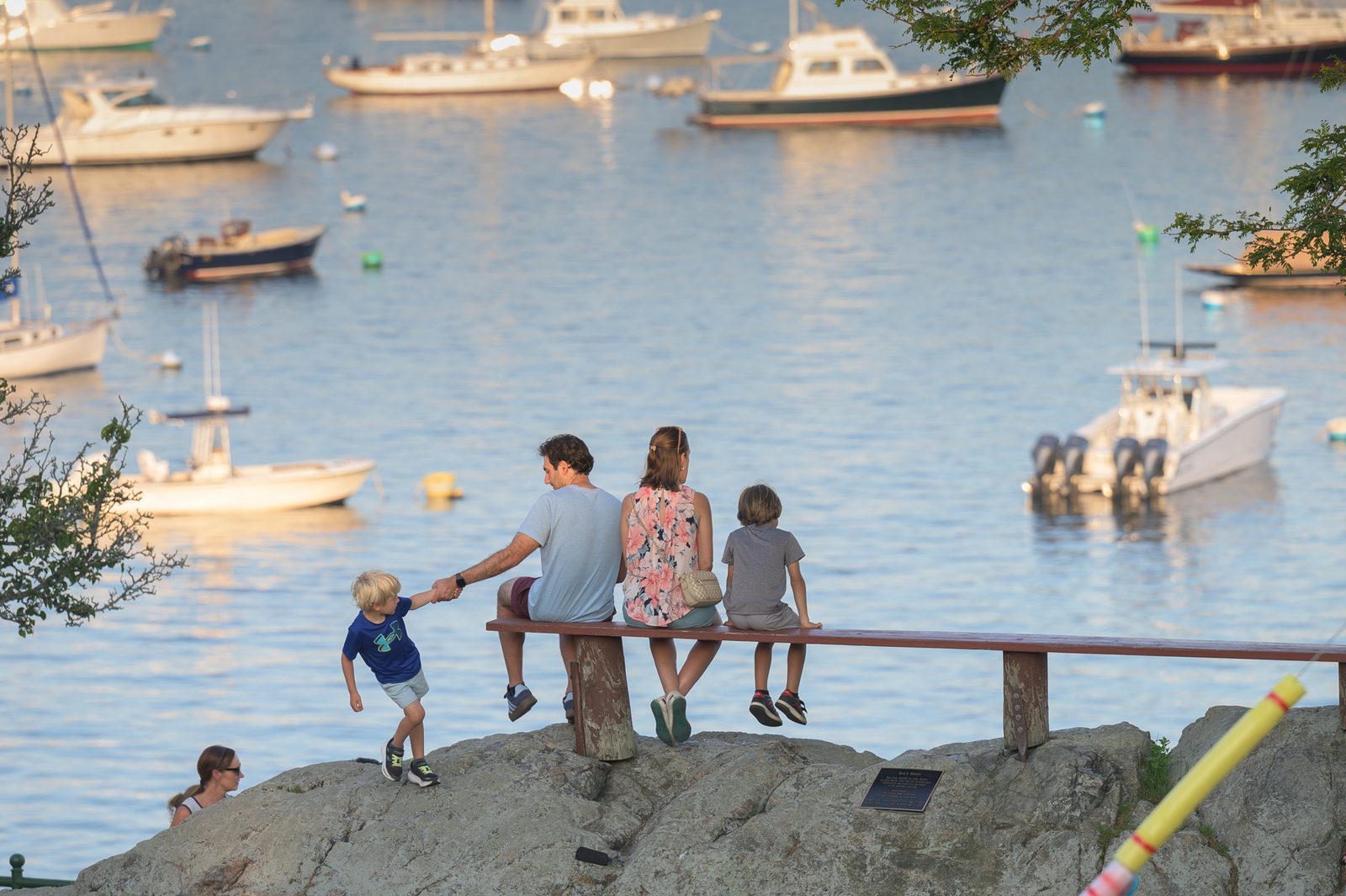
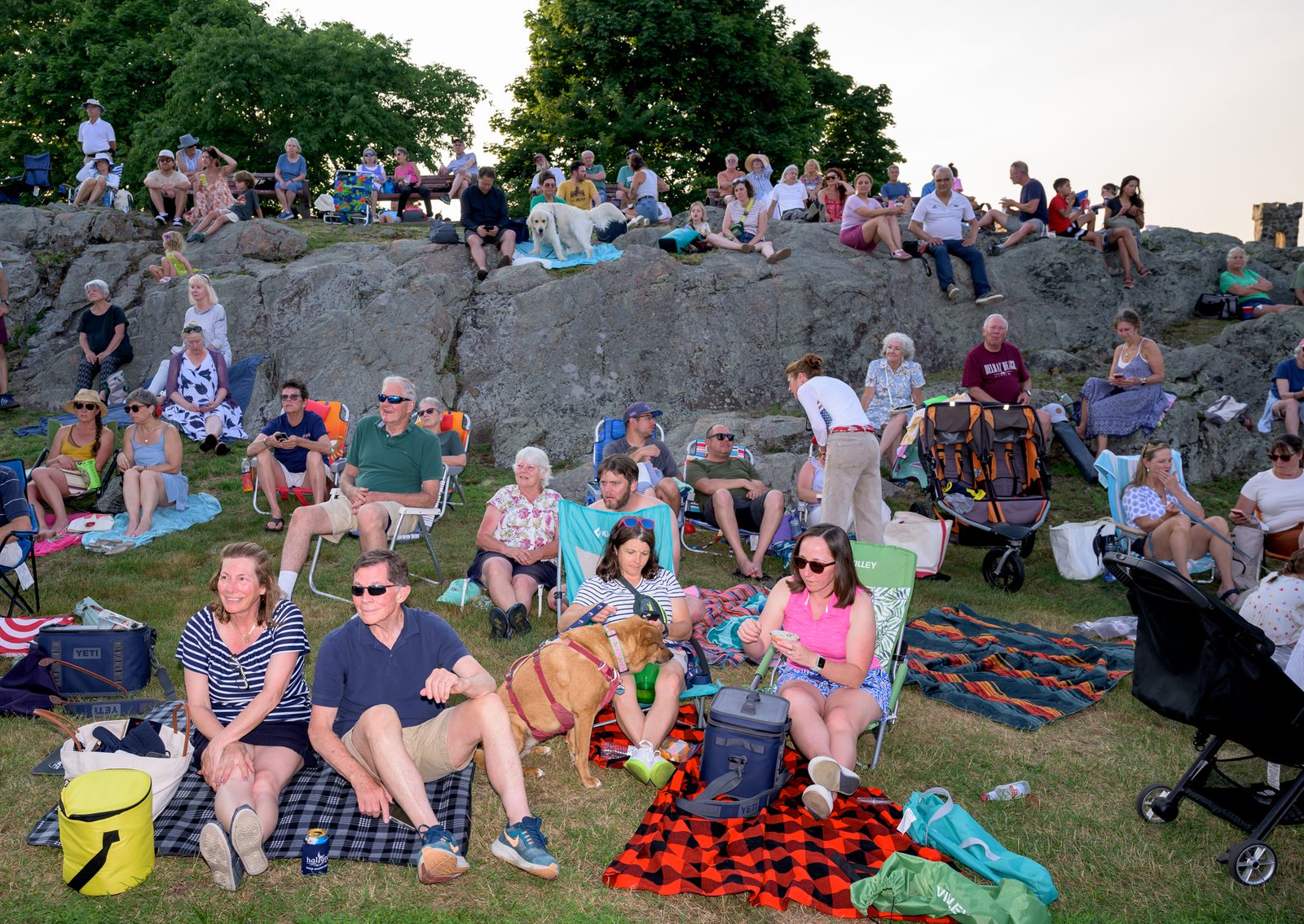
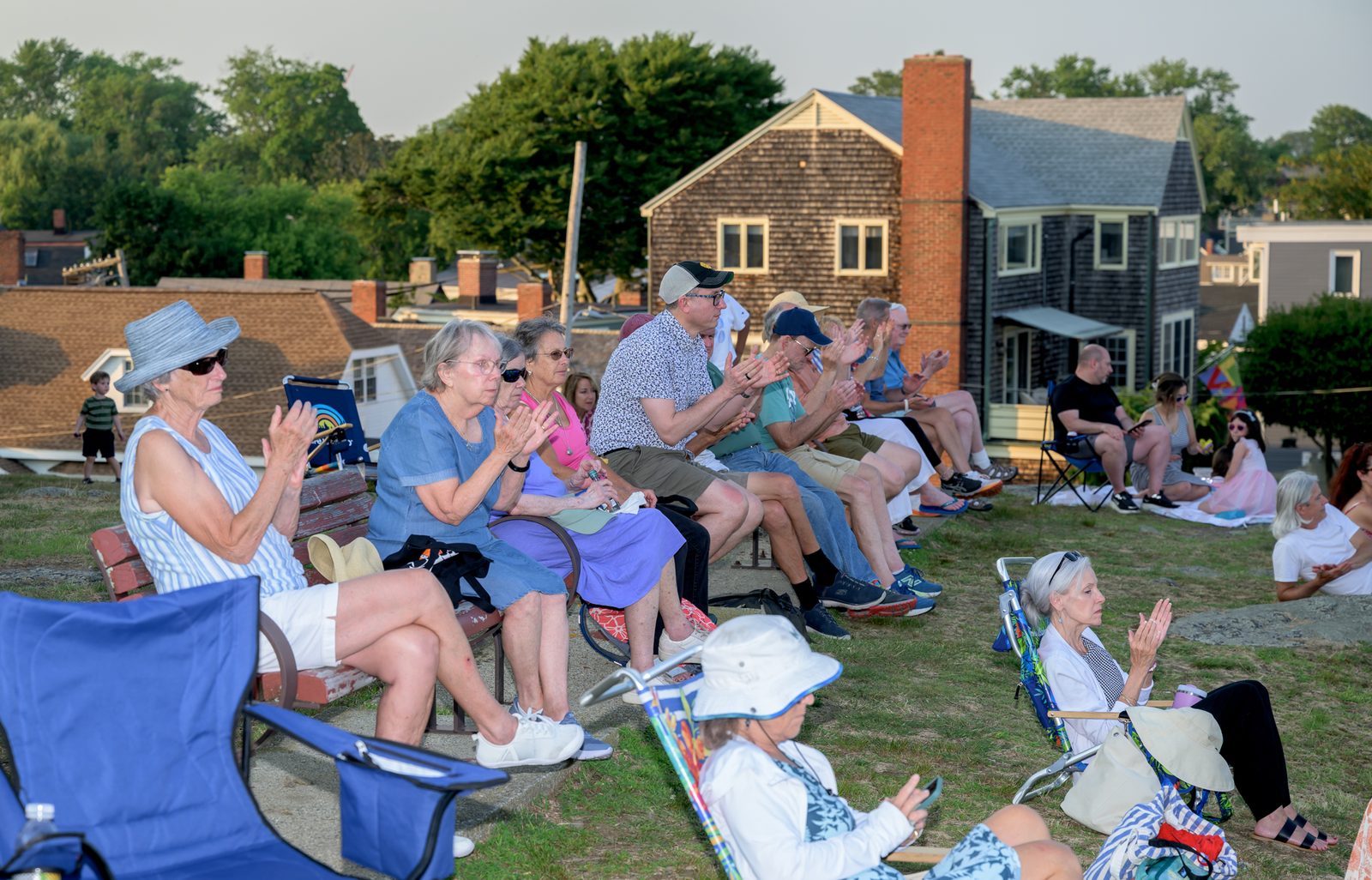
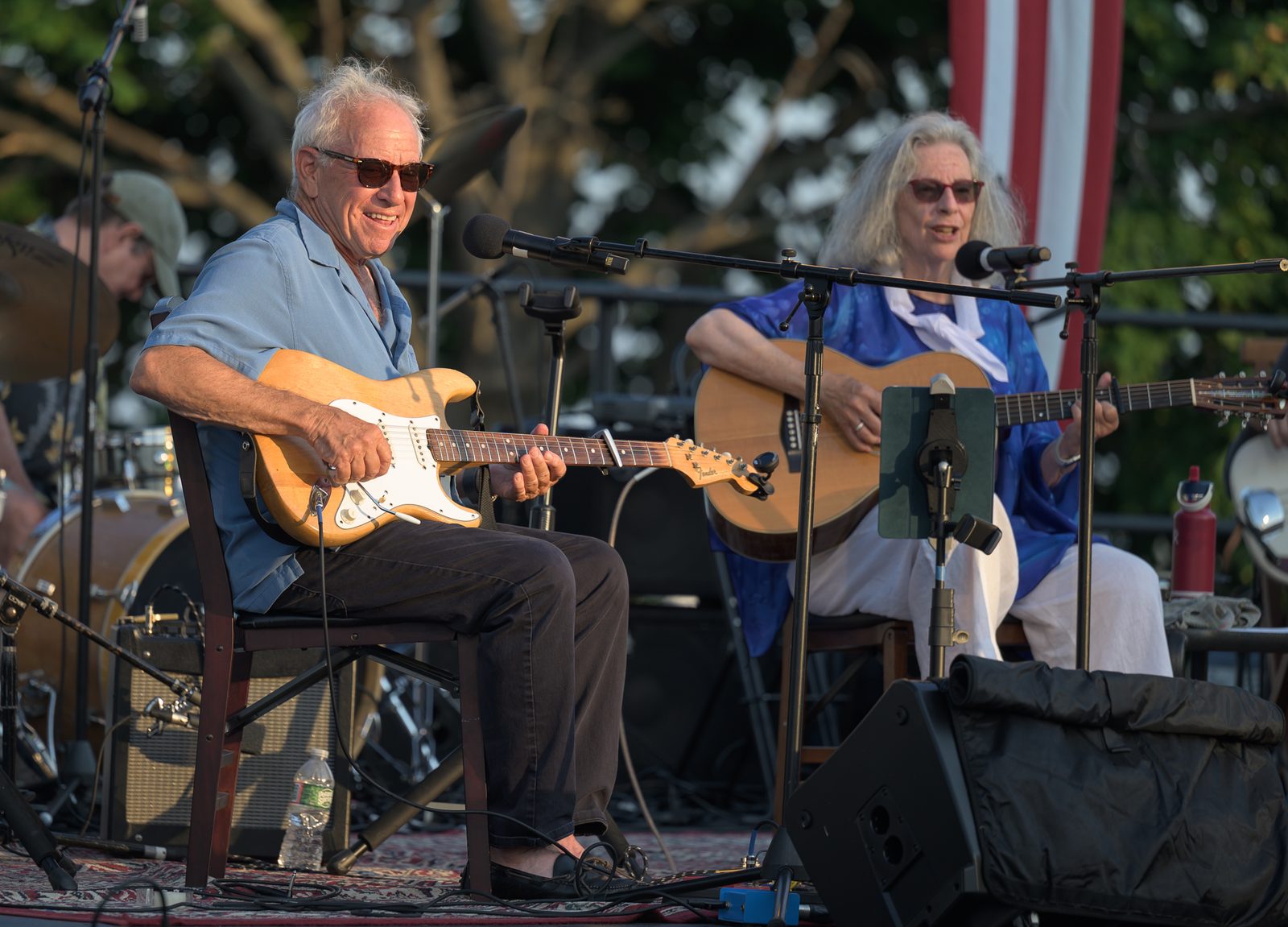
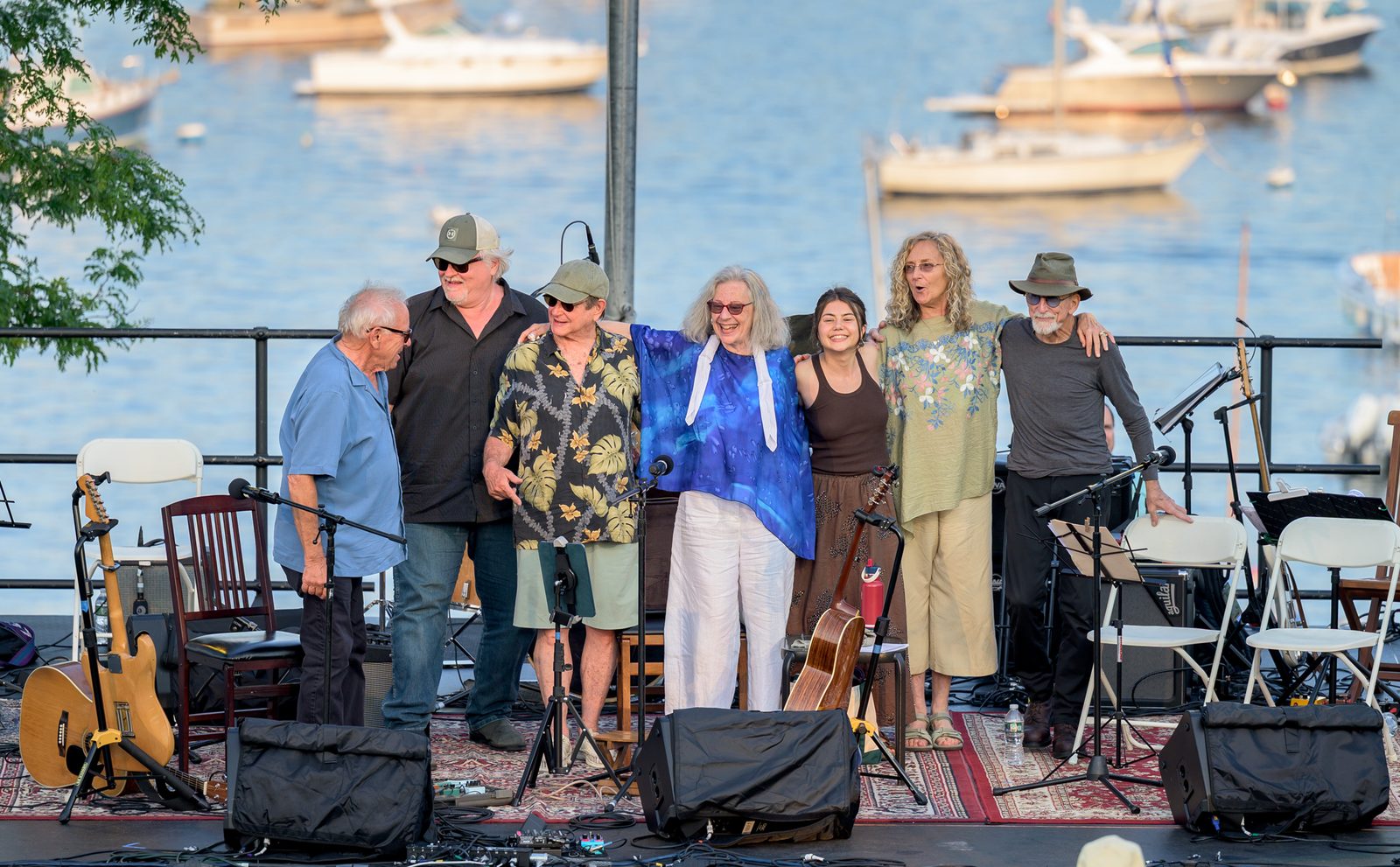
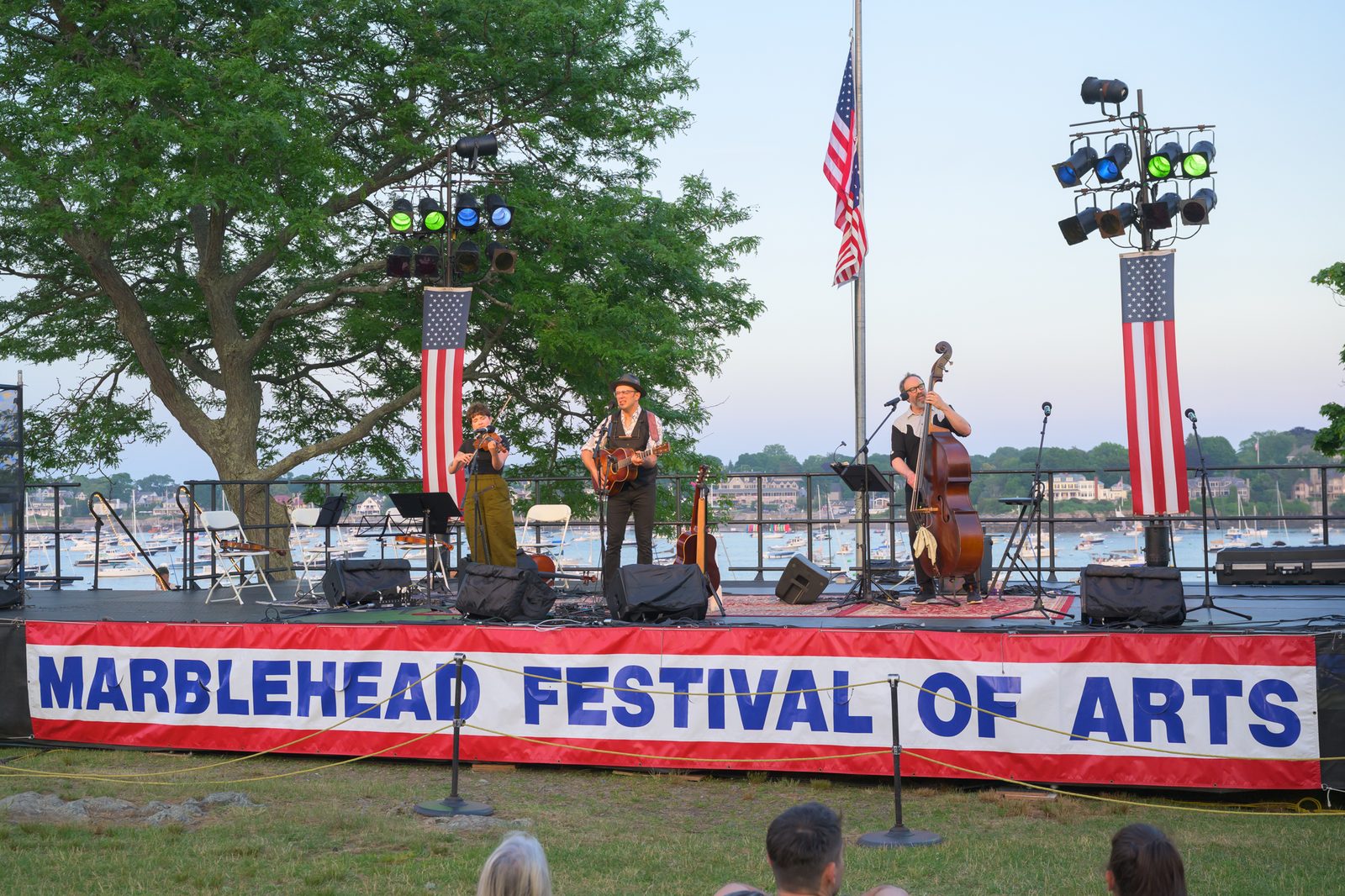
At Crocker Park the lawn filled long before the light left. Blankets went down, anchored by pizza boxes and coolers; a golden retriever stood watch on a blue one while hundreds settled onto the grass and the granite ledges and the sun came sideways through the trees. On stage, under vertical flag banners, a silver-haired guitarist bent over a well-worn Stratocaster. At the end of a set, seven performers linked arms across the front of the stage and laughed. The music kept on as the light went — a string quartet, then a folk trio under the flagpole, the masts of the moored fleet fading to silhouette behind them.
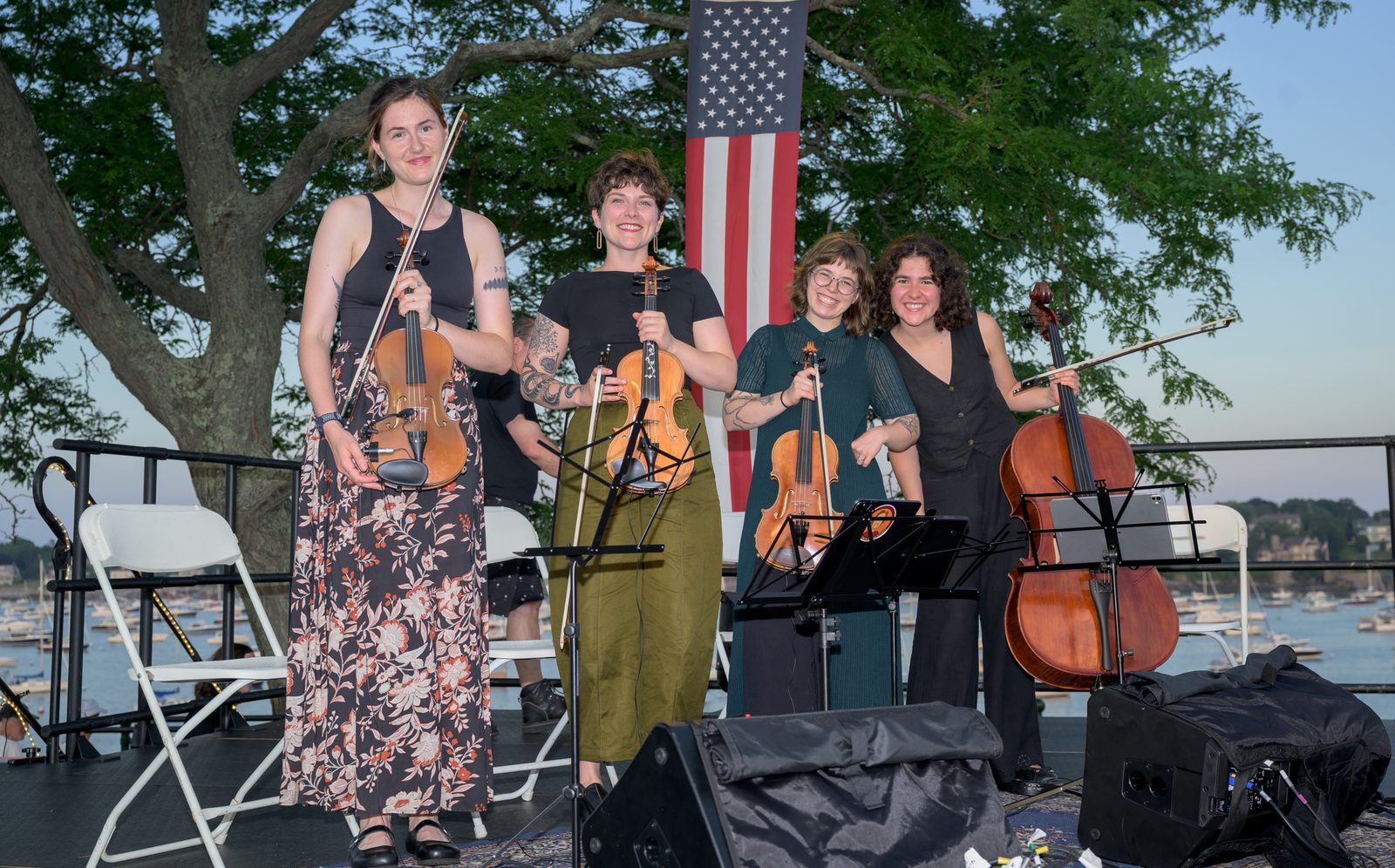

The town dressed up
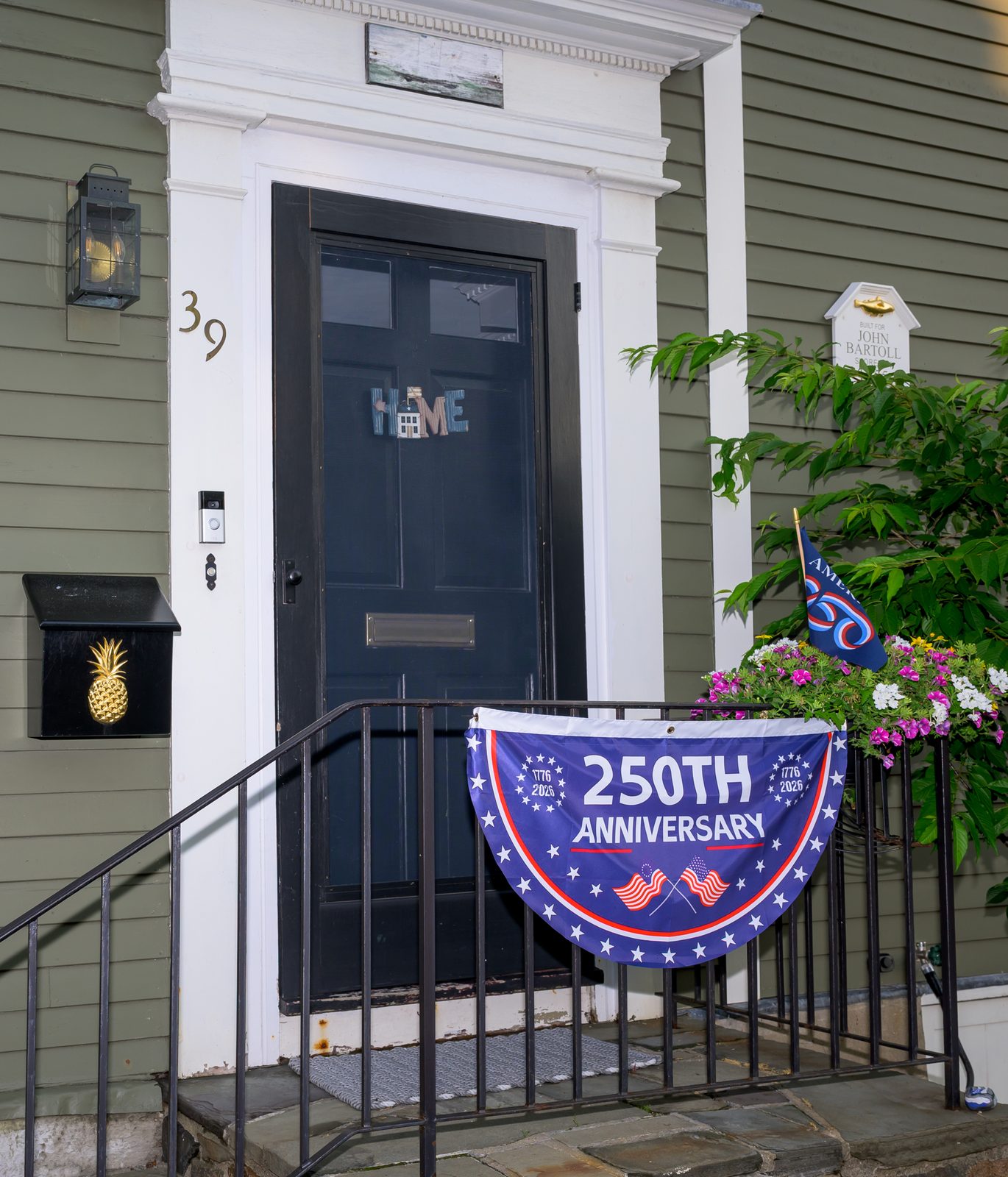
Marblehead was celebrating two birthdays at once. On a black iron stoop rail, purple-and-white bunting read “250TH ANNIVERSARY,” 1776 and 2026 wreathed in stars — Marblehead marking the country’s 250th the same week it marked 60 years of its own festival. Four days still to come, and the harbor had not yet had its fireworks.