Table of Contents
Get our free local reporting delivered straight to your inbox. No noise, no spam — just clear, independent coverage of Marblehead. Sign up for our once-a-week newsletter.
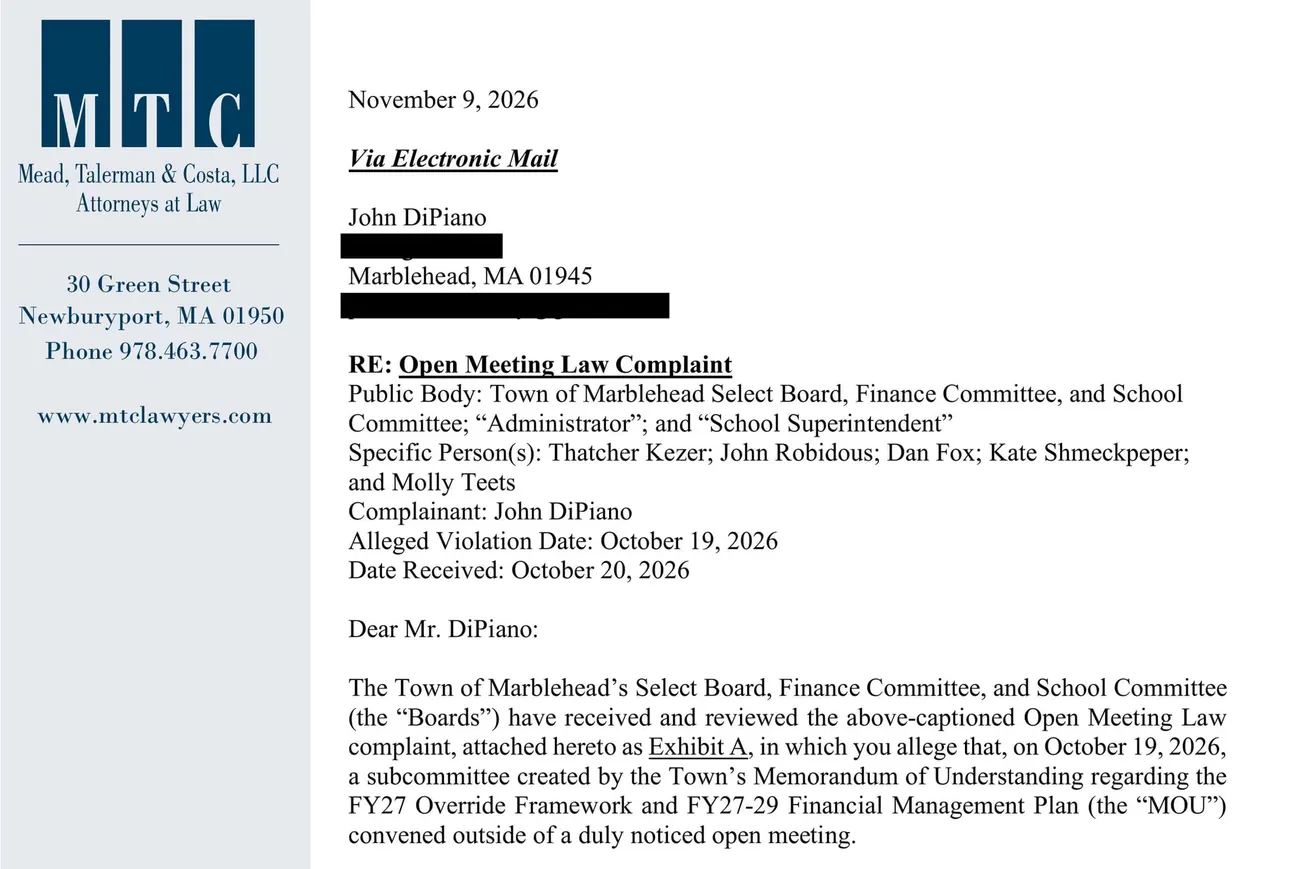
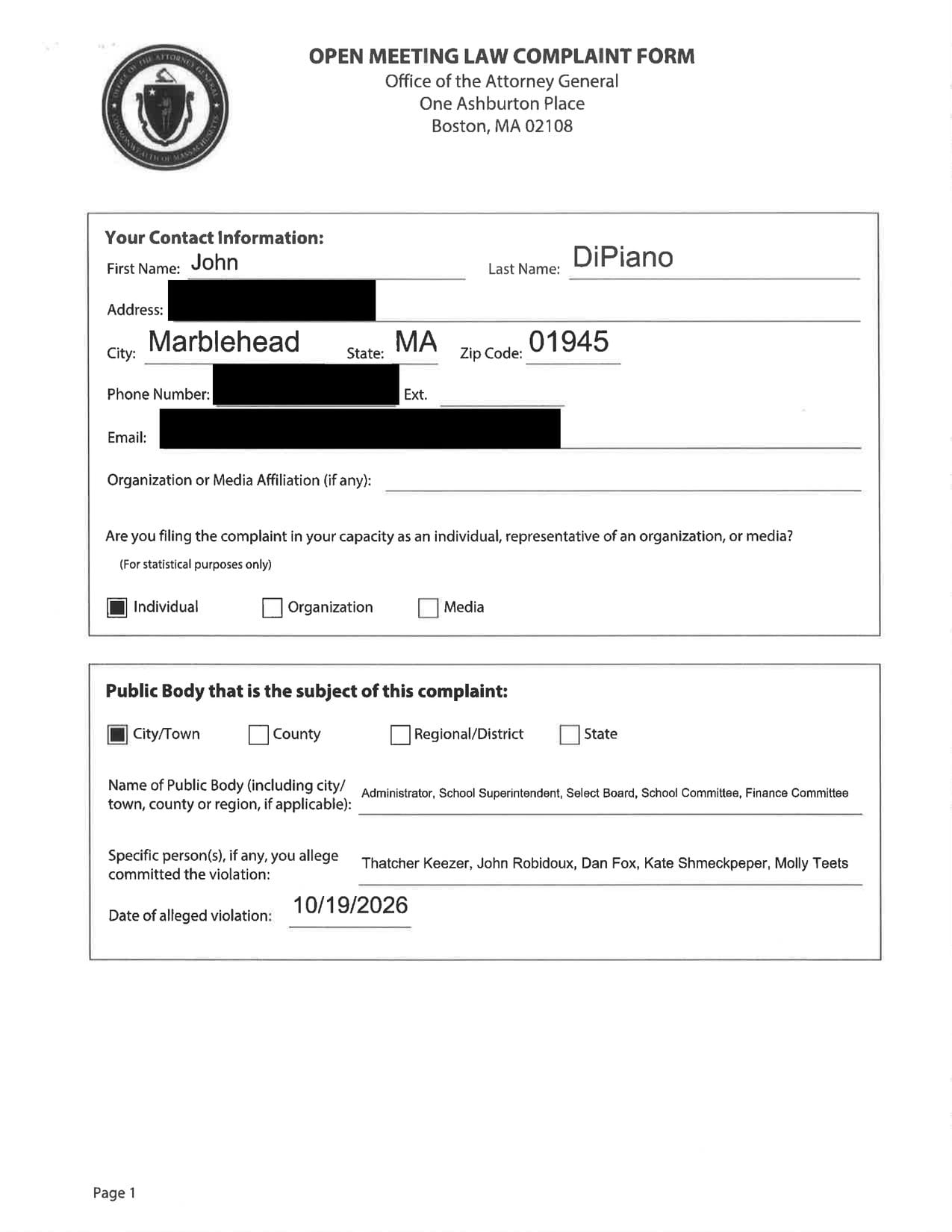
John DiPiano told the town that five officials broke the Open Meeting Law when they reviewed Marblehead’s finances out of public view last month. The town’s answer, delivered in a two-page letter, is that there was no public body to break it.
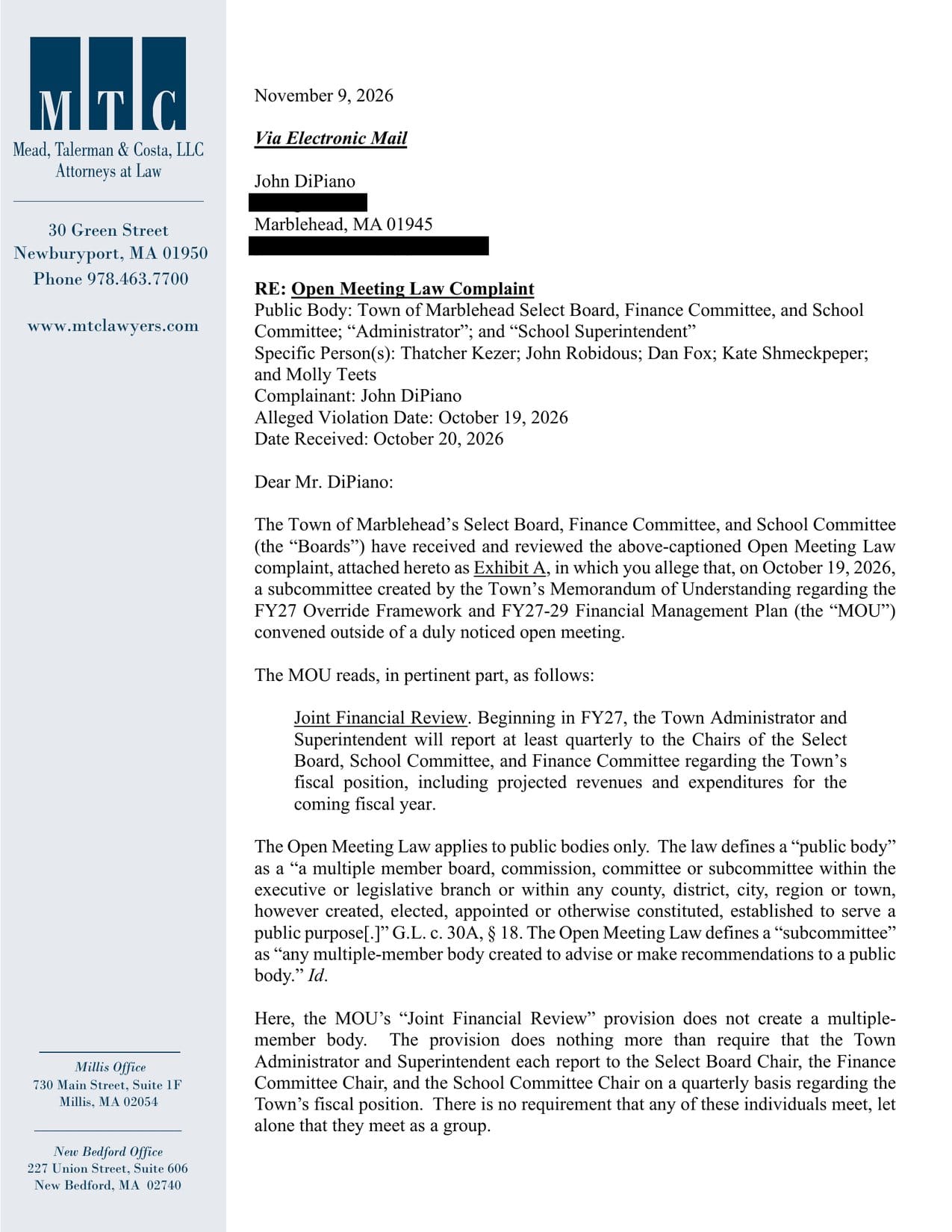
Town Counsel Alexander Castro wrote Nov. 9 that the override agreement DiPiano cites “does not create a multiple-member body” and that his allegations “are wholly outside the scope of the Open Meeting Law.” Castro, of the Newburyport firm Mead, Talerman & Costa, wrote on behalf of the Select Board, Finance Committee and School Committee.
The letter is the town’s legal position, not a ruling. The state attorney general’s Division of Open Government, which Castro copied on the letter, decides whether the law was broken. And the letter argues from the wording of the agreement alone: It does not say whether the five officials met during the week of Oct. 19, who was in the room or what they did there.
The town provided the letter to the Independent on Nov. 10.
What the letter argues
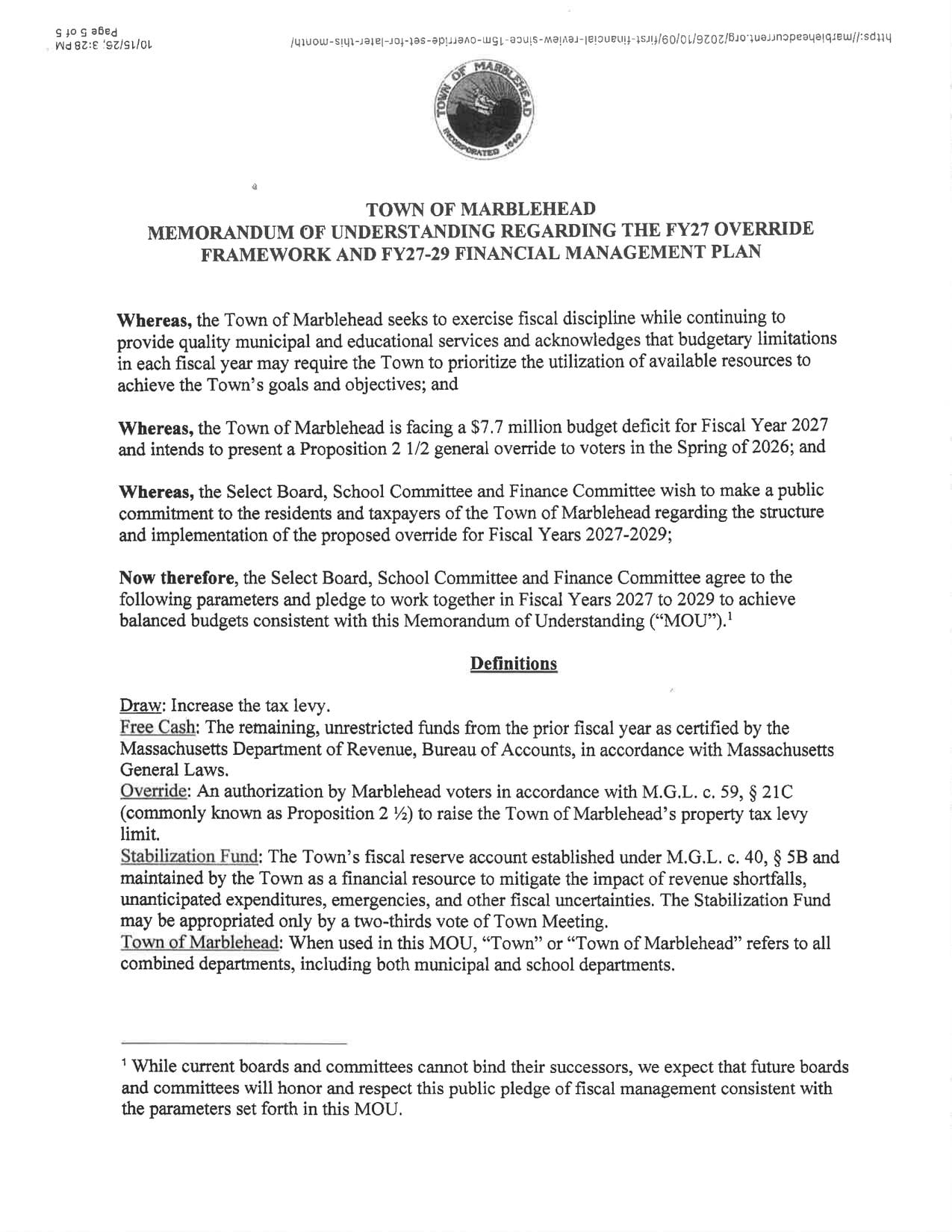
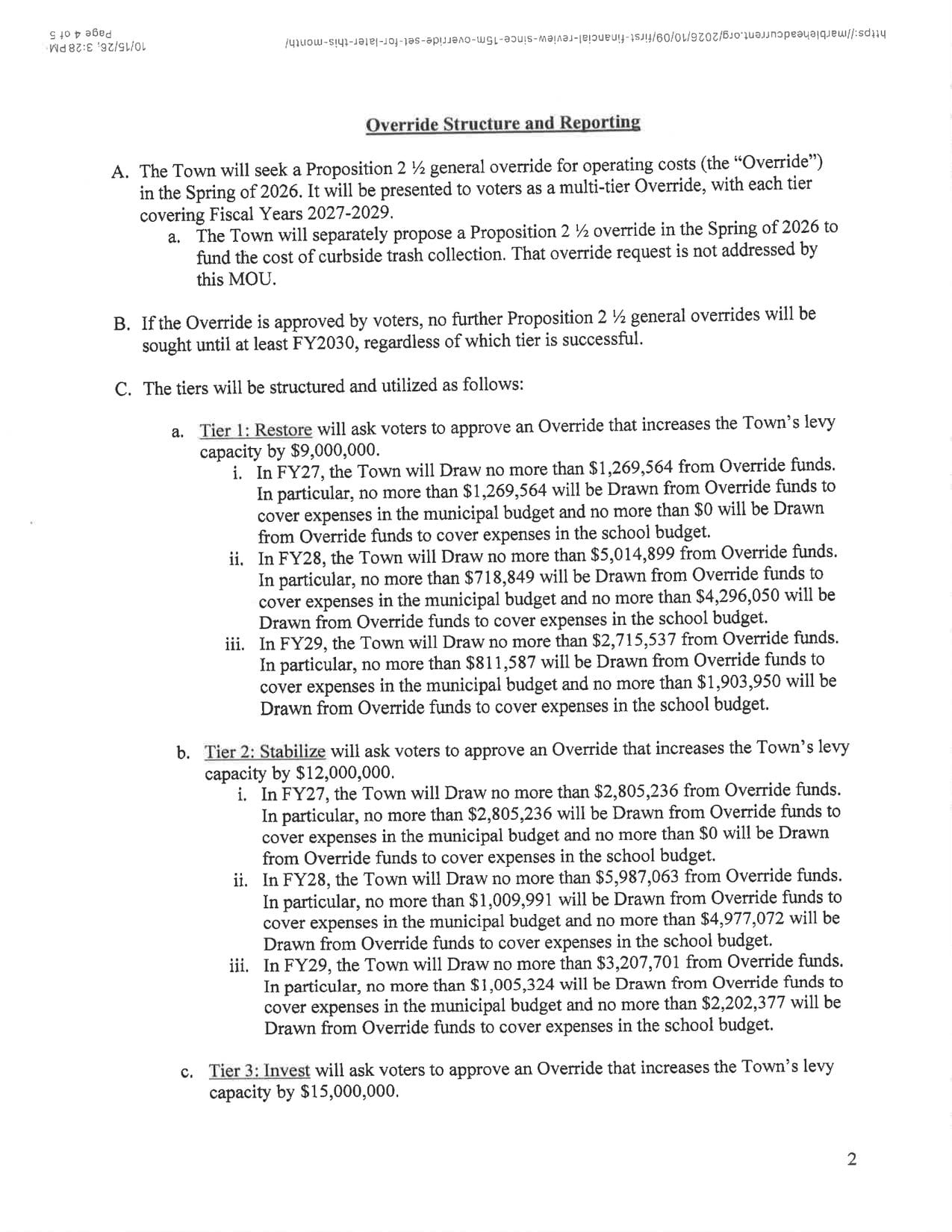
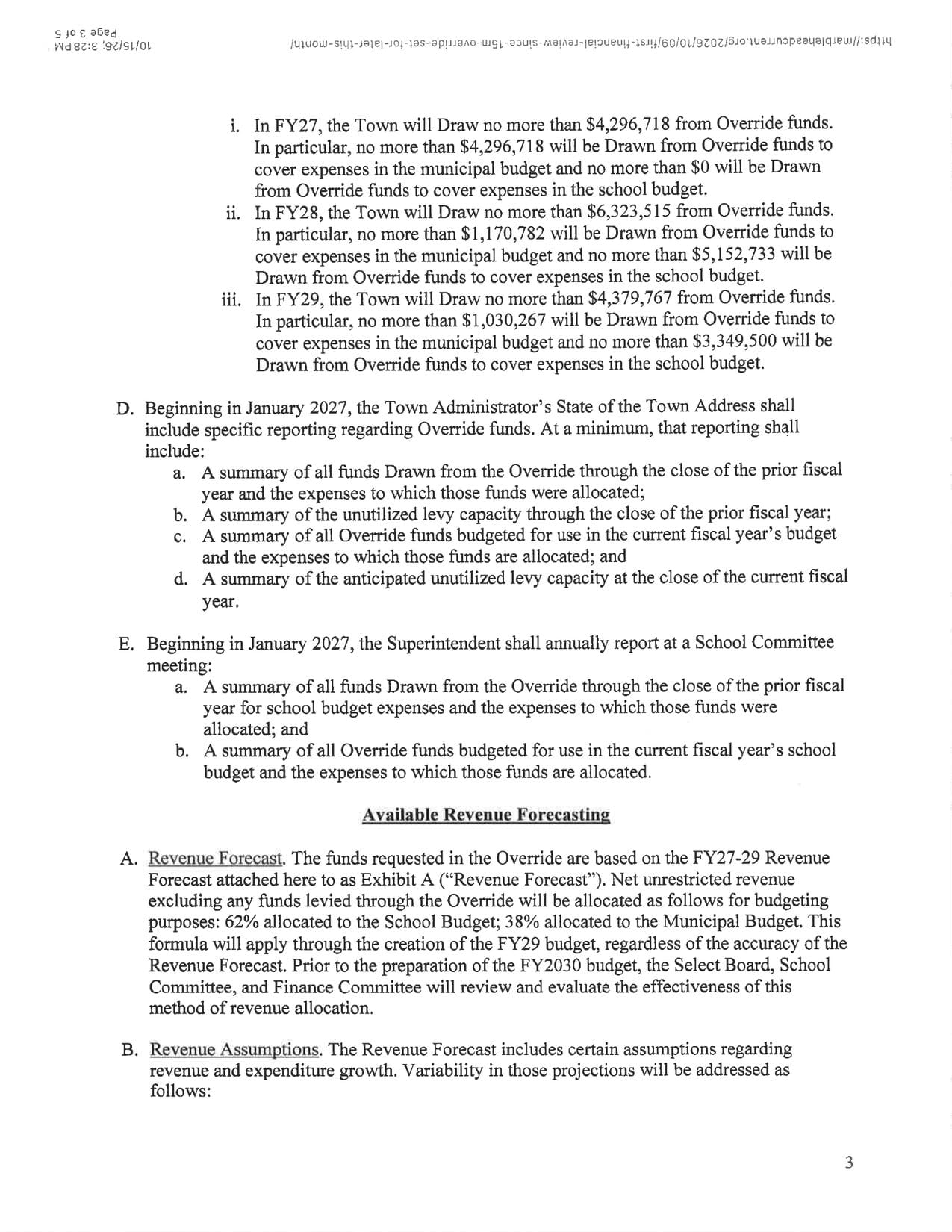
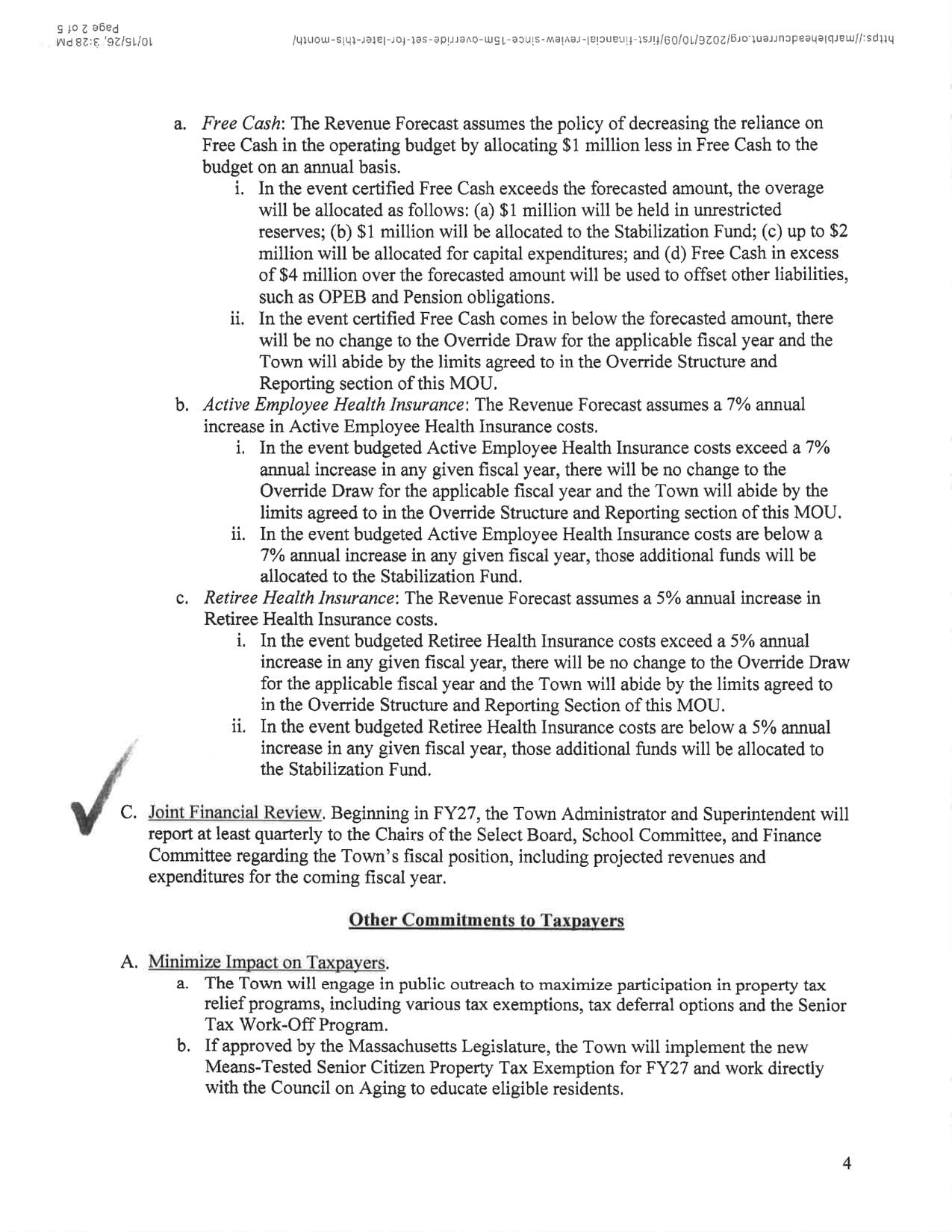
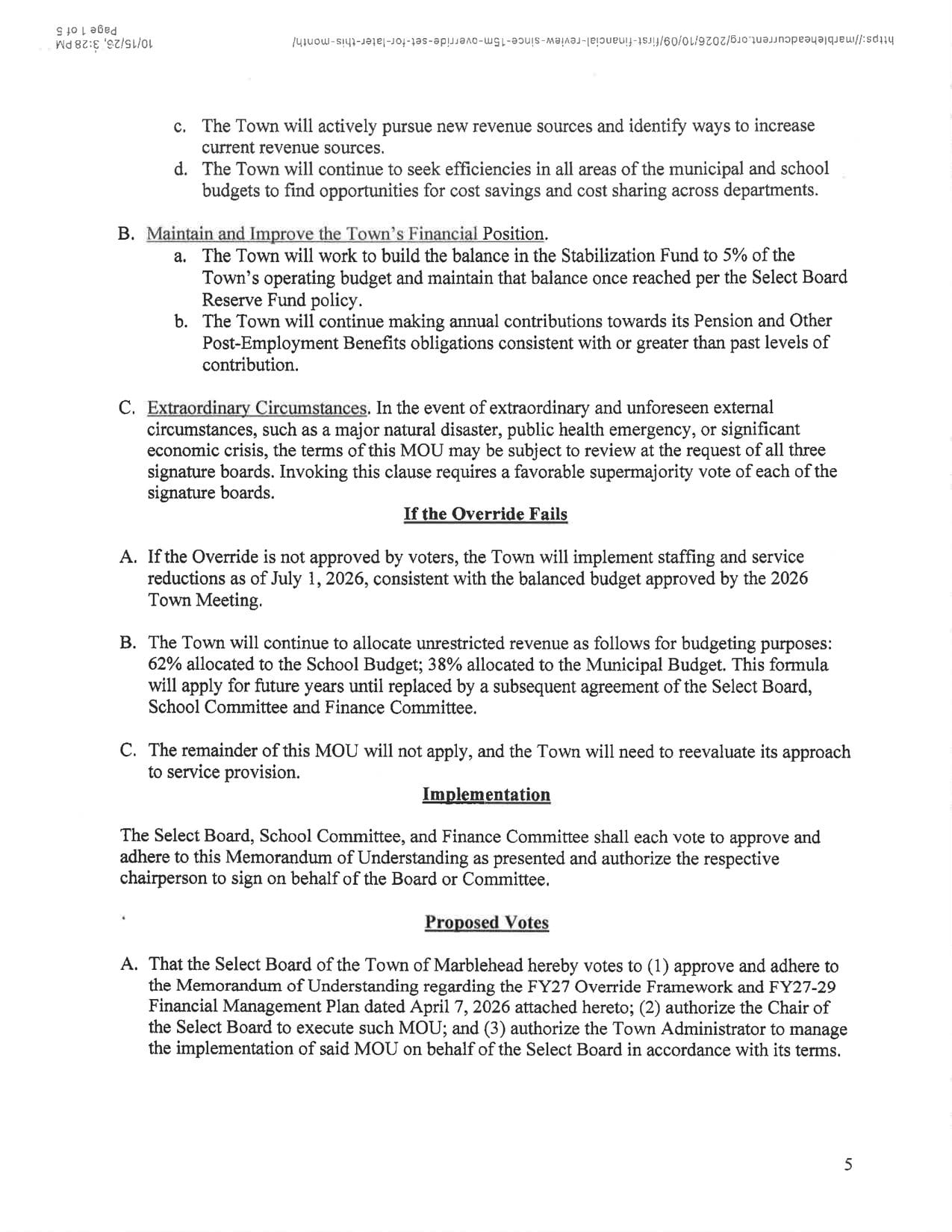
DiPiano’s complaint rests on one clause in the memorandum of understanding the three boards approved before voters passed a $15 million operating override June 9. Under the heading “Joint Financial Review,” it says the town administrator and superintendent will report at least quarterly to the chairs of the Select Board, School Committee and Finance Committee on the town’s fiscal position.
Castro wrote that the clause “does nothing more than require” each administrator to report to each chair.
“There is no requirement that any of these individuals meet, let alone that they meet as a group,” he wrote.
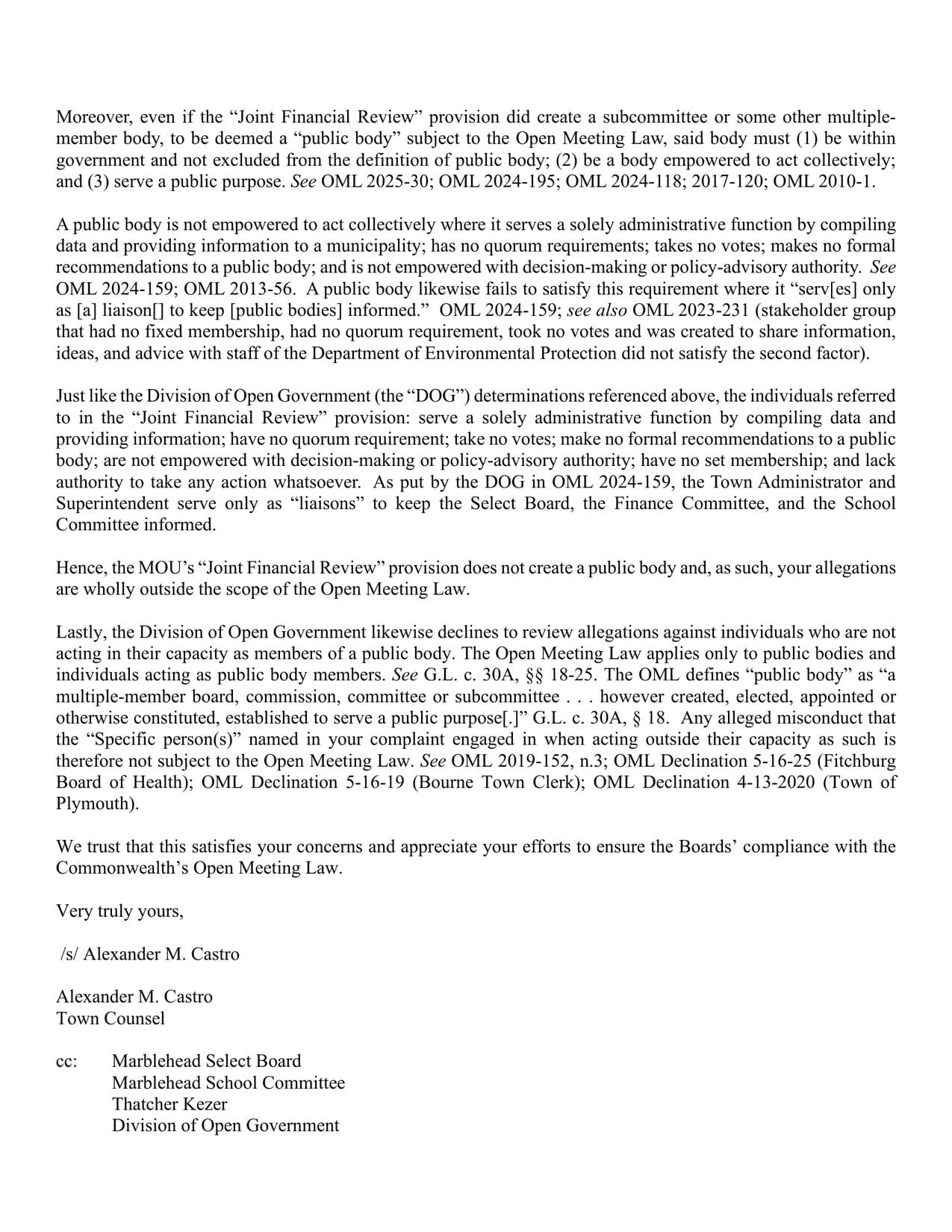
He then argued that the complaint would fail even if the clause had created a group. To count as a public body, he wrote, a group must sit within government, be empowered to act collectively and serve a public purpose. A group that only compiles data and provides information, with no quorum, no votes, no formal recommendations and no decision-making or policy-advisory authority, does not meet the second test, he wrote.
The people named in the clause fit that description, Castro wrote, adding that they “have no set membership” and that the town administrator and superintendent “serve only as ‘liaisons’” to keep the boards informed.
His last argument concerns the five people DiPiano names. The Division does not review allegations against individuals who are not acting as members of a public body, Castro wrote.
For support, the letter cites nine Division determinations and three letters in which the Division declined to review complaints. The Independent has not reviewed those decisions.
What it does not address
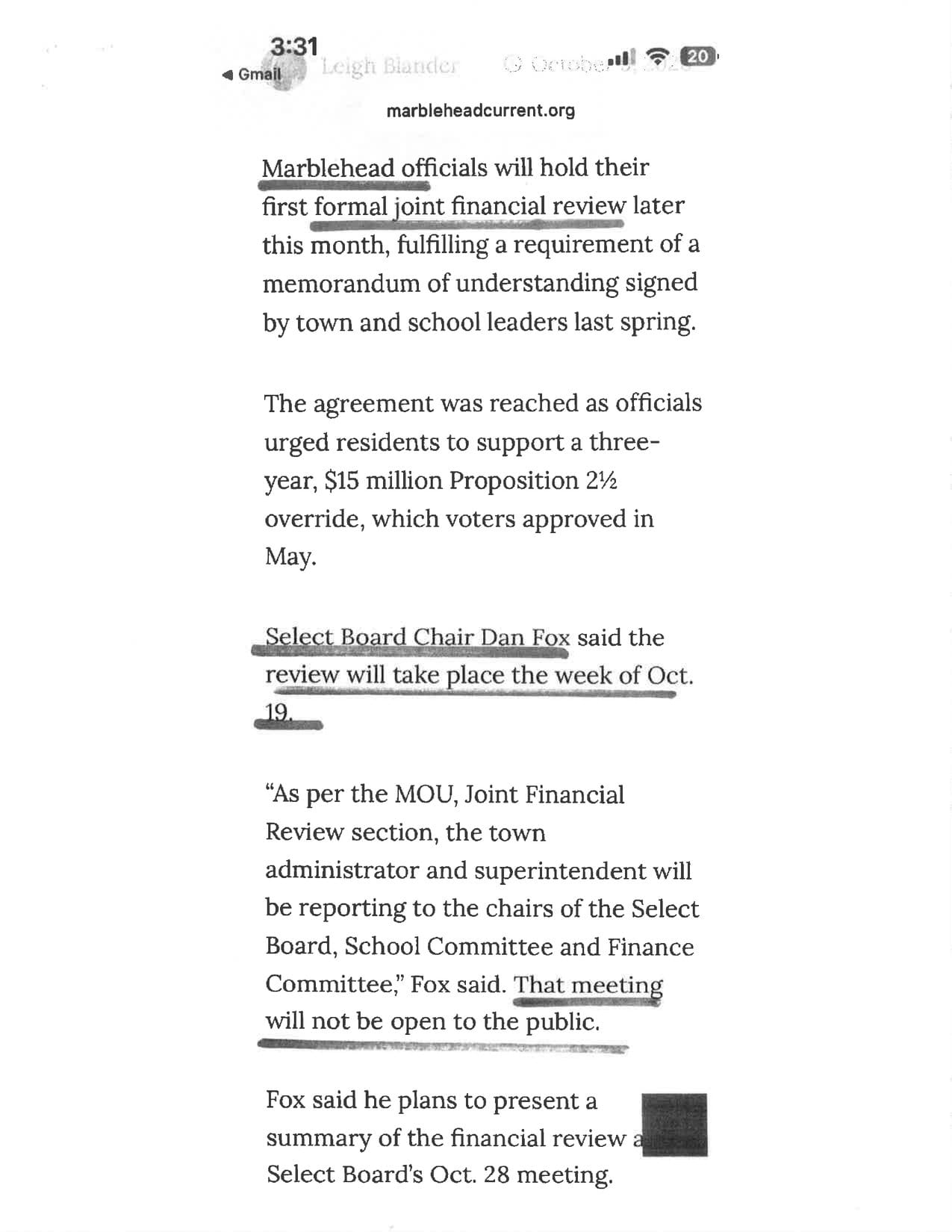
A School Committee update that member Henry Gwazda submitted to the Independent, published Oct. 22, said town leaders planned a first joint financial review during the week of Oct. 19 and that the meeting was not public. Select Board Chair Dan Fox has since described a daytime session that week as preparation for the first quarterly report, which he presented in public Oct. 28.
“There’s nothing to be discussed,” Fox told the Independent on Oct. 27. “It’s just a question of putting stuff together that’s presentable in a digestible way.”
He said officials were “formatting a PowerPoint presentation” and that no votes or policy decisions were made.
Castro’s letter does not describe that session. It does not say who attended, who arranged it or how long it lasted, and it does not take up the remedies DiPiano seeks. Its statements about votes, quorums and recommendations concern “the individuals referred to in the ‘Joint Financial Review’ provision,” not any particular gathering.
Select Board member Jim Zisson pressed Fox on Oct. 28 about what, legally, the session was: a working group, a subcommittee or an executive session. The letter answers that question only as to the agreement’s wording. The Board voted unanimously that night to have counsel respond to the complaint.
What DiPiano alleges
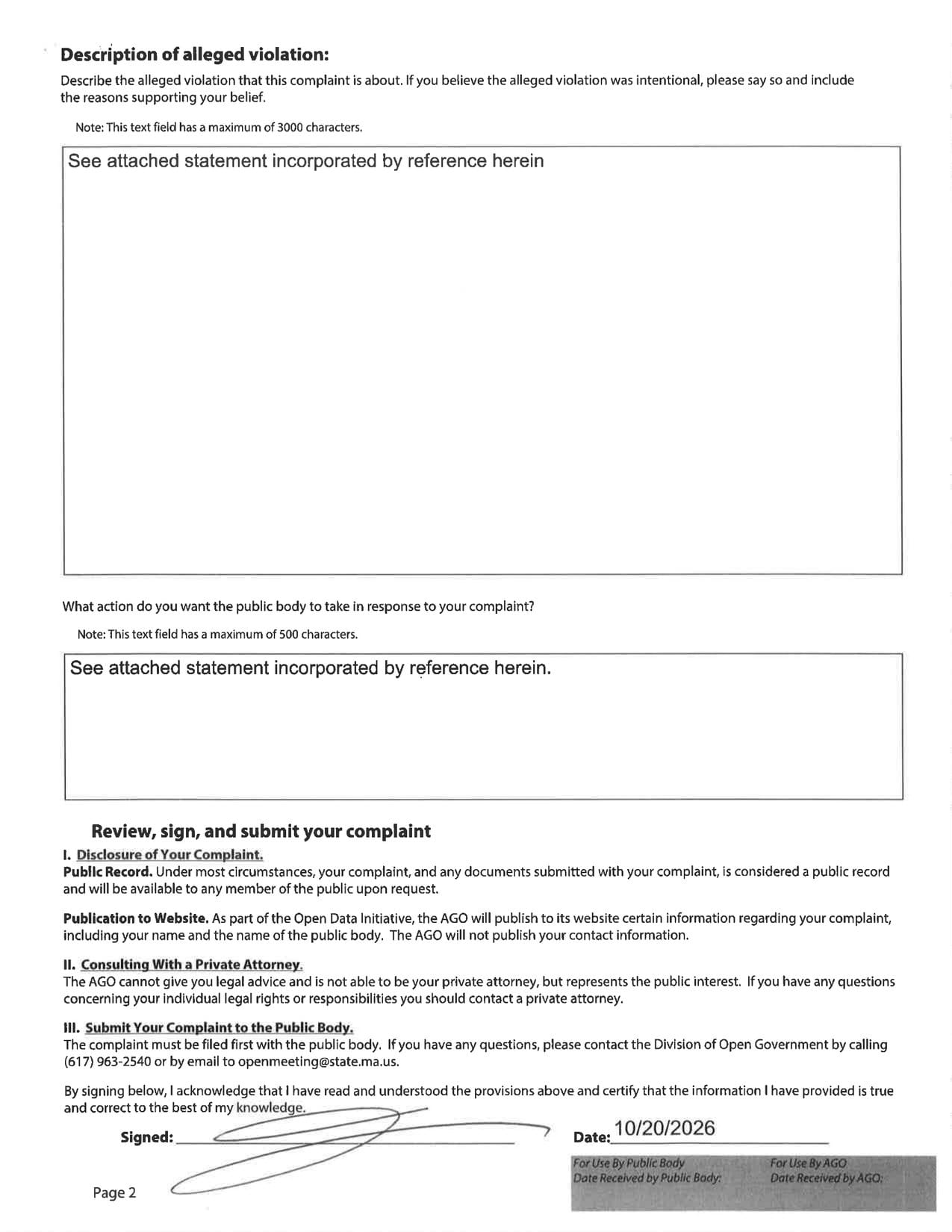
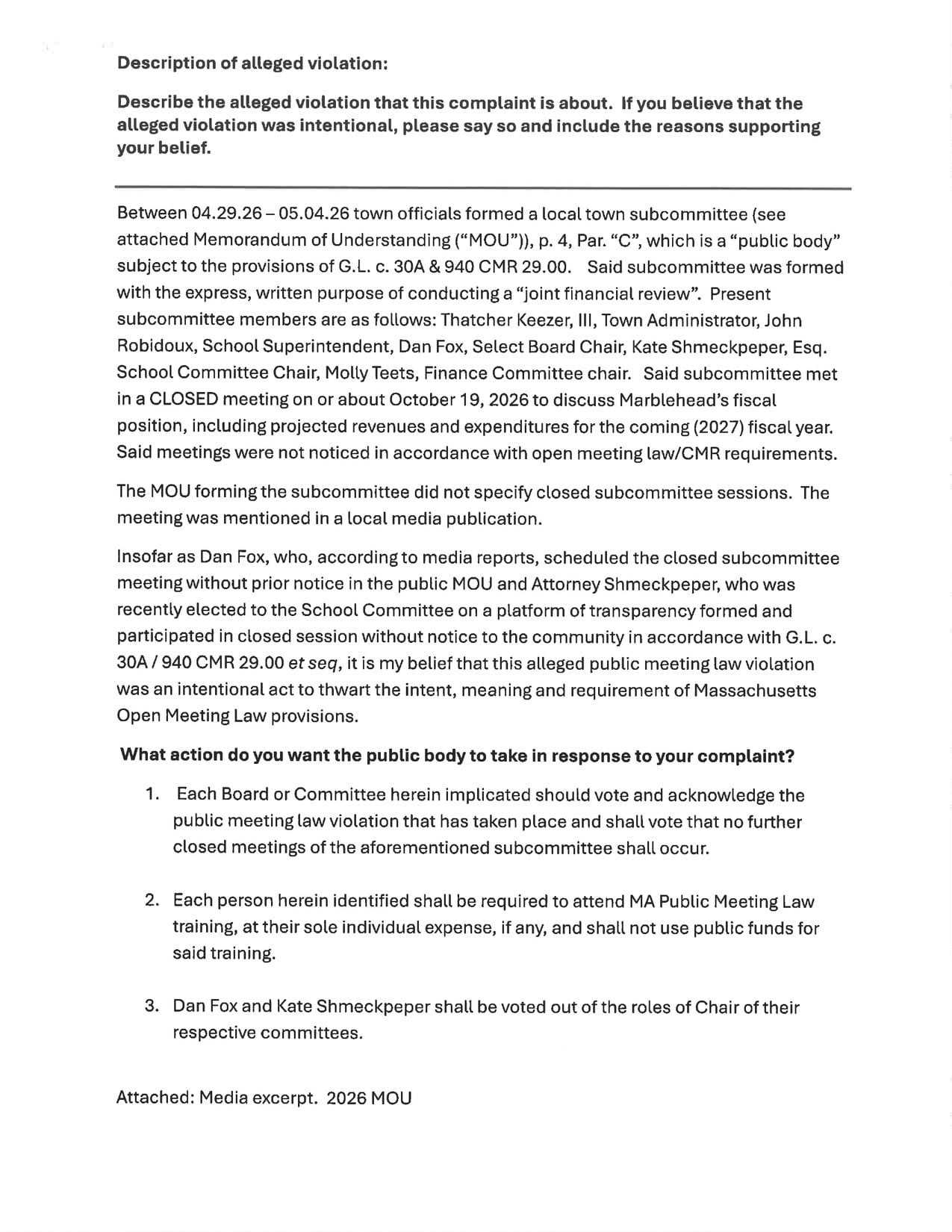
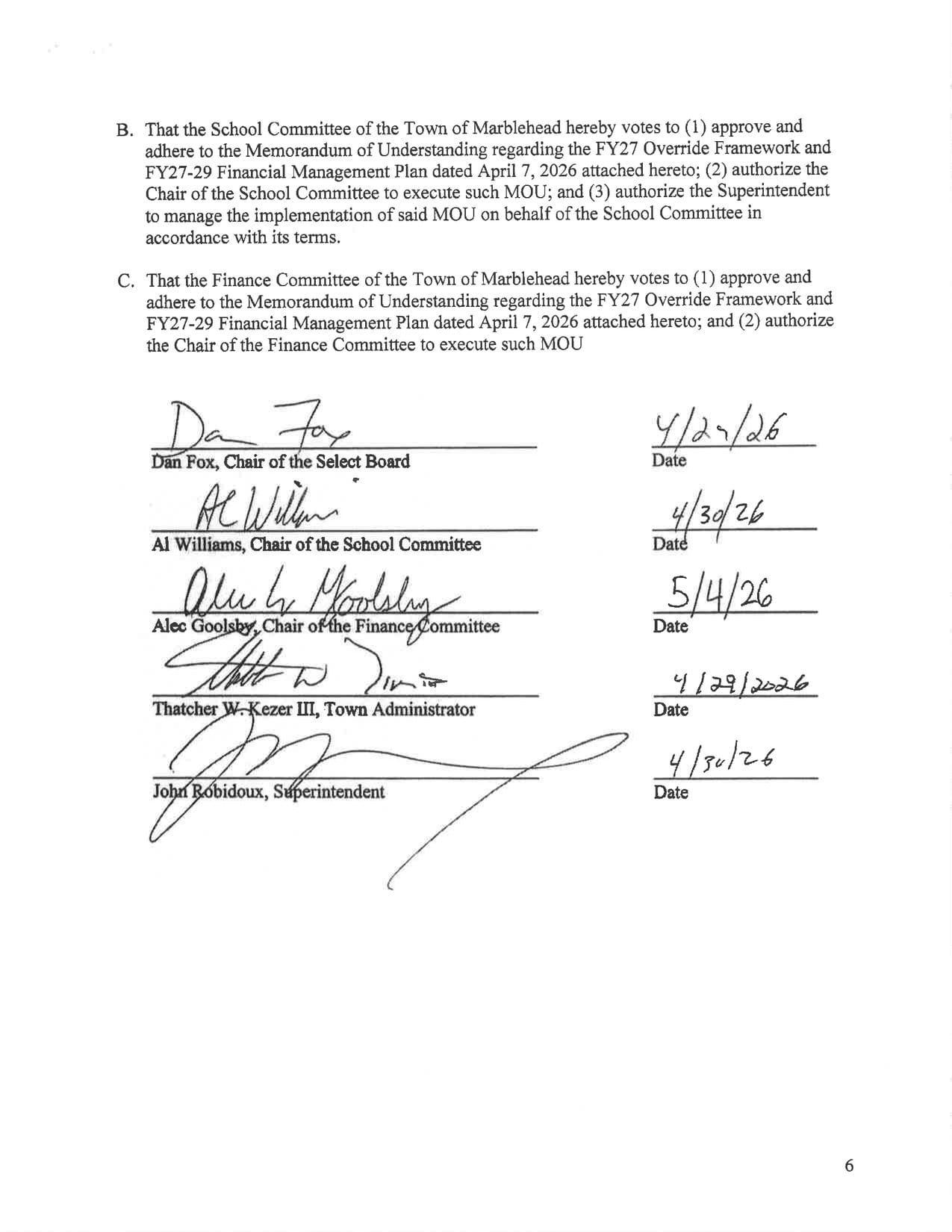
DiPiano, who worked on Better Way Marblehead’s campaign against the override, filed the complaint Oct. 20. It contends that town officials formed a subcommittee between April 29 and May 4, the span of the signature dates on the memorandum, and that the subcommittee met in a closed meeting on or about Oct. 19 without the notice the law requires.
It names Fox, Town Administrator Thatcher Kezer, Superintendent John Robidoux, Kate Schmeckpeper and Molly Teets, and identifies Schmeckpeper as School Committee chair and Teets as Finance Committee chair. The memorandum was signed by Fox, Kezer, Robidoux and the chairs of those two boards last spring, Al Williams and Alec Goolsby.
DiPiano wrote that he believes the violation was “an intentional act to thwart the intent, meaning and requirement of Massachusetts Open Meeting Law provisions.”
He asks each board to vote to acknowledge a violation and to bar further closed meetings; each named official to take Open Meeting Law training at personal expense; and Fox and Schmeckpeper to be voted out as chairs.
DiPiano did not respond to questions the Independent emailed Nov. 11.
What comes next
The letter does not indicate that the Division has acted on the complaint.
A separate public records request, filed Oct. 22 by resident Allen Waller, seeks communications among the five officials from Oct. 12 to 26. The Independent has not confirmed whether the town has answered it.
The next quarterly update, and the next round of preparing it, is expected in mid-January.
BEFORE YOU GO … Our reporting remains free and open to all. It is sustained by readers who choose to support it — by contributing so that routine, document-based local reporting continues without paywalls or promotional framing. Right now, 133 readers support The Marblehead Independent with monthly or annual contributions. Click here to become an Independent member.