Table of Contents
Get our free local reporting delivered straight to your inbox. No noise, no spam — just clear, independent coverage of Marblehead. Sign up for our once-a-week newsletter.
Marblehead’s Recreation and Parks Commission on Tuesday walked residents through a $3.6 million plan to transform the aging Green Street rink into a covered, refrigerated sports deck funded entirely by a decades-old bequest and private donations, laying out a vision for a self-sustaining municipal facility that would serve hockey, lacrosse, soccer and community skating year round.
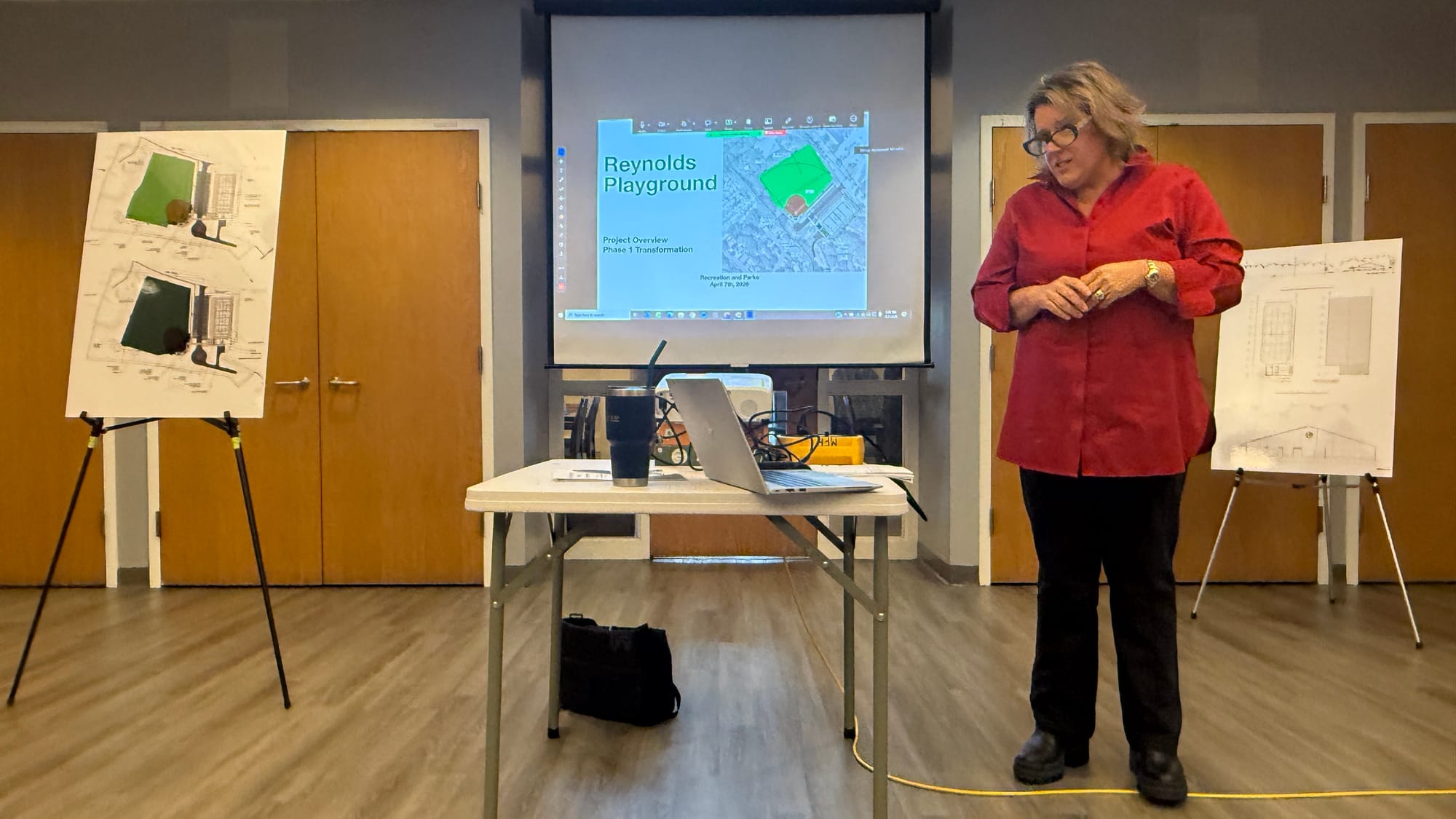
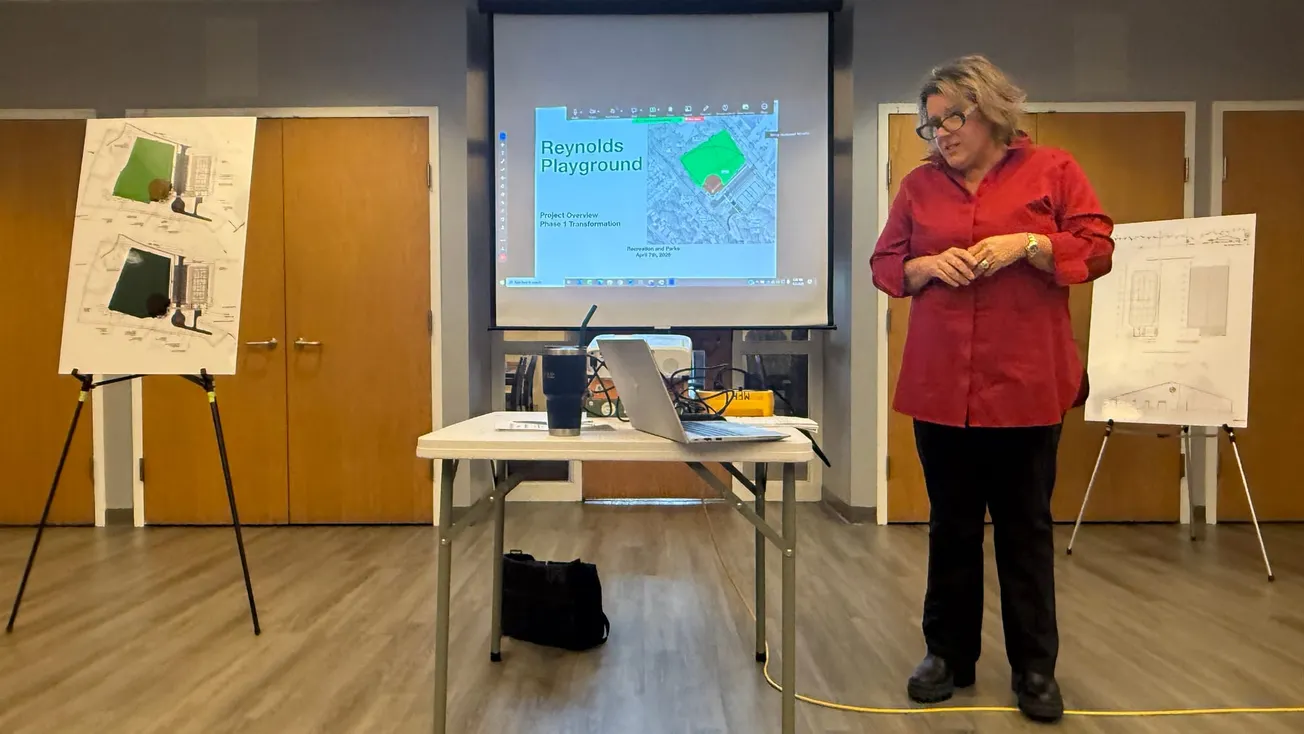
Commissioner Shelly Curran Bedrossian led the public meeting, presenting the project as one that would rely on rental fees to cover operating costs and future equipment replacement rather than the town’s general fund. The plan centers on Reynolds Playground and is built around a bequest from Larz Anderson granted in 2018, originally valued at $2.2 million and now worth about $3.3 million after an additional $800,000 was added.
Phase 1, budgeted at roughly $3.6 million and fully funded by the Anderson bequest, would build a 170-ft-by-70-ft sports deck — 85% of regulation game-sheet size — under a pavilion-style airnasium roof. Bedrossian said a full regulation rink, which she believes Anderson originally envisioned, would cost more than $10 million to $12 million and would displace other town properties. Two legal rulings require the money be spent on property in Marblehead.
Line items include a $635,000 refrigerated base, an $835,000 roof, $195,000 in dasher boards and glass, $166,000 in modular turf. The modular turf would roll out when ice is not installed, giving soccer and lacrosse programs a covered practice surface for about 20 weeks a year.
Youth sports leaders lined up in support. Mike Calabrese, outgoing president of Marblehead Youth Hockey, said families currently drive to Salem State, Lynn, Andover and Revere for ice time, with some Saturday practices starting at 6:30 a.m. and weeknight practices ending at 10 p.m. Incoming president Emily Ries said the program fielded five Mite teams last season and had to rotate practice slots so only three teams could skate on a given Wednesday.
Dennis Whelan, president of Marblehead Youth Lacrosse, argued synthetic turf is safer for his sport because the ball sits up on the surface rather than burying in grass. Patrick Noonan, representing Marblehead Youth Soccer, said his organization runs about 900 players each fall and spring.
Four Mite players — Eleanor Ries, Emmy Fox, Rosie Inglis and Mickey Garnitz — read a joint statement describing practices in Lynn and Revere that force them to leave Marblehead by 4:15 p.m. and return home after 7:30 p.m.
“And we really hope the rink is built so we can enjoy the sport we love, in the town we love,” they said.

Adam Corbeil, a parent who arrived at the meeting after picking up his children from out-of-town sports practices, told commissioners the project already reflects what a municipal facility should do — keep families in town and give them a place to gather.
“This field’s already doing what it’s designed to be, and that’s to bring everybody together to stay in town,” Corbeil said. He praised the level of care town officials had given environmental questions about turf and said the benefit would reach thousands of residents. Corbeil also pointed to the Marblehead youth hockey program’s longstanding exchange with St. Lambert, Quebec, saying a modern facility would give the town something to offer visiting families in return.
Bedrossian said the commission chose a split-chilling refrigeration system over air-cooled or geothermal options in part because it cuts noise by roughly 40 decibels compared with air-cooled units. Five layers of noise mitigation are planned: the split chillers; a 10-ft fence on the north and east sides; Accoustiblock fabric that adds another 10-decibel reduction; arborvitae plantings; and the dasher boards, shielding and airnasium roof.
Energy modeling points to about 200,000 kilowatt-hours over a 120-day season at an average 35 degrees, a figure Bedrossian said was triple-verified by CHA Consulting engineers, the Marblehead Municipal Light Department and ChatGPT. Seasonal electricity is projected at roughly $35,990 at 35 degrees, ranging from about $28,585 at 25 degrees to $49,594 at 50 degrees. Solar was explored but only one side of the roof faces south, offering about 6,500 sq ft of viable surface out of 13,000 sq ft.
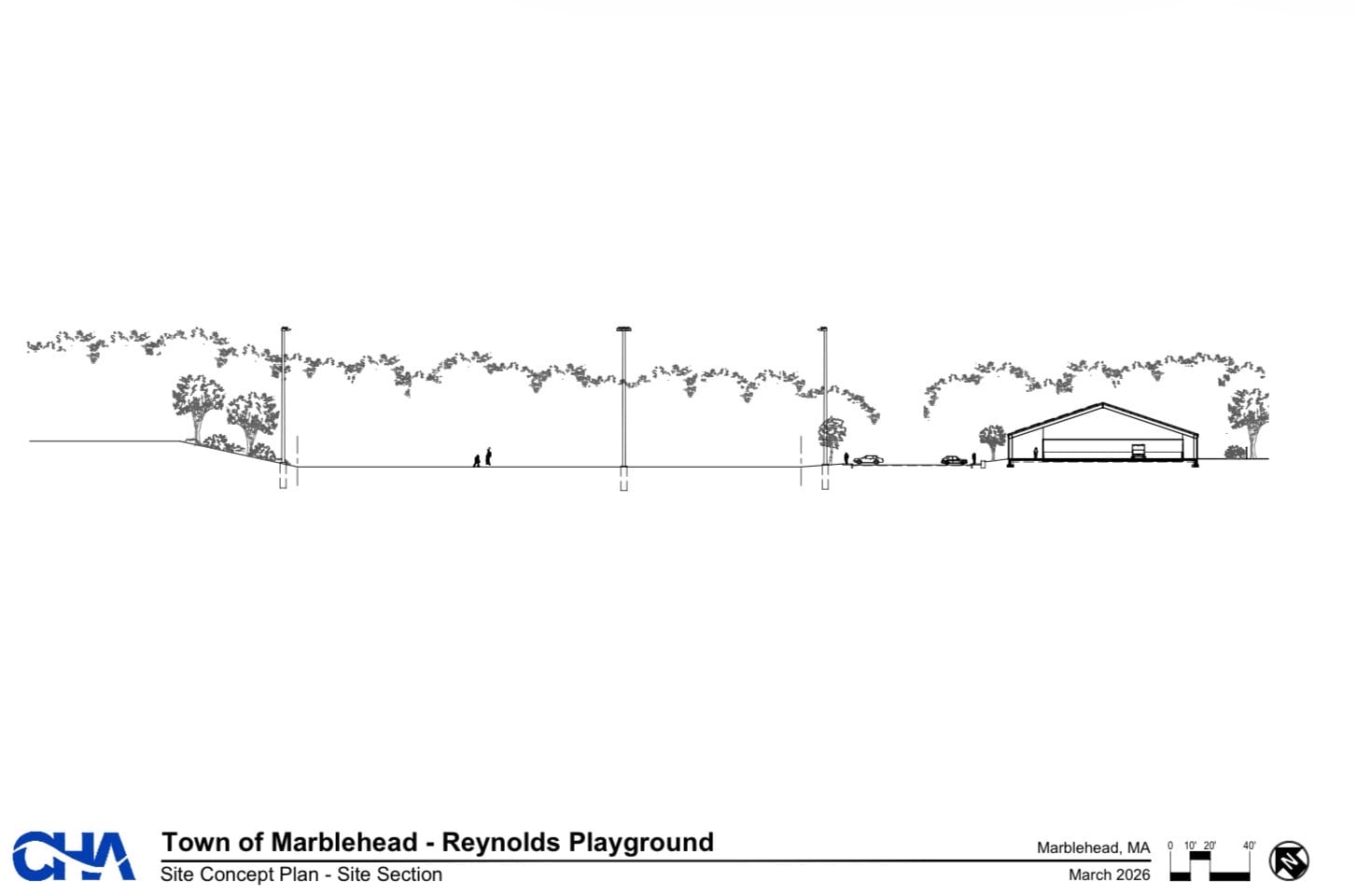
Phase 2, which would rebuild the adjacent softball diamond and add a multiuse field, remains unsettled. The commission has not yet chosen between natural grass and synthetic turf, and no funding source is identified. Bedrossian said operating costs diverge sharply: natural grass would run about $52,680 a season, including $25,480 for water and $27,200 for labor, while synthetic turf would cost about $9,187. She also cited an April 2024 report from the U.S. Environmental Protection Agency and the Centers for Disease Control and Prevention finding that urinary polycyclic aromatic hydrocarbon levels rose in children after play on both grass and synthetic surfaces, with no difference between field types.
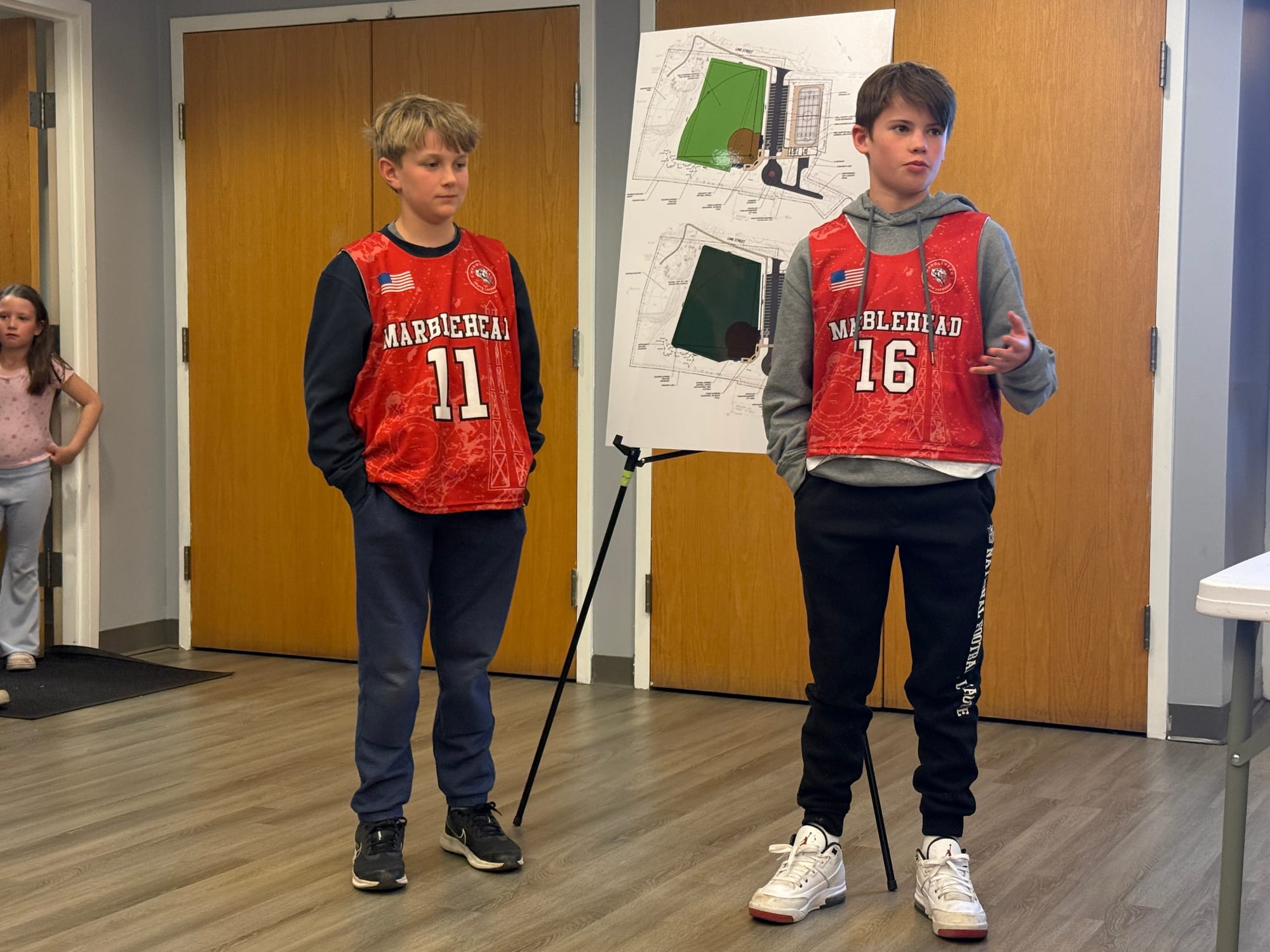
Pete Jaffe, speaking for the Marblehead men’s softball league, said the nearly 90-year-old league and its roughly 120 players support the rink but oppose the current Phase 1 layout, which would add a 42-stall parking lot where right field now sits. He asked for an overlay showing the new design against the existing field before any commission vote.
“We’re not asking for anything crazy,” Jaffe said. “We want everyone in that town to use that field year round.”
Commissioner Chris Kennedy, a 25-year softball league participant, said designers are working to preserve as much playable space as possible and that final diamond dimensions are not set.
Phase 3, a package of neighborhood improvements, would expand parking from 2 to 41 spaces, redesign Winslow Square and add Green Street sidewalks to the town’s Complete Streets priority list. It’s price tag is to be determined. The commission separated that phase to pursue federal grant funding for accessibility work.
The commission must still send the Phase 1 budget to the Select Board for approval. Bedrossian said construction would take six to eight months, with procurement beginning in May and a target opening of late 2026 or early 2027.
BEFORE YOU GO … Our reporting remains free and open to all. It is sustained by readers who choose to support it — by contributing so that routine, document-based local reporting continues without paywalls or promotional framing. Right now, 101 readers support The Marblehead Independent with monthly or annual contributions. Click here to become an Independent member.