Table of Contents
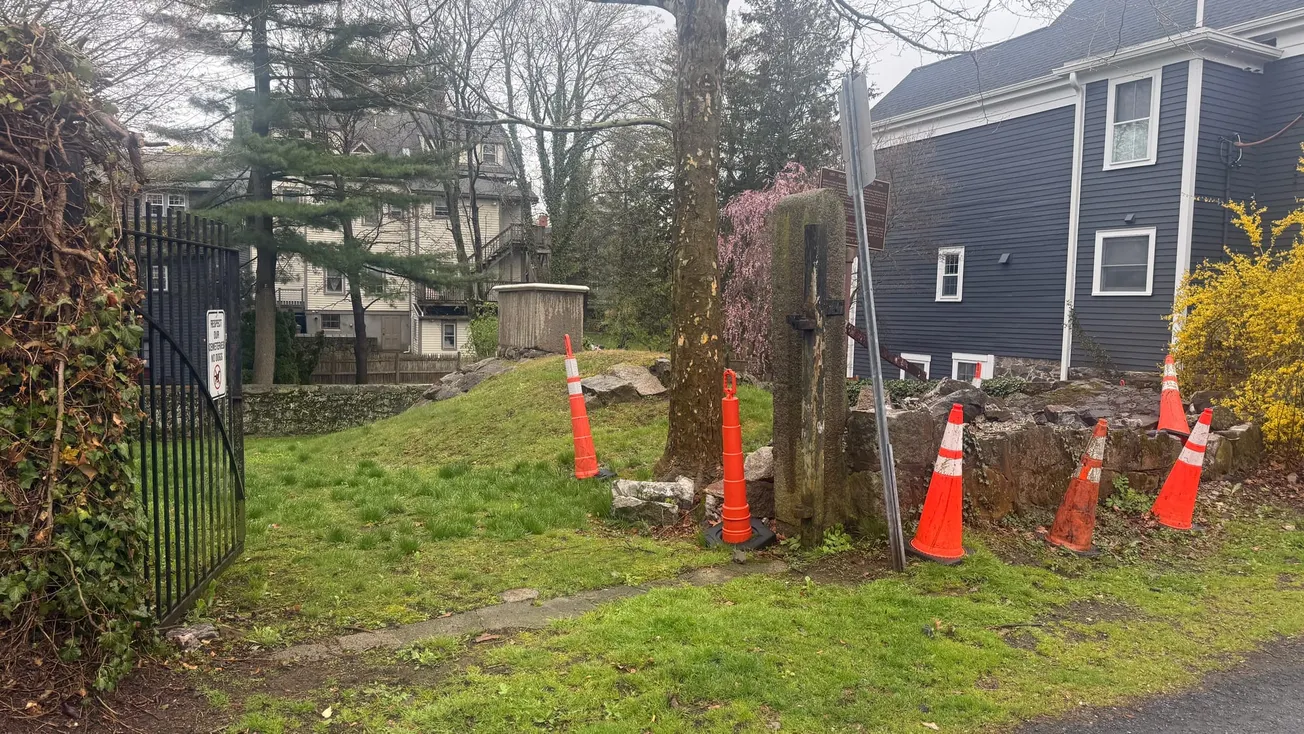
The Harris Street Cemeteries Oversight Committee is preparing to launch the first phase of restoration at the Hooper Tomb this summer, with an estimated $40,000 in initial work that would rebuild the collapsed stone wall to roughly the 3-foot level and reorganize the site for future phases.
David Bittermann, who chairs the committee, told the Marblehead Historical Commission at its most recent meeting that he and commission Chair Pam Peterson met March 30 with Alison Jenkins, the town’s chief procurement officer, who agreed that phasing the project was a sound strategy. Jenkins will issue a solicitation for bids in the coming months once the committee secures funding commitments and finalizes plans and specifications.
The committee plans to seek the $40,000 from the Shattuck Fund, the same source the commission has tapped for past preservation work. Total cost of restoring the Hooper Tomb wall is expected to substantially exceed that figure, Bittermann said, which is why the work will be divided into stages. The wall would be reconstructed using the original stones, which remain on site.
Peterson said dividing the project into stages was the most workable path forward given limited funding.
“There’s a very good solution, to divide it, to do it in two stages so that it becomes more affordable for us,” she said.
In addition to the wall project, the committee is exploring a geophysical survey of the Hooper Tomb plot using ground-penetrating radar. John Steinberg of the Fiske Center for Archaeological Research at the University of Massachusetts Boston met with the committee in February to discuss the proposal. The survey would help identify unmarked burials — believed to number around two dozen inside the tomb itself, with additional graves possibly located outside the tomb based on local accounts of missing headstones.
Bittermann said the radar work would not disturb the ground and could help mark vulnerable sites to protect them from future equipment damage, while potentially also revealing shallow broken headstones. The survey is not on the critical path of more urgent restoration needs and would be pursued through separate planning grants.
The Massachusetts Preservation Project funding source, originally targeted as a possible contributor to the restoration, is not available this cycle, Bittermann said. He added that the committee will continue searching for other grant sources as funding rounds reopen.
Pat Franklin, who handles preservation grant work for the commission, offered to make initial inquiries with the Massachusetts Historical Commission about other potential funding opportunities beyond the neighborhood survey work she has long managed.
Beyond physical restoration, the committee continues work on historical research, a web page, signage and neighborhood engagement. It also plans a two-day public cleanup of all three sites — Harris Street Cemetery, the Hooper Tomb and the Captain Martin Tomb — repeating last year’s volunteer effort, which focused on the western end of Harris Street Cemetery.
Peterson said the commission will move forward with the Shattuck Fund application without a formal vote, treating the meeting discussion as informal endorsement of the project.