Table of Contents
Get our free local reporting delivered straight to your inbox. No noise, no spam — just clear, independent coverage of Marblehead. Sign up for our once-a-week newsletter.
The ladder was the strange part. To reach the fireworks that would light Marblehead Harbor on the Fourth of July, you first had to climb from the deck of a boat up onto a barge crowded with hundreds of black mortar tubes, each one waiting for a shell, a wire and a spark.
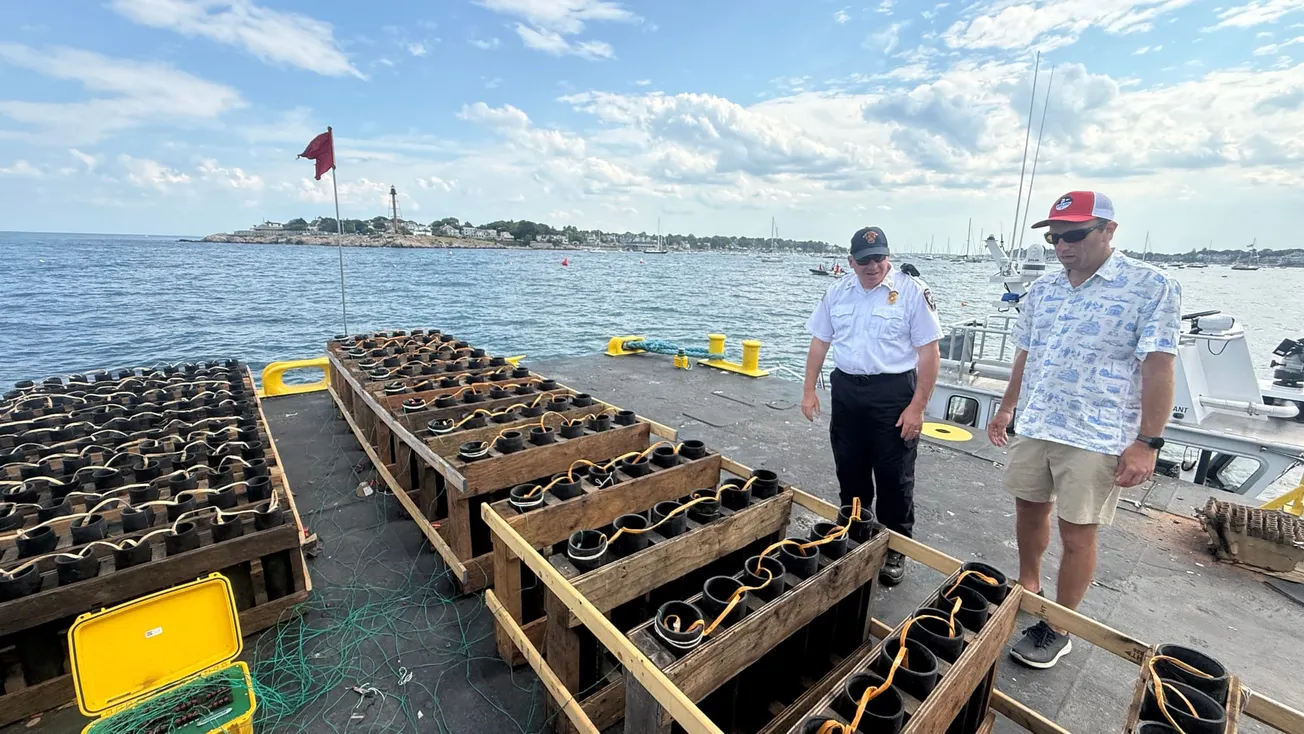
At about 4 p.m., Fire Chief Jason Gilliland rode out on the harbormaster boat Stacey Clark for the final safety check before the town display. The group climbed the ladder onto the barge, where fire officials, the harbormaster and a licensed pyrotechnics crew had one job left before dark: make sure everything was dry, spaced, secured and wired exactly where it was supposed to be.
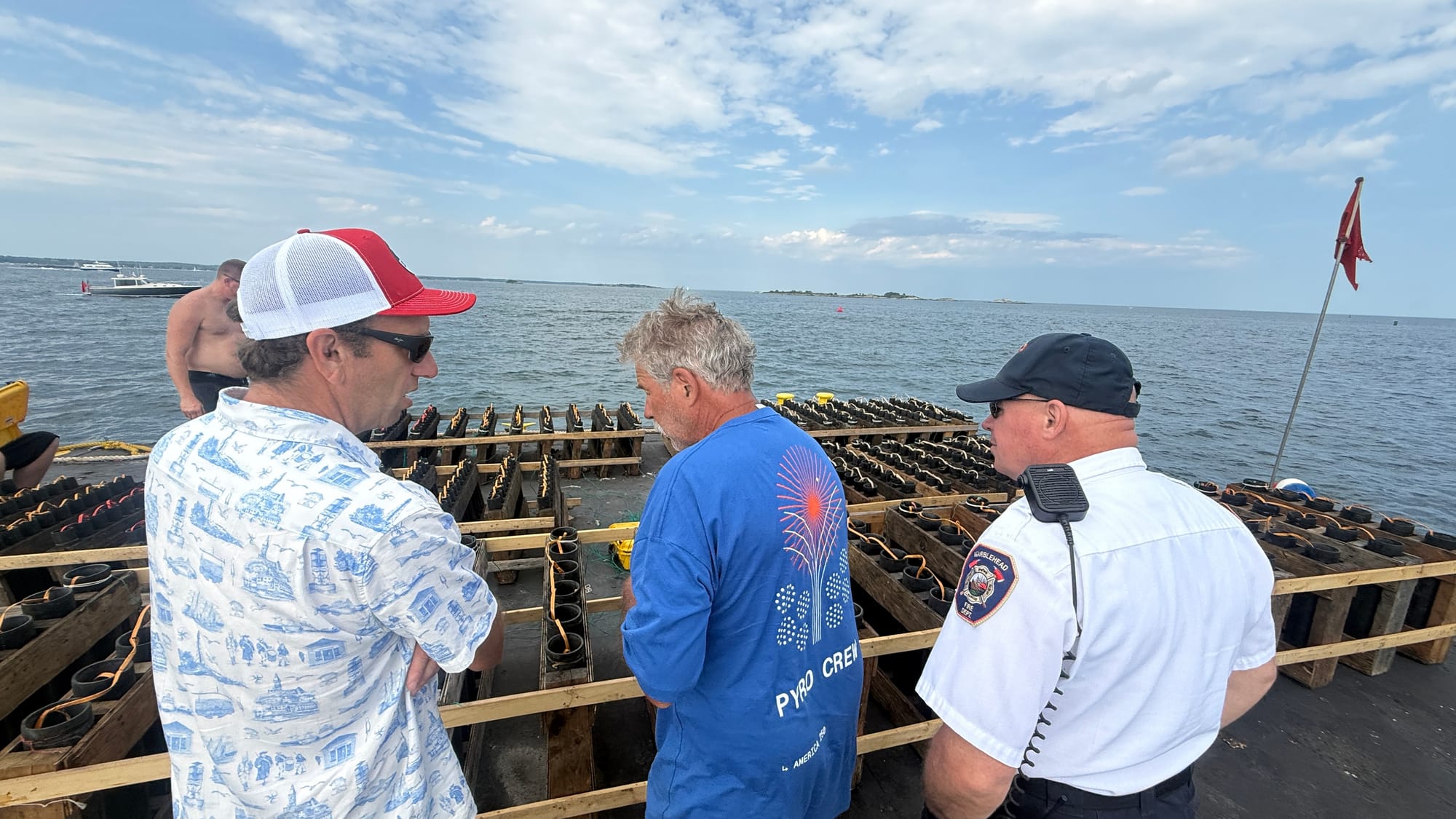
Also aboard were Fire Prevention Capt. Gregg McLaughlin, Harbormaster Mark Souza and Select Board Chair Dan Fox. Waiting on the barge was Peter Hanson, the licensed shooter, and his crew.
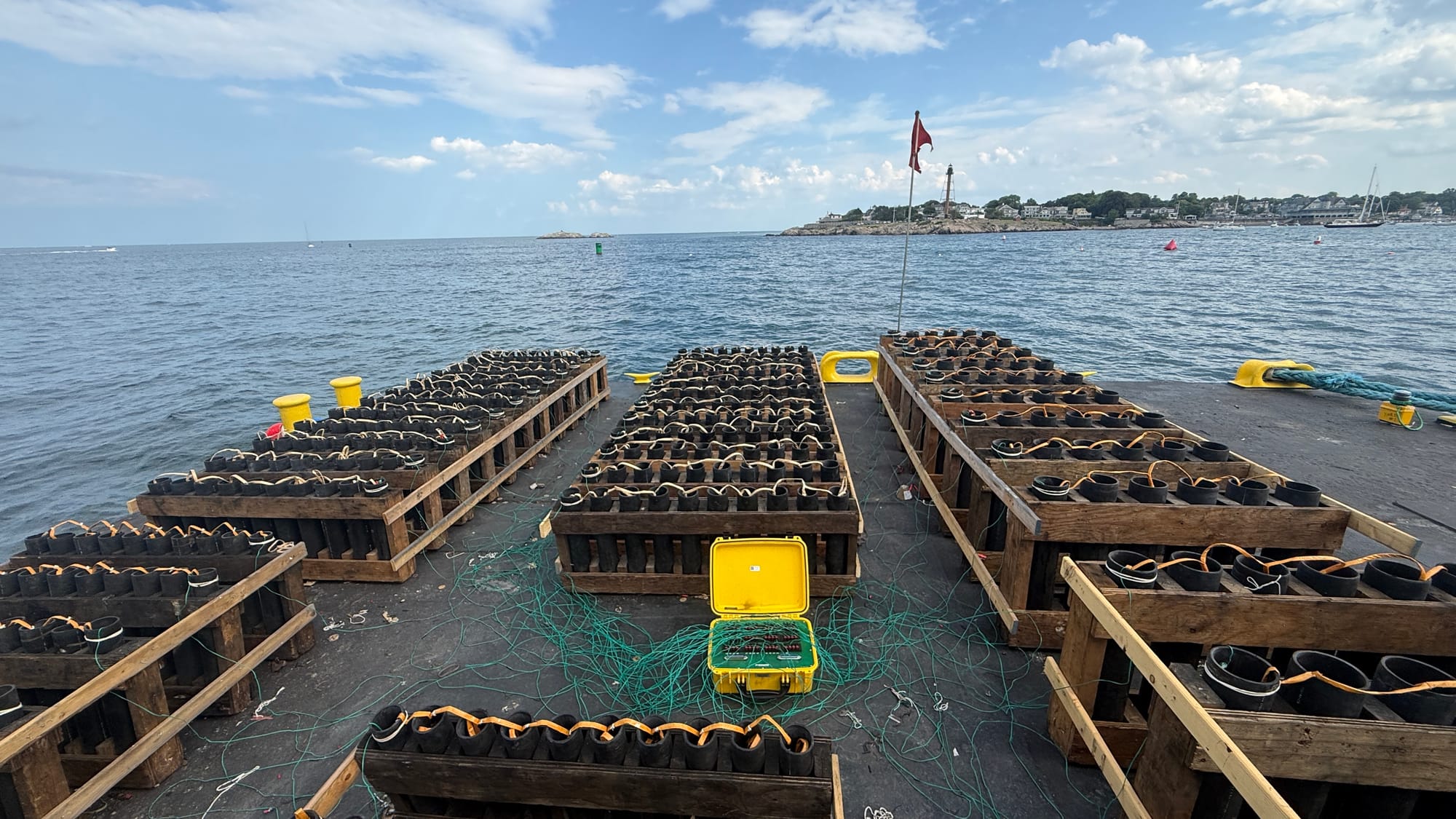
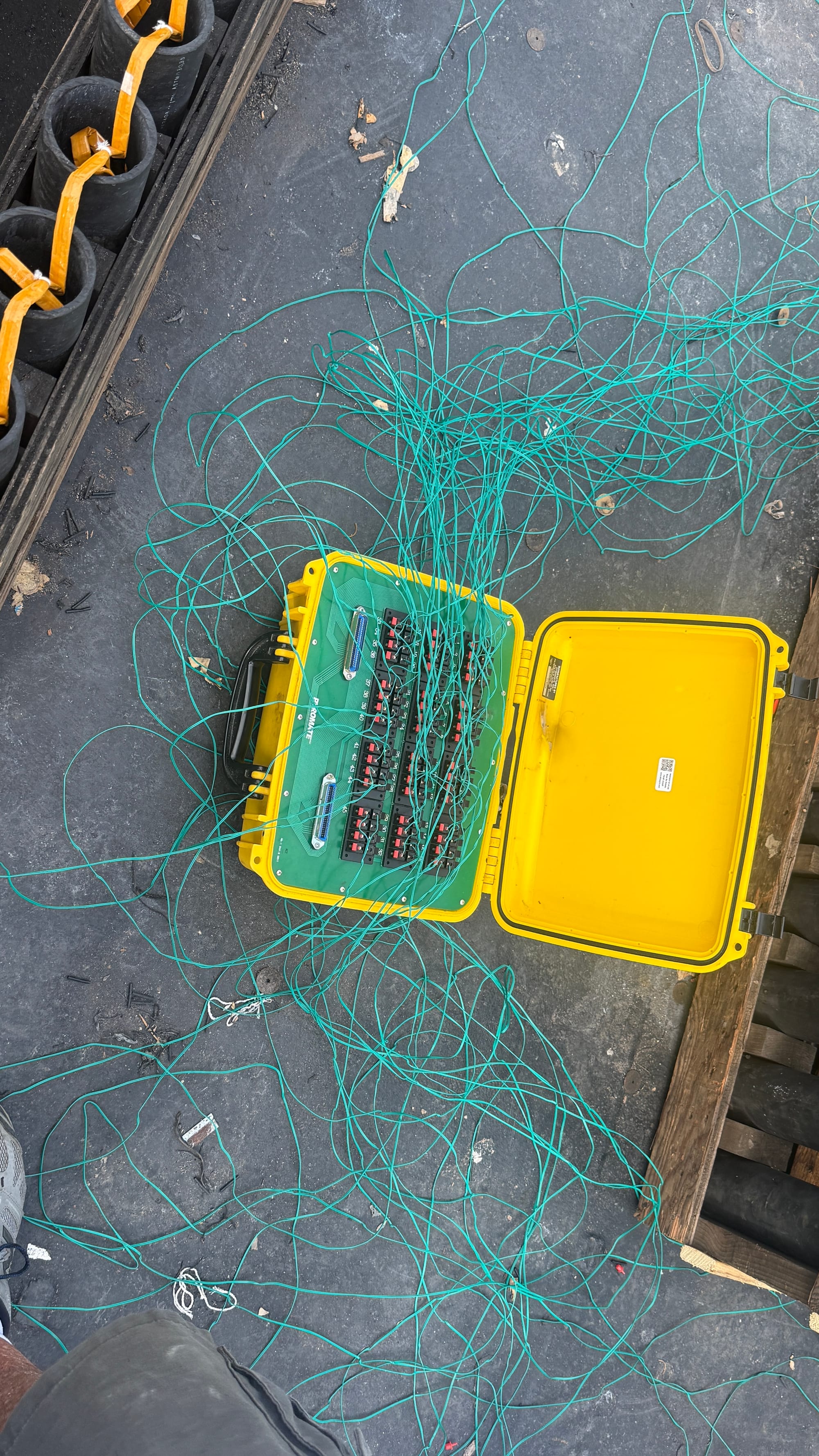
The barge sits in open water at the mouth of the harbor with Marblehead Light in the distance. Rows of black tubes stood in wooden racks. A red flag snapped overhead. There were yellow cleats, a shipping container, tangles of green firing wire and a yellow electronic firing-control case open on the deck. Crew members moved through the racks, checking connections.
Gilliland said he has helped plan Marblehead's fireworks as chief for 18 years, and worked on the show before that as a firefighter. The planning starts in the spring, he said, when the fireworks company applies for the permit. Gilliland reviews and approves it, and it goes to the State Fire Marshal's Office.
The week of the Fourth, town officials meet on the wider logistics: road barriers, security, trash barrels, emergency medical coverage and the harbor. The town brings in an extra ambulance and a small gator-type vehicle that can move between Fort Sewall and the Boston Yacht Club area, Gilliland said. Firefighters are stationed on the public safety boat and with the harbormaster.
The barge itself had come from the Swampscott and Lynn show the night before and was moved to Marblehead overnight. The fireworks arrived by truck around 8 a.m. and were ferried out, and the crew spent the day loading shells and wiring the show.
The inspection is not a formality. Gilliland said the fire officials work from a state checklist, confirming the racks and tubes are positioned properly, spaced properly and secured so they do not wobble. McLaughlin confirmed the checklist and said the maps and distances get submitted through the fire department to the state for approval. The state used to send inspectors more often, he said, but with so many shows it may now come out only every few years.
Weather sat over the whole day. Gilliland said passing thunderstorms were possible, and that rain matters most before the shells are loaded and covered, because the tubes have to stay dry. Once the shells are in and protected, he said, the show can technically be fired in rain, though visibility and quality would suffer.
This is not someone walking the deck with a lighter. Hanson said the show is fired electronically from a panel connected by cables to boxes and igniters out in the racks. An electrical impulse travels to an igniter, which lights a connected string of shells, some igniters firing several shells at once.
Hanson estimated the barge held roughly 500 to 600 shells connected to 440 igniters, counting the finale. The smallest shells in the finale were 2.5 inches, he said, and the largest were 6 inches. Fireworks generally rise about 70 feet per inch of shell diameter, Hanson said, so a 6-inch shell climbs to roughly 420 feet. When one of those fires, he said, you feel the barge shake as the lift charge goes off.
Electronic firing means more wiring, but Hanson said it is safer than the old hand-lit method and gives the show a steadier rhythm for the crowd. The fireworks themselves have not changed much, he said; the way they are fired has.
There is craft in it, too. The company sends a variety of shells, Hanson said, and the shooter arranges the rhythm, spacing and placement. Spreading the finale out makes it look bigger and fuller. He said he avoids doing things in pairs, following advice from his uncle, an artist, that a show should have a center point with positions off to either side.
The water was its own safety problem. The barge cannot move under its own power. A no-boat perimeter surrounds it, and a volunteer group helps keep it clear until 6 p.m., when public safety boats take over, one staged near the barge and another patrolling. Boats, weather, wind and misfires were the concerns named on the ride out.
While this story is still fresh, reader support helps keep this kind of local reporting free to read — from the planning that starts in spring to the final safety check on the water. Neighbors make it possible for The Marblehead Independent to cover the details behind town traditions, public safety work and the people who make both happen. 🟦 Become a member here.