Table of Contents
Karin Ernst crossed Lafayette Street on a recent Saturday morning with one specific goal: to say thank you to the 20+ volunteers planting a pollinator garden in Glabicky Field.
“That’s my house,” she said, pointing to a home just across the busy roadway. “I’m going to get to see this all the time … I just wanted to say thank you.”
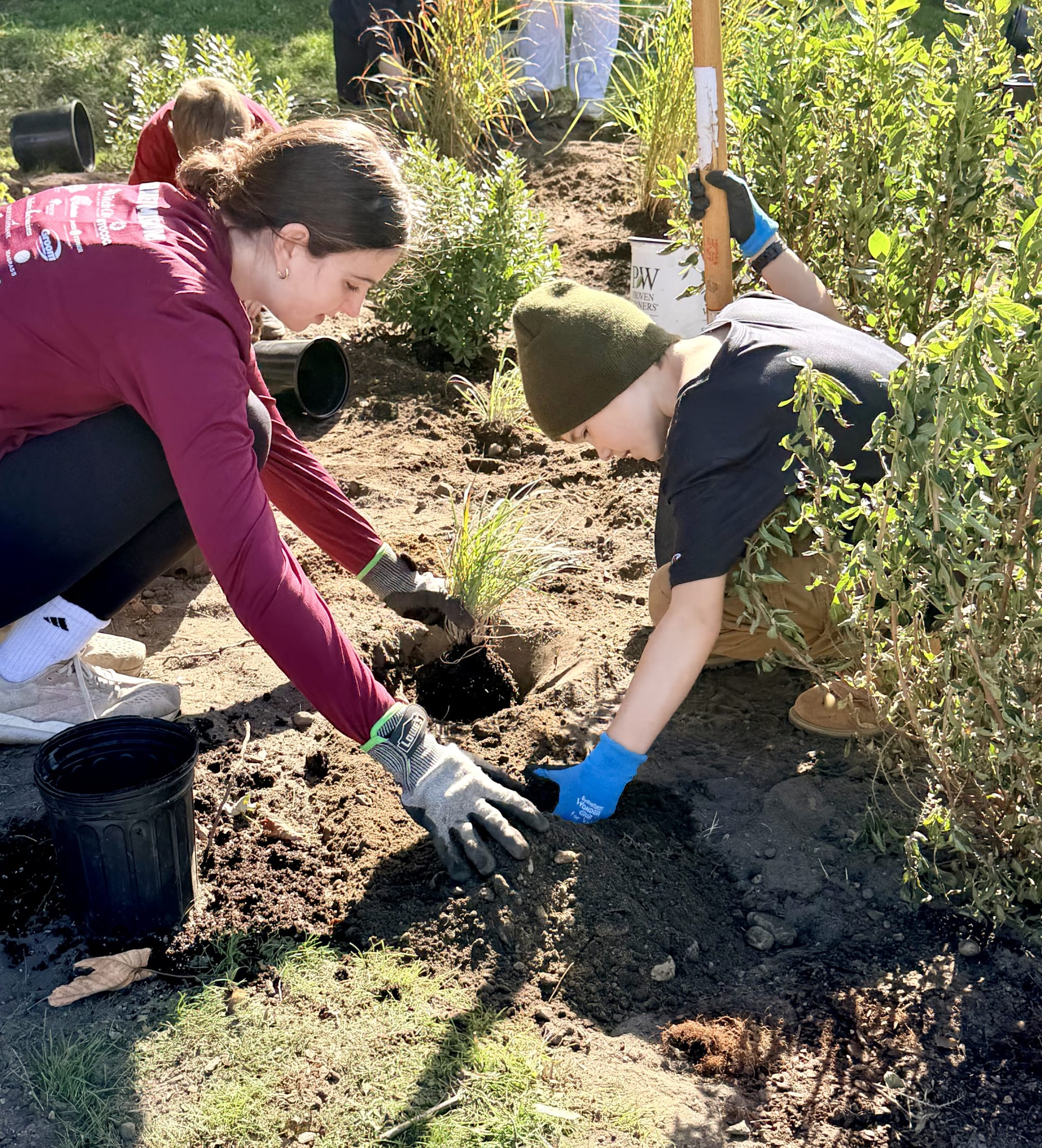
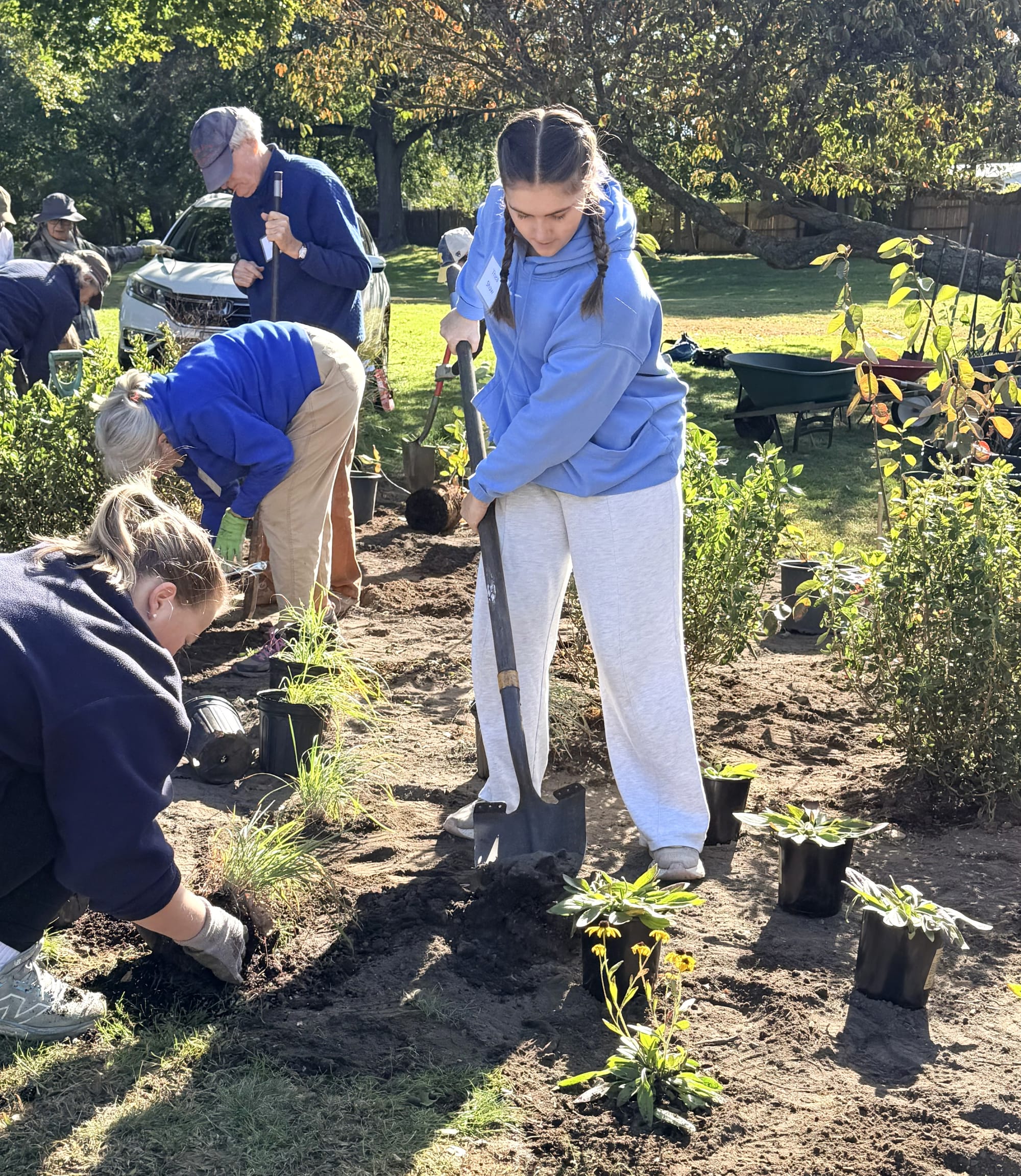
The volunteers planted inkberry shrubs, coneflowers, chokeberry and golden Alexanders, among other native plants. The project was the first of the relatively new nonprofit, Friends of Marblehead Parks. The group, an idea sparked by Larry Simpson and Kathy Bradford, has been around less than a year, but has been three years in the making.
Simpson, a garden designer with degrees in horticulture and botany, who also serves on the Recreation and Parks Committee, and Bradford, a landscape architect, were, by happenstance, at a native plant conference.
Though Simpson didn’t particularly know Bradford, he knew she was from Marblehead so he introduced himself and asked a question: “Do you ever feel like giving back?”
“That was the seed for this idea, no pun intended,” he said.
Bradford said in January she got a call from Simpson suggesting they actually follow through on the idea, which is what led them to Glabicky Field.
Marblehead has a number of parks with “killer views” of the water, but the Friends’ goal is to add another layer to the interior parks. Glabicky has no playing fields or playground equipment. Bradford said she thought of it as more just open space, rather than park, but due to its location, at the corner of Maple and Lafayette streets, it is also a gateway to Marblehead.
The pollinator garden installed on Oct. 10 is on the Lafayette side of the park, but both Bradford and Simpson said they hope to plant another strip along the Maple Street edge of the park.
Marblehead High School seniors Thea Shaw and Julia Betz were among the volunteers' digging holes and dropping in plants. Shaw, who volunteers with the Marblehead Conservancy as well as the MHS Green Club, said she was invited to volunteer for the project. Betz had done a summer internship with the Conservancy.
“I like doing this,” Betz said. “It’s fun being out in nature and connecting with my hometown. And I like learning from other people who have a lot of experience in this.”
Simpson said he’s spent his whole life working in nature, with nature, plants and open spaces. While working for the Trustees of the Reservation he oversaw 114 acres of public gardens. He called it a great lesson in what great parks look like and the need for biodiversity, which he admits, early in his career, he did not think much about. When he started out as a designer, the standard was about color, not necessarily the life of a garden, he said.
Then, about 25 years ago, Simpson said he heard a talk where the speaker asked, “How much life is in your garden?” They wanted to know if the garden had snakes, were birds nesting in it, were there earthworms, dragonflies and other creatures.
“It was eye opening,” he said.
Simpson pointed to work being done by the Marblehead Conservancy at Lead Mills, where they have been planting specific wildflowers over the years with an eye on rebuilding the population of native pollinators.
“That is what we’re trying to do here and in other key parks,” Simpson said, adding, “it’s also about beautification.”
Bradford said the golden Alexanders are one of the first plants to bloom in the spring and provide nectar and pollen for bees. She said switchgrass planted provides motion and texture and the Rudbeckia, or black-eyes Susans, will continue to bloom into the fall.
Judith Black, who sits on the board for the Friends of Marblehead Parks, said joining the planting party was an easy choice for her.
“I believe profoundly in biodiversity,” she said.
Figuring out what you can do to combat climate change, to make a difference on the federal level is a lesson in frustration, she said.
“So, we bring our parameters in and do what we can in our world,” Black said. “We create biodiversity.”
Not only will the park add to the beauty of the area and create a home for pollinators, but it will also absorb water during extensive rainstorms and all that contributes to creating a healthier planet.
“We’re doing all this to help preserve that,” she said. “One plant at a time.”
BEFORE YOU GO … Our reporting remains free and open to all. It is sustained by readers who choose to support it — by contributing so that routine, document-based local reporting continues without paywalls or promotional framing. Right now, 101 readers support The Marblehead Independent with monthly or annual contributions. Click here to become an Independent member.