Table of Contents
EDITOR'S NOTE: This story complements our new MA-06 campaign finance dashboard, a searchable breakdown of every dollar reported by all eight active candidate committees in the MA-06 race — the six Democrats competing in the Sept. 1 primary, one Democrat (Rick Jakious) who has since withdrawn, and Republican candidate Micah Q. Jones, who will face the Democratic nominee in November — who gave, how much, from where and what's left in the bank. You can sort candidates by any metric, trace itemized contributions down to individual donors and employers and see exactly how each campaign's money breaks down by category. Explore it yourself at marbleheadindependent.com/ma-06.
The question was supposed to be uncomfortable in a playful way.
On a Saturday morning in late February, the Democrats running for Massachusetts’ open 6th Congressional District seat gathered at a senior center in Hamilton and talked about housing, health care and the scones at the break. Near the end, the moderator asked them to imagine they were not candidates. Whom on the stage would they vote for instead?
They laughed. They complimented one another. They resisted choosing.
State Rep. Tram Nguyen said she would not be running if she did not believe she was the best candidate. John Beccia praised the field without naming anyone. Rick Jakious spoke about the camaraderie among competitors.
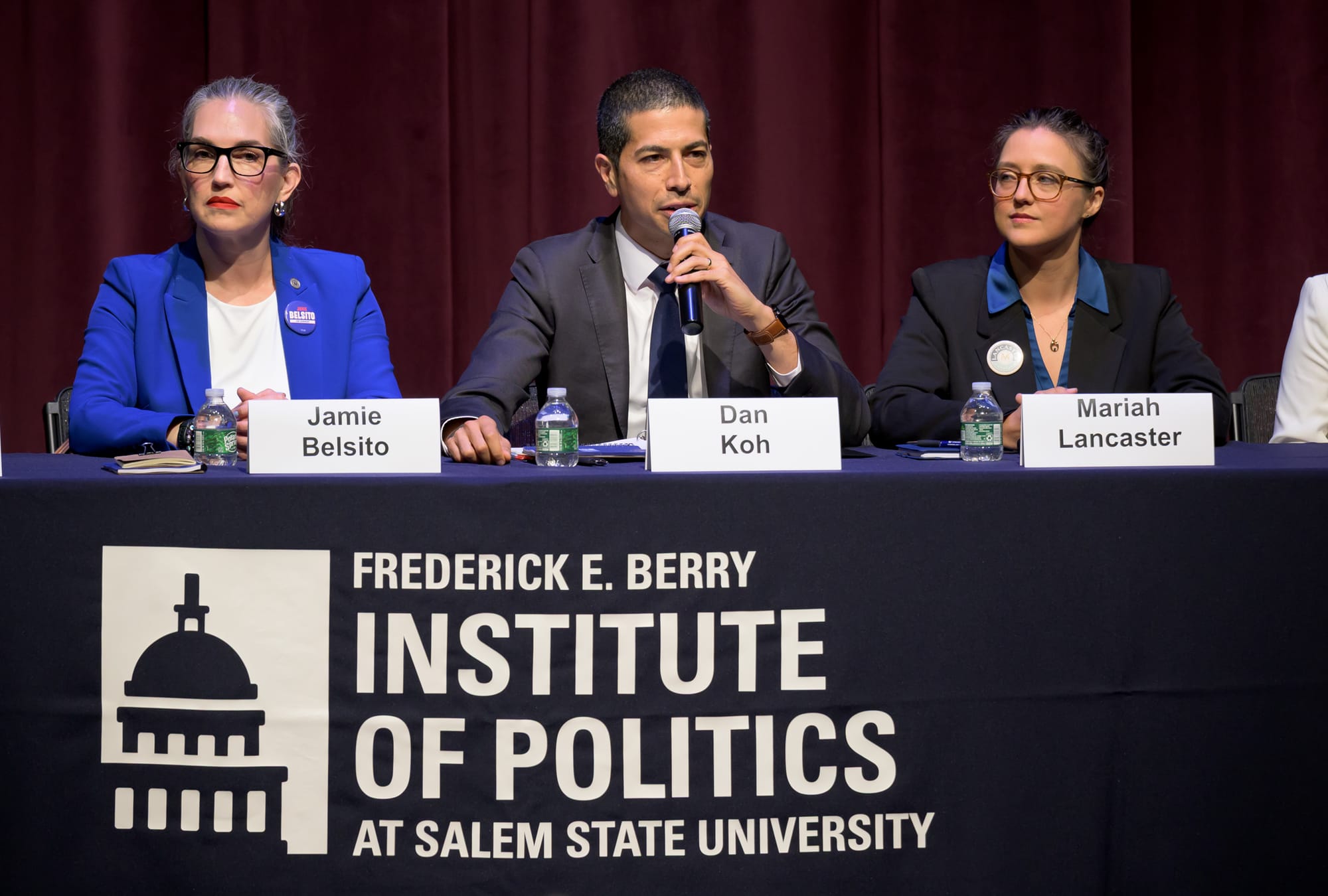
Then Mariah Lancaster answered a different question — the one hanging over the campaign whether anyone asked it or not.
“I don’t know that all of us are even going to make it to September,” Lancaster said. “I think part of this race is having enough money to make it through a race this long.”
She pointed out that one candidate was absent, and said that person did not have to worry as much about fundraising as the others.
“A lot of us on this stage are very scared that our campaigns may not survive,” she said, “to actually be able to cast the vote for ourselves or one another.”
The moderator called it an eloquent evasion. It was also a prediction. Six weeks later, one of the people who heard it would be gone.
The empty chair
The federal filings that landed July 15 — the last full accounting before the Sept. 1 primary — put hard numbers behind Lancaster’s warning. They cannot say who will win. They say something almost as decisive: who can afford to keep going.
Money does not guarantee victory. It buys staff, mail, travel and airtime, and above all it buys time. For some candidates the filings show months of it. For others, the clock is loud.
The empty chair that February morning belonged to Dan Koh, the Andover native and former Biden White House aide — and it is easy to see why he could skip a room full of rivals. He is sitting on the biggest pile of money in the race, by a wide margin.
Koh’s books at a glance:
- Cash on hand: about $3.6 million — the largest war chest in the field.
- Raised this cycle: $4.5 million, none of it carried over from past races.
- Where it comes from: nearly half — close to $2 million — from outside Massachusetts; about $271,000, or 6.5 percent, from inside the district, home to 190 of his 2,145 itemized donors.
- Who’s giving: 564 donors wrote checks of $3,500 or more, together supplying about 70 percent of his itemized money, while donors giving under $200 accounted for just 4 percent.
A note on the donor counts: the FEC only itemizes contributors who give more than $200, listing each by name and town; smaller gifts arrive as a lump, with no address attached. The counts and in-district figures in these boxes therefore cover itemized donors — the larger givers — and cannot see the small-dollar base, which for the grassroots campaigns is the overwhelming majority of their donors.
Koh’s fundraising actually slipped by nearly a third from the first quarter, but it hardly registered: he spent so little that his reserve grew anyway. That cushion is the most valuable thing any candidate in this race owns. It lets him choose when to go on television and how hard to spend in the final weeks, while a leaner campaign has to bet everything on a single move and hope.
His own numbers tell two stories at once. The campaign’s press release led with a folksy figure — more than 12,000 contributions at a median of $15, from every city and town in the district. That is true, and most of his donors did give small. But the dollars came from somewhere else. His biggest sources by city were Boston (about $584,000) and New York (about $524,000), and among donors who listed an employer the largest clusters were in finance and law: a combined $64,500 from people at Blackstone, $37,000 from Bain Capital, with smaller groups at Ropes & Gray, KKR and RA Capital.
Koh has pledged not to take corporate PAC money during the primary, the general election or, if he wins, in Congress. His filings show $95,300 from political action committees; the campaign said those were “labor and other committees” and that “none are corporate PAC money.”
Betting on himself
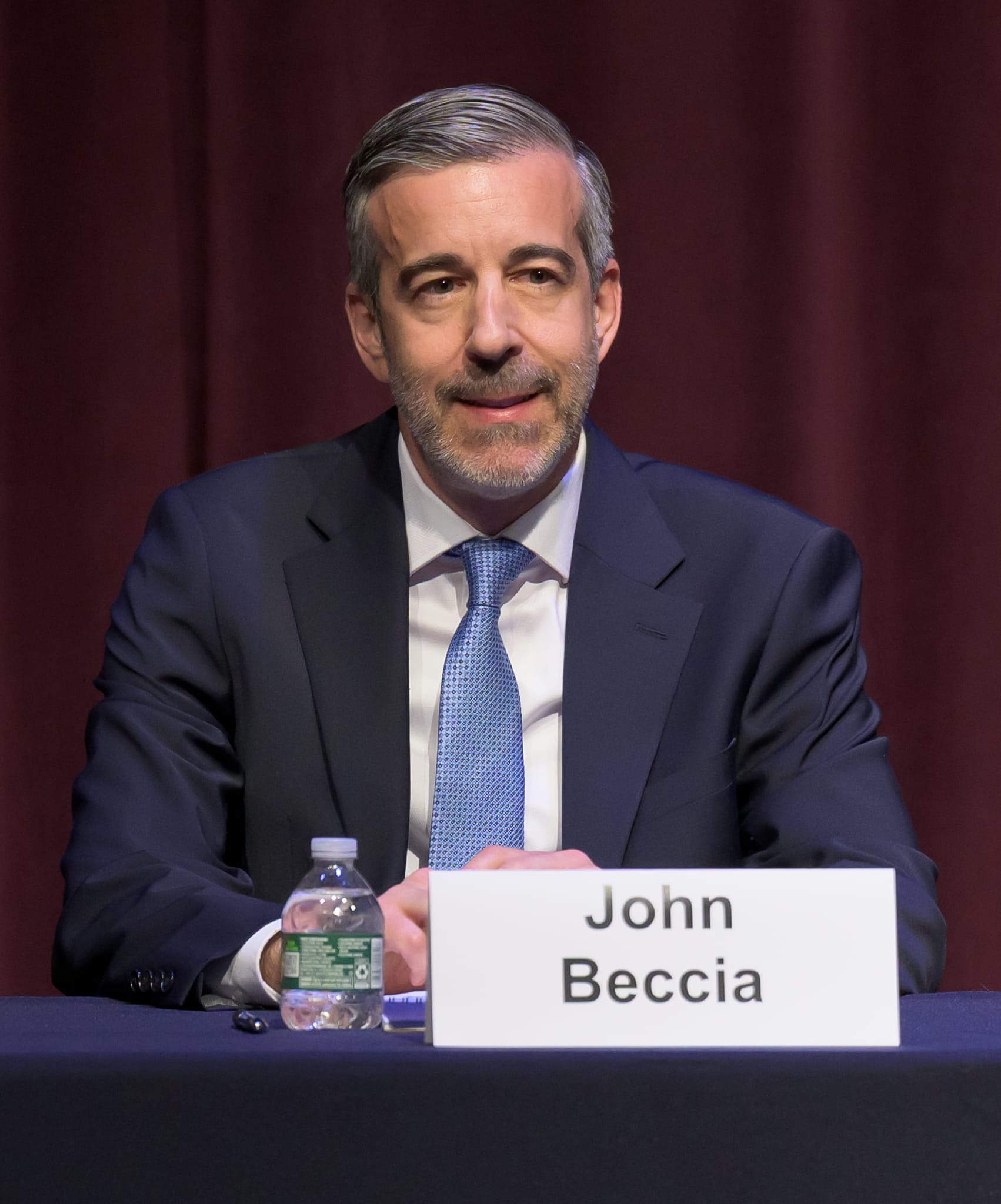
If Koh’s edge is money he has banked, Beccia’s is money he can write himself.
“I’m putting in a lot of my own funds in this campaign,” he said at a Swampscott forum in May. “I’m betting on myself.”
He means that literally.
Beccia’s books at a glance:
- Cash on hand: about $2.1 million — second only to Koh.
- Raised this cycle: $3.5 million — but roughly $3 million of it is loans from Beccia to Beccia.
- From other people: about $440,000, of which an estimated $7,300 — under 2 percent, from 12 of his 294 itemized donors — came from inside the district.
- Biggest expense: advertising, about $613,000, his largest single outlay.
Beccia poured in another $1 million this spring and ran up his spending nearly fivefold, blanketing the district with paid media. What he has not done is persuade many of the people who live there to chip in: barely $7,000 of his money came from inside the seat he wants to represent.
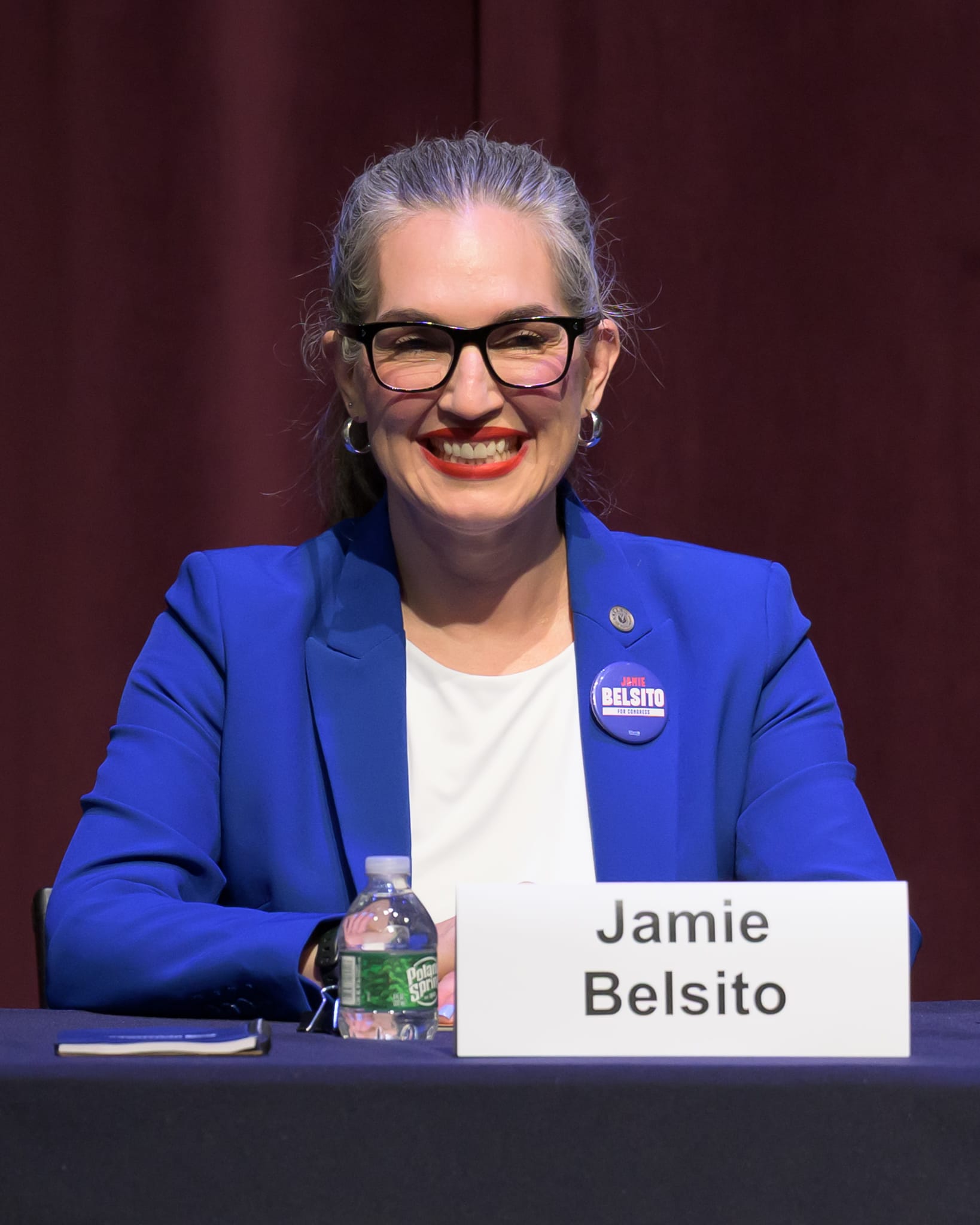
That gap is what Jamie Belsito seized on at a June debate at Salem State University.
“Broken when you have $2 million of your own dollars to self-fund a campaign, though,” she said. “That’s part of the reality.” She pointed to her own roots. “My dad’s a floor layer, and he doesn’t know anyone in Washington,” she added. “He can’t call anybody to help me fundraise.”
Beccia said his wealth buys something worth having. “I’ve been very blessed,” he said. “I have resources. I’m betting on myself, but I have a level of independence.”
Belsito was blunter about what she thought the contest had become. “This actual race is class warfare,” she said.
Growing without wealth
Below the two men with millions sits everyone else — four campaigns wagering that a broad, local, small-dollar base is worth more than a big bank balance. Their filings are a study in who is gaining ground and who is running out of it.
Belsito had the best spring of the group, more than doubling her first-quarter haul, and she has the most local money in the race. Belsito's books at a glance:
- Cash on hand: about $122,000.
- Raised this cycle: about $253,000 — the smallest cycle total among the remaining Democrats, but climbing.
- Where it comes from: the strongest local base of anyone still running — 97 of her 223 itemized donors, and about $59,000 (38 percent) of her itemized dollars, from inside the district.
- Who’s giving: more than 2,000 donors, roughly 90 percent of them giving $200 or less, at a median of $25.
“I’ll show you my tax returns,” she said at Swampscott, “and you’ll cry because I’m broke.” Asked later whether she meant it, she said she would gladly show them, and that she “knows what it’s like to lose a job, to lose her health insurance and to almost lose her home.” The roughly $25,000 she lent her campaign, she said, came out of her retirement and was paid back within 60 days. Her campaign said it runs a lower burn rate than its rivals, raised $50,000 in the last five days of the quarter and leans on more than 300 volunteers and field captains ranging in age from 15 to 85 — the kind of organization no filing captures.
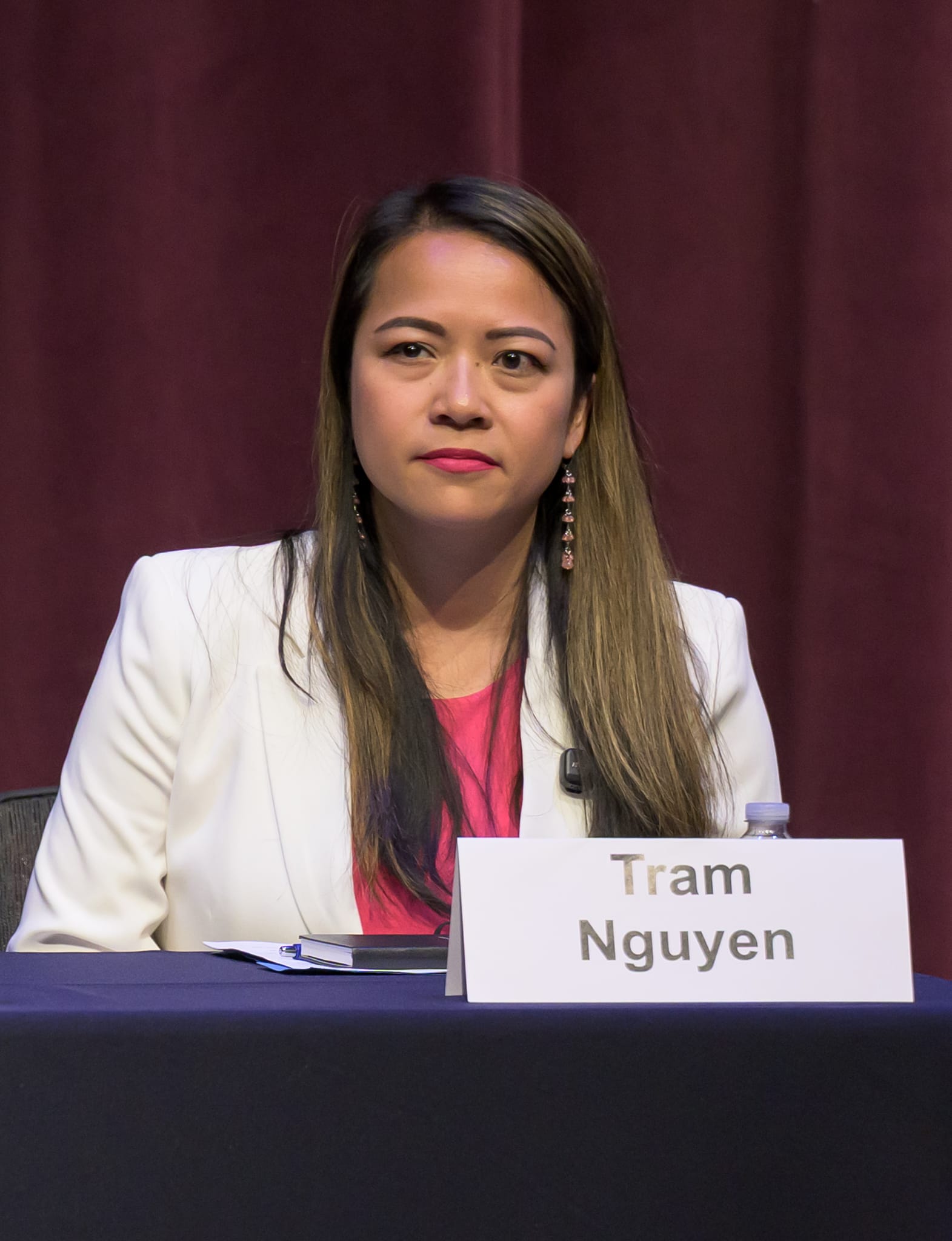
Nguyen is the best-funded of the grassroots group, and she is building it through donations rather than loans. Nguyen's books at a glance:
- Cash on hand: about $330,000 — the healthiest balance outside the two self-funded front-runners for cash.
- Raised this cycle: about $711,000, with no candidate loans.
- Where it comes from: heavily local — 173 of her 615 itemized donors, about $176,000 (31 percent), from inside the district, and about 85 percent from Massachusetts overall; where Koh drew nearly half his money from out of state, Nguyen drew about one dollar in seven.
- How she spends: almost nothing on advertising, steering her money instead into consultants (about $131,000) and payroll (about $86,000).
At Swampscott, Nguyen said more than 83 percent of her donations came from Massachusetts and nearly 30 percent from within the district. The filings back her up almost exactly — a rare case of a campaign’s talking point matching its paperwork.
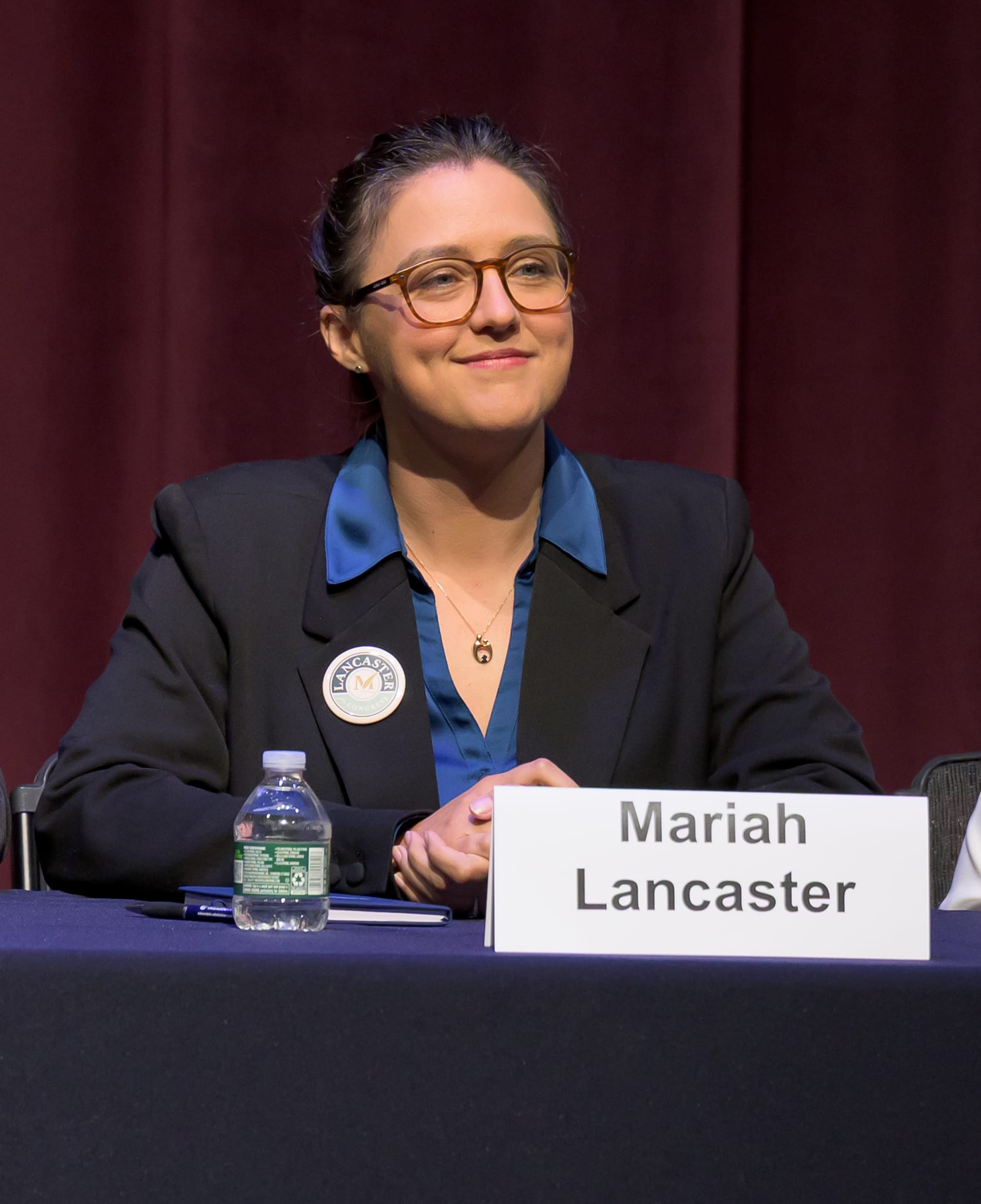
Lancaster is moving the wrong way. Her fundraising was cut in half from the first quarter, and she spent more than she took in — leaving hers the only Democratic account that shrank. Lancaster's books at a glance:
- Cash on hand: about $88,000, and falling.
- Raised this cycle: about $310,000.
- Where it comes from: 6 percent — 16 of her 235 itemized donors — from inside the district; nearly two-thirds from out of state.
“Please consider supporting your favorite,” she told the Swampscott audience, “because there’s a lot of people on the stage that need it.”
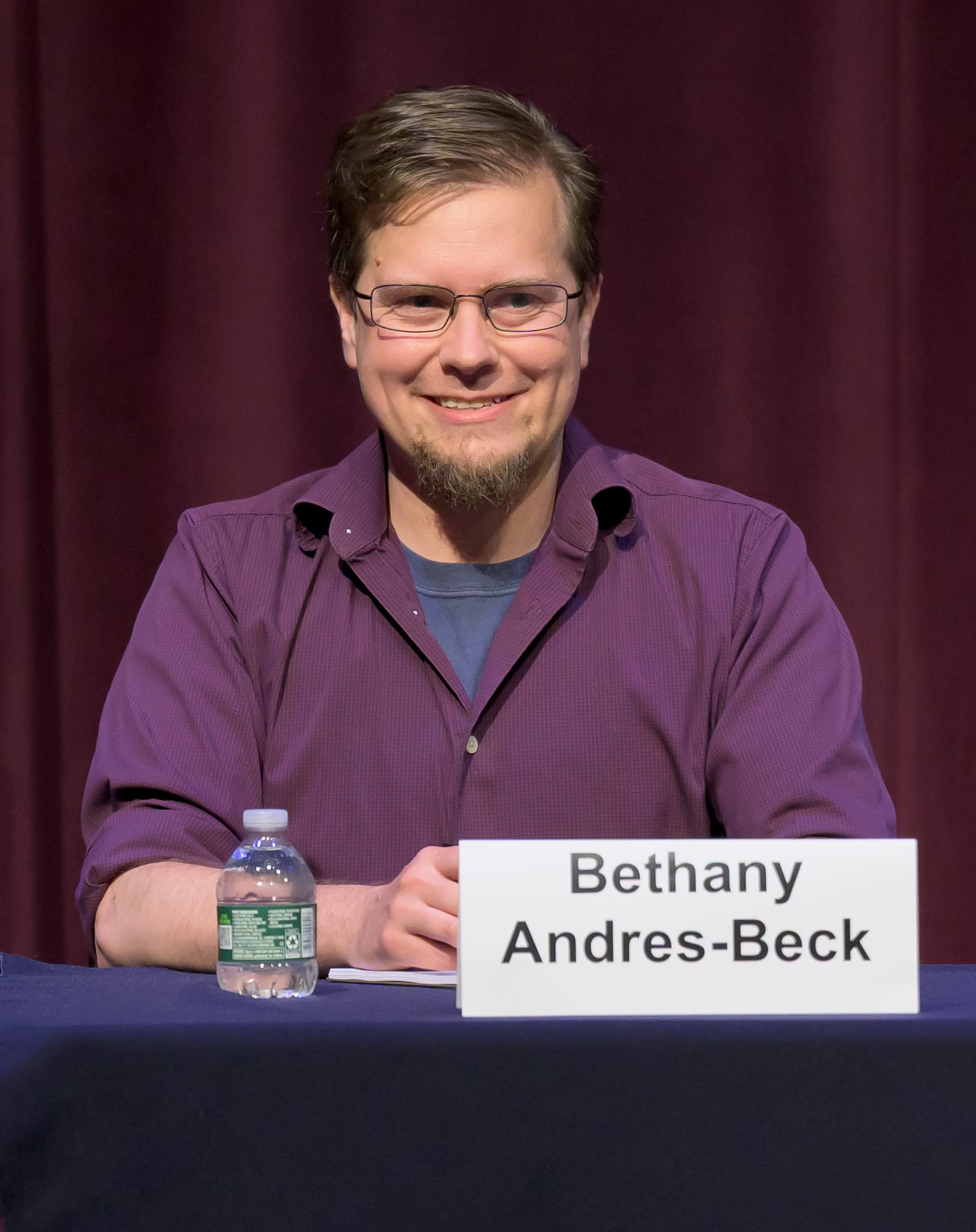
Andres-Beck is running the leanest, most openly small-dollar campaign in the field — and betting it counts for more than cash. Andres-Beck books at a glance:
- Cash on hand: about $21,000 — the smallest in the race.
- Raised this cycle: about $322,000, including $103,000 in interest-free loans they made to the campaign.
- Who’s giving: more than 3,700 donors at a median around $10, with nearly half the campaign’s individual money coming from people who gave under $200 — the biggest small-dollar share in the field.
- What the filing can place: 105 of those 3,700-plus donors gave enough to be itemized, and just 4 listed an in-district address — so the paperwork simply can’t locate the small-dollar base that is her campaign.
Their fundraising fell by nearly a third, and more than half of what they raised last quarter was a $40,000 loan to themselves. Campaign manager Prinxe Oliver said the loans are interest-free and that whether they are repaid or forgiven “will be determined after September 1st, and likely depend on the results that day.” The campaign plans to keep its current staff and pour its energy into canvassing, phone banking and text banking rather than chasing the field’s biggest ad budgets.
Oliver’s larger argument was that the money misses the story. “Under campaign finance rules, a campaign could raise $10,000 from three people, or it could raise $10,000 from a hundred people,” Oliver said. “We shouldn’t conflate that with more support.” Or, put more simply: “Whether you can contribute one dollar or a thousand dollars, your vote counts the same as any other person.”
The first casualty
Rick Jakious had already proved Lancaster right by walking away.
Moulton’s former chief of staff quit April 15 — six weeks after sitting on that Hamilton stage — not because his account was empty, but because he said the price of admission was one he could not pay.
“Running for Congress requires access to significant wealth,” he said. “That’s not how our democracy should work, but it is the system we’re in.” He called that the “barrier I’ve run up against in this race.”
His last filing reads like a wind-down: a few thousand dollars raised, most of the money heading back out the door in refunds to donors and repayment of a loan he had made himself, leaving under $8,000. He had nearly $200,000 on hand the quarter he quit. What he did not have was a way to keep pace.
The next reports will not come until mid-October, weeks after voters choose a nominee. So these are the last full numbers before the primary, and they measure one thing above all: How much room each campaign has to compete before Sept. 1.”
They do not measure ideas or debate skill or the quality of a doorstep conversation. At the Hamilton forum, Lancaster never did say whom she would vote for if she were not running.
“Ask me again in August,” she said.
Stories like this take time: Fillings, data checks, follow-up calls and careful editing. If this reporting helped you understand the money shaping the MA-06 race, join the 122 readers already helping keep it free. Support local journalism, or contribute to our Founders’ Circle. Not ready to contribute yet? Sign up for our weekly newsletter.