Table of Contents
On Oct. 7, 2023, Hamas, an armed Palestinian terrorist organization in Gaza, attacked Israel with brutal precision, kidnapping 251 people and killing upwards of 1,200.
What happens to a person who is having a great time dancing to music, or quietly sipping coffee on their kibbutz one minute, then has their world blown apart the next? That is a story longtime journalist and editor of the Jewish Journal of Greater Boston Steven Rosenberg felt was not being told — at least not here in the United States. So he decided to tell it.
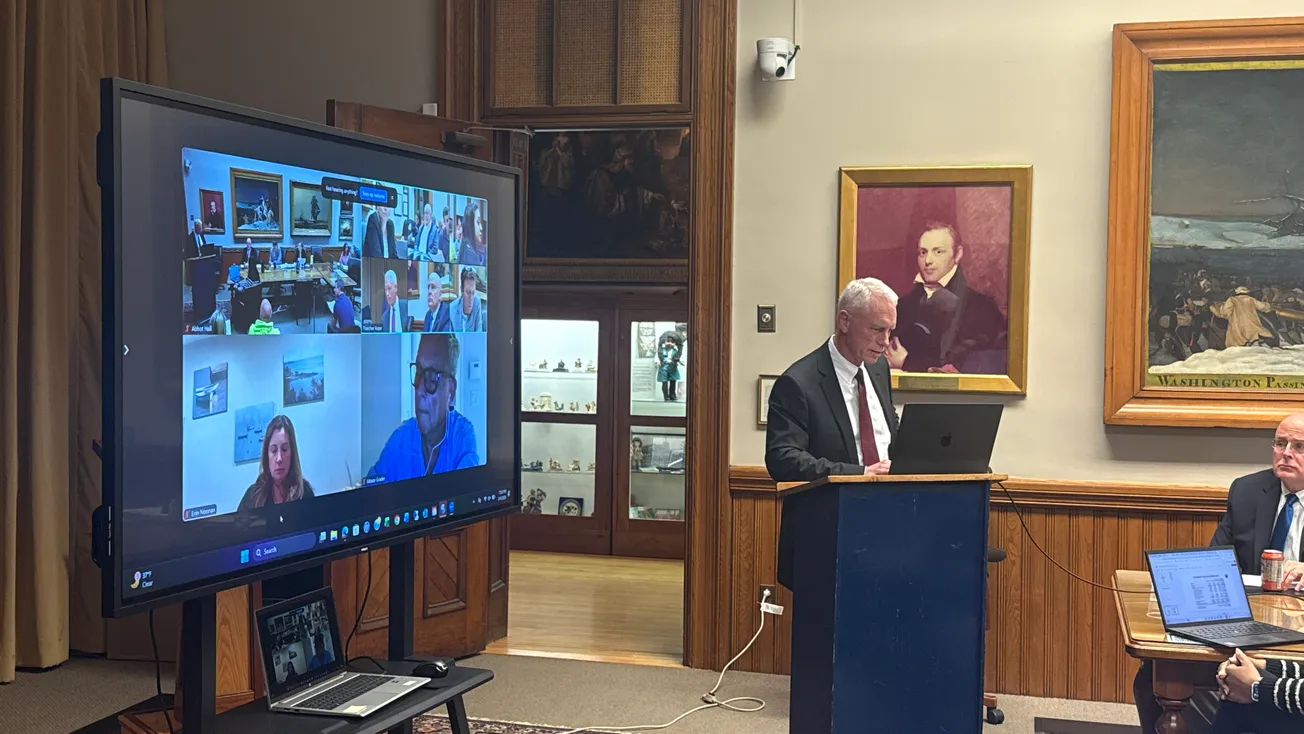
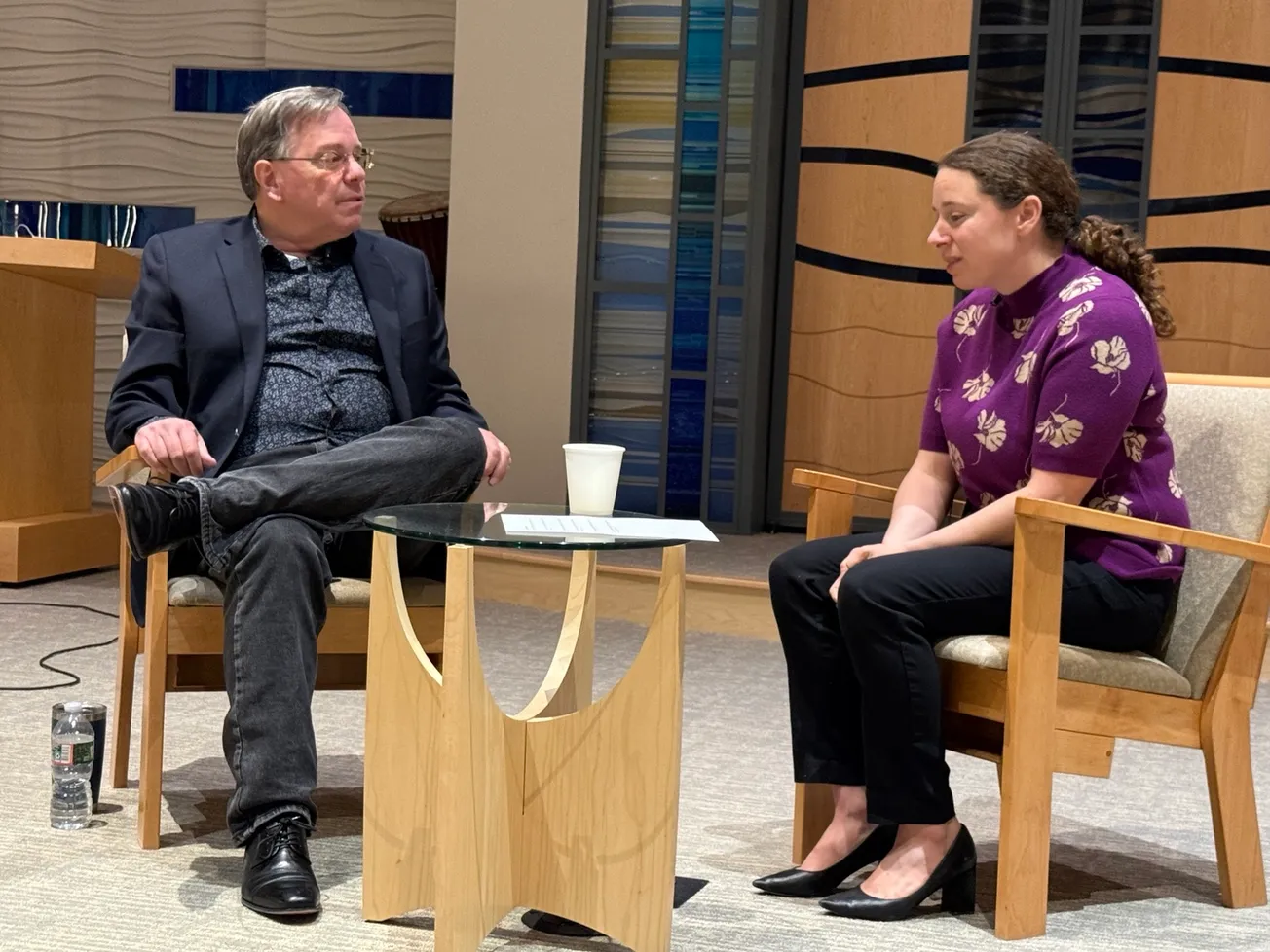
“The release of the hostages has got to be the most unreported story,” he said to a crowd gathered at Temple Emanu-El on a recent Thursday evening.
Rosenberg, who has family and friends living in Israel, was on hand to talk about his new film, “Hostage,” where he interviews four survivors of the attack. He said he had been to Israel four times since Oct. 7, 2023, and last January wrote long stories about the war, but what was really bothering him were the hostages. They’d since been released, but he wondered how they were doing, really doing.
Rosenberg said he found it was actually the best story to tell in regards to the war because as tragic as it is, “it’s really a story of hope and belief.” He said it was love that kept people alive while in the most dire of circumstances. He also said it was important to film the interviews rather than simply write about them because on Oct. 8, 2023, people were already denying the event of the previous day. He said he wants to be able to show the film publicly so people could understand what the people who were snatched off streets, from the music festival and from their homes went through while being held captive.
For the film, Rosenberg sat down with husband and wife Keith and Aviva Siegel, Yosef Chaim Ohana, and Elkana Bohbot.
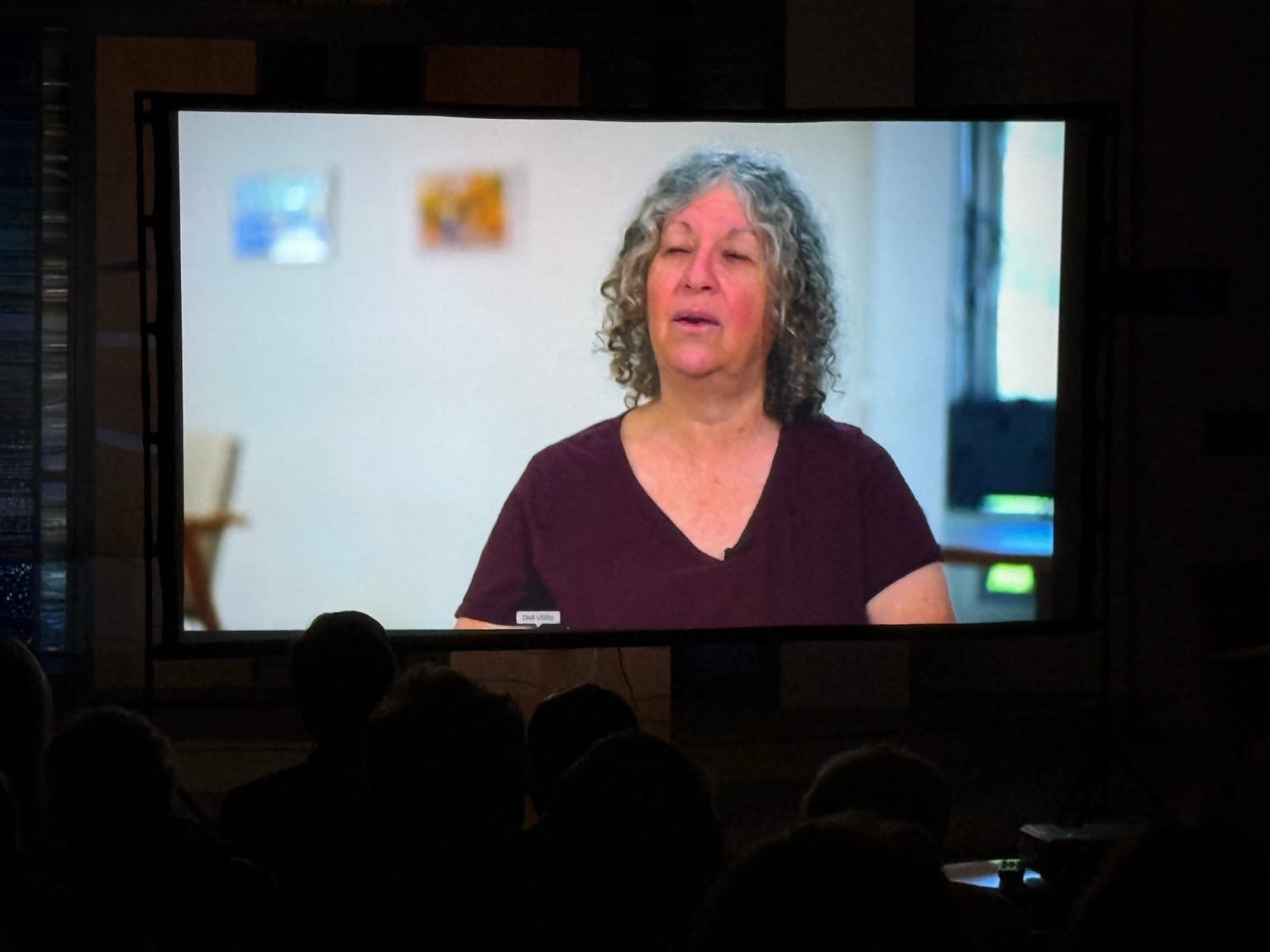
The Siegels were kidnapped by Hamas from their kibbutz, Kfar Aza. Aviva, who is originally from South Africa, was released after 51 days, but Keith, originally from North Carolina, would remain in captivity for 484 days.
Yosef Chaim Ohana was with friends at the Nova Music Festival when he was abducted. He was held by Hamas for 738 days. Likewise, Elkana Bohbot was also taken from the Nova Music Festival and was held by Hamas for 738 days.
“I found them to be all incredibly courageous,” he said. “They had a spark of life in them that they found at the deepest depths of, you know, the worst situation possible.”
In the film, the quartet, who were all kept in separate locations, talk about starvation, humiliation, beatings and abuse, both physical and mental. Aviva never used the word rape but talked around the fact that women were sexually assaulted. Bathroom privileges were few and far between. A shower was a bottle of water with a hole in the cap that happened maybe once a month, Siegel said.
How did they get through it?
“They only had everything taken away from them … they lived without so much but they all found this strength thinking about their families, their children, their friends, their parents,” he said.
Keith Siegel talked a lot about mindfulness, Siegel said. He forced himself to stay in the present and then figured out a way to find hope. He decided one day that he would send a message to his mother, who had actually died while he was in captivity. He said he would focus on his mother, willing his message to reach her. Then he sent messages to his wife, his children and other friends and family. Siegel said by the end of his captivity Siegel was sending his energy and love to over 60 people.
“It’s really amazing,” he said. “It’s a reflection of the human spirit and a rejection of the worst behavior a human can exist.”
When asked what Rosenberg hoped people would take away from the film, he said simply that they remember that the attack happened, it was real.
“This is a reflection of the worst, one of the worst days in modern history for Israel,” he said. “But what I hope you take away is that you’ll remember that this really happened. That’s the most important thing.”
Shiri Katz-Gershon, who is from Israel but has lived stateside for decades, agreed with Rosenberg that the stories must not only be remembered but talked about. And that happens in Israel, where people live with this kind of tragedy every day, she said, but she wondered how that would happen here.
Rosenberg said he believed there is a disconnect between Jewish Americans and Israeli Jews. He said he was shocked to learn there is a high level of anti-Zionism among younger American Jews, which is another reason why making and showing the film is so important.
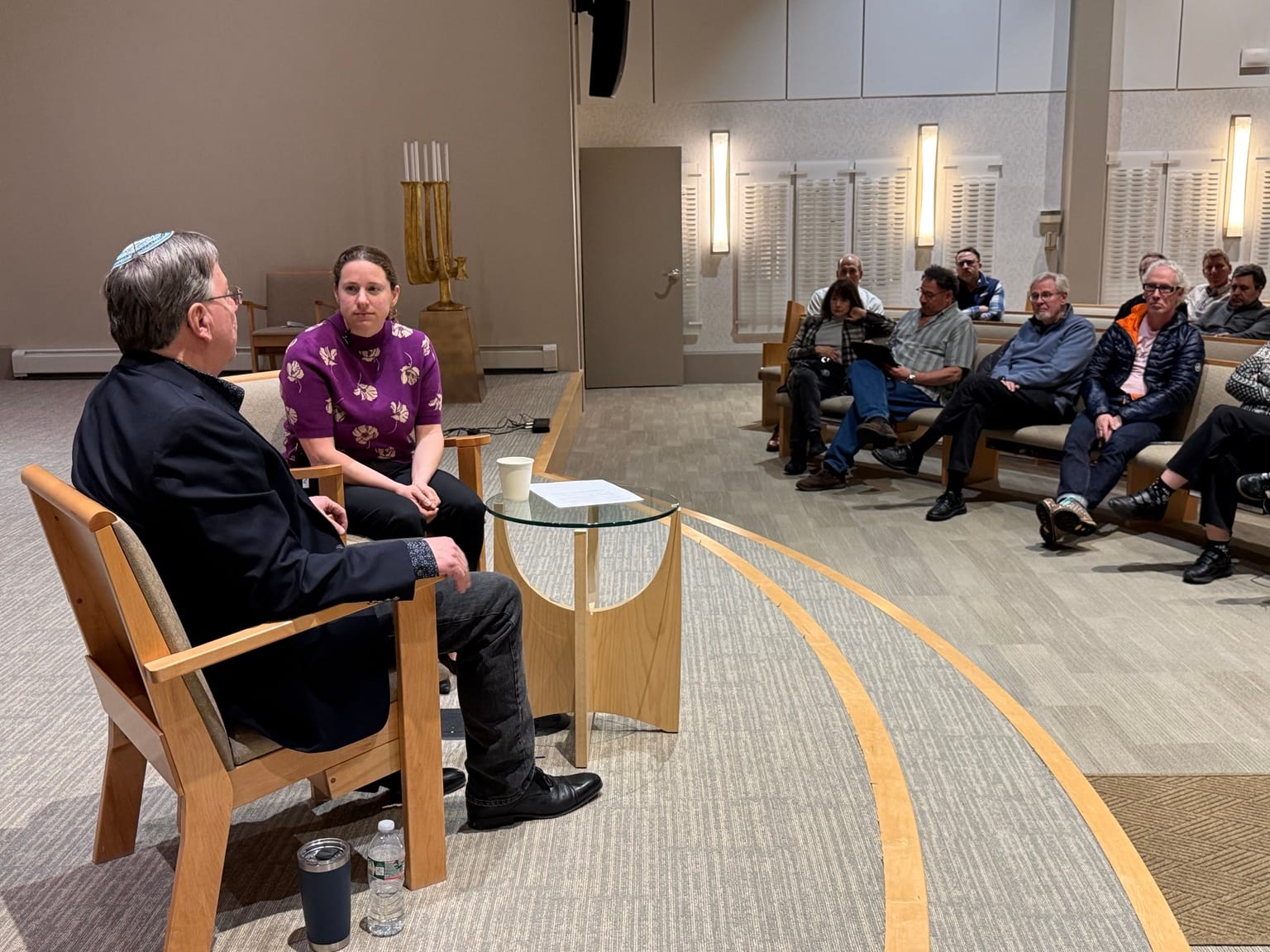
The film, which Rosenberg showed about 20 minutes of, will be shown in its entirety twice on Thursday at the Warwick Cinema. He said there will be a matinee at 4:30 p.m. and a second showing at 7:30 p.m.
When the discussion of the possibility of peace between Israel and Palestine came up, Rosenberg said he thought there would need to be changes on both sides and Katz-Gershon immediately called him on it. She said it was a mistake to think that it was an equal conflict.
Katz-Gershon said later she wished she had not gotten political but she felt it important to point out that there is no symmetry between Israel and Palestine.
When the conversation drifted further into the political realm talking about conspiracies and extremism and hate, Laura Hoffman, seated in the back of the room, deftly pulled it back on track, saying they should be focusing on the hostages.
“This hasn’t stopped for them,” she said. “They’re continuing moment to moment, the ones that weren’t actually murdered and came back, and life is really horrible for them.”
There have been suicides and PTSD, but they are also talking about it, Hoffman said. Many are writing books about their experience, including Bohbot, she added. If people want to help, they should think about fundraisers, “but really, what we really ought to be doing is embracing these hostages,” she said.