Table of Contents
Get our free local reporting delivered straight to your inbox. No noise, no spam — just clear, independent coverage of Marblehead. Sign up for our once-a-week newsletter.
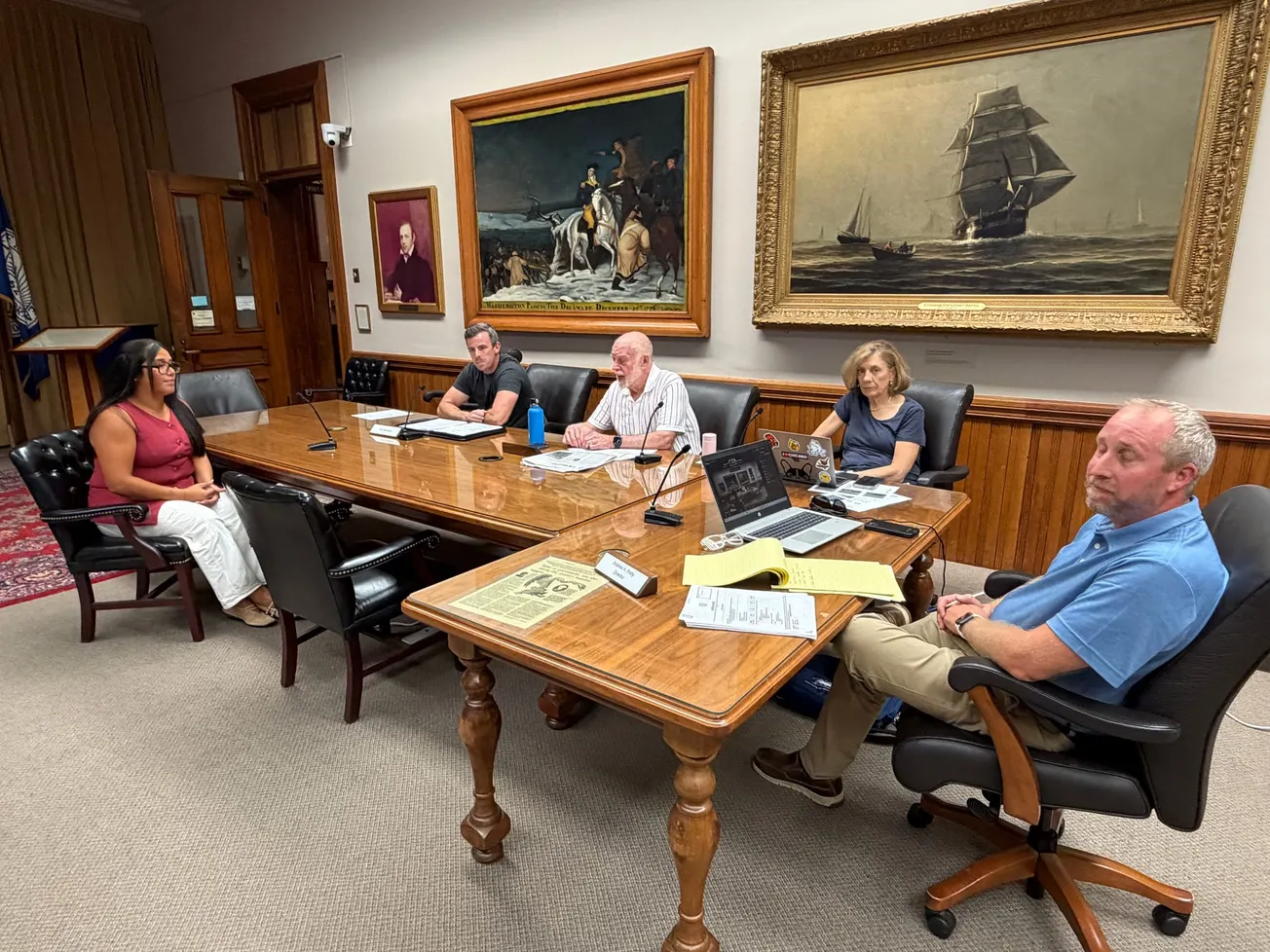
Board member Tom McMahon had just cited a Youth Risk Behavior Survey question asking Marblehead High School students whether adults they lived with had used substances in front of them in a way that made them concerned. McMahon put the yes answers at 92 percent, and drew a conclusion from it about parents in town.
Resident Ryan Wilson, who has two children at the high school and works as a market researcher, said the color key showed the reverse: 8.2 percent said yes, 91.8 percent said no.
"If you're looking at a black-and-white copy, it's not going to register," Wilson said.
The correction landed while the Board of Health is deciding whether to ask Town Meeting to repeal or rewrite a 1995 bylaw on minors and alcohol, and while board members are calling youth drinking one of the town's central public health problems. What the survey actually shows has become part of that argument.
Board member Julie Selbst, an attorney and physician, laid out the law. Section 9-3 of the town bylaws, adopted at the 1995 annual Town Meeting, fines an adult with care or custody of someone under 18 who fails to keep that minor out of a place, a vehicle or a boat where alcohol is being transported. The fines run $25 to $75. A separate section sets a $150 fine for an adult who fails to keep a minor from drinking on residential property. State law already bars furnishing alcohol to anyone under 21 and allows a fine up to $2,000 or a year in jail. The town clerk's office has no record of the bylaw being enforced since 2017, and it does not reach anyone between 18 and 21.
Board chair wants Town Meeting to decide
Board chair Thomas Massaro, a neonatologist, said the medical case is not in dispute. He described imaging research showing measurable thinning of the cerebral cortex in adolescents who binge drink, and said the two most alcohol-sensitive windows in early life are the final three months before birth and roughly ages 16 to 20. He wants the question put to Town Meeting, possibly with a three-way vote: keep the bylaw, repeal it or update it. Cannabis, which the bylaw never mentions, may be the bigger problem within five years, he said.
"I see it as a portal," Massaro said, pointing to the 2,553 residents who answered the board's 42-question wellness survey and, he said, told the board the town was not doing enough.
McMahon pressed Wilson directly: is underage drinking a problem in town or not. Wilson said it is less of one than it was a year ago. McMahon cited gatherings of 80 to 100 teenagers, two deaths in four years and what he says he keeps hearing about the Fourth of July at Crocker Park — kids drunk in public, in daylight. The Browns Island party that weekend turned up in the police log. Crocker Park did not.
Wilson's evidence was the survey itself. Lifetime alcohol use among high school students, he said, has fallen from 40 percent and 42 percent in earlier years to 32 percent, and that round was collected two months after last August's death. He argued the number is softer than it sounds: a sip of champagne at a family wedding counts as a yes, and the survey does not ask how often or how heavily students drink. The board did not say how many students took the survey, so those shares cannot be converted into head counts. Wilson made his own conversion on the mental health questions, putting 11 percent reporting suicidal thoughts at 88 students, 9 percent with a plan at 72 and 1.2 percent who attempted at nearly 10. He said 60 percent reported texting while driving, and nearly 10 percent said they do it every time they drive.
He also warned that a crackdown could move parties to the woods, to Salem, to Lynn or onto boats. "They have to get in a car to get to those places," he said.
McMahon concedes the number, not the trend
In an interview the next day, McMahon said Wilson was right and he was wrong.
"Total mistake, and I'll acknowledge," he said. "I thought it was correct." He said he had reversed the chart, and that a second figure he cited — roughly 13 percent of students saying their parents would not impose any consequence for regular alcohol or marijuana use — held up.
He said an earlier version of the survey bundled tobacco, marijuana, alcohol, cocaine and heroin into a single yes-or-no question about lifetime use, which he called useless for telling a cigarette from a line of cocaine. He said he does not know whether that question was changed for the most recent round. He said the drinking-and-driving question is put to the whole high school, including students too young to have a license, which he argues pushes the number down. And he pointed to the step Gina Hart, the social worker who ran the survey, added after the results came back: she showed students their own numbers and asked what they thought. Seventy-two percent said peer drinking was higher than the survey reported.
"The students say the data from their own survey isn't accurate," McMahon said.
Hart has taken a job outside the district. The superintendent has named a replacement, Massaro said, but she was not there when the survey was given.
Marblehead asks fewer questions than most districts
Board of Health member Kristin duBay Horton, who has worked on adolescent behavior for 25 years, defended the instrument while faulting Marblehead's version of it. The district leaves out four risk areas that she said about 97 percent of districts nationally collect, including alcohol and other drug use, and never added vaping. She offered to analyze 10 years of raw results if the schools or the state release them, and asked that board members stop citing different numbers in public. Then she offered Wilson a coffee and a walk through the data.
Health Director Andrew Petty said he would ask the state for the raw files and post them publicly. The board is hiring a part-time public health information curator to rebuild the Marblehead Cares website, and starts office hours the morning after the September meeting, at 10 a.m.
On the bylaw itself, McMahon does not want a straight repeal. The repeal idea, he said, came out of a conversation with the police chief, who wanted to keep both the town and state options available — an arrangement McMahon says the law does not allow, since an officer cannot choose the lighter local penalty over the state one. What he wants is the fines rewritten. A $25 ticket, he said, is a 1995 number.
Later that night, McMahon wrote on Facebook that he had lost his temper and needed to do better. He said he should have let Wilson finish and put his own name on his position. Then he explained why he did not. He was in the driveway when he learned a Marblehead teenager had died last August, and his daughter came outside and asked why he was crying.
"I see it as a threat to my kids," he said.
While this story is still fresh, your contribution helps keep careful local reporting free for the whole town. The Marblehead Independent covered the meeting, the correction, the bylaw question and what still needs to be clarified because readers deserve more than rumor or fragments. Neighbor support makes that work possible. 🟦 Become a member here.