Table of Contents
Get our free local reporting delivered straight to your inbox. No noise, no spam — just clear, independent coverage of Marblehead. Sign up for our once-a-week newsletter.
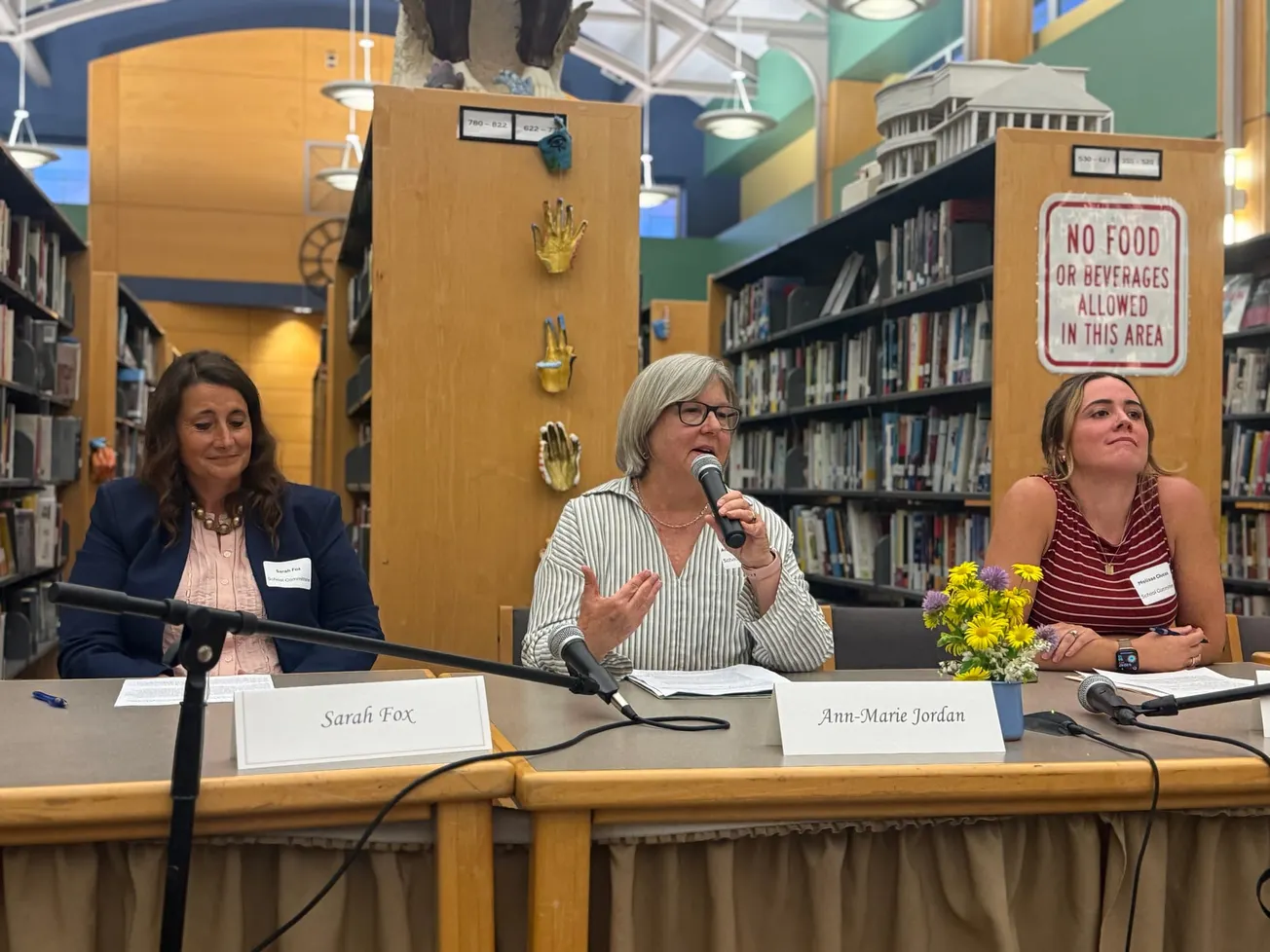
Before the School Committee candidates closed out the night, Marblehead’s lower-profile races had their turn at the microphones. At the League of Women Voters Candidates Night, those contests brought questions that went to the mechanics of town government: who manages Town Meeting, how parks are maintained, whether artificial turf belongs on public fields, how cemetery records can be opened to the public and how Housing Authority tenants can be heard.
The forum, held at Marblehead High School ahead of the June 9 town election, gave candidates in the moderator, Recreation and Park Commission, Cemetery Commission and Housing Authority races a few minutes each to make their case. Some contests featured full panels. Others were shaped by absences, with statements read into the record or candidates answering alone.
Process takes the stage
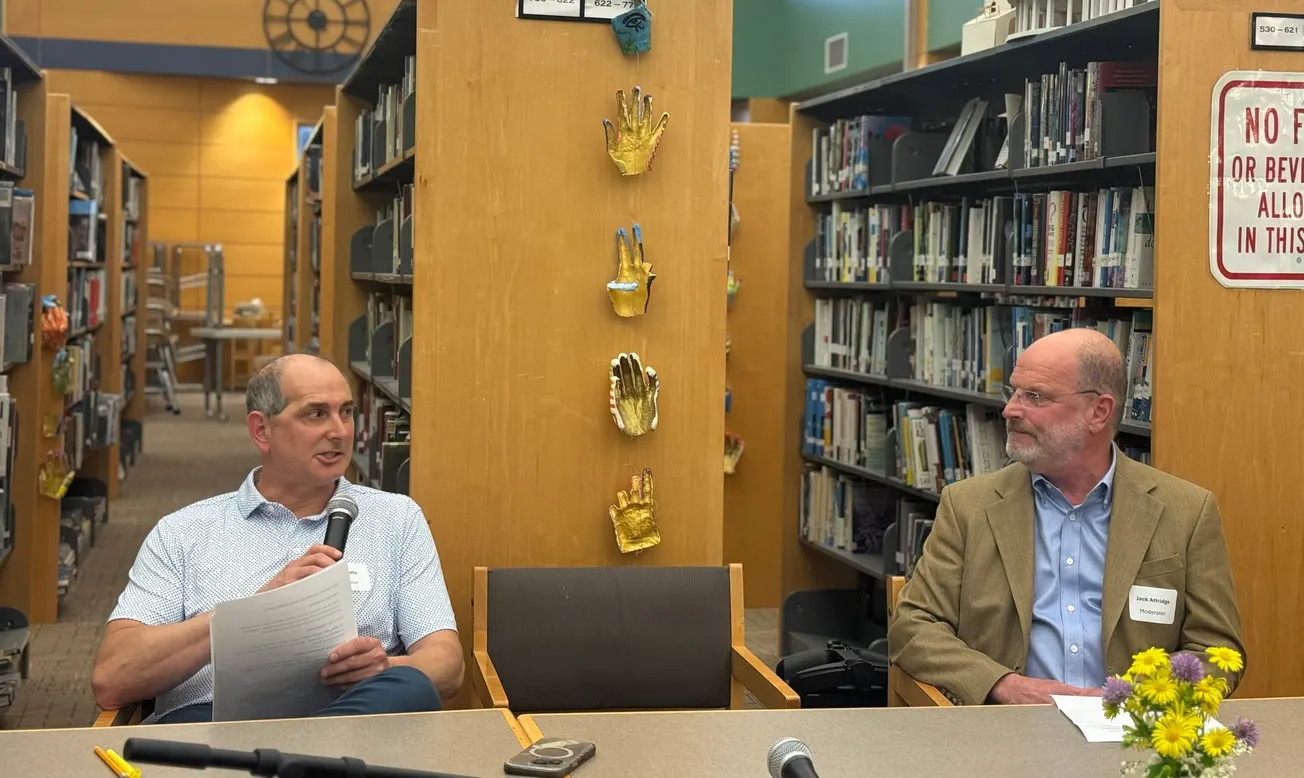
The moderator race brought Peter Jaffe and Jack Attridge, the current town moderator, to the table for a discussion centered less on policy than on process, preparation and control of the room.
Attridge, who is seeking a fifth term, described Town Meeting preparation as something close to a civic obsession.
“Town meetings are sort of my Netflix and my hobby,” he said, adding that he follows public meetings closely, in person and on Zoom, and sees part of the moderator’s job as helping residents move through the process when they are trying to achieve something through Town Meeting.
Jaffe, a lifelong Marblehead resident, said he would need to catch up on some procedural experience if elected, but argued that the job requires more than simply showing up. He said a moderator must review warrant articles and bylaws, coordinate with town counsel and prepare for the people who will come to the floor.
“It’s not easy to be a town moderator,” Jaffe said. “You don’t get a lot of credit for all the work you do, but you certainly get judged when you stand in front of everyone.”
Asked about proper handling of the process, Jaffe said consistency matters, including whether voters raise their hands or use electronic devices. He also said speakers who use disrespectful language toward town boards should be shut down.
Attridge said every town has its own Town Meeting traditions and that Marblehead has added new ones, including electronic voting devices. He cited the state law defining the moderator’s role as presiding over and regulating Town Meeting proceedings and said he has tried to meet that charge.
In closing, Jaffe called the position “not simply a ceremonial role,” but a leadership post requiring preparation, neutrality, organization and the ability to manage difficult discussions fairly. Attridge said the town needs volunteers to sustain its form of government and asked voters to consider returning him to the job.
Parks candidates split on turf
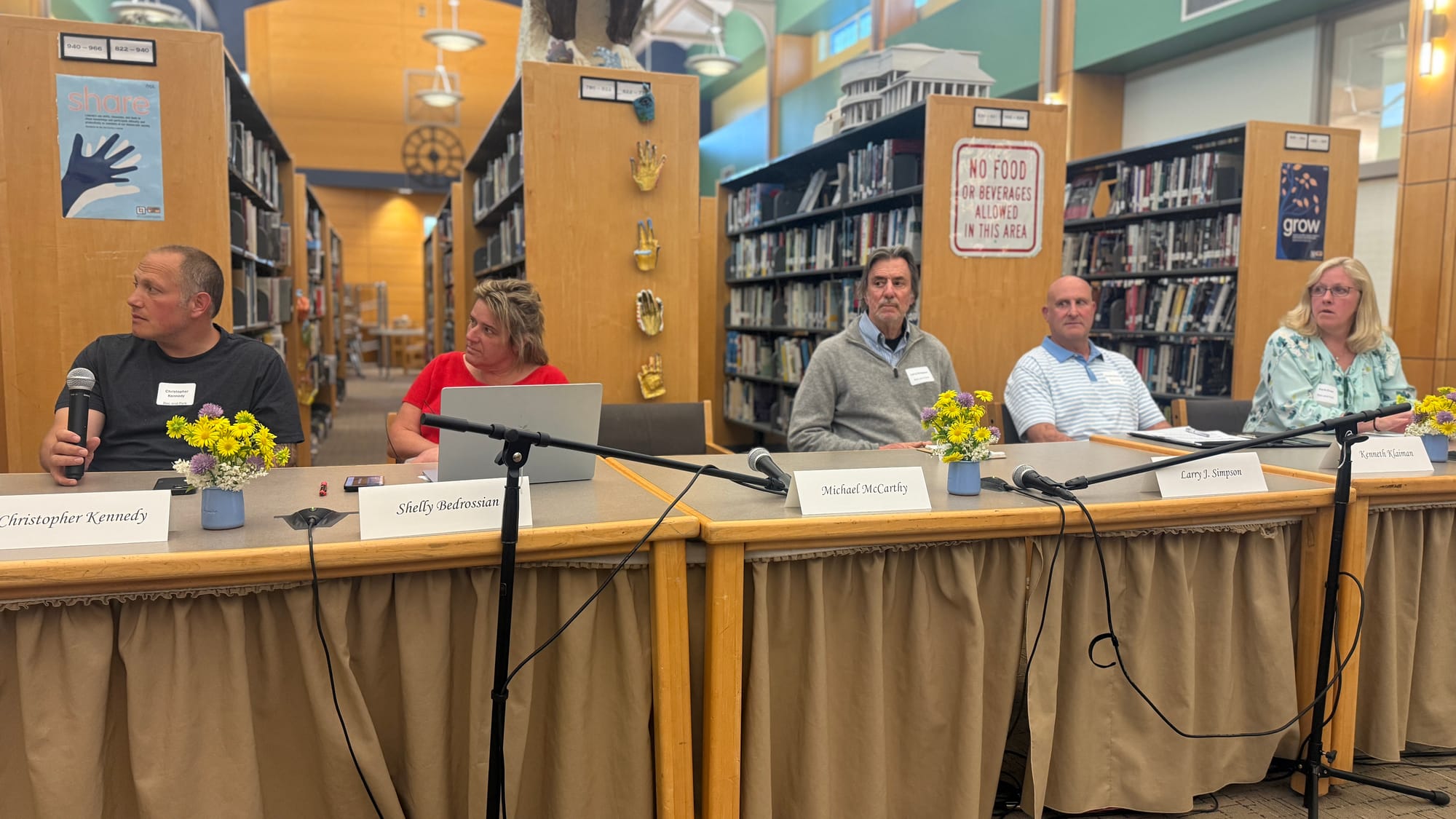
The Recreation and Park Commission segment put six candidates before voters, though Michael McCarthy was absent because of what the moderator described as an unforeseen medical situation. His statement was read aloud. The other candidates — Chris Kennedy, Shelly Curran Bedrossian, Larry Simpson, Kenneth S. Klaiman and Karin Ernst — answered questions in person.
The sharpest divide came over artificial turf, with candidates asked about the Commission’s past green and sustainable policies and the recent decision to use artificial turf.
Bedrossian said Marblehead was among the first municipalities in the country to adopt a bylaw requiring organic materials for field maintenance. On artificial turf, she said the question is more complicated than can be answered in one minute and pointed to economic factors, replacement values, market demand and input from youth sports groups.
Simpson took the clearest opposing position, saying he had gone on record as the only commissioner to vote against artificial turf or at least for a pause.
“I think there’s no question that from a playability point of view artificial turf works better,” Simpson said. “But from a health, there’s tons of microplastics, there’s PFAS in artificial turf. It heats up a lot.”
Klaiman gave the shortest answer: “Real grass and no chemicals, because that’s what parks and kids are about.”
Ernst described the decision as a balancing act. She said Marblehead needs field space, other communities use artificial turf and local athletes are accustomed to playing on it. She said natural fields in town are often closed after rain, while artificial turf could expand playability.
Kennedy strongly supported turf at Reynolds, saying he has coached soccer, still plays and sees turf fields in other communities. He said drainage, maintenance costs, limited staffing, scheduling pressures and field shortages make turf necessary at that location.
The candidates also used the forum to list priorities. Simpson named pickleball, the Reynolds project and Friends of Marblehead Parks. Klaiman cited accessibility, cost control and long-term planning. Ernst named ongoing projects, the memorial policy, dog park access, pickleball, the Anderson Trust and later phases of Reynolds. Kennedy pointed to long-term planning and a possible Chandler Hovey renovation tied to accessibility improvements. Bedrossian said her top goal is completing design work for all three Reynolds phases and construction of the first phase, followed by making parks barrier-free.
Cemeteries and housing turn to access
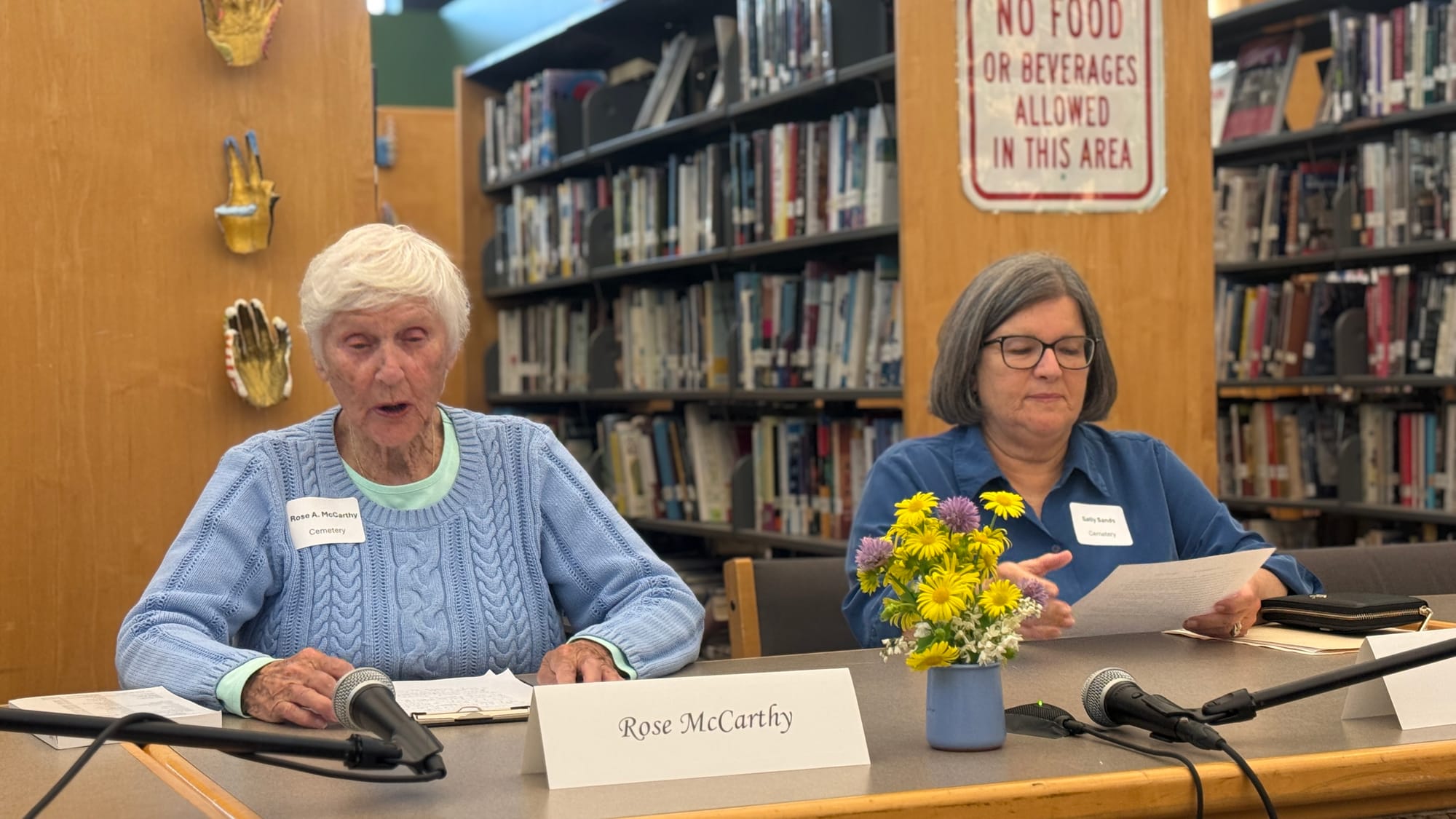
The Cemetery Commission race paired Rose McCarthy and Sally Sands, who was appointed to the Commission in February and is running for the two-year term.
Sands used her opening statement to focus on historic preservation and future cemetery capacity. She said volunteer oversight committees are seeking grants and private funds for Old Burial Hill and Harris Street and that expansion work near Liberty Lane at Waterside Cemetery is expected to provide 200 additional graves this year.
Asked about finding money outside the town budget, Sands said the town’s historic cemeteries create opportunities for grants, including work on collapsed walls and tomb restoration.
McCarthy said the cemetery had traditionally been able to fund itself through burial expenses, but she also said water access is needed so people can maintain gravesites. If grants are available, she said, the town has people who can write them.
On cemetery records, McCarthy said she wanted better hours for public access and raised concern that the chapel is often locked. Sands said some records have been digitized, but many remain on small cards with drawings and burial information. She said digitizing them would be a large job and difficult under budget cuts, but she would be interested in exploring it.
In her closing, Sands said she had noticed in her first few meetings that no one attends Cemetery Commission meetings, even during budget discussions. She said the Commission can feel “sort of an island into itself” and should invite people in through meetings and public forums.
The Housing Authority segment was shorter. Jeffrey Weeden attended in person, while Jean Eldridge, who is seeking reelection, was unable to attend. The moderator read a statement from Eldridge saying she has served for several terms and has practical understanding, institutional knowledge and commitment to residents.

Weeden said he works for the Lynn Housing Authority and hoped his experience would carry over to Marblehead. Asked how he would address tenants who do not feel heard, he pointed to his work on a smoke-free housing policy in Lynn, where surveys and meetings helped reveal more resident support than he expected.
He said the answer is to meet residents one on one, gather feedback ahead of time and make sure they are heard during board meetings.
Asked about key housing issues in Marblehead, Weeden said the town has an opportunity to reimagine sites, including Broughton Road, with mixed-income housing and added density done carefully. In a late question about the Coffin School property, he said he liked an option that preserved the school, included green and park space and appeared to include the most housing.
We covered this forum so readers could see the choices before the June 9 vote, not just the names on the ballot. Reporting like this takes time at meetings, careful editing and follow-up so the work stays free to read for the whole town. If the Indy is part of how you follow Marblehead, make your support count while this election coverage is still fresh. 🟦 Become a member here.