Table of Contents
Get our free local reporting delivered straight to your inbox. No noise, no spam — just clear, independent coverage of Marblehead. Sign up for our once-a-week newsletter.
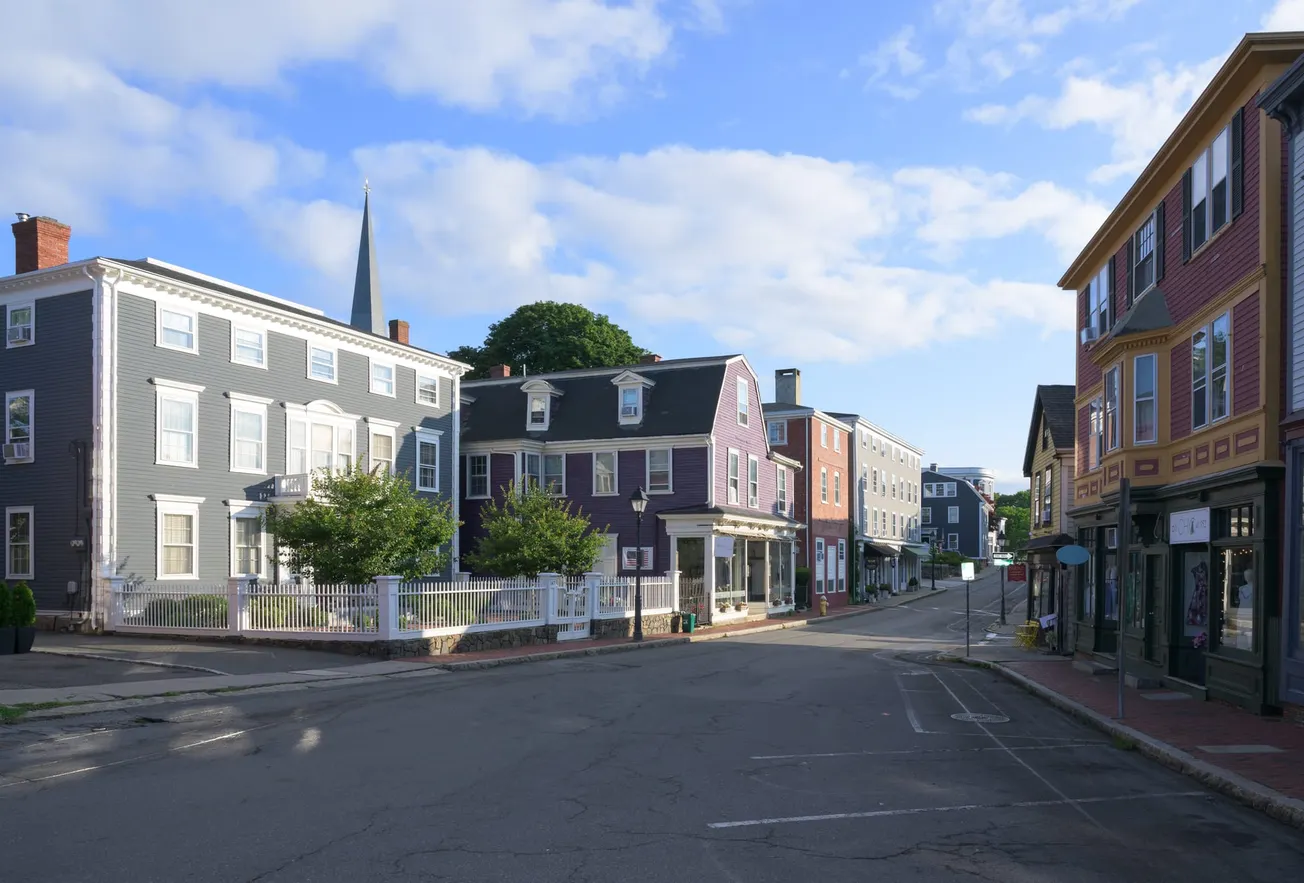
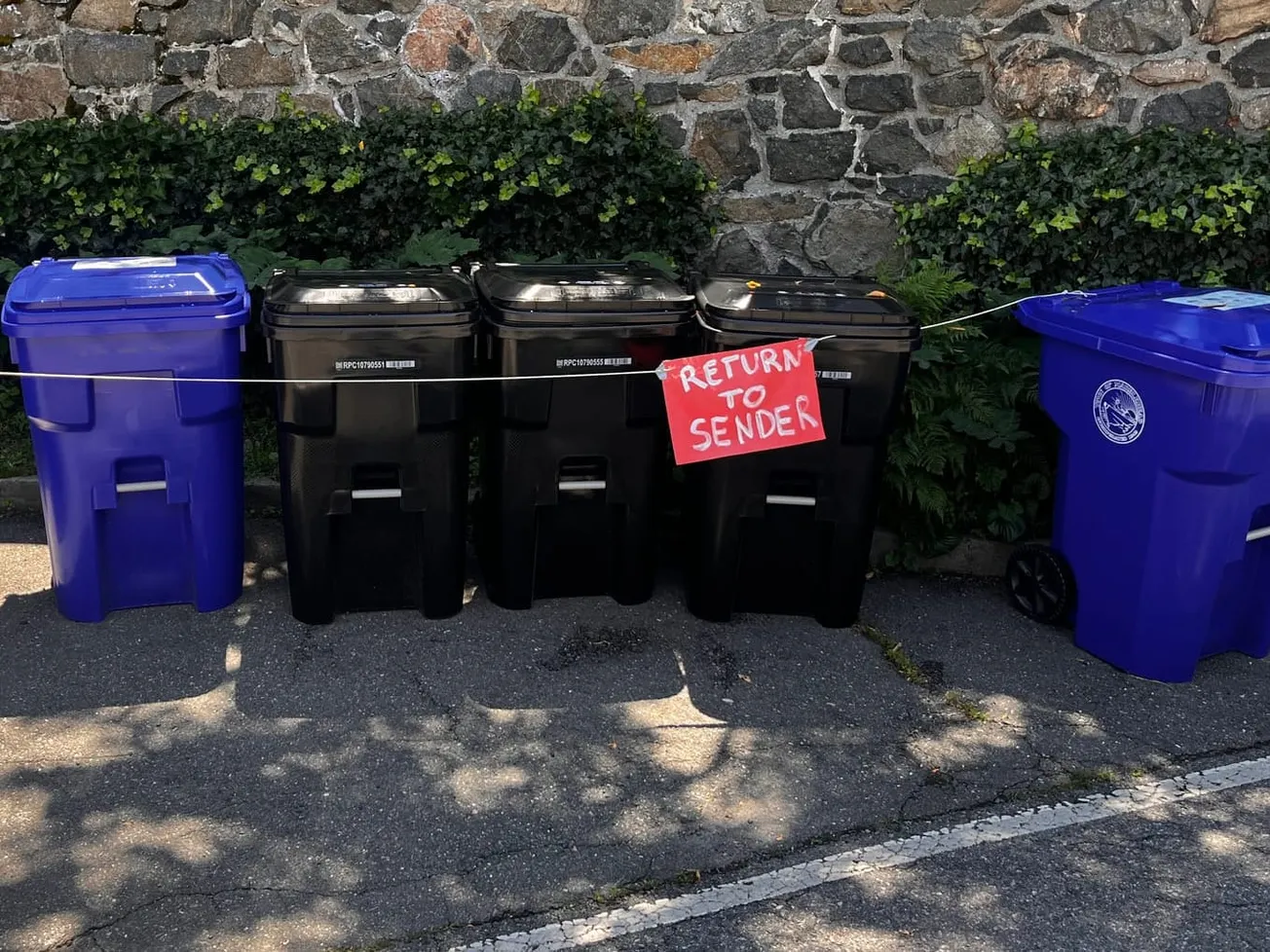
Eight new trash and recycling barrels arrived at a Front Street home in the Old Town section of Marblehead. The household needed two. The other six are still on the street, with no backyard to hide them and no room in the garage.
"They are an eyesore and totally out of scale for any residential home, let alone for the unique challenges and aesthetic of Old Town," Nick Kent, the Front Street resident, told the Independent. "Somewhere along the line, logic flew out the window."
The barrels are the most visible piece of the town's new curbside trash and recycling program, which takes effect July 1. Voters approved a trash override, a Proposition 2½ measure, that kept collection in Marblehead's property taxes instead of a fee residents would have paid directly.
Photos of unwanted barrels marked "return to sender" have spread on local Facebook pages.
This kind of reporting takes time: meetings, follow-up calls, public-process details and the practical answers residents need before a change takes effect. The Marblehead Independent is working to reach 175 contributors by the end of the summer so this local coverage can stay free to read and available to the whole town. If you’ve been meaning to support the Indy, today is a useful day to join your neighbors in making that possible. 🟦 Become a member here.
Aleesha Benjamin, the town's finance director, wrote in message clarified that – contrary to information that has been floating around out there – every eligible property is enrolled as of July 1 unless the owner opts out in writing, and that owners who opt out must still dispose of waste lawfully through permitted haulers. Returned barrels should not be brought to the Assessor's Office, the town said; no abatement, credit or refund will be issued, and questions should go to the Board of Health at 781-631-0212.
The grievances filled the Board of Health's most recent meeting, where about a dozen residents lined up in person and on Zoom to object that the barrels are too big, too many and too hard to store. Several were older residents who said the 95-gallon recycling cart would not fit in a small garage or could not be wheeled over a winter snowbank, and who faulted a rollout that reached them with little warning.
Others questioned the fairness, objecting that single-family owners now help pay for multifamily buildings that received a barrel for every unit. Board of Health member Kristin duBay Horton said the Marblehead Housing Authority is budgeting about $30,000 a year because it is billed as a business.
Why the carts are so big
Andrew Petty, the town's director of public health, ran through the reasons. The town is keeping its hauler, Republic, but switching to automated trucks that lift and empty the carts with a mechanical arm. "All the big companies are no longer offering hand collection due to safety reasons," Petty said. Downtown, where the trucks cannot maneuver, crews will still collect by hand one day a week.
The carts belong to the town, not the household, which Petty said was deliberate. "All the carts are owned by the town of Marblehead. We didn't want to have this debate of, 'You broke my barrel, you threw my barrel,'" he said. The town expects to get at least 10 years out of them.
The standard set is a 65-gallon trash cart and a 95-gallon recycling cart, sizes Petty said were written into the contract to control how much waste the town pays to haul. Smaller 35-gallon trash carts exist, but in limited numbers — about 500 — and the town is steering them first to downtown, Old Town and residents with mobility problems. Petty waved off the smallest option for recycling. "That 35 is really too small of a recycling bin for anybody," he said.
With a waste office Petty said runs on two people, custom requests are not realistic. "The hardest thing for us is it's impossible for us to take custom orders," he said. A survey letter to the town's roughly 8,000 households, the kind several residents said they wanted, would cost more than $8,000 to mail, he said.
Much of the disorder, Petty acknowledged, traces to the calendar. The town had "a very short period of time" to order carts and deliver them before the July 1 contract began, after the decision to fund collection through an override rather than fees came late in budget season. On a normal schedule, he said, barrels would not have gone out until September.
Tom McMahon, a member of the Board of Health, traced the pileup at multifamily homes like Kent's to the same scramble. Had voters rejected the override, he said, the town would have billed each unit its own fee — Petty put it at $290 a household — so crews delivered a set to every unit rather than guess wrong. Under the tax-funded program that passed, the extra barrels can go back.
Sharing, and a wider shift
The remedy officials keep pointing to is sharing. Because collection is now funded through taxes rather than per-unit fees, neighbors no longer each need a set. "Neighbors are more than welcome to share barrels at this time," Petty said; under the fee plan, he said, that would not have been allowed. Owners can give back the barrels they do not need by filing a form with the Board of Health, which will collect them, though the town has said it will not refund anything for returned carts. One resident has organized a volunteer effort that found takers for close to 500 discarded barrels, much of the demand in nearby Peabody.
The town did weigh cheaper options. McMahon said residents turned one down themselves. "There was an option on the table to save money as a town to go to recycling every other week, like Salem does, and when we had the public forum, no one wanted that," he said. The board kept weekly recycling after a hauler strike last summer left residents wary of less frequent pickups, though Petty said every-other-week collection could return when the contract is rebid in five years.
McMahon framed the overhaul as part of a shift he sees as unavoidable. The state's last landfill is set to close in 2030, he said, and towns may then have to truck waste out of state. New Hampshire has already said it will not take it, he said.
Neighboring communities are further along. Salem has run a similar program for more than 10 years, McMahon said, and Lynn, Beverly and Swampscott have moved or are moving to barrel collection. Towns that pay more to keep older systems, he said, are "just kicking the can down the road."
The sorest point is communication. McMahon said the change was covered for months in two local newspapers and town newsletters before residents noticed the barrels at the curb. "Everyone's like, 'Well, why didn't you mail something to my house?' And I'm like, 'Well, we did. It's called two different newspapers that get delivered to your house,'" he said. Residents at the meeting had a ready answer: they get their news from Facebook and Instagram, not newspapers, and said even online the rules were hard to find. The board's own Facebook page, by its own account, had sat idle since 2022.
Before adjourning, the board voted 4-0 to let downtown businesses join the curbside program for $160 a month, a step it left to staff to roll out once the residential switch settles.
Kent, the resident with the surplus, had a plainer question: "How does one even go about returning these?" The answer is a form at the Board of Health, or a neighbor willing to share. For now, the six barrels are still on the street.