Table of Contents
Get our free local reporting delivered straight to your inbox. No noise, no spam — just clear, independent coverage of Marblehead. Sign up for our once-a-week newsletter.
My vegetable garden is a disappointment so far. The tomatoes are just turning red, the cucumbers have not taken off, no eggplants yet, a few beans and peas ... I do, however, have enough shallots for a lifetime. The fruit trees, strawberries and blueberries have been underwhelming. I suspect a critter has been tasting the best ones. Recently, Digby caught a large critter. Good news is, I almost stepped on a garter snake last week. This new discovery may, hopefully, deter some critters and I have a new pet snake!
This is the time of year when I take stock — what worked and what do I need to change? I struggle with this. I am thinking very seriously about what I may move later in the fall. I have four or five precious David Austin roses that are not doing their best in their current location. Now is not a great time to transplant pricey perennials. But these roses are really on their last leg. I can tell because the insects are targeting their leaves more than others. These roses have only one strong cane and barely produced two flowers each. They should be full shrubs at this stage of the summer. I did a sort of sun study (looked out my window and took pictures) and could say for sure, these roses were getting less than two to three hours of direct sun, thanks to the town Norway maple that has managed to shade my entire yard. This was not the case when I planted these roses. Roses need a solid four to six hours of direct sun.
What could be done? I very carefully dug all of the roses up, potted them up in plastic containers with excellent soil with good drainage, watered them deeply and after a few days, I placed them in the sunniest area in my yard, which happens to be the vegetable garden. I will keep them there and watch them until early fall, and by then I will have found a sunnier place for them. It may be that they are destined to be permanently in the front of my vegetable garden! Why not have roses in front of tomatoes?
Now is a good time to look at what plants may need to be divided. If you have hostas, irises or daylilies that have completely outgrown their spot, and maybe it has a bare spot in the middle of its clump, it is a good idea to mark it for division. Put a stake in it and remind yourself on your calendar to divide it in the fall. What is division? It is digging up the entire clump, and then cutting it in half with a shovel or saw or scissors. Then, replant one of the pieces, and give the other pieces to your neighbors or find a spot in your yard to replant it.
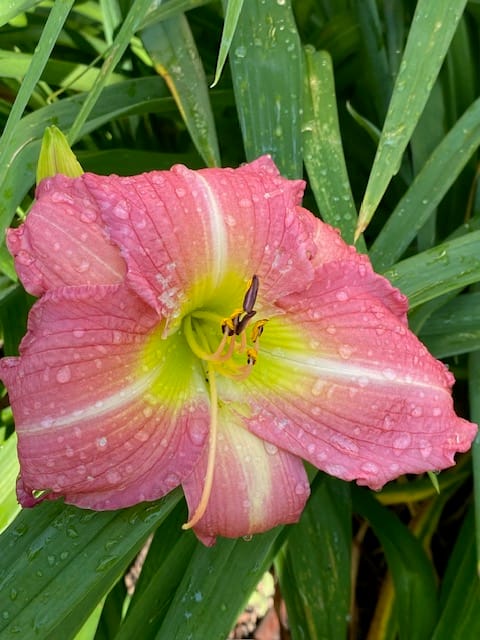
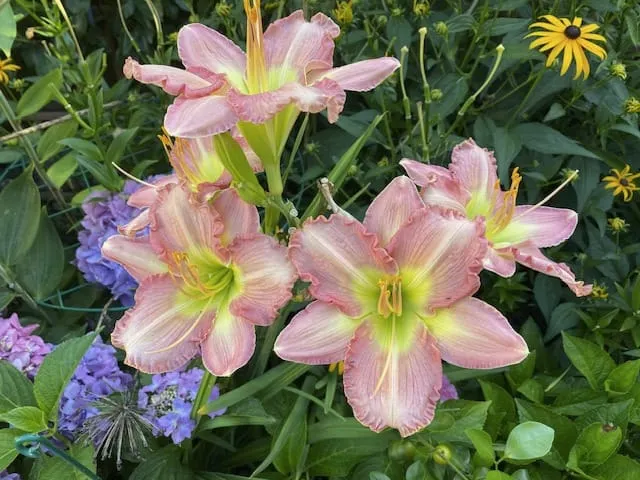
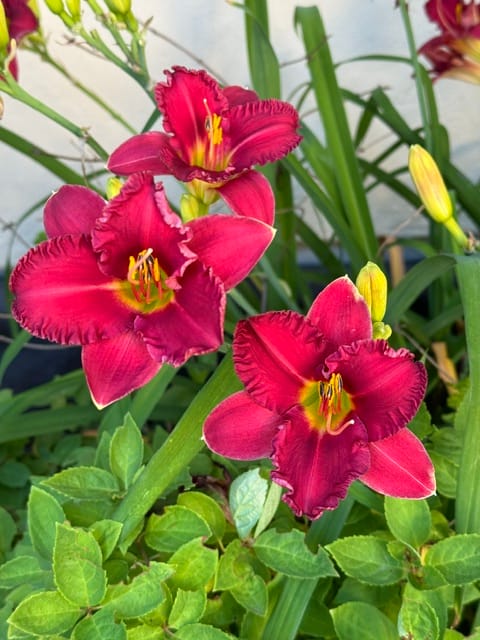
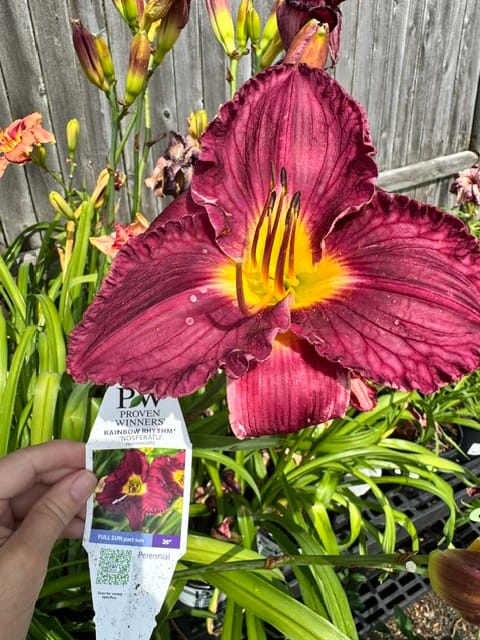
Speaking of daylilies, I absolutely love them! They are the easiest plants with the most bang for your buck! Once established, they flower for weeks, longer than most any perennial in our gardens. Daylilies are among the best performing perennials in zones 6-7. I am not referring to the orange tiger lilies that grew in the ditches around where I grew up in central New York. Those were the 1970s version of daylilies. Those still look striking in a border. I encourage you to explore the endless beautiful colors and varieties that are available online on Oakes Day Lilies. These plants are so easy and perfect for our Massachusetts soil and climate. They thrive in my garden. I especially like the spider variety. The flowers are 7 inches across. When they are all done blooming, the foliage just looks like free flowing grasses in your border. These "grasses" blow gracefully with the wind, then die back in winter. They have a tidy mounded look and in my opinion are close to carefree. They don't need staking, there are no pests attacking them and they just quietly perform year after year. My first daylily was a variety called Joan Senior. I was on a quest for an almost white flower. That was easily 15 years ago and it is still blooming year after year! Lately, I became interested in finding daylilies with variegated striped foliage, like Golden Zebra Hemerocallis Malja, which would brighten up a spot on the edge of my garden.
I contacted a New Hampshire farm which sells interesting varieties to see if they knew of any daylilies with unique foliage. Carl Harmon of Harmon Hill Farm explained to me that there are not many with foliage like Golden Zebra. His farm grows over 4,000 varieties. A few daylilies they sell there can have 60 buds and are blooming for two and a half months! One everyone is familiar with is Stella D'Oro which blooms from June through August. Other strong bloomers are Early and Often and The Jury is Out (love that name). I think I see a road trip to Harmon Hill Farm in my future!
If you want to look up these daylilies, research here: daylilies.org. There are 100,000 registered cultivars! Daylilies take a few years to get established, but I think it is totally worth the wait. Some of my favorites are Kindly Light, Chorus Line, Persian Market, Ruby Spider, Pardon Me and Webster's Pink Wonder. Bonus, when you order from Oakes, they give you one free plant! As of this writing, I am currently obsessed with one called Breathing in Snowflakes.
Now for some tasks you could be doing in the garden:
Prune back your Nepeta, if it is like mine, it needs it now, you may get a second bloom. Now, is also a good time to trim hollies, boxwoods and hedges if you have not already done it. Weeding, of course, is always to be done, stay on top of it, this will prevent it from seeding next year. It is a good time to fertilize and feed everything one last time in August. Avoid doing this in the fall, as the new growth will not survive the winter. There is a lot of powdery mildew out there. Try making a mix of one-fourth milk and cup of water and spray it on the leaves while the sun is out. The enzymes in the milk help make the gray powdery mildew dissipate. (My grandmother taught this to my mother). Find a spot in your garden to plant lettuce, even in a pot. You will love not having to worry about gastrointestinal issues! Lettuce likes the cooler nights and fall weather in general. Hope for a better harvest than I have had with my cucumbers.
Colleen Connor, our garden columnist, is co-president of the Cottage Gardeners of Marblehead and Swampscott.