Table of Contents
Get our free local reporting delivered straight to your inbox. No noise, no spam — just clear, independent coverage of Marblehead. Sign up for our once-a-week newsletter.
In November 1980, in the state its critics called Taxachusetts, voters approved a citizens initiative with one blunt promise: town halls could no longer raise property taxes more than 2.5 percent a year without asking permission. Proposition 2½, pushed by Citizens for Limited Taxation in the wake of California’s Proposition 13, took effect in 1982 and rewired the relationship between Massachusetts and its 351 cities and towns. The law left an escape valve — the override — but built it to be hard to turn. For 44 years, no town honored that design more faithfully than Marblehead. On June 9, Marblehead turned the valve harder than all but one community ever has.
Voters approved a $15 million operating override, 4,278 to 3,594 — 54.3 percent of the 7,872 votes cast on Question 3, a 684-vote margin — and a $2.3 million trash and recycling override, 5,326 to 2,580, or 67.4 percent of the 7,906 votes on that question.
The $17.3 million combined is second in the law’s history only to the $23.25 million Brookline approved five weeks earlier. To see what the town actually did, look at where the levy sits in the budget. Marblehead collects about $84.6 million in property taxes this year at a rate of $8.59 per $1,000 of assessed value, but the figure Proposition 2½ governs — the levy limit, which excludes voter-approved debt like the high school bonds that just rolled off after two decades — stood near $77.8 million heading into fiscal 2027. That capped levy supplies roughly three-quarters of the town’s projected $101 million in operating revenue. Under the cap it can grow about $2.2 million a year, plus new construction, which added just under $300,000 last year.
We have 120 paying members helping keep The Marblehead Independent free to read, and this kind of reporting is what that support makes possible. Our next goal is 175 members by the end of July, so we can keep covering the votes, records, costs and follow-up decisions that shape life in town. 🟦 Become a member here.
Against that, Town Administrator Thatcher Kezer told the Select Board in February that a projected 15 percent health insurance increase would cost roughly $1.9 million — consuming about 86 percent of the $2.2 million in new capacity before a single road is paved or teacher hired. The override resets that arithmetic. Once fully phased in, it lifts the levy base from about $77.8 million to roughly $95.1 million, an increase of about 22 percent — the equivalent of eight years of allowed growth, granted in one ballot. And because the new base compounds, the $17.3 million will itself generate roughly $433,000 in additional allowable levy growth every year afterward, forever.
Forever is what Marblehead always refused. Since 1982 the town approved 68 of 84 debt exclusions — temporary taxes for things it could touch — while passing three of 21 operating overrides, a Marblehead Independent review of every ballot question found. The state Division of Local Services vote database records the town rejecting a $508 override for Meals on Wheels in August 1991, 782 votes to 716, and erasing all 10 questions on a single ballot in June 2010. “Debt overrides are transparent, specific and directly accountable,” former Finance Committee chair Moses Grader said this spring, summarizing the creed. The town would borrow for what it could see. It would not permanently enlarge the government underneath.
The same squeeze that broke Marblehead’s creed is moving the whole state. The record for the largest override ever approved, held by Newton’s $11.5 million from 2002 until 2023, has since fallen three times: Brookline’s roughly $12 million in 2023, Melrose’s $13.5 million in November, then a 73-day run this spring in which Arlington passed $14.8 million on March 28, Brookline passed $23.25 million on May 5 and Marblehead passed $15 million on June 9 — the three largest in the law’s history, back to back to back. According to the Boston Globe, 54 communities put overrides before voters this year, the second most since the early 1990s, as health insurance, special education and the end of federal pandemic aid outrun a formula written when inflation, not fixed costs, was the enemy.
The wave is real but selective.
“From what we've seen reported, it appears that about two-thirds of questions have passed this year,” John Ouellette, director of communications at the Massachusetts Municipal Association, told the Independent. “Of course, some communities have attempted more than one question.”
What has changed is not the statute but the price of consent. Marblehead’s yes came itemized — three tiers named Partial Restore, Build and Invest, each listing the librarians, firefighters and grant writer it bought — and collateralized: a signed memorandum of understanding among the Select Board, School Committee and Finance Committee pledges no further override at least through fiscal 2030, quarterly joint financial reviews, a phase-out of free cash budgeting and a rebuilt stabilization reserve. The override, conceived in 1980 as an emergency exception, now arrives the way a bond offering does, wrapped in covenants.
Consent still has a ceiling. Winchester rejected $11.5 million in March by fewer than 300 votes, and Marblehead’s ballot measured the gradient precisely: 5,312 yes votes at $9 million, 4,928 at $12 million, 4,278 at the level that won. The median homeowner, assessed at $998,600 and billed about $8,548 now, pays roughly $430 more next year, building to $1,538 a year by fiscal 2029. Better Way Marblehead worked the polls with signs reading “$7,500+ per household every three years, forever,” and spokesperson John DiPiano predicted the cost “will not be fully recognized by taxpayers for a few years.”
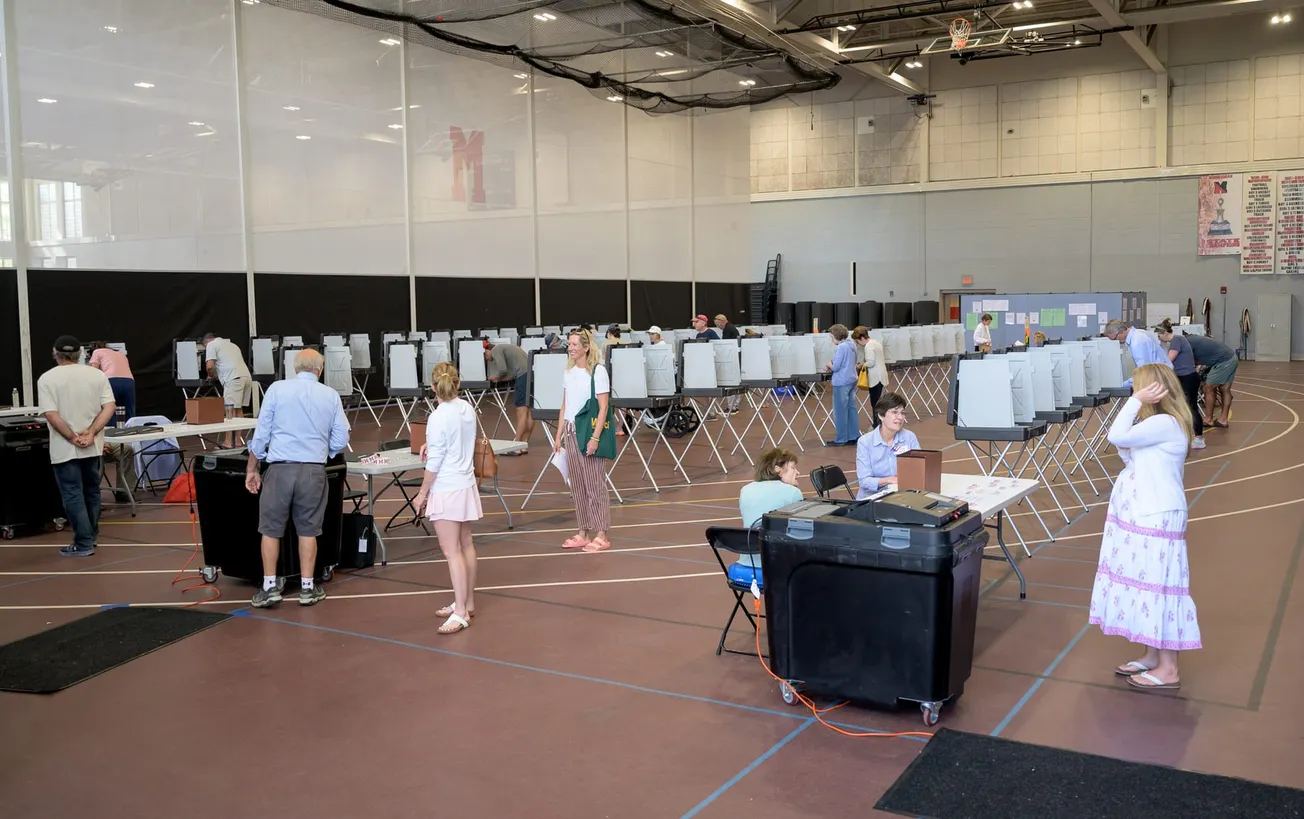
On that one point, both sides agree: the change is permanent. The $2.73 million override of 2005 is still in the levy, still compounding. As of Tuesday, with 8,092 voters participating — 47.5 percent of the town’s 17,040 registered, a modern record — $17.3 million joined it, in the town the authors of Proposition 2 1/2 could once count on to say no.