
Table of Contents
Get our free local reporting delivered straight to your inbox. No noise, no spam — just clear, independent coverage of Marblehead. Sign up for our once-a-week newsletter.
Essex County District Attorney Paul Tucker told a packed Board of Health forum Tuesday night that parents who host underage drinking parties face up to a year in jail and a $2,000 fine under Massachusetts law.
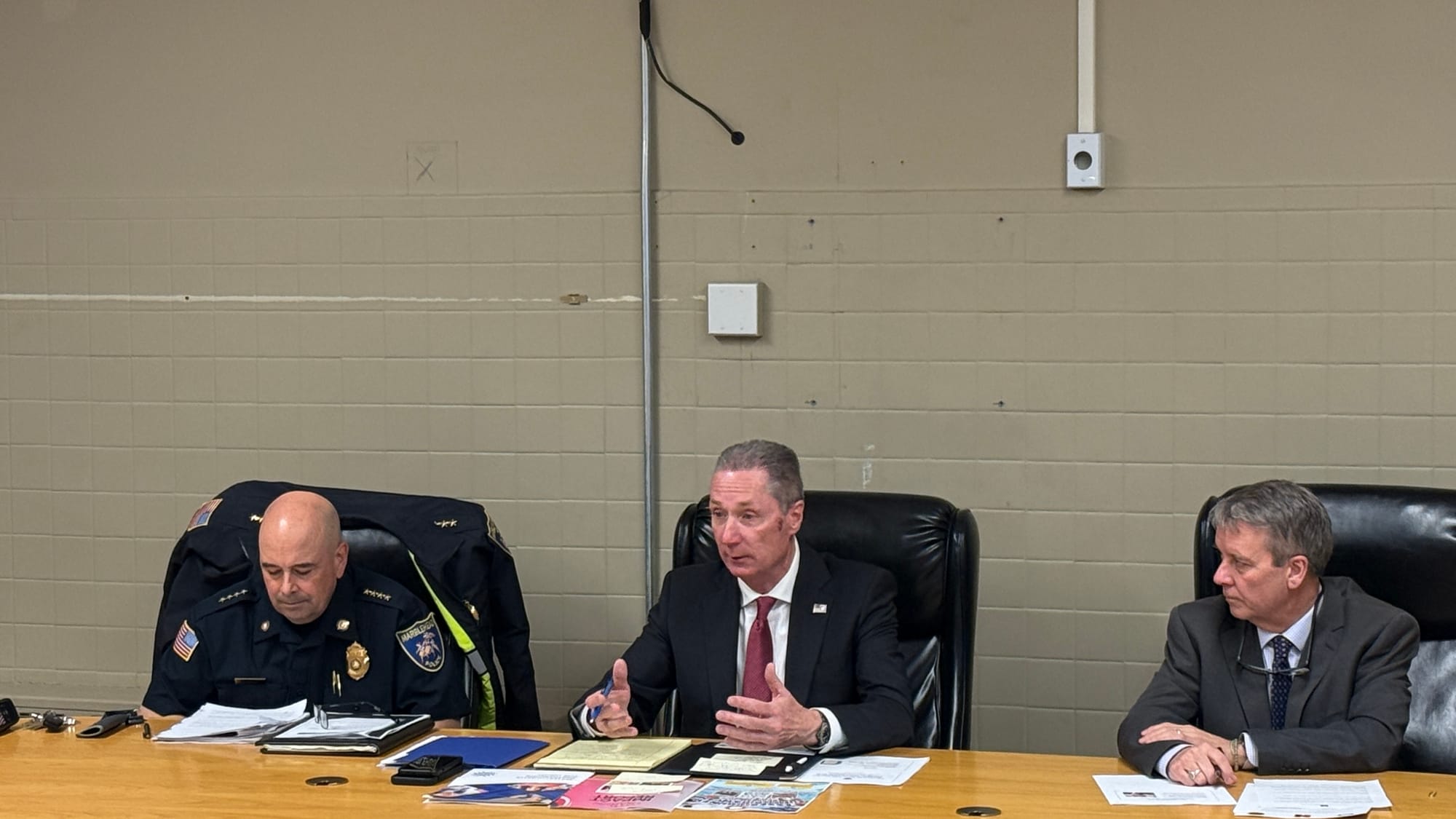
Tucker headlined a community dialogue on youth mental health at the Mary Alley building in Marblehead, Massachusetts, joined by Police Chief Dennis King and Superintendent John Robidoux. The Board of Health convened the panel to examine how public safety, public education and public health can work together on mental health and substance health use among young people — issues residents ranked second only to sidewalks in a recent town wellness survey.
Tucker's appearance was the product of months of growing concern in town over underage drinking and youth safety. He said he was approached by King and a small group of residents after what he called "a couple of tragedies in Marblehead," and his visit came as town officials moved to align schools, police and public health ahead of prom and graduation season.
Board of Health member Tom McMahon has been among the most persistent voices on the issue, pressing town leaders since last fall to more aggressively enforce social-hosting laws against adults who allow teen drinking in their homes. His push helped keep the issue before the board as the wellness survey confirmed broad community concern about youth substance use.
With prom and graduation weeks away, Tucker focused much of his talk on social host liability. He said the Marblehead bylaw carries only a small fine and has little deterrent effect compared with the state law, which he called a criminal statute with real teeth. He outlined the four elements prosecutors must prove: that an adult knowingly and intentionally allowed minors to possess alcohol on premises the adult owns or controls; that those in possession were under 21; that the beverage was alcoholic; and that the adult knew it was alcohol.
"There is not any situation that I believe that it will be okay for adults to furnish alcohol or allow it to be possessed, thinking that they're being well intentioned," Tucker said.
He cited a 2016 Massachusetts case in which parents came home to an underage party and joined the drinking. When a girl at the party became violently ill and asked to be taken to a hospital, the parents — the mother a nurse — refused. They were charged with social host violations and reckless endangerment of a child. Tucker also urged families to discuss the state's Good Samaritan law, which shields minors from prosecution if they summon help for a friend incapacitated by alcohol or drugs.
A former Salem police chief and state representative who lived in Marblehead from 1991 to 2001, Tucker announced that Marblehead High School will receive a $3,800 after-prom grant from his office — part of nearly $40,000 distributed across Essex County this year. Principal Michele Carlson applied for the grant and plans to bring Gloucester mother Kathy Sullivan to speak to senior parents. Sullivan lost her daughter in an alcohol-related accident after the teen drank too much at a party, wandered off and drowned in a shallow swamp.
Tucker said the need for youth mental health services continues to outpace capacity.
"I don't think that we still, a couple of years out, have seen the top of the tidal wave on mental health coming out of COVID," Tucker said. "There are so many things that happen behind closed doors."
King, a longtime colleague of Tucker's from the Salem Police Department, agreed with the district attorney on the law but said enforcement alone will not change outcomes for young people. He said he rejects the phrase "teen drinking culture" and believes adults must intervene at the earliest warning signs.
"I do not believe criminal charges alone change the trajectory of a young person's life," King said. "Consistent support, timely intervention, clear expectations and measured accountability are what make the difference."
King praised Marblehead school resource officer Sean Sweeney Jr., noting that the role shifted away from school discipline in 2018 and now centers on behavioral health and early intervention. Parents, he said, cannot choose what he called "deliberate indifference."
Robidoux, who arrived in Marblehead during a period that included an 11-day teacher strike, said the panel itself marked a shift toward proactive collaboration. He read aloud a joint letter he signed with Tucker and King urging parents to know where their students are before and after prom, who is supervising and how transportation will be handled.
"These milestones should be remembered for celebration, accomplishment, community pride, and not for the preventable harm caused by underage drinking, impaired driving or unsafe gatherings," the letter said.
Robidoux said the district already uses an annual substance use risk survey at the high school and a screening tool administered in grade 7 and again in high school to identify students at risk. He has added the Wayfinder social-emotional learning program at all schools and contracted with Cartwheel, an online counseling service, to give students in-the-moment support.
Board of Health Chair Dr. Thomas Massaro, a pediatrician, said Marblehead's independent town boards have long operated in what he called "parallel play" and need to shift toward shared goals on youth well-being.
BEFORE YOU GO … Our reporting remains free and open to all. It is sustained by readers who choose to support it — by contributing so that routine, document-based local reporting continues without paywalls or promotional framing. Right now, 101 readers support The Marblehead Independent with monthly or annual contributions. Click here to become an Independent member.