Table of Contents
Get our free local reporting delivered straight to your inbox. No noise, no spam — just clear, independent coverage of Marblehead. Sign up for our once-a-week newsletter.
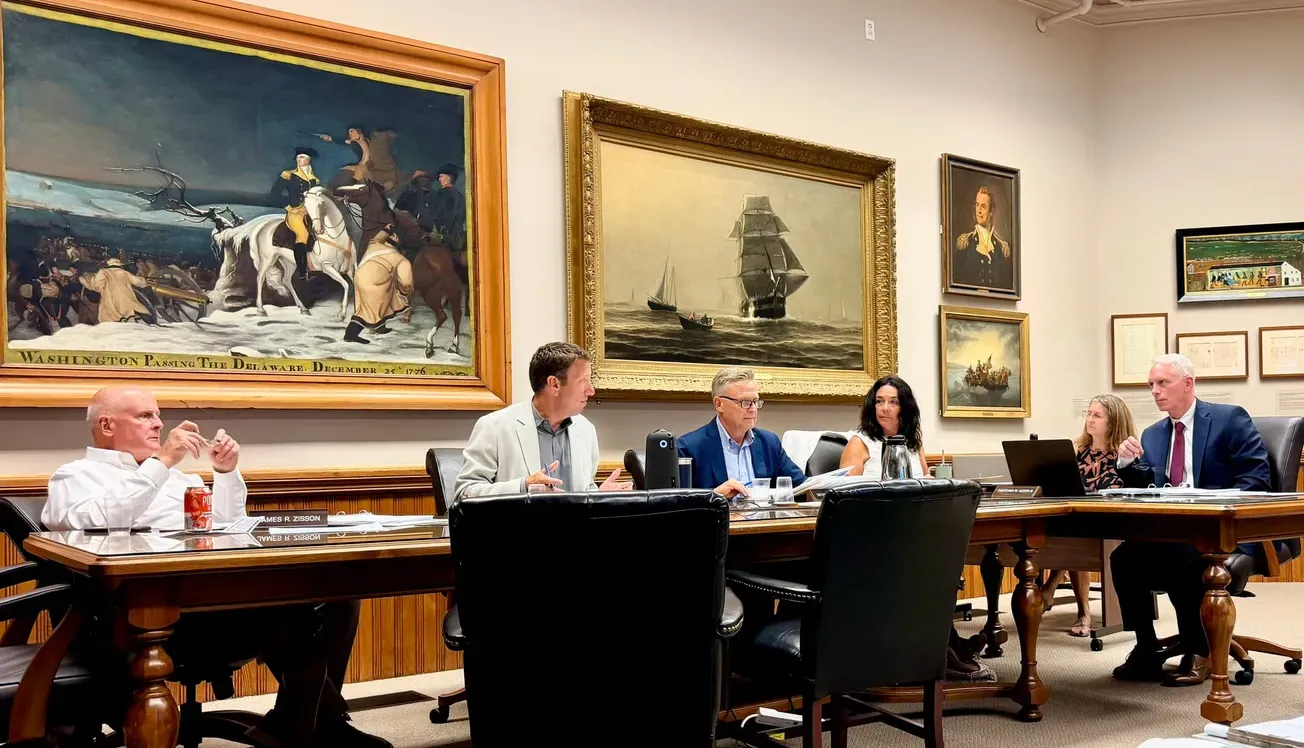
Every portrait subject in the room where Marblehead's Select Board meets is a man. That is about to change.
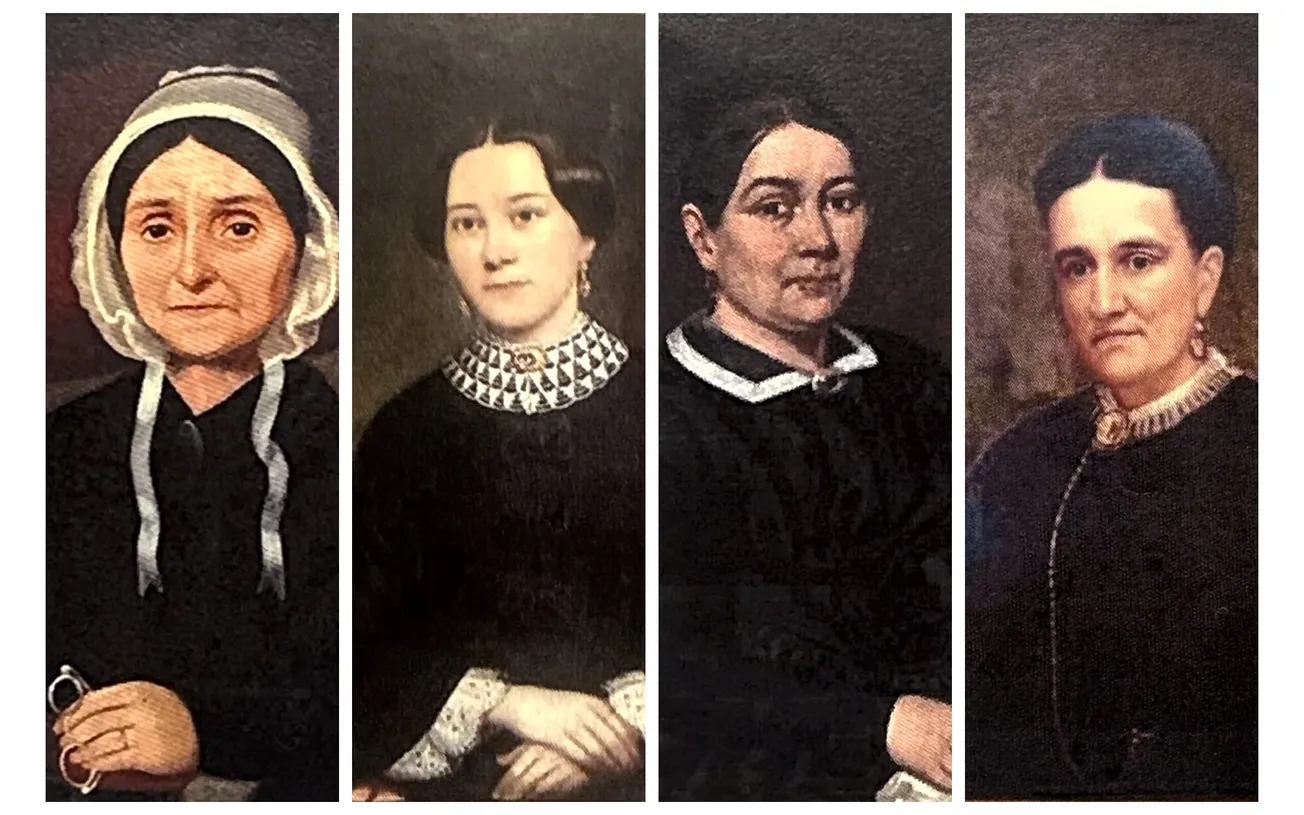
The Marblehead Historical Commission has been offered four portraits of Marblehead women by donor Sharon K. Heim — four consecutive generations of one family, mother to daughter to granddaughter to great-granddaughter. Commissioners said they will accept them and want to hang all four together on the wall now occupied by Supreme Court Justice Joseph Story and Gen. John Glover. The paintings are expected in early October.
Story is the one they intend to take down. The Supreme Court justice has gone magenta, his background bled to the color of a bruise, at the tail of a row that includes Gen. George Washington on a white horse crossing the Delaware, a schooner running before weather in a heavy gilt frame and Glover in uniform.
"He was never meant to be purple," Pam Peterson said.
Peterson chairs the Historical Commission. Across the room from where she sat, behind an enormous sheet of protective glass, Archibald M. Willard's "The Spirit of '76" takes up most of another wall.
Fifers. Drummers. A privateer captain. A judge. A vice president in bronze. Not one woman among them.
Peterson said the commission may still need, "as a formality," to meet with the Select Board and tell members what it would like to do.
Artist unknown
Peterson passed images of the four canvases around the table. The artist does not appear to be identified. All four are 19th century, she said, and all four are Marblehead.
"They're not famous like Mary Alley or anything like that," she said, adding that the commission would write up the women's lives for labels.
Edward O. Nilsson noted that one of them descends from the Blackler family. "First family's here," commissioner Chris Butler said.
Then Butler said the thing that had apparently gone unsaid through decades of meetings in that room.
"I find it fascinating what you said about there's not one picture of a woman in this building," he said — reacting to Peterson's account of the room, not to any inventory of Abbot Hall. The claim Peterson actually made was narrower and firmer: there are no portraits of women in the Select Board room.
"I know, I know," Peterson said.
"And you're right. I just never realized it," Butler said.
"So it's about time, right?"
The four canvases appear to be about the same size as the purpled Story image. Peterson's plan is to put Story into storage — or eventually replace him with a fresh copy of the same portrait — and slide the Glover portrait and the smaller Delaware crossing down to where he now hangs. That opens a run long enough for four women side by side. Dottie Giles, an associate commissioner who keeps the display cases, has been part of the planning.
Heim wrote to the commission on Aug. 8, 2026. She is 77. Her brother died last October at 81. She described herself as the last of her line, going through her things, deciding where four family portraits should end up. Marblehead historian Dan Dixey told her to call the Historical Commission.
The women, she wrote, are four continuous generations of her ancestors, every one of them married to a Marblehead man tied to fishing, maritime work or ship captaining. The portraits run from the late 1700s into the early 1900s. She asked that they be cared for and that the women's stories be connected with the town's maritime history. It would be a comfort, she wrote, knowing "these ladies have finally returned home."
Peterson told commissioners the donor is in her late 70s and wants them back in Marblehead before winter.
Four generations shaped by Marblehead’s life at sea
According to the family profiles compiled by the Historical Commission's Peter Stacey from the material Heim supplied, the line starts with Elizabeth Jackson Blackler, 1755-1833, who married William Blackler on Jan. 23, 1774. In 1775 he served as a drummer in Capt. Francis Symonds' company under Glover's regiment — the regiment whose general hangs on the wall where her portrait would go. On Jan. 17, 1786, the schooner "Betsey" foundered and he was lost at sea. She married John Stacey three years later.
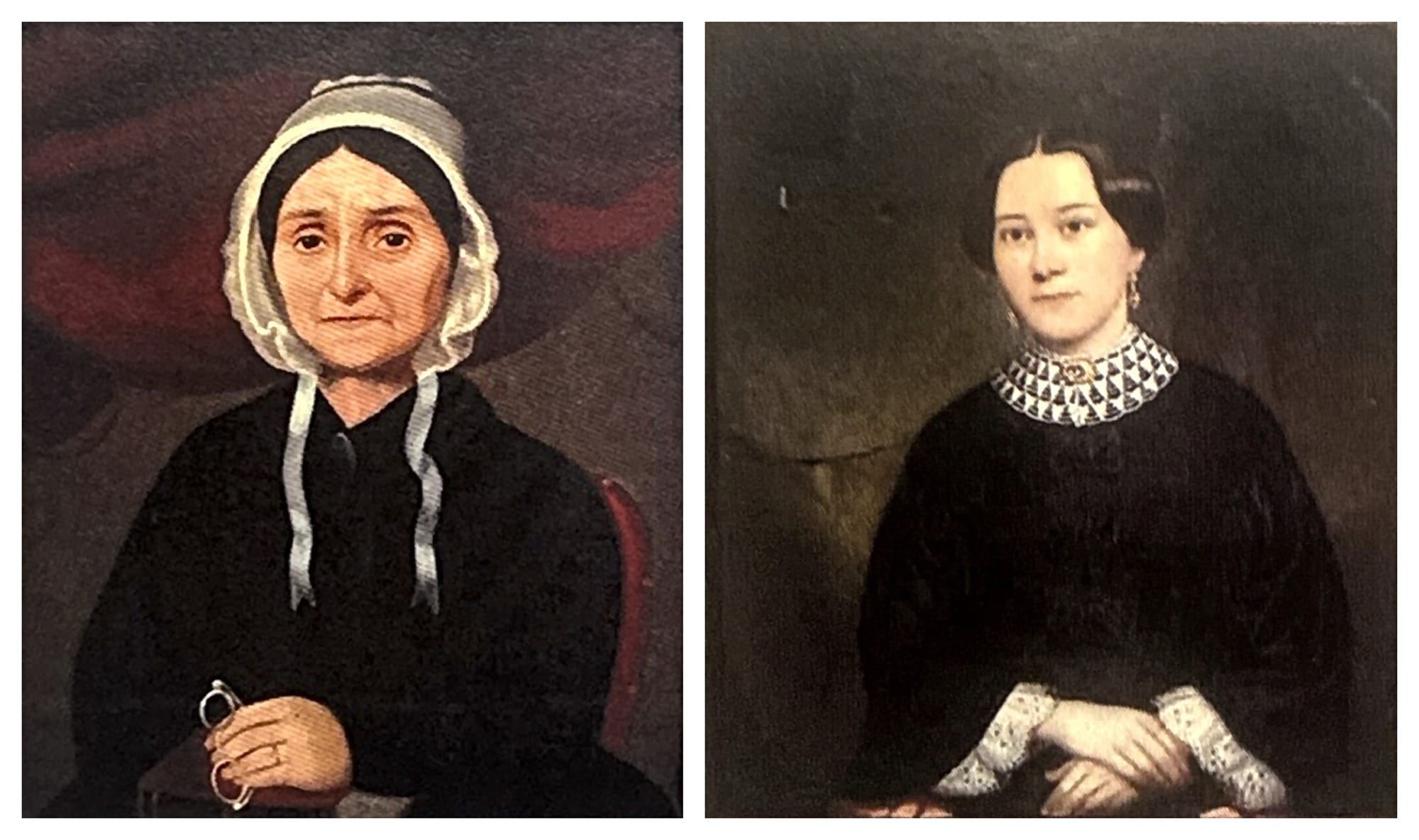
Her daughter, Martha "Patty" Blackler Olerreen, 1779-1854, married Daniel Olerreen on New Year's Day 1804. He was lost at sea too. Word came Sept. 27, 1806, when their daughter Martha was about 1 year old. Patty married Neal C. Lemmon in 1811, a Scot naturalized in 1815, listed as a boatswain's mate in 1842 and described as a mariner when he died in 1845 after an accidental injury. Their son died of fever in Port-au-Prince, Haiti, in 1843.
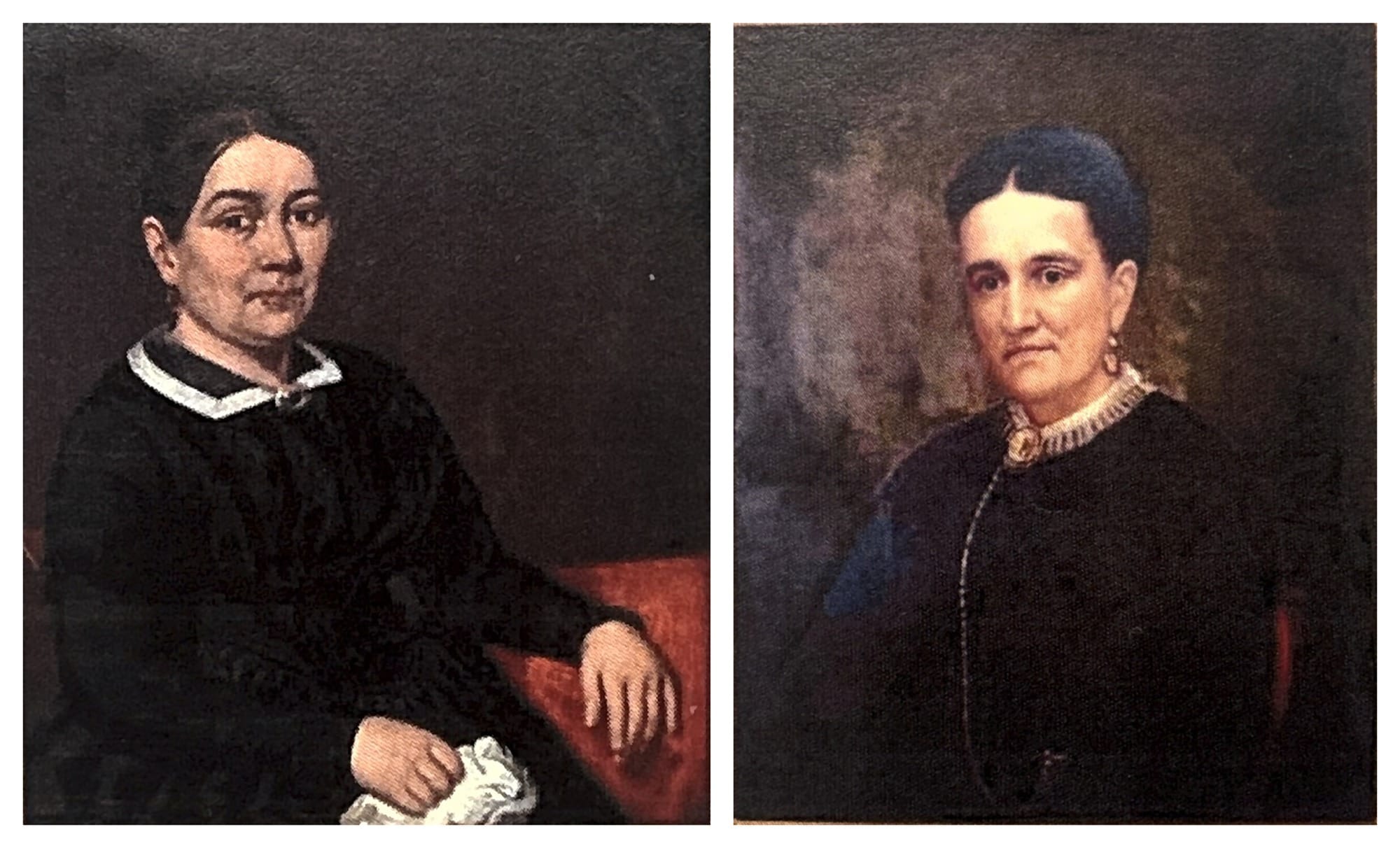
That 1-year-old grew up to be Martha Olerreen Mason, 1805-1862, who married Capt. Jonathan Breed Mason on Sept. 25, 1824, at 19. The Marblehead marriage record cited in the research spells her surname Hallareen; the research does not settle which spelling is right. Mason, 1792-1861, was a captain in the War of 1812 who later commanded the merchant ship "Hawk," which the family believed had been seized by the French. He finished his working life making shoes. She is buried in the Mason family tomb at Waterside Cemetery.
Her daughter Eliza Mason Morris, 1827-1909, closes the set. She married a cordwainer, George Innis, on April 4, 1844. Their son was born Jan. 5, 1845. When the baby was about nine months old, on Oct. 26, 1845, Innis was lost at sea. Eliza married George Godfrey Morris of Lunenburg, Nova Scotia, five years later, was widowed again in 1899 and died March 19, 1909, at 82. Same tomb as her mother.
The pattern goes back further. Eliza's great-grandfather, Capt. Jonathan Breed Mason Sr., 1733-1799, is described in the research as a Marblehead master mariner who commanded the privateers "True Blue," "Pomona," the 16-gun brigantine "Lion" and the "Cyrus," and later served as clerk of the Marine Society. The ships on that list would not look out of place on the labels beside Willard's drummers.
The "Hawk" outlived everyone in it. In 1927, Mary Eliza Morris Fitch — Eliza's daughter — wrote to a Boston lawyer trying to recover an insurance settlement on the cargo of her grandfather's ship, still convinced the French had taken it. The lawyer wrote back, the family history says, that any records of an earlier claim had burned in the Great Boston Fire of 1872.
Story comes down in October. Glover moves over. Four canvases go up in a row, with labels explaining who these women were and whom they buried.
Membership keeps that kind of work free to read and helps the Indy follow the details that give town history its fuller shape. While this story is still fresh, your support helps make the next one possible. 🟦 Become a member here.