Table of Contents
Get our free local reporting delivered straight to your inbox. No noise, no spam — just clear, independent coverage of Marblehead. Sign up for our once-a-week newsletter.
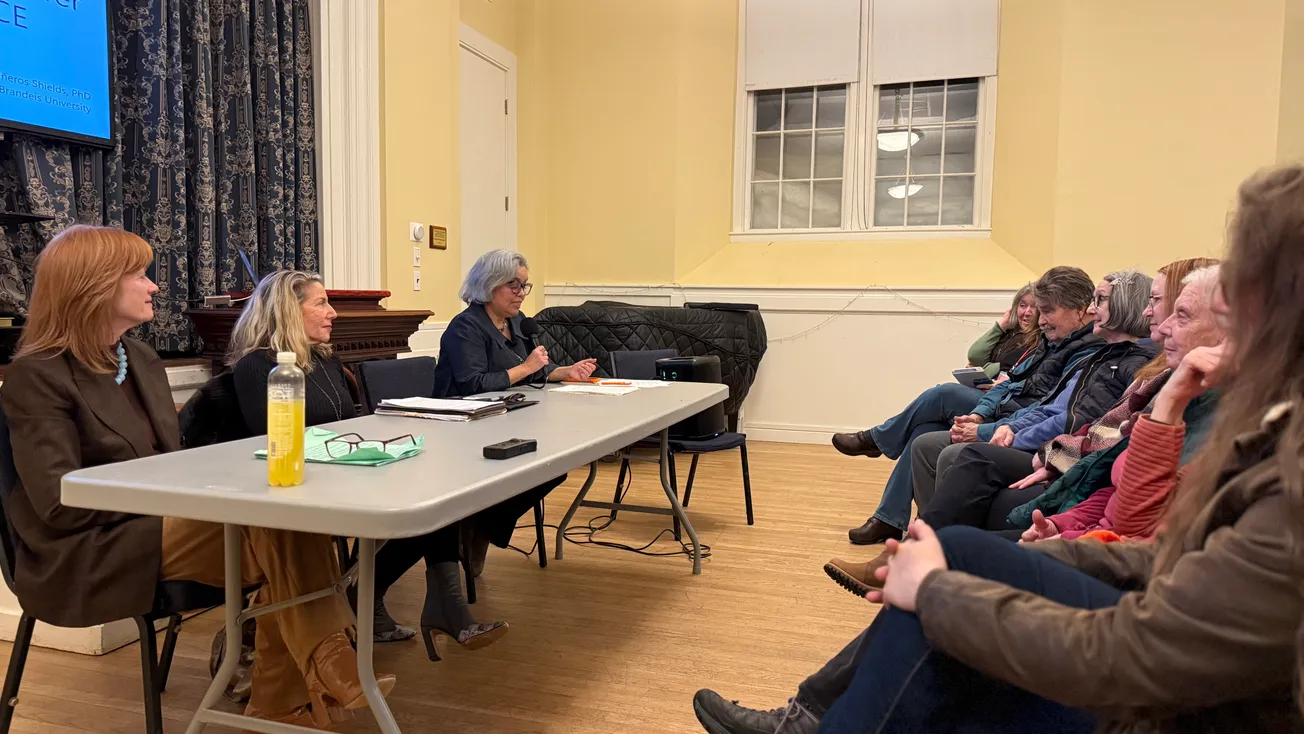
More than 100 people gathered at Old North Church on Tuesday evening for a panel discussion that mapped the overlapping layers of authority governing immigration enforcement, from federal policy shifts and legal practice to local policing limits and state executive action.
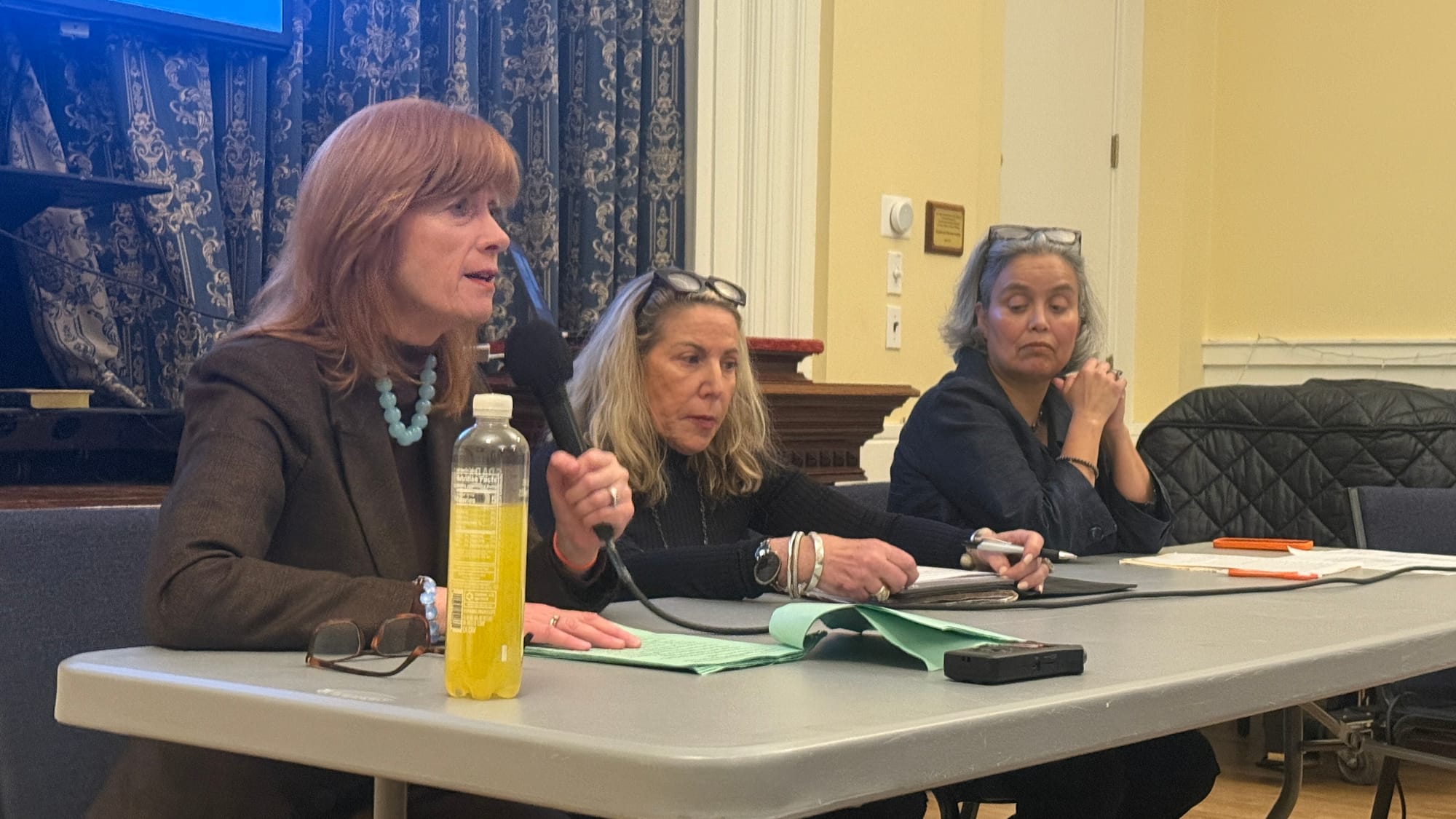
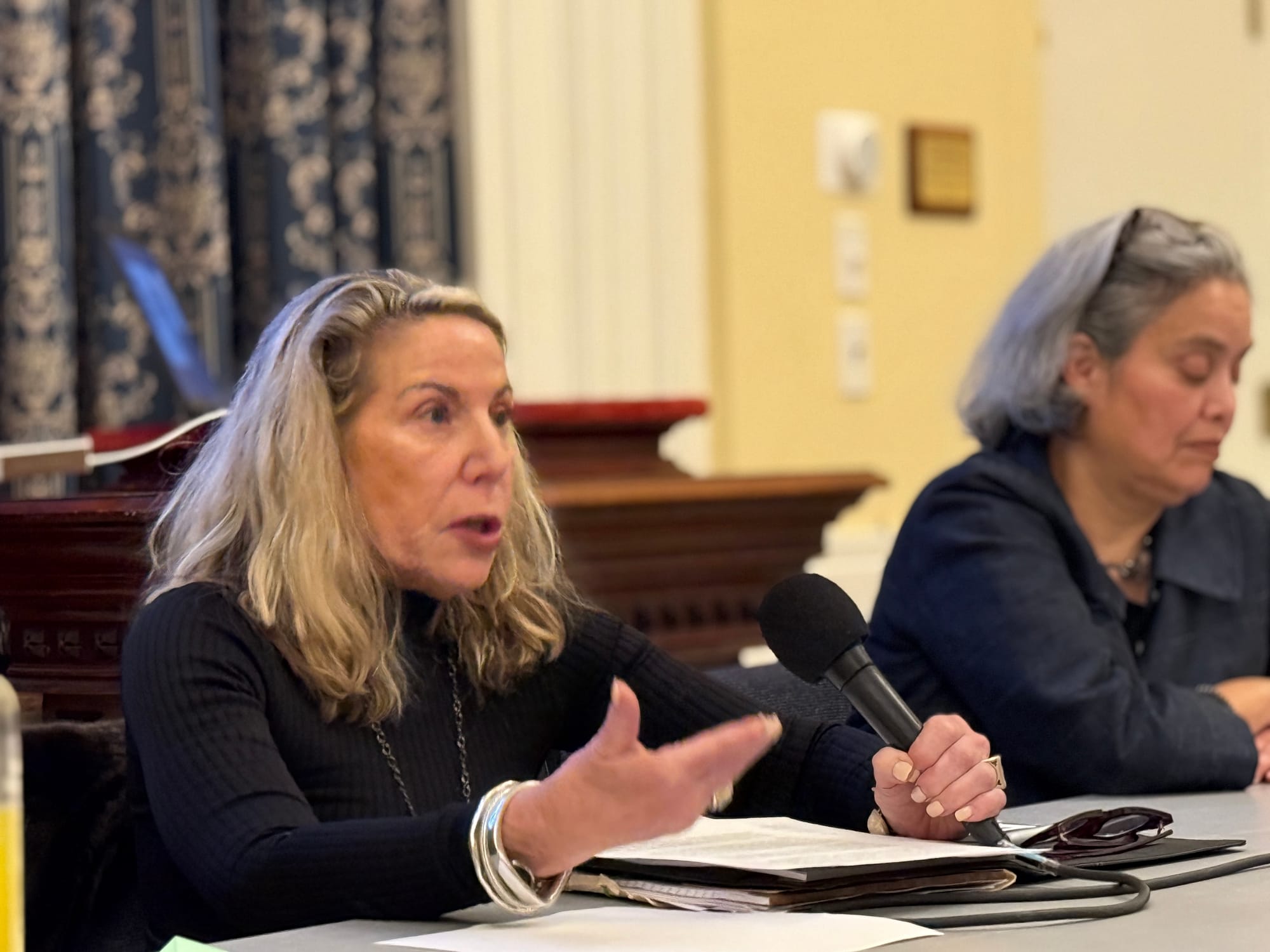
The forum featured immigration attorneys Diann Slavit Baylis and Nancy Norman, both of Marblehead, and Alexandra Piñeros-Shields, an associate professor who directs the Master of Public Policy program at Brandeis University's Heller School. The event was rescheduled twice due to snowstorms before taking place Feb. 17.
At the federal level, Slavit Baylis, a pro bono attorney who represents unaccompanied children, described policy changes she said have upended the system for people who followed existing rules. She said the administration has ended parole for most people, expanded expedited removal — deportation without a hearing before a judge — and revoked deferred action protections for victims of domestic violence, trafficking and crime, making those individuals deportable for the first time in decades.
"Two thirds of the immigrants in detention right now, they don't have a criminal conviction," Slavit Baylis said, citing a recent conference.
She described an operation in which Immigration and Customs Enforcement sent letters to detained unaccompanied minors between 14 and 18, pressuring them to give up pending applications and accept a $2,500 stipend to self-deport, a step she said is ordinarily prohibited under the national Trafficking Act.
"Why would a child want to self deport?" Slavit Baylis said, adding that The minors fear the consequences of refusing.
She said the administration reduced the annual refugee ceiling from 125,000 to 7,500, expanded the travel ban to 39 countries and suspended immigrant visa processing from 75 countries.
'We can only fight within the confines of the law'
In her legal practice, Norman, who has practiced immigration law exclusively for nearly 40 years, described how attorneys navigate narrowing options. She said most Biden-era parole programs have been terminated and that one of the most important current tools is the federal courts, where attorneys file writs of habeas corpus to challenge unlawful detention. She described a tactical challenge: ICE transfers detainees across state lines within hours.
"Your client will be charged and will be taken into custody in Massachusetts, and then, you know, 12 hours later, taken to Louisiana," Norman said. "And so you can't file the writ in Massachusetts. You have to team up with another attorney in Louisiana."
"We're not standing still. We are fighting back, but understanding that we can only fight within the confines of the law," she said.
Federal action, local lines
Locally, the forum took place in a town where residents witnessed a federal enforcement action in early September. According to prior reporting by the Marblehead Independent, officers wearing green vests marked "FBI" were seen handcuffing at least one person against a landscaping truck at Beach and Atlantic streets. Witnesses described several unmarked vehicles and an operation lasting approximately 30 minutes.
Marblehead Police Chief Dennis King told the Independent his department was not notified, did not assist and had no role. In a subsequent interview, he said the department follows statewide guidance distinguishing criminal law enforcement from civil immigration actions.
"We do not detain people on civil immigration orders alone," King said. "Unless there is a new crime or a warrant issued by a judge, our officers are not making arrests on immigration matters."
The identities of those detained, any charges or warrants involved and the outcomes of the detentions have not been confirmed. Select Board members Erin Noonan and Moses Grader both said they do not favor designating Marblehead as a sanctuary community but expressed confidence in King's approach.
At the state level, Gov. Maura Healey signed Executive Order No. 650 on Jan. 29, 2026. According to the accompanying press release, the order limits new 287(g) agreements between state and local agencies and ICE, bans civil ICE arrests in state facilities and prohibits the use of state property as staging locations. The order states that federal enforcement tactics are "undermining public safety and creating immense fear." Separately, the attorney general's office issued guidance outlining K-12 schools' obligations to protect students and their information from ICE requests.
Federal officials have said enforcement measures are intended to strengthen border security and enforce existing law.
'The conditions of our democracy'
Piñeros-Shields closed the forum by framing immigration within what she called three dimensions of power. She presented a historical overview of how the federal immigration bureaucracy shifted from the Department of Labor in 1924 to the Department of Justice in 1940 to the Department of Homeland Security in 2003, a trajectory she said reflects a shift in how government views immigrants, "from workers to criminals to terrorists."
She urged residents to monitor whether local police departments have data-sharing contracts with companies that share information with ICE and to advocate for the Protect Act, a bill recently introduced by the Black and Latino caucus of the state legislature.
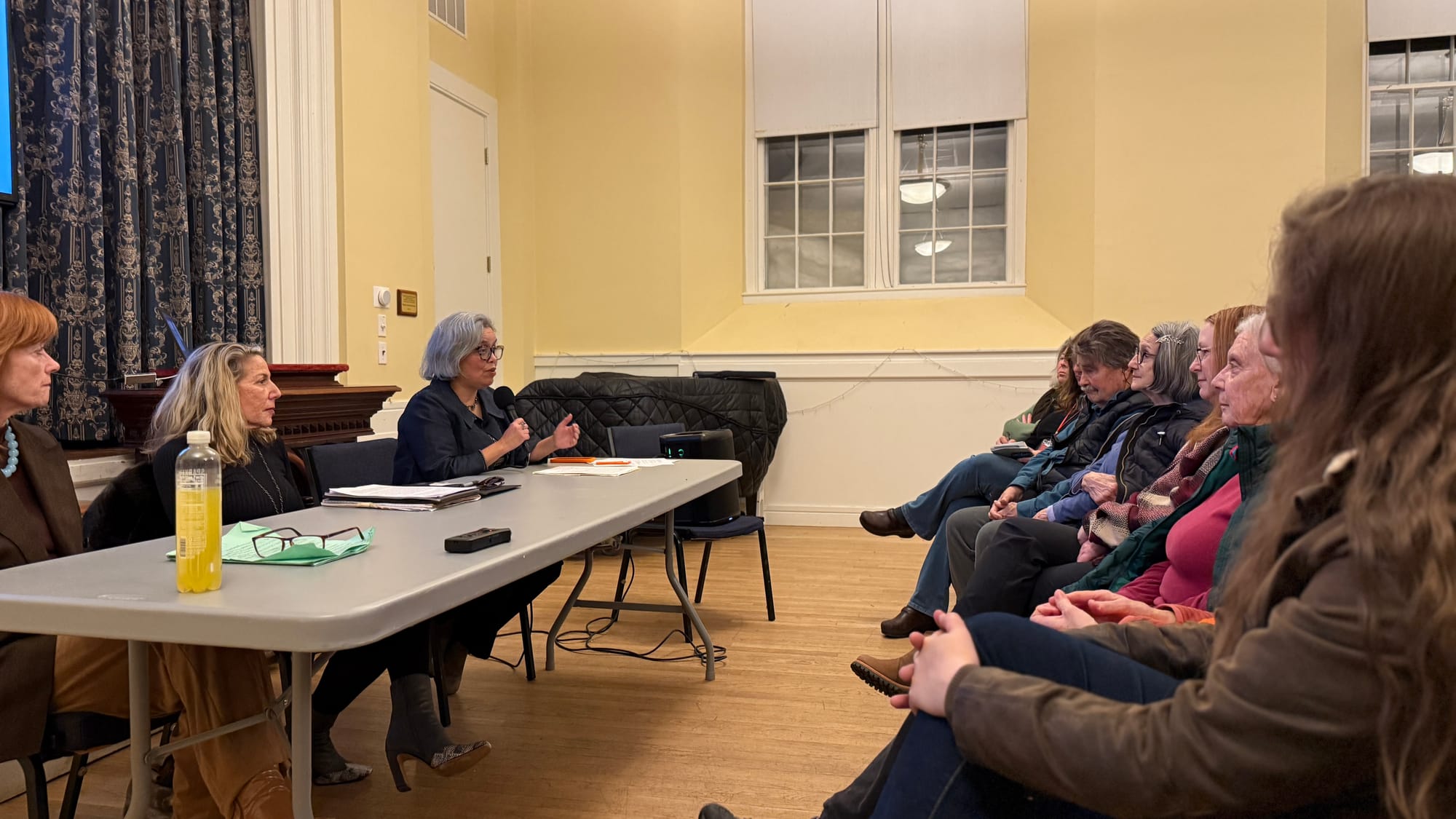
"What is happening to immigrants is a warning sign about the toxicity of the mine," Piñeros-Shields said, invoking the canary-in-a-coal-mine metaphor. "This work is about the conditions of our democracy."
The forum reflected the jurisdictional reality the speakers described: federal policy sets the broadest terms, attorneys work within narrowing pathways, local police define their own boundaries and the state establishes limits on what its agencies will do. What residents do within those layers, the panelists said, is where community authority begins.
BEFORE YOU GO … Our reporting remains free and open to all. It is sustained by readers who choose to support it — by contributing so that routine, document-based local reporting continues without paywalls or promotional framing. Right now, 101 readers support The Marblehead Independent with monthly or annual contributions. Click here to become an Independent member.