Table of Contents
Get our free local reporting delivered straight to your inbox. No noise, no spam — just clear, independent coverage of Marblehead. Sign up for our once-a-week newsletter.
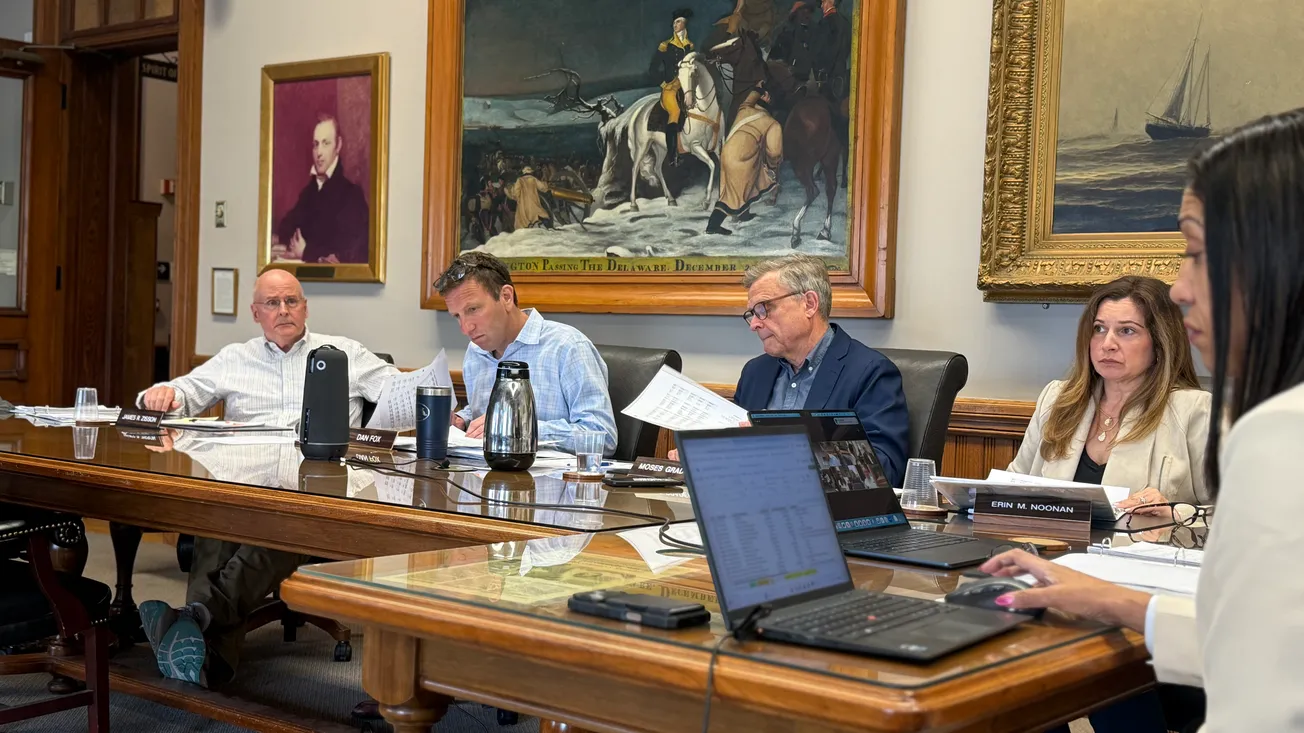
Marblehead’s first Finance Committee “Super Saturday” ended with the town’s largest budget and, by several members’ account, its most consequential one: the schools.
By the time school officials appeared Saturday afternoon, Finance Committee Chair Alec Goolsby said the day’s running tally had already reached an estimated 21 funded positions cut from the town side of the general fund, with more uncertainty still hanging over the library and cemetery budgets. By the end of the schools discussion, that running total had climbed to 35.75 full-time-equivalent positions, with school leaders still needing to identify another $1.5 million in reductions at an April 9 meeting.
That closing discussion capped a day that moved from enterprise budgets into the town’s hardest trade-offs: the library, Recreation and Parks, assessors, town clerk and elections, cemetery operations and the broader squeeze of benefits, snow and fixed costs.
Schools
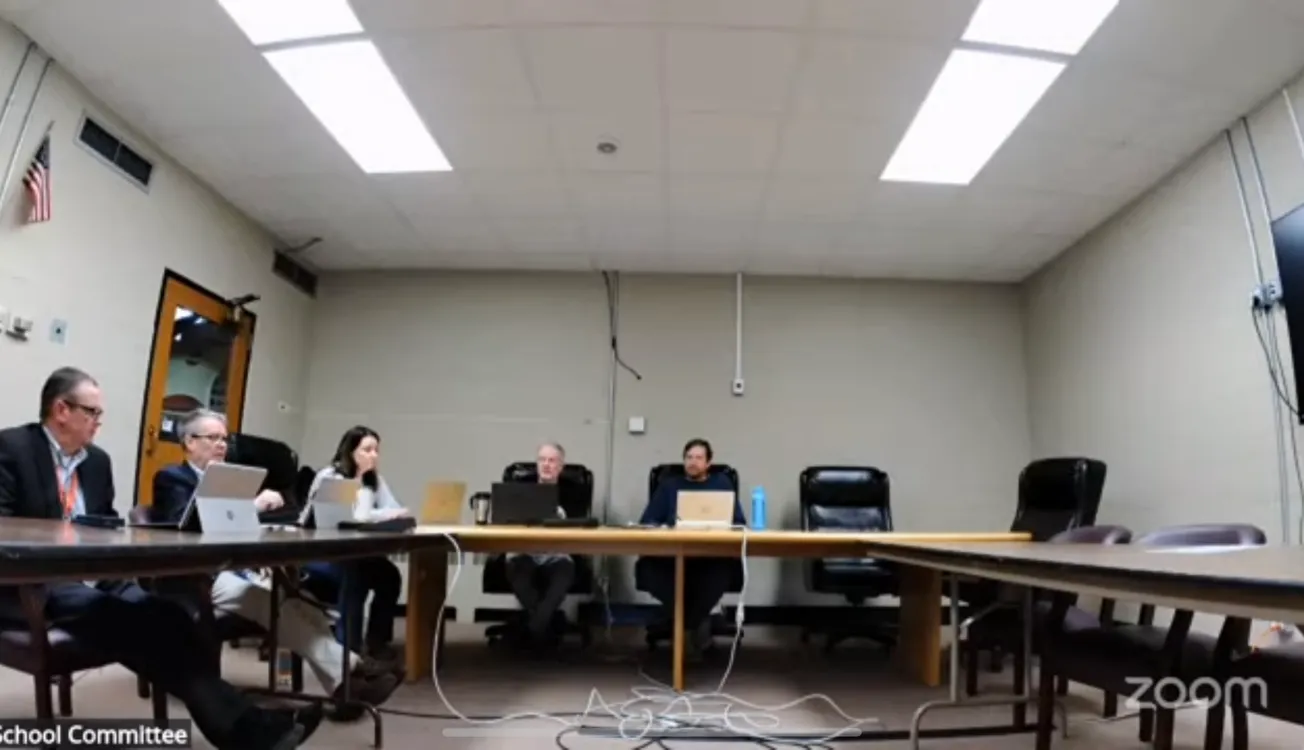
Superintendent John Robidoux told the committee the School Committee had voted its fiscal 2027 budget the night before and would return April 9 with a line-item plan showing how it will reach an additional $1.5 million in cuts. He said the district’s level-service budget stood at about $51.7 million in November, about $2.6 million above the prior year, driven by contractual salary obligations, a roughly 6% increase in special education tuition and a 2% increase in supplies, contracted services, professional development and training.
Assistant Superintendent for Finance and Operations Michael Pfifferling said the district had already relied on several offsets even before getting down to level funding, including special education circuit breaker money, a reduced retirement-savings assumption and a larger offset from the prekindergarten and kindergarten revolving account. He said some of those moves are not sustainable long term and warned that cuts to federal or state grants remain a risk, with a 10% reduction in IDEA special education funding alone amounting to about $80,000.
Robidoux said getting to level funding required identifying 14.75 FTEs through vacancies and positions that will not be filled. He said administrators also found copier lease savings, shifted some costs into grants and revolving accounts, level-funded most supply lines and reduced utility spending after locking in a lower natural gas rate. The Finance Committee then voted to recommend a fiscal 2027 school budget of $47.6 million.
Goolsby said that leaves the schools about $2.6 million below level service. Finance Committee member Molly Teets said the first round of cuts looked more like right-sizing to enrollment trends than a dismantling of services. But Robidoux said the next round would be different, warning that any further reductions in school personnel would affect class size, services, resources, safety and security. Goolsby added that the public data the committee reviewed does not suggest Marblehead is overfunded compared with peer districts.
The school discussion also underscored the compressed timeline ahead. Goolsby said the April 6 warrant hearing may come before the schools have publicly finalized exactly where that remaining $1.5 million will come from, raising the possibility that any override-related vote might need to wait until a later warrant hearing closer to Town Meeting.
Town clerk and elections
Just before the schools, the committee approved the Town Clerk budget at $201,877 and the elections budget at $132,200.
That discussion centered on a cut to one clerk position. Benjamin said the office’s two special clerks help with elections, Town Meeting and daily operations and that Town Clerk Robin Michaud had made clear both are vital. Goolsby counted the loss as one more FTE removed from the general fund.
When Michaud joined remotely, she said the office cannot function normally with only two people. She said the office handles not just elections but also dog licenses, birth certificates, marriage certificates and other daily walk-in business, describing it as “like a retail business during the week.” She said reduced staffing could force the office to close at points during the day.
Michaud also raised the possibility of the state stepping in on elections if staffing becomes too thin, though Goolsby and other committee members pressed for a more concrete public explanation of what that would actually mean in service terms before Town Meeting. Goolsby said the public needs to know not just that a cut is serious but exactly what would happen if it stands.
Benjamin said the rise in election spending was driven largely by mandated mail voting, higher postage and the cost of a state primary, not by new staffing.
Cemetery Department
The cemetery budget turned on a more technical question: whether cuts made in the general fund could be offset with cemetery revenue instead of reducing staffing in practice.
Goolsby said that for general fund purposes the budget in front of the committee still represented about 1.5 FTEs cut from taxpayer support, even if cemetery officials were hoping to cover those costs another way. Catherine Kobialka, speaking for the Cemetery Commission, said the goal was to keep the full positions intact by relying on lot-sale revenue.
That led to a longer debate over cemetery finances, including perpetual care funds, lot-sale revenue and what those accounts can legally support. Benjamin then said state law restricts cemetery lot-sale money to cemetery maintenance, improvements and permanent care, not general town expenses, effectively blowing up the solution as it was being discussed.
With that unresolved, the Finance Committee still voted to recommend the cemetery budget as presented at $410,539, while making clear that the issue may have to come back for follow-up if a legal funding path is found.
Abbot Public Library
Abbot Public Library remained one of the sharpest flash points of the hearing as Finance Committee members pushed library officials to spell out more precisely what residents would lose under the no-override budget now before the town.
Earlier in the hearing, Library Director Kimberly Grad said the proposed budget could reduce library service to about 20 to 25 hours a week, eliminate evening and Saturday hours and put state certification at risk. Goolsby said that warning now needs to be translated into a clearer public breakdown before Town Meeting: how many FTEs would remain, what hours the library could actually keep and which services would survive.
Grad said she would prepare that scenario, including which staff positions would be left and how the library would operate under a reduced schedule. Goolsby and other committee members said that explanation also needs to quantify the effect of decertification, including the impact on the North of Boston Library Exchange, or NOBLE, and other shared library services.
The committee also compared Marblehead’s situation with other communities. Grad said Stoneham received a waiver after a 13% overall cut, though she said Marblehead’s proposed reduction is steeper. Another official cited Lynnfield, which went through a 45% cut. Goolsby said Marblehead now appears to be facing one of the deepest proposed library reductions under discussion.
By the end of the discussion, the Finance Committee voted to recommend a fiscal 2027 library budget of $857,633. That is $635,659 below the fiscal 2026 proposed budget of $1.4 million, a 42.57% reduction from that base. The warning from library officials did not change. What changed was the committee’s insistence that the consequences be made more concrete before Town Meeting.
Recreation and Parks
Recreation and Parks officials told the committee that a proposed $45,000 cut would eliminate one full-time park maintenance position.
Recreation and Parks Director Jamie Banks said the position is currently vacant because of recent internal promotions but called it essential to maintaining the department’s current service level. Without it, she said, the department would no longer have staff capacity to service roughly 187 public trash barrels across town.
Trash pickup would continue at beaches during the staffed season and at sites where Recreation and Parks programming is actively taking place, Banks said, but not at the townwide level the department currently provides. She also said eliminating that service would remove the need for a planned trash truck replacement that she estimated at a minimum of $100,000.
The committee’s running tally reached 10.5 FTEs cut after the Recreation and Parks discussion.
Banks said the department remains lean even before the latest proposed cut. She and committee members noted that Recreation and Parks also returns revenue to the town through park permits, beach parking and other local receipts. Officials said the department has worked in recent years to raise some nonresident fees while trying to keep resident costs lower.
The effect of the position cut quickly expanded beyond parks. Department of Public Works Superintendent Amy McHugh said Recreation and Parks staff also help cover smaller neighborhood plowing routes, meaning the loss would affect snow operations. McHugh and Banks both said fewer public trash barrels could also create secondary problems, from litter and illegal dumping to dog waste entering storm drains and affecting water quality.
The Finance Committee approved the Recreation and Parks budget at $1 million.
Assessors Department
The Finance Committee approved the Assessors Department budget at $380,003.
Committee members described the office as one of the town’s most important revenue-supporting functions, particularly in tracking new growth and keeping abatements under control. They said the budget is down slightly from last year, largely because the office is no longer in a certification year, which requires more outside valuation work.
Assistant Town Assessor Todd Laramie said new tools and tighter coordination with the Building Department are already paying off. He said aerial imagery and related software have helped identify at least $30,000 in new growth, including additions, decks and patios that might otherwise have gone unrecorded.
Kezer and Benjamin praised the office’s improvements in training, public response and accuracy. Goolsby said the committee saw little room to cut a three-person office so closely tied to the town’s largest revenue source.
General government, benefits and fixed costs
Before reaching the later departments, the committee spent significant time on one of the budget’s biggest structural pressures: the rising cost of benefits and other fixed obligations.
Goolsby said the town’s health insurance lines are among the largest drivers of the current shortfall. Rather than rely on a rough percentage estimate, he said, Benjamin built the budget employee by employee using actual enrollment data. He said the budget includes about a 4.5% cushion for changes such as retirements, new hires and shifts from individual to family plans.
Rather than speak in broad percentages alone, Goolsby framed the issue in dollar terms. He said health insurance and related fixed-cost increases amount to about $2.5 million at a time when available revenue is down about $600,000.
He also cited about a $500,000 increase in pension costs, said the town is not meaningfully funding its other post-employment benefits liability and noted that unemployment costs are now being built into the budget alongside proposed staffing reductions elsewhere.
Benjamin said the process of reviewing those lines with the committee was intensive but helpful. Goolsby and Teets both said the work gave them greater confidence in the town-versus-school split in those costs and in the reliability of the numbers now in front of the committee.
Veterans Services
The Veterans Services discussion was far less contentious than many of the other department reviews.
Veterans Agent Roseann Trionfi-Mazzuchelli said the increase in the expense line was tied largely to flags placed on veterans’ graves, which are reimbursed by the state at 75%, and to Chapter 115 benefits, which are also partially reimbursed.
Trionfi-Mazzuchelli used the hearing to argue that the office produces an outsized return. She said every local dollar spent on veterans benefits brings in $10 in state and federal support. She also said a new report estimates that Marblehead’s 717 veterans contribute about $9.6 million annually to the local economy.
She said much of her work focuses on helping older veterans move from temporary Chapter 115 support into long-term federal Veterans Affairs benefits, which can also reduce pressure on local aid lines.
A small Memorial Day and Veterans Day line remained level at $2,000.
Council on Aging
The Council on Aging review identified another visible service reduction.
Officials said the balanced budget removes the full-time nutrition coordinator position. Council on Aging Director Lisa Hooper said the job supports far more than meal service, including the Tuesday lunch program for roughly 80 to 100 people, a newer pop-up lunch program drawing about 30 people, volunteer coordination, daily building setup and backup driving.
Hooper said Friends of the Council on Aging pay for the food itself but not the staffing needed to run those programs. She said the nutrition coordinator position cannot be covered through other funding if it is cut.
She also clarified that a temporary special clerk line discussed by the committee reflects a position that had already shifted to public health after providing office support during the trash strike.
Snow and ice
Snow and ice emerged as one of the clearest warnings of how quickly budget assumptions can collapse.
The town budgeted $105,000 for snow and ice in fiscal 2025 and again in the current year, but officials said actual spending had already reached $636,000 this year by the time of the hearing. Benjamin said the town had imposed a spending freeze effective April 1 and could still raise another $150,000 on the recap, but would still need transfers and other measures to close the gap.
Officials noted that snow and ice is unusual because state law allows municipalities to deficit-spend in that line. Even so, Kezer warned that current spending could still mean roughly a $500,000 hit to free cash depending on how the year ends.
Committee members said that matters because the town is already trying to reduce its reliance on free cash to support recurring operating expenses.
Public works, highway, tree and drains
Public works was one of the day’s hardest budgets to follow because it mixed real cuts with contract changes and accounting cleanup.
After repeated questioning from Goolsby, McHugh said one full laborer position is a real cut. She also said the department has a half-time position that is empty and remains unfunded in the current plan.
Benjamin said standby pay rose by $93,075 while scheduled overtime fell by the same amount because of a bargaining agreement. Other shifts were described as corrections in how line items had originally been entered into MUNIS.
There were also real nonstaff cuts. Benjamin said the town cut $60,000 from hot-top paving again this year. McHugh said that could be absorbed one time through a revolving fund tied to street openings but not sustainably. She said the fund does not generate enough annual revenue to support regular paving needs and that using it for routine maintenance undercuts the trench-repair program she had hoped to build.
McHugh also warned that oil and asphalt prices remain a risk and said stormwater work is continuing to suffer as the department absorbs more responsibilities without enough support.
Building Inspection Department
The Building Inspection Department did not appear to lose staff during this part of the hearing, but it did absorb a notable operational cut.
Officials said they cleaned up confusing labels in the budget so positions such as electrical inspector, plumbing inspector and senior clerk are easier to identify. They also said the department lost $52,500 in professional and technical spending, including money for OpenGov and copier maintenance.
Committee members described that as a real support cut even if it is not an FTE reduction.
Fire Department
The Fire Department discussion suggested staffing remains tight but that one earlier cut had been reversed.
Officials said a firefighter vacancy had initially been removed, but the Select Board restored that position and instead reduced overtime by the same amount. Committee members said they supported that choice because minimum staffing rules can mean cutting a firefighter does not actually save money if the result is even more overtime.
Officials also said the department is under pressure from military and medical leaves, which are driving overtime and affecting morale.
Police Department
The clearest police cut discussed was the removal of a patrol officer assigned as the school resource officer.
Goolsby said that is a real cut to a current assignment in the schools. Committee members said Marblehead would be the only North Shore community without a school resource officer under the balanced budget being reviewed.
Officials said the rest of the department is already operating at what the chief considers a bare minimum for patrol staffing. They also pointed to a $35,000 increase in the Peace Officer Standards and Training stipend line, which Kezer said was tied to a new collective bargaining agreement and broader public safety labor trends.
Community Planning and Development
Community Planning and Development drew one of the day’s starkest discussions.
Officials said the balanced budget would take the department from five employees to two, with three FTEs lost: the director, the sustainability coordinator and the grant coordinator.
Kezer said that in a less constrained year, the town’s goal would not have been to shrink the department this sharply. Instead, officials would have preferred to convert the grant coordinator role into a conservation agent role as part of a larger effort to separate conservation work from town planning and improve how permits are processed.
The sustainability coordinator drew special attention because officials said that employee had generated grant funding equal to about 10 times the salary cost.
Human Resources
The Human Resources discussion was more about reclassification and trimming than outright staff loss.
Officials said $11,000 was shifted out of one clerk line because a benefits-related position was reclassified into an administrative role. Another $11,000 was cut from the department’s professional and technical line, which covers items such as advertising and employment costs.
Kezer said the reclassified benefits employee plays a central role in open enrollment and day-to-day benefits administration for both town and school employees.
Public buildings
The clearest building-services cut discussed was in public buildings.
Committee members said the budget under review removes two custodians, one assigned to Abbot Hall and one to Mary Alley. Officials described those as real positions, not just vacant lines.
Kezer said that if those positions are not restored, the town would likely have to hire commercial cleaners and rely on department heads and others to open and close buildings. Members immediately raised concerns about both service and security, especially in buildings that already require careful attention to locking, heating and access.
Town counsel
The Town Counsel line rose from about $113,000 to $276,000.
Officials said part of that jump reflects the decision to consolidate legal costs that had previously been spread across other departments. But they also acknowledged that the increase is not purely cosmetic: the town is budgeting more here because it expects continued legal spending tied to claims, lawsuits and labor matters.
Finance Department
The Finance Department discussion centered on one confirmed staffing loss and the difficulty of cutting technology spending in a town that is still rebuilding core systems.
Goolsby said a senior clerk position currently employed by the town is out of the finance budget under review. He also said state travel had been cut by about $9,000 while requested computer-equipment spending was cut by $50,000.
Finance officials said that equipment line still reflects real replacement needs identified by the North Shore information technology collaborative, but that the town is now replacing less than it ideally should. Committee members raised concerns about cybersecurity and aging systems. Kezer said the town has made substantial investments over the past several years in servers, firewalls and other core infrastructure, giving it some room in the short term, though several members stressed that information technology cannot be treated as a one-time purchase.
The broader message was that finance had been underbuilt in prior years and is still in the middle of modernizing. Goolsby and others praised Benjamin’s work implementing MUNIS and improving transparency.
Finance Committee reserve fund
The committee also discussed the Finance Committee reserve fund, which Goolsby said is down about $30,000 from last year but still sits at roughly $414,000.
He described that fund as a more transparent way to deal with unexpected spending than burying contingencies in larger budget lines. Members discussed whether it could potentially help if, for example, the town’s assumptions about curbside trash participation prove too optimistic.
Select Board
As the hearing moved into general government, the committee reviewed Select Board-related budgets.
One of the first clarifications was that labor attorney costs had been shifted into the Town Counsel line. Officials described that as a reclassification, not a cut. Goolsby also said the Select Board had removed its elected officials expense line, which he described as a real cut.
At the same time, the budget adds or expands a civic events line to cover the town’s 250th anniversary and other town-sponsored events. Kezer said the town has repeatedly had to patch together money for events such as Juneteenth ceremonies and the Marine Corps birthday observance and said a dedicated line would provide a clearer, more transparent place to track those costs.
Waste collection and curbside collection
Waste was one of the day’s most complicated discussions, largely because officials were trying to explain what is and is not actually being funded by taxes.
The committee approved a Waste Collection budget of $1.7 million to be funded by taxes. It separately recommended a Curbside Collection budget of $2.2 million to be funded by a fee collected through the general fund.
That distinction mattered. Goolsby repeatedly stressed that the curbside collection amount appears in the budget because it has to be appropriated so bills can be paid, but in the balanced budget under discussion it is not being funded by taxes. Instead, officials said it would be covered by a fee unless an override passes.
Health Director Andrew Petty said the proposed curbside fee would cover trash and recycling collection, disposal, leaf and grass pickup and related staffing. He said the town has identified about 8,108 eligible households. If about 3% of those households opt out, that would mean about 243 households, leaving about 7,865 participating homes. Under that scenario, he said, the fee would be about $281.77 per household.
Petty also said the Board of Health would hold a public hearing before Town Meeting to set the fee. If the override passes, officials said the fee would not go forward. If it does not, the fee would likely need to be revisited annually because trash contract prices are expected to rise.
Committee members pressed Petty on the risk if more households opt out than expected. Petty said the town has some cushion in its waste revolving account but acknowledged there is still risk. That revolving account, funded largely through commercial weigh-and-pay operations, became a major part of the discussion, with members asking whether more of that money could or should be used to blunt residential costs. Petty said the current bylaw limits how the account can be used.
Board of Health
The committee voted to approve the Board of Health budget at $339,320.
Petty described the department’s budget as relatively straightforward. Salary costs were cited at $252,839, with much of the increase tied to the department inheriting another clerk from another department at a higher rate.
One of the clearest themes in the health discussion was mental health support. Petty said the budget includes $60,000 for the Marblehead Counseling Center, which he described as a major community benefit, but that figure is lower than what he originally requested. Benjamin said Petty had documented the need and committee members suggested counseling support could become a restoration item if an override moves forward.
Petty also said state public health benchmarks would put Marblehead’s ideal local health budget closer to $708,980, far above the current proposal.
Harbor and Waters
The committee recommended the Harbor and Waters enterprise fund budget of $1.3 million.
Harbormaster Mark Souza said the budget is essentially level-funded aside from mandatory cost increases such as benefits and taxes, with fuel one of the main pressures. He said the department has tried to shift money around to reflect real spending trends without materially expanding the budget.
As with water and sewer, some of the apparent salary increase was described as a line-item reclassification rather than major new spending. Committee members said the total Harbor and Waters budget is up modestly from last year.
Souza said most of the department’s capital planning remains focused on maintenance and replacement work, though one project under consideration would add a float at Schmidt to expand public access. Committee members also highlighted a newly acquired boat funded largely through federal grants, with one member saying the grant covered 75% of the cost. The materials did not provide the total purchase price needed to translate that percentage into a dollar figure.
Sewer Department
The committee recommended the Sewer Department budget at $4.8 million.
The most significant change was a drop of more than $1 million in the South Essex Sewerage District line after the final year of the Salem Harbor pipeline replacement loan rolled off last year. But McHugh warned that the lower budget does not mean sewer pressures are easing.
She said Marblehead financed that emergency harbor pipeline work over 10 years rather than 20, saving about $1 million overall. But she also said the town’s sewer infrastructure remains under strain, with 28 pump stations, many dating back decades, and equipment so old that replacement parts can be hard to find.
So while this year’s sewer budget is lower, she said future rates will still have to support infrastructure work. She pointed to a long-range capital plan and said the town is trying to smooth out future increases rather than hit ratepayers with another sudden jump.
Water Department
The Finance Committee recommended the Water Department budget at $6.9 million.
Officials emphasized that water is an enterprise fund, meaning it does not count against the town’s tax levy. Still, it affects residents through water rates.
Some of the apparent growth in the salary lines was described as accounting cleanup rather than new spending. Benjamin said costs that had previously been booked as expenses were moved into salary lines to better match the town’s MUNIS financial system. McHugh said the rest of the increase was largely contractual, plus a small office reclassification worth about $4,000.
McHugh said the Massachusetts Water Resources Authority remains the department’s biggest outside cost driver, though she said the agency has historically tried to keep increases around 4%. The materials did not provide the prior-year Massachusetts Water Resources Authority base needed to translate that rate into a dollar increase.
She also clarified that water and sewer pay their own retirement, Medicare and health insurance costs directly rather than drawing on the town-side health insurance budget.
BEFORE YOU GO … Our reporting remains free and open to all. It is sustained by readers who choose to support it — by contributing so that routine, document-based local reporting continues without paywalls or promotional framing. Right now, 101 readers support The Marblehead Independent with monthly or annual contributions. Click here to become an Independent member.