Table of Contents
We’ve reached 122 members toward our goal of 175 by the end of July, leaving 53 to go. Membership keeps The Marblehead Independent free to read while supporting the reporting time, editing and follow-up work that make local stories like this available to the whole town. If you’ve been meaning to join, this is a concrete way to help keep that model going. 🟦 Become a member here.
Marblehead held its Juneteenth celebration outside the building from 4 to 6 p.m. June 12, a week ahead of the federal holiday, and the program moved between celebration, remembrance, local history and blunt talk about the present.
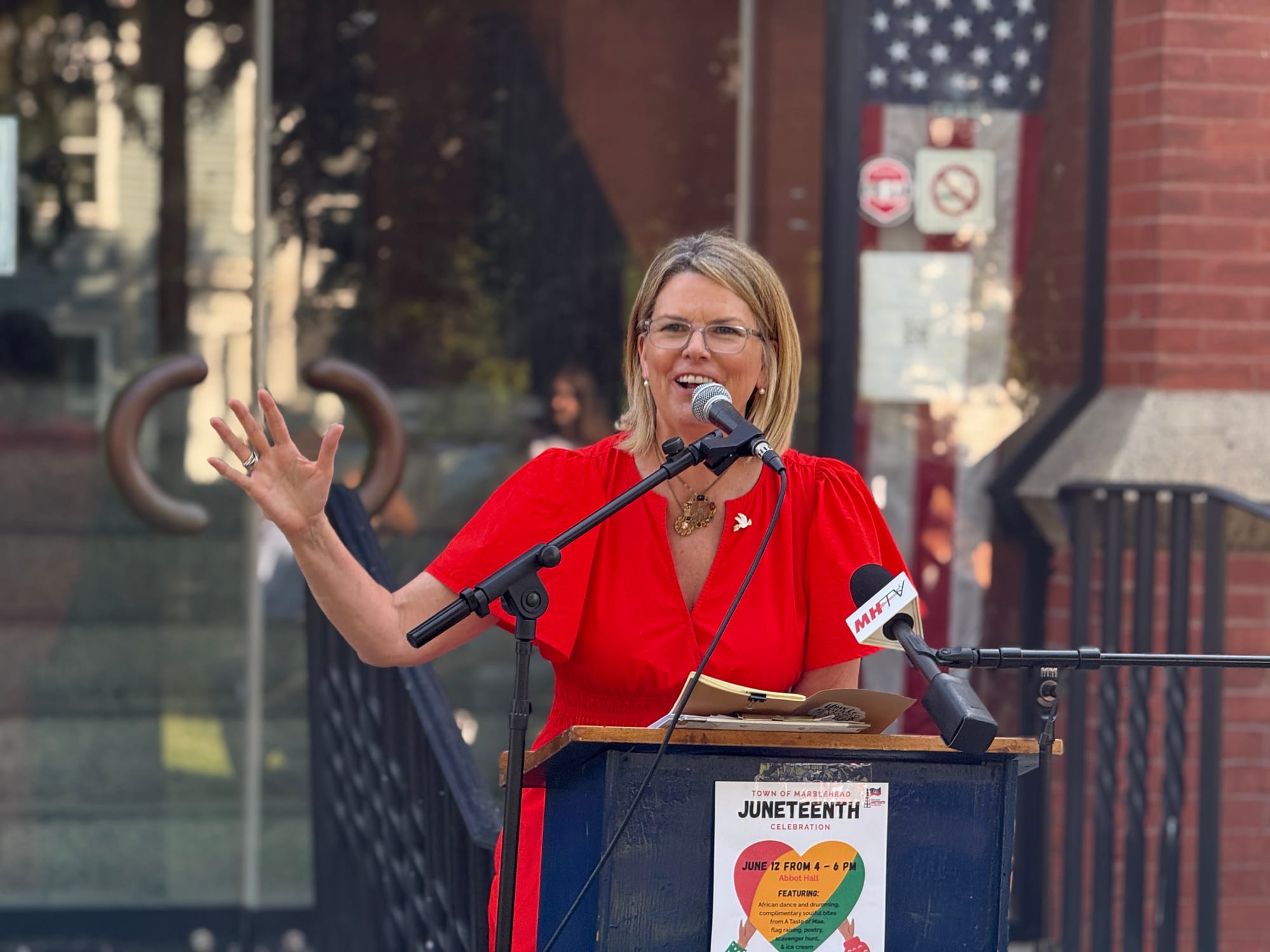
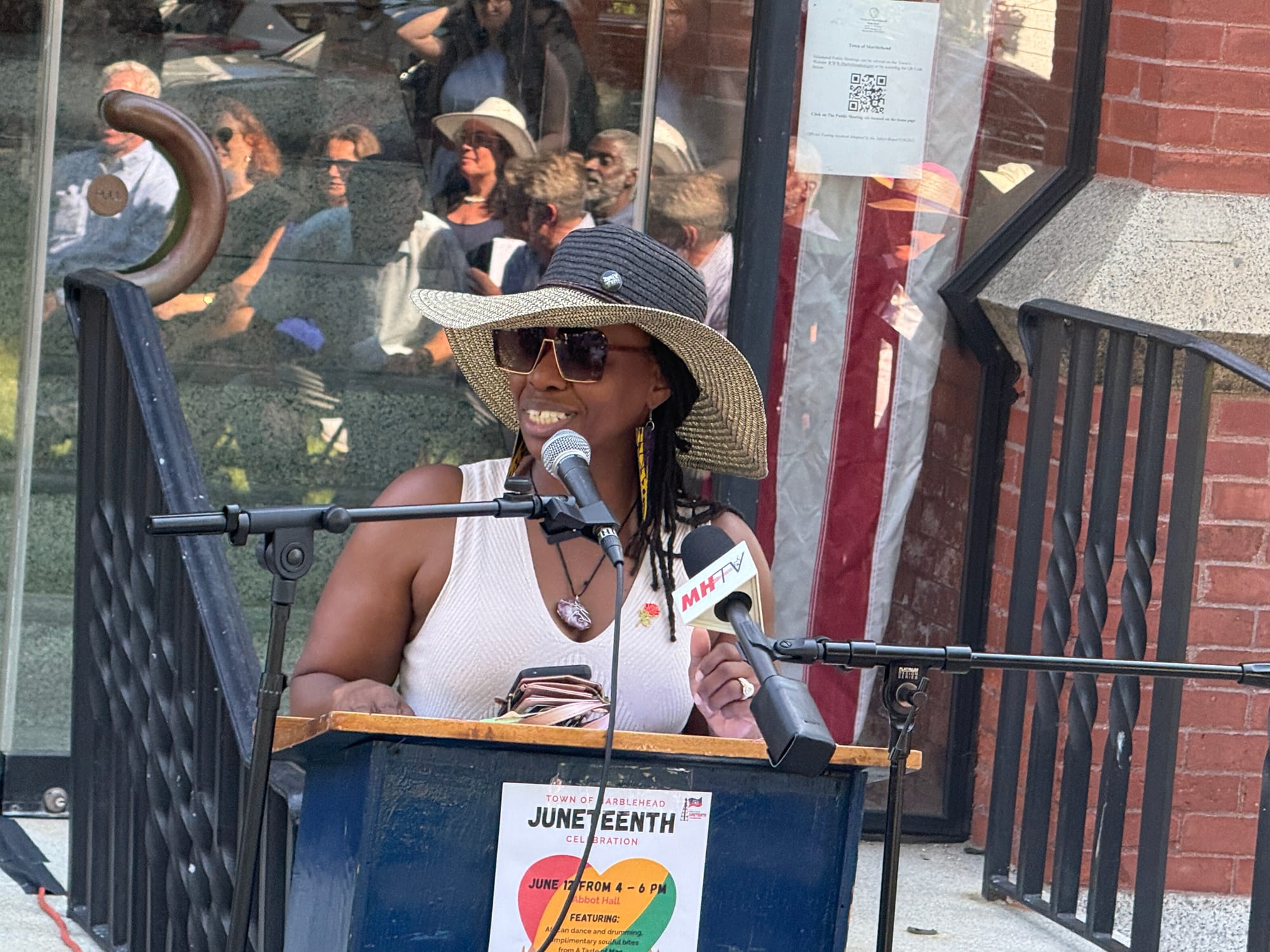
Candice Sliney, in a red dress, emceed from a lectern fixed with a Juneteenth poster. She opened by thanking Marblehead resident and former grant coordinator Donna Cotterell for securing additional funding through a Mass Humanities grant, money that paid for food, ice cream and expanded programming. She thanked the Marblehead School of Music for donating the sound system. Then she read a land acknowledgment recognizing the ground now known as Marblehead as the ancestral homeland of the Naumkeag Band of the Massachusetts and Pawtucket tribes.
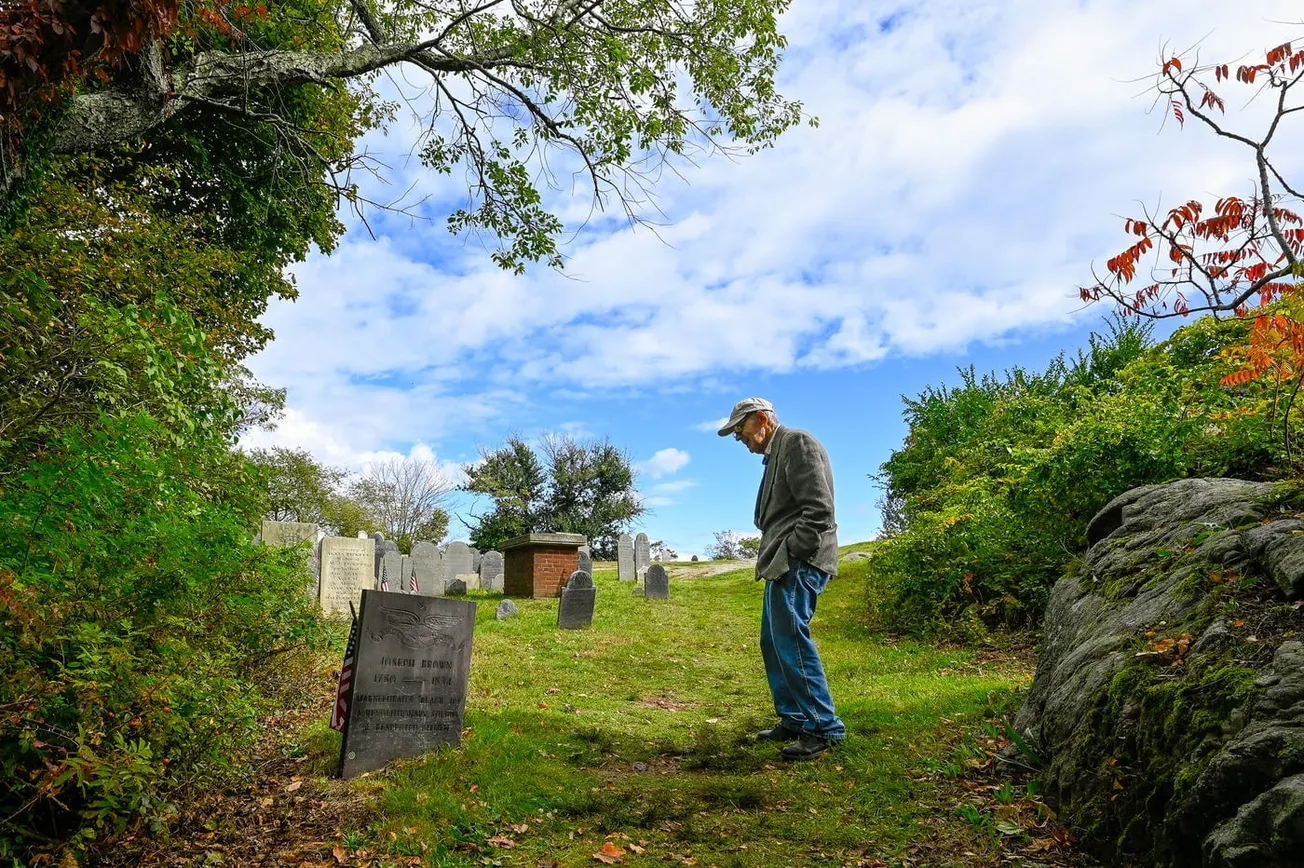
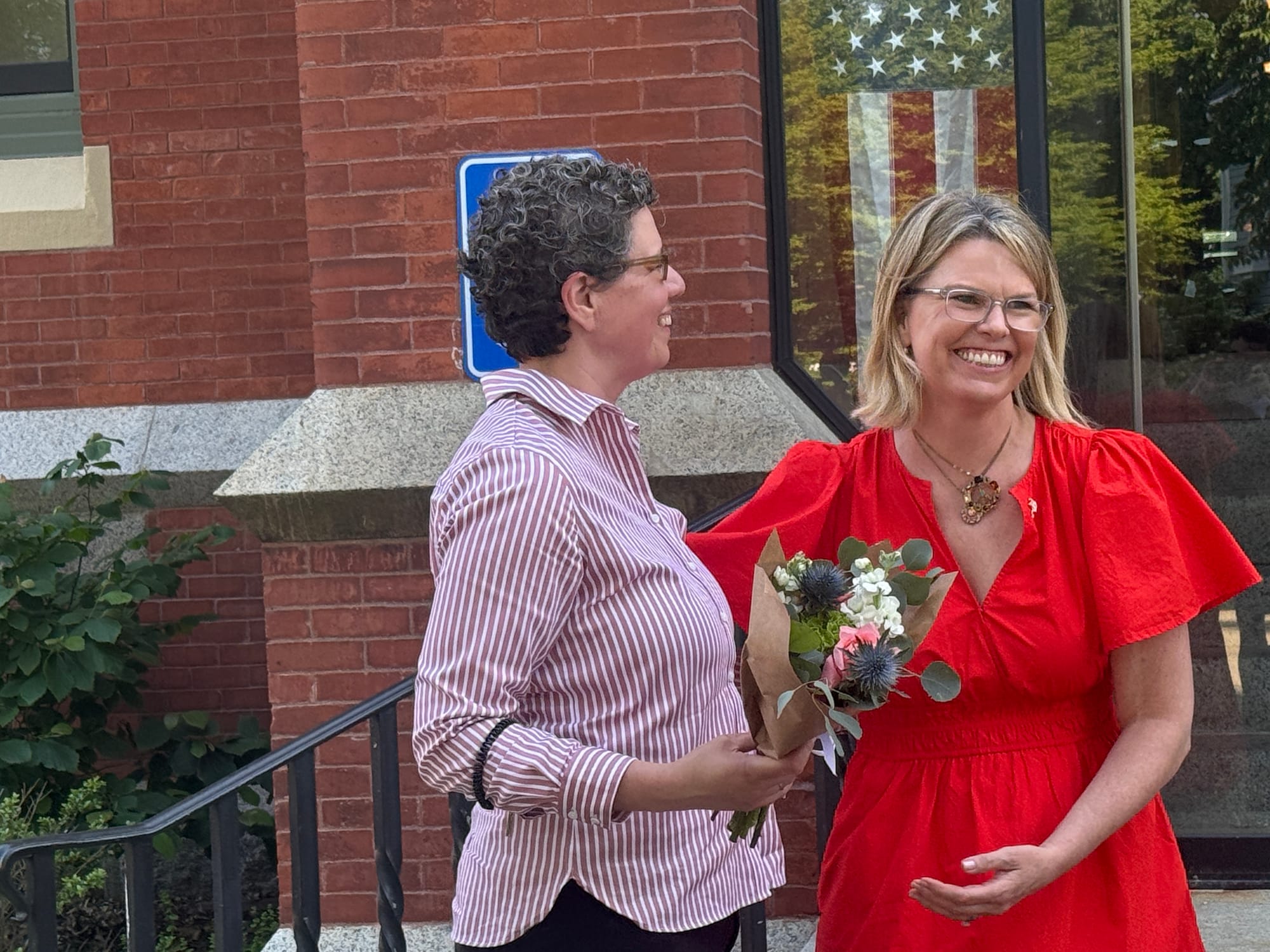
Sliney turned to a piece of town history that framed much of the afternoon. She cited a 1976 letter to the newspaper from a young Black Marblehead resident, later identified as the son of Dr. Edward Joseph Robinson, who had asked whether the town’s Bicentennial Commission would represent Black history in its celebration. Sliney used the letter to recognize Lauren McCormack, executive director of the Marblehead Museum, for researching and elevating that history, including work on the 1768 Jeremiah Lee Mansion kitchen and enslaved quarters and on the Black soldiers of the American Revolution. She presented McCormack with flowers and wished her well in a new role at Freedom’s Way National Heritage Area, then stepped from behind the lectern to embrace her.
Dan Fox, chair of the Select Board, welcomed attendees on behalf of the board and the town and thanked local officials in the audience. He drew on a book by Clay Cane to discuss misinformation as an old tool, one he said distorts history and concentrates power.
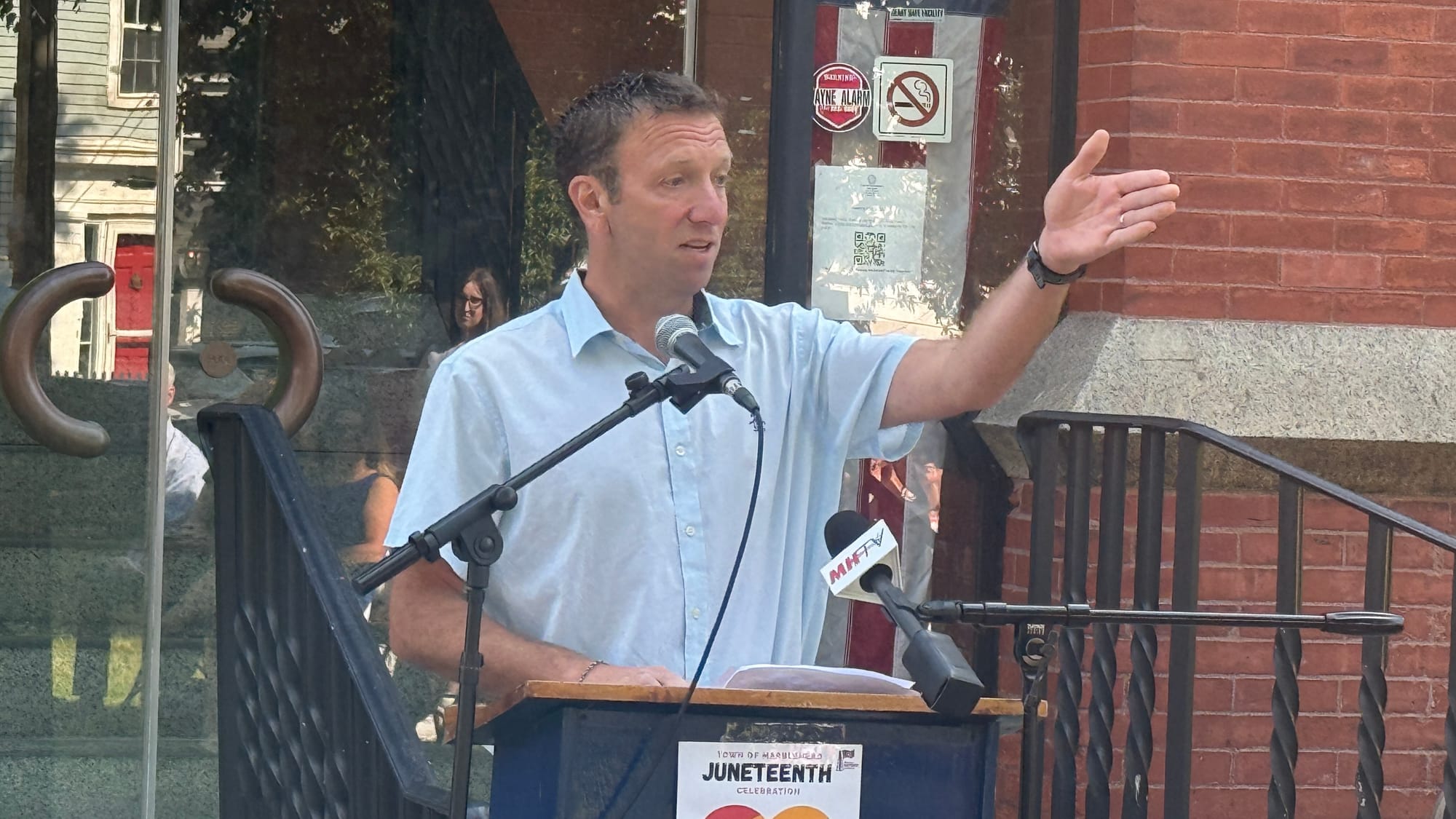
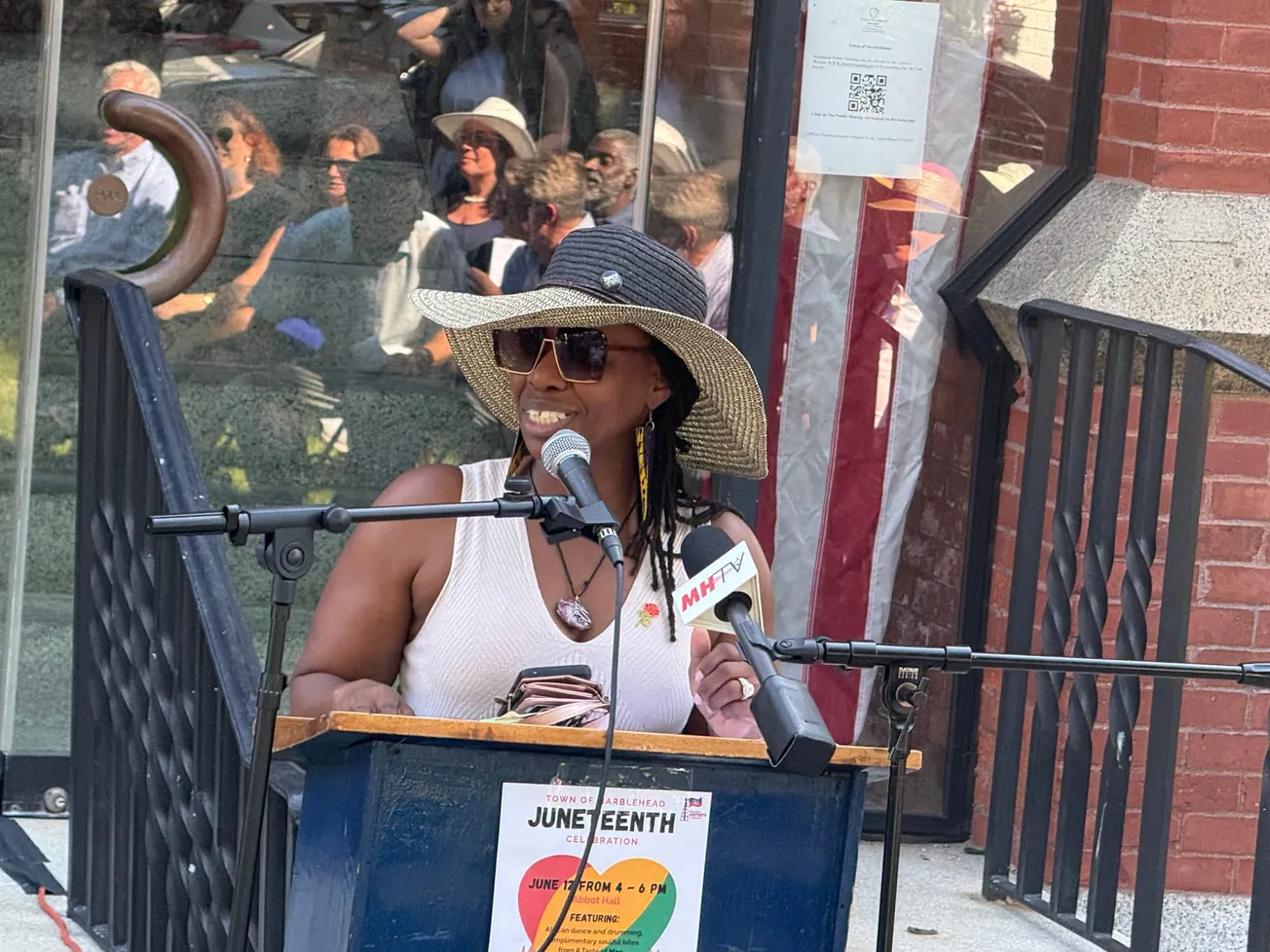
Nicole McClain, president of the North Shore Juneteenth Association, gave the introduction and placed the day in its history. On June 19, 1865, more than two years after the Emancipation Proclamation, the last enslaved Black Americans in Galveston, Texas were finally told they were free. McClain said that delay still echoes.
“Freedom for Black Americans has always been incomplete,” she said. She tied the point to attacks on voting rights, book bans, economic inequality and a persistence of anti-Blackness she said shows up in narratives and priorities as much as in systems. Equity, she said, is not a competition; justice is not a limited resource.
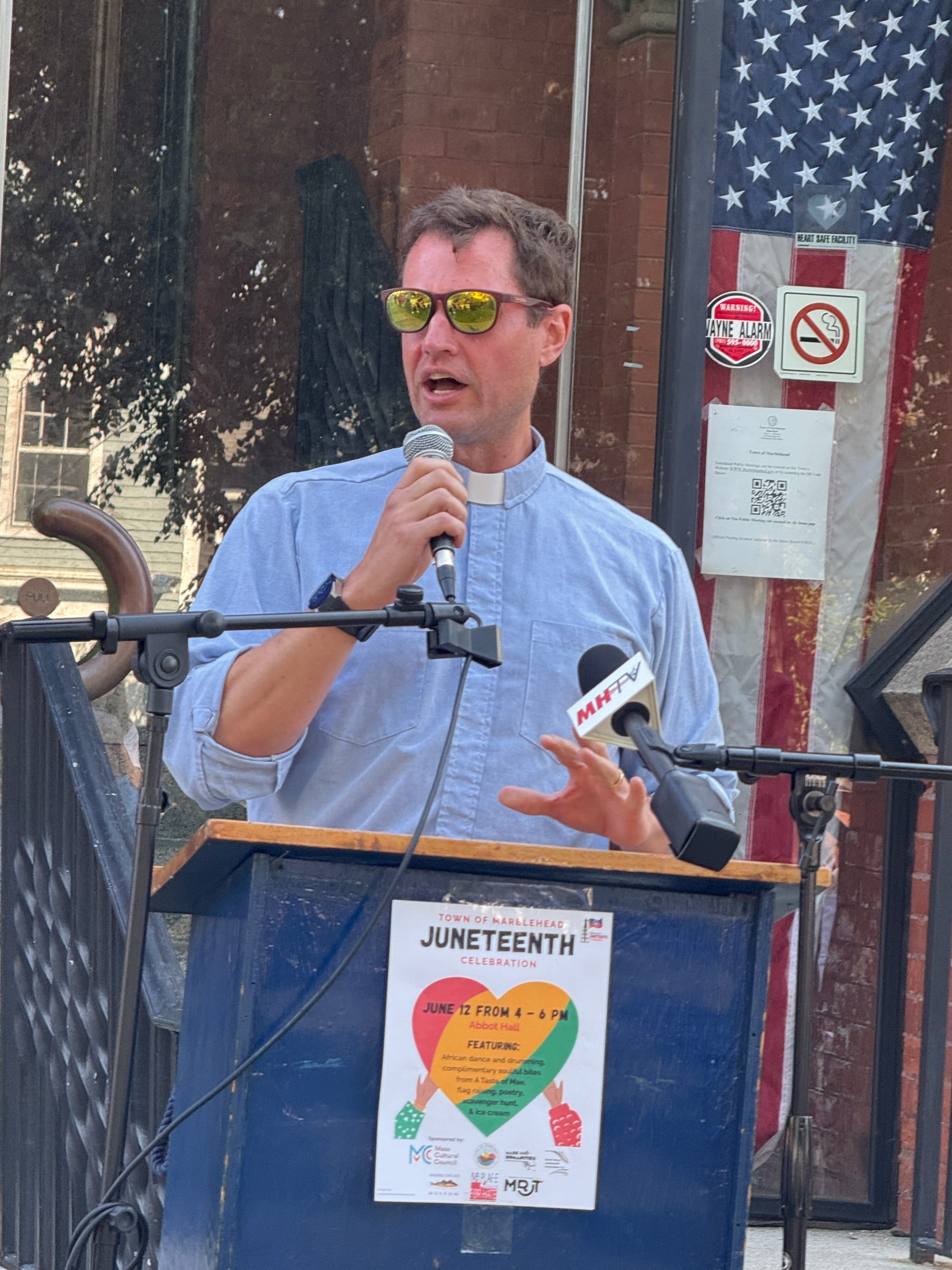
The Rev. Jim Bixby, speaking for the Marblehead Racial Justice Team, said he was honored to be invited and built his remarks around the image of being asked to a cookout. A white guest, he joked, starts by bringing ice and only later climbs the “invisible hierarchy of the cookout” toward the macaroni and cheese. The invitation, he said, was an invitation into American history and Black history, and into Black joy and Black excellence. He named what he saw as one face of anti-Blackness directly: a white Christian nationalism that, he said, uses patriotism and the cross to erase stories unlike its own.
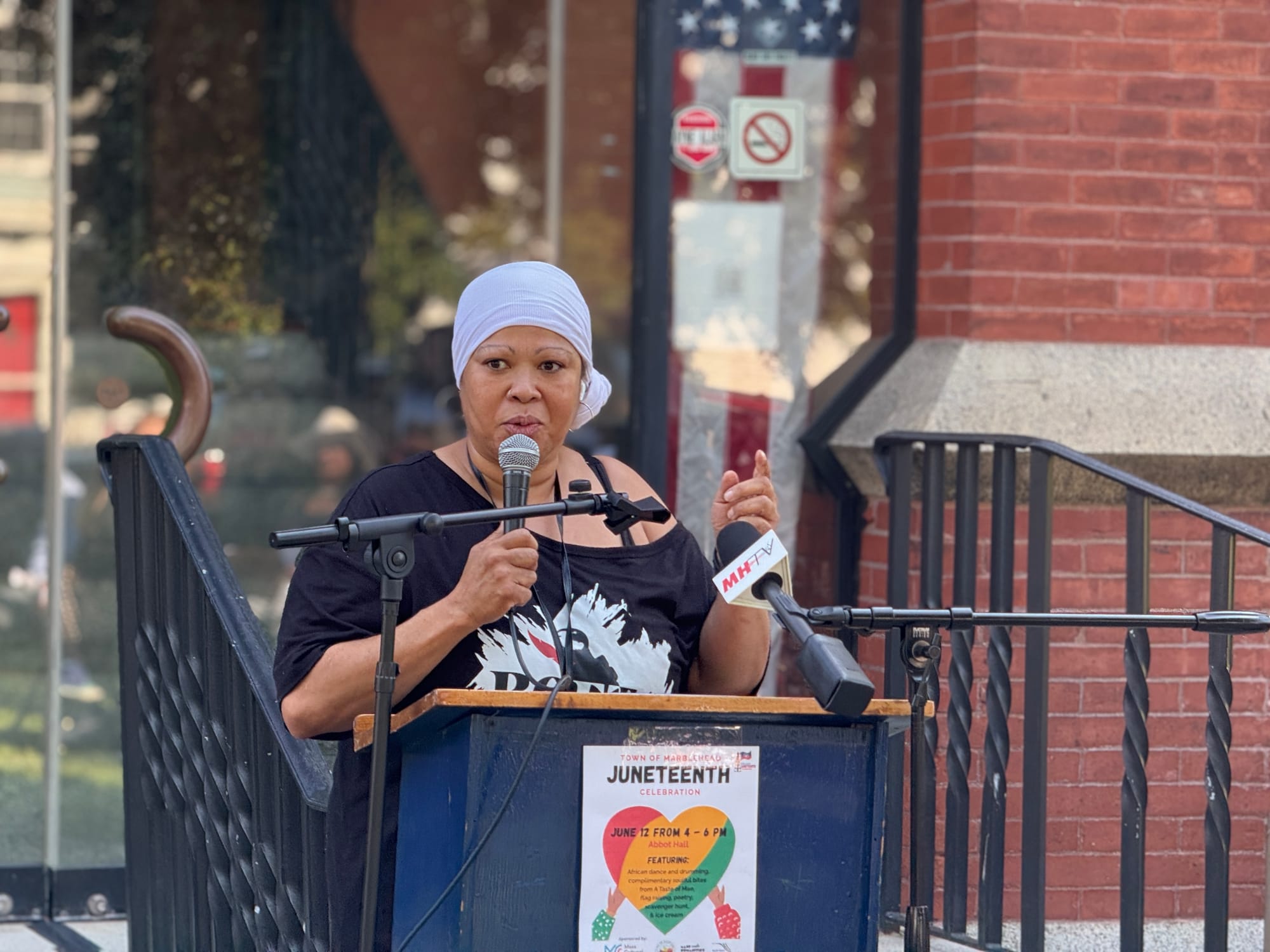
Michelle La Poetica, the North Shore Juneteenth Association poet, performed last among the speakers and spoke plainly about her multiracial family, about pain, homelessness and grief, and about a community that she said too often trades whispers instead of holding people to account. She pressed elected officials and residents alike to talk to one another and to follow through. “Stop whispering in corners of coffee shops,” she said. If local governments did not change how it handled its own business, she warned, “we are going to lose everything for nothing.”
Folks sang “Lift Every Voice and Sing. The Juneteenth flag was raised, and African dance and drumming was provided by De Ama Battle and friends. Cadets from the Lynn English ROTC took part in the flag ceremony. Sponsors included the Mass Cultural Council, the town of Marblehead, Mass Humanities, the North Shore Juneteenth Association, the Marblehead Museum, No Place for Hate and the Marblehead Racial Justice Team.
Get our free local reporting delivered straight to your inbox. No noise, no spam — just clear, independent coverage of Marblehead. Sign up for our once-a-week newsletter.