Table of Contents
Get our free local reporting delivered straight to your inbox. No noise, no spam — just clear, independent coverage of Marblehead. Sign up for our once-a-week newsletter.
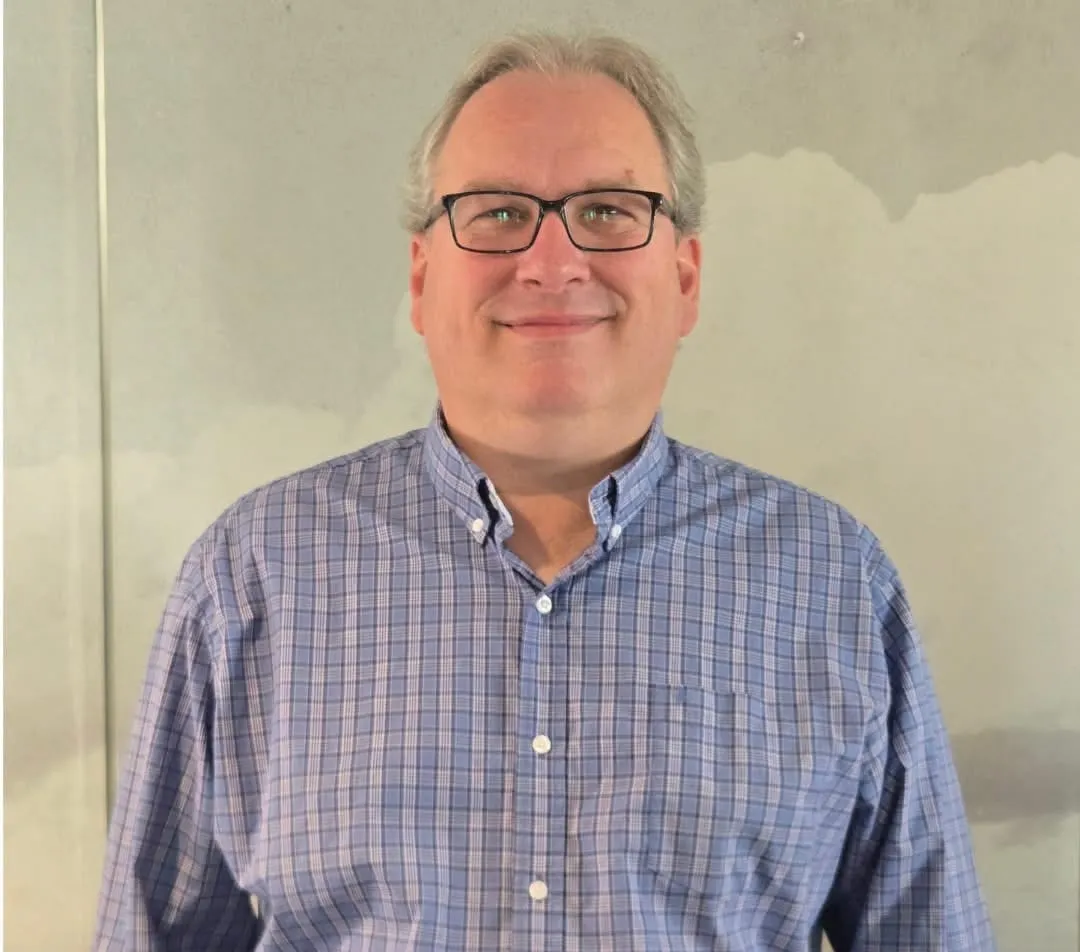
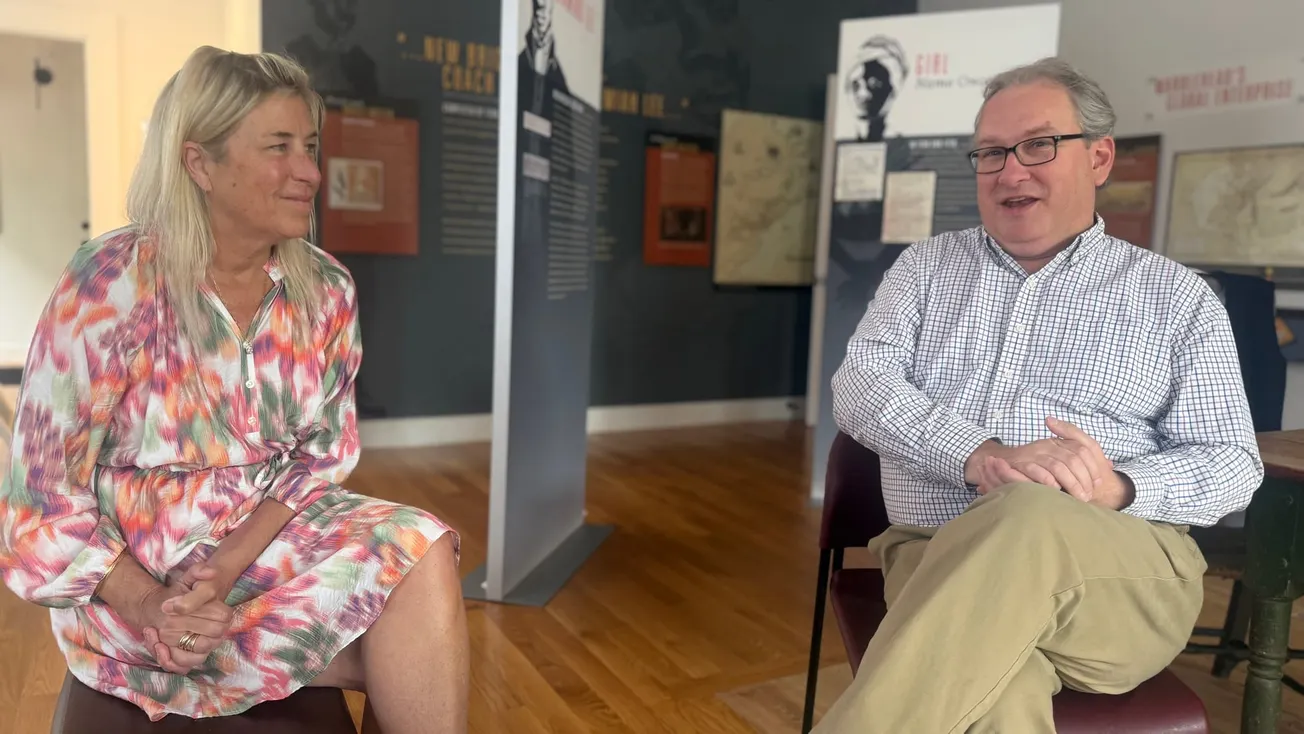
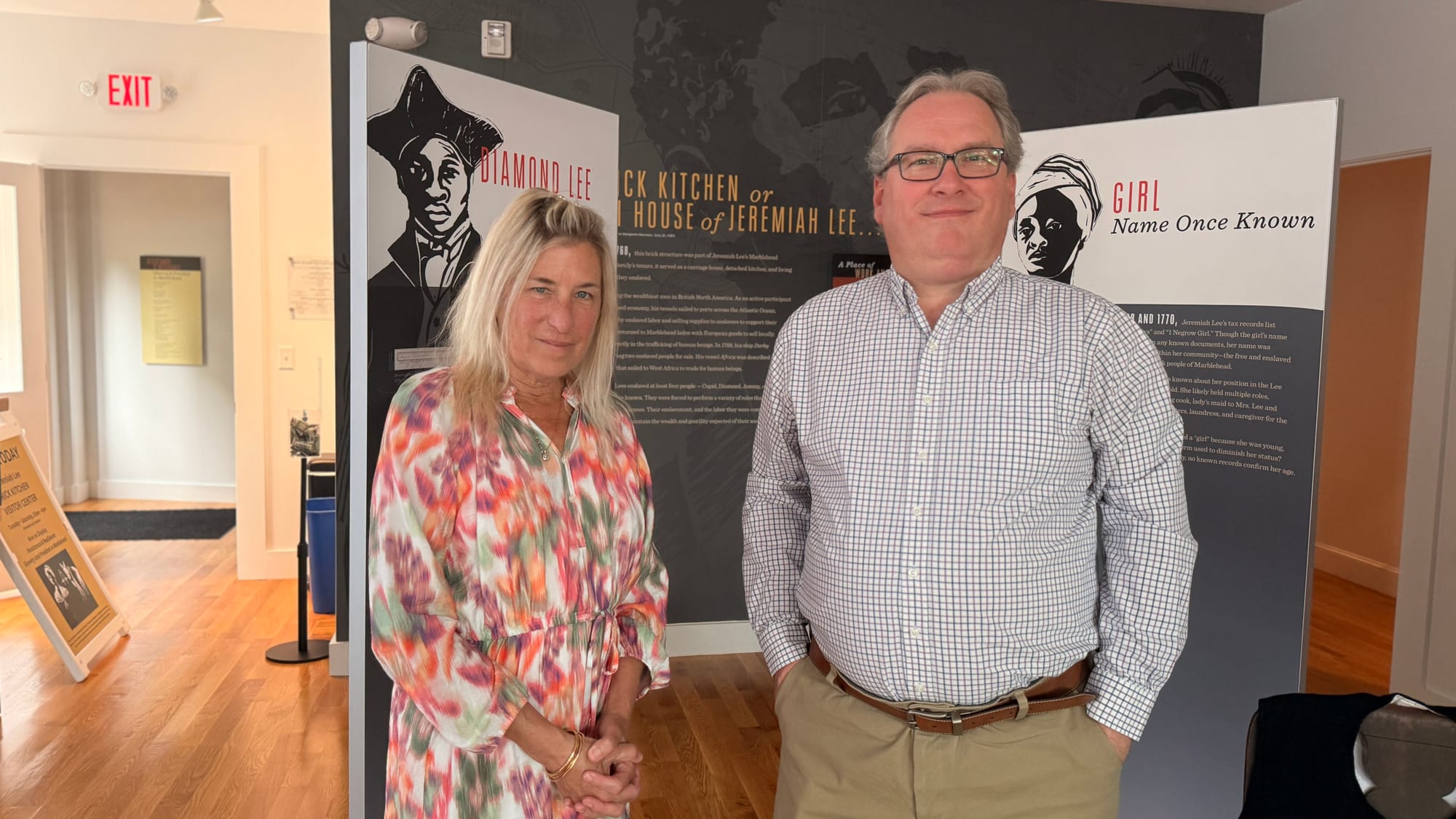
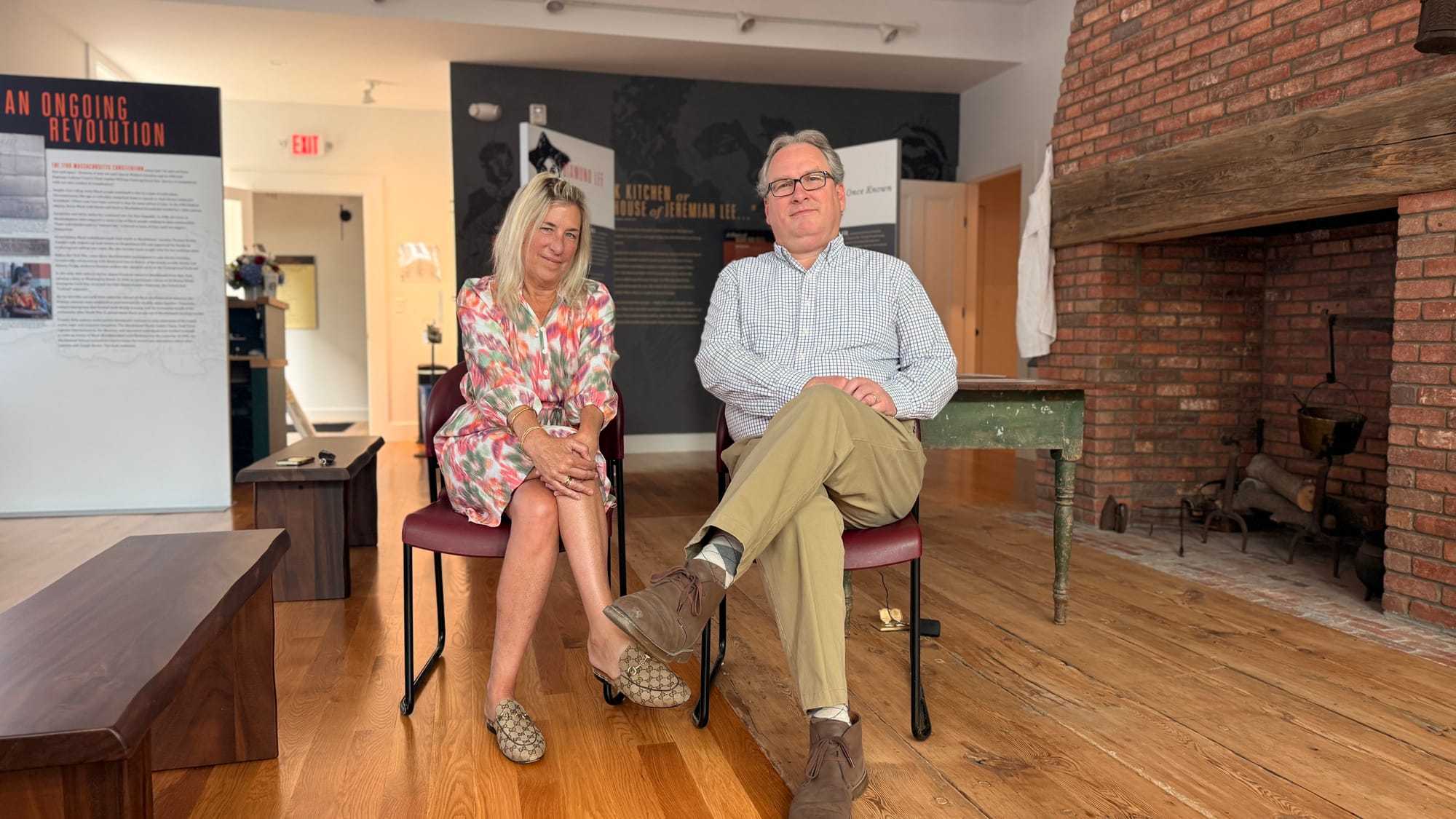
Dan Marshall started running the Marblehead Museum on Monday, walking into a building that became a museum only five weeks ago. The brick house at 157 Washington St. opened to the public June 1, its rooms turned over to the lives of three enslaved people once held in the household of Col. Jeremiah Lee.
Marshall, who has lived in Salem 13 years, succeeds Lauren McCormack as executive director. He inherits the institution's largest recent project, a $1.4 million restoration of the Brick Kitchen and Slave Quarters, and the exhibit that opened inside it, "Resistance and Resilience: Slavery and Freedom in Marblehead."
The museum bought 157 Washington St. in April 2021 from the Orne family, reuniting the Lee estate for the first time since the late 18th century. It is one of only three surviving detached slave quarters owned by a museum in New England, the institution says. Its second-floor research center is named for lead donor Standley H. Goodwin.
The museum runs four buildings, including the Jeremiah Lee Mansion and the headquarters and J.O.J. Frost Folk Art Gallery at 170 Washington St.
He thinks like an interpreter
Marshall came up in roughly the order the job demands. He started as a historical interpreter at the Colonial Williamsburg Foundation in Williamsburg, Virginia, where he portrayed Edmund Randolph and helped run historic buildings, including the Peyton Randolph House. He managed visitor services at The House of the Seven Gables in Salem, then ran education and interpretation at Lexington History Museums in Lexington. He has worked in the field more than 25 years, the museum says.
Along the way he has done the unglamorous parts of the work: interpretive planning, building operations, admissions, collections, exhibit development, budgeting and staff training.
He compares interpretation to an iceberg. The part above the water is what guides tell visitors every day. The much larger part below is the court records and old documents he reads for fun. Most of it never gets said aloud, he said, but it shapes how he talks about the past and gives him something to reach for when a visitor asks.
He uses the same approach at fundraisers.
"I approach it almost like I'm interpreting the history," he said, except the history is the organization's.
His own taste in history runs old and specific: 17th- and 18th-century medicine. For fun he builds display tables on the medicinal uses of plants, one keyed to spring flowers like daffodils and daisies, pulling from herbals and medical books of the era.
Why the board picked him
The board that hired Marshall, led by President Patty Pederson, was already looking to 2029. Marblehead turns 400 that year, and the board has made the anniversary a priority. Pederson said she wanted a director who could "find something to focus on that will embrace this town in this history."
Pederson put together a committee to interview the candidates. Past the questions about budgets and managing staff, she said, she was looking for someone warm who would work well with the museum's volunteers and docents. Marshall gave her a second reason. She called his background a "trifecta," Williamsburg, Lexington and the Gables, and noted that he lives in Salem and already knows the North Shore. Pederson said she could hand the job over as a fairly open assignment.
"Here's the palette," she said. "Just go and paint your picture."
Marshall talks about the anniversary as an opening.
"With Marblehead 400 it gives us an opportunity, I think, to tell a lot of different stories, and maybe ... highlight a few things that we just haven't had the capacity to highlight before," he said.
He would rather reach the collection through walking tours, school programs and short-run displays than build one permanent gallery.
He argues for breadth on principle.
"The more stories that are in the conversation, the better," he said. "It just enriches the tale when you add more stories."
The slave quarters raise the stakes on that.
"I'm a steward for the histories of all of these people that were impacted," Marshall said, meaning those enslaved on the property, those enslaved elsewhere in Marblehead and the town's free Black residents.
Then there is the money
The finances have improved over the past decade. The museum's net assets grew from about $1.9 million in 2016 to $4.17 million at the end of fiscal 2024, and annual revenue rose from $464,316 to $926,858, according to federal filings. The museum ran a surplus every year McCormack led it.
The numbers are good, but the conditions behind them may not last. McCormack has called this the hardest funding climate small museums have seen in a decade, with fewer federal grants and more pressure on the dues and fees a museum this size leans on. Pederson knows it up close.
"My job is to bring money," she said.
When a second grant installment for the exhibit, roughly $400,000, fell through, she said, she told McCormack they would "learn to breathe water" and find the money somewhere else. They did.
Marshall figures grant money moves in cycles. It has always gone up and down, he said, and a thin year now could turn into a better one later. His plan is to think big but stay realistic and budget only for what the museum can actually pay for. Part of the answer, he said, is programming. The more the museum offers, the more people come through, and some of them turn into members and donors.
Pederson describes an active board that still trusts its director to run the place.
On McCormack's slave-quarters project, she said, "we just let her run with it."
Marshall will get the same room, and he inherits at least one person who knows the operation. Associate Director Jarrett Zeman, who runs programming, is staying on after deciding not to apply for the top job, McCormack said.
Right now Marshall is mostly getting his bearings. It is his first job at the director level, he said, and his early days are spent listening.
"There's so much information coming in, just ... learning the organization, learning the town," he said.
Pederson has told him there is no rush: take a couple of months, meet people, settle in.
The Marblehead Independent reported this through interviews, federal filings and the history behind one of Marblehead’s public-facing institutions. If this helped you understand the museum’s transition, its finances and the work ahead, today is a good day to support the reporting that keeps Marblehead informed and the site free for everyone. 🟦 Become a member here.