Table of Contents
Get our free local reporting delivered straight to your inbox. No noise, no spam — just clear, independent coverage of Marblehead. Sign up for our once-a-week newsletter.
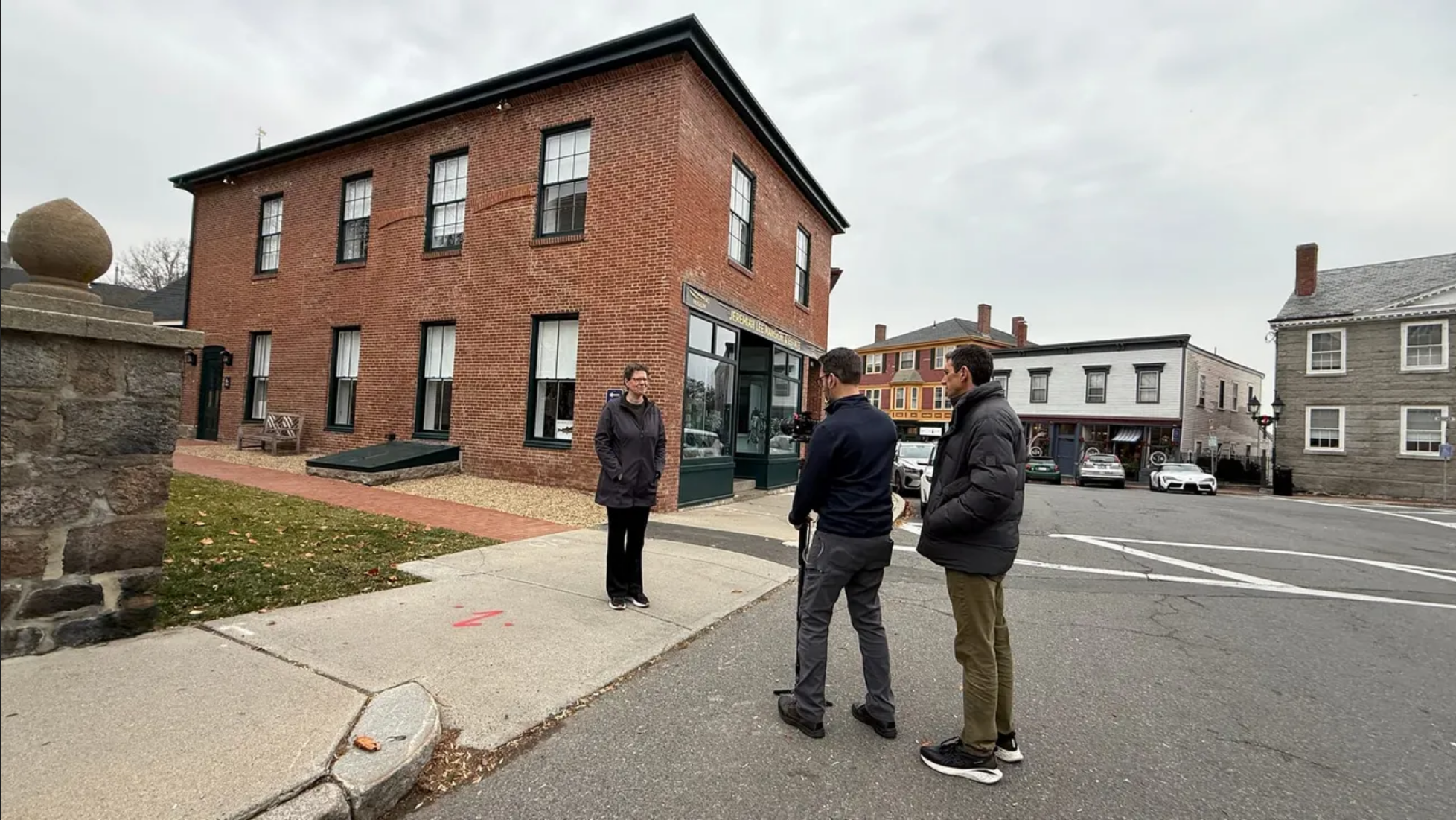
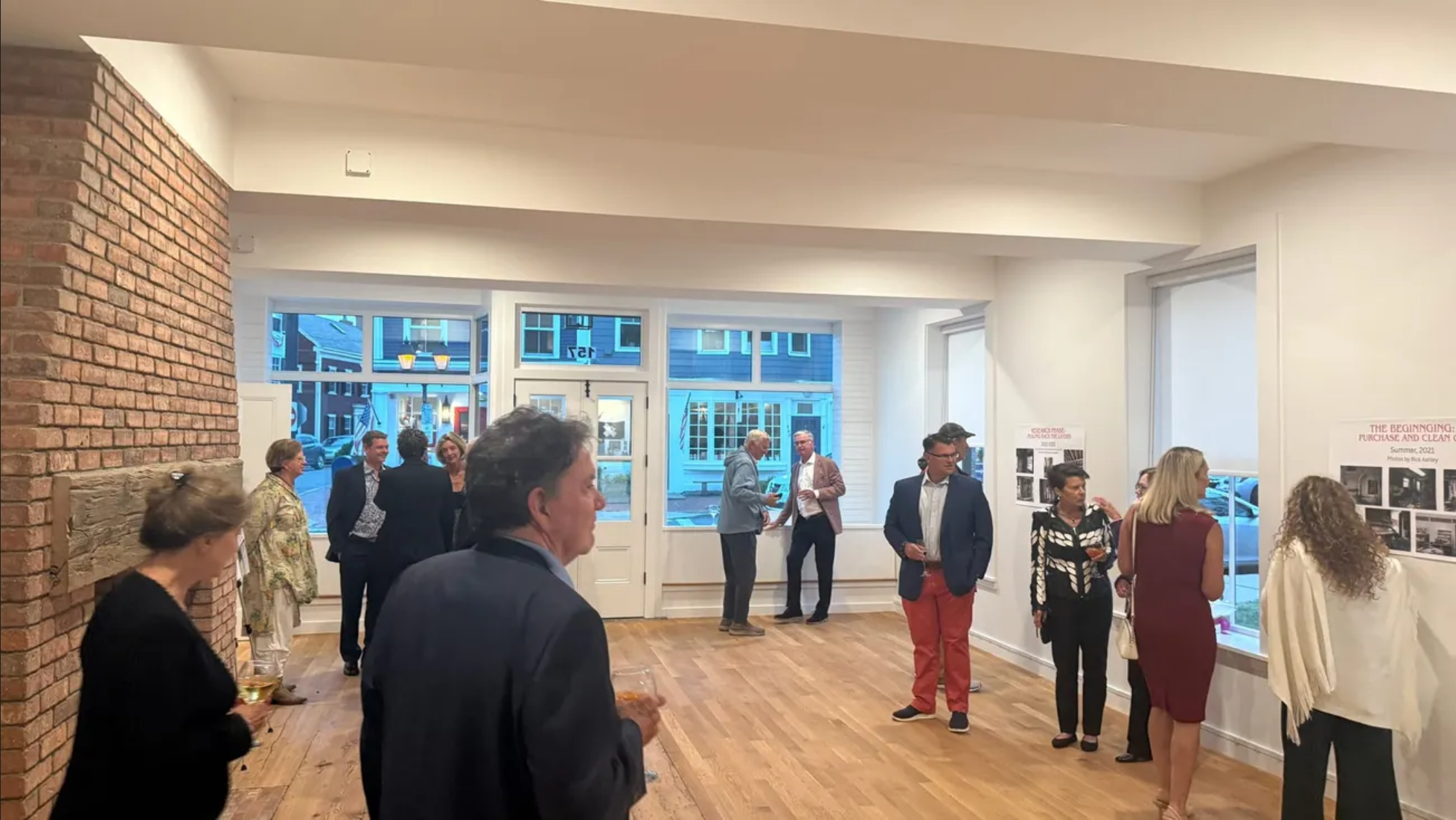
The brick out-building at 157 Washington St. spent most of the 20th century as a print shop. Before that it was a stable. Before that, in the 1760s, it was the detached kitchen, coach house and living quarters for the household of Col. Jeremiah Lee, the wealthiest merchant in Massachusetts at the time of his death in 1775, and for the three enslaved people the inventory of his estate listed alongside his silver and his horses. On June 1, the building reopens to the public for the first time in its history as a museum, with an inaugural exhibit titled "Resistance and Resilience: Slavery and Freedom in Marblehead" and a new research center on the second floor.
Twenty-nine days later, the woman who spent five years getting it there will lock the door behind her and drive home.
Lauren McCormack, executive director of the Marblehead Museum since 2018 and a member of the staff since 2016, will leave the institution effective June 30 to become executive director of Freedom's Way National Heritage Area, a federally designated 45-community, 994-square-mile region spanning north-central Massachusetts and southern New Hampshire. She announced the move in an email to the museum community on May 6.
"This has been a very difficult decision for me, but I will be leaving the Museum at the end of June," she wrote. "I have been struggling with the long commute. I did not expect that I would be leaving so soon after finishing the Brick Kitchen, but an opportunity came up unexpectedly that I just had to try for."
In an interview on Monday, she put it more bluntly. "It just got to the point where I could feel it affecting me physically, and it was just too long to be in the car every day," she said. The commute from her home in central Massachusetts runs roughly three hours round trip, four days a week, and it has run that way for five years.
Freedom's Way, headquartered at 94 Jackson Road in Devens, coordinates programming, partnership grants and federal preservation work across 45 municipalities in Middlesex, Worcester and Hillsborough counties, including portions of Minute Man National Historical Park. McCormack succeeds Patrice A. Todisco, who had led the heritage area since 2015. She starts in early July.
The Brick Kitchen and Slave Quarters is, by every measure, one of the largest preservation projects that the Marblehead Museum has undertaken, and the most consequential single act of McCormack's tenure. The museum purchased the building in April 2021 from the Orne family, reuniting the Lee estate for the first time since the late 18th century. The institution describes it as one of only three surviving detached slave quarters owned by a museum in New England. The restoration ran to $1.4 million as structural problems emerged behind the 1889 facade. The funding stack drew on the National Park Service Save America's Treasures Program, the National Endowment for the Humanities, the Massachusetts Cultural Council, Mass Humanities, the National Trust for Historic Preservation and several family foundations, along with lead donor Standley H. Goodwin, whose name the new second-floor research center bears.
The museum's 2025 annual report names her directly. "The principal mover and shaker behind the Brick Kitchen project was our director, Lauren McCormack," the report reads.
McCormack's legacy
Every long-serving director of the Marblehead Museum seems to leave behind a big capital project. Pam Peterson, McCormack's predecessor, who retired at the end of 2017, oversaw the J.O.J. Frost Folk Art Gallery at 170 Washington St., inside the museum's headquarters.
Peterson, reached Monday, said of McCormack: ”She has done a great job, and the Lee Mansion kitchen is a long-desired addition that adds so much to Marblehead history."
The annual reports trace a less photogenic arc than the Brick Kitchen alone. McCormack was promoted to executive director in 2018, the year of the Jeremiah Lee Mansion's 250th anniversary, for which the museum raised $250,000 toward an ongoing preservation fund. Then came COVID-19, and the closure of the museum's sites, and a year of pared-back programming. The 2022 report records the recovery: 3,750 visitors across the three sites, exceeding pre-pandemic numbers, and 24 lectures and programs that drew more than 1,000 attendees, with attendance up 42% over the previous year. The 2025 Annual Appeal raised more than $120,000.
The nonprofit's 990s tell the same story in a different language. The museum's net assets stood at roughly $1.9 million in 2016, the year McCormack was hired as curator of collections. They reached $4.17 million at the end of fiscal 2024. Annual revenue rose from $464,316 to $926,858 over the same period. The institution has run a surplus every year of her directorship.
Widening the story
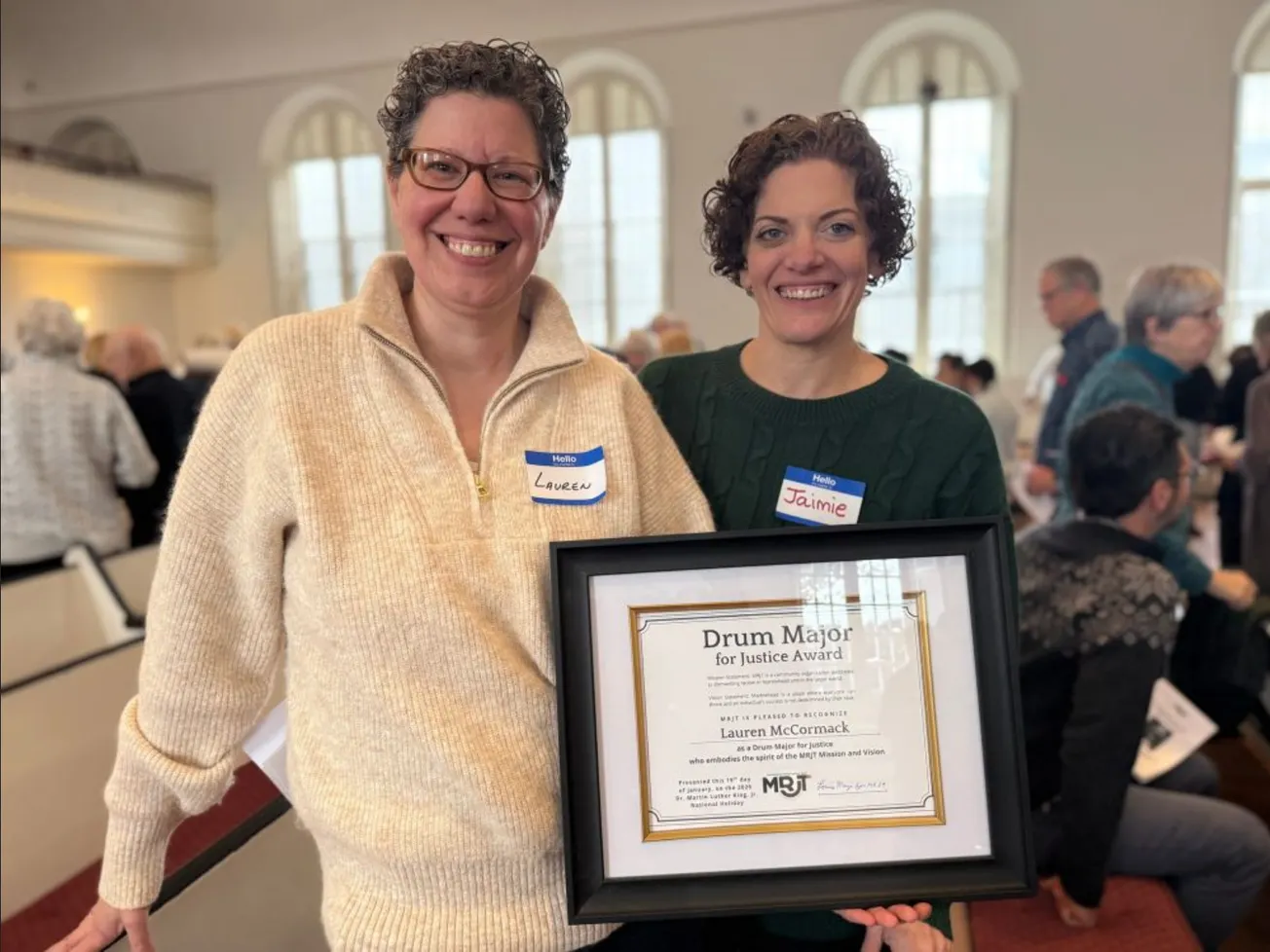
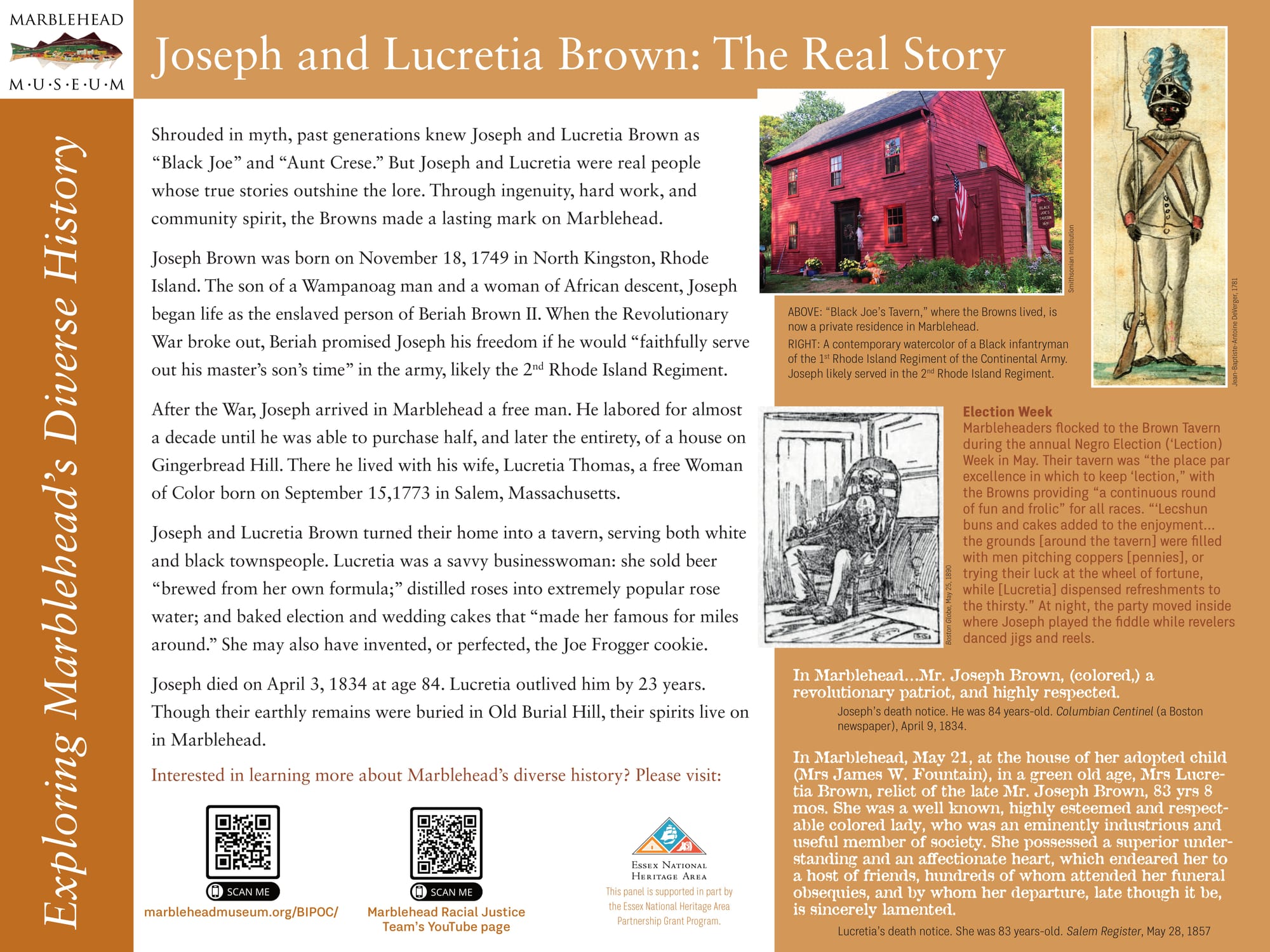
What the reports do not capture in dollar terms is the second half of McCormack's legacy: a steady, deliberate widening of whose stories the museum tells. The work includes a database documenting Black and Indigenous people who lived or labored in Marblehead through the end of the 19th century; interpretive sidewalk panels installed around town beginning in 2023, including one at Hammond Park in 2024 about the ship Desire, which brought enslaved Africans to Massachusetts in 1638; a partnership with the Atlantic Black Box Project; and collaborations with the Marblehead Racial Justice Team, the Marblehead Task Force Against Discrimination and Marblehead Public Schools. In 2024, the racial justice team gave her the inaugural Drum Major for Justice award.
Donna Cotterell, a Marblehead resident and the town's former grant coordinator, served alongside McCormack on the Marblehead 250 Committee.
"Lauren's expertise and knowledge of all things Marblehead shown like a beacon," she said. "I am tremendously grateful to her for bringing to the forefront the stories of black and indigenous people who lived and labored in Marblehead."
That public-history shift has unfolded against a federal funding climate McCormack has spoken about plainly. Earlier this year, after Essex National Heritage Area's partnership grant program was rescinded, she warned that small museums were facing tougher conditions than they have in a decade — fewer federal grants, a more uncertain economy and rising pressure on the membership dues and program fees that institutions her size rely on.
"We have four buildings," she said. "It's hard to maintain them in a good year."
Don Doliber, the town's historian and a fellow member of the Marblehead 250 Committee, did not hedge.
"What a loss for the town of Marblehead," he said. He credited her with steering the Brick Kitchen project to completion and with a habit he said had become familiar. "She does, and then she steps back, not looking for the credit." Of her decision to leave, he added: "It's our loss, but her benefit."
McCormack joined the Marblehead 250 Committee roughly two years ago to plan the town's contribution to the national semiquincentennial commemoration of the Revolutionary War — a particular responsibility for the town that was home to General John Glover and his Marblehead Regiment, credited with rowing George Washington across the Delaware. The committee met this week to begin sorting out a successor co-chair. McCormack already has the next milestone in view. "Soon it will be time for the town to look to its 400th," she said, of the anniversary in 2029 of the town's 1629 settlement.
Melissa Stacey, founder of Discover Marblehead, has worked with the museum on collaborative programming since 2020.
"Lauren has been an amazing asset to Marblehead Museum and the town these last 10 years," she said. "She's also been an incredible partner to Discover Marblehead since 2020. She will be missed greatly." Of the commute, she added: "I'm gonna miss her but am truly happy for her as I know the commute has been difficult for her."
The desk she leaves behind
The board, led by President Patty Pederson, has posted the executive director position on NEMA Jobs, the New England Museum Association board, and HireCulture.org. Associate Director Jarrett Zeman, McCormack's longtime second-in-command and the museum's lead on programming, has declined to apply. “He's happy where he is," McCormack said. She will sit in on the first round of interviews and then step back. "I want whomever is being interviewed to feel free to say whatever, to offer suggestions, and not have to worry about offending me or hurting my feelings," she said.
She has told the board she will be available after June 30 to help with the transition. Her research files will live, she said, in a museum Dropbox account and on an external hard drive, "to ensure it is not lost in the transition."
EDITOR’S NOTE: The author has made, and continues to make, financial contributions to the Marblehead Museum. Those contributions had no bearing on the reporting, editing or publication of this story.