Table of Contents
Get our free local reporting delivered straight to your inbox. No noise, no spam — just clear, independent coverage of Marblehead. Sign up for our once-a-week newsletter.
In May 1775, a crowd gathered at Marblehead Harbor to watch Thomas Robie and his family board a ship bound for Nova Scotia. They had not come to wave goodbye. They came to jeer.
Robie was a merchant whose shop sat across from Training Field Hill, where Abbot Hall stands today, and he had committed, at the time, the town’s unforgivable sin: He kept selling imported British goods while his neighbors boycotted them. Marbleheaders had already ransacked the shop. Now they were running the family out of town. As the catcalls rose from the dock, Mary Robie climbed to the bow of the ship, turned to face the crowd and delivered a farewell the town never forgot.
“I hope that I shall live to return and find this wicked rebellion crushed, and see the streets of Marblehead run with rebel blood,” she said.
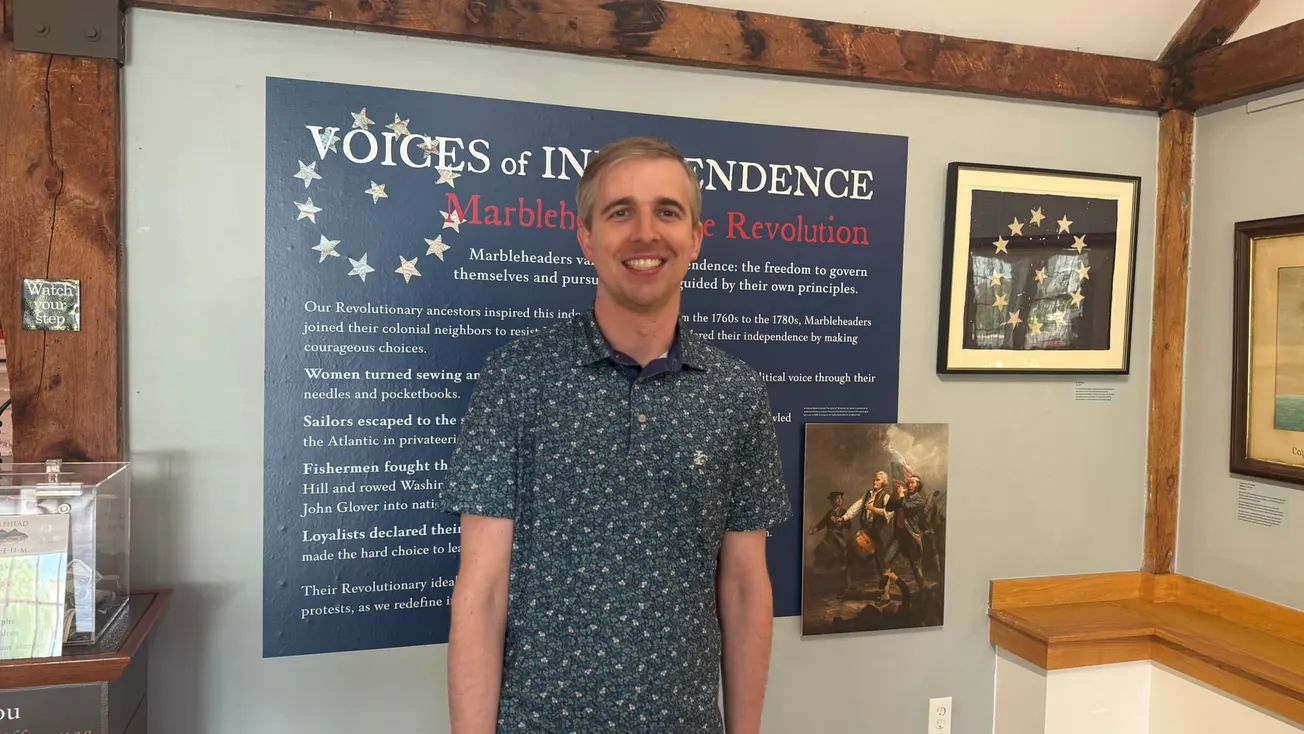
Her threat is now printed on a wall at 170 Washington St., inside the Marblehead Museum’s new exhibit “Voices of Independence: Marblehead in the Revolution,” which opened this month in the main gallery and runs through Dec. 24. Timed to the 250th anniversary of the Revolution, the exhibit took Associate Director Jarrett Zeman about eight months to research and assemble, and it does something unexpected for a town that wears its Revolutionary credentials like a uniform: It makes room for the people Marblehead drove out.
“We want to make sure that we’re telling the full story of the Revolution,” Zeman said. “We want to make sure that visitors are seeing a complete picture.”
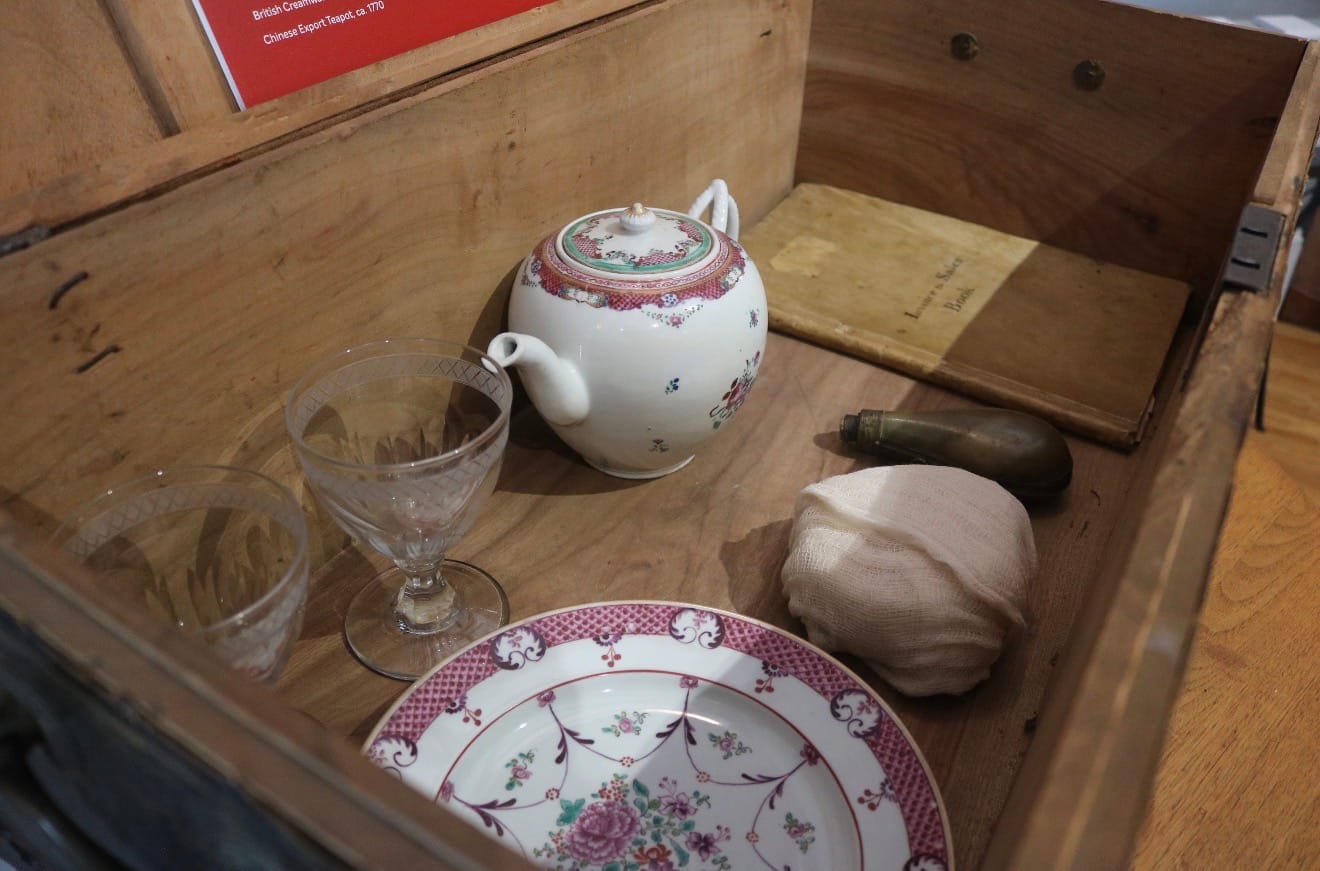
The complete picture is not always flattering. Marblehead patriots accused King George III of enslaving them — language they chose deliberately, Zeman said — while behaving, in his words, “a little tyrannically” toward neighbors who declined to share their politics. The Robies are Exhibit A. Near Mary Robie’s quote sits a wooden trunk, its lid propped open to reveal the merchandise of a loyalist shopkeeper’s world: a Chinese export teapot from around 1770, its porcelain belly painted with roses; a British creamware plate bordered in pink lattice; a pair of etched wine glasses; a brass powder flask; a leather-bound invoice and sales book, its spine soft with age. These are the goods a man like Robie imported and sold — glass, china, cheese, gunpowder — and the reason his neighbors turned on him.
Grudges that outlasted the war
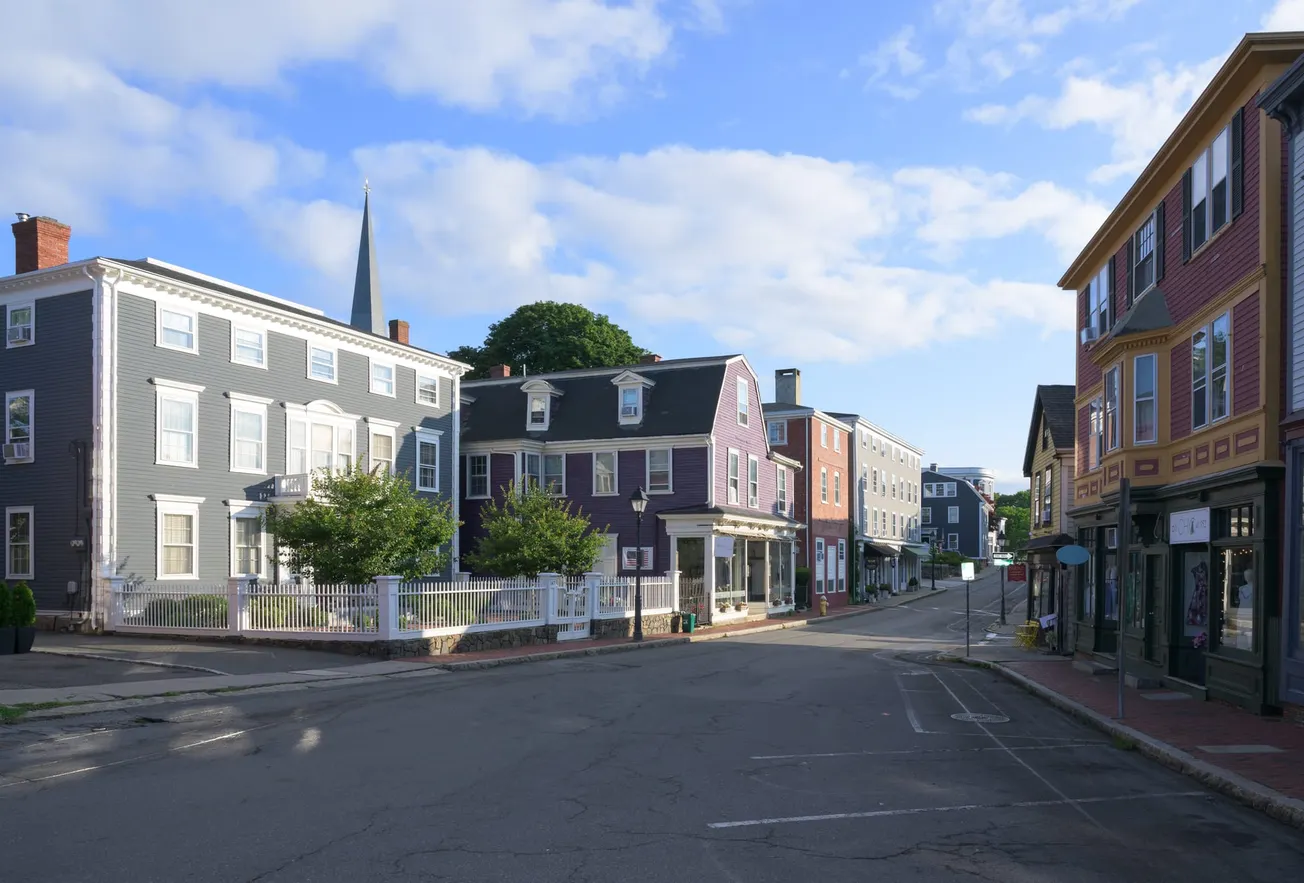
The story does not end at the dock. In 1783, with American victory all but certain, the Robies sailed back into Marblehead Harbor hoping to resume their old lives. Eight years had passed. The crowd that met them had not softened. Threatened at the dock, the family had to be smuggled off the ship in the dead of night by sympathetic Marbleheaders and hidden in a safe house. They never lived in town again. Their red brick house still stands around the corner from the museum, a small plaque marking the name.
Zeman, who says the loyalist section is the part of the gallery he keeps returning to, frames it as the most surprising discovery of his research — a side of the Revolution “that isn’t necessarily highlighted as much.”
If the loyalists complicate the town’s heroes, the women’s section expands them. Here the exhibit argues that Marblehead women turned the most ordinary domestic acts — shopping, sewing — into political weapons. They led the tea boycott. They refused British silk and spun their own clothing from American wool and cotton, coarser and stiffer than what they gave up.
“It’s kind of the Revolutionary version of Buy American,” Zeman said. A label quotes the Rev. John Cleveland of Ipswich, who observed that by making their own clothes the women might “recover the full and free enjoyment of our rights” — something, he added pointedly, the men had not yet managed.
The section’s centerpiece is a reproduction East India Company tea chest covered in insults. In 1770, Marblehead women got hold of a real one, painted it with abuse aimed at the British and carted it through the streets in protest. The museum staff recreated the stunt themselves, hunting down genuine Revolutionary-era insults and painting them onto a reproduction chest by hand. Asked which single artifact he would show a visitor with time for only one, Zeman chose it, replica or not, as the best illustration of the zeal with which Marbleheaders threw themselves at the Revolution.
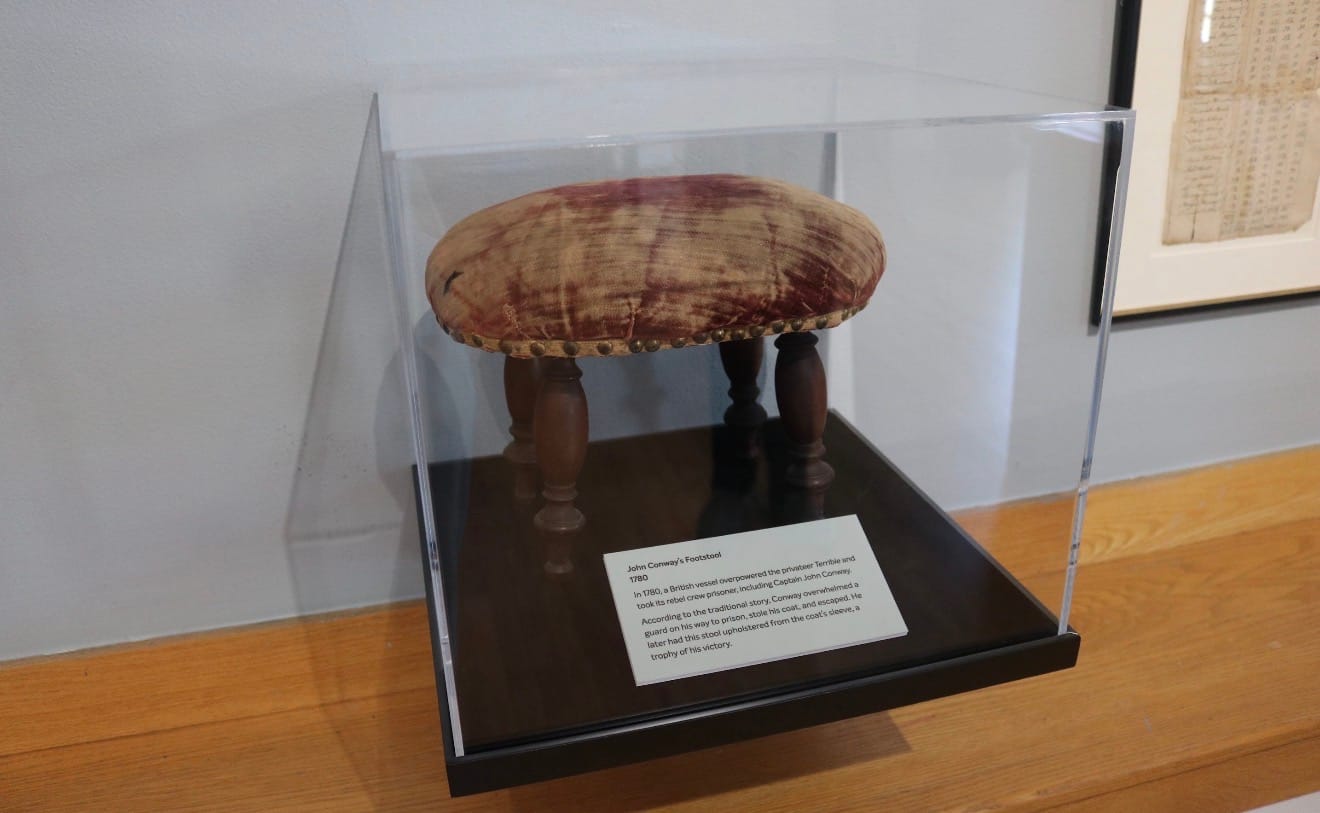
That zeal took stranger forms. In the privateering section — where the exhibit explains how a government without much of a navy licensed Marblehead fishermen to capture British cargo in their own ships — sits a small upholstered footstool. In 1780, the story goes, the British captured a privateer called the Terrible and took its Marblehead captain, John Conway, prisoner. On the way to prison, Conway overpowered his guard and stole the man’s coat. The footstool is covered with what is said to be a sleeve.
“You can almost picture him in his living room with his feet on top of this British soldier’s coat,” Zeman said. “The rest of his life, he’s kind of dominating the British.”
In Glover’s own hand
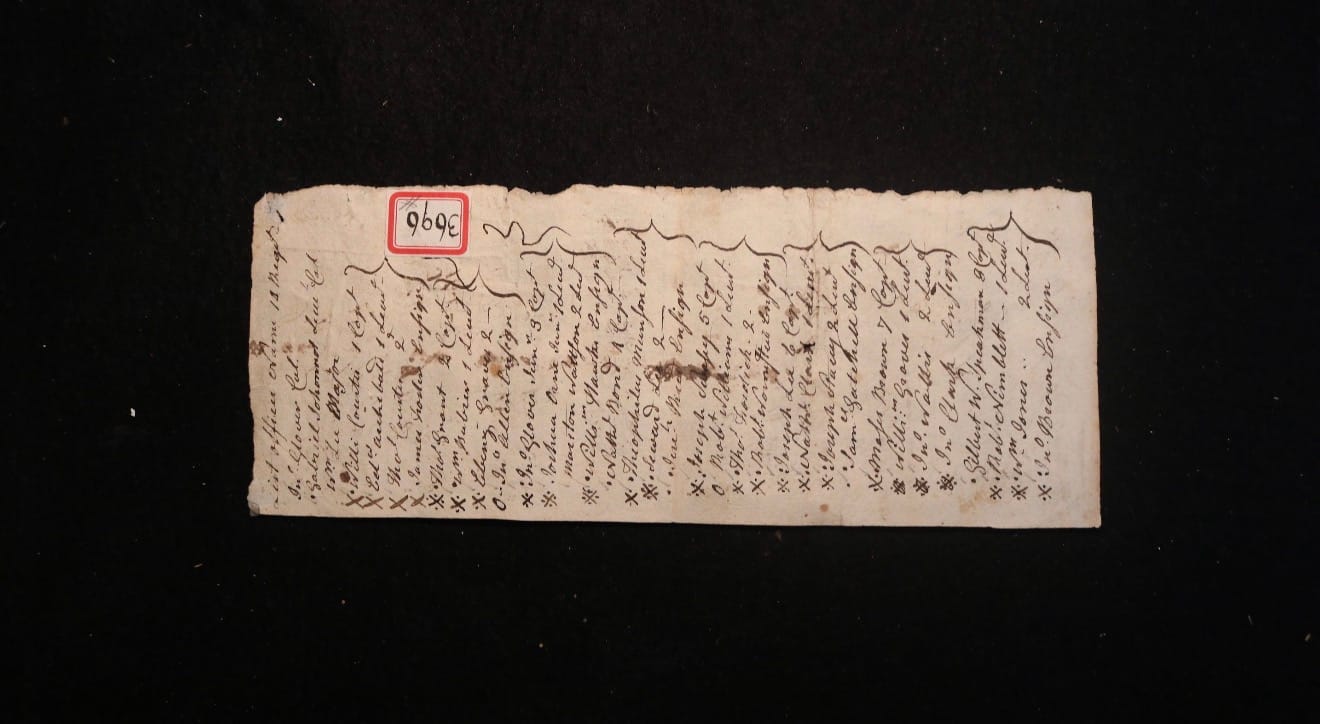
The exhibit’s documentary treasures occupy a case near the center of the room, drawn from several folders of John Glover material stored in the museum’s archive across the street and rarely displayed. There is a muster roll in Glover’s own elegant hand, with Xs and Os penciled beside each name to mark who showed up — marks that determined who got paid. “He’s kind of like an human resources manager,” Zeman said.
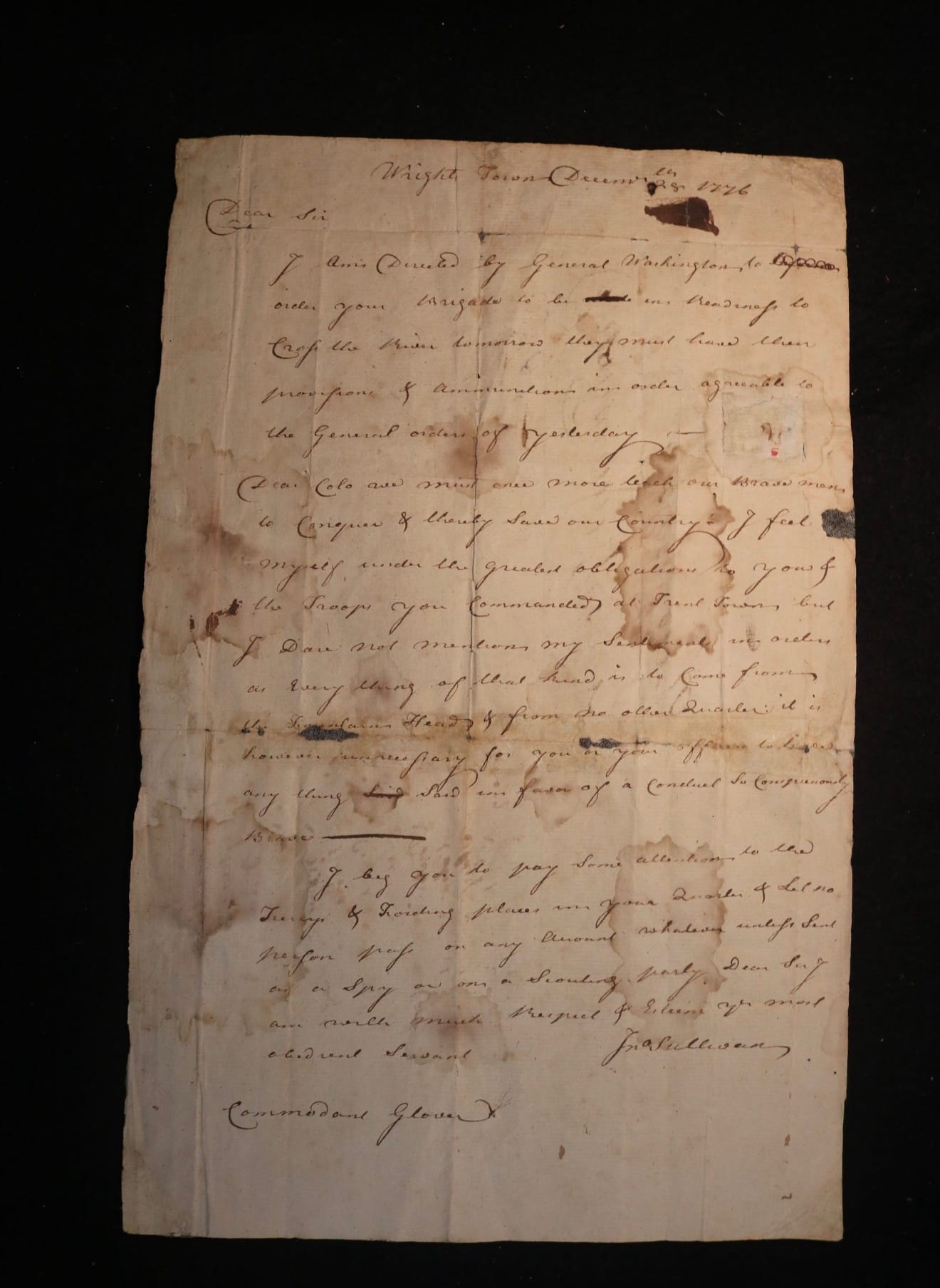
There is a letter, browned and water-stained, creased along folds made 250 years ago, sent from Wrightstown, Pennsylvania, in December 1776. In it, Gen. John Sullivan relays Washington’s orders for Glover’s brigade to be ready to cross the Delaware again for a second strike at Trenton, days after the famous first crossing that Glover’s Marblehead mariners rowed. “We must once more teach our brave men to conquer,” Sullivan wrote, “and thereby save our country.”
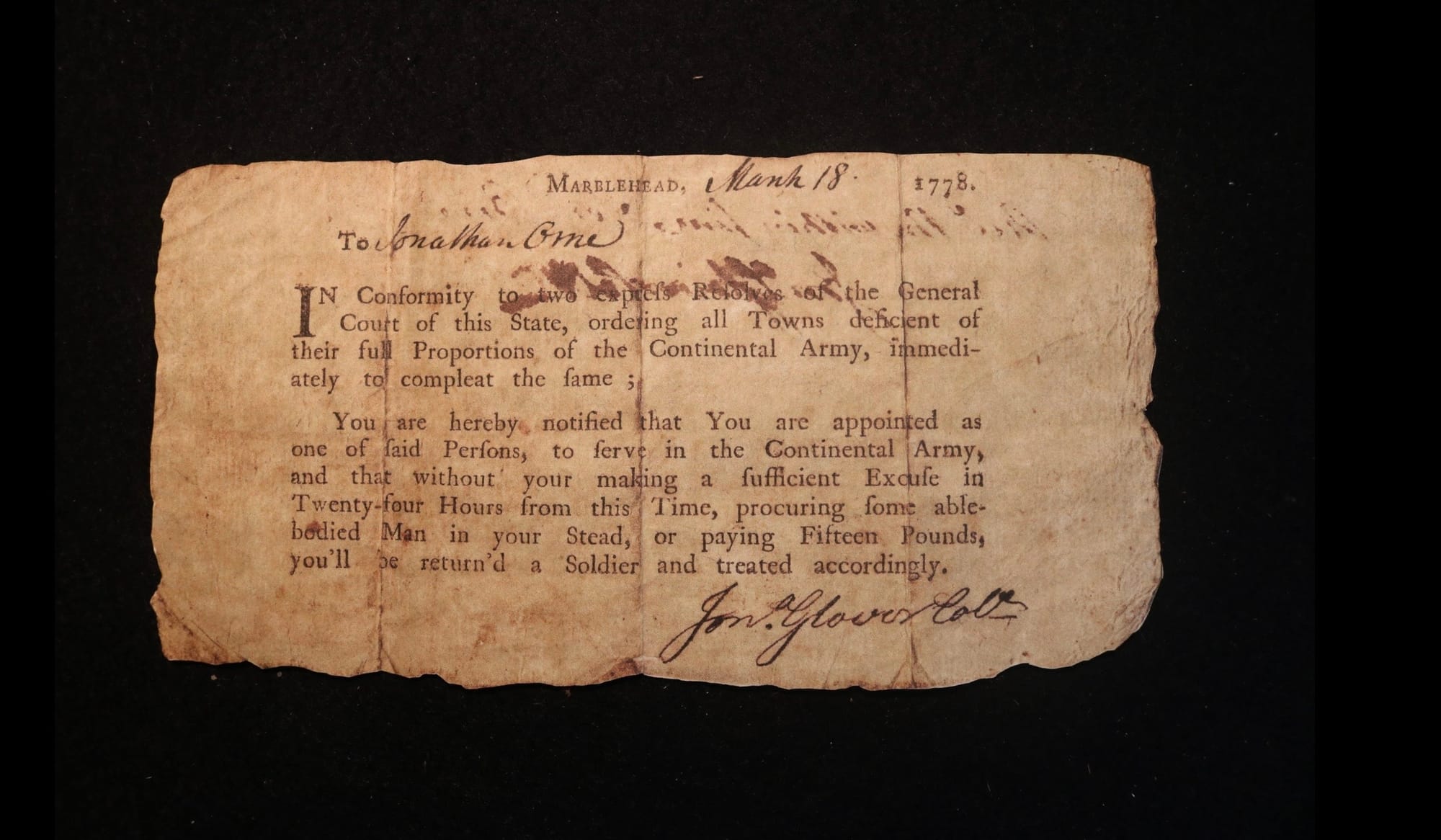
And there is a draft notice — a palm-sized printed slip with ragged edges, dated March 18, 1778, and signed in Glover’s looping hand. It informs one Jonathan Orne of Marblehead that he has 24 hours to find an able-bodied man to serve in his place or pay 15 pounds, or be “return’d a soldier and treated accordingly.” Orne did neither. He enlisted — for the second time.
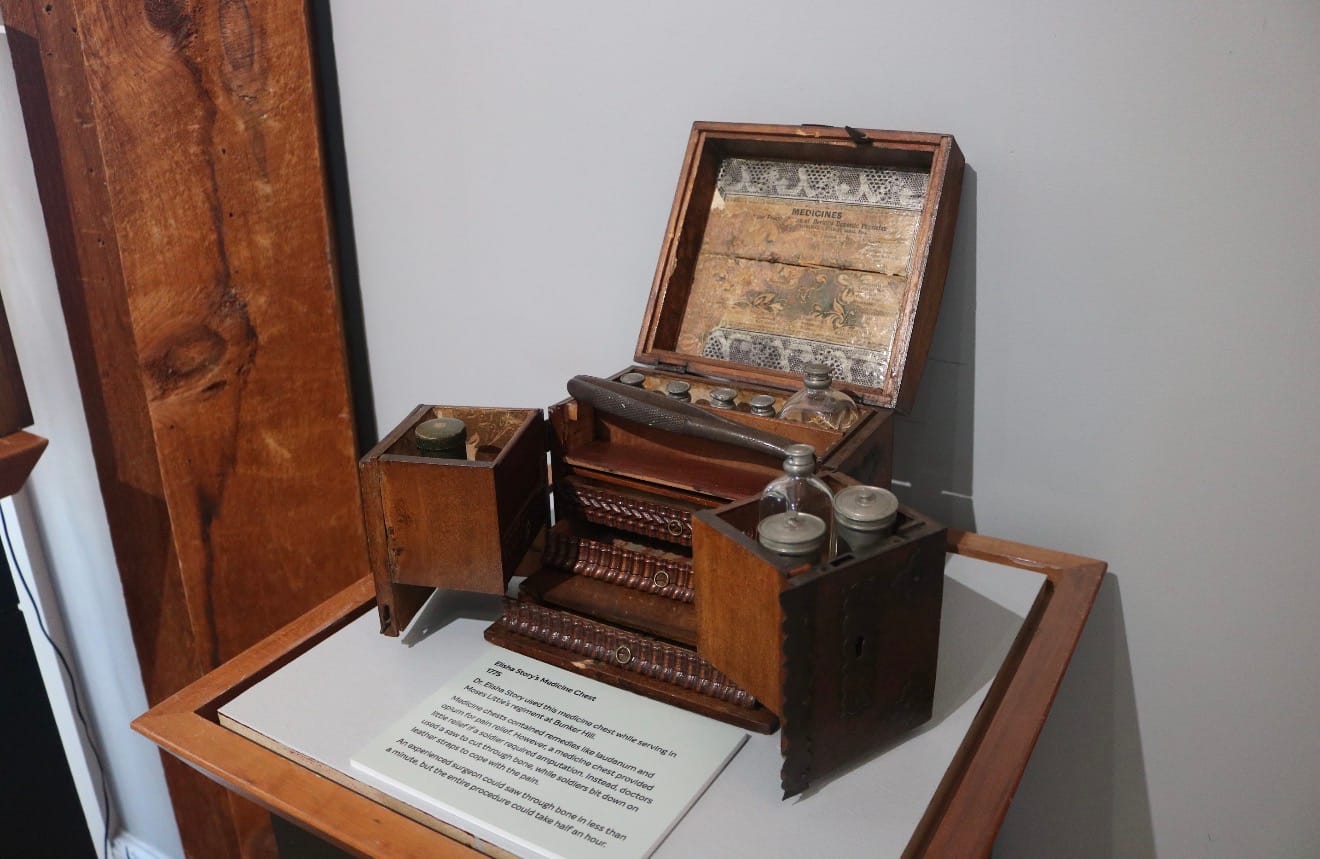
Other cases hold a portable medicine chest carried by Dr. Elisha Story at Bunker Hill, its little drawers and pewter-capped bottles intact, alongside a label noting that an experienced surgeon could saw through bone in under a minute while the patient bit down on a leather strap. Story’s memories of an earlier night — Dec. 16, 1773, when he led a gang of men aboard the Dartmouth to dump tea into Boston Harbor — survive because his son Joseph wrote them down decades later, in a manuscript the museum owns and has enlarged and transcribed on the gallery wall.
Even the exhibit’s section on memory refuses easy certainty. A 19th-century drum on display is supposedly the one Henry Devereux carried — supposedly, because two other institutions claim the real one. Zeman shrugs at the dispute. What matters, he said, is “how important it is for us to feel like we have a physical connection to history.”
The Robies wanted that connection too. They came back for it, eight years after the catcalls at the harbor, and the town turned them away a second time. So in the end, Mary Robie never saw the streets of Marblehead run with rebel blood.
This story is the kind of local reporting that takes time: visits, interviews, archival detail and careful editing so Marblehead’s history is told with context, not shorthand. The Marblehead Independent has 121 members now, with a goal of 175 by July, and every new member helps keep this work free to read for the whole town. While this story is still fresh, join the neighbors making that possible. 🟦 Become a member here.