Table of Contents
Get our free local reporting delivered straight to your inbox. No noise, no spam — just clear, independent coverage of Marblehead. Sign up for our once-a-week newsletter.
The Marblehead School Committee voted 5-0 Friday to approve a fiscal 2027 operating budget of $47.6 million, absorbing roughly $1.5 million in additional cuts and clearing the way for the district to join a townwide push for a tiered Proposition 2½ override.
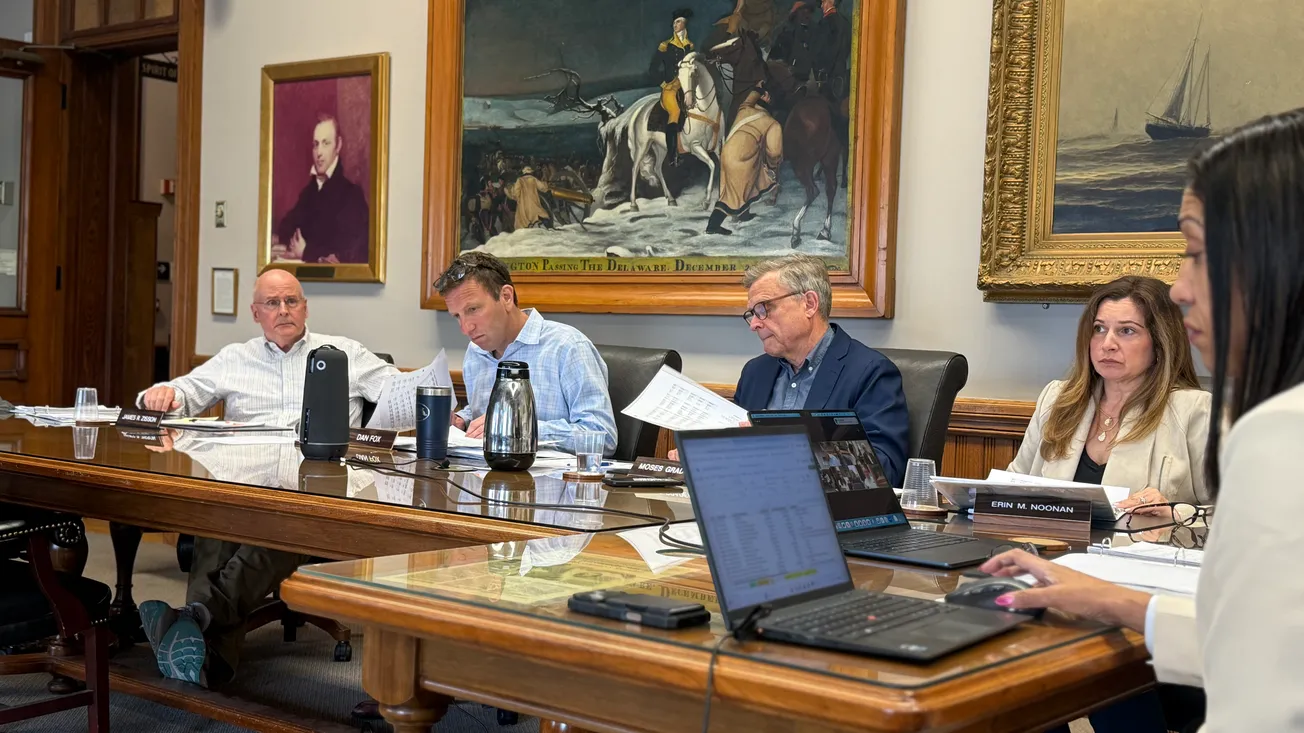
The budget represents a reduction of approximately $1.5 million from the fiscal 2026 appropriation of $49.1 million. That cut comes on top of $1.7 million the district already trimmed to reach a level-funded budget this year, eliminating 14.75 full-time-equivalent positions. The vote came nearly two hours before the Select Board was scheduled to meet at Abbot Hall on Friday afternoon to vote the remaining portions of its own municipal budget, which assumes the full $1.5 million school reduction.
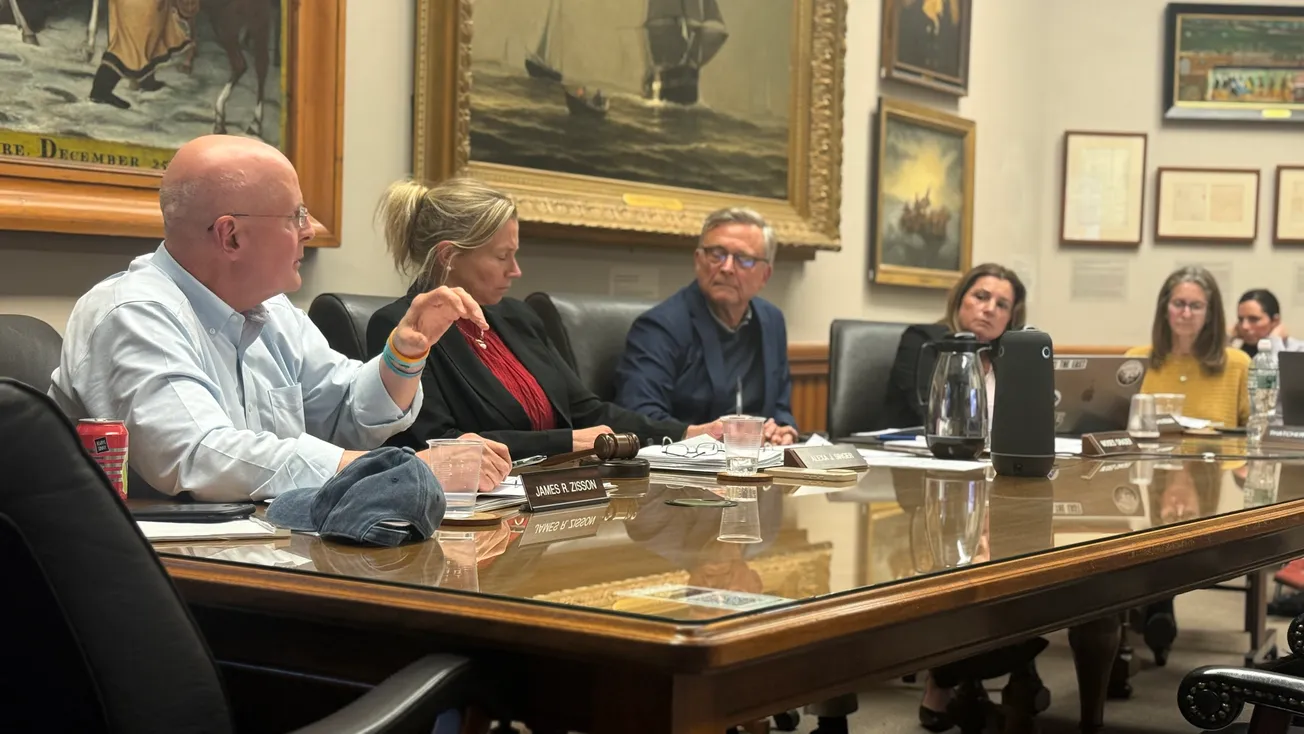
The unanimous vote resolved a dispute that had deadlocked the Budget Subcommittee two days earlier over a $462,000 health insurance cushion. Budget Subcommittee Chair Jenn Schaeffner had backed the administration’s recommended budget of roughly $48 million, which would have excluded the school’s share of the buffer. She argued the district was being asked to shed jobs to preserve a reserve it does not control, and that benefit costs would fall as layoffs take effect on both sides — a reduction she said was not reflected in the current projections.
“I would like the record and the minutes to reflect that that is the number that I support,” Schaeffner said of the administration’s figure. “But it is clear that there’s no additional support for the administration’s recommendation.”
School Committee member Melissa Clucas, who serves on the Budget Subcommittee, took the opposing view. The town’s finance director had recommended a 5 percent buffer on health insurance as standard practice, and $300,000 of a comparable $630,000 cushion had already been spent through mid-March in the current fiscal year. Removing it, Clucas said, would leave the district exposed and jeopardize the school’s standing in override talks.
“Continuing to battle and nickel and dime these short-term things doesn’t just not help us — it actively hurts us,” Clucas said. “It will risk our seat at the table on an override.”
Three independent analyses of benefit costs — by Assistant Superintendent of Finance and Operations Michael Pfifferling, Finance Director Aleesha Benjamin and Finance Committee Chair Alec Goolsby — had converged within about $50,000, validating the $1.5 million figure the town requested.
School Committee Member Kate Schmeckpeper sided with Clucas, saying the committee needed to stop managing the crisis in front of it and start building toward a longer-term fix.
“Advocacy for school funding has really started to operate from a scarcity mentality,” Schmeckpeper said. “I am ready to move forward, even though this is going to be a really painful process.”
School Committee member Henry Gwazda made the motion, and Committee Chair Al Williams called the roll. Schaeffner voted in favor. Pfifferling told the committee his recommendation had been intended as budget neutral, not adversarial.
“This was not malicious,” Pfifferling said. “We thought we were actually helping the situation.”
Superintendent John Robidoux said the coming year’s budget process must begin earlier, with consistent communication between the town and school sides so officials are not resolving major disputes weeks before Town Meeting.
Joining the override effort
Minutes after approving the budget, the School Committee voted 5-0 to join the Select Board’s override effort. Schmeckpeper made the motion, directing Williams to coordinate the committee’s participation in a joint working group that Town Administrator Thatcher Kezer is assembling. The Select Board voted 4-1 Wednesday to pursue a multiyear, three-tier override and a separate trash-funding ballot question to close a $7.7 million townwide deficit. Town Meeting, where any override must first be authorized, is approximately five weeks away.
Health insurance is driving much of the shortfall. The Group Insurance Commission approved an 11.17 percent premium increase for active employees this cycle, pushing projected costs to nearly $15.8 million for fiscal 2027. Under Proposition 2½, Marblehead can raise only about $2.2 million in new tax revenue each year.
The committee spent considerable time discussing what each override tier should include for the schools. Under the Select Board’s framework, the tiers are cumulative — the highest tier that wins majority support determines the permanent increase to the tax levy. Gwazda said the district needed to ensure the lowest tier alone would be sufficient if it was the only one voters approved. He floated full-day kindergarten and in-district special education programs for a second tier, arguing both would resonate with voters and that the town is an outlier in not funding full-day kindergarten.
Robidoux said he and Pfifferling needed time to determine what a restore budget would look like before committing to specific numbers. The central question, he said, is whether restore means returning to a level-service budget or simply reversing the latest round of cuts.
“This can’t be guesswork at this point,” Robidoux said, adding that his idea of what belongs in each tier might differ from the committee’s or the town’s.
Schaeffner noted the combined cuts now total roughly $3.2 million — the original $1.7 million from level funding plus the $1.5 million approved Friday — and said the first year the district has ever reduced its budget from the prior year’s appropriation. She said any restore conversation would need to distinguish between positions the district wants back and efficiencies it does not intend to reverse.
Schmeckpeper called the override an opportunity for the administration to envision what the district actually needs rather than simply making numbers work.
Clucas said she had spoken with Goolsby and Finance Committee Vice Chair Molly Teets after Wednesday’s meeting and asked them to prepare a framework projecting free cash and revenue over the next several years so the town and schools would be working from the same financial assumptions.
Schaeffner also raised the question of capital funding, noting the Finance Committee had zeroed out capital outlay from the general fund for fiscal 2027. Pfifferling said the schools are included in the town’s capital plans but that he was still working to confirm which requests made the cut.
The School Committee also discussed moving health insurance onto the school side of the budget for fiscal 2028 and securing a school representative on the Public Employees Committee, which is negotiating a benefits contract that expires June 30. Kezer is expected to return to the Select Board on April 8 with override details. Williams asked the administration to present a line-item budget by April 9.