Table of Contents
Get our free local reporting delivered straight to your inbox. No noise, no spam — just clear, independent coverage of Marblehead. Sign up for our once-a-week newsletter.
Select Board Chair Dan Fox said Wednesday night that the board, the School Committee and the Finance Committee are finalizing a memorandum of understanding that would formally commit the town to a three-year window without another override request if any of the three tiers passes. The document is expected to be signed before Town Meeting opens in less than four weeks.
“Yes,” Fox said when a resident asked directly whether passage of any tier would lock the board into that three-year commitment.
The MOU is meant to address a question that has come up repeatedly in public meetings and at Abbot Hall: what guarantees do taxpayers have that the town will not return to the ballot asking for more money the year after an override passes. Fox said the document would be signed by the Select Board, the School Committee chair and the Finance Committee once final language is agreed on.
Finance Director Aleesha Benjamin said the MOU also lays out how override dollars would be managed if the town hits unexpected financial turbulence during the three-year window. The priority, she said, is rebuilding the town’s stabilization fund, which is supposed to hold 5 percent of the operating budget but has fallen well below that threshold in recent years.
“That stabilization really needs to be built up,” Benjamin said. “Once we at least get to the 5 percent, we could make decisions from there.”
The agreement also codifies a new approach to funding other post-employment benefits, or OPEB — the long-term liability the town carries for retiree health insurance and similar obligations. Benjamin said the schools are now dedicating a portion of their revenue toward their share of OPEB liabilities, and the town is doing the same on its side. That split is built into each tier of the override, with both sides putting money toward the obligation rather than leaving it to grow unfunded.
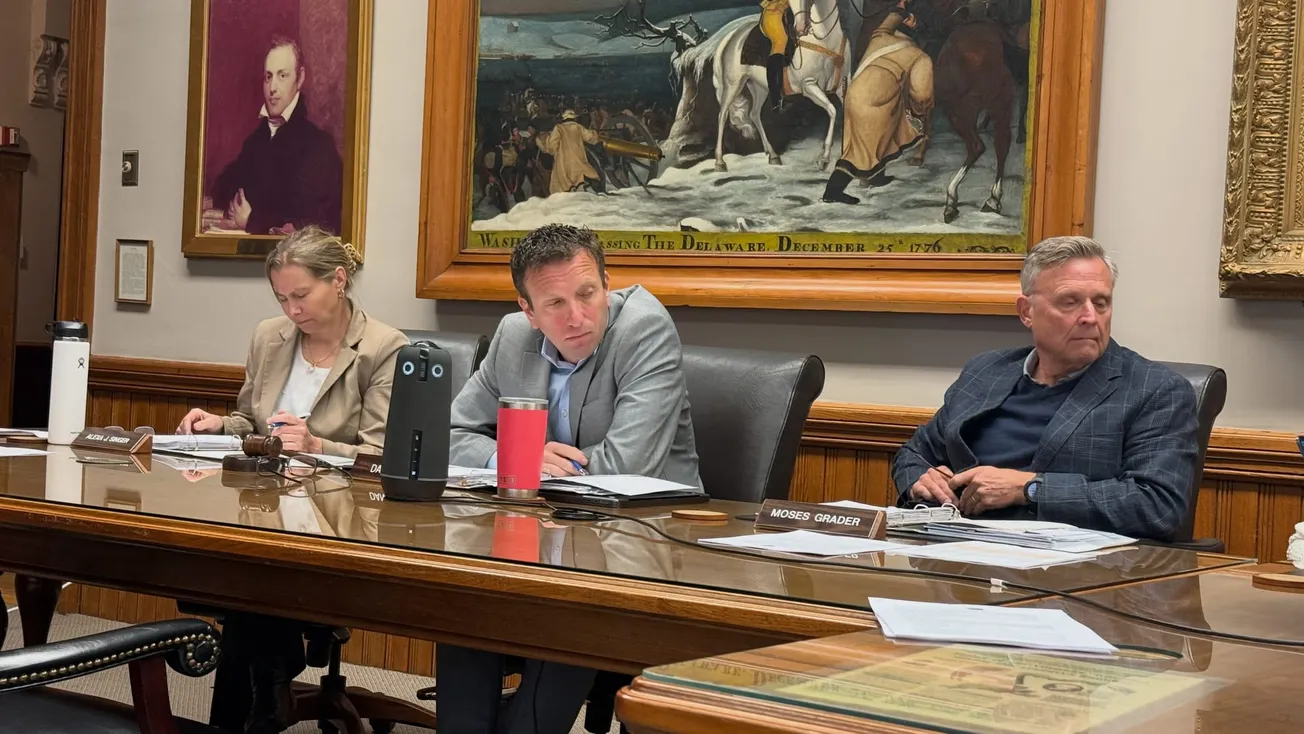
Select Board member Moses Grader pressed Benjamin during Wednesday’s meeting on what options the town would have if a “black swan” event hit during the three-year window — an unexpected shortfall, a major cost spike or a revenue collapse. Benjamin said there is no mechanism to pull money from a future year into the current one, which is why the stabilization fund matters so much.
Town Administrator Thatcher Kezer said the override dollars are scheduled to be drawn down over three fiscal years rather than spent all in year one, a structure he said is designed to save taxpayers money by staging the tax-levy impact rather than front-loading it.
The MOU is expected to be presented in final form at the Select Board’s April 22 meeting, alongside the board’s vote on whether to place the override questions on the June ballot.