Table of Contents
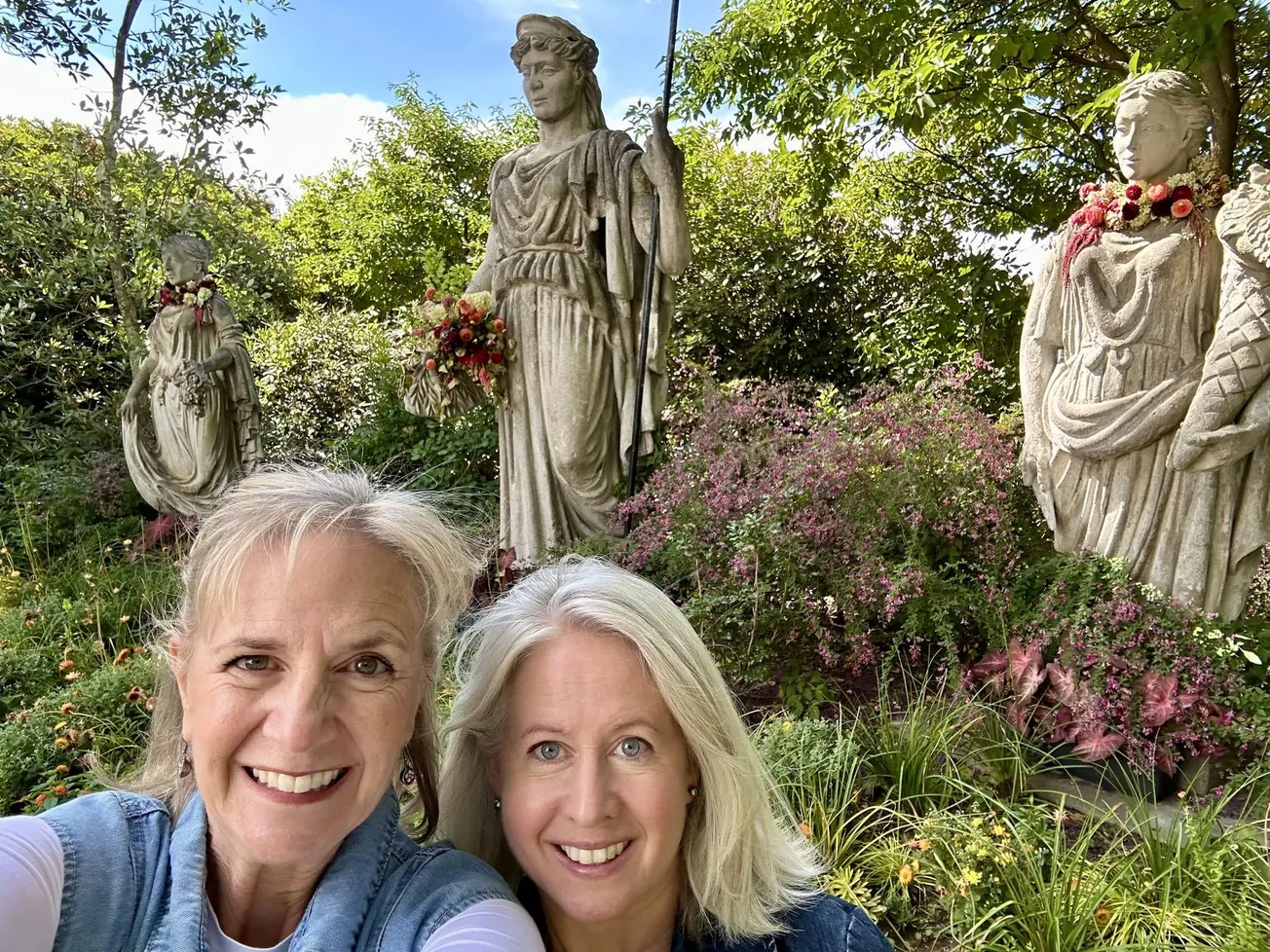
The New England Flower Show hosted by the Massachusetts Horticultural Society was a real treat for my friend Beth and me this weekend. We were inspired in so many ways and found ourselves signing up for more ways to learn about our love of gardening.
The highlight of the MHS Flower Show was the judged competitive arranged floral and plant displays. Our favorite was the Botanical Arts Competition titled "Nature's Framework," which were miniature displays of a structure like a greenhouse and garden cottage made entirely of plant material like seeds and stems. The attention to detail and creativity blew us away.
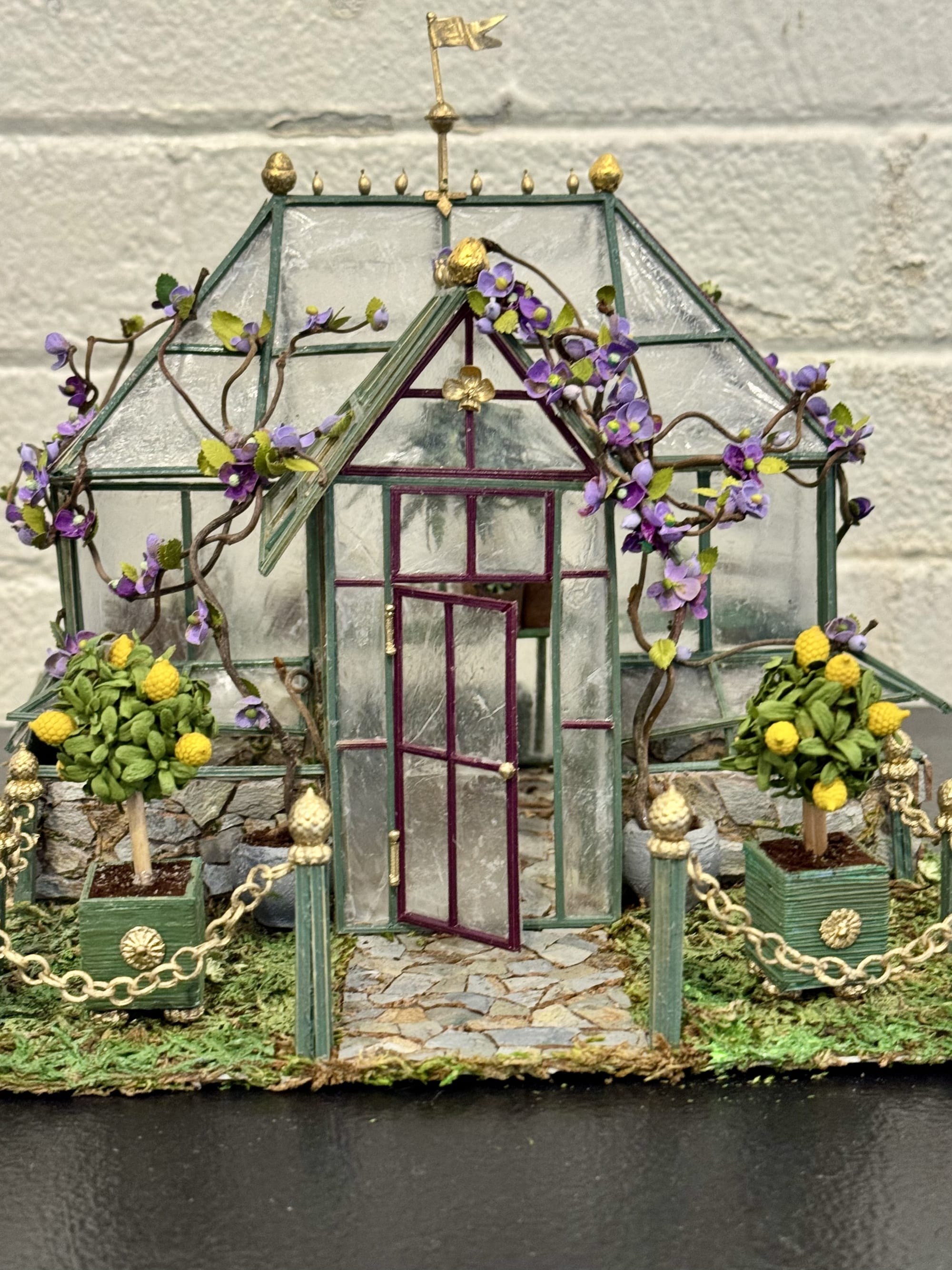
We found it interesting that the judged design competitive arrangements could be submitted by anyone, no need to be a member of the MHS or a garden club. We did notice that there were not any professional florists like Winston.
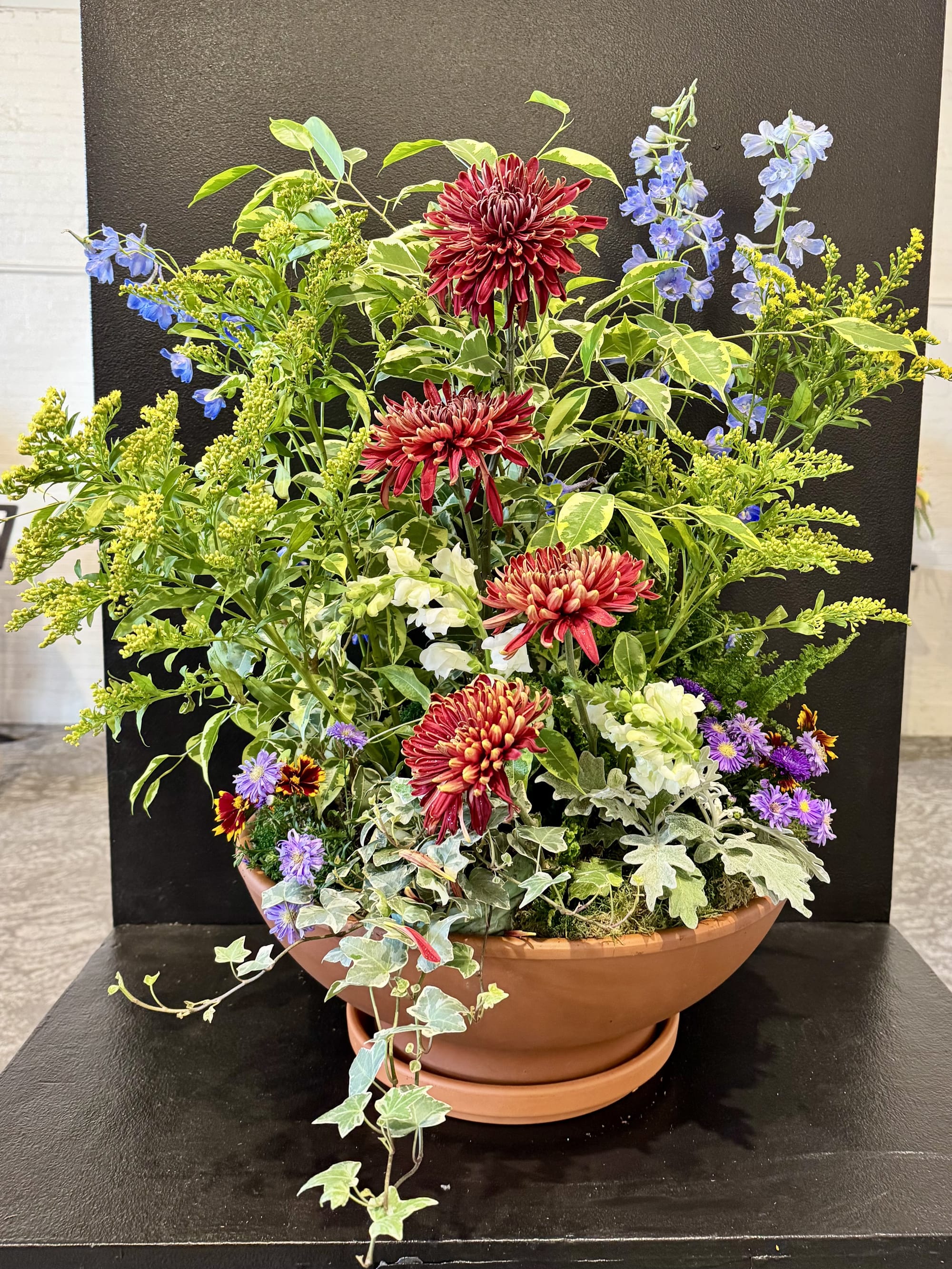
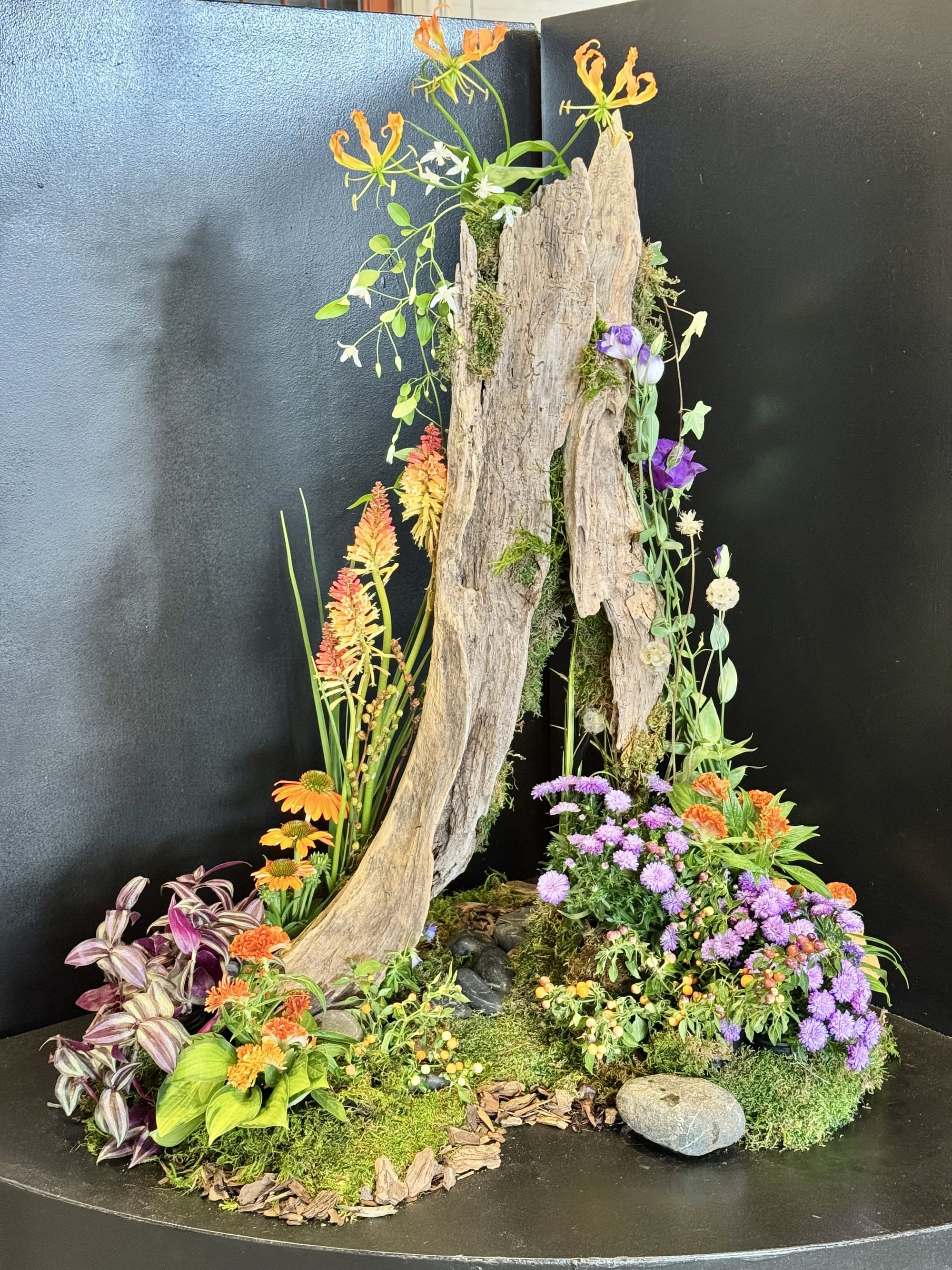
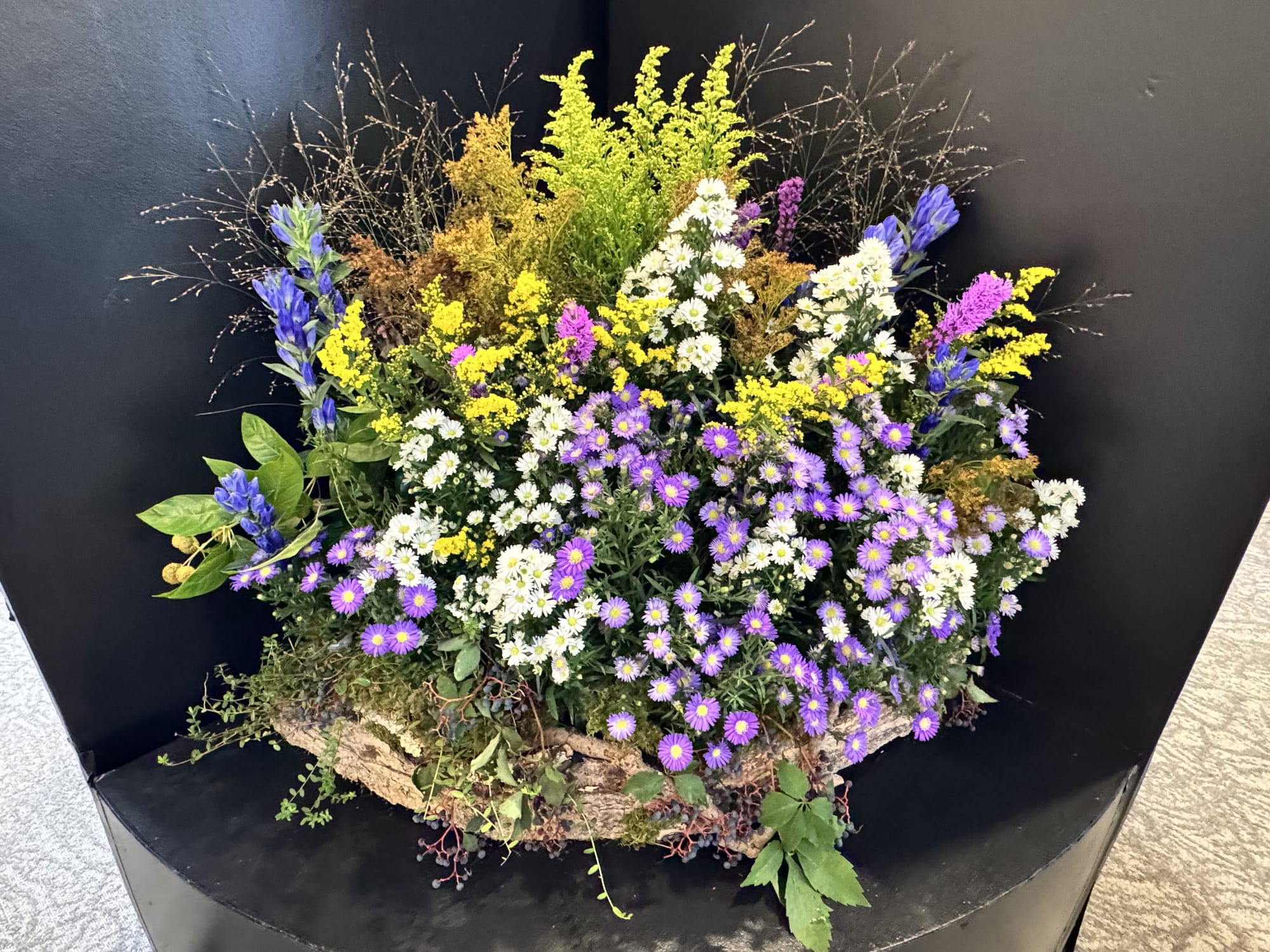
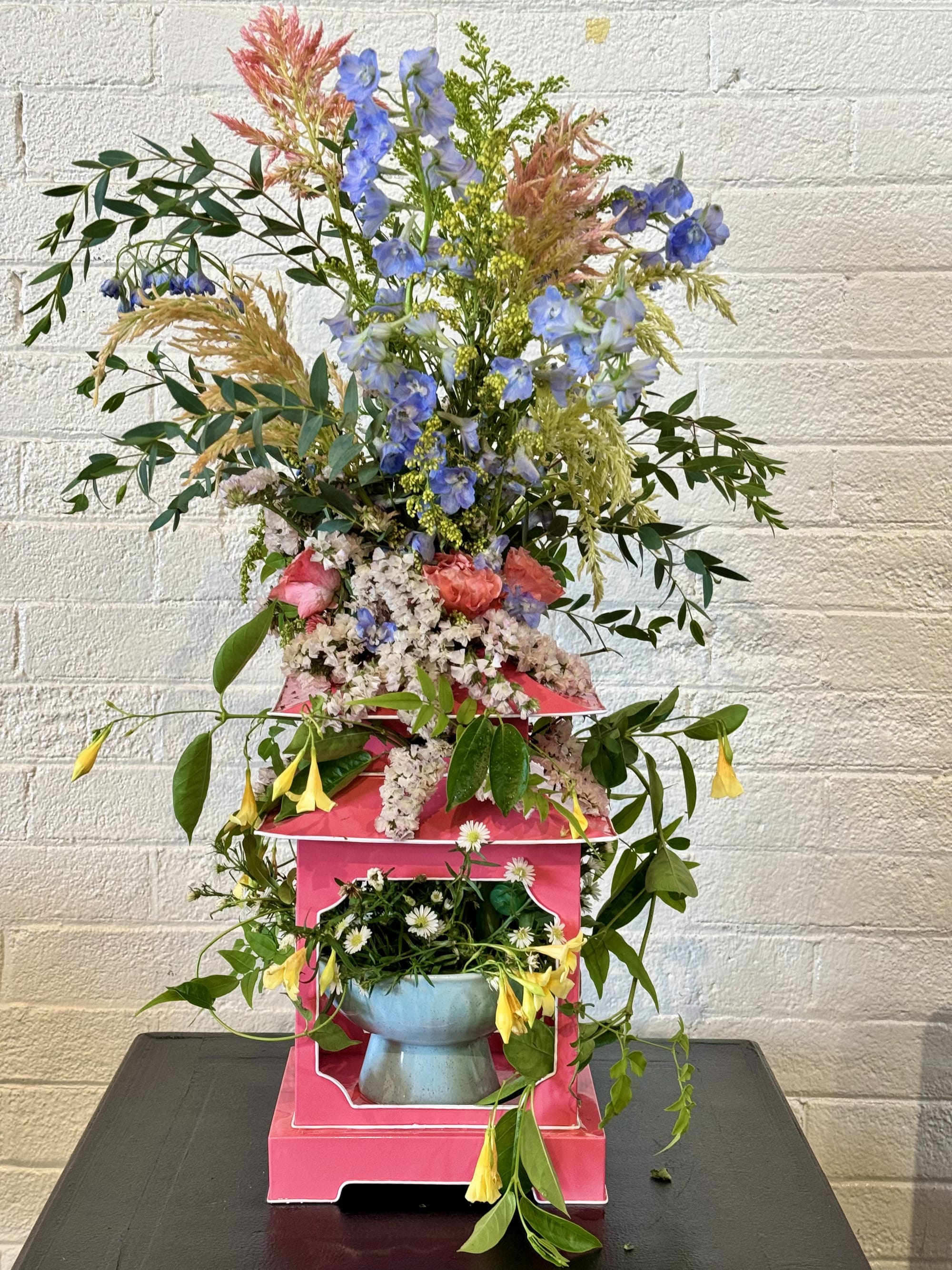
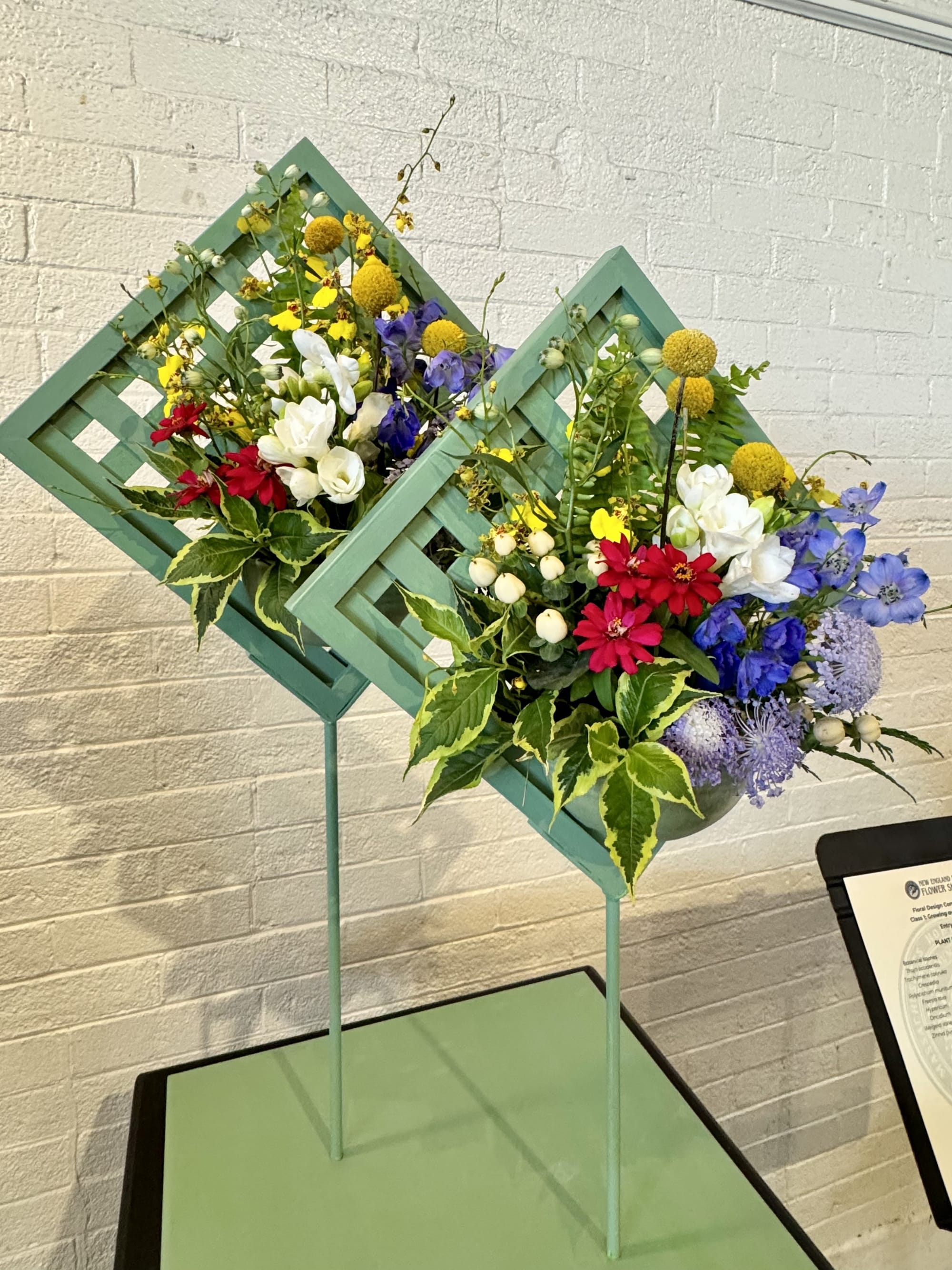
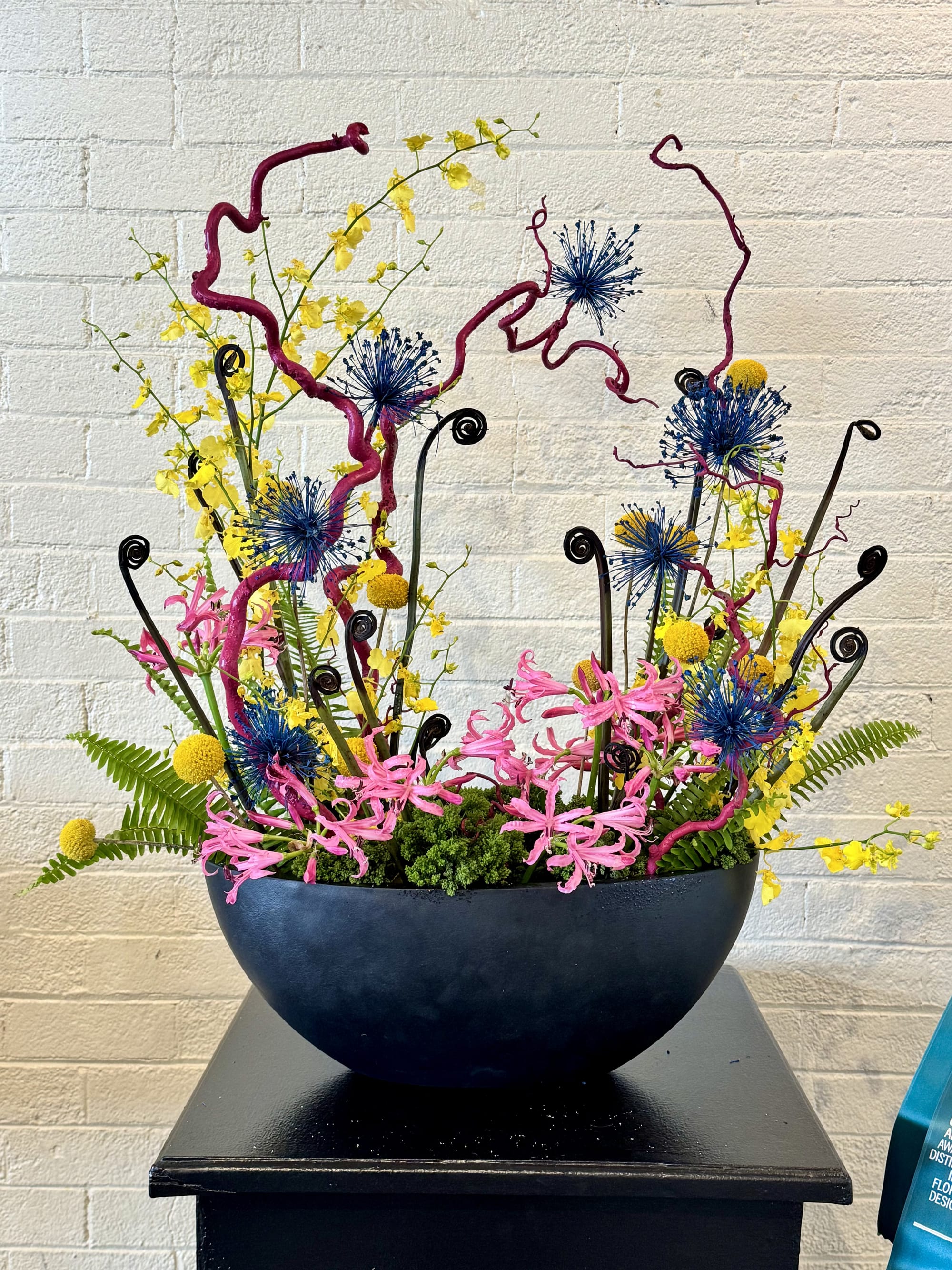
There were also numerous single flower judged competitions where dahlias and hydrangeas and asters were among hundreds of other flowers judged for their perfections.
Everywhere we looked we learned about the Japanese school of flower arranging called ikebana, which originated in 1462. There were three local schools of ikebana displaying their arrangements throughout the flower show. Ikebana, we learned, is less about decorating a space and more about creating a living and spiritual sculpture. It appeared to me that often the vase or vessel is as important as what goes in it. Ikebana flower arranging is unlike Western floral design, which emphasizes abundance and symmetry and filling a space; ikebana follows an aesthetic of subtraction. There is often some element that is tall to represent the heavens, the middle represents humanity, where leaves or petals are selected to reach out at different heights and different directions right down to the base of the vessel, which represents earth often meeting the water, which is often poured to the top of the vase like a martini or a Maddy's Sail Loft pour.
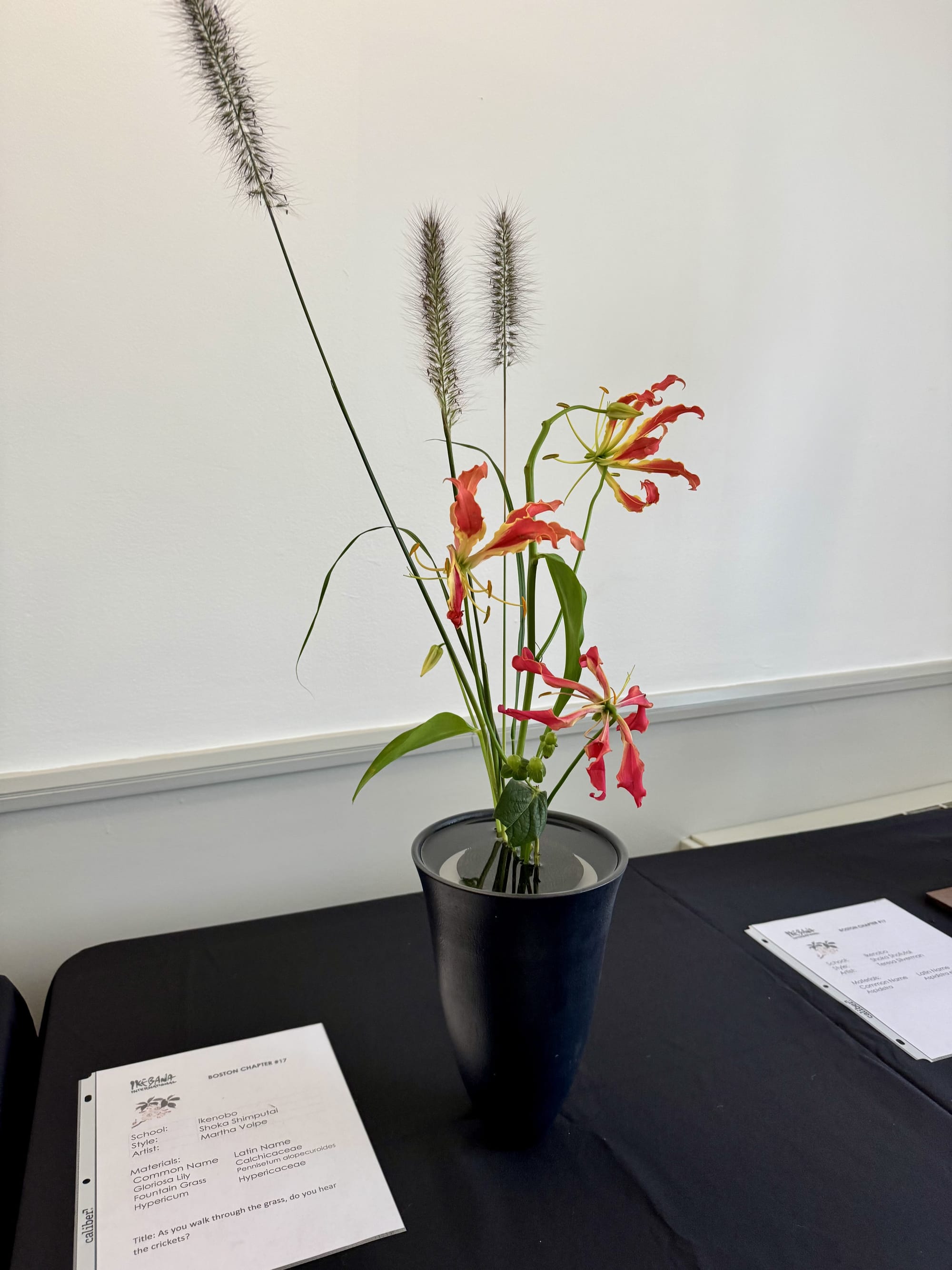
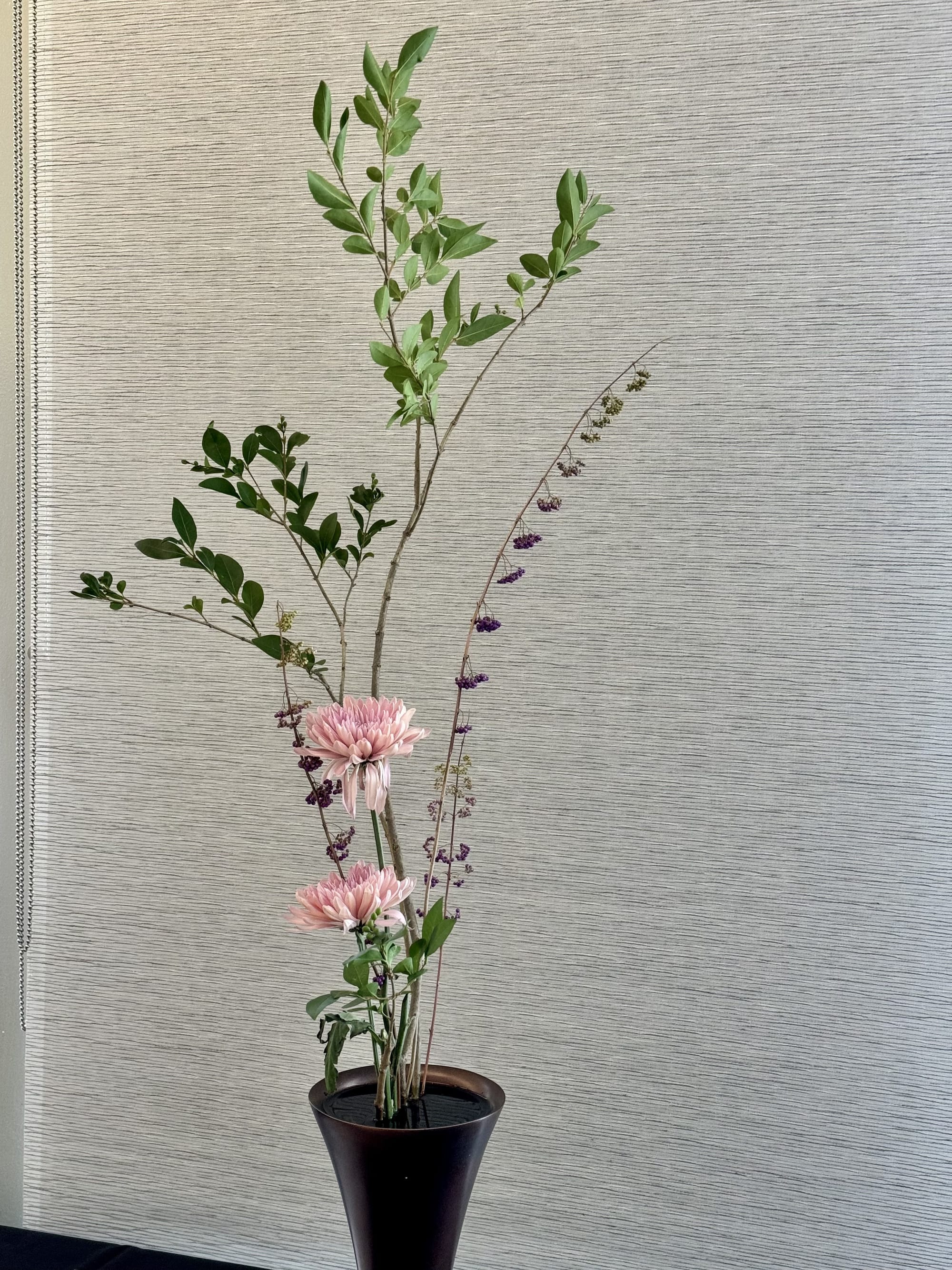
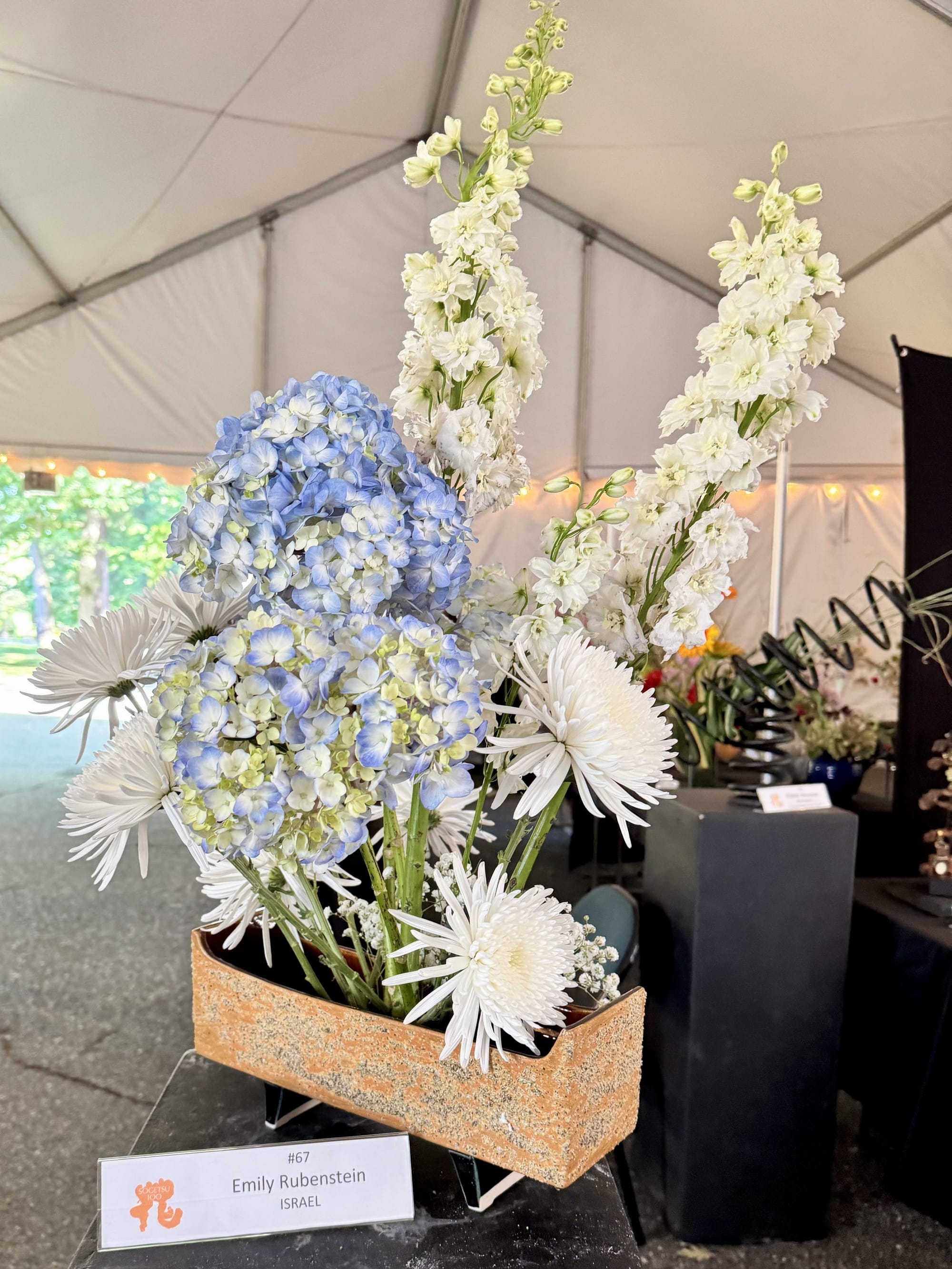
We met the MHS educational director and professional botanical artist, Sarah Roche, who teaches botanical painting and easily convinced both of us to sign up for a beginner botanical painting class in November. Throughout the weekend of the show there were hourly demonstrations and speakers to show us how to arrange flowers, take care of roses and learn more about organic practices. All under the most beautiful big tent reminiscent of the 1920s.
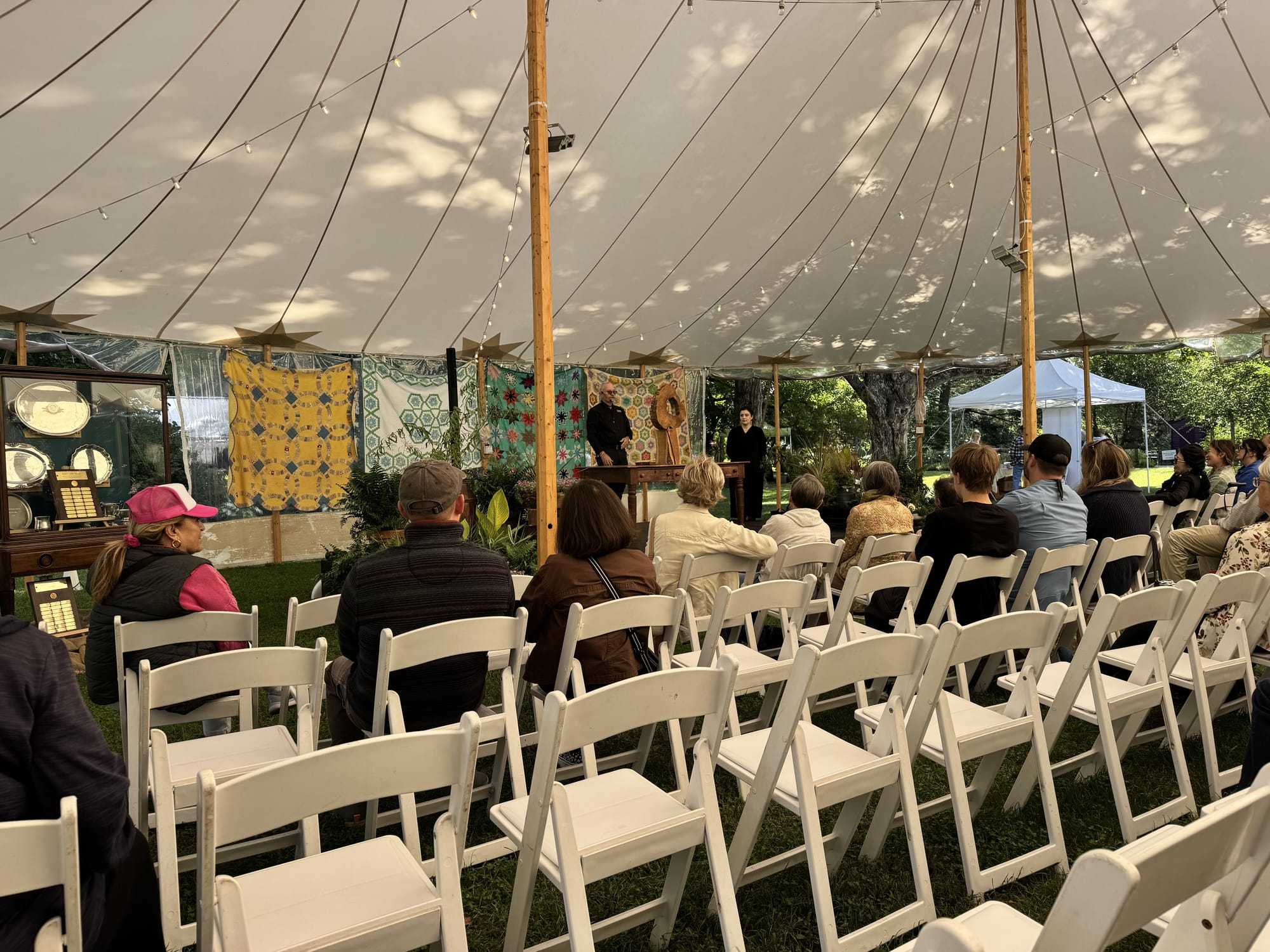
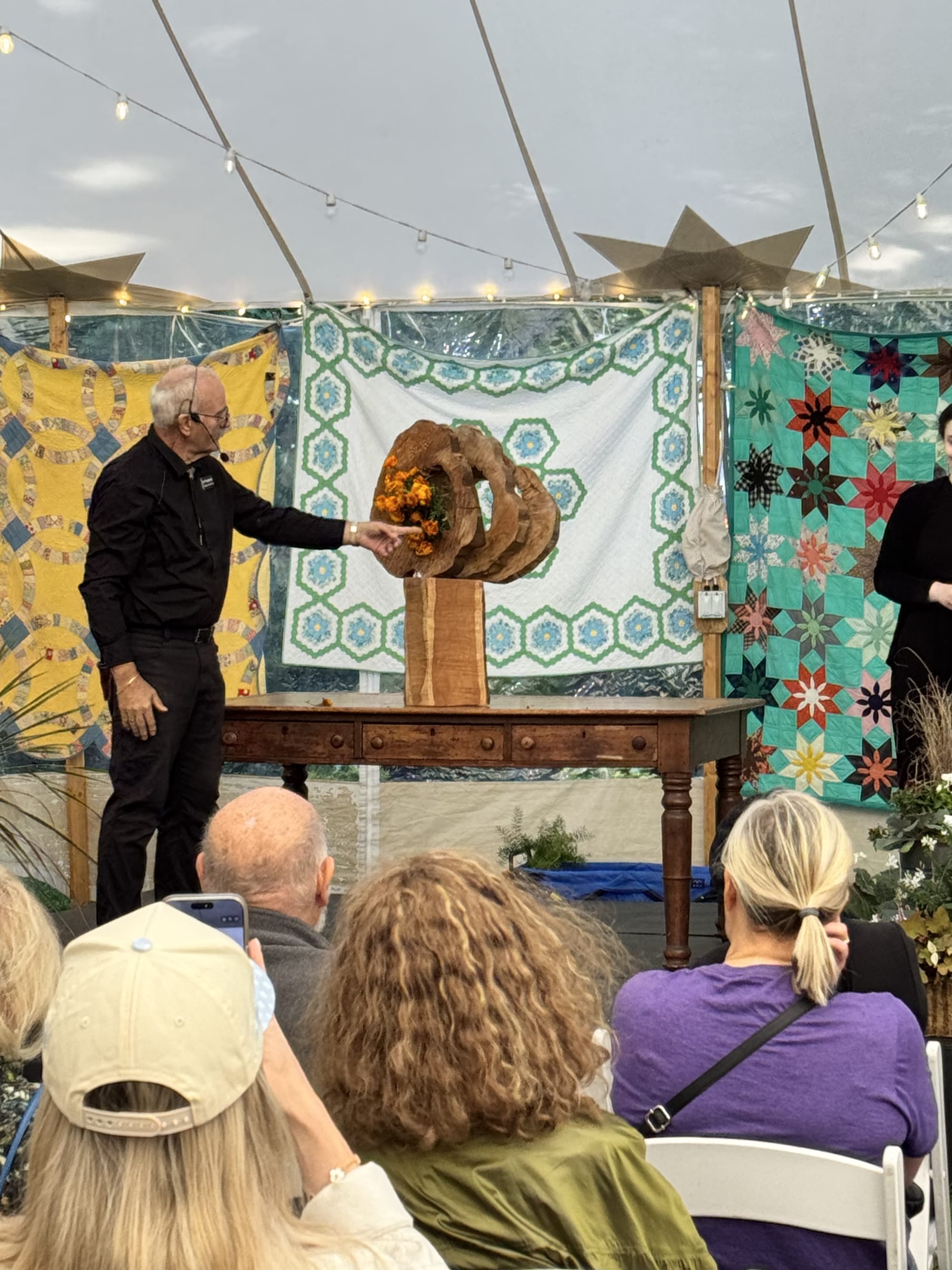
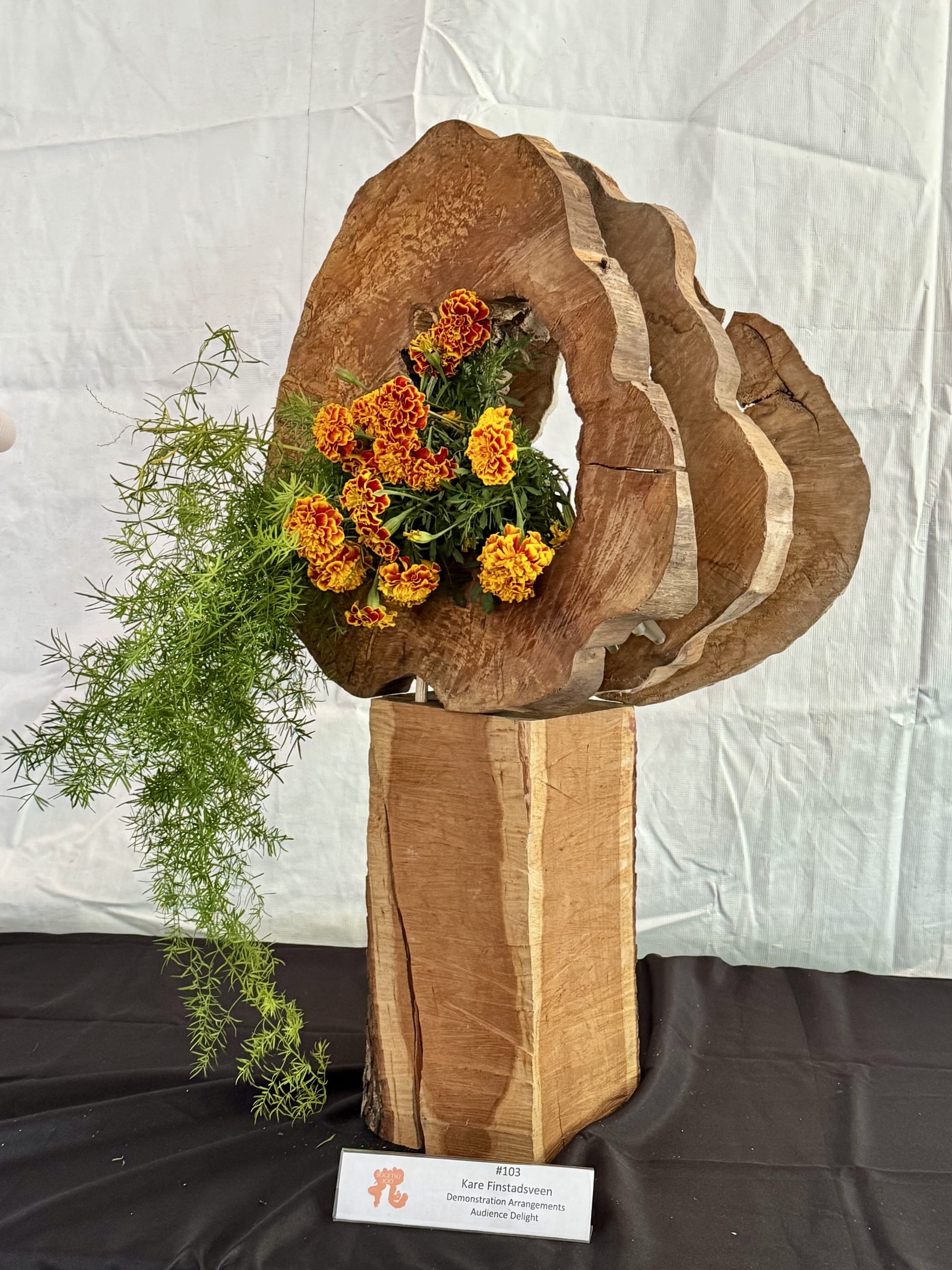
The part that I most enjoyed was how friendly everybody was and how I could just go up to any expert and start asking questions.
Strolling around Elm Bank was like being in a Jane Austen novel. The herbaceous borders were romantic and lush.
Select vendors were generous with their samples. The Bartlett Tree Experts graciously rolled out hundreds of free beautifully packaged oak and maple trees and something called a tupelo tree. I have already planted mine. There were shortbread samples and adult beverages and food trucks. MHS knows what they are doing when it comes to planning a flower show; they have been involved with flower shows for nearly 200 years! The spring flower show tradition dates back to 1871. They were founded in 1829; they are the earliest and oldest continuously operating horticultural society in the United States.
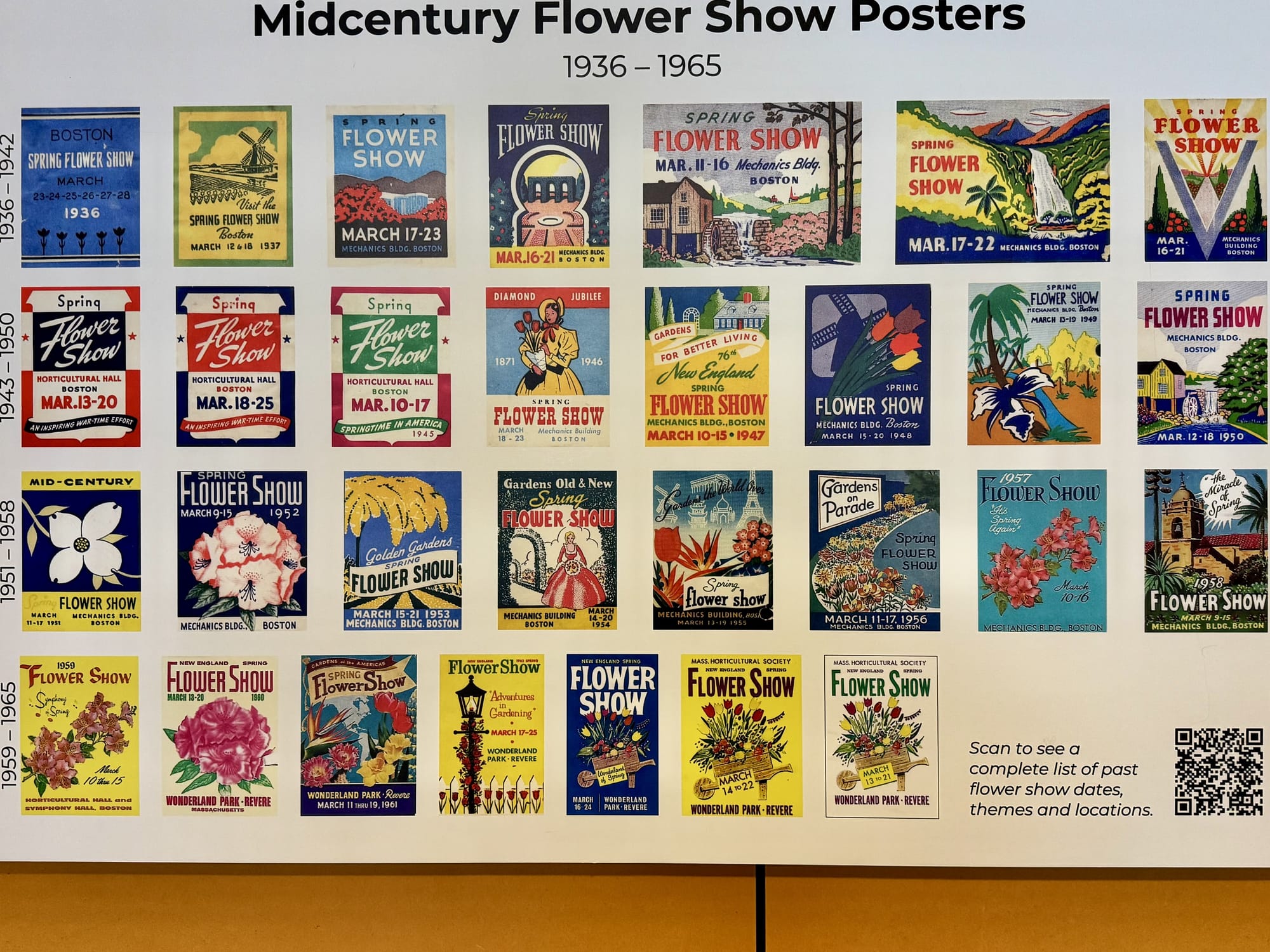
My friend Beth and I both promised each other that we were joining MHS. Now, just a few jobs for this week. We are expecting some rain, so now is a good time to cut flowers and bring inside to enjoy.
If you have hydrangeas turning into beautiful fall colors, snip some and bring inside to dry for a fall arrangement. Just keep them in 1 inch of water and away from the windows and light to prevent fading. Once they dry, display them anywhere you like, and if you are crafty, you can make a wreath.
Clean out your garage now. You are going to need room for all your garden items and storing overwintering containers full of bulbs.
First frost is usually mid-October, so focus on picking your tomatoes and beans and peppers. It is a good time to divide hostas and peonies and irises. Gather the spring-blooming bulbs you want to plant. Cut back any diseased plants you may have like black-spotted perennials. Start thinking about which plants you are bringing inside and start debugging them now.