Table of Contents
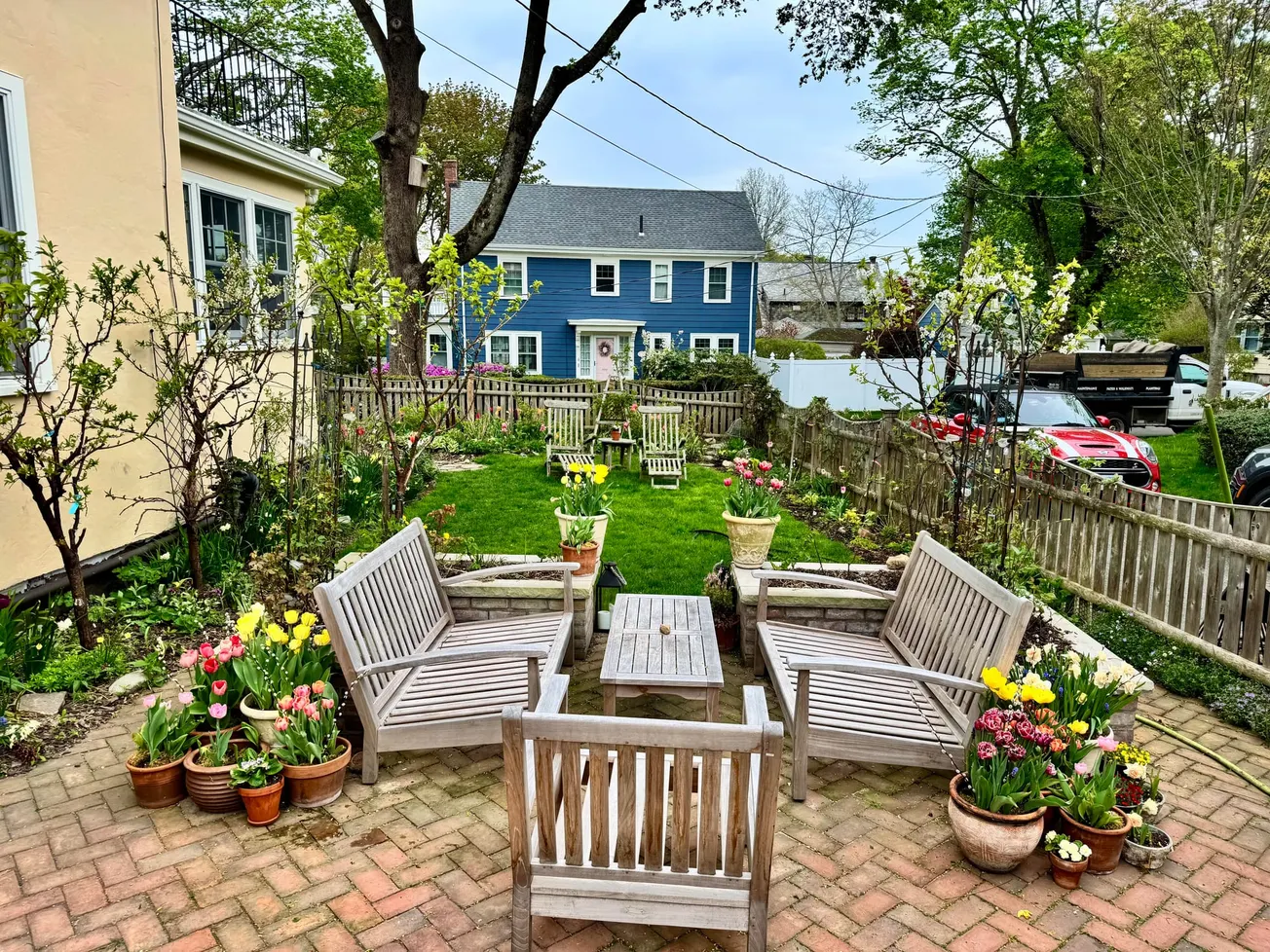
This is a perfect time to get reacquainted with your beds. Put on some good shoes and walk right into the borders. This week as I ventured in, my plants were visibly growing as I "worked" in my garden. I had to be so careful where I stepped. On one pass through my front border, I smashed a lily that wasn't there hours before. I am considering placing stepping stones once again.
You can and should make a garden file on your phone to review and compare different years. Take photos of where things are coming up and how they look. I found I had one very tall yellow tulip come up all by itself and made a note to plant more nearby next fall.
Deadheading can start in a small way now. This is where you snip off the very top of a stem just below the spent flower, once it has stopped blooming and it looks like paper. This allows the plant to make energy for the next flowers or the next season's blooms. In the case of daffodils, the plant will thank you next year with healthy blooms. Any dried-up hyacinth, daffodil or tulip will benefit from this practice of deadheading.
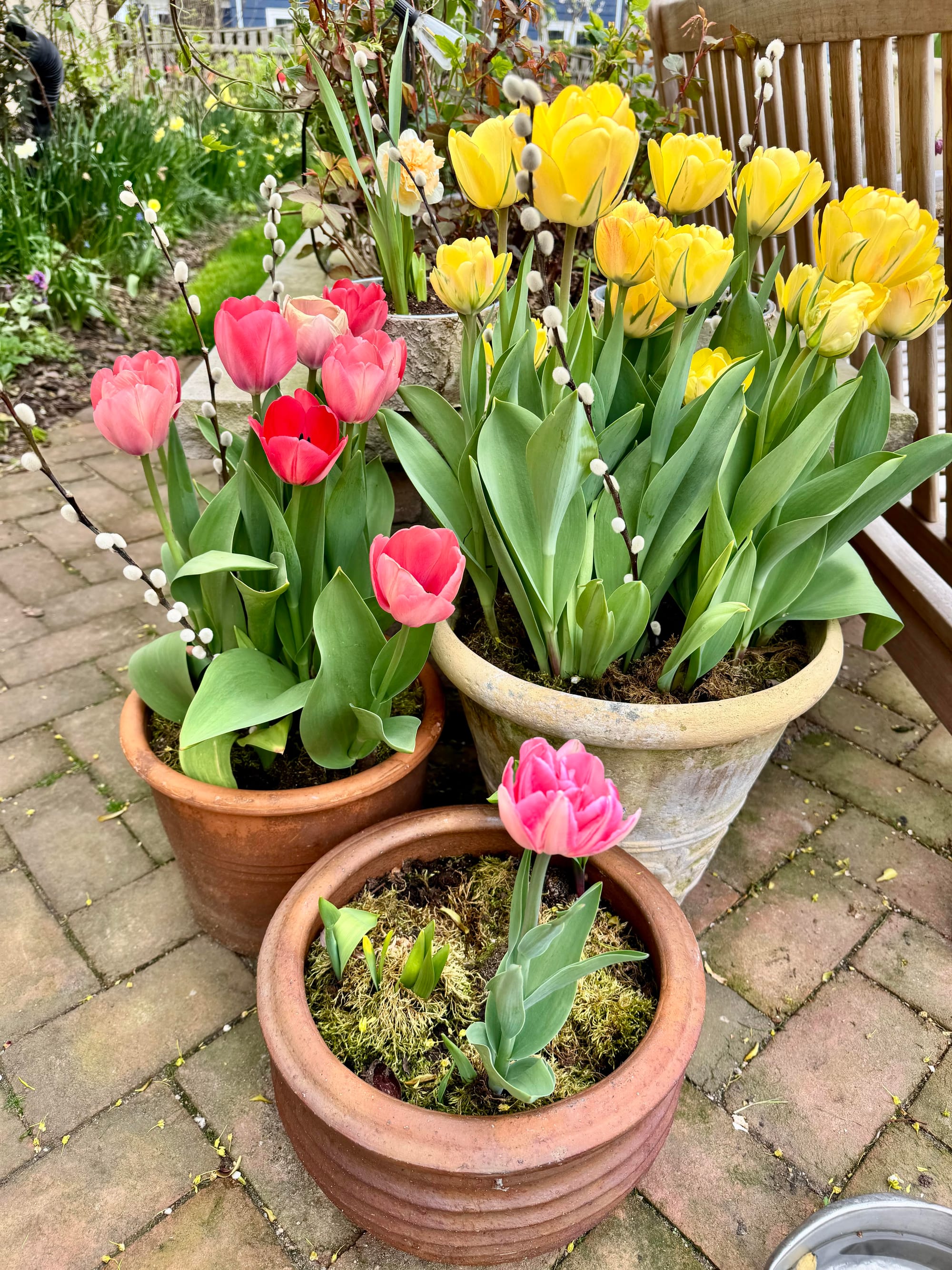
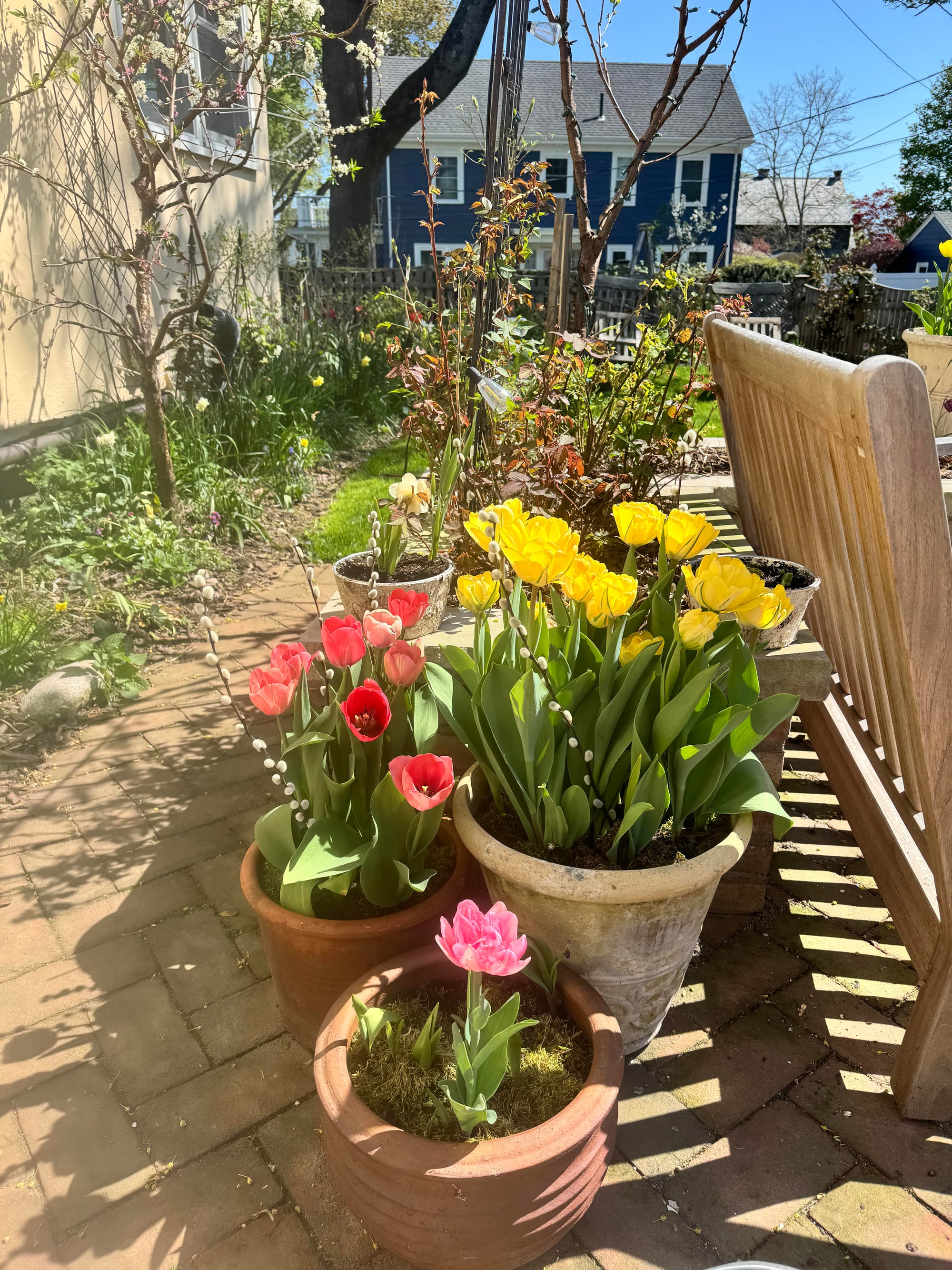
I play musical chairs with my pots. The gorgeous bulbs in all my pots will be fading soon and I will need those pots for other plants. I will dig a hole somewhere in my garden toward the back of a border and plant all the bulbs that are in the terra-cotta pots in those holes. Some gardeners just transfer the bulbs to plastic pots and stick them somewhere on the side of their garage and reuse the nicer pot. It is also OK to toss tulips, because honestly, they are not great rebloomers. The fosteriana tulips are the exception. In my gardens, they return year after year.
If you grow a vegetable garden, it is now a good time to start your squash and cucumber seeds in pots under lights. You can still directly sow lettuce seeds in your outdoor vegetable area. I am trying to be good about succession planting, so I have lettuce on through June. One year, I planted lettuce in my window boxes with snap peas. It was fun to just go out there and get dinner. I felt like I was on Green Acres.
Hardening off is important now. That is the practice of gradually bringing your indoor plants outdoors. This is to prevent shocking the plants, which causes stunted growth. The trick is to not do it all in one day. Take your time. Bring the pots outside for two hours at first. Pick a shaded and protected spot in your yard. I like to use my garage. I just had my son bring out all my citrus trees and a huge jasmine. Each day, I open the garage for a little longer, allowing the plants to get used to the air, the breezes and the environment. You should harden off your seedlings in the same way. Watch to make sure they do not dry out. The outside air does tend to dry the soil quickly. This practice of hardening off is also great exercise if you keep your plants in a basement. Set an alarm on your phone to bring them back inside after two hours the first day. Then the next day, leave them out for four hours. Finally, on day three, go for six hours. After that, you should be good to leave them out all day. Watch the night temperatures closely. If it dips below the 40s, be ready to put them in your garage, especially if you have tomatoes, peppers or dahlias. I usually harden off these tender plants last.
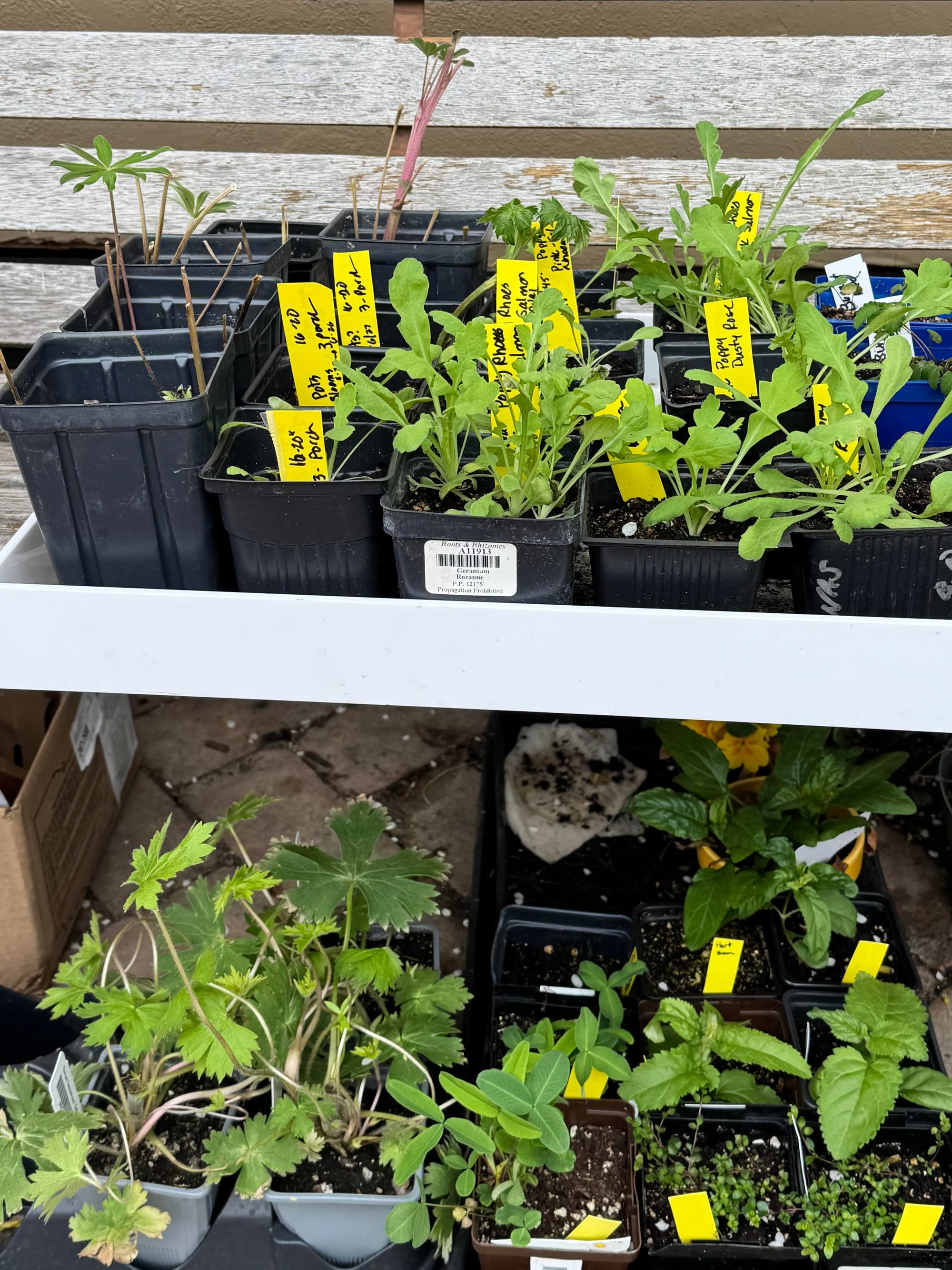
Planting new plants is my favorite thing to do this time of the year. I have visited five or six nurseries this spring. I am also looking forward to going to the local garden club plant sales. When I buy a new plant, it feels exciting to just place it in my car. I water it as soon as I get home and I temporarily place it in my border to see where I like it. I read the tiny label and look for things like the plant's eventual height, the light and soil requirements. But I really focus on the colors of the leaves and flowers. I am not great at garden design, but I know what I like when I see it. Oftentimes, some of my best garden color combinations were accidents.
Now is the time to get into your garden beds and clean up all the sticks and pull weeds. Feed your special plants like roses and hydrangeas. If you see any dead branches on your evergreens, prune them. Look everything over. Before everything gets all big and leafed out, consider placing your supports around things like lilies and peonies. It is better to do this earlier than later.
It is time to mulch. I like to empty bags of mulch into my wheelbarrow and scoop it out. It is easier on my back. I know lots of people like to drag the bags to all of their beds and work from the bags. Make sure you do not place mulch right up to the trunks of trees or bushes. Leave some space. I don't love to see mounds or volcano-shaped mounds around trees. If you have it, use leaf mulch around special plants like hellebores or other woodland-type plants. The nutrients are perfect for those types of plants.
Fruit trees always require their own special protections. As soon as the flowers drop, I spray them with a clay spray to protect the fruit. It is not pretty, but I prefer my cherries without extra worm protein. Yuck. I also use diatomaceous earth at the base of fruit trees to discourage ants from going up my fruit trees. I have used yellow sticky tape too. It is a battle. What I really like to see are the ladybug larvae eating the aphids for me. It is a beautiful thing to witness. I have been known to order predatory insects like assassin bugs to protect my fruit trees. I find that I don't need to order any more because my garden is full of meat-eating bugs and birds. It is like watching Mutual of Omaha.
Colleen Connor, our garden columnist, is co-president of the Cottage Gardeners of Marblehead and Swampscott.