Table of Contents
This took five years of reporting, research and restoration — and it nearly stopped when a federal grant did not come through late in the process. Marblehead Museum still opened the exhibit because local donors, historians and designers stepped in to carry it across the finish line. If you believe detailed local reporting like this matters, 120 Marblehead readers already support the Independent with recurring monthly or annual contributions to keep it free for everyone. We’re aiming to grow to 175 recurring contributions, so we can keep covering the town’s history, government and civic life with the depth it deserves. 🟦 Become a member here.
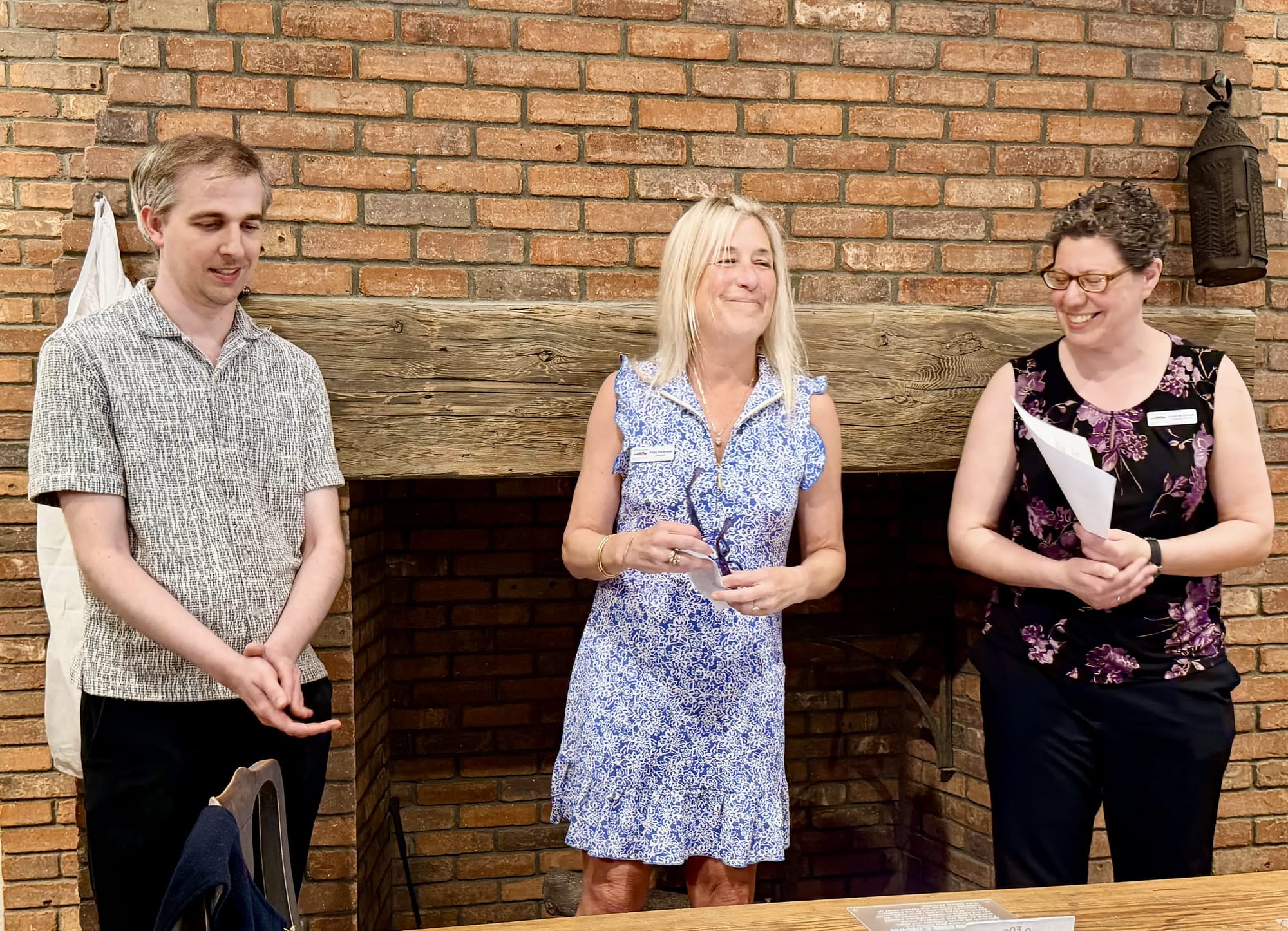
Lauren McCormack tried to keep her composure at the podium and could not. The executive director of the Marblehead Museum had warned the room she had written her remarks down this time — too many people to thank to do it off the cuff, as she usually does. She was reading carefully when she got to Chris Danemayer and Michelle Jarvis, the exhibit designers at Proun Design who had taken the museum's five-year project across the finish line without being asked, and without being paid.
"I am not a crier," McCormack told the room of donors, researchers, supporters and board members after a long pause.
The federal implementation grant the museum had counted on to complete its new exhibit, "Resistance and Resilience: Slavery and Freedom in Marblehead," was not received. McCormack emailed Danemayer and Jarvis to break the news. Without prompting, she said, they came right back and offered to finish the work for free. That offer is the reason the gallery opened to donors Tuesday night and will open to the public June 1.
What Proun Design produced is the entire interpretive environment around the exhibit — the freestanding panels, the way the rooms read, the order in which the building's history unfolds. Sam Duket of Transom Incorporated handled the fabrication.
Restoring the brick kitchen
The exhibit fills the restored brick kitchen and coach house at 157 Washington St., a building completed by 1768 as part of Jeremiah Lee's estate. During the Lee family's tenure the structure served as a carriage house, a detached kitchen and living quarters for the people they enslaved. It is one of only three existing detached enslaved persons' quarters buildings in New England owned by a museum, and therefore accessible to the public. The museum bought the building with the help of an big donor and reunited it with Lee's 1768 estate. Two years ago, McCormack said, the inside was little more than rotted beams and broken plaster.
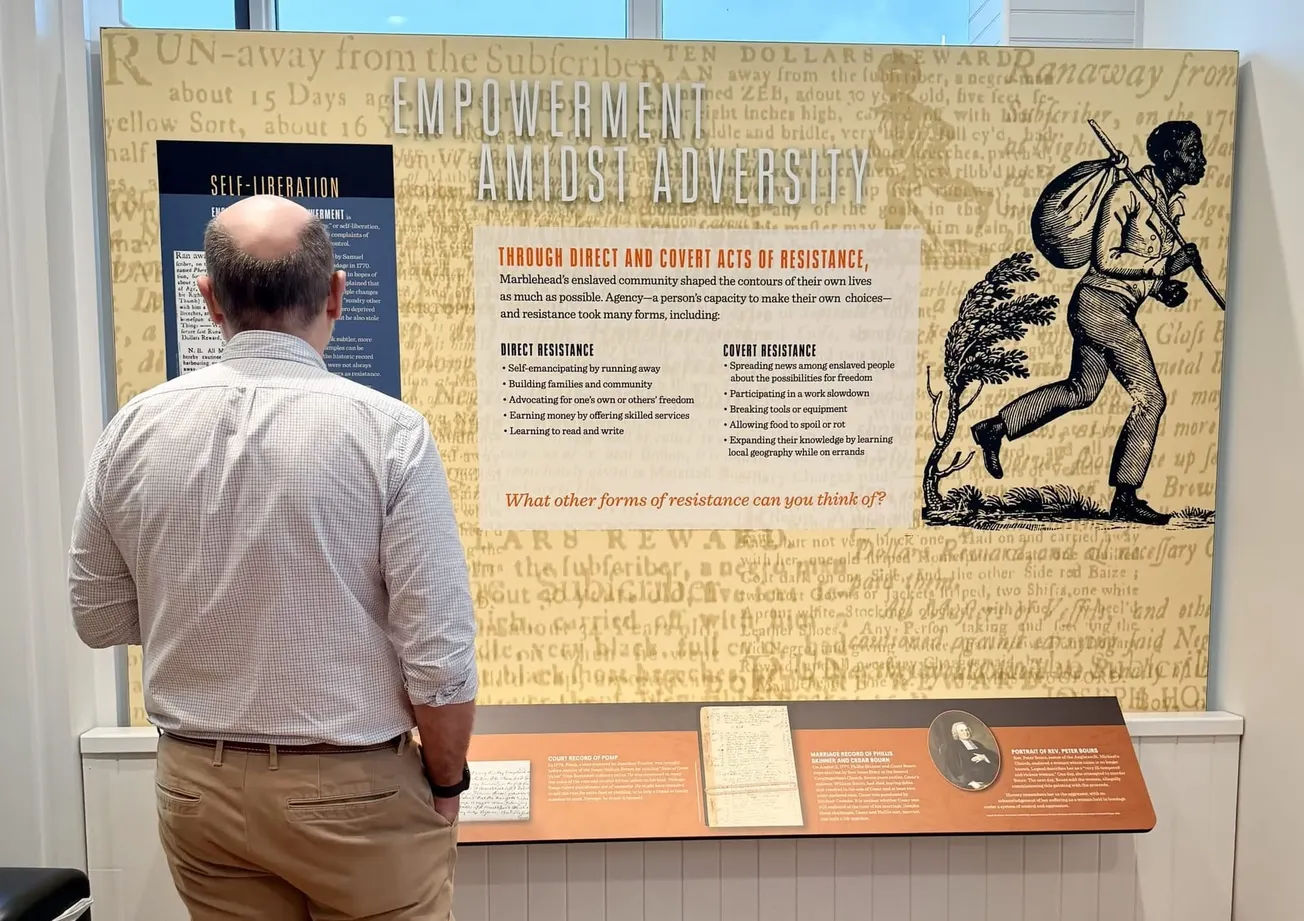
The exhibit recovers the lives of dozens of people enslaved by Marblehead families. Inside the Lee household: Cupid Lee, Diamond Lee, Jemmy Lee and a Girl whose name was once known but is now lost. In nearby Marblehead households: Pompey, enslaved by captain and cordwainer Richard Trevett, and Ishmael, enslaved by merchant Jacob Fowle. A separate section called "Contestations of Freedom" tells the stories of three Black soldiers from Marblehead who served in the Revolutionary War: Joseph Brown, Cato Prince and Romeo Johonnot. Each profile has a freestanding panel with a commissioned linocut portrait by Yamanda Wright, who holds a doctorate. No images of these people survive. Wright worked from period documentation. The exhibit uses "enslaved person" and "enslaver" throughout, a choice explained on a panel titled "Words and Images Matter."
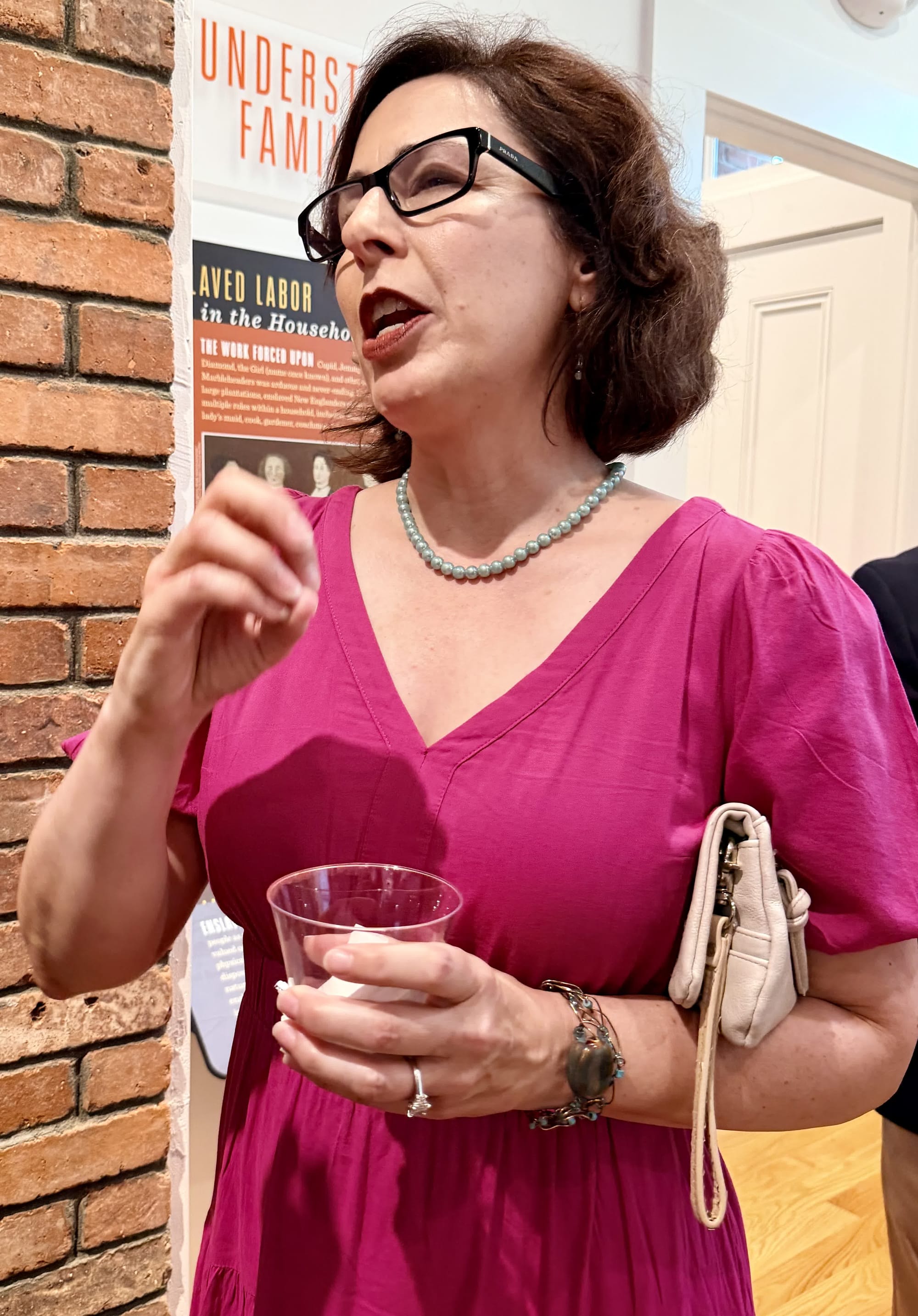
Kristin Gallas, the content consultant who runs MUSE Consulting in Medford, has spent her career working with New England museums and historic sites on how they tell the stories of enslavement. She said the exhibit has a chronological path but is built so visitors can begin wherever a portrait or object draws them in, and is also a deliberate argument about evidence.
"We want to make sure visitors know how we know what we know," Gallas said. "It's not magic."
One section lays out four primary sources and asks visitors what story they can tell from them. The records were written by white enslavers, Gallas said, and the work of the exhibit is partly the work of reading between their lines.
Get our free local reporting delivered straight to your inbox. No noise, no spam — just clear, independent coverage of Marblehead. Sign up for our once-a-week newsletter.
'Slavery was slavery'
She corrected a framing visitors keep arriving with — that enslaved people at the Lee estate had a measure of freedom unusual for the time. Marblehead resembles other Atlantic maritime communities in that enslaved people in the maritime trades had slightly more freedom of movement than enslaved people elsewhere, she said. She was direct about the limits of that observation.
"Slavery was slavery, no matter where it was or how it manifested," Gallas said.
She described the exhibit as a step in a reparative journey, and said the question the community now faces is what comes next.
The building tells the same story in architecture. The original structure had a single window facing the Lee mansion; the mansion had three windows facing back. Enslaved people had a degree of autonomy in the detached quarters, she said, while remaining under constant surveillance.
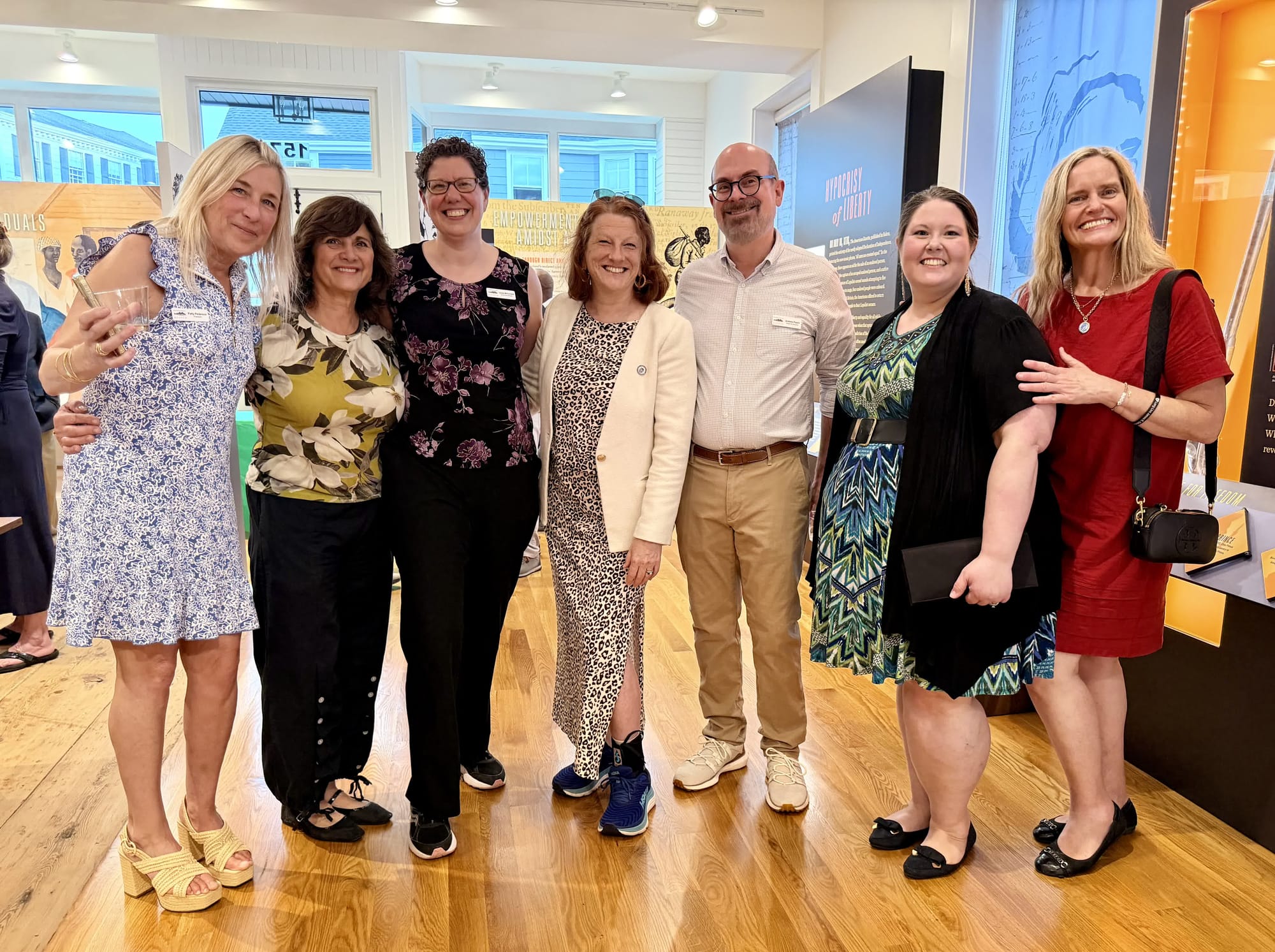
Three summers of archaeological excavation by a team from the University of Massachusetts Boston's Fiske Center for Archaeological Research, led by John Schoenfelder and John Steinberg, shaped what visitors now see. Christa Beranek, a research scientist at the center, said artifacts came from both indoor and outdoor workspaces, with the far side of the yard on the other side of the house serving as a primary work area. The objects displayed in the gallery — thimbles, sewing pins, a mouth harp and smoking pipes — represent both work and leisure. The team has so much material it is still making sense of what it has.
"The support that Marblehead has shown for the museum in putting this together is really important," Beranek said. Many people she has met who grew up in town, she said, had no idea this part of its history existed. The team's work informed not just the artifact display, she said, but the museum's wider sense of how the Lee estate was used by both white and Black people in the 18th century.
Annie Harris of Essex National Heritage, which provided partnership grants, said the exhibit "sets up the contradictions about what happened during the American Revolution with the Patriots." Local stories, she said, put a fire in teachers and students that broad national narratives never quite manage.
Reaching students and the local record
Nine Marblehead teachers are building primary-source curriculum at the 5th grade and high school levels, coordinated by Julia Ferreira, the assistant superintendent of teaching and learning for the district. Students will examine the sources in their classrooms and then visit the brick kitchen.
Lou Meyi, a community representative who served on the project's advisory committee, said the National Endowment for the Humanities planning grant that preceded the rescinded implementation grant was highly competitive for a museum of the Marblehead Museum's size. The planning grant required an advisory committee the agency had to approve.
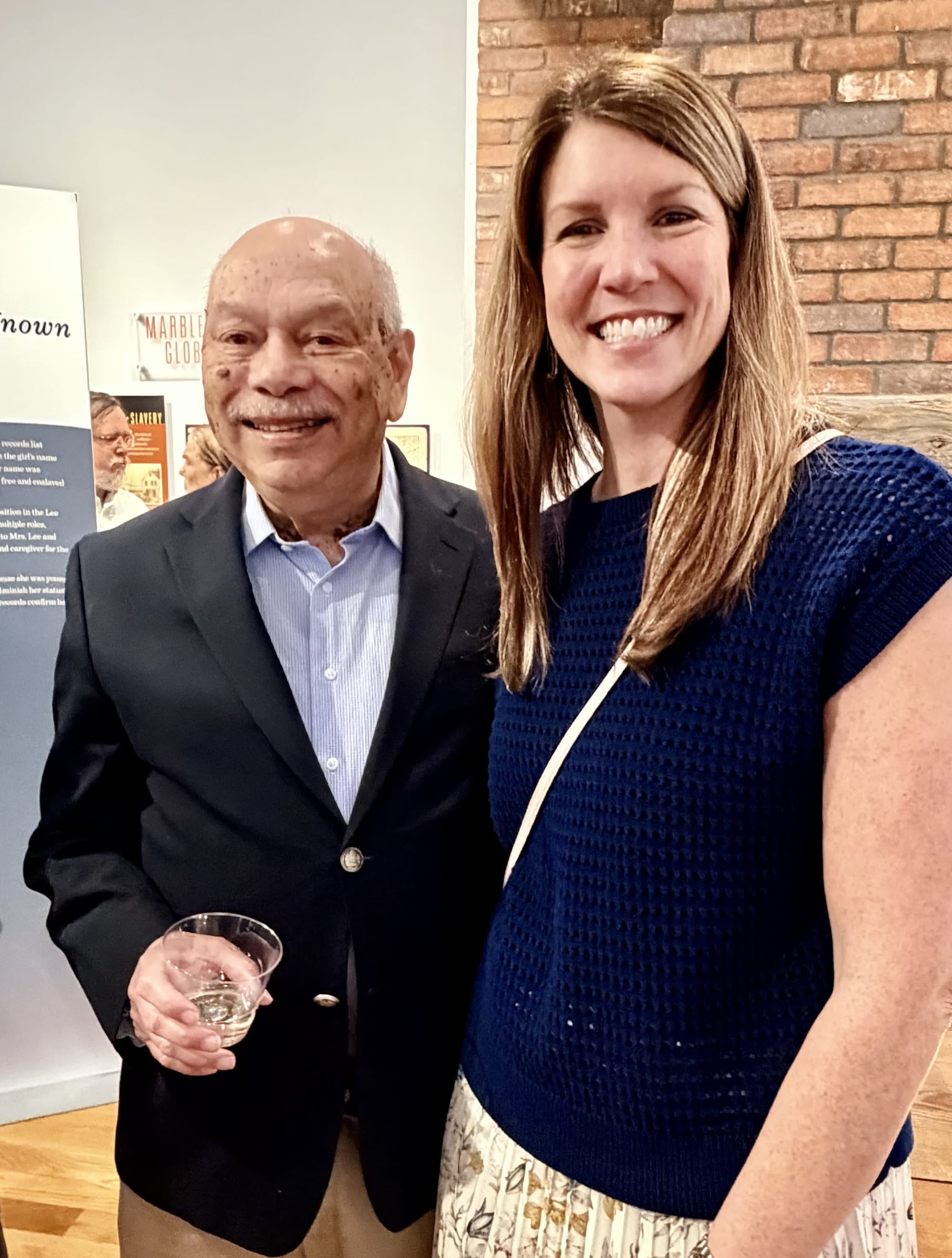
One discovery from the project's research changed the local record. Lucretia Thomas Brown — for whom Marblehead's new elementary school was co-named with her husband, Joseph Brown, in 2021, after a proposal by former School Committee member Emily Barron — was long believed to have been born enslaved and freed before her marriage. McCormack's digging in records in Lynn established she was born free. The exhibit reflects the correction.
Board president Patty Pederson opened the evening by telling the room, "You didn't just fund an exhibit, you preserved a legacy." The gallery has been officially named the Ted and Julie Moore Family Fund exhibit gallery for its lead donors, whose generosity also funded the remodel of the museum's first floor exhibit space. State Rep. Jenny Armini and state Sen. Brendan Crighton included the museum in a legislative earmark. Other funders included a Massachusetts Humanities Expanding Massachusetts Stories grant, Essex National Heritage, the Marblehead Cultural Council, the Massachusetts Cultural Council and National Grand Bank of Marblehead.
The exhibit names people whom the systems of the 18th century did their best to erase. The girl listed in the Lee estate inventory is still a girl whose name was once known. What it costs a small town to insist on recovering even one of these lives — to give a face to a person who left no portrait, who left no signature, who left only what the people who held her chose to write down — is the question the museum is now leaving with everyone who walks through.
EDITOR’S NOTE: The author has made, and continues to make, financial contributions to the Marblehead Museum. Those contributions had no bearing on the reporting, editing or publication of this story.
CORRECTION: An earlier version of this article incorrectly identified the exhibit design firm as Crown Design. The correct name of the firm is Proun Design.