Table of Contents
Stories like this take time: a long conversation, careful editing, local photography and space for a Marblehead writer’s work to be understood in full. The Marblehead Independent is free to read because neighbors support it; we have 52 memberships to go to reach a goal of 175 by the end of July. If you have been meaning to join, this is a good week to help keep the Indy’s no-paywall model steady. 🟦 Become a member here.
Eric Jay Dolin would rather ask the questions. He describes himself as an introvert, someone who keeps a conversation pointed away from himself and listens more than he talks. It is a strange temperament for a man who will spend much of this summer on stages — by his own count, 30 or 40 talks before the season is out, some tied to the 250th anniversary of American independence, others to the books that made his name.
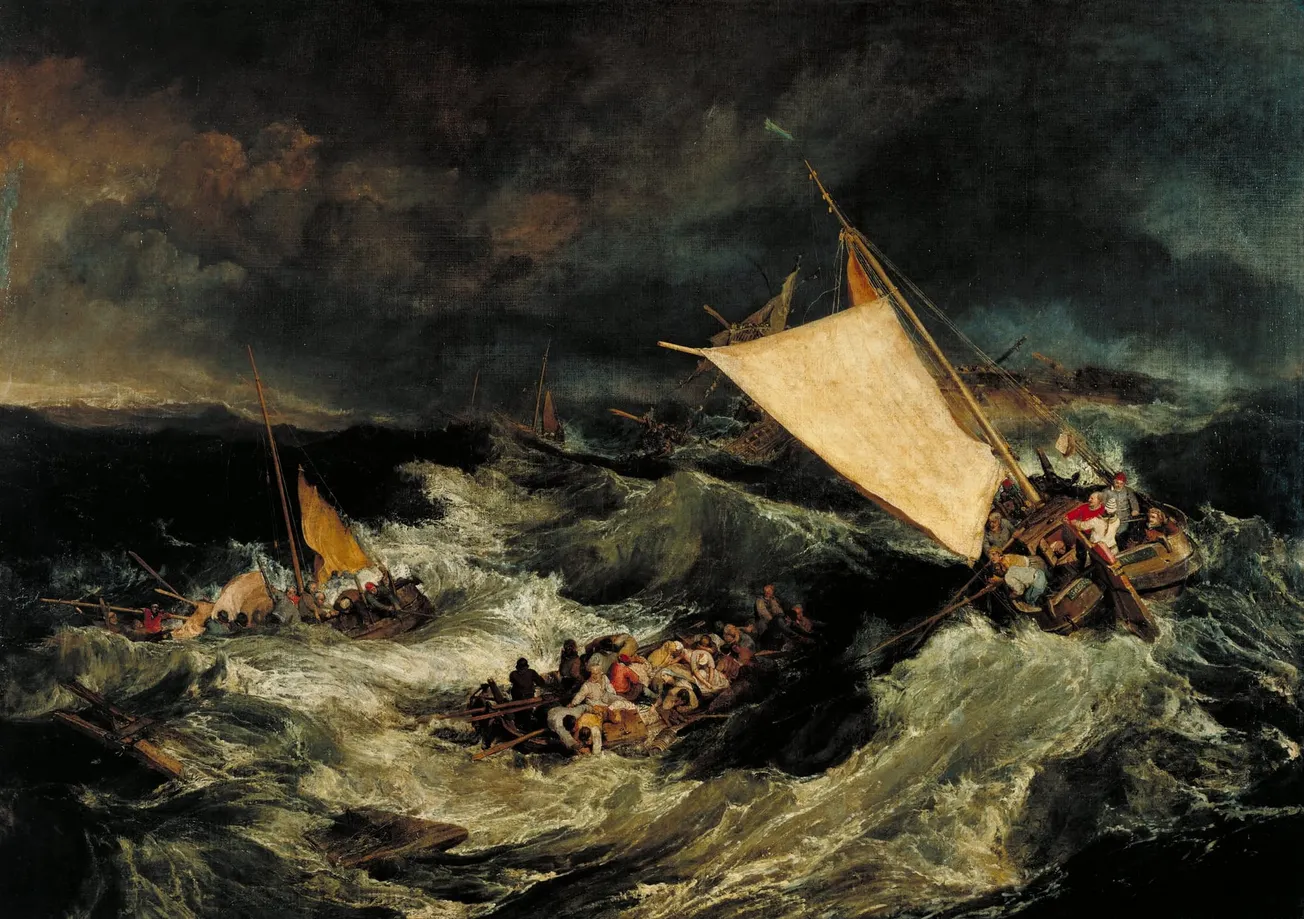
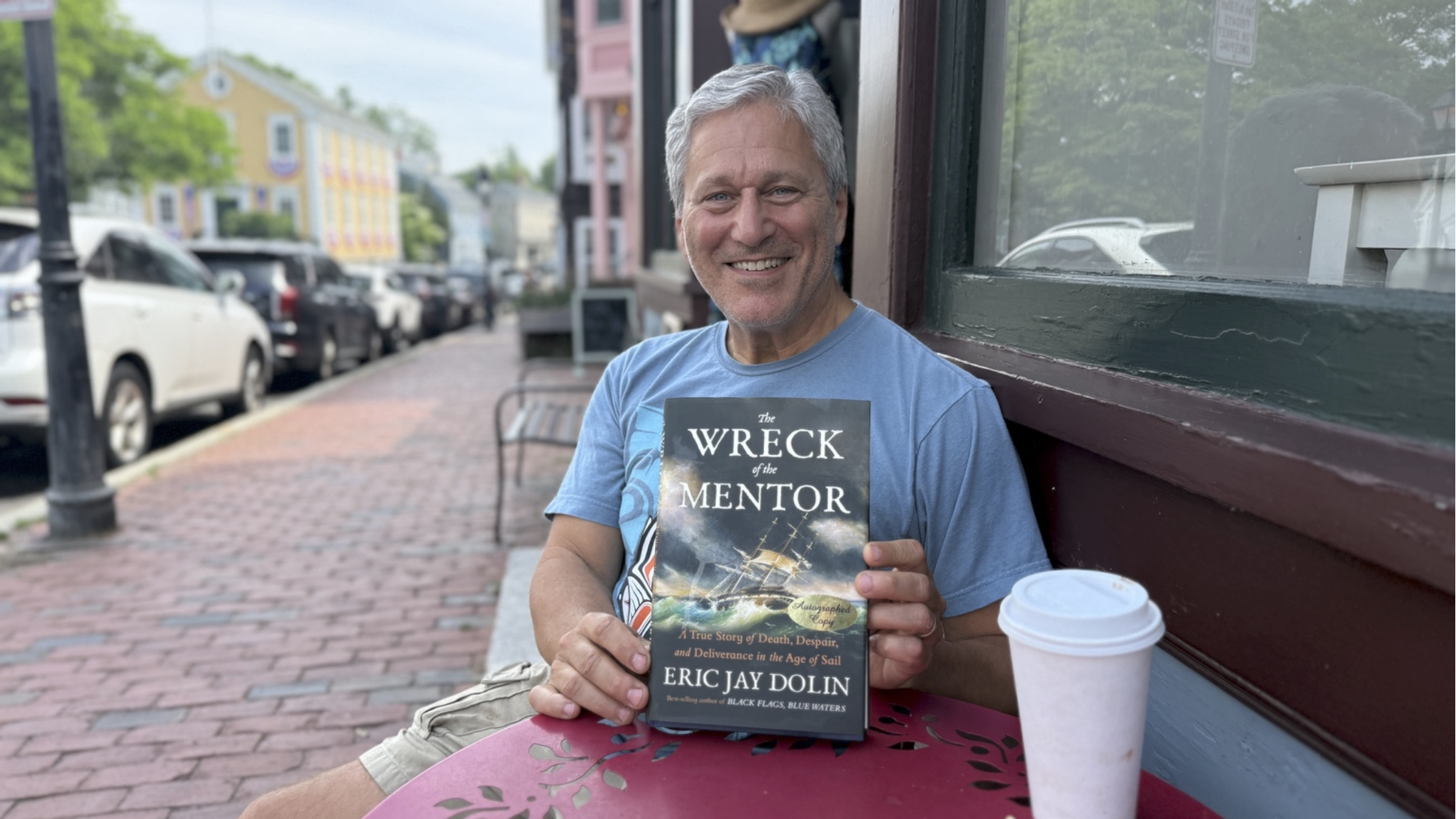
Dolin, who lives in Marblehead, is the author of 17 books, most of them about the sea and what it has done to people. His latest, "The Wreck of the Mentor: A True Story of Death, Despair, and Deliverance in the Age of Sail," was published June 2 by Liveright/W.W. Norton. It follows an American whaleship that struck a coral reef near Palau in 1832, and the men who survived the wreck only to face the longer ordeal that came after it.
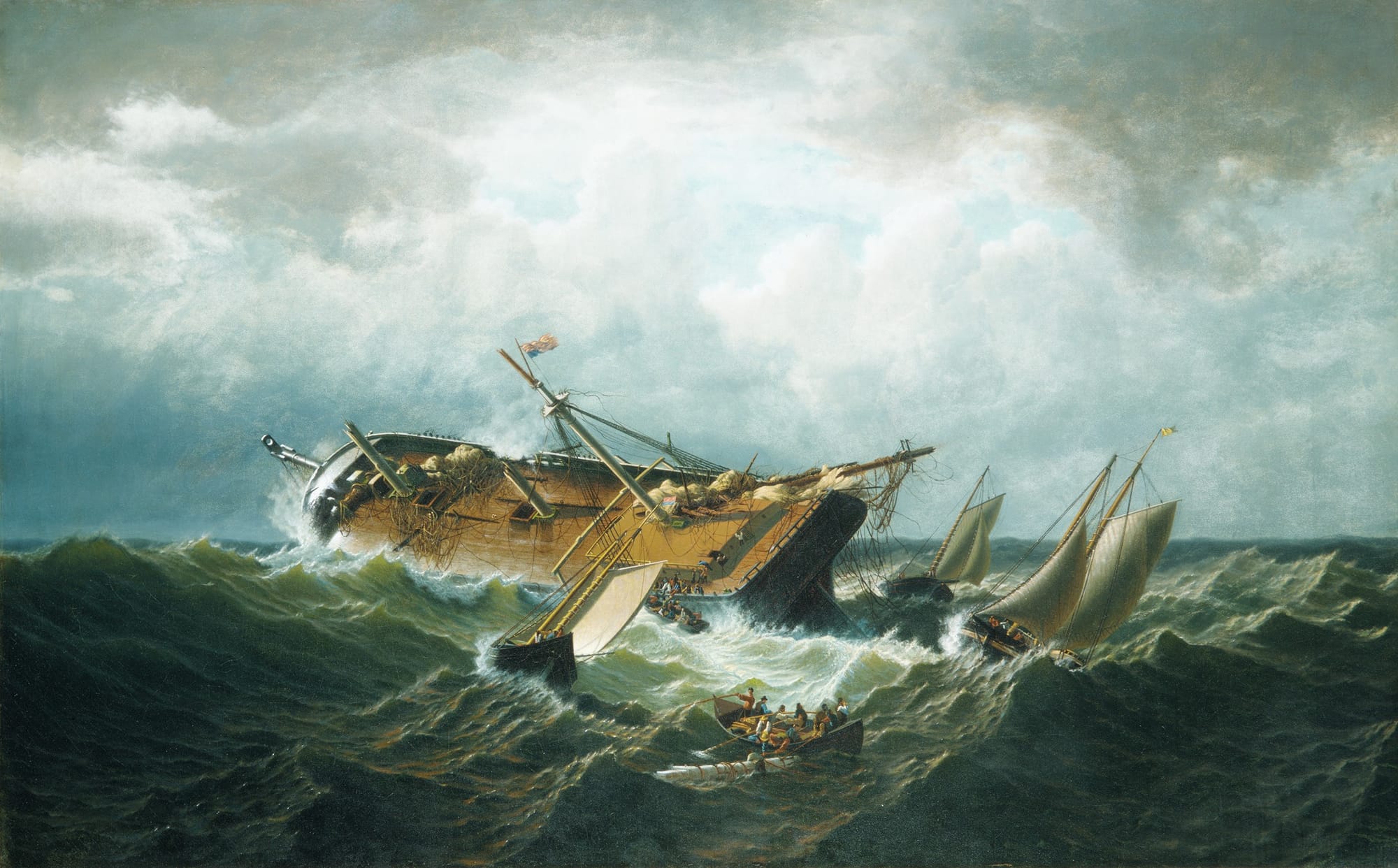
The Mentor sailed out of New Bedford in July 1831 with 22 men aboard, bound for the Pacific and its sperm whales. The dying came fast. Within hours of the wreck, Dolin said, 11 of the 22 were dead — 10 in a single whaleboat that pushed off into a storm and was never seen again; an 11th drowned when a second boat was wrecked as the crew tried to lower it.
The survivors reached land, met islanders who attacked them, then other islanders who took them in. The subtitle promises death, despair and deliverance. Asked which was hardest to write, Dolin picked the middle one. "It's kind of depressing," he said. The despair has a precise shape in his telling: men stranded on a beach, watching a passing ship that might have carried them home sail away without them. Of the 22 who left New Bedford, seven made it back.
From shells to shipwrecks
Why this became his book is harder to predict from a résumé. Dolin did not train as a historian. He took one history course in college and two more in graduate school, and the last English class he sat through was in high school. His degrees — a bachelor's from Brown University, a master's in environmental management from Yale and a doctorate in environmental policy and planning from the Massachusetts Institute of Technology — point toward a different life. Before he wrote books, he worked in environmental and public-policy jobs.
As a boy he wanted to be Jacques Cousteau. He collected seashells seriously enough to write a 150-page high school paper on the mollusks of Long Island Sound, and once imagined himself a malacologist. The doctorate, he said, mattered less for its subject than for what it left him: "It gave me a lot of good research skills."
"I am a historian," he said, "but I tell stories about history." He prefers the true ones. "Good nonfiction is better than fiction," he said. "People are weird. Strange things happen."
The turn came with "Leviathan: The History of Whaling in America," published in 2007 — the book that established him as a writer general readers would follow. He came across the Mentor while researching it, and the story sat in the back of his mind for the better part of two decades. It took another shipwreck book, 2024's "Left for Dead," about men deliberately marooned in the Falkland Islands, to send him back. The parallels nagged at him. Once he had read the captain's account, a crewman's published narrative and the records of the warship sent to retrieve the survivors, he knew he had a book.
The crewman was Horace Holden, "a green hand" from New Hampshire who had never been to sea and who lived through forced tattooing, near-starvation and years of captivity to reach the age of 94. Holden published a detailed account after he got home; without it, Dolin said, the book could not exist. Holden also changed inside the story. He arrived calling the islanders savages and brutes. By the time he left, he was sorry to go, and he later described one Palauan chief as something closer to a brother and a friend.
The holes in the record
The record does not keep every voice equally, and Dolin is candid about the cost. The Palauans held their history orally; most of what survives in writing came from Westerners who looked down on nearly everyone. A historian short of sources on one side, he said, can decide there isn't enough to write a book, or decide there is enough so long as the gaps are marked and the context is honest. He took the second path, used oral history where he could find it and worked to be fair. One reader in Palau, a woman who runs a museum there, told him he had gotten it right.
But the limitation haunts the text. In the New York Times, reviewer Blair Braverman praised Dolin's attempt to view the story "through the eyes of the people upon whose territory the ships encroached," yet noted the tension at the heart of the book: "Indigenous perspectives rarely come through in the text, which reads as if it could have been based entirely off Western accounts." Dolin's introduction promises such a perspective, she observed, but "renders the introduction ... into more of a disclaimer." The Wall Street Journal's Michael O'Donnell took a different view, crediting Dolin with helping readers understand how Western visitors affected "the delicate balance of power among indigenous cultures — sometimes forcefully, but often unwittingly." Both reviewers, though, recognized the fundamental difficulty Dolin faced: one side of the story is preserved in detail; the other survives mostly in silence.
The captain, Edward C. Barnard, left a record too, though it almost vanished. He wrote a manuscript about the ordeal and never published it. He died in 1844 when his ship went down on Lake Erie, and his body was never recovered. The manuscript disappeared, surfaced in the 1970s in a museum basement and was finally printed as a thin pamphlet.
For all the awards — and there are several — Dolin talks about authorship as precarious work. The week a book comes out still makes him anxious; so many titles are published, he said, that the odds of any one rising above the pile are slim. What still gets to him is smaller and stranger: walking into a bookstore far from home and finding one of his own books on the shelf.
"Without independent booksellers," he said, "I wouldn't have a career."
Most writers, he is quick to add, never make a living at it. He knows he is the exception, and he knows how he got there. Before he quit his job to write, he and Jennifer set aside a year of his salary in case he failed. Jennifer has always earned more, and her support, he said, made everything else possible.
Get our free local reporting delivered straight to your inbox. No noise, no spam — just clear, independent coverage of Marblehead. Sign up for our once-a-week newsletter.
He came to Marblehead by marriage. Jennifer grew up here, and their first date was at her parents' house in town; the two now keep an old house on Elm Street, where he tends a koi pond, mixes native and non-native plants. It makes a quiet base for days spent among drownings, beatings and men watching their rescue sail past.
Dolin and Jennifer were married in 1990 at the Peabody Essex Museum, in a porcelain room that no longer exists, back when the place was still mostly a maritime museum and he was not yet writing about the sea. He did not see any of this coming.
"There is absolutely no way that anybody, including me, would have predicted I would be here now," he said.