Table of Contents
By Judith Black
"Nothing can be said to be certain except death and taxes."
Of course, our distant ancestors moved here to avoid the king’s taxes, only to levy their own. The earliest, to cover the cost of the Revolution, caused a rebellion: Shays’ Rebellion. This is by way of saying that no one enjoys reaching deep into their pockets and giving to the government their hard-earned greenbacks. But for our town, for the collective care of the people, institutions, infrastructure and organizations that bring value to our daily lives, it is a blessing to give. This is why I am supporting Tier 3 of the potential override, though I appreciated select board member Moses Grader’s menu-style approach.
While we all want a town that offers fine education, bikeable and drivable roads and a fully staffed and functional library, we need to do some serious thinking and action around our recurring expenses.
TRASH: When is the last time you really observed what you or your family tosses into a bag and puts on the sidewalk to be taken away by a big truck and never seen again? As landfills reach their capacity, the petrochemical industry is thrilled by our traditional take on trash. Unnecessary packaging, single-use everything, cheap toys, tools and containers all fill yet more plastic bags. Southern Louisiana, where much plastic is made from dangerous chemical processes tied to fossil fuels, has long been treated as a human sacrifice zone for the industry. Now it has become clear that plastics degrade into microplastics, polluting our oceans and all that live there, and entering human systems including our lungs, kidneys and brains. Yet we blithely buy, use once and toss.
What if, as a town, we committed to eliminate as much plastic as possible from our lives? Imagine how that would increase health benefits and bring down trash costs. One option could be that every four people get to fill one compostable bag a week. If they want to toss more into our overtaxed landfills, they can pay extra for that by purchasing stickers from the Health Department.
HEALTH CARE: Health care should be a human right. If we had a single-payer system, like Canada or England, our budget would not be bleeding money. It is not an immediate answer to the problem, but we all need to promote this vision of fully funded national care.
PENSIONS: Pensions, while a kind and historically honored practice, are also one of the fixed costs now pressing hard on Marblehead’s budget. The town’s pension appropriation is on a schedule that rises 8.6% annually through fiscal 2035, with a final amortization payment in fiscal 2036. We need to research what other small communities are doing to manage these long-term obligations responsibly while honoring commitments to workers.
SCHOOLS: Tomorrow is based on today’s educational systems. Starve the schools and you starve the future. That said, we could look at the practice of sending children with learning and physical disabilities to private institutions and ask whether more of those children, when appropriate, could be served in-district by teachers trained in these issues within our public school system. Out-of-district special education tuition and transportation already consume millions in the school budget and are projected to rise again. Just think of all the fuel and greenhouse gases saved by staying home.
RE-THINK PRIORITIES: Giving our grant writer and sustainability coordinator the boot has to be among the most myopic choices made. They raise money for the town. The sustainability coordinator alone secured $745,000 in grants, and the planning and community development work now under threat has been tied to $1.9 million in grants, 35 active projects and an estimated $50 million in construction activity. These positions help the town begin addressing issues that absolutely will not be going away, like rising water levels.
THE MBTA COMMUNITIES ACT: By responding so cantankerously to this state law, we have lost essential grant money and not responded to the growing need for affordable housing. We are not an island, just a peninsula, and as the population grows, we must respond responsibly. Noncompliance has already shut Marblehead out of more than $2.8 million in state grants, and more may be at risk.
One thing we must address is how to assist folks on fixed incomes whose only asset is their homes. I am an old lady on a fixed income and know that beyond a certain amount I too will be unable to pay elevated property taxes.
Our world is at a huge turning point. The climate crisis will only get worse, making resources dearer, summers hotter and biodiversity more decimated. Yes, things are bad, but let’s do all we can to maintain our collective home.
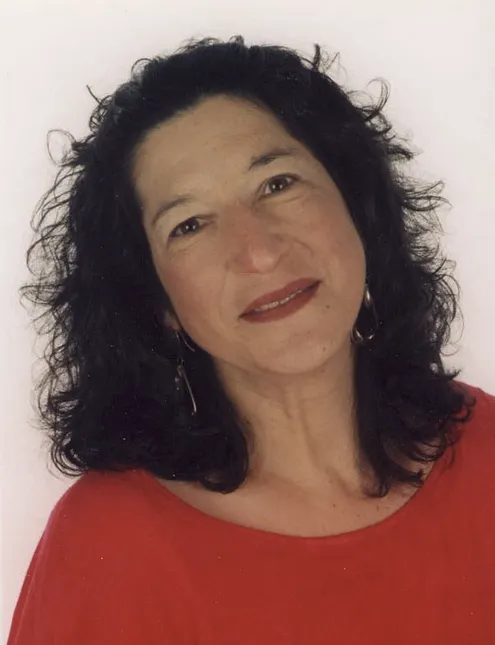
Judith Black is a storyteller, activist and Marblehead resident.