Table of Contents
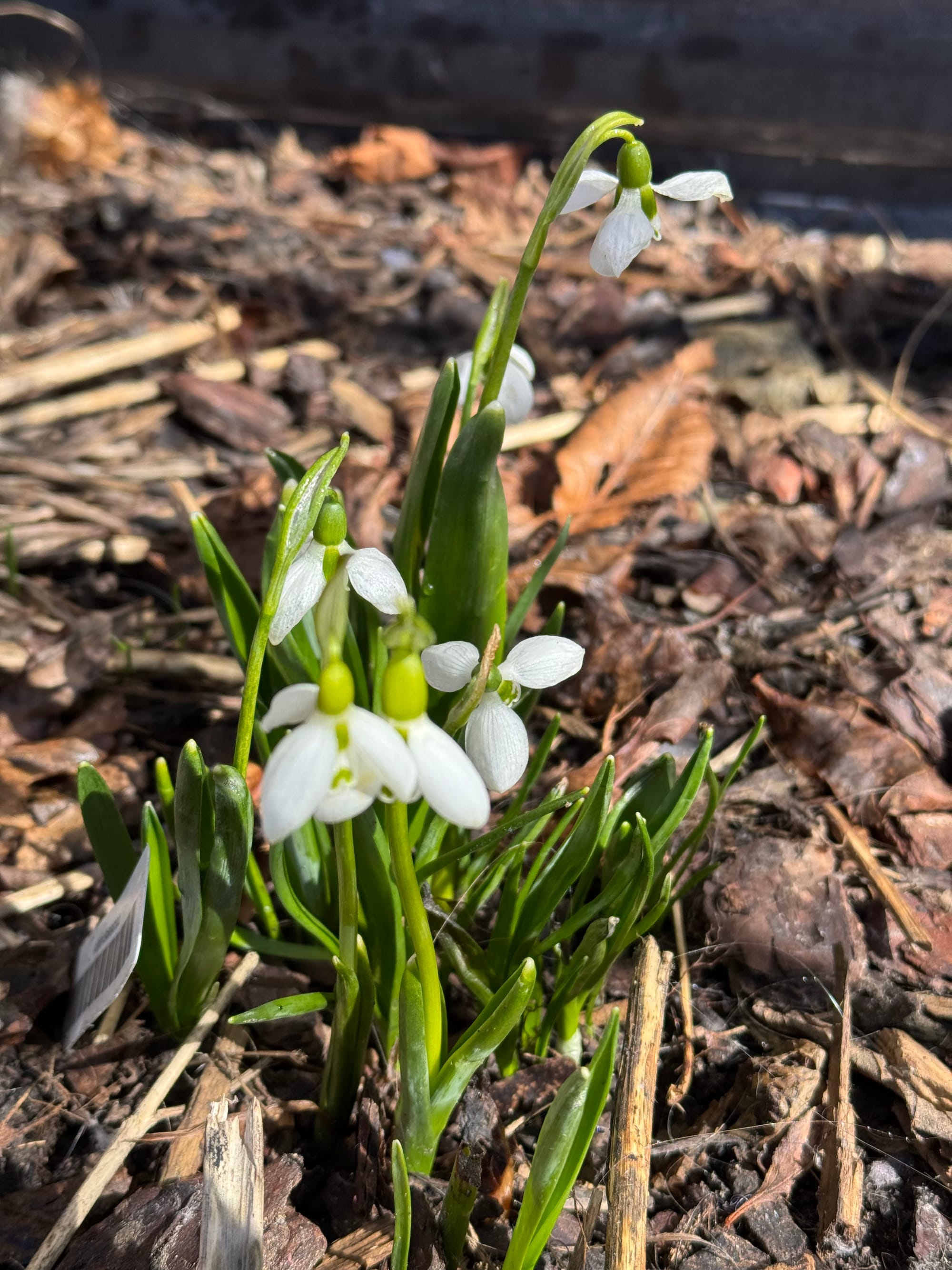
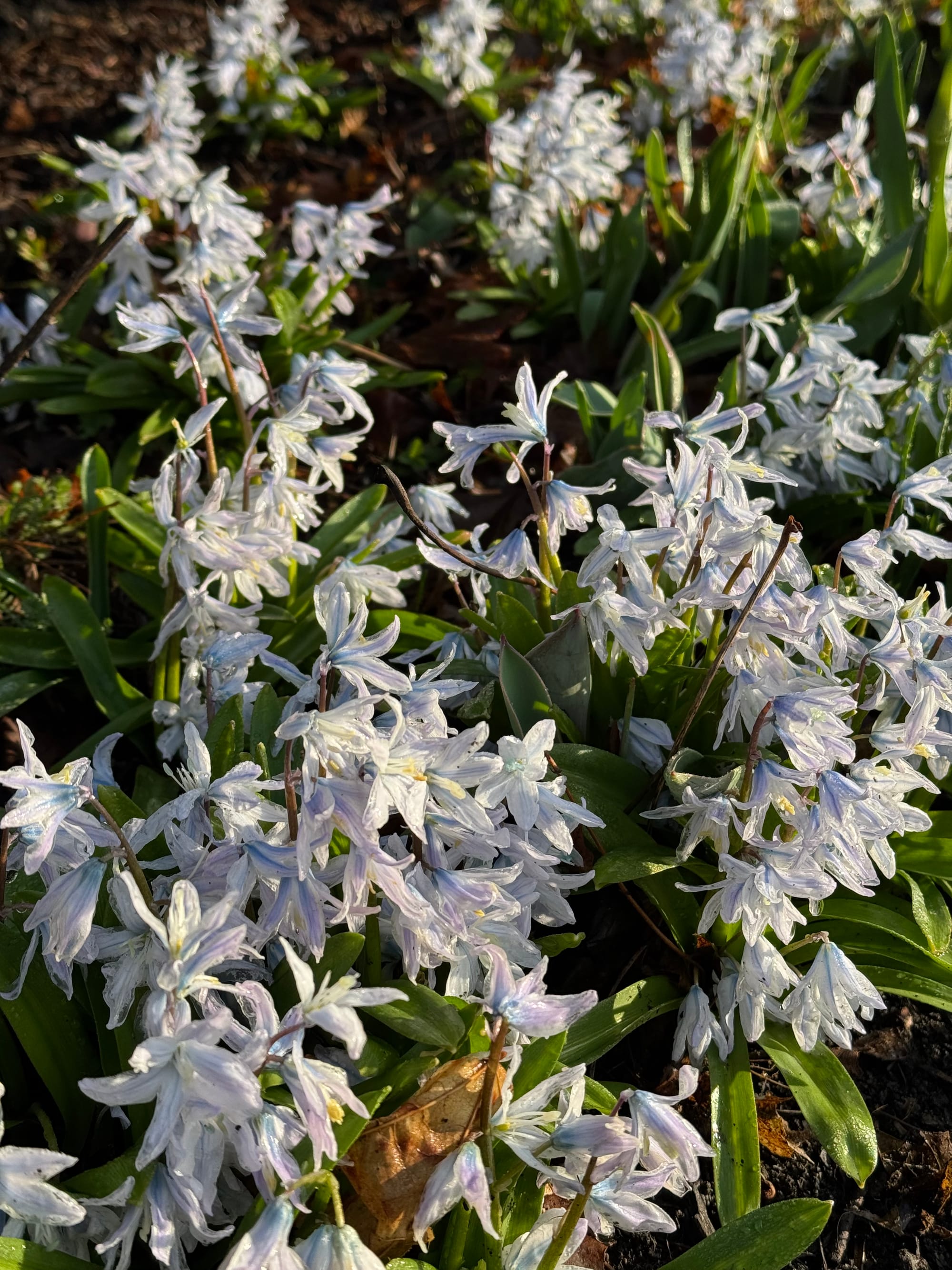
I love seeing signs of spring. Hellebores are blooming now. Snowdrops are blooming, where the snow is melted. Look soon for crocuses, early daffodils (mine are just two inches tall, so exciting), muscari, squill, and my favorite, glory of the snow.
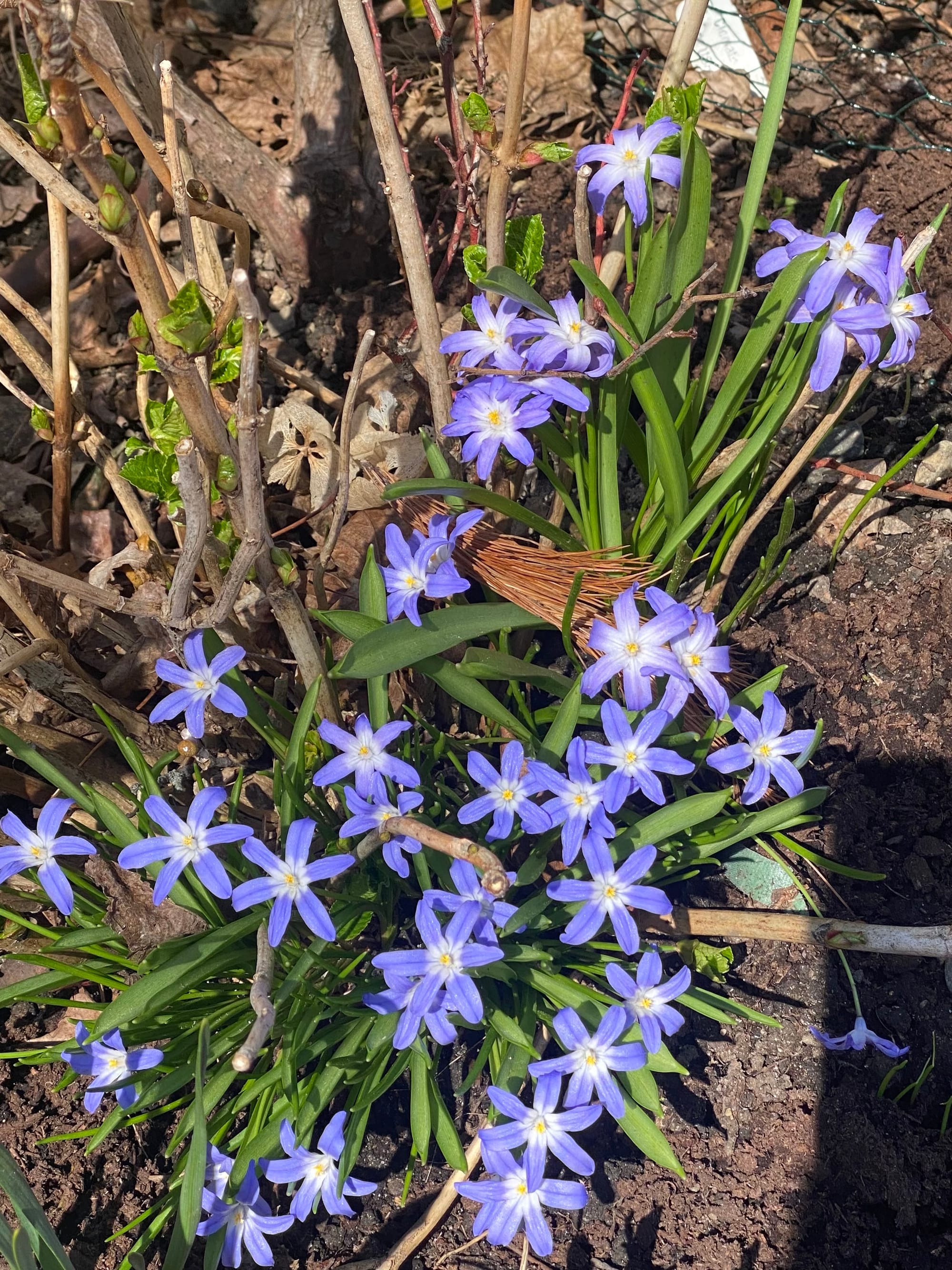
If you like them and do not have them, make a note to plant these bulbs next October or November. Squirrels and rabbits don’t disturb or eat these early bulbs or foliage. It is hopeful and beautiful to see these bulbs pop up, especially after the winter we just experienced.
Time to check on your potted bulbs. See if the soil is dry, give them a little drink. Critters found a window box of mine stored in the garage. It was a bit messy but not a big deal. The critters left the bulbs on the floor. I just picked them up and replaced them and added more soil on top.
I always find it strange and amusing when curious critters decide to disrupt my perfect pots.
March is the time I prune several plants in my garden. The idea behind this is, if you cut back these shrubs while they are dormant in March, when they wake up, they will burst with growth and really be their best for you this season.
I also look for dead or damaged wood and thin that out.
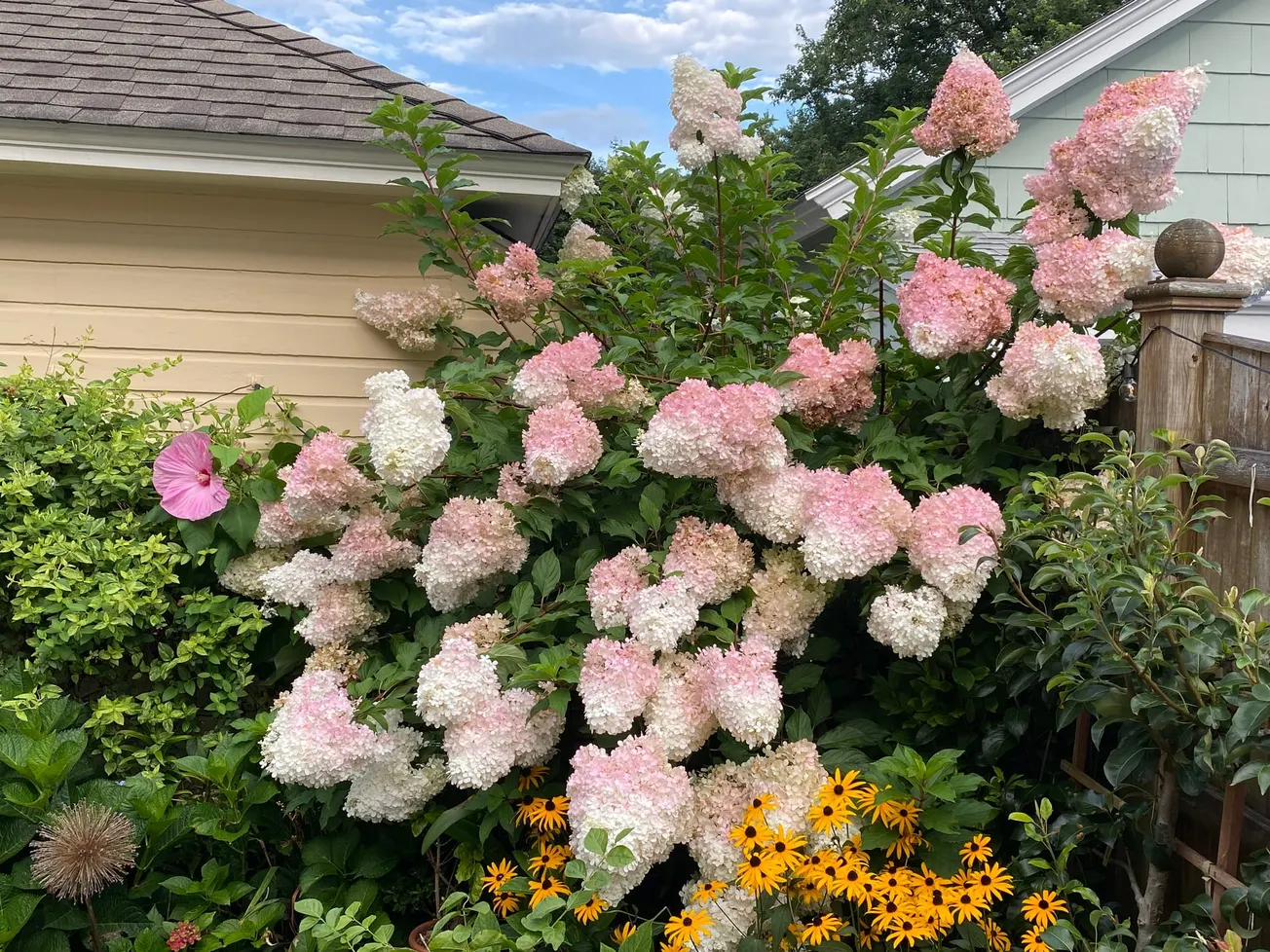
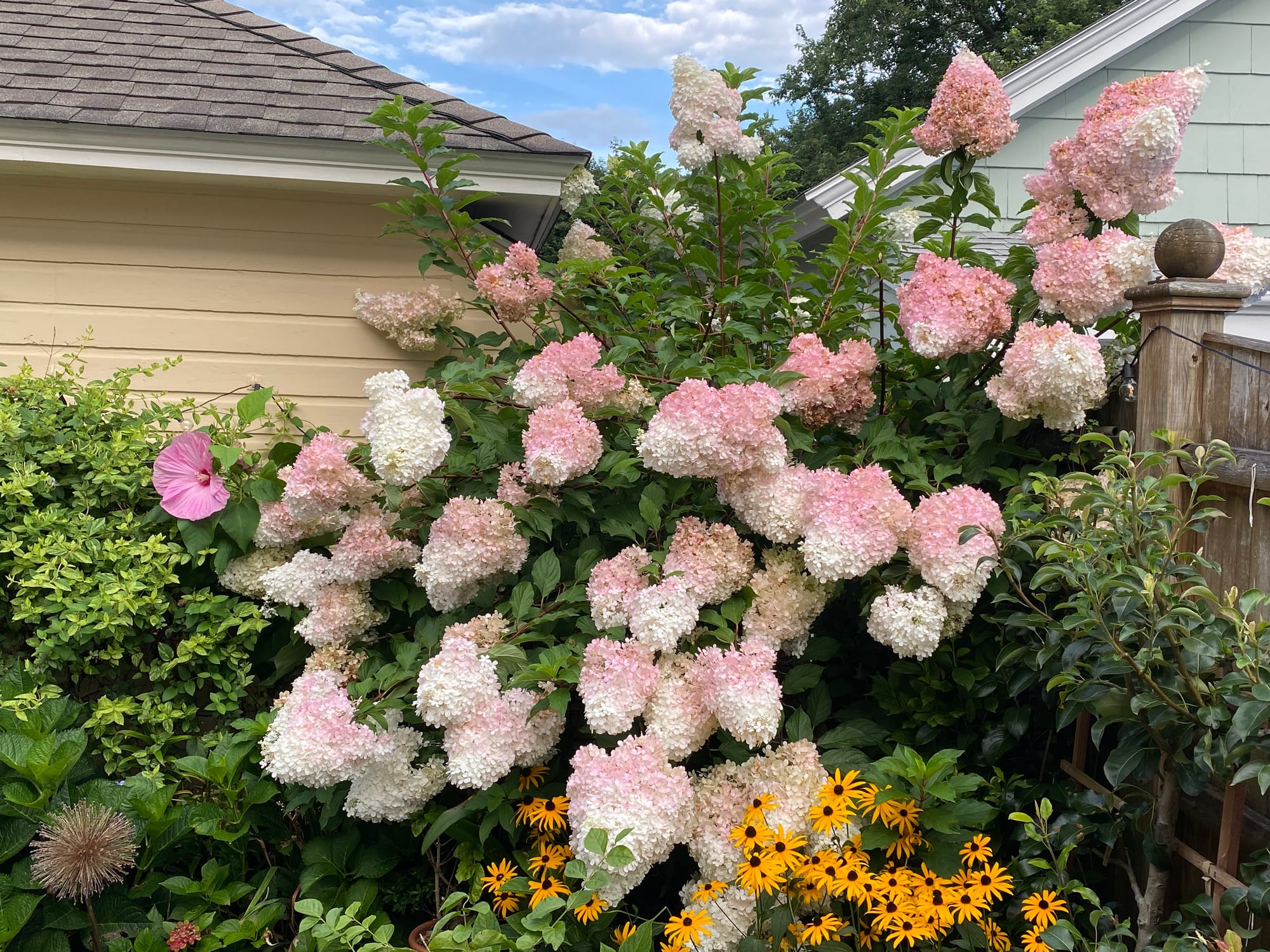
I always prune my conical and panicle hydrangeas, not blue mopheads. See photos (Strawberry vanilla, Incrediball)
I cut these hydrangeas by reducing their size overall by 1/3. Often more. I have to stop myself. This pruning helps the large shrubs give more flowers on stronger stems.
I also start to trim my honeysuckle. I prune them down to 12–24 inches off the ground. The honeysuckles are vigorous and can take it. It is a big job but I really like doing it. If I do not control the honeysuckle, it will take over every thing else.
Next, I carefully locate my clematis which is labeled type 3 pruning clematis. These I prune to 12” from the ground as well. Typically, these are the clematis that have smaller flowers and grow 12 feet tall or higher. I have so many clematis, I had to create a map of them, so as to find them all during pruning season.
Here is a list of plants and shrubs that benefit from a March pruning:
— Butterfly bush - start to prune when you see new growth at the base
— Hydrangea Panicle or Paniculata - prune 1/3 off, just above a set of new buds
— Oakleaf hydrangea - prune lightly, if needed
— Smooth Hydrangea or Hydrangea Arborescens - prune 1/3 off just above a new buds
— Rose of Sharon - prune 1/3 off
— Bluebeard or Caryopteris - prune 6–12 inches from ground
— Potentilla - prune it 6 to 12 inches from ground
— Red Twig Dogwood - for vibrant red stems prune out the older, thicker branches
— Boxwood - light shaping
— Summer-blooming Spirea - prune 1/3 off, if leggy, cut 8 inches from the ground
— Roses with repeat flowering - I personally wait until later in April when the forsythia is blooming
— Beautyberry or Callicarpa - reduce entire shrub by 1/3
— Honeysuckle - prune 1/3 to 1/2 off of its size, if is old and woody you can prune 12 inches from the ground
— Clematis (type 3) - prune to 12 inches from the ground
— Russian Sage - when you start to see new growth, prune all stems to 6–12 inches above ground
— Asters and Chrysanthemums - remove dead stems and prune to the ground
It is a good time to take down those holiday lights off of the shrubs. You may notice piles of bunny droppings. Look over your shrubs and plants to see if there is any damage from the bunnies or from winter storms. If there are partial breaks or chew marks, make a pruning cut below the damage.
All these branches and sticks can be left in a pile. It’s ok to do a bit of a clean up in the yard. Dead branches from winter storms and sticks can be piled up in a corner of your yard.
Once the spring bulbs come up, you will not want to be walking all over the beds to gather them to tidy.
Check on your indoor seedlings daily. It is a good idea to start raising the grow lights and pinch plants back to get more branches. Check for moisture levels, the plants start to drink much more as they grow taller. Remove containers where nothing has germinated.
Also check on your dahlia tubers. I know some dahlia growers have already started their tubers in soil.
Look closely at your indoor plants for pests. I brought my citrus trees outside this past week to treat them with 70% isotopic alcohol and spray them with dormant oil to control the scale that appeared out of nowhere.
Finally, now is a good time to explore new sources of gardening information.
My absolute favorite gardening program on TV is the BBC’s Gardening World with Monty Don. If you have Brit Box, a new season started this week on Friday nights. If not, you can find old episodes on Youtube.
I especially like Monty’s way of presenting information in a not judgement or preachy manner. It is always the gardener’s yard and the gardener’s choice on how to decide what works for each individual.
Except on the topic of peat.
I am convinced that every time BBC presenters mention the words “Peat Free” people in pubs all over England take a drink.
I also recommend looking into specific gardening societies. if you have a particular plant you want to know more about, you should check online to find a society named after that plant.
Even if you decide not to join, the people running these societies are very happy to answer your questions and offer advice and resources on their websites. Many use Facebook as their platform.
I joined the Delphinium Society, and they sent me free seeds! I joined the New England Rose Society and was invited to listen to presentations by experts on rambling roses and also a rose breeder. I also met very like minded people who I know like to share their love of roses. It is low commitment and a win-win in terms of helpful advice.
Now, I am seriously considering planting an indestructible and carefree rambling rose to climb the massive town tree in front of my house.
Don’t judge me!
Colleen Connor, our garden columnist, is co-president of the Cottage Gardeners of Marblehead and Swampscott.