Table of Contents
Polls in Marblehead’s six precincts open at 7 a.m. and close at 8 p.m. on Tuesday, Nov. 3, and anyone in line at 8 p.m. may still vote, according to the state’s official Information for Voters booklet. In-person early voting, held at the Town Clerk’s office in Abbot Hall for every precinct, ends at noon on Friday, Oct. 30.
The ballot runs two to four pages because of “an unusually high number of ballot questions,” the Secretary of the Commonwealth’s office told news organizations in an Oct. 27 advisory. Marblehead voters will choose a successor to U.S. Rep. Seth Moulton in the 6th Congressional District, decide a four-way U.S. Senate race led by Sen. Edward J. Markey and Republican John Deaton, fill six statewide offices, elect a Governor’s Councillor, return a state senator and a state representative who have no listed opponents and answer nine binding statewide questions. A 10th question, asked only in two House districts including Marblehead’s, is advisory.
In September the town’s certified primary count went against the eventual winners in the two contested races that drew the most local attention. Moulton, who grew up in Marblehead, beat Markey here 2,946 votes to 1,917 while losing the Democratic nomination statewide. Marblehead attorney Diann Mary Baylis beat Governor’s Councillor Terrence W. Kennedy here 3,107 to 1,135 while losing the district, according to results certified by the Secretary’s Elections Division.
This guide covers the deadlines that remain, where to vote, every contest on Marblehead’s ballot and what each question would do. Where the available figures cannot show a local effect, it says so.
In this guide
- What is left on the calendar
- Where to vote on Election Day
- Returning a mail ballot
- The booklet and the order of the ballot
- Markey seeks a third full term
- An open congressional seat
- Governor and the statewide offices
- Marblehead backed Baylis and the district backed Kennedy
- Crighton and Armini run unopposed
- District attorney and register of probate
- How September went in town
- Why the ballot is so long
- Question 1: Public records
- Question 2: Public defender employees
- Question 3: Party primaries
- Question 4: Election Day registration
- Question 5: State revenue limit
- Question 6: Nature for All Fund
- Question 7: Single-family lots
- Question 8: Retail marijuana
- Question 9: Firearms law
- Question 10: Carbon fee
- Before Election Day
What is left on the calendar
Two deadlines have passed. Voter registration for this election closed Saturday, Oct. 24: online at 11:59 p.m., by mail with a form postmarked that day and in person at 5 p.m. Applications for a mail ballot had to reach the Town Clerk’s office by 5 p.m. Tuesday, Oct. 27. Both deadlines are set out in the Secretary’s booklet.
Early voting runs through Friday, Oct. 30, and in Marblehead it takes place at the Town Clerk’s office in Abbot Hall, 188 Washington St., for all precincts. The remaining hours are 8:30 a.m. to 5:30 p.m. Wednesday, Oct. 28; 8:30 a.m. to 4:30 p.m. Thursday, Oct. 29; and 8:30 a.m. to noon Friday, Oct. 30, according to a notice from Town Clerk Robin A. Michaud’s office posted on the town’s website. The Secretary’s office posts every community’s schedule on its site, VoteInMA.com, and the booklet advises checking the local schedule first, because “many communities have limited or no voting hours on Fridays.”
Clerks may open mail and early-ballot envelopes and feed the ballots into tabulators from Oct. 25 through Nov. 2, a step the Secretary’s office calls advance processing. Sessions must be publicly posted and are open to observers, and no results can be produced until the polls close Nov. 3. A second notice from Michaud’s office schedules Marblehead’s sessions for 9 a.m. each day from Sunday, Oct. 25, through Monday, Nov. 2, in the Select Board’s Meeting Room at Abbot Hall.
After Election Day, mail ballots postmarked by Nov. 3 from inside the United States count if they arrive by Friday, Nov. 6. Ballots mailed from overseas have until Nov. 13. Clerks must certify local results by Nov. 18, and the Governor and Governor’s Council are expected to certify the statewide results Dec. 2, according to the advisory.
Where to vote on Election Day
Marblehead has six precincts, and voters must vote in their own, the town’s page says. A precinct can be checked through the state’s Where Do I Vote lookup, which the town links from its site, or by calling the Town Clerk’s office at 781-631-0528.
At the Sept. 1 primary, Precincts 1 and 2 voted at Abbot Hall, 188 Washington St., and Precincts 3, 4, 5 and 6 voted at the Marblehead High School Field House, 2 Humphrey St., the Independent reported.
Michaud’s office in Abbot Hall is open Monday, Tuesday and Thursday from 8 a.m. to 5 p.m., Wednesday from 8 a.m. to 6 p.m. and Friday from 8 a.m. to 12:30 p.m. It can be reached at 781-631-0528 or elections@marbleheadma.gov.
Returning a mail ballot
A voter who still holds a mail ballot has four ways to return it under the Secretary’s rules: by mail, by a secure drop box, by hand at an early voting location while early voting lasts or by hand at the Town Clerk’s office. A ballot “must reach your local election office or drop box by close of polls on Election Day in order to be counted,” and it “cannot be dropped off at a polling place on Election Day.”
The one exception is the mail. In a November state election, ballots postmarked by Election Day get three extra days to arrive, which this year means Friday, Nov. 6. The state “strongly” recommends a drop box or hand delivery for anyone who has not mailed a ballot a week before Election Day. A voter who has not returned a mail ballot may still vote early or at the polls; if the mail ballot then arrives, it is rejected.
The booklet and the order of the ballot
The state mailed its 88-page Information for Voters booklet to residential addresses in September. For each of Questions 1 through 8 it carries a summary written by the attorney general, statements on the effect of a yes and a no vote written jointly by the attorney general and the secretary, a statement of fiscal consequences from the Executive Office of Administration and Finance, 150-word arguments from each side, the Legislature’s committee reports and the full text. For Question 9 it carries the same material about an existing law. The state does not certify the arguments’ accuracy, and where no organized opponent filed one, the Secretary’s office compiled an argument from the Legislature’s majority report, as the booklet notes for Questions 1, 2 and 6.
Secretary of the Commonwealth William Francis Galvin carried a copy to the Marblehead Democratic Town Committee’s picnic at the Gerry 5 Veteran Firemen’s Association hall on Sept. 14, the Independent reported.

Offices appear on the ballot in this order, according to the booklet: senator in Congress; governor and lieutenant governor; attorney general; secretary of state; treasurer; auditor; representative in Congress; councillor; senator in General Court; representative in General Court; district attorney; register of probate. The nine binding questions follow, and the Secretary’s ballot questions page says nonbinding questions are listed after them. A specimen ballot for Marblehead’s Precinct 2 issued by the Secretary’s office shows that order, with Questions 1 through 8 headed “Law proposed by initiative,” Question 9 “Referendum on an existing law” and Question 10, last, “This question is not binding.” The booklet’s last page is a tear-out checklist for the polls.
Markey seeks a third full term
Four names are on the Senate ballot, according to the Secretary’s official candidate list: Markey of Malden, Democratic; Deaton of Bolton, Republican; Shiva Ayyadurai of Belmont, Independent; and Joe Tache of Boston, Socialism and Liberation.
Markey first won the seat in a June 2013 special election, with 55% of the vote, and won full terms in 2014 and 2020, according to the Secretary’s election results database. He is seeking a third full six-year term. Before the Senate he represented a Massachusetts district in the U.S. House; the database lists his House victories from 1980, and the Independent has reported that he has served in Congress since 1976.
In the Sept. 1 Democratic primary, Markey beat Moulton 580,628 votes to 314,198, or 64.7% to 35.0% of the votes cast for a candidate, in results the Elections Division has certified. Blank ballots are left out of those percentages. The Associated Press called the race for Markey at 8:31 p.m., 31 minutes after polls closed, the Independent reported.
Marblehead went the other way. Of the town’s 4,919 Democratic primary ballots, 2,946 went to Moulton and 1,917 to Markey, with 48 left blank and eight cast for others, a margin of 1,029 for Moulton. The town’s certified numbers match the official count the Independent reported in September.

Moulton, a Marine Corps veteran who served four tours in Iraq, challenged Markey on a message of generational change. He first won his House seat in 2014 by beating incumbent U.S. Rep. John Tierney in the Democratic primary, the Independent reported. This year he and his wife, Liz, moved back to Marblehead. A sign for Markey was posted among the Dan Koh and Healey-Driscoll signs at the Democratic Town Committee’s picnic 13 days after the primary; Moulton was not among the speakers.
Deaton, who lost to U.S. Sen. Elizabeth Warren in 2024, was unopposed in this year’s Republican primary and received 221,950 votes statewide, 735 of them in Marblehead, where 872 Republican ballots were cast.
An open congressional seat
Marblehead’s seat in Congress is open for the first time in more than a decade. Moulton first won the 6th District in 2014 and was reelected five times, according to the state database. He did not seek reelection and ran for the Senate instead. Massachusetts voters have not filled the seat in an election without an incumbent on the ballot since Michael Harrington retired in 1978, the Independent reported.
The district takes in 39 cities and towns, from Marblehead, Swampscott, Lynn and Salem up the coast through Gloucester and Newburyport and inland to Andover, Tewksbury, Billerica and Bedford, according to the Secretary’s results database.
Two candidates are listed: Democrat Dan Koh of Andover and Republican Micah Quinney Jones of Essex.
Koh won a six-way Democratic primary with 47,835 votes, or 40.9% of the 116,908 votes cast for a candidate, in the certified count. State Rep. Tram T. Nguyen of Andover had 34,324, or 29.4%; John A. Beccia III 14,215; Jamie M. Belsito 11,268; Mariah L. Lancaster 4,725; and Bethany Andres-Beck 4,385. Another 4,643 of the 121,551 Democratic ballots were left blank in the race. In Marblehead, Koh had 2,064 votes to 1,343 for Nguyen, 691 for Beccia, 277 for Belsito, 199 for Lancaster and 91 for Andres-Beck, with 248 blanks. Koh’s margin over Nguyen in town was 721.
Koh is a former chief of staff to Boston Mayor Marty Walsh and a former aide in President Joe Biden’s White House. He lost a 2018 congressional primary to now-U.S. Rep. Lori Trahan by 145 votes. By the primary he had raised about $4.5 million, the most of the six Democrats, according to the Independent’s review of Federal Election Commission filings.
At a June 17 debate at Salem State University, Koh pitched what he called a “no more agenda”: $10-a-day child care, $25,000 in down-payment help and caps on what families pay for rent and utilities. He said the package would save a typical district resident $23,000 a year and would be paid for by reversing tax cuts. At the Marblehead picnic he also listed Medicare for All and student-debt cancellation.
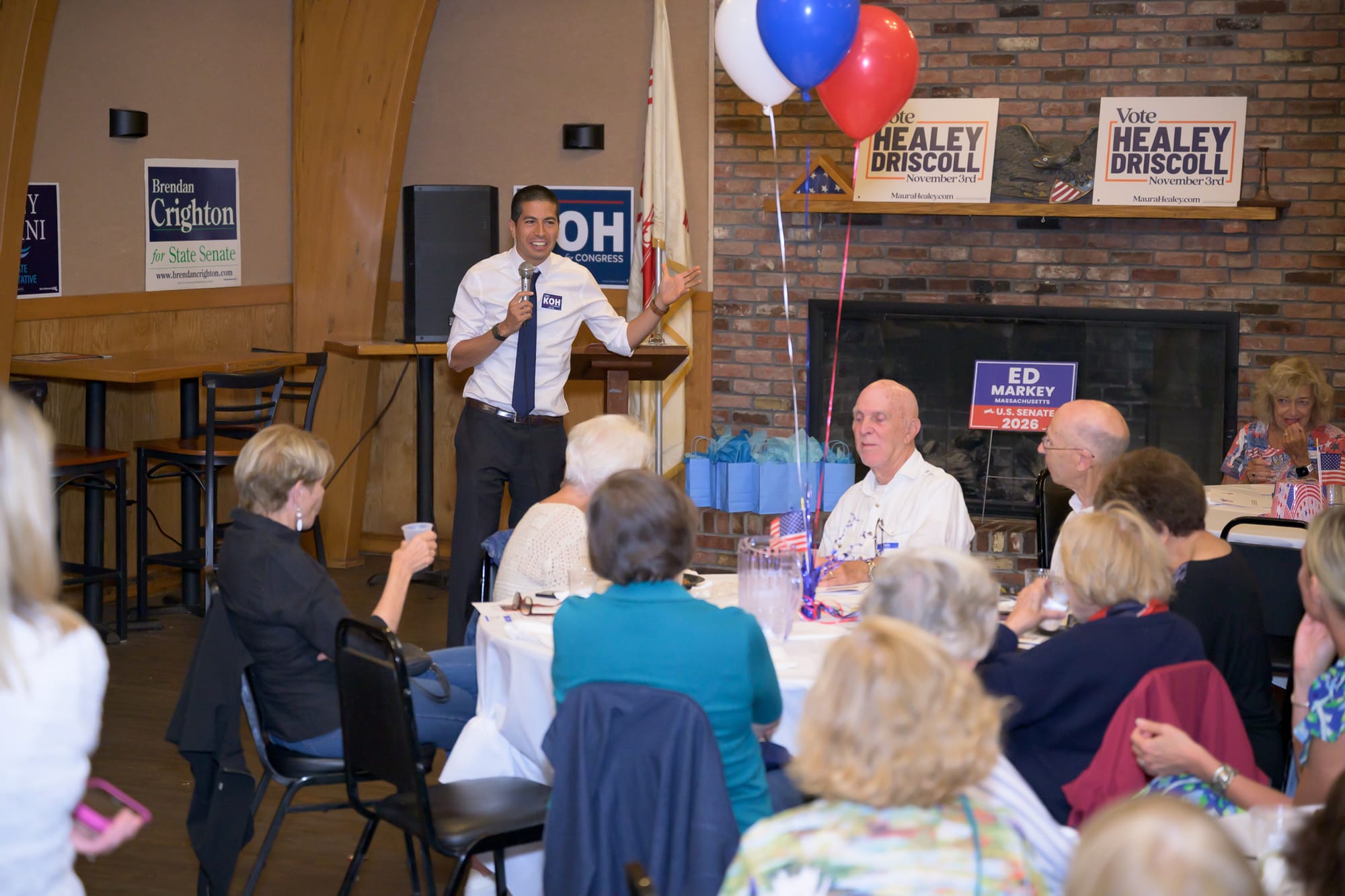
Jones, 38, was unopposed in the Republican primary and received 29,111 votes districtwide, 667 of them in Marblehead. He spent most of more than five years in the Army as an infantry officer with the 82nd Airborne Division, earned a Bronze Star and left the service as a captain in 2016. He graduated from Northeastern University School of Law in 2019 and practiced securities enforcement and litigation at the Boston office of Morgan Lewis until February, when he gave up the practice to run, the Independent reported.
Jones called himself a Democrat for eight years, left the party in law school and became an independent. He registered as a Republican in 2022. Koh told the picnic crowd that Jones had voted for Donald Trump twice. Jones has said he voted for Hillary Clinton in 2016 and for Trump in 2020 and 2024. Charlie Baker, a former governor who lives in Swampscott, has endorsed him.

Jones says his campaign rests on three pillars: accountability for members of Congress, including term limits and a ban on stock trading by members and their spouses; opportunities for the North Shore and Merrimack Valley; and national security. He supports expanding natural gas pipeline infrastructure and new nuclear technology, and he wants the federal deduction for state and local taxes raised for New England.
Jones says Koh backed out of two planned debates, including a Sept. 17 forum at Endicott College. Koh’s campaign says he has taken part in 11 debates, “including with Micah Jones.”
Through Sept. 30, Jones’ campaign had raised $586,091, according to Federal Election Commission filings. The Cook Political Report rates the district Solid Democratic, and no Republican has held a U.S. House seat in Massachusetts in three decades, the Independent reported.
Governor and the statewide offices
Three tickets are listed for governor and lieutenant governor: Healey and Driscoll, Democratic; Minogue and Oliver, Republican; and James and Kittredge, Independent. The Secretary’s list gives the tickets by surname only.
Gov. Maura Healey, elected attorney general in 2014 and 2018 and governor in 2022 with 64% of the vote, is seeking a second term, according to the state database. She was unopposed in the Democratic primary. Lt. Gov. Kim Driscoll, the former Salem mayor, was elected with her in 2022. Michael Roger Minogue won the Republican primary over Brian J. Shortsleeve, 194,758 votes to 62,161, or 75.6% to 24.1% of votes cast for a candidate; in Marblehead the Republican count was 690 to 169. Shawn Oliver was unopposed for the Republican lieutenant governor nomination.
Healey signed the 2024 firearms law that Question 9 asks voters to keep or repeal, and she backs the yes side, the Independent reported.
The four other statewide offices each have two candidates:
- Attorney general: Andrea Joy Campbell of Dartmouth, Democratic, elected in 2022 and seeking a second term, against Michael C. Walsh of Lynnfield, Republican.
- Secretary of state: Galvin of Boston, Democratic, first elected in 1994 and reelected every four years since, seeking a ninth term, against Anne R. Brensley of Wayland, Republican.
- Treasurer: Deborah B. Goldberg of Brookline, Democratic, elected in 2014, 2018 and 2022 and seeking a fourth term, against Elizabeth Dionne of Belmont, Republican.
- Auditor: Diana DiZoglio of Methuen, Democratic, elected in 2022 and seeking a second term, against Al Ozonoff of Medford, Libertarian. DiZoglio also wrote the booklet’s argument in favor of Question 1.
Each incumbent was unopposed in the Democratic primary. Term histories come from the Secretary’s results database.
Marblehead backed Baylis and the district backed Kennedy
The Governor’s Council is an eight-member elected body that reviews and votes on gubernatorial nominations for judges and members of the Parole Board. It also handles pardons, commutations and warrants for the state treasury, and it certifies statewide election results, the Independent reported. Marblehead is in the 6th District, which also takes in all or part of Boston, Cambridge, Chelsea, Everett, Lynn, Lynnfield, Malden, Medford, Melrose, Nahant, Reading, Revere, Saugus, Somerville, Stoneham, Swampscott, Wakefield, Winchester and Winthrop, according to the state database.
Kennedy, a Democrat from Lynnfield, first won the seat in 2010 with 55% of the vote in a four-way race and has been reelected every two years since, the database shows. He is seeking a ninth term and is the only name listed for the seat on Nov. 3; no Republican ran in the September primary.
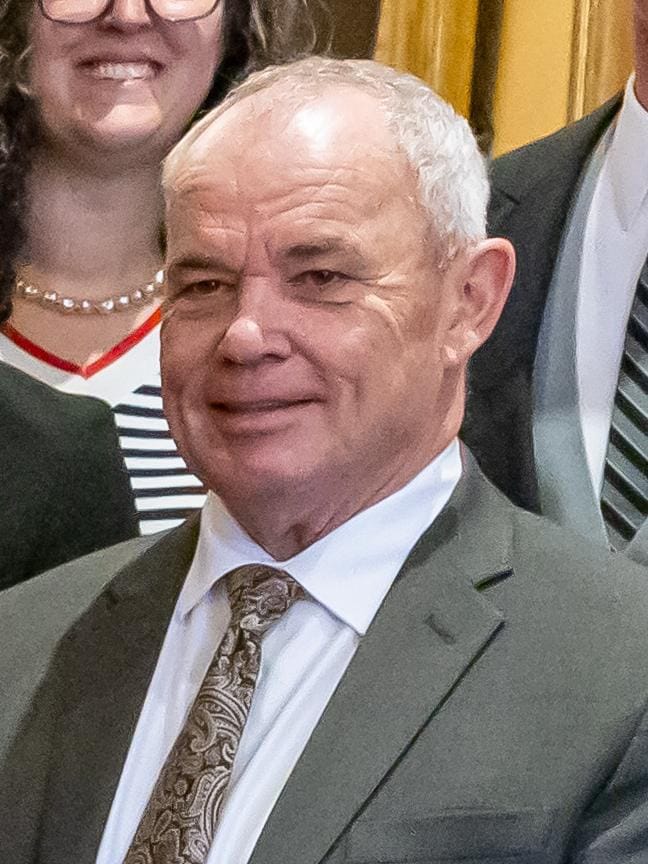
Baylis, a Marblehead immigration and family law attorney, challenged Kennedy in the Democratic primary. Districtwide he won 56,963 votes to her 40,722, or 58.1% to 41.6% of votes cast for a candidate, with 21,011 of 118,973 ballots left blank, in the certified count. In Marblehead she beat him 3,107 to 1,135, or 73.2% of the 4,242 votes cast for the two, and she carried all six precincts, the certified precinct returns show. Her widest margin was in Precinct 1, 594 to 224, and her narrowest in Precinct 6, 491 to 229.
Crighton and Armini run unopposed
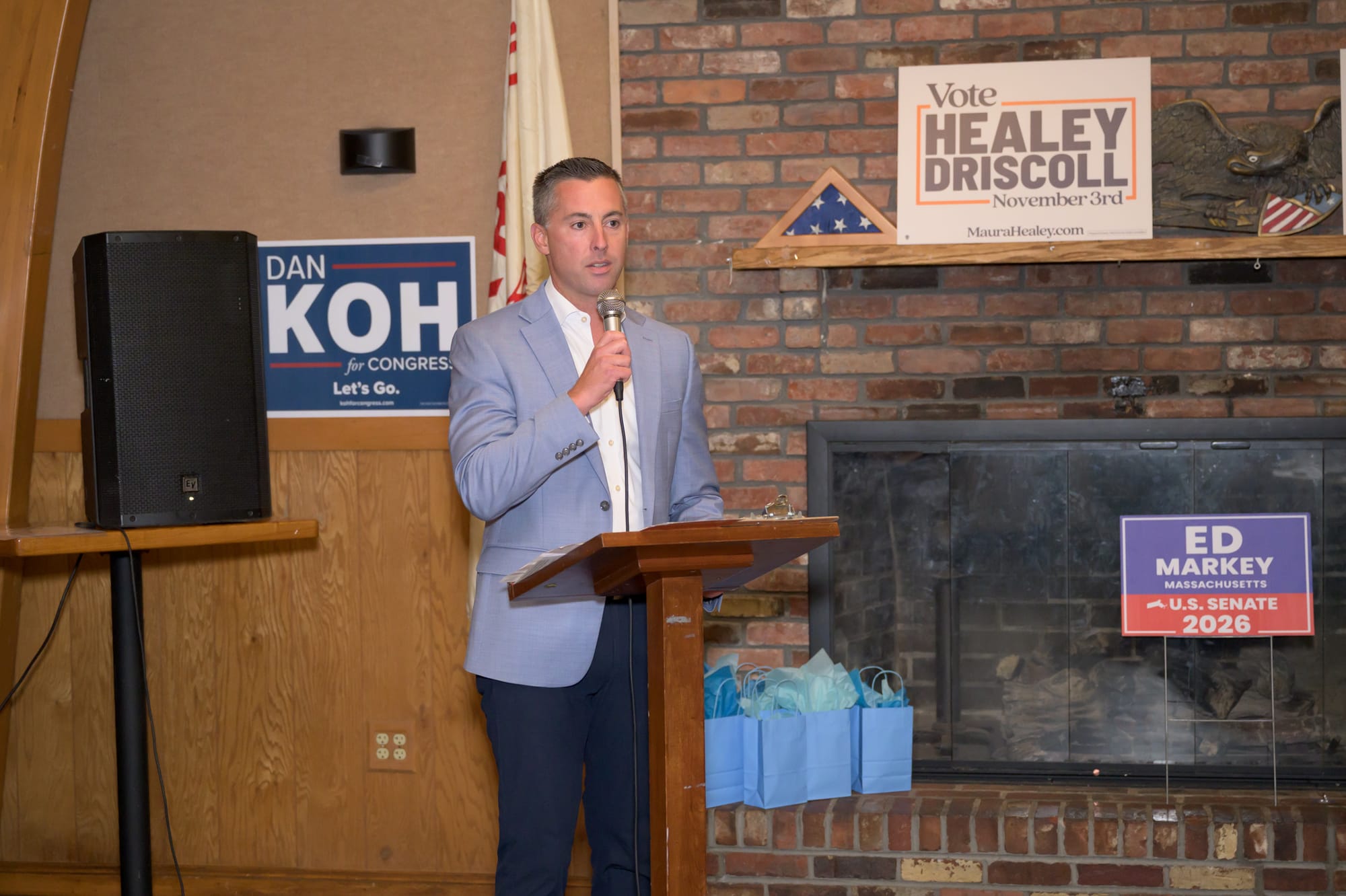
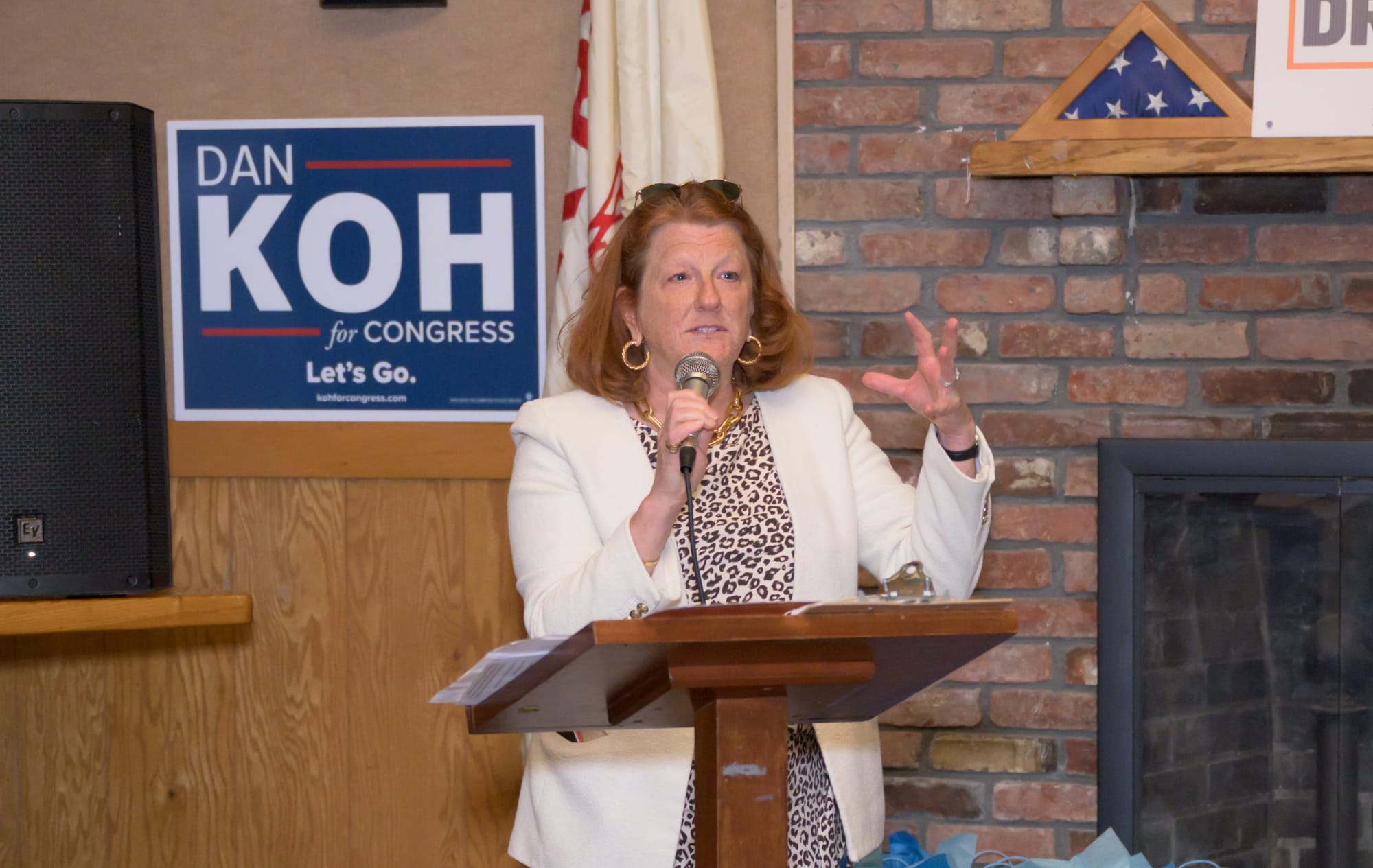
State Sen. Brendan Peter Crighton, a Lynn Democrat, is the only candidate listed in the Third Essex District, which covers Lynn, Lynnfield, Marblehead, Nahant, Saugus and Swampscott. State Rep. Jennifer WB Armini, a Marblehead Democrat who goes by Jenny, is the only candidate listed in the Eighth Essex District, which covers Marblehead, Swampscott and part of Lynn. Both districts come from the Secretary’s results database, and no Republican sought either nomination in September.
Crighton served two terms as state representative from Lynn, elected in 2014 and 2016, and won the Senate seat in a 2018 special election. He has won four full terms since, in 2018, 2020, 2022 and 2024, and is seeking a fifth, the database shows. His one contested general election was 2022, when he took 71% against an unenrolled challenger. He is the Senate chair of the Legislature’s Joint Committee on Transportation, the Independent reported.
Armini won the seat in 2022, taking a six-way Democratic primary with 28% of the vote and the general election unopposed, and was reelected without opposition in 2024. She is seeking a third term. In the Sept. 1 Democratic primary, Marblehead gave Crighton 3,629 votes and Armini 3,940 of the 4,919 ballots cast.
In June the two announced $65,000 in state Fair Share money for Marblehead’s public schools: $40,000 for cameras on school buses and $25,000 for music and culinary arts programs. It came through the fiscal 2026 Fair Share supplemental budget, which channels surplus revenue from the 4% surtax on income above $1 million into schools and roads, the Independent reported. In March they announced a $31,200 state grant for security personnel at the Epstein Hillel School in Marblehead.
At the picnic, Crighton credited the Healey-Driscoll administration with returning ferry service to the North Shore. Armini listed housing money, school funding, a vote to take cellphones out of schools and a process she said keeps challenged books on library shelves.
District attorney and register of probate
Two county offices round out the ballot, each with one candidate. District Attorney Paul F. Tucker of Salem, a Democrat, was elected in the Eastern District in 2022 after three terms as a state representative and is seeking a second term. Register of Probate Pamela Casey O’Brien of Saugus, a Democrat, was first elected in Essex County in 1996 and reelected in 2002, 2008, 2014 and 2020; she is seeking a sixth six-year term. Both histories are from the state database. Tucker received 87,028 votes and O’Brien 86,229 in the uncontested Democratic primaries.
How September went in town
Marblehead cast 5,791 ballots in the Sept. 1 primary, 4,919 Democratic and 872 Republican, in the certified results. Only those two parties held primaries. That is 34.0% of the 17,042 voters the Secretary’s office counted as registered in town a week before the primary, and up from 3,005 ballots in the 2024 state primary, the Independent reported.
Massachusetts lets unenrolled voters choose either party’s ballot in a primary, so the split shows where the interest was, not how many voters belong to each party. As of the Oct. 24 registration deadline, Marblehead had 17,084 registered voters: 11,250 unenrolled, 4,057 Democrats, 1,633 Republicans and 144 enrolled in other parties or designations, according to the Secretary’s enrollment count.
Before polls opened Sept. 1, 2,521 ballots had been cast early or by mail, the Independent reported from state statistics, with Democratic ballots making up 2,196 of them.
November is running ahead of that pace. By 4 p.m. on Oct. 27, the Town Clerk had mailed 4,335 ballots on 4,350 applications and had 2,576 back, or 59.4% of those mailed. Another 1,264 voters had voted early in person. The 3,840 ballots in hand equaled 22.5% of the town’s registered voters, against 15.6% statewide, where 814,909 of 5,230,765 registered voters had voted, according to the Secretary’s ballot statistics.
Why the ballot is so long
Attorney General Andrea Campbell said residents filed “a record-breaking 47 ballot initiative petitions this year.” Her office certified 44 petitions, 40 proposed laws and four constitutional amendments, as eligible to collect signatures. The Legislature enacted none of the certified measures. In June the Supreme Judicial Court thinned a potential field of as many as 12. It struck a rent-control petition as an excluded matter, blocked an income tax cut after finding Campbell’s official summary “significantly misleading,” and helped sink a legislative-stipend overhaul with an advisory opinion, the Independent reported.
The field locked July 21, when Galvin’s Elections Division assigned final numbers and the State Ballot Law Commission rejected the last pending challenge, a fraud objection to the marijuana repeal’s signatures. Recent elections have typically featured two to four statewide questions, the Independent reported.
Questions 1 through 8 are laws proposed by initiative petition, citizen-drafted laws that reached the ballot after backers gathered 74,574 signatures, lawmakers declined to act and backers collected 12,429 more. Each appears on the ballot with the question of whether voters approve a law “on which no vote was taken by the Senate or the House of Representatives before May 6, 2026.” Question 9 is a referendum on an existing law: “If a majority vote ‘yes,’ the law will remain in place. If a majority vote ‘no,’ the law will be repealed,” the booklet says.
Galvin’s letter in the booklet calls the nine “the most that Massachusetts voters have ever been asked to consider.” His office told the Independent in December that the previous high for a single state election was nine, in 1972, 1976 and 1994, and the Independent has described this year’s ballot as tying that mark.
The 10th question is a different kind. State law lets voters petition to put nonbinding public policy questions on the ballot in their legislative district. The questions “ask voters for their opinion on actions that their legislator should or should not take” and “do not have any binding effect on state law,” the Secretary’s page says. A binding question changes state law if it passes. An advisory question changes nothing on its own.
Question 1: Public records
The booklet titles Question 1 “Expanding the Public Records Law.” It would make most records held by the Legislature and the governor’s office public records, exempting documents related to the development of public policy and constituent communications tied to requests for help with government benefits, services or agencies. Both branches are now exempt, and Jesse Littlewood of the Coalition for Healthy Democracy, the proponent of record, calls that status a national outlier, the Independent reported. The House responded in June with a bill covering the governor’s office but writing separate rules for lawmakers.
The state’s fiscal statement says the law “has no discernible material fiscal consequences for state and municipal government finances.” The argument in favor is signed by DiZoglio, the state auditor, for the Committee for Transparency and Democracy. No organized group filed an argument against, so the Secretary’s office compiled one from the Legislature’s majority report.
A yes vote “would make most records held by the Legislature and the Office of the Governor public records.” A no vote “would make no change to the Massachusetts Public Records Law.” Official question text.
Question 2: Public defender employees
Question 2, “Collective Bargaining for CPCS Employees,” would specify that employees of the Committee for Public Counsel Services, the state’s public defender agency, may bargain collectively, and would require the agency, once it signs a contract, to ask the governor for the money to fund it. Tom McKeever of Service Employees International Union Local 888 filed it after the 2025 right-to-counsel collapse, when bar advocates, paid $65 an hour in district court, stopped taking cases and courts dismissed more than 120 cases in Boston Municipal Court in a single day, the Independent reported. Bar advocates are contractors, not agency employees, so the question would not by itself settle their pay fight.
The fiscal statement says the law “may have an impact on state finances” and that the impact “is difficult to project.” McKeever signed the argument in favor for Labor Unions for Public Counsel Workers Rights. No organized opponent filed an argument.
A yes vote “would specify that Committee for Public Counsel Services employees may form a union to collectively bargain with their employer.” A no vote makes no change. Official question text.
Question 3: Party primaries
Question 3, “State Primary Elections,” would end separate party primaries for state elections. All candidates would appear on one primary ballot, any voter could vote for any candidate and the top two would advance to November regardless of party. Candidates for governor and lieutenant governor would run as a ticket in the primary, and any group whose statewide candidates drew at least 3% of primary ballots would gain party status, according to the official summary.
The coalition behind it points to a State House News Service analysis of data from Galvin’s office: voters have a choice between listed candidates in 82 of the Legislature’s 200 seats this year, or 41%, with 25 incumbent senators and 91 representatives unopposed, the Independent reported. Two veteran Democrats sued to block the question, and the Supreme Judicial Court let it proceed.
The fiscal statement finds no discernible material fiscal consequences. Danielle Allen of the Coalition for Healthy Democracy signed the argument in favor; Vanessa A. Snow of Voter Rights MA signed the argument against.
A yes vote creates the top-two system. A no vote “would make no change to the laws governing primary elections.” Official question text.
Question 4: Election Day registration
Question 4, “Election Day Registration,” would let eligible residents register, or update an address, at their precinct’s polling place on Election Day by showing proof of residency and signing an oath that carries felony penalties for false statements. A voter without proof of residency could cast a provisional ballot, counted only if the voter returned with the documents within six days after a state election. Registered voters could not change party on Election Day. The law would take effect Jan. 1, 2028, according to the summary.
Galvin is the proponent of record, having gone to the ballot after the House repeatedly killed same-day registration bills, the Independent reported. Registration now closes 10 days before an election.
The fiscal statement finds no discernible material fiscal consequences. Norma B. Shulman signed the argument in favor for YES on Election Day Registration. Amy Carnevale signed the argument against for the Massachusetts Republican Party.
A yes vote permits Election Day registration. A no vote keeps the current deadline. Official question text.
Question 5: State revenue limit
Question 5, “State Revenue Limit & Rebate,” would change the limit on how much revenue the state may collect in a year. The limit would equal the prior year’s net revenue grown by the average increase in Massachusetts wages and salaries over the most recent three years, and collections above it would be refunded to taxpayers the following year. All revenue from the surtax on incomes over $1 million would count toward the limit. The provisions would take effect July 1, 2027, according to the summary.
The current cap, Chapter 62F of 1986, has been triggered twice: in 1987, and in fiscal 2022, when collections of about $41.8 billion topped an allowable $38.9 billion. The state returned $2.94 billion to roughly 3 million taxpayers as credits equal to 14.0312% of each filer’s 2021 income tax liability, according to the Department of Revenue, the Independent reported. For a hypothetical filer who owed $10,000 that year, the credit would have come to about $1,403.
The state’s fiscal statement says the law “would put stricter limits on allowable annual revenue growth,” would “reduce the amount of money available to support the state budget, which includes local aid for schools and municipal budgets,” would reduce deposits to the rainy day fund and “could change the frequency of statutorily-required refunds to taxpayers.” The Tufts Center for State Policy Analysis projects refunds would arrive three to five times as often and return five to 15 times as much money, and the Massachusetts Taxpayers Foundation calculates it would have paid out $3.9 billion in fiscal 2024, the Independent reported.
Taxpayers for an Affordable Massachusetts signed the argument in favor. Colette Berard, an Andover history teacher, signed the argument against for Protect Massachusetts’ Future.
Fair Share money paid for the $65,000 Marblehead school award announced in June. How Question 5 would affect any future local award cannot be determined from the available figures.
A yes vote installs the new formula and rebate. A no vote “would make no change in the law relative to state revenue collection.” Official question text.
Question 6: Nature for All Fund
Question 6, “Natural Resource Conservation Fund,” would create a Nature for All Fund that, subject to appropriation by the Legislature, would receive 50% of state sales and use taxes collected on sporting goods, recreational vehicles and golf courses in its first year and 100% after July 1, 2028. The Executive Office of Energy and Environmental Affairs could spend it on conservation, parks, trails and outdoor access, and state agencies, municipalities, conservation charities, tribal governments and regional public entities could receive grants. A 15-member board of five state officials and 10 gubernatorial appointees would set the rules. The law would take effect July 1, 2027.
The fiscal statement says the law “would have a significant impact on state and local budgets,” would “automatically divert tens of millions of dollars of tax receipts” a year from the operating budget and “would also have substantial implementation costs.” Mass Audubon, which signed the argument in favor, puts the figure at “as much as $100 million/year.” The Independent has reported the campaign’s estimate as about $100 million based on $2.49 billion in reported 2022 sporting-goods sales, about 1% of the more than $9.6 billion the state collected in sales and use taxes in fiscal 2025. No organized opponent filed an argument.
Whether the fund would pay for any Marblehead project cannot be determined from the available figures.
A yes vote creates the fund. A no vote “would not create this natural resource conservation fund or change how sales and use taxes are spent.” Official question text.
Question 7: Single-family lots
Question 7, “Single Family Homes,” would allow a single-family home in any residentially zoned area on a lot of at least 5,000 square feet with at least 50 feet of frontage and access to public water and sewer. Cities and towns could still regulate height, distance from neighboring buildings, open space, parking and short-term rentals, and the Executive Office of Housing and Livable Communities could issue regulations, according to the summary. Zoning codes set lot minimums town by town now, and Boston, governed by its own statute, is exempt, the Independent reported.
The fiscal statement says new housing “could provide positive new growth revenues to municipalities” but the scale is “difficult to project,” so the law “has no discernible material fiscal consequences.” Wesley Lima of Legalize Starter Homes signed the argument in favor. Adam Chapdelaine of the Massachusetts Municipal Association signed the argument against.
Marblehead has been through a separate zoning fight. The Massachusetts Bay Transportation Authority (MBTA) Communities Act requires 177 communities served by the transit system to allow multifamily housing by right in at least one district. Voters repealed the plan Town Meeting approved in 2025, 3,642-3,297, in a July 8, 2025, referendum. Town Meeting approved a district built mostly on the Tedesco Country Club 881-82 in May. On Oct. 26 the state found Marblehead in compliance, accepting a 40.8-acre district with estimated capacity for 900 units against a required minimum of 897.
That law governs multifamily housing. Question 7 governs single-family lots. A proposal to repeal the MBTA law is not among the nine questions. The available figures do not show how many Marblehead lots Question 7 would affect.
A yes vote “would allow single-family homes to be built on lots of 5,000 square feet or more in residential areas, subject to reasonable local regulation.” A no vote makes no change. Official question text.
Question 8: Retail marijuana
Question 8, “Prohibit Retail Sale of Adult Recreational Use Marijuana,” would repeal the laws that legalize, regulate and tax retail sales of recreational marijuana. Adults 21 and older could still possess and give away up to an ounce, with no more than 5 grams of concentrate; possession of 1 to 2 ounces would draw a $100 civil penalty. Licensed retailers could apply on an expedited basis to become medical dispensaries and sell their inventory to them, and the Cannabis Control Commission would regulate only the medical market. The law would take effect Jan. 1, 2028, according to the summary. The Independent reported in July that it would also end home cultivation, now capped at six plants for adults.
The fiscal statement says taxes on retail recreational sales “raised approximately $280 million in state revenue and $50 million in local revenue” in fiscal 2025, money the repeal would cut. Dr. Jeffrey Morgan, a retired oncologist, signed the argument in favor for the Coalition for a Healthy Massachusetts. Ryan Dominguez of the Massachusetts Cannabis Coalition signed the argument against. The coalition qualified the question with $1.55 million, all of it from SAM Action Inc. of Alexandria, Virginia, according to state campaign finance filings the Independent reviewed in July.
Host communities may levy up to a 3% local tax on marijuana sales. The available figures do not show what Marblehead collects, so the local effect cannot be determined.
A yes vote “would prohibit the legalization, regulation, and taxation of the retail sale of adult recreational use marijuana, and change the penalties for possession.” A no vote makes no change. Official question text.
Question 9: Firearms law
Question 9, “Firearms Regulation,” is a referendum on the firearms law the House passed 124-33 and the Senate 35-5 on July 18, 2024, and Healey signed July 25, 2024. It reads in reverse from the other eight. A yes vote keeps the law. A no vote repeals it.
According to the official summary, the law lets school administrators and licensed health care providers seek extreme risk protection orders, penalizes untraceable “ghost guns” and requires serial numbers, sets 21 as the age to own semiautomatic rifles or shotguns, defines bump stocks, trigger cranks, Glock switches and auto sears as machine guns, clarifies which firearms are assault-style weapons, bars carrying firearms in government buildings, polling places and schools with exceptions, requires State Police training and a test for new license applicants and creates a public firearms data dashboard.
The fiscal statement says the state has made “significant investments” to implement the law and that repeal “would require the Commonwealth to expend resources in suspending or re-directing those investments.” Ned Notis-McConarty signed the argument in favor for Vote Yes for a Safe Massachusetts. Toby Leary signed the argument against for the Civil Rights Coalition.
Leary’s coalition had 78,707 signatures certified, more than double the 37,287 needed for the ballot but short of the roughly 49,700 that would also have suspended the law, so it has been in force throughout, the Independent reported. Massachusetts posted the nation’s second-lowest gun-death rate in 2024, 3.8 deaths per 100,000 people, according to a Violence Policy Center analysis of federal data.
A yes vote “would keep in place the law, which increases the regulation of firearms, including ghost guns, machine guns, and assault-style weapons.” A no vote “would repeal this law.” Official question text.
Question 10: Carbon fee
Marblehead’s ballot carries a 10th question that appears only in the First Essex and Eighth Essex Representative Districts. It reads: “Shall the Representative from this District be instructed to introduce and vote for legislation that places a fee on the carbon content of fossil fuels to compensate for their environmental pollution, and returns the proceeds directly to residents as monthly payments?”
It is not binding. A majority either way cannot enact a carbon fee or create rebates; it is advice to Armini, the district’s representative, on legislation she might file. Official question text.
Before Election Day
Voters who registered by mail and are voting for the first time may be asked to show identification, such as a driver’s license or a recent utility bill listing their name and address, the Independent reported before the primary.
Massachusetts has no official election-night reporting. Clerks give unofficial tallies to the Associated Press, and many post them on town websites. Because mail ballots may run to several pages and some voters return only part of one, the Secretary’s office warned that unofficial results could post later than usual on Nov. 3. Results go on the Elections Division’s site only after certification.
Nine of the questions change law or keep it. The 10th does neither. The Town Clerk’s office at Abbot Hall is at 781-631-0528.